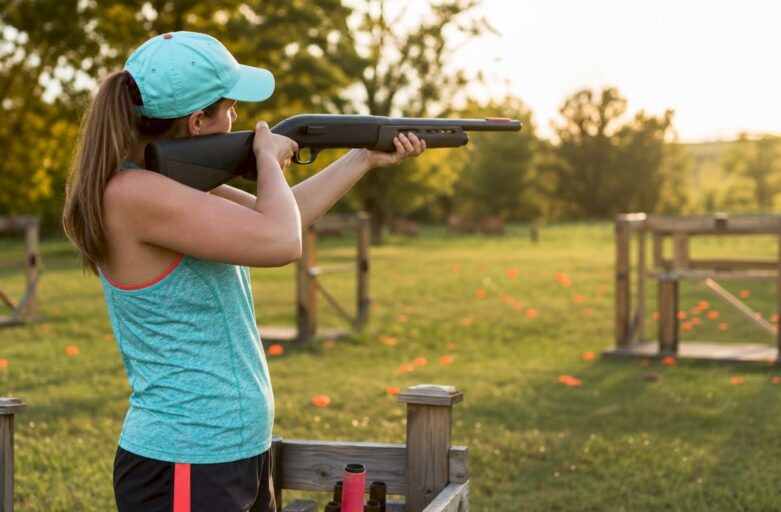
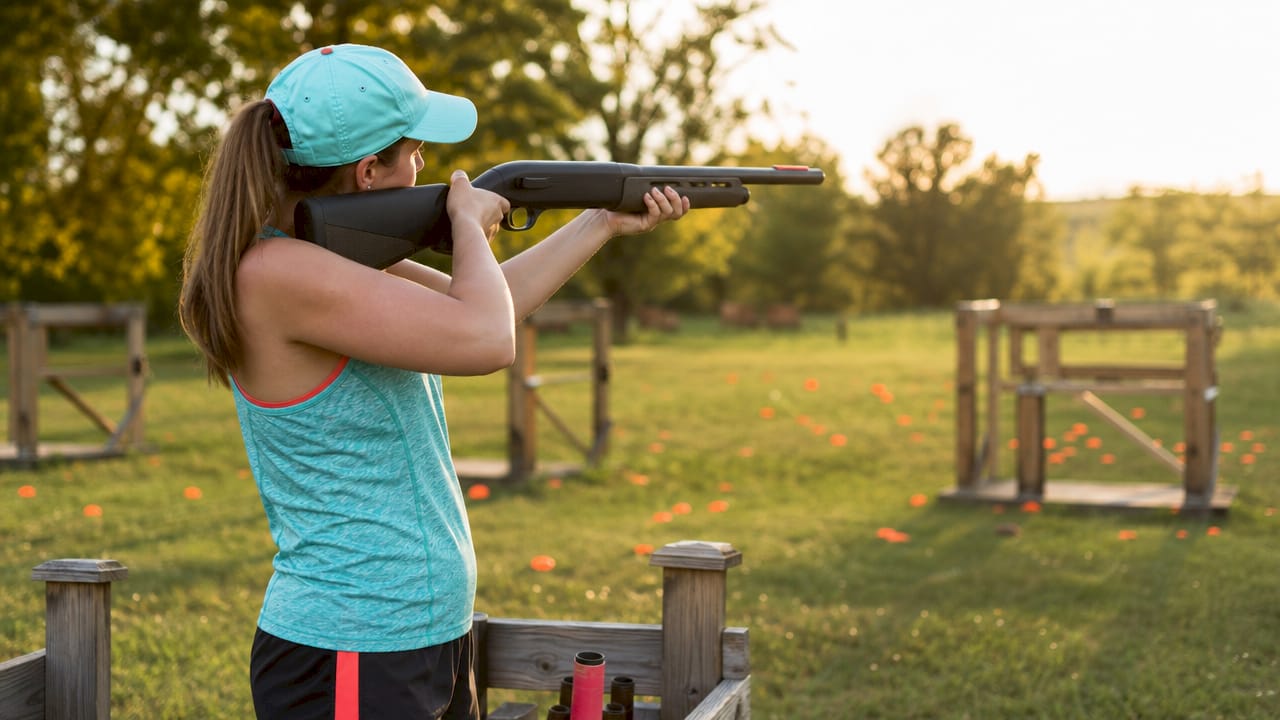
Laser clay shooting is defined as a form of clay target shooting that uses deactivated 12-bore shotguns firing infrared beams instead of live ammunition, making it one of the most accessible entry points into shooting sports today. If you want to get started with laser clay shooting as a beginner, the good news is that no prior experience, specialist equipment, or firearms licence is required. You simply show up, receive a safety briefing, and start shooting. Laserclay has built its entire experience around this principle: removing every barrier that typically stops newcomers from trying the sport, from recoil and noise to cost and safety concerns. The result is a genuinely fun activity that teaches real shooting technique from your very first session.
What equipment do you need to get started with laser clay shooting?
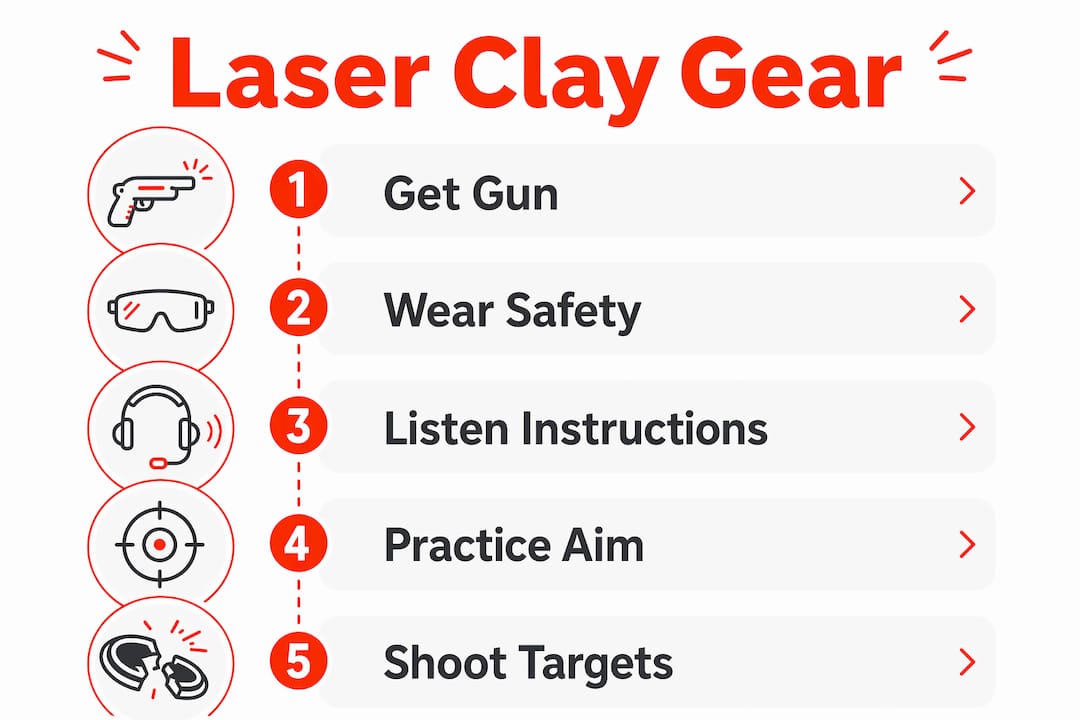
Laser clay shooting uses infrared beams from deactivated shotguns that register hits electronically on fluorescent clay targets, with scores displayed in real time on a connected scoreboard. This matters for beginners because it removes the two biggest obstacles in traditional clay shooting: the physical shock of recoil and the intimidating crack of a live round. You feel none of that here.
The core equipment you will encounter at a Laserclay session includes:
- Laser clay guns: Deactivated 12-bore shotguns modified to emit an infrared beam. They look and feel like real shotguns, which builds genuine muscle memory without any of the associated risk.
- Fluorescent clay targets: Bright, high-visibility discs that respond to the infrared beam and register hits electronically.
- Electronic scoring system: A live scoreboard that tracks every shot across the group, adding a competitive edge even in casual sessions.
- Safety gear: Eye protection and ear protection are provided as standard. Hearing protection is vital in all shooting sports for long-term ear health, and adopting the habit early is good practice if you ever transition to live ammunition later.
All necessary equipment including guns, safety gear, and instructions is provided by most laser clay shooting providers. You do not need to purchase or bring anything. This is a significant contrast to traditional clay shooting, where a beginner must source a suitable shotgun, appropriate ammunition, and personal protective equipment before even stepping onto a range.
| Equipment item | What it does for beginners |
|---|---|
| Deactivated laser gun | Builds real shotgun handling skills without recoil or noise |
| Fluorescent clay targets | High visibility makes tracking easier for new shooters |
| Electronic scoreboard | Gives instant feedback so you know exactly how you are progressing |
| Eye and ear protection | Provided as standard; builds safe habits from day one |
| Group scoring system | Up to five guns connected simultaneously for team competition |
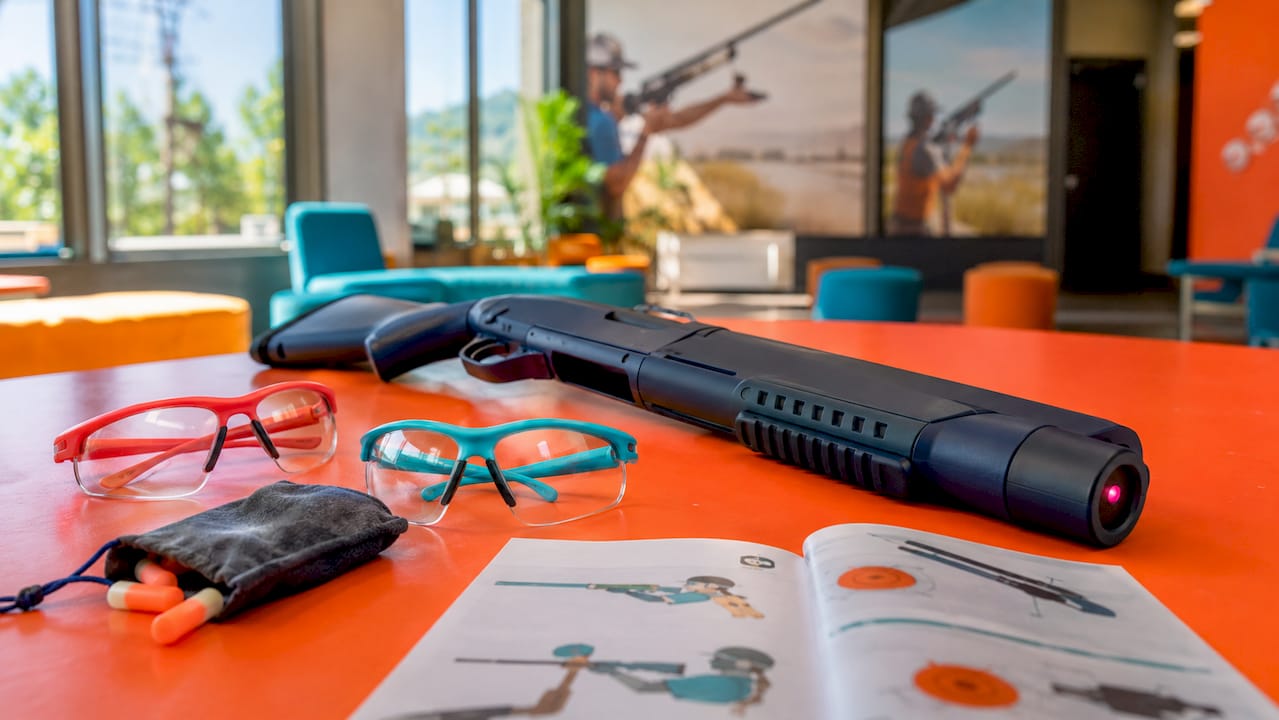
Pro Tip: When you first pick up the laser gun, spend thirty seconds simply mounting it to your cheek and shoulder before you look at any targets. Getting comfortable with the weight and fit of the gun is the single fastest way to improve your first session.
How do you shoot laser clay targets as a beginner?
The most important technical concept for any beginner laser shooting guide is this: point, don’t aim. Clay shooting is not like rifle shooting, where you line up a fixed sight on a stationary target. The clay is moving, so your job is to swing the gun through the target’s flight path and fire at the right moment. Trying to aim precisely at a moving disc is the single most common mistake beginners make, and it causes the majority of early misses.
Here is a step-by-step breakdown of the core technique:
- Set your stance. Stand with your feet shoulder-width apart, your non-dominant foot slightly forward. Keep your weight balanced and your knees soft. A rigid stance makes it harder to rotate and track the target smoothly.
- Identify your dominant eye. Your dominant eye controls where the gun points. Close each eye in turn while pointing at a distant object to find which eye stays aligned. Most right-handed shooters are right-eye dominant, but this is not universal.
- Mount the gun consistently. Bring the stock up to your cheek first, then your shoulder. The cheek weld is your aiming reference point. If the mount changes between shots, your accuracy will be inconsistent regardless of technique.
- Track the target before you shoot. Watch the clay leave the trap and follow it with the gun barrel before pulling the trigger. Smooth swing control and body rotation produce far better results than stabbing at the target at the last second.
- Swing through and fire. Move the barrel through the clay’s line of flight, pull the trigger as the barrel passes through the target, and keep swinging after the shot. Stopping the swing the moment you fire is another classic beginner error.
- Use your score as feedback. The electronic scoring system tells you immediately whether you hit or missed. Your instructor can use this data to identify patterns in your technique and correct them in real time.
Instructor-led guidance and immediate scoring feedback accelerate skill development considerably. Beginners who receive active coaching during their first session typically develop rhythm and timing far faster than those who simply shoot without guidance.
Pro Tip: Before the session begins, practise your swing at home by tracking a moving object, such as a car passing outside, with an imaginary gun. This trains your eyes and body to work together before you ever pick up the laser gun.
How to prepare for your first laser clay shooting session
Booking a session with a provider like Laserclay is straightforward. Most providers offer group packages and individual beginner lessons, with all equipment included in the price. You do not need to prepare any specialist gear or study technical manuals beforehand.
Here is what to expect when you arrive:
- Equipment fitting: You will be handed a laser gun and shown how to hold and mount it correctly. The instructor will check your grip and stance before any shooting begins.
- Safety briefing: Every session starts with a clear explanation of range rules, safe gun handling, and what to do if something goes wrong. This takes around five to ten minutes and covers everything a first-timer needs to know.
- Practice round: A typical session includes a practice round, multiple competitive rounds, and a team challenge, lasting approximately one hour in total. The practice round is low-pressure and designed specifically to let you find your feet.
- Competitive rounds: Once you have a feel for the gun and the targets, the session moves into scored rounds. The live scoreboard adds friendly competition without any intimidating formality.
- Team challenge: Most sessions finish with a group challenge that encourages communication and teamwork. This is particularly popular at corporate events and birthday parties.
Wear comfortable clothing that allows you to rotate your upper body freely. Avoid bulky jackets that restrict shoulder movement, as a clean gun mount depends on being able to bring the stock flush to your cheek and shoulder without obstruction. Flat-soled shoes with good grip are ideal. There is no physical fitness requirement, and the activity suits all ages and abilities.
Common challenges beginners face and how to overcome them
Beginners typically experience initial misses but develop rhythm and timing over their first few targets. Missing early is not a sign of failure. It is a sign that your brain is still learning to coordinate eye, body, and trigger at the right moment. That coordination comes quickly with practice.
The most common challenges and their solutions are:
- Aiming instead of pointing. Stopping the gun to line up a sight picture causes you to shoot behind the target every time. Trust the swing and keep moving.
- Rushing the shot. Many beginners pull the trigger the instant they see the clay, before the swing has caught up. Slow down, track the target, and let the shot happen naturally.
- Inconsistent gun mount. If the stock lands in a different position on your cheek each time, your point of impact shifts. Practise the mount repeatedly until it becomes automatic.
- Ignoring instructor feedback. The scoring system and your instructor are your two most valuable tools. Use both actively rather than simply shooting and hoping for improvement.
- Skipping protective gear. Even in a laser session, hearing and eye protection build habits that matter if you ever progress to live ammunition sports.
“Successful clay shooting depends on coordinated body movement and smooth target tracking rather than rifle-style aiming. Beginner coaching reflects this from the very first session.” — Boise Gun Club Beginner’s Guide
Laser clay shooting reshapes beginner fears from safety concerns to learning movement and timing. Once you realise there is nothing physically intimidating about the equipment, your attention shifts entirely to the skill itself. That is exactly where it should be.
You can also explore practising without live ammo as a structured way to build technique between sessions, which many beginners find accelerates their progress significantly.
Key takeaways
Laser clay shooting gives beginners a safe, technique-focused introduction to clay sports by removing recoil, noise, and equipment cost while delivering real-time scoring and instructor feedback from the first shot.
| Point | Details |
|---|---|
| No equipment needed | All guns, safety gear, and instructions are provided; just show up and shoot. |
| Point, don’t aim | Swing through the moving target rather than lining up a fixed sight picture. |
| Use scoring feedback | The live scoreboard tells you immediately what is working and what needs adjustment. |
| Wear comfortable clothing | Unrestricted upper body movement is the only physical preparation required. |
| Misses are part of learning | Rhythm and timing develop over the first few targets; early misses are normal and expected. |
Why I think laser clay shooting is the smartest way for beginners to start
The first time I tried laser clay shooting, I expected it to feel like a watered-down version of the real thing. It did not. What surprised me most was how quickly the technique feedback loop kicked in. You miss, the score updates instantly, your instructor tells you exactly why, and you adjust on the next target. That cycle is far tighter than anything you get in traditional clay shooting, where the noise, recoil, and cost of each shot can make beginners hesitant to experiment.
What I have found consistently is that beginners who start with laser clay shooting develop better foundational habits than those who jump straight into live ammunition sports. The absence of recoil means you are not flinching in anticipation of the shot, which is one of the hardest habits to correct once it is established. You learn the swing, the mount, and the timing in their purest form before any physical distraction enters the picture.
The competitive element also matters more than people expect. Seeing your score on a live board alongside your group turns what could be a quiet technical exercise into something genuinely entertaining. I have watched complete beginners become visibly hooked within twenty minutes, not because they were hitting every target, but because they could see themselves improving in real time. That visible progress is what keeps people coming back. If you are on the fence about trying it, the beginner-friendly shooting sports guide is worth reading before you book your first session.
— Joshua
Book your first laser clay shooting session with Laserclay
Laserclay makes it straightforward to get your first session booked, whether you are coming alone, with friends, or organising a group event. Every package includes full equipment provision, a safety briefing, and instructor guidance throughout, so there is nothing to prepare in advance.
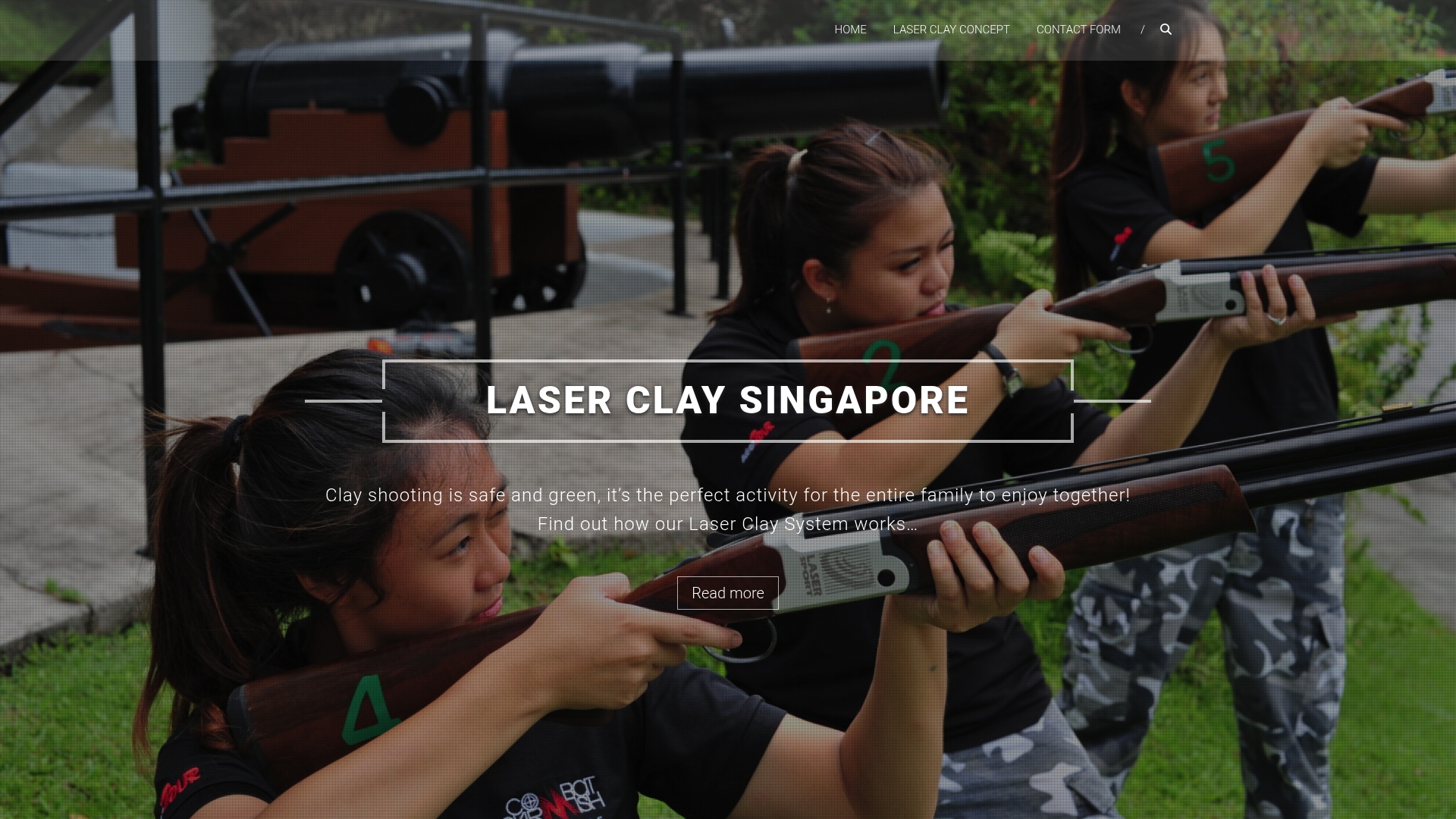
Sessions are structured to suit complete beginners, with practice rounds before any competitive scoring begins. Group packages accommodate up to five simultaneous shooters on a connected scoreboard, making it ideal for team-building days, birthday celebrations, or a weekend activity with family. Visit the laser clay booking page to check availability and find the right package for your group. Laserclay also offers a full guide to the sport if you want to read more before you arrive.
FAQ
What is laser clay shooting?
Laser clay shooting is a form of clay target shooting using deactivated 12-bore shotguns that fire infrared beams instead of live ammunition. Hits are registered electronically on fluorescent clay targets, with scores displayed in real time.
Do I need any experience to try laser clay shooting?
No prior experience is required. Sessions are designed for complete beginners, with all equipment provided and instructor guidance throughout.
Is laser clay shooting safe for children and older adults?
Laser clay shooting produces no recoil and no loud gunshot noise, making it physically accessible for all ages. Eye and ear protection are provided as standard at every session.
How long does a beginner laser clay shooting session last?
A typical session lasts approximately one hour and includes a practice round, multiple competitive rounds, and a team challenge.
Will I actually learn real shooting technique from laser clay shooting?
The point-and-swing technique used in laser clay shooting is identical to that taught in traditional clay sports. Beginners who start with laser clay develop foundational habits in body movement, gun mount, and target tracking that transfer directly to live ammunition shooting.