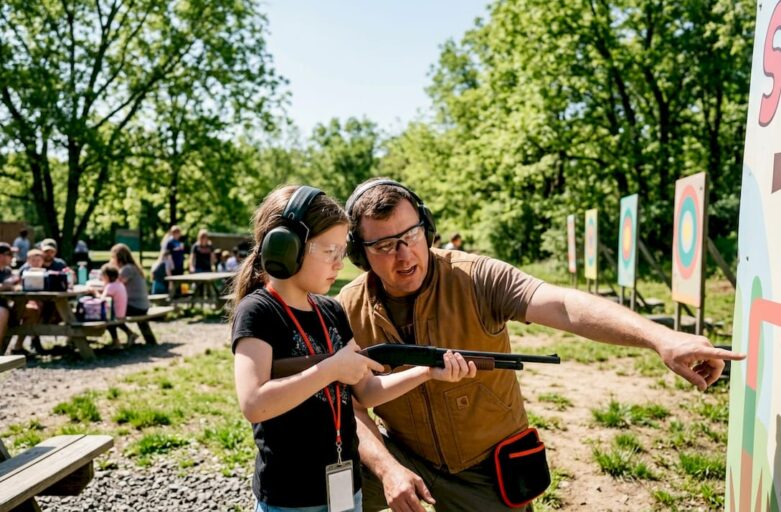
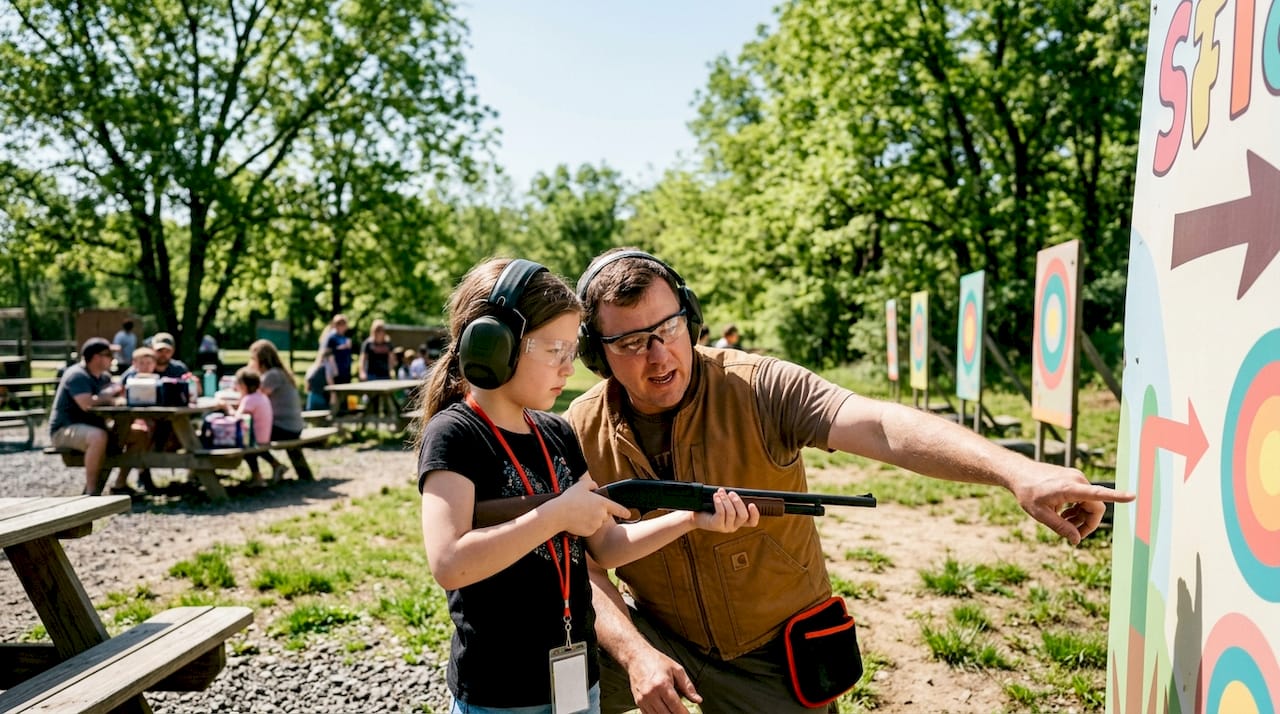
A child-safe shooting activity is a supervised, structured shooting experience designed specifically for children, with enforced safety protocols, age-appropriate equipment, and trained instruction at every stage. Programmes like the NSSF youth recreational shooting guide and BASC’s Young Shots represent the recognised standard for what safe marksmanship for children looks like in practice. These are not casual outings. They are carefully organised events where safety, instruction, and proper equipment form the foundation of every session, giving parents a clear framework for choosing child-friendly shooting activities with confidence.
What is a child-safe shooting activity?
A child-safe shooting activity is defined by three non-negotiable elements: qualified supervision, structured safety instruction, and equipment matched to the child’s age and physical capability. The NSSF’s parent guide frames youth shooting as a safety-oriented pursuit rather than casual firearm handling, which is a meaningful distinction. Letting a child handle a firearm without these structures in place is not a child-safe activity. It is simply unsupervised access.
BASC’s Young Shots programme in the UK is one of the most cited examples of how to teach kids shooting correctly. It follows a stepwise format: safety education first, then coach-led shooting, then practical field experience. This progression matters because it builds competence gradually rather than throwing children into live shooting without context. Parents searching for kids shooting sports should treat this model as the benchmark against which any other programme is measured.
What safety measures make shooting activities safe for children?
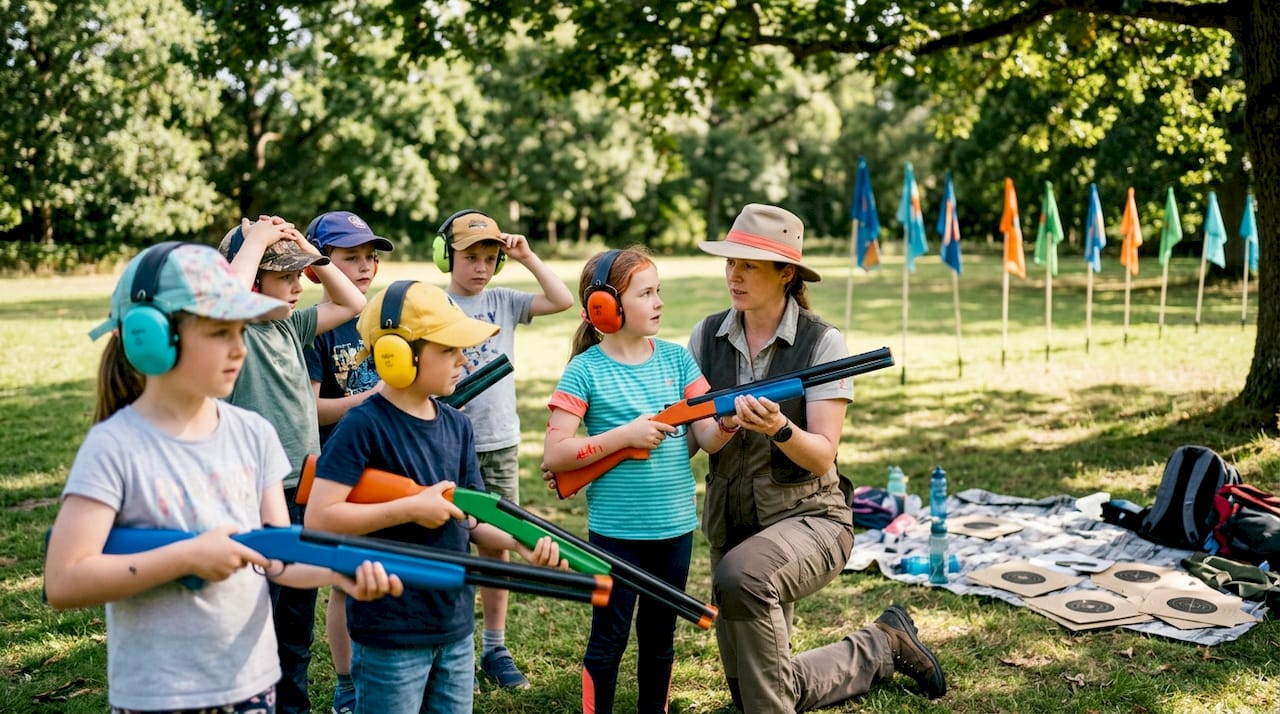
Safe shooting games for kids depend entirely on the quality of the safety infrastructure around them. The following measures are standard across credible youth shooting programmes.
- Trained supervision: Every session must be led by qualified coaches or instructors, not simply experienced adult shooters. Coach-led sessions create accountability and consistent safety enforcement.
- Mandatory safety briefings: BASC’s Young Shots begins every event with presentations covering gun safety rules and shoot etiquette before any child touches a firearm. This is non-negotiable.
- Hearing protection: Firearms produce noise levels of 155 to 165 dB©, which ISVR Consulting confirms is sufficient to cause acoustic trauma after just a few shots. Children’s hearing is particularly vulnerable, making properly fitted ear defenders a strict requirement, not a suggestion.
- Correct fit of protection: Wearing hearing protection is not enough on its own. Imperfect fit or inconsistent wear still leaves children exposed to peak impulse noise. Supervisors must check that ear defenders are seated correctly before any shooting begins.
- Eye protection: Ballistic-rated safety glasses are standard at all credible youth events to guard against ejected casings and debris.
- Appropriate firearms: Programmes specify gauge and choke restrictions to match the child’s size and strength. A firearm that is too heavy or produces excessive recoil is a safety risk regardless of supervision quality.
Pro Tip: When evaluating any youth shooting programme, ask specifically whether hearing protection is provided and whether staff check the fit before shooting starts. A programme that leaves this to the child or parent is cutting corners on the most critical safety measure.
How do organised youth shooting programmes structure their activities?
Understanding the format of a well-run youth shooting day removes a great deal of parental anxiety. Here is how a typical session at a programme like BASC Young Shots is structured.
- Registration and check-in: Parents sign children in and complete any required consent forms. BASC events operate with clear sign-in procedures and defined pick-up windows, so parents know exactly when to return.
- Safety presentation: Qualified instructors deliver a structured talk on the four fundamental rules of gun safety, shoot etiquette, and what to expect during the session. No child proceeds without completing this stage.
- Coach-led shooting: Children shoot under direct one-to-one or small-group supervision. Coaches correct stance, grip, and muzzle discipline in real time.
- Field experience: Participants observe or take part in a practical shooting scenario, connecting the technical instruction to a real context.
- Debrief and collection: Staff conduct a closing review, and parents collect children within the stated window.
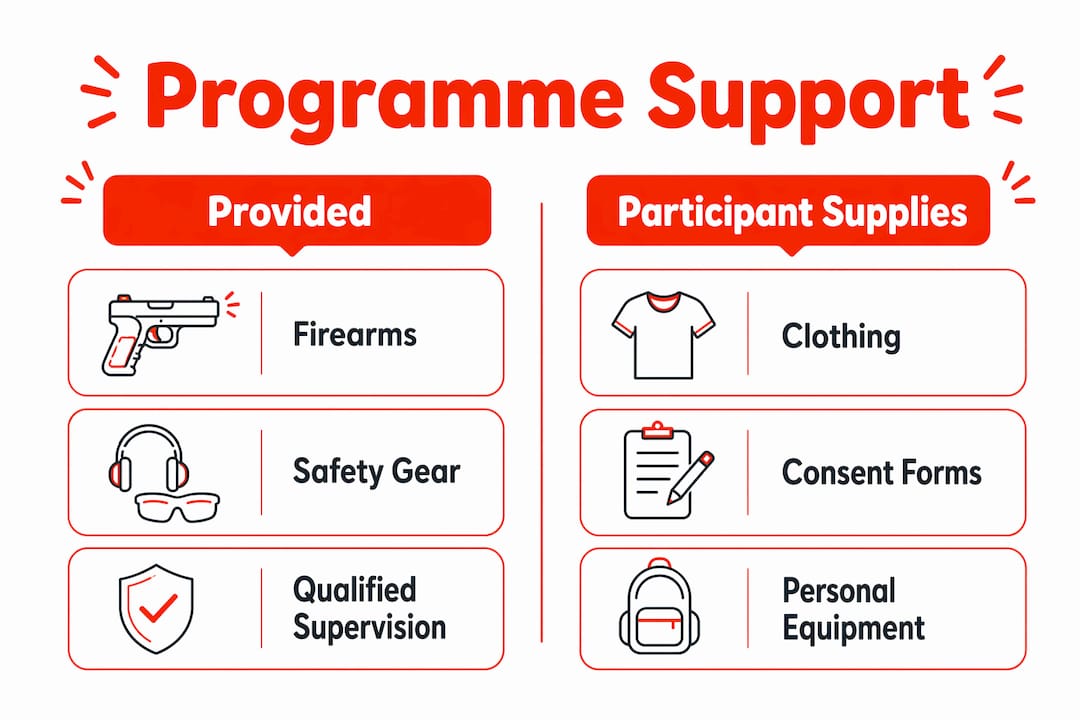
The table below summarises what parents should expect to provide versus what is typically supplied by the programme.
| Item | Provided by programme | Brought by participant |
|---|---|---|
| Firearms and ammunition | Yes (in most cases) | Only if pre-approved |
| Hearing and eye protection | Yes | Can bring own if certified |
| Safety instruction | Yes | N/A |
| Suitable outdoor clothing | No | Yes |
| Packed lunch and water | No | Yes |
Age suitability varies by programme, but most BASC Young Shots introduction days accept participants from around eight years old upwards, with parental consent required throughout. Costs are typically modest, reflecting the subsidised nature of youth development programmes in the shooting sports community.
What environmental and equipment considerations are involved?
Child-friendly shooting activities carry environmental responsibilities that responsible programmes take seriously. Lead contamination from spent ammunition is a documented ecological concern, and the best youth programmes address this directly.
- Non-lead ammunition: BASC’s driven game days require non-lead ammunition as standard, reducing soil and water contamination at shooting grounds. This is not just an environmental preference. It is increasingly a legal requirement across many shooting venues in the UK.
- Shotgun and choke compatibility: When participants bring their own firearms, programme organisers verify gun and ammunition compatibility, including nitro proofing checks and choke safety assessments. Non-lead shot requires specific choke ratings to avoid barrel damage and safety risks.
- Clothing and footwear: Outdoor shooting days take place in all weather. BASC events specify weather-appropriate outdoor gear including waterproof layers and sturdy footwear. A child who is cold, wet, or wearing inappropriate shoes is a distracted and potentially unsafe participant.
The comparison below illustrates the difference between a programme that meets best child-safe shooting practices and one that falls short.
| Feature | Best practice programme | Minimal compliance programme |
|---|---|---|
| Ammunition type | Non-lead, specified gauge | Unspecified |
| Hearing protection | Provided and fit-checked | Participant’s responsibility |
| Firearm suitability | Verified by staff | Self-declared |
| Environmental policy | Documented and enforced | Not stated |
Parents should request a written safety and environmental policy from any programme before booking. If none exists, that is a clear signal to look elsewhere.
What alternatives exist to live-fire shooting for children?
Laser clay shooting is the most practical child-friendly shooting activity for parents who want the engagement of target sports without live ammunition, noise, or environmental risk. Laserclay uses advanced laser technology to replicate the experience of clay shooting. Participants aim and fire a laser-equipped replica shotgun at moving clay targets, receiving instant feedback on accuracy without a single cartridge being discharged.
The safety advantages over live-fire activities are significant.
- No acoustic trauma risk: Without live ammunition, there is no impulse noise. Children can participate without hearing protection, removing one of the most complex safety requirements from the equation entirely.
- No lead contamination: Lead-free shooting eliminates the soil and water contamination associated with traditional clay shooting, making it suitable for a far wider range of venues including urban parks and school grounds.
- No recoil: Children are not physically impacted by the shot, which removes the risk of bruising, flinching, or developing poor technique from fear of the gun’s kick.
- Inclusive by design: Because there is no minimum physical strength requirement and no safety risk from mishandling live rounds, laser clay shooting is accessible to younger children and those with physical limitations who would be excluded from live-fire programmes.
Pro Tip: Laser clay shooting is an excellent first step for children who are curious about shooting sports but whose parents are not yet comfortable with live-fire environments. It builds the same target-tracking skills and hand-eye coordination as traditional clay shooting, making the transition to live-fire much smoother if the family chooses to progress.
Skill development is genuine, not simulated. Tracking a moving clay target, leading the shot, and reading the trajectory are the same cognitive and physical challenges whether the gun fires a laser or a cartridge. You can read more about why laser beats live clay for children in terms of safety, accessibility, and engagement.
Key takeaways
Child-safe shooting activity requires qualified supervision, structured safety instruction, and age-appropriate equipment as non-negotiable foundations, with laser alternatives offering a fully risk-free entry point for younger or more cautious participants.
| Point | Details |
|---|---|
| Definition is specific | Child-safe shooting means supervised, structured sessions with trained coaches, not casual firearm access. |
| Hearing protection is critical | Firearms reach 155 to 165 dB©; correct fit and consistent wear are both required to prevent acoustic trauma. |
| Programme structure matters | Credible programmes follow a safety briefing, then coached shooting, then field experience sequence. |
| Environmental responsibility is standard | Best practice programmes mandate non-lead ammunition and verify firearm and choke compatibility. |
| Laser alternatives remove key risks | Laser clay shooting eliminates noise, recoil, and lead contamination while preserving all the skill-building benefits. |
Why I think parents underestimate the structure already in place
Most parents I speak with assume that getting children into shooting sports means navigating a complicated, risky process with few guardrails. The reality is almost the opposite. Programmes like BASC Young Shots and the NSSF’s youth framework have spent decades refining exactly how to introduce children to shooting safely. The structure is already there. The problem is that parents do not always know where to look or what questions to ask.
What I have found genuinely surprising is how seriously the environmental dimension is taken at the programme level. Non-lead ammunition requirements, choke compatibility checks, and documented environmental policies are not afterthoughts. They are built into the event design. That level of rigour should give cautious parents real confidence.
The one area where I think conventional wisdom still falls short is hearing protection. Parents tend to assume that any ear defenders will do. They will not. Fit matters enormously, and a child who has not had their hearing protection checked by a qualified instructor is still at risk even if they are wearing something on their ears. This is the detail most guides gloss over, and it is the one I would press hardest on when evaluating any programme.
For parents who are not yet ready for live-fire environments, laser clay shooting is not a compromise. It is a genuinely excellent introduction to target sports that builds real skills without any of the risks that make live-fire activities complex to manage for younger children. The confidence and discipline children develop carry directly across to traditional shooting if they choose to progress later.
— Joshua
Try child-safe laser clay shooting with Laserclay
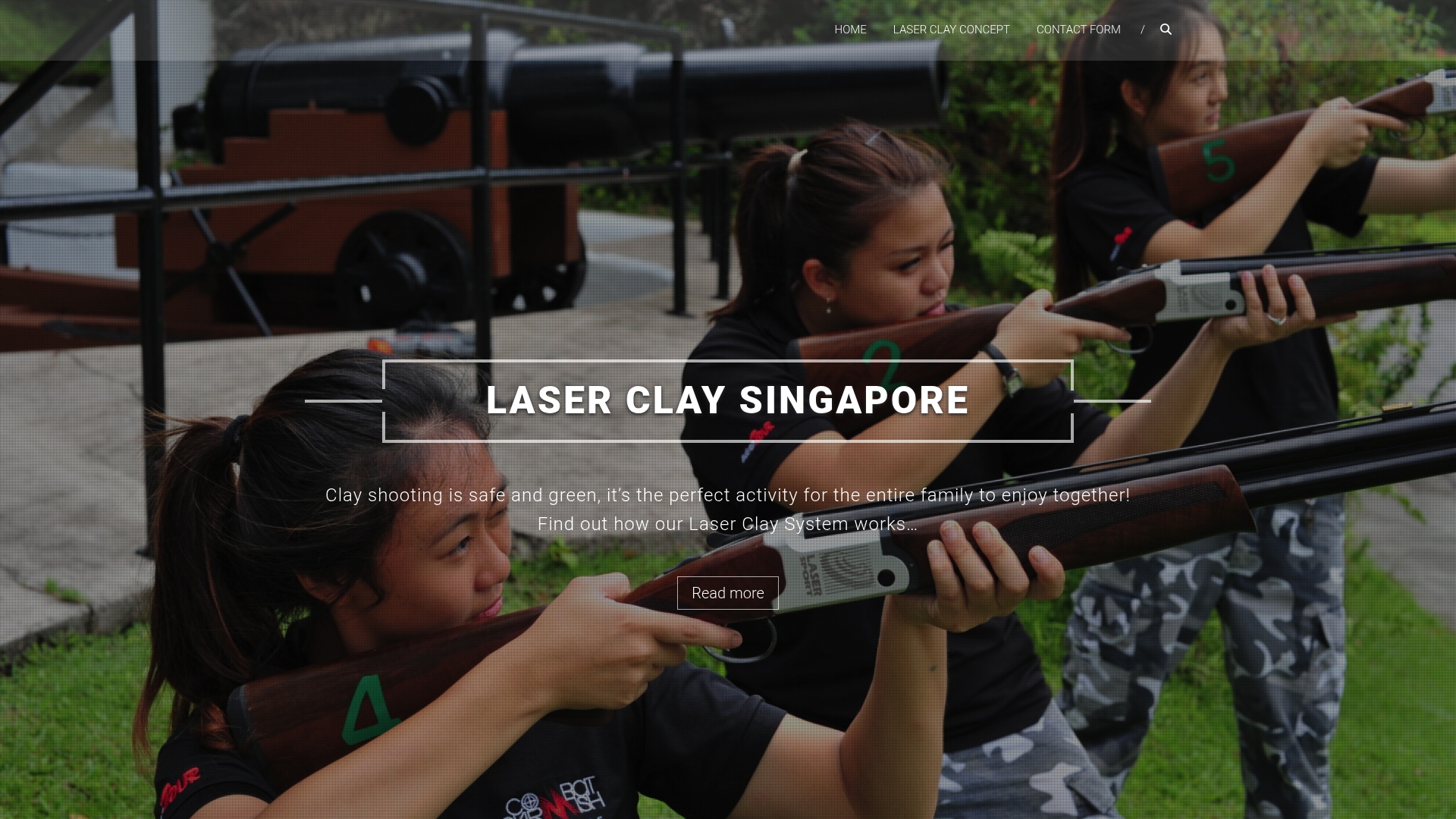
Laserclay offers families a way to experience the full excitement of clay shooting without live ammunition, noise, or environmental concerns. Using precision laser technology, children of all ages can track moving targets, develop hand-eye coordination, and enjoy genuine competitive fun in a completely safe setting. There is no recoil, no lead, and no hearing protection required. Laserclay runs sessions for birthday parties, school events, and family days, making it one of the most accessible child-safe shooting experiences available in Singapore. If you want your child to discover target sports the right way, find out how to play and book a session today.
FAQ
What age is appropriate for child-safe shooting activities?
Most structured youth shooting programmes, including BASC Young Shots, accept children from around eight years old with parental consent. Laser clay shooting has no minimum age restriction, making it suitable for younger children.
Is hearing protection always required at youth shooting events?
Hearing protection is mandatory at all live-fire youth events. Firearms produce noise levels of 155 to 165 dB©, which can cause permanent hearing damage after just a few shots, so correct fit must be verified by a supervisor.
Can children bring their own firearm to a youth shooting day?
Some programmes allow personal firearms, but organisers verify compatibility including nitro proofing and choke suitability before use. Most introductory events supply all equipment to remove this complexity for first-time participants.
How is laser clay shooting different from traditional clay shooting for kids?
Laser clay shooting uses laser-equipped replica shotguns to target moving clays without live ammunition. It removes noise, recoil, and lead contamination entirely while preserving the same target-tracking and hand-eye coordination skills as traditional clay shooting.
What should parents look for when choosing a child-friendly shooting programme?
Look for qualified coaches, mandatory safety briefings, provided hearing and eye protection with fit checks, a documented environmental policy, and a clear sign-in and supervision process. Programmes that cannot provide written evidence of these standards should be avoided.