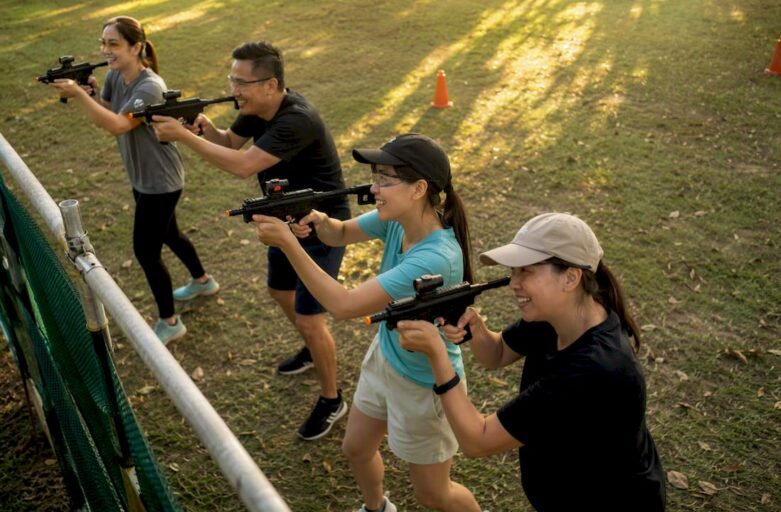
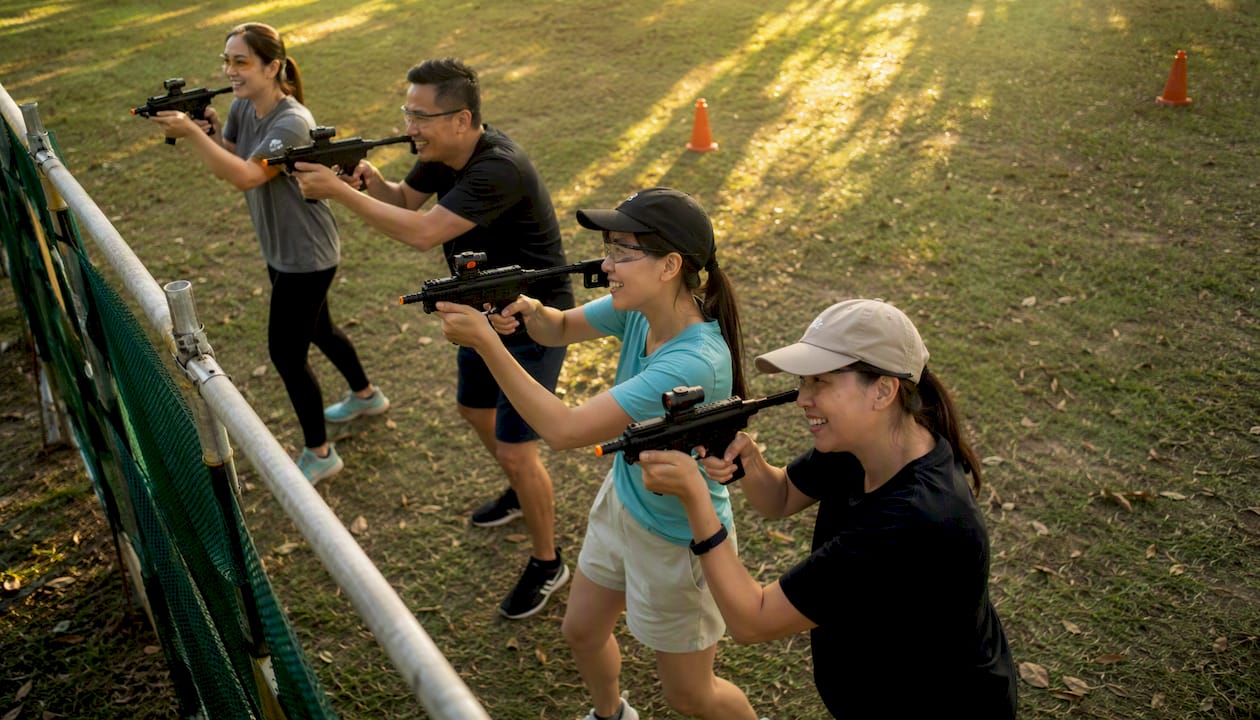
The five activity types Singapore employers should prioritise right now are group physical exercise, mental-wellbeing workshops, social team-bonding events, financial wellness education, and gamified step or challenge programmes. Together, these cover the pillars that local providers and the Health Promotion Board consistently build programmes around. For a ready-to-book social bonding option with zero skill barrier, Laserclay’s laser clay shooting sessions are available for corporate groups across Singapore with full facilitator support and indoor or outdoor setups.
The quickest starting points for any HR team this week:
- Physical activity: Group exercise sessions, yoga, or HPB Healthy Workplace Ecosystem classes registered via the Healthy365 app
- Mental wellbeing: Stress-management talks, mindfulness workshops, or access to MindSG digital resources
- Financial wellness: Lunch-and-learn sessions on CPF planning, budgeting, or insurance literacy
- Gamified challenges: The Corporate Challenge (part of HPB’s National Steps Challenge), which syncs staff activity through Healthy365 and provides weekly team reports
Pro Tip: If you are starting from scratch, register your company on Healthy365 this week. It costs nothing, gives you access to HPB’s activity listings, and lets you measure participation from day one before you spend a single dollar on external vendors.
Key takeaways
Singapore employers who combine official HPB programmes with one well-chosen facilitated team event and a clear communications plan consistently achieve higher participation than those who rely on a single activity type alone.
| Point | Details |
|---|---|
| Start with a pilot | Run a 6–8 week pilot with 15–40 participants before committing to a full programme. |
| Use free HPB infrastructure | Register on Healthy365 and join the Corporate Challenge to access leaderboards, reporting, and rewards at no cost. |
| Target 15–40% participation | A 15–40% participation rate is a realistic pilot target; higher repeat attendance signals strong programme fit. |
| Measure MVPA and NPS | Track MVPA minutes per participant and event NPS alongside attendance. |
| Book Laserclay for social bonding | Laserclay’s facilitated laser clay sessions are a ready-to-book, skill-free team-bonding option for Singapore corporate groups. |
This article is general information, not a substitute for advice from a qualified doctor. Consult a qualified healthcare professional about your own circumstances before acting on anything here.
Table of Contents
- What corporate wellness activities in Singapore work best by pillar?
- Singapore programmes and platforms every HR team should know
- How do you run a corporate wellness pilot in Singapore?
- Who should you hire and what should you ask them?
- Ready-to-use programme templates HR can copy
- Health, safety and confidentiality checks before you run any activity
- How Laserclay works as a corporate wellness and team-building activity
- What legal and compliance requirements apply to corporate wellness in Singapore?
- How do you integrate wellness activities with existing HR policies and benefits?
- How to promote wellness activities so employees actually show up
- Laserclay is ready to book for your next corporate wellness event
- Sources
What corporate wellness activities in Singapore work best by pillar?
Mapping activities to wellness pillars helps you build a programme that covers the whole person rather than just the gym-goer. Local providers, including AIA WorkWell and Workwell.sg, consistently organise offerings around four to five pillars: physical, mental, social, financial, and occupational.
Physical
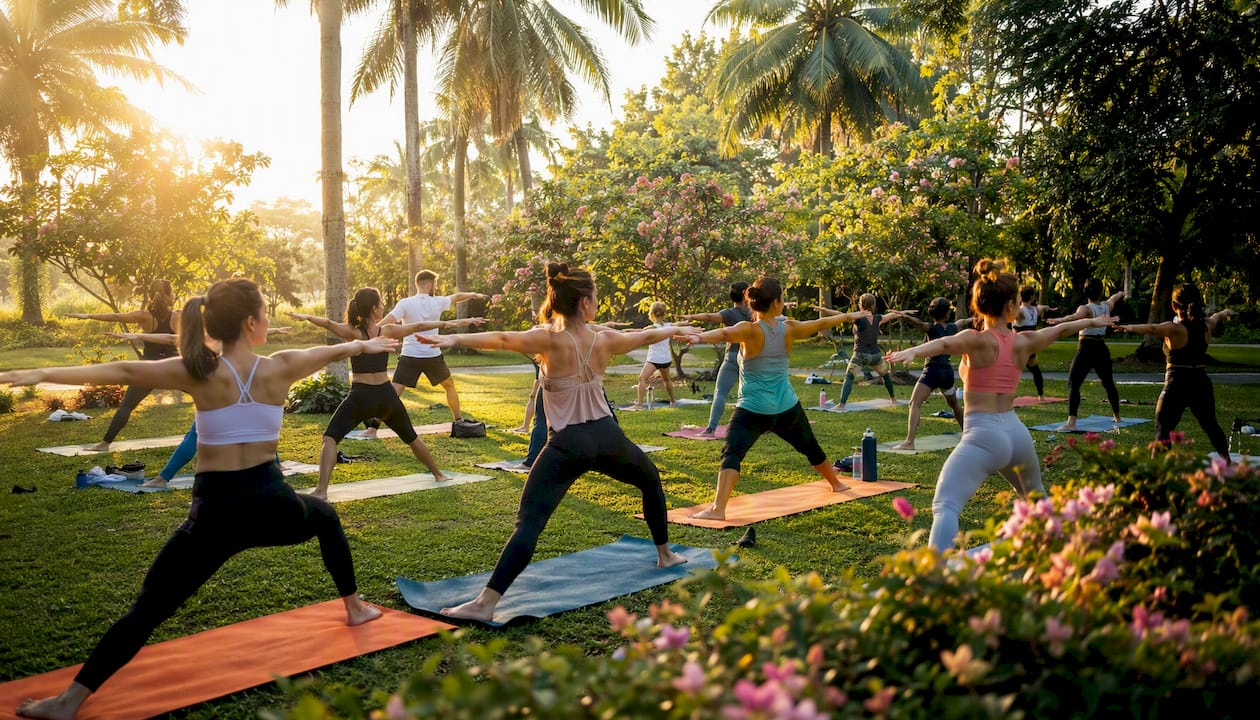
Onsite group exercise (yoga, HIIT, pilates), walking meetings, HPB-facilitated fitness classes, and step challenges via Healthy365. These work well for large groups and shift workers because they can run at different times. The measurable outcome is MVPA (moderate-to-vigorous physical activity) minutes per participant per month.
Mental wellbeing
Stress-management talks, resilience workshops, mindfulness sessions, and access to Employee Assistance Programmes (EAPs). Virtual delivery suits remote or hybrid teams. Mental health workshops in Singapore are increasingly delivered by licensed counsellors through EAP providers, which keeps individual data confidential.
Social and team bonding
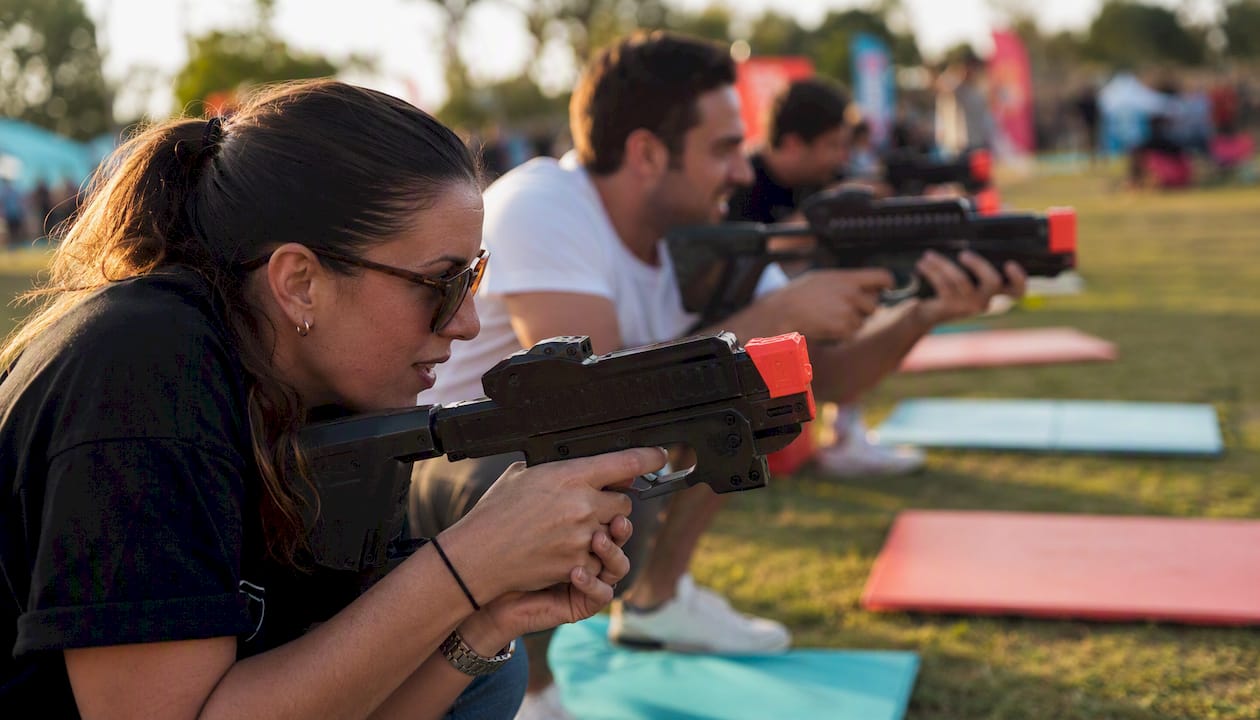
Facilitated group activities, team lunches, creative workshops, and high-engagement events like laser clay shooting. These build psychological safety and morale, particularly for teams that rarely interact cross-functionally. Active, gamified formats tend to generate higher voluntary participation than passive talks.
Financial wellness
CPF planning sessions, insurance literacy talks, and budgeting workshops delivered by licensed financial advisers. Lunch-and-learn formats work well here: low time commitment, high perceived value.
Occupational
Ergonomics assessments, lunch-break stretching programmes, and workload-management workshops. These address the physical environment and work design, which are often overlooked in favour of off-site activities.
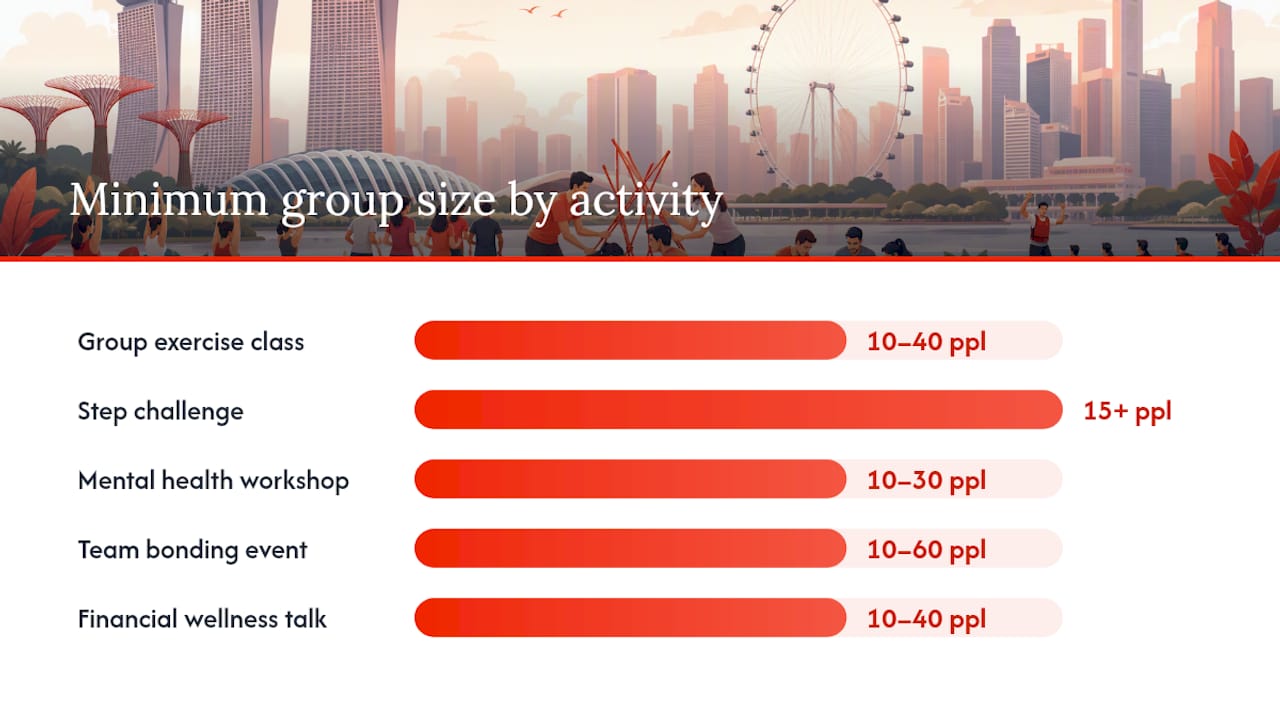
| Format | Best group size | Indoor/Outdoor | Time commitment | Suitability |
|---|---|---|---|---|
| Group exercise class | 10–40 | Indoor | 45–60 min | All fitness levels |
| Step challenge (app-based) | 15+ | Both | Ongoing, 4–8 weeks | Desk and field workers |
| Mental health workshop | 10–30 | Indoor | 90 min–half day | All staff |
| Team bonding event (e.g. laser clay) | 10–60 | Both | 1–3 hours | All skill levels |
| Financial wellness talk | 10–40 | Indoor/Virtual | 60–90 min | All staff |
| Ergonomics assessment | Individual | Indoor | 30 min per person | Office-based staff |
Pro Tip: Before finalising your activity mix, check your workforce’s shift patterns and age profile. A 6 AM yoga class suits early starters; a lunchtime step challenge suits desk workers. Demographic fit drives participation far more than activity quality.
Singapore programmes and platforms every HR team should know
Healthy Workplace Ecosystem and Healthy365
The Healthy Workplace Ecosystem (HWE) is HPB’s flagship employer partnership, connecting workplaces with free exercise sessions, health talks, coaching, and healthier food options. Employers and employees register activities directly through the Healthy365 app. With over 80 ecosystems across Singapore, there is a good chance a cluster already operates near your office. To start a new cluster or join an existing one, contact HPB via the email listed on the HWE page.
Corporate Challenge (National Steps Challenge)
The Corporate Challenge lets registered organisations sync staff step and activity data through Healthy365, track weekly team performance, and compete for monthly prizes. Some reward seasons set a minimum of 15 employees to qualify. Complimentary HPB health programme slots are sometimes available to participating organisations, though these are subject to availability and safe-management advisories. Register your company’s UEN through the HealthHub portal to get started.
Workplace Outreach Wellness (WOW) programme
The WOW programme supports companies in building healthier workforces through structured outreach. Once a WOW engagement concludes, HPB directs employers to continue using free Healthy365 resources, including physical activity programmes and MindSG’s digital mental-health tools. This makes WOW a useful entry point for companies that want structured support before transitioning to self-managed wellness.
Insurer and benefit partner programmes
Insurers such as AIA structure corporate wellness around physical, mental, financial, and social pillars and can supply turnkey programmes as part of employee benefits packages. AIA WorkWell is one example of a benefit partner that offers bespoke planning services alongside standard coverage. If your company already has a group insurance policy, check whether a wellness programme component is included before procuring separately.
Key registration notes for HR teams:
- Have your company’s UEN (from ACRA) ready before registering for HPB or HealthHub programmes
- Healthy365 is free to download; employees register individually but activity syncs to your corporate dashboard
- A pilot of 15–20 participants is a practical minimum for generating meaningful data and qualifying for most reward tiers
- Aim for 30–40% workforce participation as a realistic target for a first-quarter pilot
How do you run a corporate wellness pilot in Singapore?
Start small and measurable. A six-to-eight-week pilot with a defined group, clear KPIs, and a post-pilot review gives you the evidence to scale or redirect before committing significant budget.
Needs assessment checklist:
- Survey staff on preferred activity types, time slots, and any physical limitations
- Map shift patterns and identify the largest common availability windows
- Review existing benefits (group insurance, EAP) to avoid duplicating what you already pay for
- Identify a budget range: one-off sessions typically cost less than multi-week programmes and are lower risk for a first pilot
- Confirm venue or outdoor space availability and any building management requirements
Sample 8-week pilot timeline:
- Week 1: Finalise activity type, vendor, and date; send save-the-date to all staff
- Week 2: Open registration; share Healthy365 sign-up instructions if using HPB channels
- Weeks 3–4: Pre-event communications (two reminders, one FAQ email); collect health declarations if required
- Week 5: Deliver activity; collect attendance data and a short post-event NPS survey
- Weeks 6–7: Analyse participation rate, NPS, and any MVPA data from Healthy365
- Week 8: Present findings to leadership; decide on scaling, repeating, or switching format
For a step challenge, the timeline runs concurrently across weeks 1–8 rather than as a single event.
| KPI | What it measures | Short-term target |
|---|---|---|
| Participation rate | % of eligible staff who attended or registered | 15–40% for a pilot |
| MVPA minutes per participant | Physical activity intensity and volume | MVPA minutes per participant |
| Event NPS | Satisfaction and likelihood to recommend | +30 or above |
| Absenteeism rate | Days lost per employee per quarter | Track baseline; aim for reduction over 2–3 cycles |
| Repeat participation | % who attend a second event | 50%+ signals strong programme fit |
Budgeting is straightforward at pilot scale. A single facilitated onsite session for 20–40 people typically costs less than a multi-week programme subscription. Pair a one-off event with the free Corporate Challenge to give participants an ongoing activity layer without additional spend. For reward ideas that drive participation without large budgets, wellness reward schemes such as gift vouchers, recognition badges, or team prizes tend to lift engagement meaningfully.
Who should you hire and what should you ask them?
Vendor categories
- Fitness and exercise providers: Certified instructors or studios offering group classes, yoga, or HIIT sessions onsite or virtually
- EAP providers: Licensed counselling and mental-health support services, typically contracted annually with per-employee pricing
- Event and team-bonding companies: Facilitator-led experiential activities (laser clay shooting, escape rooms, creative workshops) for one-off or quarterly events
- Health screening providers: Clinics or mobile screening units offering biometric checks, blood pressure, BMI, and chronic disease screening
- Digital wellness platforms: App-based programmes covering fitness tracking, mental health, and financial wellness content
- Insurer/benefit partners: Turnkey programme bundles integrated into existing group insurance or employee benefits
Vendor evaluation checklist
Before signing any contract, confirm:
- Credentials: Relevant certifications (fitness instructors, licensed counsellors, first-aid trained facilitators)
- Insurance: Public liability coverage for onsite events; ask for a certificate
- Customisation: Can the vendor adapt content, duration, or format to your workforce profile?
- Measurement and reporting: Do they provide attendance data, NPS scores, or MVPA estimates? Ask for a sample report
- Data handling: Will individual health data remain confidential? Require anonymised aggregate reporting only in the contract
- References: Ask for two Singapore corporate clients you can contact directly
Pro Tip: Always ask vendors for a pre-event risk assessment document and confirm their contingency plan for outdoor events (weather, venue changes). A vendor who cannot produce these quickly is a vendor who has not run many corporate events.
Selection questions worth asking during procurement: What is your minimum group size? Who facilitates on the day and what is their backup if they are unavailable? How do you handle a participant who becomes unwell during the activity? What does your post-event report include and when will we receive it?
For competitive office events, ask specifically whether the vendor provides scoring systems, facilitator briefings, and equipment safety checks as standard inclusions.
Ready-to-use programme templates HR can copy
Template 1: One-off wellbeing talk with Q&A
A 90-minute session works well for 10–40 participants. The first 60 minutes cover the chosen topic (stress management, sleep hygiene, financial planning), and the final 30 minutes are open Q&A. Run it at lunchtime to maximise attendance without cutting into work hours. Collect a five-question NPS survey immediately after. Measure: attendance rate, NPS score, and one follow-up question two weeks later asking whether participants changed a behaviour.
Template 2: Half-day wellness retreat
A three-to-four-hour offsite or onsite event for 20–60 participants. Structure: 30-minute arrival and networking, 60-minute physical activity (group exercise or a facilitated team event like laser clay shooting), 45-minute lunch with a nutrition talk, and a 45-minute mental-wellbeing session. Ideal group size is 25–40 for a single facilitator. Measure: attendance, NPS, and a qualitative question on which element participants found most valuable.
Template 3: Eight-week step challenge
Use the Corporate Challenge via Healthy365 as the infrastructure. Week 1: registration and onboarding. Weeks 2–7: weekly team leaderboard updates sent by email every Monday. Week 8: prize ceremony and post-challenge survey. Minimum 15 participants to qualify for reward tiers. Measure: average MVPA minutes per participant, team completion rate, and NPS at week 8.
Communications timetable: Send a save-the-date four weeks out, a registration reminder two weeks out, a logistics email three days before the event, and a post-event survey within 24 hours. For a multi-week challenge, send a weekly update every Monday and a final summary at close.
Health, safety and confidentiality checks before you run any activity
Always complete a risk and suitability assessment before opening sign-up. This protects both employees and the organisation.
Safety checklist:
- Collect health declarations for any moderate-to-vigorous physical activity; advise staff with existing conditions to consult a doctor before participating (consistent with HealthHub guidance)
- Confirm first-aid coverage: at minimum, a trained first-aider on site and a clear emergency contact procedure
- For outdoor events, establish a weather contingency plan and an indoor backup venue
- Check that the venue meets any applicable workplace safety requirements under the Workplace Safety and Health Act
- For food-related activities, confirm allergen information is communicated in advance
- Verify that all equipment used by external vendors has been safety-checked and that the vendor holds public liability insurance
On confidentiality: any vendor handling individual health data must be contractually bound to provide only anonymised, aggregate reporting to the employer. Individual results, health declarations, and EAP usage must never be shared with line managers or HR without the employee’s explicit written consent. Include these terms in the vendor contract before signing, not as an afterthought.
A brief medical disclaimer applies to all physical wellness activities: this article provides general programme guidance and does not constitute occupational health or medical advice. Consult an occupational health professional or your EAP provider when designing activities for employees with known health conditions.
How Laserclay works as a corporate wellness and team-building activity
Laserclay is a safe, eco-friendly, high-engagement team-building activity that fits naturally into corporate wellness days, half-day retreats, and standalone bonding sessions. It uses sound-simulated, deactivated shotguns and reusable laser targets, removing the safety risks and environmental concerns associated with traditional clay shooting while keeping the competitive, active format intact.
Package components include:
- Trained facilitators who brief participants and manage the session from start to finish
- Customisable game formats and real-time electronic scoreboards that create natural team competition
- Equipment rental with full setup and pack-down handled by the Laserclay team
- Indoor and outdoor adaptability, so the session works in a function room, a carpark, or an open field
Logistics at a glance:
- Group sizes: Suitable for groups from around 10 to 60+ participants
- Setup time: Typically 30–45 minutes before the session begins
- Session duration: One to three hours depending on the format chosen
- Skill requirement: None. The laser format means first-timers compete on equal footing with experienced participants, which is important for inclusion
- Safety features: No live ammunition, no recoil, no lead residue; suitable for all fitness levels
Expected outcomes for HR: high voluntary participation (the competitive format draws in participants who would skip a yoga class), measurable engagement through scoring data, and a post-event NPS that typically reflects the novelty and social energy of the format. The eco-friendly positioning also aligns with corporate sustainability commitments, which matters for organisations with ESG reporting requirements.
For venue options across Singapore, the team building venues page covers indoor and outdoor configurations with logistics notes for event planners.
What legal and compliance requirements apply to corporate wellness in Singapore?
Singapore employers running wellness programmes operate within several overlapping frameworks. The Workplace Safety and Health Act (WSHA) requires employers to take reasonably practicable steps to ensure the safety and health of employees at work, which extends to organised activities on or off company premises. For physical activities, this means conducting risk assessments, ensuring adequate first-aid provision, and not pressuring employees to participate in activities that may be unsuitable for their health status.
The Personal Data Protection Act (PDPA) governs how employee health data collected during wellness activities (health declarations, screening results, EAP usage) may be stored, used, and shared. Employers must obtain informed consent before collecting health data, store it securely, and not share it with third parties without consent. Vendor contracts must reflect these obligations explicitly.
For activities involving food, the Singapore Food Agency’s food hygiene requirements apply to any catering arranged as part of a wellness event. For outdoor events on public land, check whether a permit is required from the relevant authority (National Parks Board for parks, building management for private premises).
Participation in wellness activities must be voluntary. Mandatory attendance at health screenings or activities may raise employment law considerations under the Employment Act, particularly if the activity falls outside contracted working hours. When in doubt, frame activities as opt-in and schedule them during working hours where possible.
How do you integrate wellness activities with existing HR policies and benefits?
The most common mistake is running wellness activities in parallel with existing benefits rather than connecting them. If your company already has a group health insurance policy with a wellness component (as many AIA and other insurer packages include), check what is already funded before procuring separately.
Map your current benefits first: group insurance, EAP access, flexible working arrangements, and any existing gym subsidies or health screening allowances. Then identify the gaps. A company with strong physical wellness benefits but no mental health support should prioritise mental-wellbeing workshops. One with an EAP that employees rarely use should focus on awareness and destigmatisation before adding new activities.
Embed wellness into the HR calendar rather than treating it as a one-off event. Quarterly touchpoints (one physical activity, one mental-wellbeing session, one social event) create a rhythm employees can anticipate. Link participation to existing recognition frameworks where appropriate: a team that completes the Corporate Challenge step target can be acknowledged in the company newsletter without needing a separate reward budget.
Hydration and physical environment matter more than most HR teams account for. Practical workplace adjustments, such as accessible water stations and ergonomic setups, support the physical activities you run and reinforce the message that wellness is an everyday priority, not just a quarterly event.
Update your employee handbook to reflect the wellness programme: participation guidelines, data privacy commitments, and the process for requesting reasonable adjustments. This protects the organisation and signals to employees that the programme is a permanent feature, not a pilot that will quietly disappear.
How to promote wellness activities so employees actually show up
Communication is where most wellness programmes fail.
Start with the right messenger. Announcements from a direct line manager generate higher attendance than emails from HR. Brief team leads two weeks before any activity and ask them to mention it in their next team meeting. Personal endorsement from a peer or manager consistently outperforms a company-wide email.
Use multiple channels and repeat the message. A single email is not enough. The effective sequence is: a save-the-date four weeks out, a registration-open email two weeks out, a reminder from the line manager one week out, a logistics email two days before, and a same-day reminder on the internal messaging platform (Teams, Slack, or WhatsApp group). For a multi-week challenge, send a weekly update every Monday.
Make the benefit concrete and personal. “Join our wellness session” is forgettable. “Spend 90 minutes on stress management and leave with three techniques you can use this week” is specific enough to motivate. For team events, lead with the social angle: “Your team gets two hours away from the desk, with lunch included.”
Incentives lift participation without requiring large budgets. Recognition in a company newsletter, a small team prize for the top Corporate Challenge team, or a certificate of participation for a health screening all signal that the organisation values the effort. Pair these with the wellness reward ideas that fit your culture and budget.
Finally, close the loop. Share participation numbers and anonymised NPS results with the whole company after each activity. Transparency builds trust and makes the next activity easier to promote.
Why the “engagement problem” in wellness is really a design problem
Most corporate wellness programmes that struggle with low turnout are not failing because employees are disengaged. They are failing because the activities were chosen for the organiser’s convenience rather than the participant’s reality.
A lunchtime yoga class sounds inclusive until you realise half your workforce eats at their desk because their manager expects them to. A step challenge sounds motivating until you notice that your highest-stress employees are also the least likely to have 30 minutes of walking time built into their day.
The programmes that work in Singapore’s corporate context tend to share one characteristic: they remove friction rather than adding obligation. Healthy365 works because it meets employees where they already are (on their phones). Laserclay works because it requires no prior skill, no kit, and no commitment beyond showing up. The Corporate Challenge works because the competitive element gives people a reason to care beyond the health benefit itself.
Laserclay is ready to book for your next corporate wellness event
Laserclay runs corporate team-building sessions across Singapore with mobile setups that work indoors and outdoors, so you are not hunting for a specialist venue. Groups from around 10 to 60+ participants get a fully facilitated session with real-time scoring, customisable game formats, and equipment handled entirely by the Laserclay team.
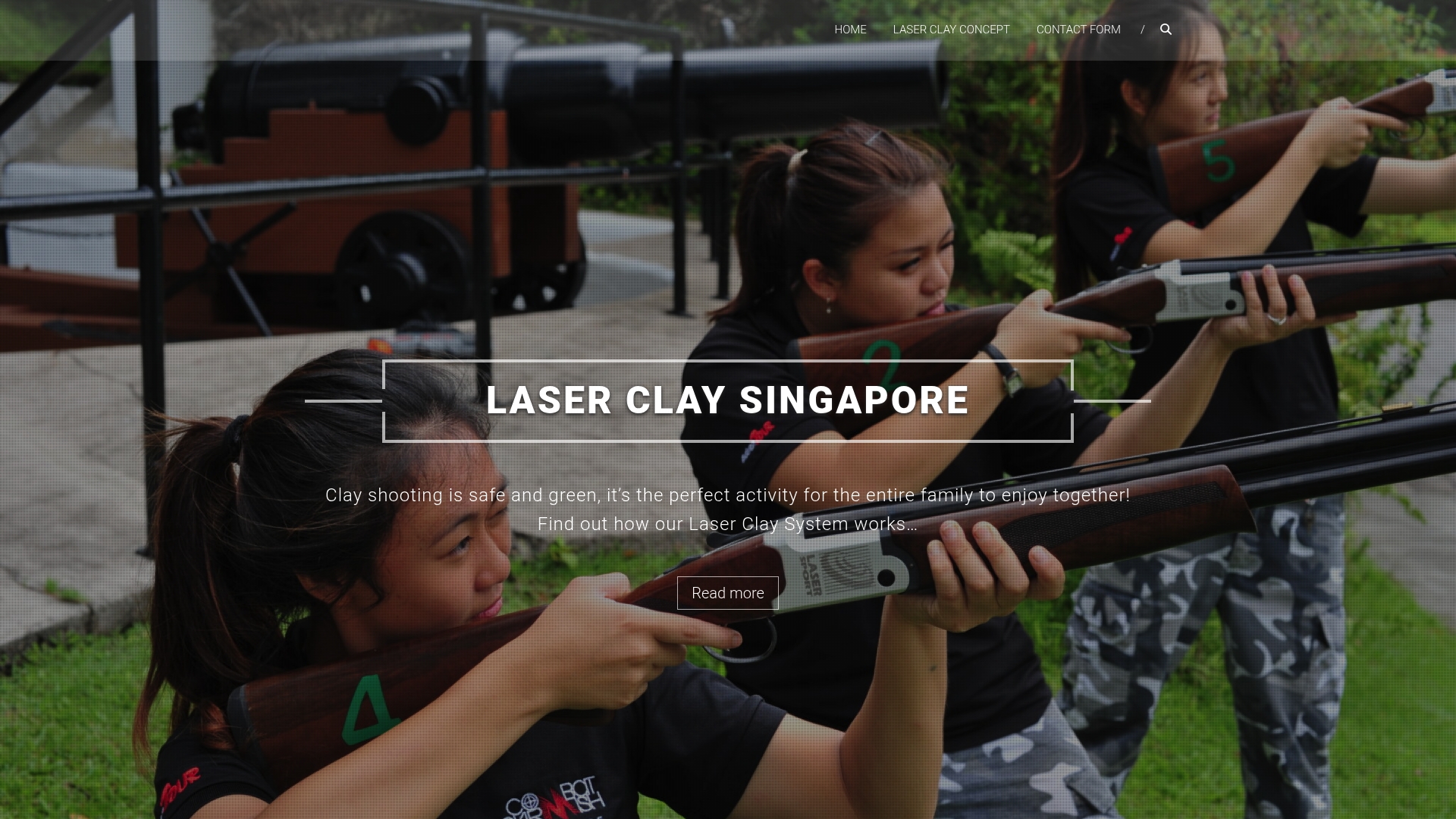
The format is genuinely inclusive: no shooting experience needed, no physical fitness threshold, and no lead or live ammunition. That last point matters for companies with ESG commitments or mixed-age workforces. Sessions typically run one to three hours and can be built into a half-day wellness retreat or run as a standalone quarterly event.
To check availability or request a quote for your team, visit the Laserclay corporate booking page or explore how the game works before you commit.
Sources
- Healthy Workplace Ecosystem | Health Promotion Board
- Corporate Challenge | HealthHub
- AIA WorkWell employee benefits | AIA Singapore