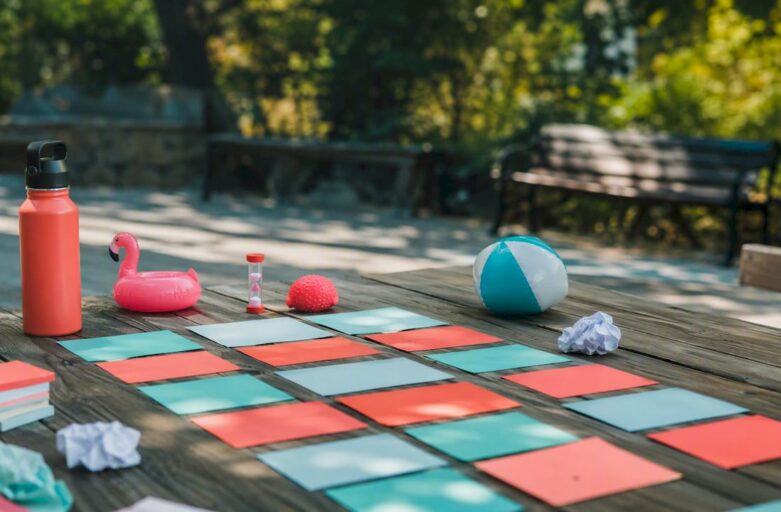
For a five-minute energy boost, run one-word pulse checks or lightning trivia. For a ten-minute icebreaker that builds real rapport, use blind drawing or 72 Seconds of Fun. For a fifteen-minute slot where you need actual output, run a mini-marshmallow challenge or a rapid prototyping sprint. That’s the whole decision tree: match the outcome you need (energy, trust, or a working skill) to the time you actually have, then pick from the band below rather than agonising over the “perfect” game.
Most facilitators overthink this. Short team-building activities under five minutes work precisely because they ask nothing of the calendar and little of the participant, and they adapt easily whether your team sits in one room or logs in from three time zones. The trick isn’t finding a magic game. It’s knowing which time band you’re working with and picking something that suits your group’s actual mood that day, not the mood you wish they had.
- Under 5 minutes: pulse checks, lightning trivia, two-truths-fast
- 5 to 10 minutes: blind drawing, 72 Seconds of Fun, rapid-fire storytelling
- 10 to 15 minutes: mini-marshmallow challenge, prototyping sprints, structured debates
For in-person sessions where you want a facilitator to handle logistics rather than run the stopwatch yourself, Laser Clay offers a fully staffed short-session format with scoring built in, which suits a fifteen-to-thirty-minute competitive slot better than most DIY games.
Pro Tip: Pick the activity based on how tired the room looks, not what’s next on your list. A flat team needs a pulse check before anything requiring creativity.
Key Takeaways
Short session team activities work best when the time band, the group’s familiarity level, and a strict timer are matched deliberately, not chosen by habit.
| Point | Details |
|---|---|
| Match time to outcome | Use under 5 minutes for energy, 5 to 10 for a specific skill, 10 to 15 for visible output. |
| Enforce the clock | A loud, visible timer prevents the single most common failure: sessions running long. |
| Fix hybrid fairness first | Chat-first and simultaneous-typing prompts stop remote colleagues losing out to live-room dynamics. |
| Debrief every time | Even ten seconds of reflection is what makes an activity memorable rather than forgettable. |
| Book Laser Clay for stakes | For a scored, facilitated, indoor-suitable session with zero setup on your side, Laser Clay handles the logistics. |
Table of Contents
- Short session team activities grouped by time and outcome
- Running quick activities for virtual and hybrid teams
- Choosing the right activity for your team’s goal
- Facilitator scripts for running a tight session
- When to book a turnkey short-session facilitator
- Common pitfalls in short team sessions and how to avoid them
- Measuring whether a short activity actually worked
- What actually matters when you’re picking a short activity
- Book a facilitated short session instead of running it yourself
- Sources
- FAQ
Short session team activities grouped by time and outcome
Every activity below states its time, group size, materials, and what it actually builds, so you can match the exercise to the outcome you need rather than grabbing whatever’s first on a list. Categorising by objective, whether energy, trust, communication, or problem-solving, is how Asana’s team-building catalogue organises its picks too, and it’s the only sensible way to browse a long list without wasting time.
Under 5 minutes: energisers and rapid check-ins
These need almost no setup and work as a cold-open before the “real” agenda starts.
- One-word pulse check — Any size, no materials. Ask everyone to type or say one word describing their energy. Read a few aloud. Builds: honesty and awareness.
- Lightning trivia — Up to 15 people, needs 3 to 5 pre-written questions. Fire off questions, first correct answer wins a point. Builds: quick energy.
- Two truths, one lie (fast version) — Pairs or small groups, no materials. Each person states three facts, others guess the lie in 30 seconds. Builds: curiosity and light disclosure.
- Desk item show-and-tell — Any size, no prep. Everyone grabs the nearest object and explains it in one sentence. Builds: spontaneity.
- Would you rather, lightning round — Any size, one prepared question. Quick vote by hand or chat reaction. Builds: quick group alignment.
- Emoji check-in — Any size, chat window only. Everyone drops an emoji that matches their mood. Builds: low-pressure participation.
- Count to twenty — Small groups, no materials. The group counts to 20 aloud with no one speaking twice in a row and no signals. Builds: nonverbal coordination.
- Name that tune (10 seconds) — Any size, needs a music clip. Play a short snippet, first to guess correctly wins. Builds: shared fun.
- Gratitude in one breath — Any size, no materials. Everyone names one thing they’re grateful for that week, fast. Builds: connection.
- Speed compliments — Pairs, no materials. Thirty seconds each way, genuine compliments only. Builds: trust.
- Weather report check-in — Any size, no materials. Describe your week as a weather forecast (“scattered showers, clearing by Thursday”). Builds: light disclosure without oversharing.
- Silent applause — Any size, no materials. Announce a win, team applauds silently (waving hands). Builds: recognition, especially good on video calls.
Virtual variant for all of the above: use chat-first prompts so everyone answers simultaneously rather than waiting their turn on mute. It removes the awkward pause and keeps things moving.
5 to 10 minutes: icebreakers and skill drills
This band is where quick 5 and 10-minute activities tend to sit, and it’s the sweet spot for building a specific skill without derailing an agenda.
- Blind drawing — Pairs, needs paper and pen per person. One person describes a shape without naming it, the other draws it, then compare. Builds: communication precision.
- 72 Seconds of Fun — Groups of 4 to 8, no materials. Each person gets 72 seconds to share something on a prompt while the group listens without interrupting; the rapid-sharing format uses the tight clock to create urgency and keep energy high. Builds: active listening.
- Two-minute back-to-back challenge — Pairs sitting back to back, needs building blocks or LEGO. One describes a structure, the other builds it blind. Builds: instruction-giving clarity.
- Rapid-fire storytelling — Groups of 4 to 6, no materials. Build a story one sentence at a time, no planning allowed. Builds: adaptability.
- Human bingo (mini version) — Any size, needs a 9-square printed or shared grid. Find colleagues matching traits, first to fill a row wins. Builds: cross-team familiarity.
- Guess the leader — Groups of 6 to 10, no materials. One person leaves the room briefly, group picks a “leader” to subtly mimic, returning person guesses who’s leading. Builds: observation and fun.
- Rank the priorities — Small groups, needs one written scenario. Given a fictional crisis, rank five responses by urgency, then compare answers. Builds: quick decision alignment.
- Desert island team — Groups of 4 to 5, no materials. Given a shrinking list of items, agree together on the final three. Builds: negotiation and compromise.
- This or that debate — Pairs or small groups, no materials. Pick a trivial but divisive topic (pineapple on pizza) and argue it for 90 seconds each side. Builds: playful disagreement skills.
- Object story chain — Groups of 6 to 10, needs a physical or virtual object. Pass an object (or its description) around, each person adds a detail to its imagined history. Builds: creative collaboration.
Virtual variant: run blind drawing and back-to-back challenges via a shared whiteboard tool like Miro or Google Jamboard, with the describer’s camera off so they can’t gesture.
10 to 15 minutes: collaborative micro-exercises
This band suits problem-solving or a rapid prototype, the kind of exercise that leaves a visible output at the end. Structured 15-minute exercises work best when they have a clear goal stated upfront and a hard stop for reflection.
- Mini-marshmallow challenge — Groups of 3 to 4, needs spaghetti, tape, string, and a marshmallow. Build the tallest free-standing structure that holds the marshmallow on top in 12 minutes. Builds: rapid prototyping and role negotiation.
- Paper plane distance sprint — Groups of 3 to 5, needs paper only. Design and test three iterations of a paper plane for maximum distance, with one minute between throws to redesign. Builds: iterative problem-solving.
- Reverse brainstorm — Groups of 4 to 6, needs a whiteboard or shared doc. Instead of solving a problem, list every way to make it worse, then flip the list into solutions. Builds: creative reframing.
- Silent line-up — Groups of 6 to 12, no materials. Line up by birthday month, height, or years at the company without speaking. Builds: nonverbal coordination under constraint.
- Two-minute pitch swap — Pairs, no materials. Each person pitches an idea (real or invented) for two minutes, partner then pitches it back as if it were theirs. Builds: active listening and reframing.
- Escape the room (mini) — Groups of 4 to 6, needs 3 to 4 simple puzzle clues. Solve a chain of clues to “unlock” a final word within the time limit. Builds: collaborative problem-solving.
- Rapid prototyping sprint — Groups of 3 to 4, needs sticky notes and pens. Sketch three quick solutions to a stated problem, vote on the strongest in the final two minutes. Builds: convergent thinking.
- Structured debate (for and against) — Groups split into two, no materials. Argue opposing sides of a work-relevant question, then swap sides for the final round. Builds: perspective-taking.
Running quick activities for virtual and hybrid teams
Remote participants lose out fastest in physical games, so the fix is almost always structural rather than about finding a “better” virtual game. Breakout rooms handle small-group activities like blind drawing or desert island team well, provided you set a hard return time and post it in the room description, not just say it aloud. Shared documents work for anything involving ranking, brainstorming, or written responses, letting everyone contribute at once instead of waiting for a turn that never quite gets equal airtime on a call.
Simultaneous-typing prompts fix the biggest fairness problem in hybrid rooms: the in-person half talking over each other while remote colleagues wait for a gap that doesn’t come. Ask everyone to type their answer in chat and hit enter on a countdown, so nobody’s response is shaped by hearing others first.
- One-word pulse check becomes a synced chat drop, everyone hits enter together on “three.”
- Blind drawing becomes a shared whiteboard exercise, describer’s camera off, drawer working in a separate tab.
- 72 Seconds of Fun becomes a gallery-view round, muting all but the speaker and using a visible on-screen timer so remote participants see the countdown too.
Some teams are experimenting with asynchronous micro-games that remove the live host entirely, letting people opt in on their own time rather than during a scheduled call. That’s worth considering for globally distributed teams where “5 minutes” never lines up on everyone’s clock at once.
Pro Tip: Give remote participants the first turn, not the last. By the time a live-room activity reaches the fourth or fifth in-person speaker, remote colleagues have usually mentally checked out.
Choosing the right activity for your team’s goal
Pick the activity by outcome first, format second. A checklist keeps this fast:
- Goal: energy, trust, communication, or problem-solving? Pick one, not all four.
- Group size: pairs need different games to groups of ten.
- Energy budget: a tired team after a long call needs a pulse check, not a marshmallow challenge.
- Accessibility: does everyone have a working camera, a pen, or equal typing speed?
- Debrief time: even a 5-minute activity needs 30 seconds to land; don’t skip it.
Timing templates you can copy straight into an agenda:
- 5-minute slot: 30 seconds framing, 3.5 minutes activity, 1 minute wrap-up prompt (“one word for how that felt”).
- 10-minute slot: 1 minute framing and role assignment, 7 minutes activity, 2 minutes debrief with one specific question.
- 15-minute slot: 2 minutes goal-setting, 10 minutes activity, 3 minutes reflection and one action item captured.
Watch for three red flags. Forced personal disclosure prompts (“share your biggest fear”) kill trust faster than they build it, and low-pressure formats consistently outperform high-stakes ones. High-prep items (anything needing props you don’t already have in the room) don’t belong in a “quick” slot. And uneven access, where remote participants can’t see the timer or hear the instructions clearly, turns a bonding exercise into a source of quiet resentment.
Facilitator scripts for running a tight session
A script removes the awkward improvising that makes short activities feel amateurish. Three you can lift directly:
- 5-minute energiser script: Open with “We’ve got five minutes, here’s the game” (10 seconds). Run the activity with a visible countdown timer on screen. Close with a 30-second wrap: “One word, go” and move straight into the agenda.
- 10-minute communication drill script: Assign roles explicitly (“You describe, you draw, swap at minute five”). Run the exercise in two rounds of 4 minutes each. Debrief in 2 minutes with one targeted question: “What made that harder than expected?”
- 15-minute micro-workshop script: State the goal aloud before starting (“We’re prototyping three ideas, picking one”). Run the activity for 10 minutes with a visible timer. Reflect for 3 minutes, capturing one concrete next step on screen.
Theatrical staging does real work here. A loud, visible timer creates urgency that a silent one doesn’t. A simple scoreboard, even a scribbled tally on a whiteboard, turns a flat exercise into a competitive one. And calling out a specific win by name (“that reframe from Priya was sharp”) lands better than a generic “great job, everyone.”
When to book a turnkey short-session facilitator
Running your own icebreaker is free and fast, but there’s a ceiling to what a DIY game can deliver once a group wants something with genuine stakes and a bit of spectacle. That’s the gap Laser Clay fills: a facilitator runs the whole session, brings sound-simulated deactivated shotguns and reusable eco-friendly targets, and handles setup in venues that would otherwise take you an hour to prep yourself.
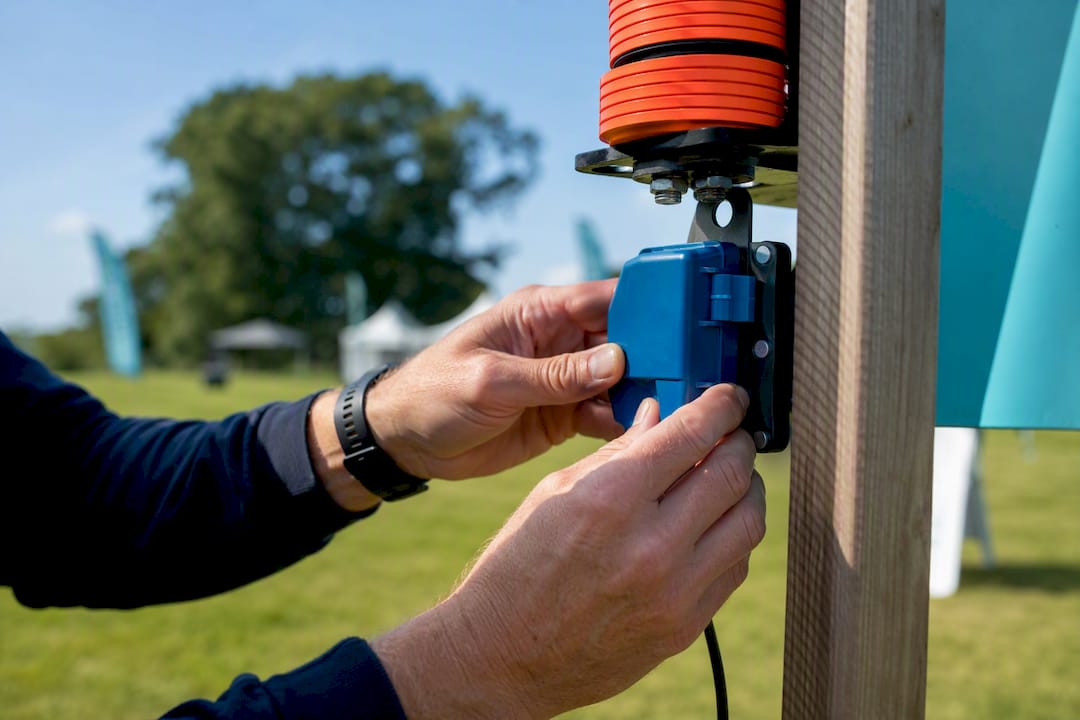
For organisers, the appeal is straightforward. A real-time electronic scoreboard does the job a facilitator would otherwise have to invent on a whiteboard, and it works indoors, which matters when weather or venue constraints rule out anything outdoors.
Three scenarios where this beats a DIY quick game outright:
- A competitive energiser after a long planning day, where teams want something with real stakes, not another trivia round.
- A reward slot at the end of a quarterly meeting, where a facilitated, scored activity feels like an event rather than an add-on.
- A safe, hands-on activity for mixed-experience groups, since no shooting skill is required beforehand and the format suits everyone from teenagers to first-time participants.
Laser Clay packages typically run from fifteen minutes up to a full session depending on group size, with a facilitator managing pacing so organisers aren’t stuck timing rounds themselves.
Common pitfalls in short team sessions and how to avoid them
The most frequent failure isn’t a bad game choice, it’s bad timing enforcement. Facilitators plan a “5-minute” activity, then let it run to nine because nobody wants to interrupt someone mid-story, and that overrun eats into whatever was scheduled next. Set a visible timer and stick to it, even if it feels slightly abrupt.
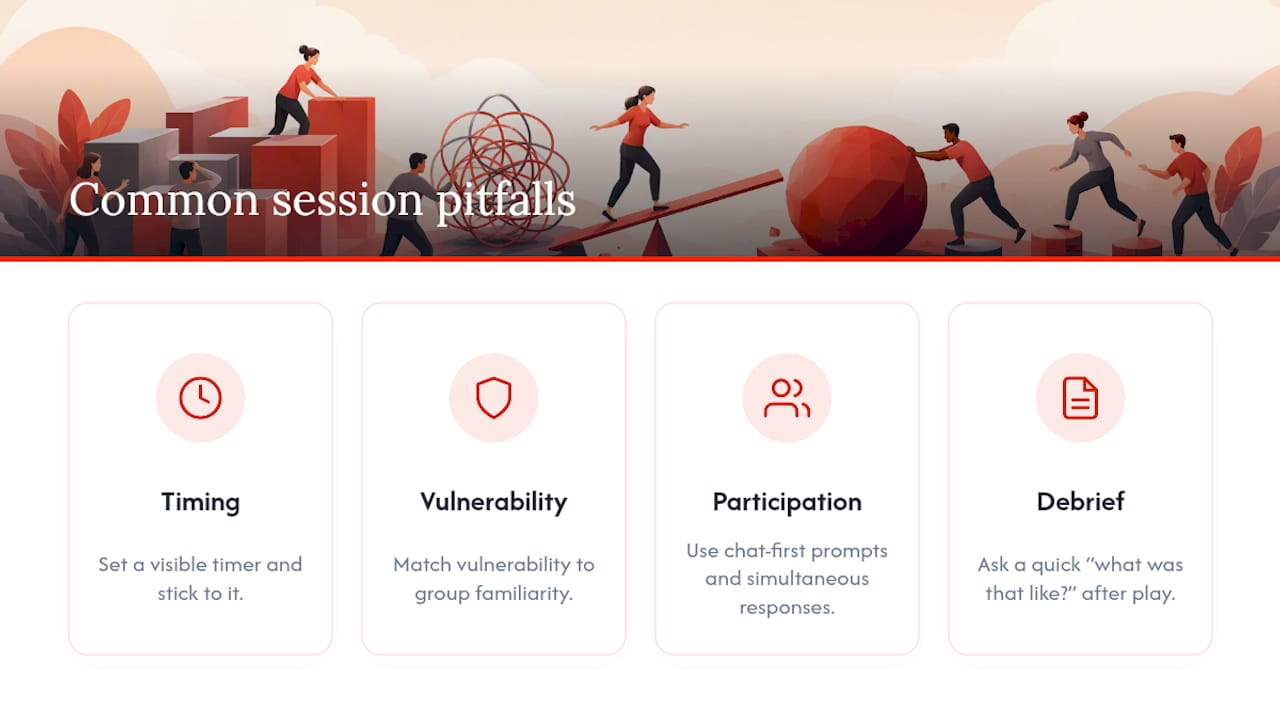
The second pitfall is picking an activity that demands disclosure a tired or newer team isn’t ready for. “Share your biggest failure” in a five-minute slot with people who’ve never met before usually produces silence, not connection. Match the vulnerability level to how well the group already knows each other, not to how much time you have.
A third issue is uneven participation, particularly on hybrid calls where the loudest voice in the room dominates while remote colleagues sit muted and unseen. Chat-first prompts and simultaneous responses fix this more reliably than asking politely for “everyone to have a turn.”
Finally, skipping the debrief entirely wastes the exercise. Even ten seconds of “what was that like?” turns a game into a moment people actually remember, rather than a filler slot they forget by lunchtime.
Measuring whether a short activity actually worked
You don’t need a survey platform to know if a five-minute energiser landed. Watch the room, literally, in the thirty seconds after it ends: does the energy visibly lift, or does everyone go quiet and check their phones? That’s a faster and more honest signal than any post-meeting form.
For a slightly more structured read, track two things over a few weeks: whether meeting attendance or on-time arrival improves once a short activity becomes a regular opener, and whether people start referencing the activity later, unprompted, in unrelated conversations. Callbacks are the clearest sign an exercise built something that outlasted the five minutes it took.
If you’re running the same activity repeatedly, ask one calibration question in your next retro: “Was that useful, fun, both, or neither?” A show of hands takes fifteen seconds and tells you more than a formal engagement score ever will. Track this loosely across a quarter and you’ll notice patterns, certain activities always land with certain teams, and others quietly fall flat no matter how well you run them.
What actually matters when you’re picking a short activity
The advice most guides give, “just try a fun icebreaker,” misses the actual decision that determines whether a short activity works: matching vulnerability level to team familiarity, not matching activity to time slot. Time band matters less than most checklists suggest. A five-minute activity that demands disclosure a new team isn’t ready for will land worse than a well-run fifteen-minute prototyping sprint with strangers who’ve never spoken.
The overrated variable is novelty. Facilitators chase new games assuming staleness is the risk, when the real risk is inconsistent timing enforcement, letting a “quick” activity run long enough to eat the agenda it was meant to protect. A tired, repeated game run on time beats a fresh, exciting one that overruns.
Prioritise the debrief before the game itself. Ten seconds of reflection is what turns an exercise into a memory; skip it, and even the best-chosen activity evaporates by the next meeting. Pick the game second. Get the clock and the closing question right first.
— Joshua
Book a facilitated short session instead of running it yourself
Running your own five-minute energiser costs nothing but your prep time, and that’s exactly right for a quick pulse check before a Monday meeting. But when you want something with real stakes, indoors, with zero setup burden on your side, Laser Clay is the option that removes the DIY effort entirely. A facilitator arrives with equipment, scoring, and a run sheet already sorted, so you get the competitive energy of a proper event without spending your own week organising it.
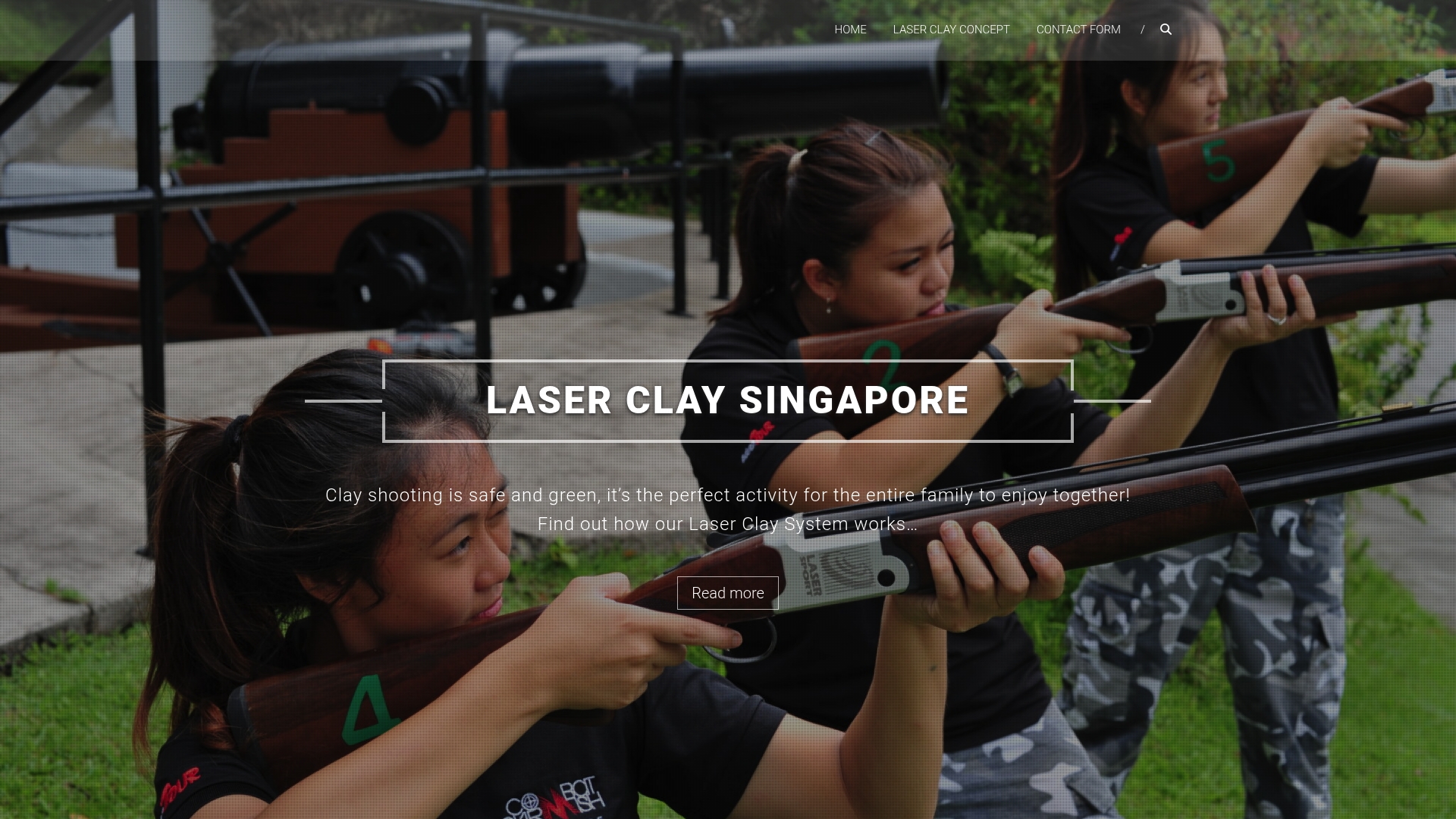
It suits the scenarios a chat-based icebreaker can’t touch: a reward slot after a big push, a safe hands-on activity for a mixed-experience group, or a corporate offsite that needs one memorable hour rather than another trivia round. Packages cover corporate team-building sessions as well as one-off celebrations, with facilitators handling setup at your venue. If a short, scored, fully run activity fits your next agenda better than another DIY game, check availability and get a quote through the Laser Clay booking page.
Sources
- 30 Five-Minute Team-Building Activities | Bryant University
- 5 and 10-minute team-building activities (Quick & fun games) | Surf Office
- 45 team-building games that will bring your team together | Asana
- 7 Team Building Exercises for a 15-Minute Meeting Slot | QuestWorks
FAQ
What are some good short activities for small groups?
Blind drawing, desert island team, and the mini-marshmallow challenge all work well for groups of three to six, since each relies on close collaboration rather than a crowd.
What are some good 10-minute virtual team-building activities?
Blind drawing on a shared whiteboard, a two-minute pitch swap in breakout pairs, or a synced chat-based pulse check all run cleanly on video calls with no travel time lost.
What can we do during team meetings to build connection quickly?
A one-word pulse check or a 72-second sharing round at the start of a meeting builds quick connection without derailing the agenda, since both fit inside five minutes.
How long should a short team activity actually take?
Anywhere from under five minutes for an energiser to fifteen minutes for a collaborative exercise with visible output, depending on whether you need a quick lift or an actual working session.
Is a facilitated option like Laser Clay worth it for a short session?
For an indoor, scored, competitive session where you want zero setup burden and a genuine sense of stakes, a facilitated format such as Laser Clay suits organisers better than assembling a DIY game from scratch.
Recommended
- Indoor team activities that need no experience at all | Laser Clay Singapore
- Corporate Team Building Outdoor Prog| Laser Clay Singapore
- Laser clay shooting: the best in-person activity for remote teams | Laser Clay Singapore
- Portable event activities: the planner’s shortlist that works | Laser Clay Singapore