For a safe, eco‑friendly, hands‑on competitive shooting experience, choose a laser clay game‑show team event. When people search for game show team building, they usually mean fast‑paced, scoreboard‑driven competitive activities, and that is exactly what laser clay shooting delivers. This article treats the keyword that way throughout: not quiz‑night trivia, but a live, physical shooting challenge with real‑time scoring.
The verdict is straightforward. Laser clay shooting suits corporate team building because it removes the two things that normally stop planners booking live shooting: safety risk and environmental impact. Laser Clay supplies the packages built specifically for this.
- No live ammunition, no recoil, no spent shot to clear up
- Beginner friendly, with instant electronic feedback on every shot
- A live scoreboard that turns quiet colleagues into vocal spectators within minutes
TL;DR:
- Laser clay shooting is safe and environmentally friendly because it uses infrared lasers and reusable reflective targets, eliminating lead waste and recoil.
- The activity suits groups of eight to sixty participants, with difficulty adjusted on the fly through target distance and exposure time.
- A typical 60 to 90-minute session includes a safety briefing, practice round, three competitive rounds, and a final shoot-off, making it suitable for most schedules.
- Booking requires confirming venue space, facilitator ratio, insurance, and cancellation policies upfront to avoid surprises and ensure smooth coordination.
- The activity encourages coaching and collaboration early on, with live scoring revealing weaknesses instantly and fostering engagement across all seniority levels.
Table of Contents
- What is game show team building with laser clay?
- How do you plan the session timeline?
- Booking checklist: the questions to ask before you hire
- Why is laser clay safer and greener than live shooting?
- What does a corporate package typically cost?
- How does the booking process actually work?
- What do successful laser clay events actually look like?
- What planners consistently underestimate about this activity
- Ready to book your laser clay session?
- Key Takeaways
- FAQ
What is game show team building with laser clay?
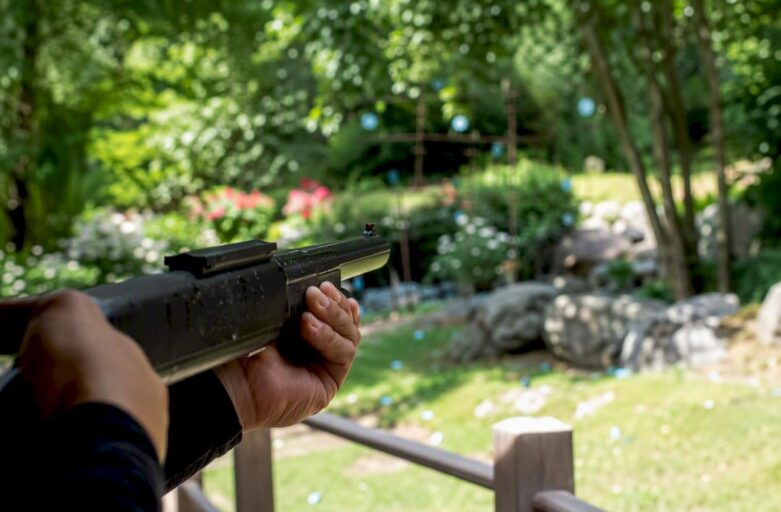
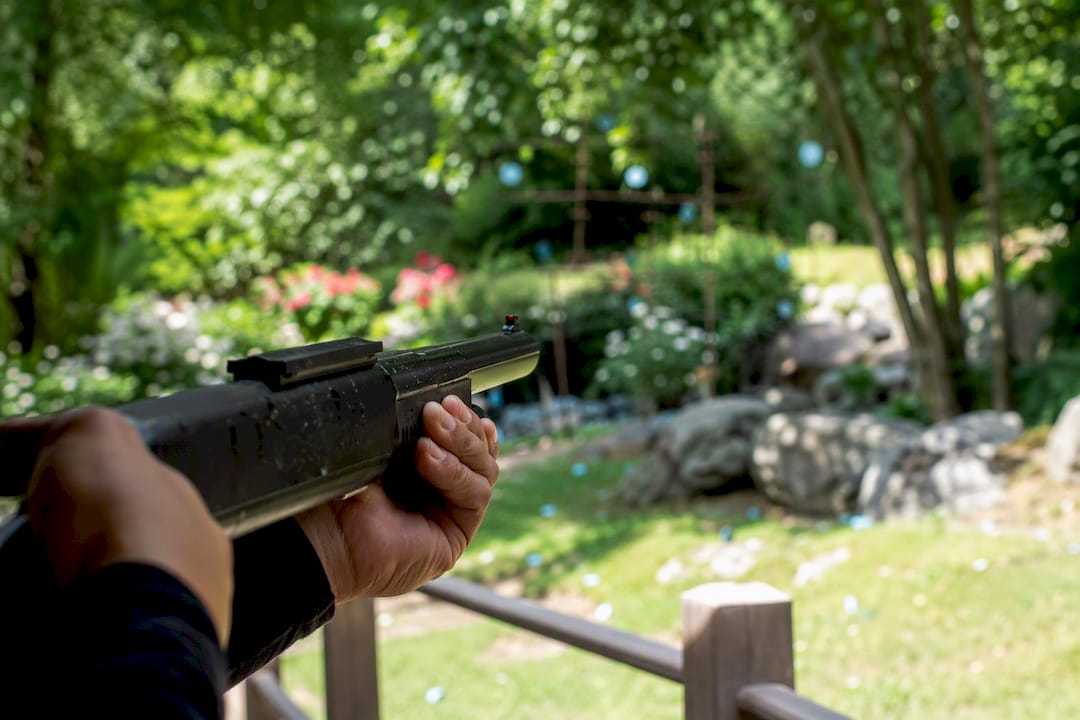
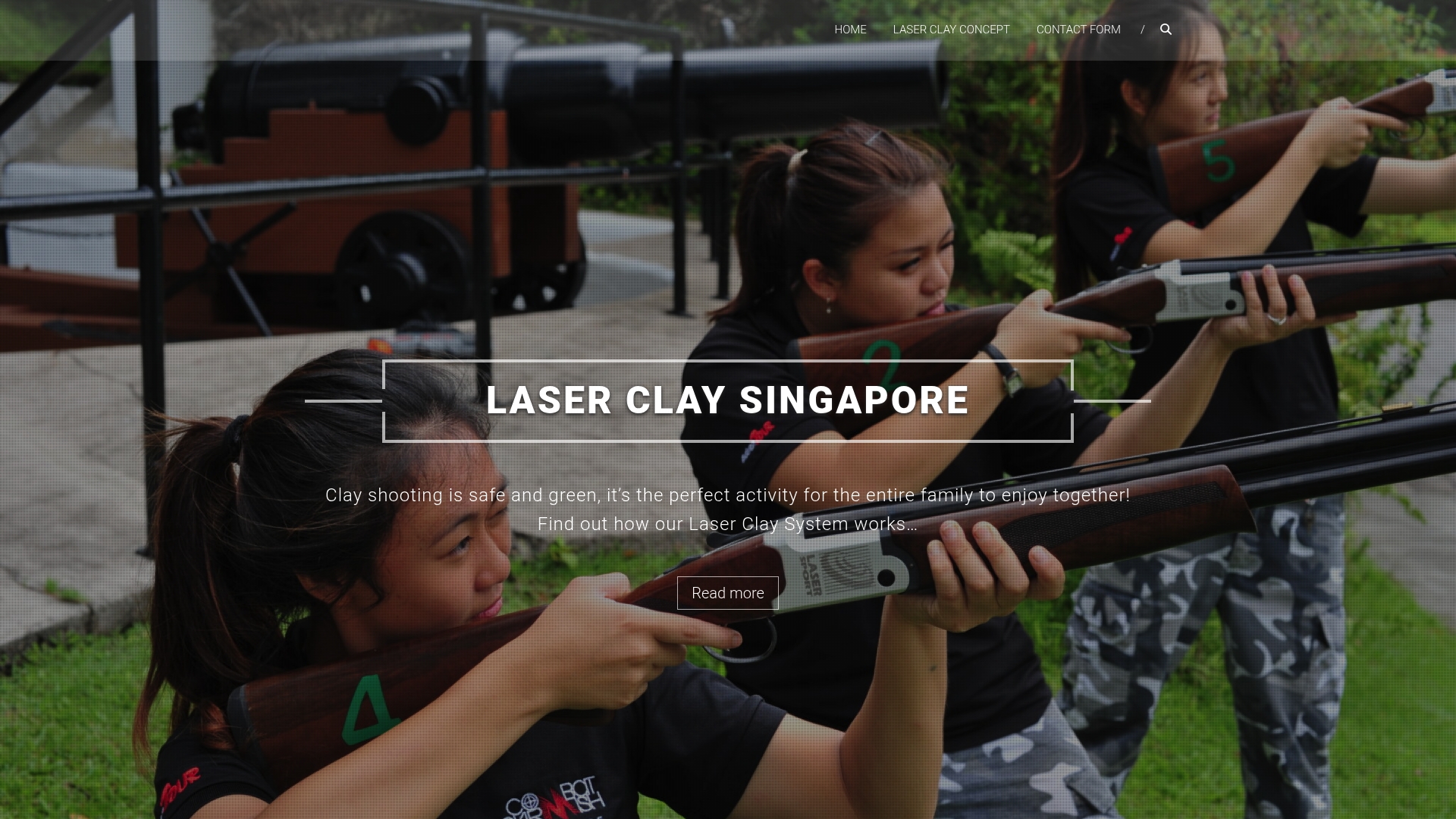
A laser clay session swaps live ammunition for infrared‑emitting shotguns and reusable reflective clays. The guns are converted or deactivated firearms fitted with a laser emitter, so they look and feel like the real thing without firing a projectile. Every hit registers instantly on a digital scoreboard, and providers usually add optional sound effects so the crack of a shot still lands with theatre, even indoors.
The game‑show framing comes from how the rounds are structured, not the equipment. Four formats cover most corporate briefs:
- Speed shoot — fastest clean hits against the clock, good for pure adrenaline.
- Accuracy rounds — fewer targets, more precision, rewards focus over speed.
- Team relay — participants rotate through stations, so the whole group’s combined score matters more than any individual.
- Shoot‑off finals — a knockout decider between the top scorers, which is where most of the photos happen.
Relay formats build collaboration because no single person can carry the team, while speed shoots reward instinct and reflexes. Mixing both into one session gives HR a genuine spread of behavioural signals to point to afterwards.
Groups of eight to sixty are common, and difficulty is adjustable on the fly through target distance and exposure time. Nobody needs shooting experience.
Pro Tip: Run the accuracy round first while attention is sharp, then finish on the speed shoot. Energy naturally builds toward the loudest, most photogenic part of the session.
How do you plan the session timeline?
A well‑paced laser clay activation runs comfortably inside a single working session. Providers commonly recommend 60 to 90 minutes as the sweet spot for corporate groups, long enough for genuine competition, short enough to fit either side of lunch.
- Arrival and safety briefing (10 minutes) — facilitator covers handling, stance and scoring.
- Practice round (10 minutes) — everyone gets unscored shots to find their rhythm.
- Three competitive rounds (30 to 40 minutes) — rotating through speed, accuracy and relay formats.
- Shoot‑off final and awards (10 to 15 minutes) — top scorers face off, then the leaderboard decides medals or bragging rights.
Staffing splits cleanly between what the provider brings and what the venue supplies.
- Laser Clay’s side: facilitator, laser guns, reusable clays and the electronic scoreboard.
- Venue’s side: enough open space, power access if the setup needs it, and shelter if running outdoors.
Setup typically takes 30 to 45 minutes before guests arrive, and breakdown is quicker, usually under 30 minutes. The system works both indoors and outdoors, which matters if your venue has no reliable outdoor booking.
Booking checklist: the questions to ask before you hire
The quality of a laser clay event depends on decisions made before anyone picks up a gun. Ask these questions when you request quotes, and treat vague answers as a warning sign.
On the venue:
- What are the minimum space dimensions, and does the provider adapt the layout for tighter or indoor venues?
- Does the ground surface matter, and is there a backup plan for wet weather?
- Is vehicle access needed for equipment drop‑off, and how far can guns be carried manually?
On your group:
- What is the minimum and maximum headcount the session comfortably handles?
- Are there mobility or accessibility needs the facilitator should plan seating or station layout around?
- Is there a minimum age, particularly relevant for family days that blend with corporate events?
On operations:
- What is the facilitator‑to‑participant ratio, and does it change for larger groups?
- Is public liability insurance in place, and can the provider share proof on request?
- What happens if you need to reschedule, and is there a first‑aid protocol on site?
Pro Tip: Get the facilitator ratio and insurance confirmation in writing before comparing final prices. A slightly cheaper quote with a thin facilitator ratio usually costs more in slowed‑down rotations on the day.
Why is laser clay safer and greener than live shooting?
Laser clay removes the two variables that make live clay shooting a hard sell to risk‑averse HR teams: ammunition and recoil. There is nothing to fire beyond an infrared beam, nothing to eject, and no possibility of a stray pellet. Facilitators control sound levels and set exposure limits per round, so even a nervous first‑timer can join without hesitation.
The absence of recoil and the instant electronic feedback on every shot are what make laser clay genuinely inclusive rather than technically inclusive — a participant with no shooting background can compete on equal terms with someone who has fired a hundred rounds before.
The environmental case is just as concrete. Traditional clay shooting leaves behind spent shot and broken clay fragments, much of it containing lead. Laser systems use reusable reflective targets and rechargeable electronics, so a full day of competitive shooting produces effectively no consumable waste.
Accessibility extends further than most planners expect. Stations can be set at seated height, exposure timing can be lengthened for slower reaction speeds, and scoring rewards accuracy over brute grip strength, which levels the field between physically different participants in a way few other physical team activities manage.
What does a corporate package typically cost?
Pricing for laser clay events tends to follow one of three shapes: per person, per hour, or a flat package fee for the whole session. Which model suits you depends more on group size than anything else. Per‑person pricing works well for larger, predictable headcounts; a flat package often suits smaller groups or repeat corporate bookings where the scope is well understood in advance.
Several factors move the number up or down:
- Travel distance to your venue
- Number of guns and facilitators needed for your group size
- Session length beyond the standard window
- Optional extras like trophies or branded backdrops for photos
A standard corporate quote should include the facilitator, all equipment, the electronic scoreboard, setup and breakdown, and basic shelter if running outdoors. Anything beyond that, such as bespoke branding or an extended finale format, is usually an optional add‑on rather than a hidden cost.
Watch for three red flags when comparing quotes: travel fees that appear only after you have committed, setup charges quoted separately from the headline price, and participant caps that are vague rather than a firm number. A transparent provider states all three upfront.
How does the booking process actually work?
Booking a laser clay session follows a predictable path, and knowing the stages helps you set internal deadlines with confidence. It typically starts with an enquiry, either through a contact form or a direct call, where you share your headcount, preferred date, and venue type.
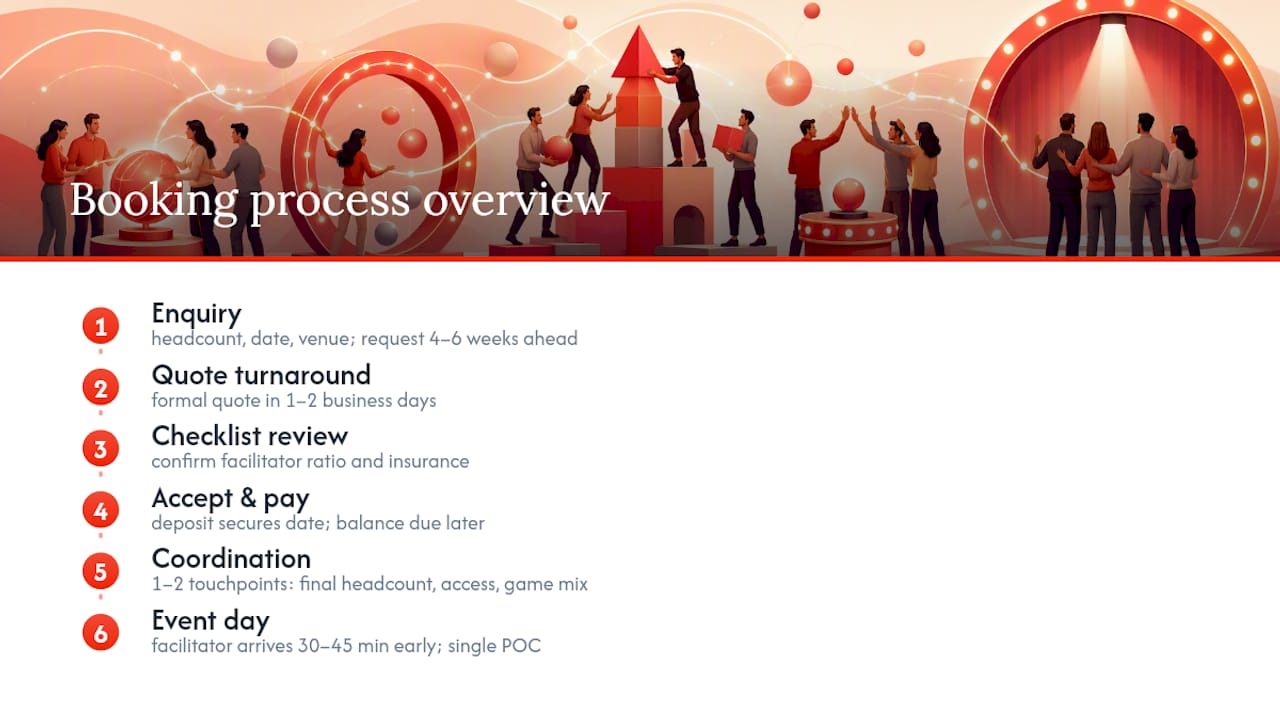
From there, most providers turn around a formal quote within one to two business days, covering the package inclusions, pricing model, and any venue‑specific notes flagged during the enquiry. This is the point to run through your booking checklist questions, particularly facilitator ratio and insurance, before confirming.
Once you accept the quote, a deposit typically secures the date, with the balance due closer to the event. Between booking and event day, expect one or two coordination touchpoints: confirming final headcount, checking venue access details, and agreeing the exact game‑mode mix for your session.
On the day itself, the facilitator usually arrives 30 to 45 minutes early to set up the guns, scoreboard, and station layout, leaving enough buffer to troubleshoot before guests arrive. For corporate bookings with multiple stakeholders, it is worth nominating one point of contact on your side to handle last‑minute changes, since headcount shifts and timing tweaks are common in the week before a corporate event.
The lead time needed varies by season. Popular corporate dates, particularly around year‑end functions, book out faster, so requesting a quote four to six weeks ahead gives you the most flexibility on date and format. Smaller, more flexible bookings can often be arranged with far less notice.
What do successful laser clay events actually look like?
The pattern across successful corporate laser clay sessions is consistent: the moment the scoreboard goes live, competitiveness spikes, and quieter participants often outperform expectations because the format rewards steady accuracy over bravado. Event planners repeatedly note that mixed‑seniority groups flatten out fast, since a junior team member who shoots well outscores a director within the first round, and nobody treats that as unusual once the scoring is transparent.
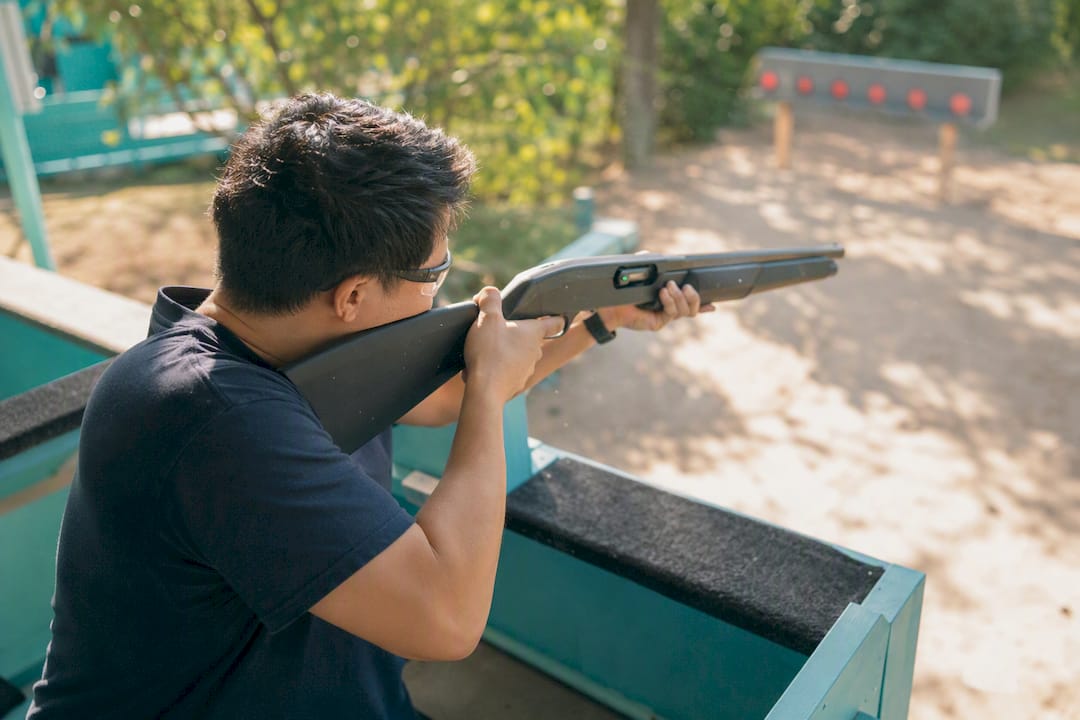
Corporate bookings that combine several game modes tend to produce the strongest engagement, because the relay format forces collaboration while the shoot‑off final gives the group a shared moment to rally around. Planners running laser clay alongside carnivals, camps, or multi‑activity days find it works as a standalone highlight rather than needing to be paired with something louder, largely because the live leaderboard already does the work of building anticipation.
For planners looking to structure other timed, scored rounds within a broader event, resources on building team skills through structured play offer useful ideas for pacing rounds and designing scoring systems that keep engagement high across a full day.
What planners consistently underestimate about this activity
Most planners expect laser clay to work as a novelty icebreaker. What actually happens is more useful: teams start coaching each other within the first practice round, because the scoreboard makes weaknesses visible immediately rather than after the fact. That live feedback loop is the real value, not the noise or the theatre of the shotguns.
I would treat facilitator quality, not equipment specification, as the deciding factor when comparing providers. Confirm event‑specific credentials and ask for any safety or environmental data a provider can share in writing. Laser Clay’s own packaging of facilitator support alongside the equipment is what makes it a dependable choice for corporate activations rather than a rented gadget with nobody to run it properly.
— Joshua
Ready to book your laser clay session?
Laser Clay is built specifically for corporate planners who need a hands‑on, competitive activity without the liability headaches of live ammunition or the clean‑up of spent shot. Where a traditional live clay range asks you to manage insurance, ammunition licensing and a dedicated shooting ground, a laser clay booking hands you a facilitator‑run, plug‑and‑play activation that sets up on almost any reasonably sized indoor or outdoor space.
A standard corporate booking includes the facilitator, converted laser shotguns, reusable clays, the electronic scoreboard, and setup and breakdown. If your group has a specific headcount, theme, or a bespoke shoot‑off format in mind, the team can tailor the package rather than forcing you into a fixed template. Browse session formats and sample timings to see how a 60 to 90 minute run‑sheet fits your day, or head straight to the corporate team building page to request a quote for your next event.
Key Takeaways
Laser clay shooting delivers a safe, eco‑friendly, scoreboard‑driven competitive experience that outperforms generic icebreakers on both inclusivity and measurable engagement.
| Point | Details |
|---|---|
| Definition matters | This keyword refers to laser clay shooting events, not trivia‑style game shows. |
| Format drives outcomes | Mix speed, accuracy, relay, and shoot‑off rounds to hit different team objectives in one 60 to 90 minute session. |
| Checklist before booking | Confirm venue dimensions, facilitator ratio, insurance, and cancellation terms before comparing prices. |
| Safety and sustainability are real differentiators | No live ammunition, no recoil, and reusable clays remove the two biggest objections HR teams raise. |
| Laser Clay is the recommended supplier | Its corporate packages bundle facilitator, equipment, and scoreboard, with customisation available for group size and theme. |
FAQ
What is game show team building in this context?
It refers to laser clay shooting events structured as timed, scored rounds with a live leaderboard, not trivia or quiz‑style game shows.
Is laser clay shooting safe for beginners?
Yes. There is no live ammunition or recoil, and facilitators adjust difficulty so first‑timers compete confidently alongside experienced participants.
How many people can join a laser clay session?
Most corporate sessions comfortably run for groups of eight to sixty, with the facilitator adjusting station layout and rotation speed for your headcount.
Does Laser Clay work indoors?
Yes, laser clay adapts to indoor venues as well as outdoor spaces, and Laser Clay advises on layout for tighter footprints during the quote stage.
What is included in a standard corporate package?
A typical package includes the facilitator, converted laser shotguns, reusable clays, the electronic scoreboard, and setup and breakdown, with optional extras like trophies available on request.
How far in advance should we book?
Four to six weeks ahead is safest for popular corporate dates, though smaller or more flexible bookings can often be arranged with shorter notice.
Recommended
- Laser clay team building explained for event planners | Laser Clay Singapore
- Laser clay shooting: the best in-person activity for remote teams | Laser Clay Singapore
- Benefits of laser shooting team events explained | Laser Clay Singapore
- Why laser clay beats traditional sports days | Laser Clay Singapore