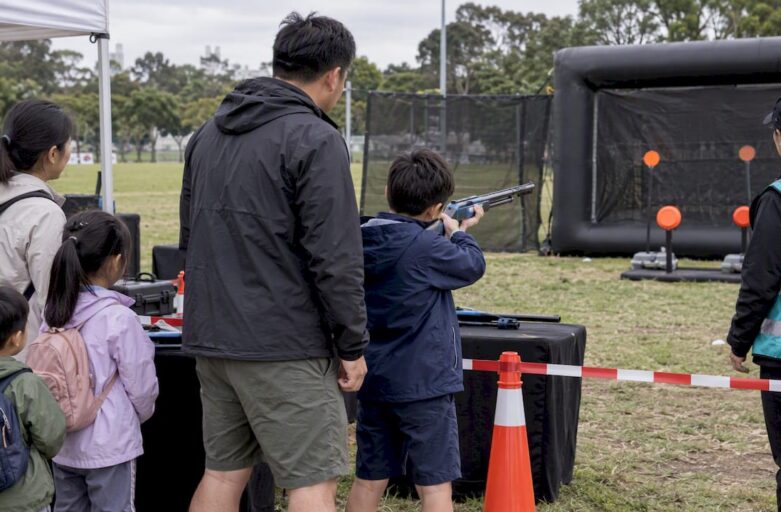
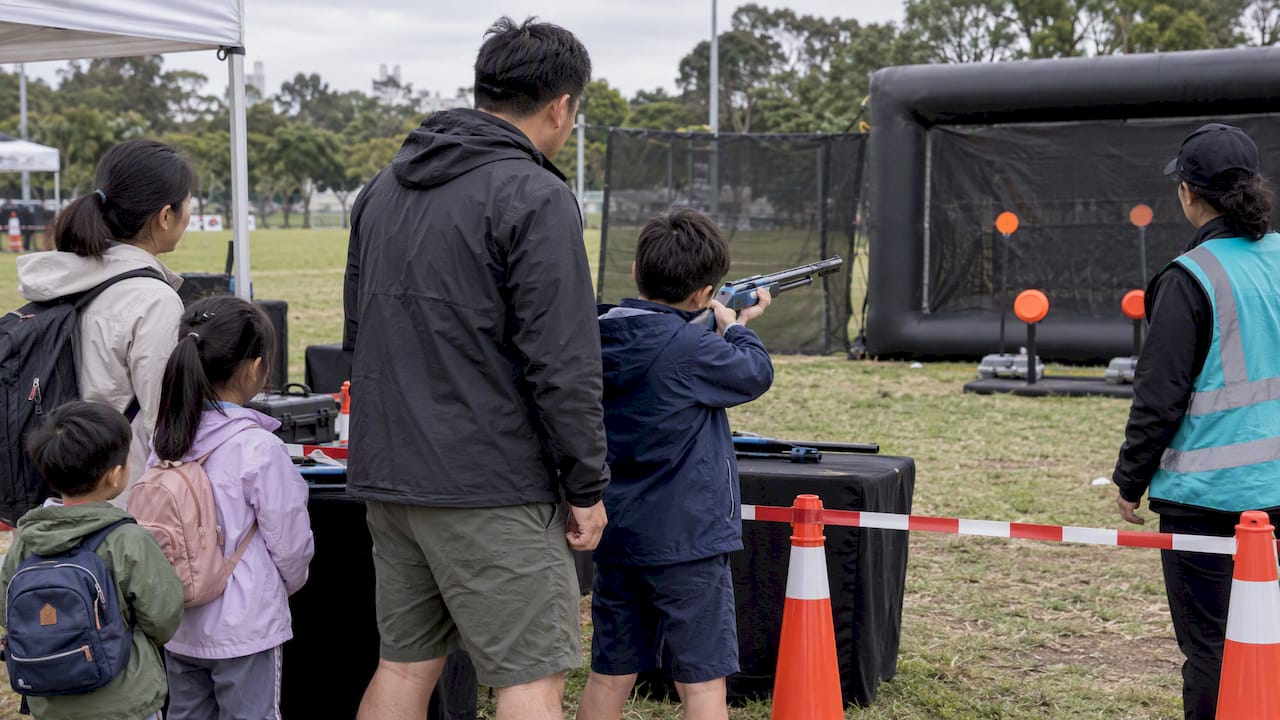
Pick a headline facilitated game, add a handful of carnival stalls, and leave room for free-play zones: that mix covers high energy, quick turnover, and downtime in one programme. We recommend building around a facilitated option such as Laser Clay for the competitive centrepiece, then checking permits, a wet-weather plan, and age spread before you book anything else.
TL;DR:
- Combining facilitated games like laser clay shooting with carnival stalls provides a balanced mix of energy, downtime, and spectator engagement.
- Events require careful planning of space, staffing, and permits, especially for inflatables, fire safety, and rain contingency measures.
- Activities should be deliberately selected and staggered to avoid over-programming, with flexible options and clear zones for different age groups.
- Budgeting scales from basic stalls and scavenger hunts to full-day Mandai attractions, with booking timelines of 2 to 6 weeks for inflatables and 4 weeks for attractions.
- Incorporating family-team formats and shared activities fosters bonding and participation across all ages, supporting long-term loyalty and engagement.
Table of Contents
- Which game formats fit which objective
- Twelve family day activities that work on the ground in Singapore
- Permits and safety checks before you confirm a venue
- Making the day work for toddlers through to seniors
- What a realistic budget and timeline looks like
- Why a facilitated shooting game earns its place on the programme
- What I’d change about most family day programmes
- Booking Laser Clay for your next family day
- FAQ
- Sources
Which game formats fit which objective
The fastest way to build a programme is to work backwards from what you want each zone to do, not from a list of activities you like.
- Carnival stalls (ring toss, basketball shootout) suit every age and turn families over quickly, though queueing can build up fast if you under-staff them.
- Inflatable obstacle courses or bouncy castles deliver high energy but need open ground, secure anchoring, and clear perimeter space.
- Craft and keepsake stations stay inclusive and low-noise, and they shelter easily under tentage if rain hits.
- A facilitated headline game, such as Laser Clay, gives you a spectator-friendly, competitive centrepiece with its own staffing built in.
- Scavenger hunts or an Amazing Race format need minimal kit and work well across mixed-age families at a single venue.
- Animal or park experiences, including Mandai’s family-focused attractions, work as a full-day alternative with programming already built around families.
- Soft-play and toddler zones are non-negotiable once you have employees bringing young children.
Treat this as a shortlist, not a checklist: three or four of these, chosen deliberately, outperform a crowded programme with no breathing room.
Twelve family day activities that work on the ground in Singapore
Each of these has been run successfully at Singapore venues, indoor and outdoor. The details below cover who it suits, how much space it needs, and what to check before you book.
-
Ring toss and basketball shootout stalls. Classic carnival games that need almost no explanation. Suitable for all ages, 2 to 4 players per round, roughly 4 to 6 square metres per stall. One attendant per stall keeps queues moving; run these near the entrance so families warm up early.
-
Inflatable obstacle course. High-energy and popular with primary-school-age children and teens. Needs at least 10 by 15 metres of flat, dry ground and one marshal per 15 participants. Anchoring and a clear perimeter of 1.5 to 2 metres matter most here, since this is exactly the kind of structure SCDF’s temporary event rules govern.
-
Craft and keepsake stations (tote-bag painting, photo booths). Works for toddlers through to grandparents, low noise, easy to run indoors or under tentage. Budget 3 to 4 square metres per station and one facilitator per two tables.
-
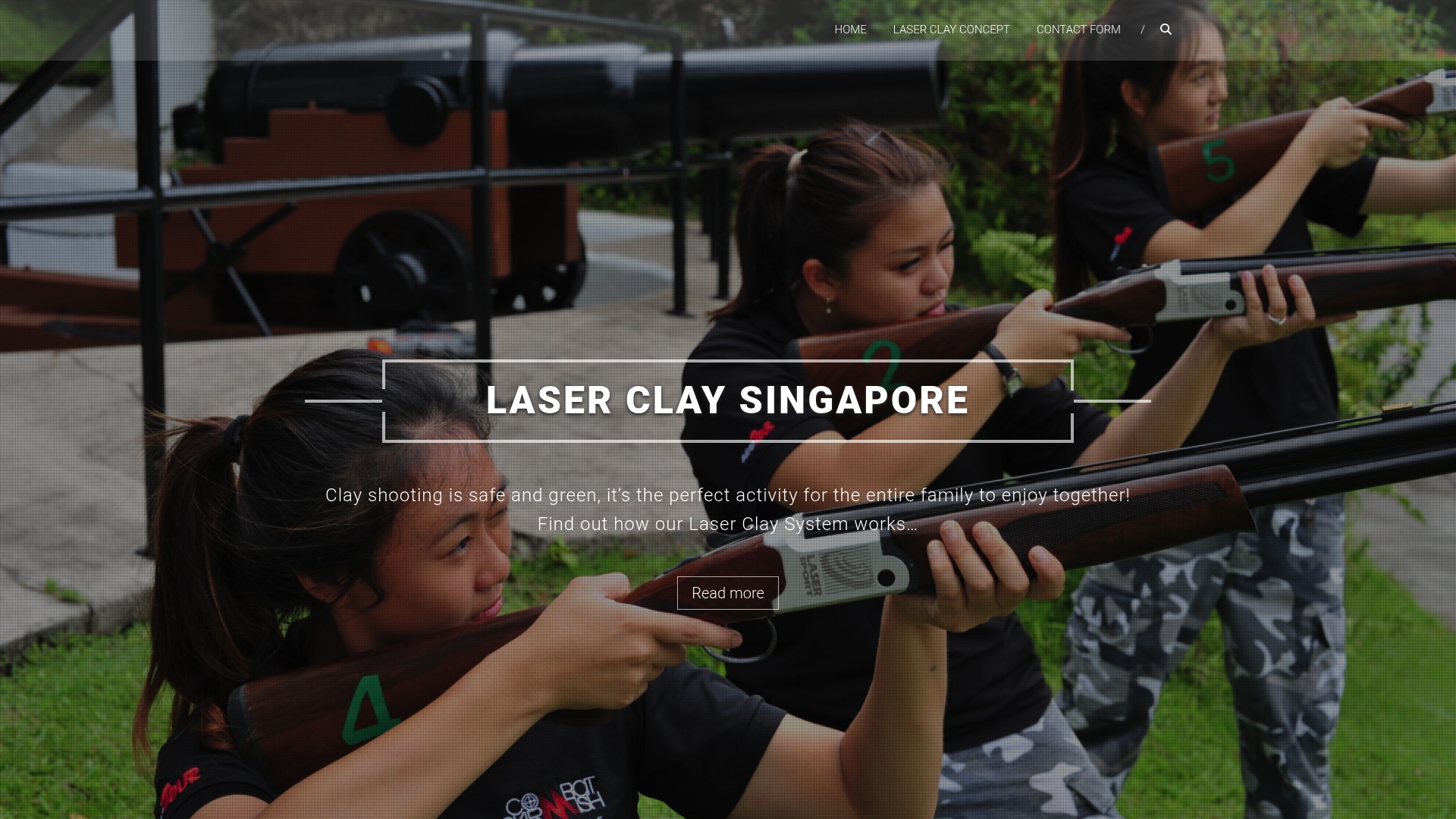
Laser Clay shooting range. A fully facilitated, spectator-friendly competitive format suitable from age 10 upward, with sound-simulated shotguns and reusable clay targets instead of live ammunition. A typical lane needs around 6 by 10 metres, with a recommended ratio of one operator and one marshal per 10 players; indoor halls and open fields both work, and it runs well as a late-morning headline slot when families have had time to settle in.
-
Scavenger hunt or Amazing Race. Minimal kit, scalable to any venue size, and good at mixing ages within a family team. Groups of 4 to 6 work best, with one roaming marshal per three to four teams checking stations.
-
Mandai family attractions. Curiosity Cove and related Mandai experiences offer sheltered, family-focused play that works as a full-day-out option rather than an on-site activity, useful when your family day doubles as an outing booked through Mandai’s own guide.
-
Soft-play and toddler zone. Essential once under-fives are in the mix. Keep this away from loud attractions, with one dedicated attendant per eight toddlers and seating nearby for parents.
-
Talent show or lucky draw stage. A scheduled highlight that gives the day structure. Needs a PA system and roughly 20 minutes per segment, slotted between free-play windows rather than back to back.
-
Face painting and balloon sculpting. Low footprint, high appeal for children aged 3 to 10. One artist can serve roughly 15 to 20 children per hour.
-
Family relay games (sack race, three-legged race, tug of war). Needs an open lawn of at least 15 by 10 metres and a referee per heat; stagger age brackets so toddlers and teens aren’t racing in the same heat.
-
Food and beverage zone with dietary-sensitive options. Not a game, but it anchors the day. Place it away from inflatables and high-traffic stalls, with queueing space of at least 3 metres clear in front of each counter.
-
Photo booth with props. A reliable low-effort filler that families return to between other activities. One booth per 100 attendees keeps queues short.
Pro tip: Stagger your headline facilitated game into two or three shorter sessions rather than one long block, so families aren’t choosing between it and everything else happening at the same time.
Permits and safety checks before you confirm a venue
Before any booking is locked in, run the programme past Singapore’s fire-safety rules for temporary events, because a missed permit can shut an activity down on the day.
- Confirm tentage and booth dimensions, 1.2 metre clear passageways, and a 1.5 metre setback from fire provisions, all set out in SCDF’s outdoor event fire-safety conditions.
- Check extinguisher placement and generator siting against the same guidance before any structure goes up.
- Confirm whether your event needs a full COReNet plan submission and Fire Safety Certificate (typically for multi-storey or permanent structures) or sits under the simpler Temporary Change of Use Permit (TCOUP) that covers most one-day carnivals and tentage events.
- Book a wet-weather venue in advance and adopt a two-hour rain rule: if rain is forecast within two hours of your start time, trigger the move indoors rather than waiting it out.
- Set staffing ratios before the day: one marshal per 15 to 20 attendees for general supervision, tighter ratios for inflatables and facilitated games, and a named onsite emergency contact who knows the evacuation route.
One fact worth building your timeline around: SID and Gallup’s 2026 workplace report found that only 14% of employees in Singapore feel engaged at work, which is a strong argument for treating a well-run family day as more than a nice-to-have.
Making the day work for toddlers through to seniors
A single programme rarely suits a three-year-old and a seventy-year-old equally, so design for the gap rather than ignoring it.
- Split the venue into quiet, active, and craft zones with clear sightlines between them, so families can move without crossing through a bottleneck.
- Shorten rounds and lower scoring thresholds for younger players, and offer a family-team format so a grandparent and a child can play together rather than against each other.
- Provide shade, seating, hydration points, and dietary-sensitive food options throughout, not just at one counter.
- Mix activities deliberately: toddler-friendly soft play and bubbles, primary-school carnival games, and teen-focused challenges running at the same time in different zones, rather than one programme trying to serve everyone at once.
Pro tip: Schedule the loudest, highest-energy attraction as far from the toddler and seated-senior zones as your venue layout allows.
What a realistic budget and timeline looks like
Costs scale with scope more than with venue, so it helps to think in bands rather than a single number.
- Low band: carnival stalls, craft stations, and a scavenger hunt, with setup, basic staffing, and teardown included.
- Mid band: adds an inflatable obstacle course and a facilitated headline game, with insurance and a dedicated event coordinator.
- Premium band: a full-day Mandai outing or multi-zone carnival with entertainment staging, photography, and extended F&B.
- Book inflatables and carnival stalls 2 to 6 weeks out, Mandai attraction slots at least 4 weeks ahead, and a facilitated headline game anywhere from 2 to 8 weeks depending on scale.
- Request from every vendor: proof of public liability insurance, a written risk assessment, a power and site plan, staff identification checks, and clear cancellation and wet-weather terms.
Catering deserves its own line item: a planner’s guide to event food logistics is worth a read before you fix the F&B zone’s footprint and timing.
Why a facilitated shooting game earns its place on the programme
A facilitated game solves a problem carnival stalls can’t: it gives the day a competitive centrepiece with its own scoreboard, its own staff, and a natural rhythm of heats that families can watch as well as play. Laser clay shooting runs on sound-simulated shotguns and reusable clay targets rather than live ammunition, which keeps noise down and removes the lead and environmental concerns that come with traditional clay shooting.
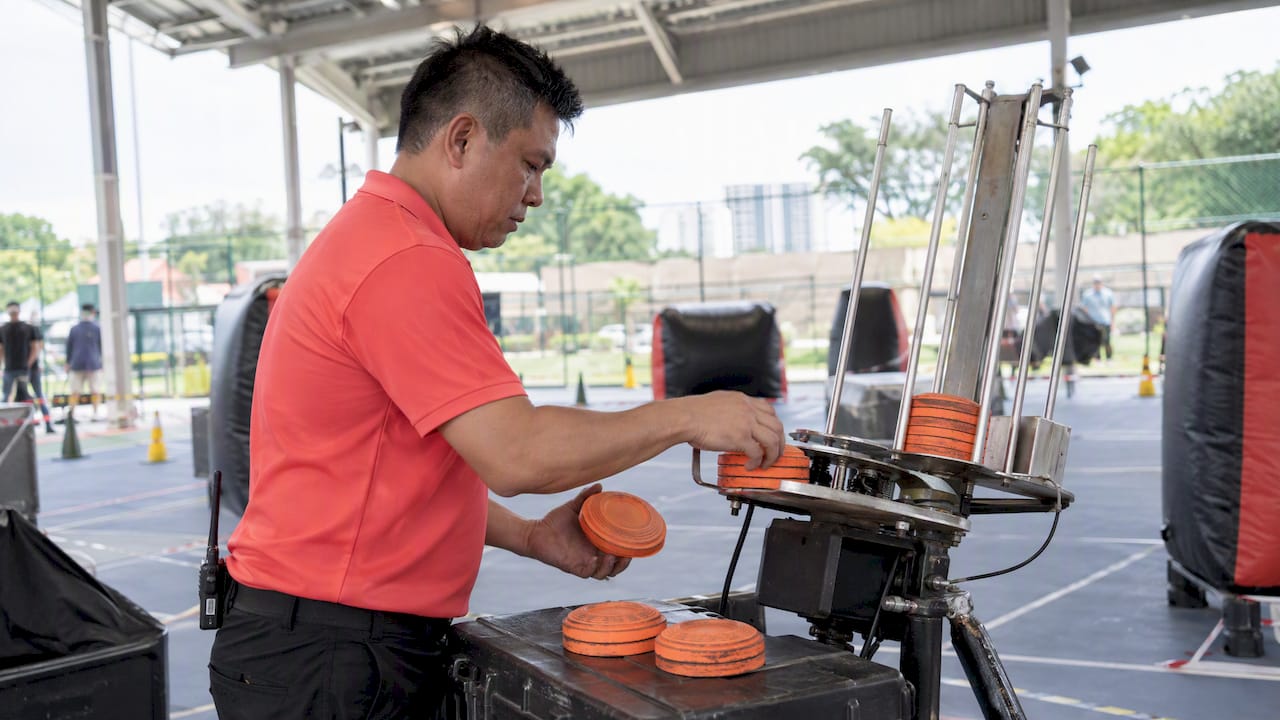
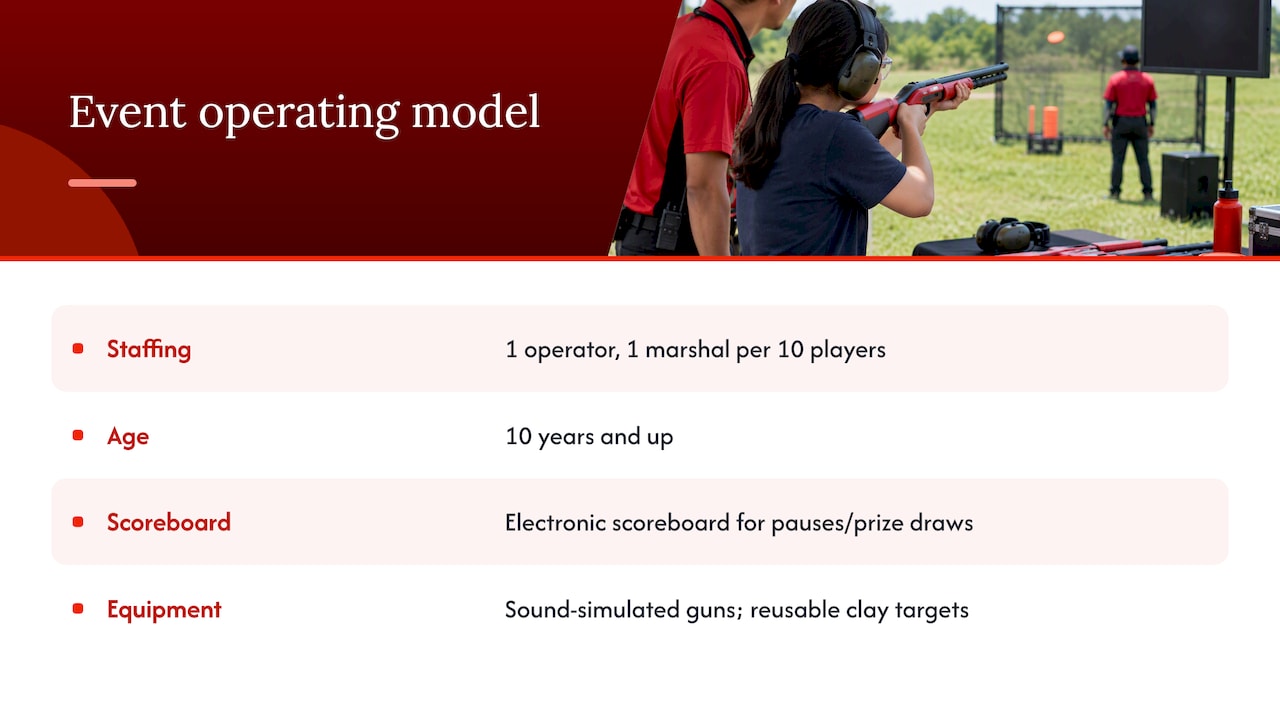
For planners, the practical draw is the staffing model: one operator and one marshal per 10 players, which keeps queues predictable even at a large event. The electronic scoreboard also gives you a built-in reason to pause the programme for an announcement or a prize draw, which is exactly the kind of structured break that keeps a long family day from feeling shapeless. It’s suited to players aged 10 and up, which makes it a natural fit alongside toddler and soft-play zones rather than competing with them for the same age group.
What I’d change about most family day programmes
The most common mistake is over-programming: every slot filled, no room to wander, and families exhausted by lunchtime. Build in free-roam time deliberately.
The second is a thin wet-weather plan. Book a backup hall before you confirm the outdoor site, not after the forecast turns.
The third is underestimating queues. Stagger your programme and add a couple of fast-turn stalls near any attraction that draws a crowd.
Test one facilitated game properly and keep everything else flexible: that combination has done more for family day reviews than any amount of extra décor.
— Joshua
Booking Laser Clay for your next family day
We run three ways to bring laser clay to a Singapore family day: the Corporate Laser Clay Package at 69 SGD one-off per person for a fully facilitated session, a birthday party package from 49 SGD one-off per person if your family day runs alongside a smaller celebration, and System Rental at 500 to 800 SGD per hour if you’d rather bring your own facilitators and run the equipment yourselves.
Whichever route fits your event, the next steps are the same: send us your site plan so we can confirm lane dimensions, agree staffing numbers against the one operator and one marshal per 10 players guideline, and sign off the service agreement before the day. Lead times run from two to eight weeks depending on scale, so it’s worth getting your site plan over to us early. Reach out through our corporate booking page to check availability for your date.
FAQ
What are some creative corporate event ideas for Singapore?
A strong Singapore family day usually pairs one facilitated headline activity, such as laser clay shooting, with carnival stalls, craft stations, and a free-play zone so families can choose their own pace. Adding a full-day option like Mandai’s family attractions works well when the event is meant to double as an outing rather than an on-site programme.
How to celebrate family day in office?
An in-office family day works best as a scaled-down version of an outdoor event: craft stations, a small carnival corner, and a facilitated activity that doesn’t need much floor space. Keep rounds short and stagger them so the office doesn’t feel crowded at any one time.
What games do you play with your family members?
Family-friendly formats that work across ages include carnival stalls like ring toss and basketball shootout, scavenger hunts that mix toddlers through to grandparents on one team, and facilitated games such as laser clay shooting for players aged 10 and up. Soft-play zones cover the youngest children while the rest of the family takes part elsewhere.
What is a good bonding activity?
Activities that put families on the same team, rather than against each other, tend to build the strongest connection, which is why family-team formats and shared scavenger hunts work well. Research into employer-run family initiatives has found that welcoming parents and family members into workplace events builds long-term loyalty and turns employees into family brand ambassadors.
Sources
- “Bring in your parents day”: building inclusion and engagement through a cross-generational family-friendly workplace initiative
- Outdoor event — Temporary Change of Use Permit (TCOU) fire safety conditions
- Mandai Wildlife Reserve family guide