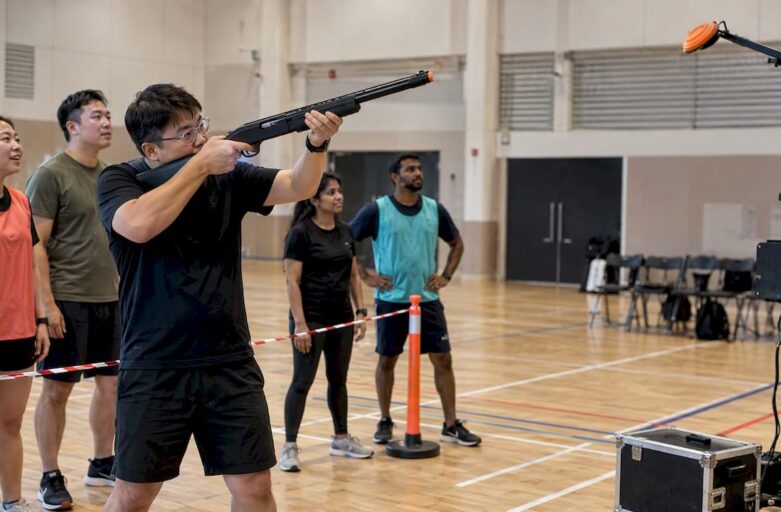
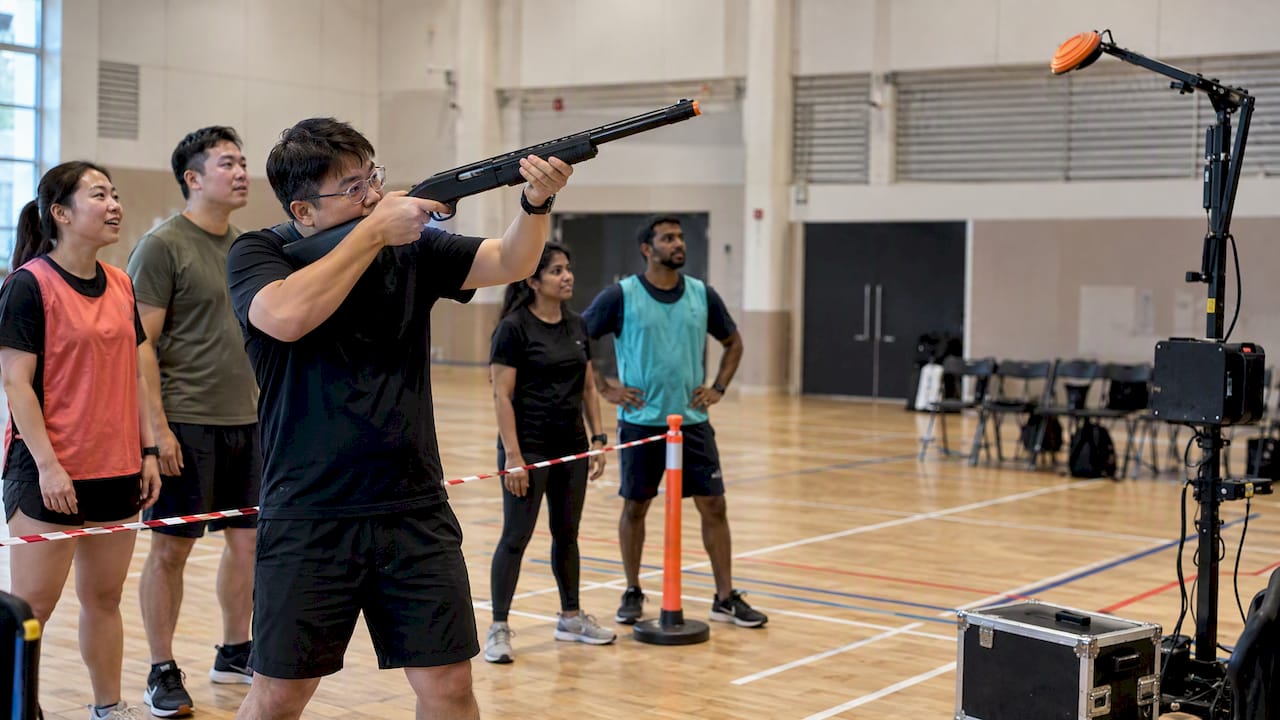
For groups of 20 or more, the fastest way to guarantee engagement is to pick a scalable format, mega trivia, a festival of microgames, an Amazing Race style route, rotation stations, or a facilitated laser-clay competition, and lock down venue and facilitators first. The right pick depends on space, how physically inclusive you need the session to be and how tight your timing is. Confirm your venue and reserve facilitators or AV support before you choose games, not after.
TL;DR:
- Large groups over 100 people should use parallel formats like mega trivia, Amazing Race routes, or rotation stations to avoid long queues and ensure engagement.
- Facilitator preparation includes early booking of venues and AV equipment, dividing groups into teams with captains, and providing laminated rules at each station to prevent confusion.
- Scalable activities should focus on building group cohesion through interdependent tasks and matching challenge levels with participants’ skills to boost performance.
- Adjustments for space and budget include indoor swaps for outdoor activities, minimal AV setups, and using printable self-run kits for inclusive, low-cost options.
- Effective event organization relies on briefings with scripts, station rules, a quiet zone, buffers for delays, and post-event feedback from captains to improve future sessions.
Table of Contents
- Six scalable formats for large groups at a glance
- Catalogue of large-group games organised by purpose
- How to run large-group games smoothly
- Design for outcomes: choosing mechanics that build cohesion and flow
- Adapting games to space, budget and inclusivity
- Sample run-sheets and programme templates
- Why laser-clay style activities work for large groups
- An experienced facilitator’s top five non-negotiables
- Book a facilitated large-group format with Laser Clay
- FAQ
- Sources
Six scalable formats for large groups at a glance
Some formats collapse once you push past 30 or 40 people. These six don’t, because each one is built to run in parallel streams rather than as a single queue.
- Mega trivia or game show: best for mixed-ability groups of 50 to 500, works indoors or outdoors, needs a stage, screen and microphone but almost no physical movement.
- Amazing Race style city or venue route: best for energetic groups of 100 to 400, works outdoors or across a large venue, needs route marshals and a clear checkpoint system.
- Rotation stations festival: best for groups split into 6 to 10 teams, works indoors or outdoors, needs multiple facilitators running short parallel activities so nobody queues long.
- Festival of microgames: best for groups wanting variety over depth, works in any space with clear zoning, needs simple props and a timer per station.
- Facilitated shooting competition: best for a competitive, low-injury-risk shooting format suitable from age 10 upward, works indoors or outdoors, needs trained facilitators and scoring equipment.
- Sports day or mini-Olympics: best for large outdoor groups wanting classic field events, needs open space, basic equipment and a scoring board.
The mega trivia format is worth flagging as the most physically inclusive option on this list: everyone participates from a seat, scoring is visible to all, and it adapts well to wheelchair users or anyone who can’t take part in running-based games.
Catalogue of large-group games organised by purpose
A long list only helps if it’s organised the way you’ll actually plan. Here’s a working menu grouped by what each game is for, with the practical details you need to drop straight into a run-sheet.
Icebreakers
- Human bingo: participants find colleagues matching bingo square facts; works for 20 to 200; 10 to 15 minutes; needs printed cards and pens; fully seated-accessible; tip: pre-fill a few squares so shy groups get moving faster.
- Two truths and a lie, team edition: small groups share statements, others guess the lie; 20 to 150; 15 minutes; no equipment; accessible to all; tip: cap it at three rounds per group or it drags.
- Speed networking circles: paired 90-second chats on rotation; 30 to 300; 20 minutes; needs a bell or timer; fully seated-accessible; tip: give a question prompt card so pairs don’t stall in silence.
- Name chain relay: teams build a chain of names and one fact each; 20 to 100; 10 minutes; no equipment; accessible; tip: works best as a warm-up before a bigger activity.
- Desert island teams: small groups debate five items to take to a desert island; 20 to 200; 15 minutes; no equipment; fully accessible; tip: assign a scribe per table to keep the debate on time.
- Common ground hunt: tables race to find five things everyone shares; 20 to 250; 10 minutes; paper and pens; accessible; tip: reward speed, not depth, to keep energy high.
Energisers
- Giant rock-paper-scissors tournament: whole-body elimination bracket; 30 to 500; 10 minutes; open floor space; moderate mobility needed; tip: run it as a quick palate-cleanser between heavier activities.
- Musical statues, team version: teams freeze together when music stops; 30 to 300; 10 minutes; speaker and playlist; moderate mobility; tip: use upbeat music to lift energy before a trivia round.
- Clap-pass wave: a rhythm passes around a circle or room; 50 to 1,000; 5 minutes; no equipment; accessible; tip: use it to settle a noisy room before a briefing.
- Balloon keep-up relay: teams keep a balloon airborne while completing a task; 20 to 150; 10 minutes; balloons; low mobility needed; tip: swap balloons for beach balls outdoors in wind.
- Chair dance freeze: seated dance-along with sudden freezes; 20 to 200; 10 minutes; speaker; fully seated-accessible; tip: a strong inclusive option when mobility varies widely.
Problem-solving and team challenges
- Marshmallow spaghetti tower: teams build the tallest freestanding structure; 20 to 200 in groups of 6; 20 to 30 minutes; spaghetti, marshmallows, tape; seated-friendly; tip: set a strict materials budget to force trade-offs.
- Egg drop engineering: teams design a package to protect a raw egg from a drop; 20 to 150; 30 minutes; eggs, straws, tape; mostly seated; tip: run the drop as a shared finale for spectacle.
- Human knot: a circle of hands must untangle itself; 8 to 16 per group, scalable across many groups; 15 minutes; no equipment; needs decent mobility; tip: offer a seated alternative puzzle for anyone who can’t join the knot.
- Blind drawing relay: one teammate describes a shape, another draws it blindfolded; 20 to 200; 15 minutes; paper, markers, blindfolds; mostly seated; tip: swap roles each round so everyone gets a turn describing.
- Puzzle piece race: teams race to assemble a jigsaw with pieces scattered across the room; 30 to 300; 20 minutes; custom puzzles; moderate mobility; tip: hide pieces in numbered zones to prevent total chaos.
- Bridge building challenge: teams build a bridge from limited materials to span a fixed gap; 20 to 150; 25 minutes; card, tape, rulers; seated-friendly; tip: judge on load capacity, not just looks, to reward engineering over decoration.
- Escape room style puzzle hunt: teams solve linked clues to “escape” a themed scenario; 20 to 400 across parallel kits; 45 to 60 minutes; printed puzzle kits, locks or envelopes; mostly seated; tip: self-run printable kits scale cleanly because they need no live facilitator per table.
Competitive and score-based
- Mega trivia tournament: multi-round general knowledge contest with live scoring; 50 to 500; 45 to 60 minutes; screen, microphone, buzzers; fully seated-accessible; tip: mix question categories every round to keep varied knowledge competitive.
- Facilitated laser-clay shooting competition: teams compete head-to-head on scored laser-clay targets; 20 to 150; 60 to 90 minutes; laser-clay equipment and trained facilitators; suitable from age 10, low physical demand; tip: run a short practice round before scoring starts.
- Minute-to-win-it relay: a series of 60-second skill challenges run in heats; 30 to 300; 30 to 45 minutes; household props; moderate mobility; tip: stagger heats across stations to avoid one long queue.
- Tug of war bracket: elimination bracket of team pulls; 40 to 400; 20 minutes; a rope per pitch; needs good mobility; tip: match team sizes by weight roughly for fairness.
- Mini-Olympics field events: sack race, relay, egg-and-spoon in bracket format; 50 to 500; 60 to 90 minutes; basic field kit; needs mobility, with seated scoring roles available; tip: assign non-running roles like scorekeeper so everyone has a job.
- Amazing Race style checkpoint route: teams navigate a multi-stop route solving tasks at each checkpoint; 100 to 400; 90 to 120 minutes; route maps, marshals at each stop; needs good mobility; tip: stagger team start times by five minutes to prevent checkpoint bottlenecks.
- Office Olympics desk challenges: seated skill challenges like paperclip chains or stapler golf; 20 to 150; 30 minutes; desk props; fully seated-accessible; tip: run as a side tournament alongside a bigger main event.
Creative and serious play
- Serious-play Lego build: teams build a metaphor for their team using Lego; 20 to 150 in groups of 5; 30 to 45 minutes; Lego sets; seated-friendly; tip: ask each group to present their build in one sentence to keep debriefs tight.
- Team talent showcase: short team performances or pitches; 30 to 200; 30 to 60 minutes depending on team count; microphone; mostly seated; tip: cap performances at 90 seconds each or the schedule slips fast.
- Storyboard pitch battle: teams storyboard and pitch a fictional product; 20 to 150; 30 minutes; paper, markers; seated-friendly; tip: judge on clarity, not artistic skill.
- Collaborative mural painting: teams contribute to one large shared artwork; 30 to 300; 30 to 60 minutes; paint or markers, large canvas; seated or standing; tip: assign sections per team to avoid overcrowding one spot.
- Printable murder-mystery kit: self-run tables solve a mystery using printed character packs; unlimited team scaling; 60 to 90 minutes; printed kits only; seated throughout; tip: this format needs no live facilitator per table, which is why it scales so cheaply across very large groups.
Inclusive and no-physical-movement
- Seated trivia relay: trivia questions answered via show of cards rather than buzzers; 50 to 500; 30 to 45 minutes; answer cards; fully seated-accessible; tip: use large-print cards for visibility across a big room.
- Guess the sound: teams identify recorded sounds; 20 to 300; 15 minutes; speaker and audio clips; fully accessible including visually impaired participants; tip: provide a written answer sheet for anyone who can’t hear well.
- Tabletop strategy mini-games: short board or card game rounds rotated between teams; 20 to 200; 20 to 30 minutes per round; board games; fully seated-accessible; tip: keep instructions on a laminated card at each table.
- Scent and taste blind challenge: teams identify items by smell or taste; 20 to 100; 15 minutes; sample cups; seated-accessible with allergy screening; tip: always collect allergy information beforehand.
- Sign language speed round: teams learn and use basic sign language phrases in a mini-challenge; 20 to 150; 15 to 20 minutes; instruction cards; fully seated-accessible; tip: a good option for building awareness alongside fun.
Virtual and remote
- Virtual mega trivia: live-hosted trivia over video call with digital scoreboards; 20 to 500; 45 to 60 minutes; video platform, polling tool; fully accessible; tip: mute all but the answering team to avoid audio chaos.
- Online scavenger hunt: participants find household items on a timed list via video; 20 to 200; 20 minutes; webcam only; fully accessible; tip: keep the list short, ten items is plenty.
- Digital escape room: teams solve an online puzzle sequence together; 20 to 150; 45 to 60 minutes; shared screen or link; fully accessible; tip: assign one “navigator” per breakout room to avoid chaotic typing.
How to run large-group games smoothly
Running games for 20 people and running them for 200 are different operational problems. The games can stay the same; the logistics around them can’t.
- Confirm the venue and permits six to eight weeks out, checking floor space, power access and any outdoor permit requirements for your chosen format.
- Book facilitators and AV at least four weeks ahead, matching headcount to facilitator ratio so no single person is running more than two stations.
- Split the group into stable teams of 8 to 15 people and assign a team captain to each, briefed separately from the main group.
- Run a captain-only briefing 30 minutes before the main session starts, so captains can relay instructions to their own teams rather than everyone waiting on one loud announcement. This is standard practice in large-group planning guidance for events between 100 and 500 people, where decentralised instruction prevents a single point of failure.
- Set up parallel stations rather than a single queue wherever the format allows it, so no team waits more than a few minutes between activities.
- Write rules on a laminated card at every station, not just announced once, so latecomers and quieter teams aren’t guessing.
- Designate a quiet zone and a first-aider location before the session starts, and tell every captain where both are.
- Build in a 15-minute buffer between each major block to absorb delays without collapsing the schedule.
- Debrief in small teams first, then gather a few short reflections to the whole room, rather than asking 200 people to share in turn.
Pro Tip: Brief captains with a short written script, not just verbal instructions, so the message they cascade to their teams stays consistent even when they’re relaying it fast and under pressure.
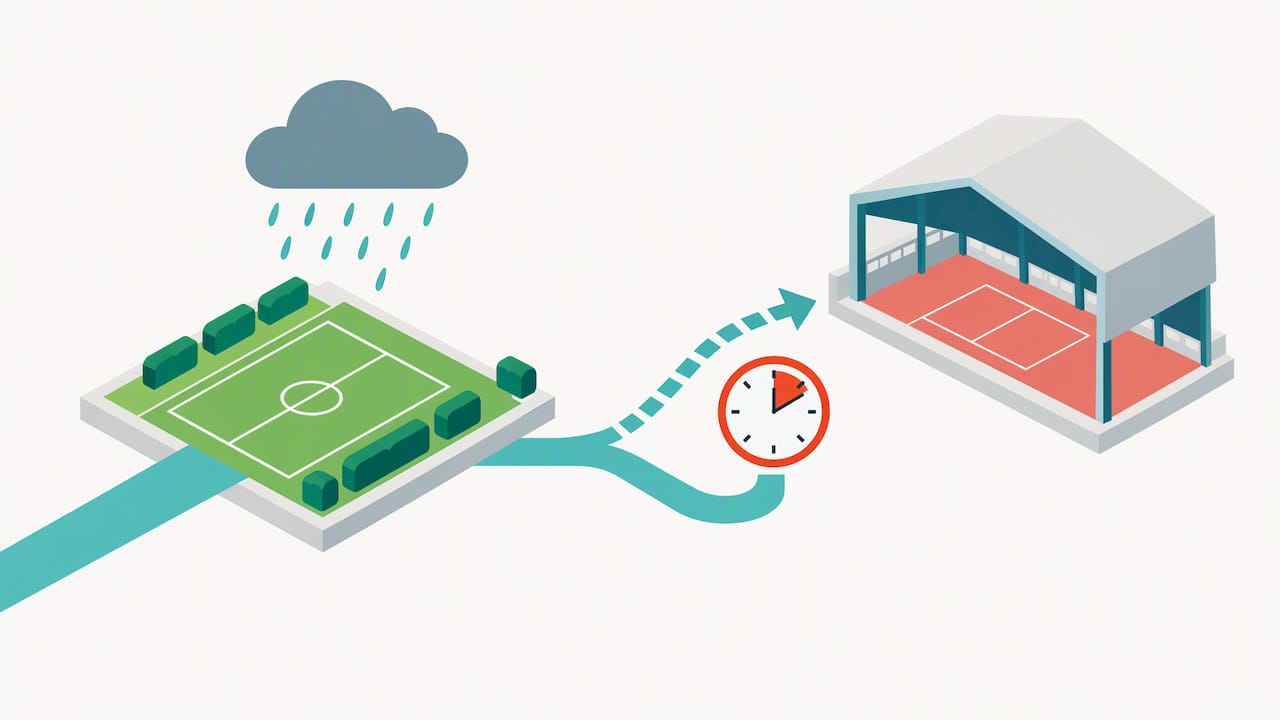
Weather contingency matters more than most organisers plan for: have an indoor backup activity ready to swap in within ten minutes if an outdoor route or field event gets rained off.
Design for outcomes: choosing mechanics that build cohesion and flow
Not every game produces a lasting team benefit, and the mechanic matters more than the theme. A randomised controlled trial of a gamification-based training programme found that structured serious-play training improved team effectiveness over time, and that the improvement was explained by increases in group cohesion rather than by the novelty of the activity itself.
Team effectiveness improved through increases in group cohesion, not merely through participation in a gamified activity.
A separate controlled experiment on team video gaming found something slightly different: team performance rose because the games created a state of flow through appropriately pitched challenge, and flow explained more of the performance gain than cohesion did.
For cohesion, choose mechanics built on genuine interdependence: tasks where no single person can finish alone, shared scoring, and roles that rotate so everyone contributes differently. For flow, choose mechanics with a challenge level that matches the group’s skill, hard enough to demand focus, not so hard that teams disengage.
A well-pitched challenge level is one of the most reliable short-term levers for lifting team performance, according to the team video gaming trial, which found significant posttest gains explained largely by the flow state participants reported during play.
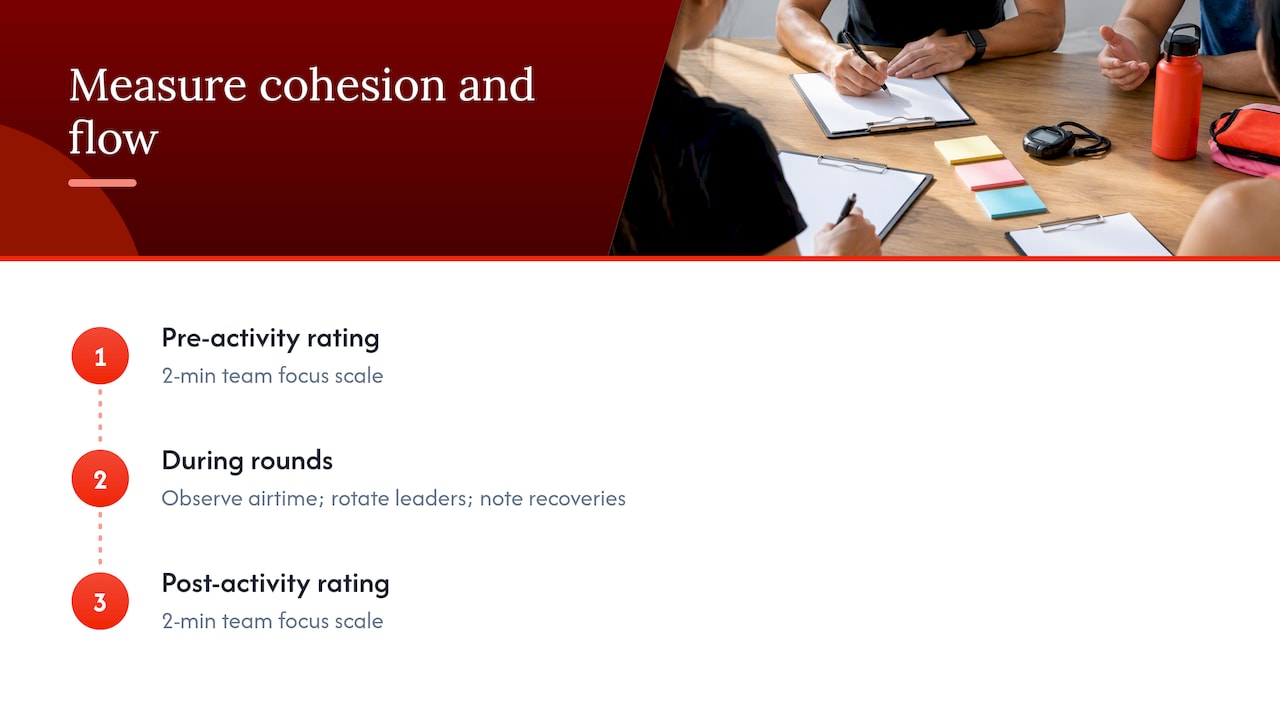
In practice, you can measure both without a survey. Watch participation airtime at each table, rotate who speaks or leads each round, and run a two-minute pre- and post-activity check where teams rate their own focus on a simple scale. Facilitators using observation prompts around participation and recovery from setbacks report more comparable data across tables than relying on self-reported mood alone, and physical activity itself has a documented role in sustaining attention and energy across a long session, as outlined in this overview of physical activity and executive vitality.
Adapting games to space, budget and inclusivity
The games above assume a reasonably flexible venue, but most large events don’t get one. A few adjustments keep the same formats working under real constraints.
- Indoors with low ceilings: swap anything involving thrown or launched objects for tabletop or seated versions, and check AC output against the extra body heat of a packed room.
- Outdoors with no shade: schedule physically demanding rounds for the cooler parts of the day and build a shaded quiet zone near the main activity.
- Limited AV budget: a single wireless microphone and a laptop with a free polling tool can run mega trivia for 300 people without a dedicated screen rental.
- No facilitator budget for every table: self-run printable kits, such as murder-mystery packs or puzzle hunts, scale without needing a live host per team, cutting per-person facilitation cost significantly.
- Mixed-ability groups: default to seated or low-mobility formats as the backbone, then offer physical formats as an optional add-on rather than the main event.
- Multilingual groups: print instructions in the two or three most common languages on site, and use visual scoring boards rather than relying purely on spoken announcements.
- Culturally mixed groups: avoid games built around culturally specific trivia or references that assume shared background, and favour formats judged on effort or creativity rather than niche knowledge.
Workplace events carry a duty of care alongside the fun, and a practical approach to combining safety and wellbeing at company events is worth reading before finalising a run-sheet for anything involving physical activity.
Sample run-sheets and programme templates
A template saves more planning time than any single game idea, because it forces the timing decisions up front.
- 60 to 90 minute plug-and-play session: 10-minute icebreaker, 50 to 60 minutes of rotation stations or a single mega-trivia block, 10-minute debrief and prize announcement. Works for 50 to 300 people with four to six facilitators.
- Half-day programme (three to four hours): opening energiser, a 45-minute competitive mini-tournament, a 30-minute working lunch, an afternoon problem-solving block, and a 20-minute group debrief. Works for 100 to 300 people with a mix of active and seated modules.
- Full-day programme (six to eight hours): morning block of icebreakers and a problem-solving challenge, a facilitated competitive activity such as a laser-clay tournament after lunch, afternoon breakout rotations across three or four stations, and a closing reflection session. Works for conferences and away-days up to 500 people.
| Template | Duration | Group size | Typical budget range |
|---|---|---|---|
| Mega trivia block | 45-60 minutes | 50-500 people | $50 per person including AV and MC, per Singapore large-group planning guidance |
| Amazing Race style route | 90-120 minutes | 100-400 people | Varies by venue and checkpoint count, per the same guidance |
| Half-day mixed programme | 3-4 hours | 100-300 people | Combines activity, venue and facilitator costs |
| Full-day away-day | 6-8 hours | Up to 500 people | Combines activity, venue, catering and facilitator costs |
Resource lists scale with the template: a 60-minute plug-and-play session needs little beyond a microphone, a timer and printed score sheets, while a full-day programme needs a venue booking, multiple facilitator teams, backup indoor space and a catering plan running alongside the activity schedule.
Why laser-clay style activities work for large groups
A facilitated competitive format fills a specific gap in most run-sheets: something with genuine stakes and visible scoring, but without the injury risk or setup complexity of live ammunition sports. We built our laser-clay sessions around that gap. Using sound-simulated deactivated shotguns and reusable eco-friendly clay targets, we remove lead and noise pollution from the activity while keeping it a real, scored shooting competition that newcomers and experienced shooters can compete in side by side.
Sessions suit groups from small teams up to larger tournaments, and we structure most bookings around 60 to 90 minute formats that slot neatly into the templates above, either as a standalone competitive block or as one rotation station inside a bigger half-day programme. Scoring runs on a real-time electronic scoreboard, so results are visible to the whole room rather than tracked on a clipboard, which matters for keeping a large audience engaged between turns.
We suit participants from age 10 upward, and our facilitators run a short practice round before any scoring starts, which keeps the format accessible to anyone regardless of prior shooting experience. Planners working from our guide to playing laser clay can see exactly what a session involves before booking, and venues looking at compatibility can check our notes on team-building venues for what a space needs to host the activity.
An experienced facilitator’s top five non-negotiables
Running large-group sessions teaches you where things actually break, and it’s rarely the games themselves. It’s the gaps around them.
Five things I won’t run a session without: a one-page rules sheet at every station, because verbal-only instructions fall apart past 50 people. A captain cascade briefing, run separately and earlier than the main group briefing. An AV check completed at least an hour before doors open, not ten minutes before. A written contingency plan covering weather and a medical incident, agreed with the venue in advance. And at least one fully seated, fully inclusive activity built into the main programme, not offered as an afterthought to whoever can’t join in.
After the event, the one habit that actually improves the next one: collect five minutes of structured feedback from team captains specifically, not just a general survey, because they saw the bottlenecks everyone else didn’t.
— Joshua
Book a facilitated large-group format with Laser Clay
If your run-sheet needs a competitive block that doesn’t rely on weather, open fields or a big AV budget, our laser-clay sessions slot in as a standalone tournament, a rotation station inside a bigger festival, or the competitive centrepiece of a half-day programme. We bring the equipment, the scoring system and the facilitators, so you’re not managing a fourth moving part on an already busy day.
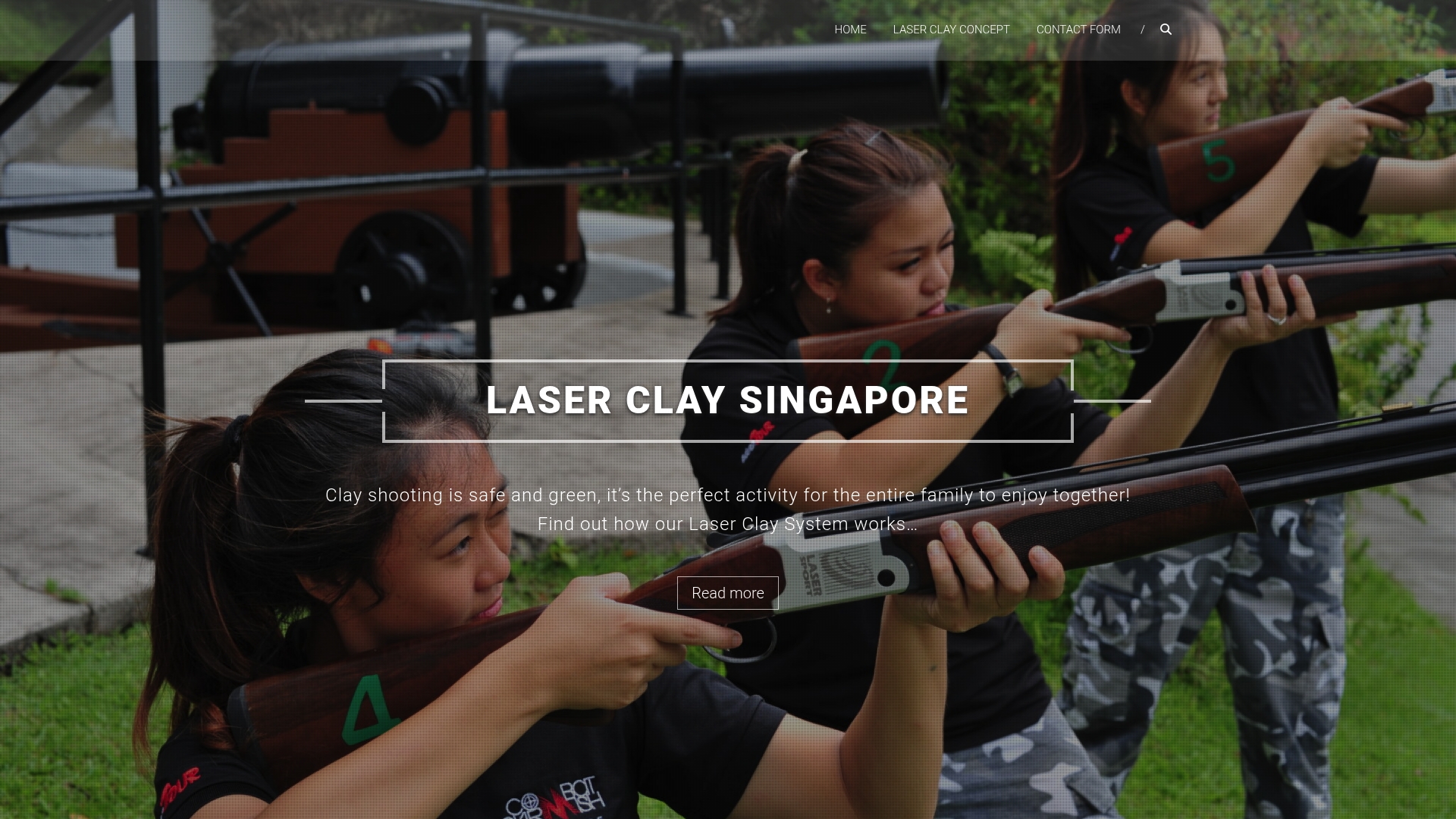
When you brief us, tell us your guest count, the space you have available, whether you need indoor or outdoor setup, and the run-time you’re working with, from a tight 60-minute slot to a full afternoon block. We’ll match the format to what you’ve told us rather than asking you to fit our default session.
- Corporate groups can book directly through our Corporate Laser Clay Package, priced at 69 SGD per person.
- Private celebrations can use our birthday party package, from 49 SGD per person.
- Planners who want the equipment without our facilitators can look at system rental, priced from 500 to 800 SGD per hour.
- For a bespoke run-sheet or a quote tailored to your headcount, reach us through our contact page.
FAQ
What are some good team games for a large group?
Formats that split naturally into parallel streams work best for large groups: mega trivia, rotation stations, an Amazing Race style route and a facilitated laser-clay competition all scale past 100 people without long queues. The key is picking a format that doesn’t rely on one person running everything at once.
What are some good ideas for large group party games?
Mega trivia with a live scoreboard and a festival of short microgames both work well for parties because they need little physical mobility and keep everyone watching the same action. A facilitated competitive activity, such as a scored shooting game using sound-simulated equipment, adds a genuine competitive edge without the safety concerns of live ammunition.
What are some good games for a large group of friends?
Lower-stakes social formats such as human bingo, two truths and a lie, or a team talent showcase work well for friend groups because they’re light on rules and heavy on conversation. For a bigger push of energy, minute-to-win-it relays or a tug of war bracket give the group something competitive without needing much setup.
What are 10 good team building games?
A strong set of ten spanning purpose includes human bingo, speed networking, marshmallow spaghetti towers, the human knot, mega trivia, an Amazing Race style route, serious-play Lego builds, a facilitated laser-clay competition, a printable escape room kit, and seated trivia relay for inclusivity. Mixing icebreakers, problem-solving and competitive formats across the ten keeps a full-day programme varied rather than repetitive.
How do I organise games for a very large group without it feeling chaotic?
Split the group into stable teams with a designated captain for each, brief captains separately about 30 minutes before the main session, and run activities in parallel stations rather than a single queue, as recommended in large-group planning guidance for events up to 500 people. Laminated rules at each station and a 15-minute buffer between blocks catch most of the delays that cause chaos.