The most effective tournament prize line-up balances experiences, practical items and public recognition, matched to how much effort each round demands. That mix keeps casual entrants engaged and gives serious competitors something worth chasing. Below, you’ll find prize categories, spend bands, a selection checklist, sourcing timelines and the mechanics that make prizes feel bigger than their price tag.
TL;DR:
- A 40 player tournament with an £800 budget can spend £200 on entry gifts, £200 on four £50 prizes, and £400 on its grand prize.
- Skill brackets suit one strong grand prize, random draws benefit from several mid tier awards, and team events need shared experiences or group vouchers.
- Order custom branded prizes 14 to 30 days before the event, approve a digital mockup, and request a sample before production.
- Pair physical awards with certificates or leaderboard recognition, then add a raffle so entrants eliminated early remain engaged until the final draw.
Table of Contents
- 1. Top prize ideas by category: experiences, tech and recognition
- 2. Prize tiers and budget guidance for every round
- 3. How to choose prizes that match format, audience and fairness
- 4. Practical logistics and sourcing: timelines and quality control
- 5. Game mechanics that amplify prizes: jackpots, mystery prizes and leaderboards
- 6. Experience prize example: a facilitated laser clay session as the grand prize
- 7. A planner’s closing note on prize design
- 8. Book a memorable experience prize for your next tournament
- FAQ
- Sources
1. Top prize ideas by category: experiences, tech and recognition
Tournament prizes tend to fall into six workable categories, each suited to a different kind of winner or moment in the competition.
Experience prizes carry outsized perceived value for modest cost. A short local activity, a facilitated group session or VIP tickets to a live event all photograph well and get shared, which matters if the tournament has any social media presence. Raffle prize research finds that experiences, practical services and local favourites such as spa days or restaurant bundles generate the strongest interest from entrants, often outperforming pure cash equivalents.
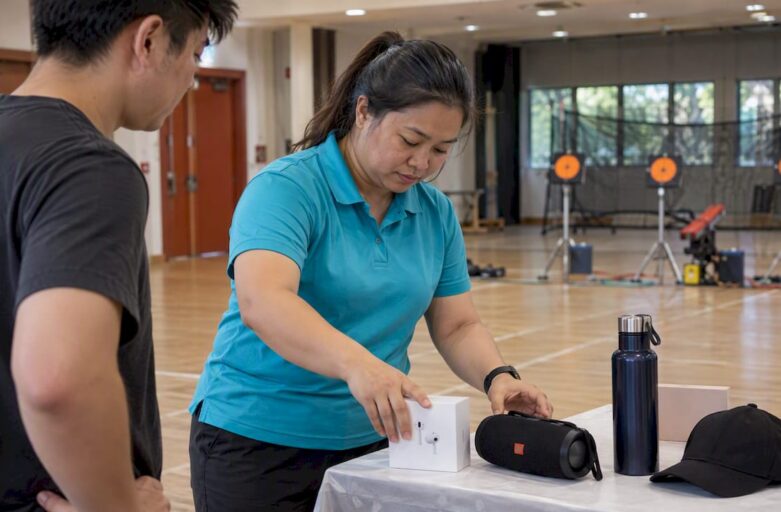
Tech and lifestyle items have near-universal appeal because almost everyone uses them. Wireless earbuds, portable speakers and smart water bottles work across age groups and don’t require the winner to have a particular hobby.
Vouchers and gift cards remain the safest flexible option. They let the winner choose, which removes the risk of gifting something unwanted, and they’re simple to source in bulk for lucky draws.
Branded merchandise serves a dual purpose: it rewards the winner and extends sponsor visibility. Local corporate gifting suppliers note that Singapore events commonly combine premium tech items with customised merchandise to create a memorable gift tier.
Trophies, medals and certificates remain the backbone of official recognition, especially for skill-based brackets where ranking matters more than the physical prize.
Novelty and fun prizes suit humorous categories, “most improved” or last-place awards, where the joke is the point rather than the value.
- Experiences: short activities, VIP tickets, facilitated sessions
- Tech and lifestyle: earbuds, speakers, smart accessories
- Vouchers: retail, dining or travel gift cards
- Branded merchandise: apparel, drinkware, sponsor-logo items
- Trophies and certificates: medals, engraved plaques, printed certificates
- Novelty prizes: joke trophies, themed gag gifts for fun categories
Team events do best with shared experiences or group vouchers that everyone redeems together, while individual awards lean harder on trophies and personalised merchandise. A compiled list of prize ideas spanning tickets, lessons and merchandise shows just how adaptable these categories are across sports and fan events.
2. Prize tiers and budget guidance for every round
Splitting prizes into tiers keeps spend under control while rewarding every level of participation. Two-tier structures, flash gifts for taking part plus exclusive grand prizes for winners, tend to increase both engagement and perceived fairness across the field.
- Flash gifts (small, frequent): keyrings, snack vouchers, raffle tickets for every entrant
- Mid-tier prizes (round winners, runners-up): branded merchandise, mid-value vouchers, novelty trophies
- Grand prizes (overall champions): experience packages, high-value tech, premium vouchers
As a worked example: say a 40-player tournament has a total prize budget of £800. Allocating £5 per player to flash gifts covers £200, leaving £600 for four mid-tier prizes at roughly £50 each (£200) and one grand prize worth £400. That split keeps every participant leaving with something while still making the top spot worth fighting for.
3. How to choose prizes that match format, audience and fairness
The right prize depends on how the contest is won, not just who enters. A skill-based bracket rewards consistent performance, so a single strong grand prize makes sense. A raffle or random draw spreads excitement better across several mid-tier prizes, since any entrant can win regardless of skill. Team events need prizes that work for groups, shared vouchers or group experiences rather than one item that only one person can use.
- Confirm the contest type (skill-based, random draw or team) before shortlisting prizes.
- Check audience factors: age range, accessibility needs and whether entrants have easy access to redeem digital vouchers.
- Add a reputation mechanic, such as a leaderboard mention or printed certificate, alongside the physical prize.
- Ask suppliers about minimum order quantities, customisation turnaround and whether samples are available before you commit.
- Confirm sponsor fulfilment terms if any prizes carry branded merchandise.
Pro Tip: Pair every tangible prize with a low-cost recognition element, a leaderboard shout-out or certificate, since reputational rewards often motivate entrants as much as the item itself.
4. Practical logistics and sourcing: timelines and quality control
Custom prizes need more lead time than most organisers budget for. Suppliers of corporate door gifts and lucky-draw prizes typically recommend ordering custom branded items 14 to 30 days ahead and approving a digital mockup before production starts, since this avoids costly reprints when logos or colours are wrong.
- Request a physical sample or printing proof before committing to a full order.
- Compare local suppliers against online marketplaces: local vendors usually turn around branded items faster, while marketplaces can be cheaper for unbranded bulk items.
- Build in buffer stock for shipping delays or last-minute entrant count changes.
- Confirm return or exchange policies for any physical goods before the event date.
5. Game mechanics that amplify prizes: jackpots, mystery prizes and leaderboards
The prize itself is only half the excitement. Event activation case studies show that progressive jackpots, prize maps and mystery mechanics turn a simple giveaway into something spectators gather around.
- Display a progressive jackpot that grows with each round, so the value is visible and climbing.
- Use mystery prizes or prize maps with difficulty zones, rewarding harder shots or rounds with better prizes.
- Set up a QR-ready leaderboard so rankings and reputational prizes update live for everyone to see.
- Combine a raffle layer with the main skill contest so entrants who are eliminated early stay engaged until the final draw.
Experimental research on contests finds that tournament incentives and peer ranking are effective at increasing effort and creative output, which is part of why visible rankings tend to outperform prizes alone.
6. Experience prize example: a facilitated laser clay session as the grand prize
A facilitated activity makes a strong grand prize because it’s memorable, inclusive of mixed skill levels and doesn’t need the winner to own anything beforehand. A typical laser clay shooting session includes a facilitator running the format, live scoring, a safety briefing and small group sizes so everyone gets real shooting time rather than a long queue.
- Package it as a redeemable voucher for the winning team, letting them book a date that suits them.
- Offer it as a VIP session add-on for runners-up, separate from the main grand prize.
- Use it as a leaderboard-topping reward tied to a season-long points system rather than a single event.
- Lean on the eco-conscious angle, reusable targets and no lead ammunition, when pitching it to sustainability-minded sponsors or organisers.
Because scoring and facilitation are built in, it also works as a mixed-skill prize: a complete beginner and an experienced shooter both get a genuinely fair contest on the day. For more background on the format itself, see what laser clay shooting involves.
7. A planner’s closing note on prize design
Good prize planning is less about budget and more about discipline: tier your spend, match format to prize type, and keep procurement timelines honest. Try one novel mechanic, a jackpot, a mystery prize, each event, then confirm supplier lead times before you promise anything to entrants.
— Joshua
8. Book a memorable experience prize for your next tournament
A facilitated activity solves a problem most prize tables can’t: it gives every tier of competitor, from the nervous first-timer to the sharpest shot in the room, a genuinely fair and memorable contest. We offer exactly that, packaged for organisers who want a grand prize that outlasts the event itself.
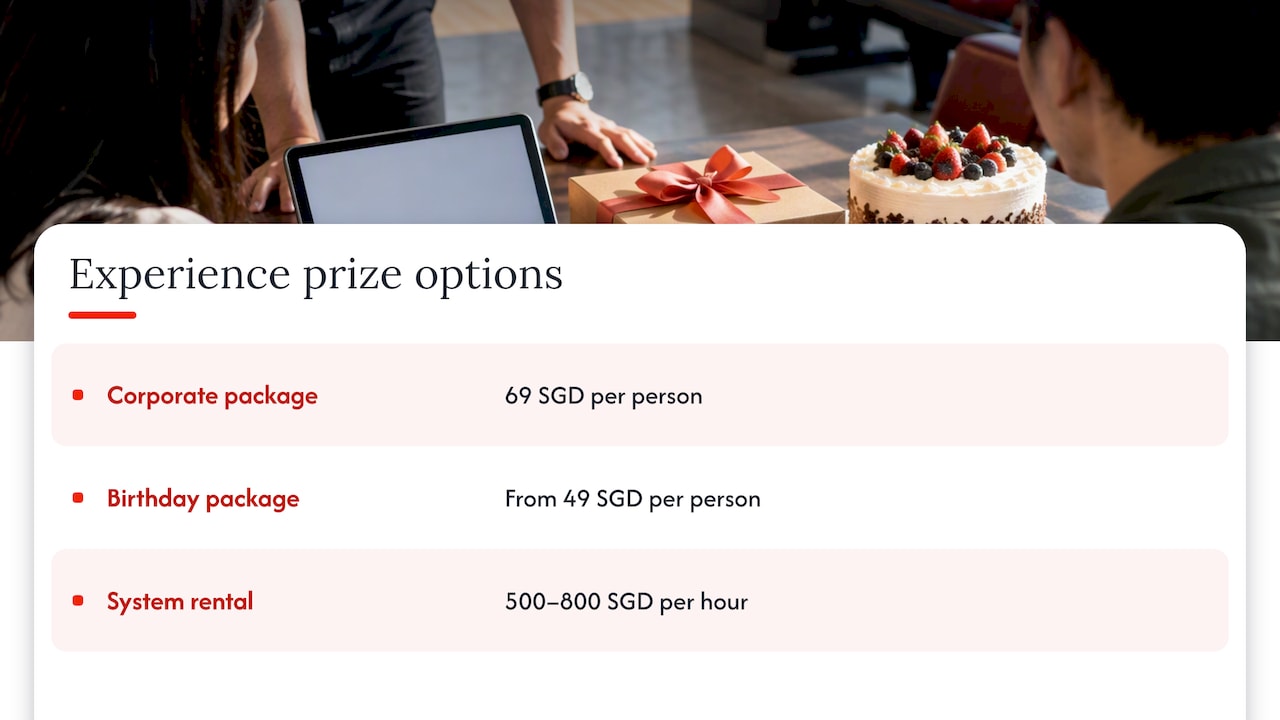
For corporate tournaments, our Corporate Laser Clay Package runs at 69 SGD per person and includes facilitation, scoring and safety briefing, making it straightforward to present as a team grand prize or VIP reward. For smaller or family-oriented tournaments, our birthday party package starts from 49 SGD per person and works well as a beginner-friendly consolation prize. Organisers running a larger event on their own venue can instead book our system rental, priced between 500 and 800 SGD per hour, and run the prize activity themselves alongside the main tournament.
Reach out through our contact page to check availability and talk through how the experience fits your prize structure.
FAQ
What are some good tournament prizes?
Strong tournament prizes mix categories: a grand-prize experience or high-value tech item, mid-tier vouchers or branded merchandise, and small flash gifts for every entrant. This tiered approach, outlined in prize idea compilations, keeps both casual and competitive players engaged throughout the event.
What are good prizes for competitions?
Vouchers, tech and lifestyle items, and facilitated experiences consistently perform well because they suit almost any winner regardless of age or interest. Research on competition prizes notes that high-tech items and experiences top participant wish lists, with vouchers a close second for flexibility.
What are cool prizes to win?
Experiences such as a facilitated group activity, VIP event tickets or a premium tech item tend to generate the most excitement because they’re memorable and shareable. Novelty prizes also work well for fun, non-serious categories where the humour matters more than the value.
What are some good prize ideas for a team competition?
Team competitions work best with shared rewards: a group experience package, a team voucher pool or matching branded merchandise that everyone on the winning team receives. A facilitated activity booked for the whole team, rather than a single individual item, keeps the reward genuinely collective.
Sources
- Dinner & Dance Gifts Singapore | Door Gifts & Prizes
- A survey of experimental research on contests, all-pay auctions and tournaments
- 122 Prize Ideas for Every Contest on Your Calendar
- 50+ Creative Ideas to Give Away Prizes at an Event – Promotoss
- 70+ Raffle Prize Ideas For All Ages & All Budgets | Givebutter