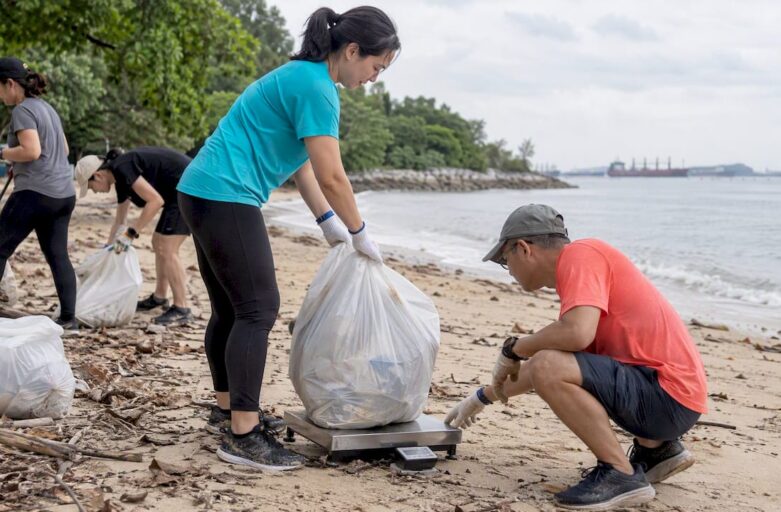
The most effective sustainable team building activities are beach and shoreline clean-ups, CSR challenge games, urban-farming workshops, guided eco-trails, zero-waste repair sessions, and low-footprint competitive formats such as laser clay shooting. Each pairs genuine collaboration with an output you can count: kilograms of litter, meals donated, trees planted. Pick that metric before you pick the activity, and the rest of the planning follows naturally.
TL;DR:
- ESG reports need verifiable evidence: photograph the weigh in, retain donation receipts, or save GPS verified checkpoint logs alongside the final totals.
- For groups under 20, choose a 60 to 90 minute CSR game; groups of 50 or more suit half day outdoor events.
- For cleanups, secure permits and waste collection, assign safety and weighing roles, provide gloves and grabbers, and record totals at a single scale.
- Digital CSR challenges can cost less per person and require less logistics than physical formats; live leaderboards and verified receipts document outputs.
- Use a single event as a pilot; Schneider Electric’s six week partnership engaged more than 300 employees and tracked volunteer hours and power monitoring.
Table of Contents
- A quick shortlist of sustainable formats
- Running a beach or shoreline clean-up that counts
- Urban farming and farm-to-table workshops
- Eco-challenges and CSR games that scale
- Zero-waste, repair and upcycling workshops
- Guided eco-trails and biodiversity volunteering
- How to choose the right activity: goal, metric, logistics, reporting
- Why a low-footprint tech option also qualifies as sustainable
- Case studies worth learning from
- Make sustainability a habit, not an event
- A sustainable, measurable option for your next corporate event
- FAQ
- Sources
A quick shortlist of sustainable formats
Matching the activity to your goal, group size and venue constraints saves weeks of back-and-forth with vendors. Here’s how the main formats stack up against each other:
- Beach or shoreline clean-up: best for large, in-person teams wanting a visible outdoor result; typically 2 to 3 hours; metric is kilograms of litter collected.
- Urban farming or farm-to-table workshop: best for teams wanting a hands-on, slower-paced session; typically half a day; metric is kilograms of produce or seedlings donated.
- CSR challenge game (eco escape room, GPS scavenger hunt): best for hybrid or remote teams and tight schedules; typically 60 to 90 minutes; metric is donation amount or verified checkpoints completed.
- Zero-waste or repair workshop: best for indoor, weather-proof sessions with a skills-building angle; typically 2 to 3 hours; metric is items repaired or kilograms diverted from landfill.
- Guided eco-trail or biodiversity volunteering: best for nature-minded teams with moderate fitness levels; typically half a day; metric is trees planted or species logged.
- Laser clay shooting: best for indoor, all-weather, time-pressed corporate bookings; typically 1.5 to 2 hours; metric is team score and reusable-target count.
CSR challenge games and laser clay sessions are the two formats that translate most easily to remote or split-site teams, since both can run indoors with minimal weather dependency.
Running a beach or shoreline clean-up that counts
A clean-up only becomes a reportable CSR event when you capture a number at the end, not just photographs of full bin bags.
- Fix the metric first: decide whether you’re tracking kilograms of litter, item counts, or both, and announce it to teams before the session starts.
- Sort roles in advance: appoint a safety lead, a weigh-station recorder, and sorters who separate recyclables from general waste.
- Arrange permits and collection: confirm site access and pre-book waste collection with your local waste management contact so bags don’t sit on the beach overnight.
- Equip properly: gloves, grabbers, and high-visibility vests for every participant, non-negotiable for safety sign-off.
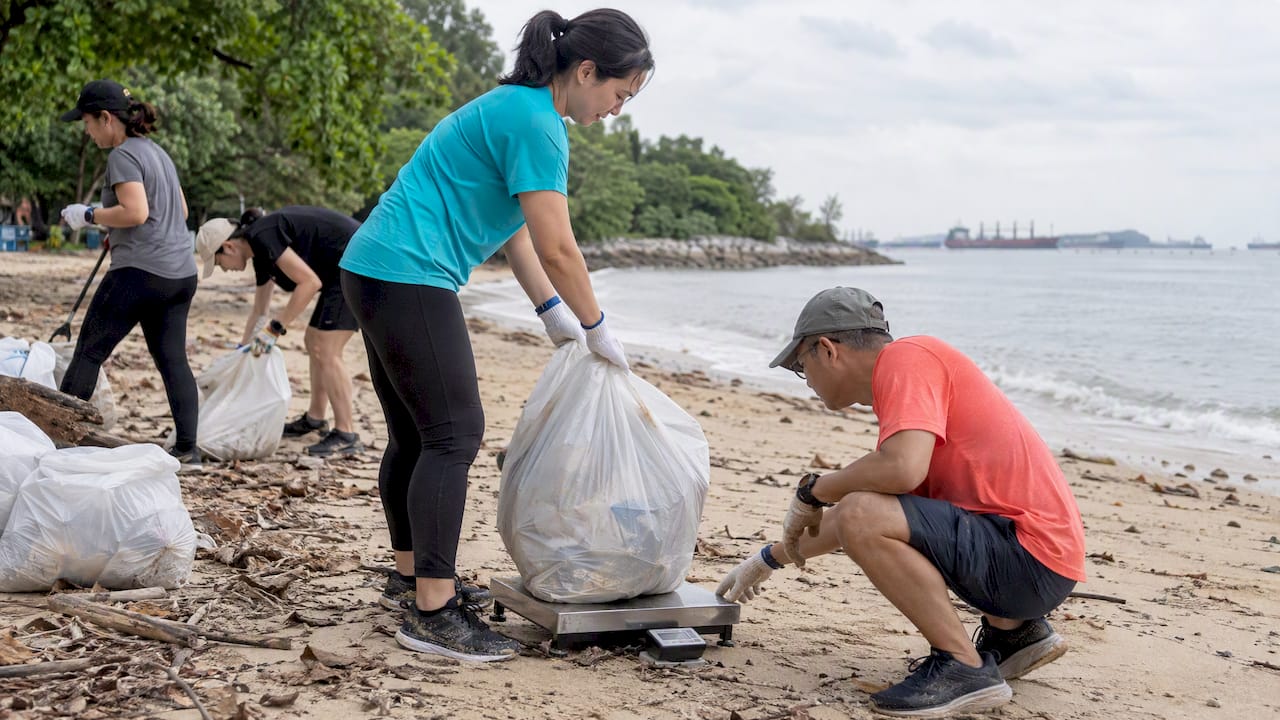
- Weigh and timestamp: record totals at a single weigh station and photograph the scale reading for your report.
Local programmes make this easier. In 2025, Singapore hosted over 1,200 Clean & Green activities, mobilising more than 400,000 participants across corporate, school and NGO sectors, and partnering with an established programme simplifies permits, logistics and the credibility of your reported figures.
Split large groups into fixed teams with a shared leaderboard tracking kilograms collected per team; the competitive element consistently lifts participation without any extra budget.
Pro Tip: Photograph the weigh-in with a visible scale reading and timestamp; it’s the single easiest way to make your clean-up’s numbers audit-proof for an ESG report.
Urban farming and farm-to-table workshops
These formats trade adrenaline for a slower kind of satisfaction: planting something, tending it, and watching a team walk away with produce or seedlings they made themselves.
- Office microgreens or herb stations: compact, indoor-friendly, and good for teams who want a short, repeatable activity across several weeks.
- Farm visits with a harvest component: half-day sessions where teams pick, pack and often donate produce to a local food bank or shelter.
- Vertical-farm harvest workshops: suited to urban venues with no outdoor space, usually paired with a short lesson on resource-efficient growing.
Impact here is straightforward to report: kilograms of produce donated, number of seedlings planted, or microgreen trays distributed to staff. The strongest version of this activity includes a follow-up, such as a second session weeks later to check on growth, which turns a one-off event into something closer to a programme. Facilitators typically need basic horticultural training rather than specialist credentials, which keeps costs manageable for a half-day booking.
Eco-challenges and CSR games that scale
CSR challenge games work well when a physical outdoor activity isn’t practical, whether because of weather, split locations, or a tight afternoon slot.
- Eco escape rooms: teams solve sustainability-themed puzzles against the clock, with each solved puzzle unlocking a fixed donation amount.
- Charity puzzle races: mixed-seniority teams compete across stations, with points converting directly into a pledged sum for a named cause.
- GPS scavenger hunts: outdoor or mixed-location hunts where each verified checkpoint, locked by GPS, logs a measurable micro-action such as a set weight of litter or a donation increment.
Digital-first CSR activities can deliver measurable outputs with a lower logistical footprint and lower per-person cost than physical formats, which makes them a practical fit for hybrid teams split across sites. Verification is built into the format itself: GPS locks confirm checkpoint completion, donation receipts confirm the charitable output, and live leaderboards keep the scoring auditable in real time rather than reconstructed afterwards.
Zero-waste, repair and upcycling workshops
A repair café or upcycling session gives participants a practical skill and a visible pile of things rescued from landfill, which tends to land better in a CSR report than abstract pledges.
- Repair cafés: teams fix donated electronics, furniture or clothing under guidance from a skilled facilitator, with output measured as items repaired.
- Upcycling workshops: old materials (fabric scraps, pallets, office supplies) are rebuilt into usable products, often donated to a charity partner afterwards.
- Composting demonstrations: teams set up or audit a composting system, with output measured as kilograms of organic waste diverted.
Sourcing matters here: choosing donated or offcut materials rather than buying new keeps the workshop’s own footprint low, which strengthens the sustainability story you’re telling. The NEA 3R guidebook explains how to appoint a 3R manager and set workplace waste-reduction targets, and borrowing that structure, naming an internal champion, setting a target, monitoring progress, turns a single workshop into the start of an ongoing programme rather than a one-off photo opportunity.
Guided eco-trails and biodiversity volunteering
Nature walks with a conservation task attached suit teams who want to learn something concrete alongside the bonding, and they scale from a gentle stroll to a half-day of physical work.
- Citizen science walks: teams log species sightings using a simple app or paper sheet, contributing real data to a conservation partner.
- Tree-planting sessions: straightforward to measure (trees planted) and popular for marking an annual CSR milestone.
- Invasive-species management: removing non-native plants under guidance, with output measured as area cleared or weight removed.
Partnering with an established nature or park programme handles permissions and safety briefings for you, and gives your reported numbers external backing. Keep the health and safety basics simple: comfortable footwear, water, sun protection, and a guide briefed on group mobility needs. For ESG reporting, the strongest narrative pairs the hard number (trees planted, area cleared) with a short note on the partner organisation and the site’s location, which gives auditors and stakeholders something to verify independently.
How to choose the right activity: goal, metric, logistics, reporting
Work through this order and the decision becomes far simpler than browsing a long menu of options.
- Decide the metric first: kilograms of litter suits outdoor clean-ups, meals or produce donated suits farming workshops, trees planted suits conservation days, and donation amount suits CSR challenge games.
- Check your constraints: confirm budget, weather contingency, accessibility needs, and any permits before locking in a venue.
- Set the minimum reporting bar: a photographed weigh-in, a donation receipt, or a GPS-verified checkpoint log is usually enough for internal ESG reporting.
- Match duration to group size: smaller teams (under 20) suit a tight 60 to 90 minute CSR game, while larger groups (50 plus) suit a half-day outdoor format with multiple stations.
Per-person costs vary widely by format: a digital CSR challenge can run lower than a staffed outdoor clean-up with equipment and transport included, so confirm pricing against your headcount before you commit to a venue.
Demand for structured programmes keeps growing. Singapore’s Clean & Green movement mobilised more than 400,000 participants across over 1,200 activities in 2025, a scale that reflects how many organisations now treat environmental volunteering as a standing part of their calendar rather than a once-a-year gesture.
Why a low-footprint tech option also qualifies as sustainable
Sustainability in team building isn’t limited to mud and litter bags. A format that eliminates a wasteful input altogether, while still producing a measurable team outcome, meets the same bar.
- Reusable equipment removes recurring waste: a facilitated laser clay session uses reusable, sound-simulated equipment and reusable targets instead of single-use ammunition, so there’s no spent cartridge or lead waste to account for after the event.
- Scoring gives you the measurable outcome CSR reporting needs: real-time electronic scoreboards track team and individual performance, giving planners the same auditable output (scores, completion rates) that a clean-up gives in kilograms.
- Indoor, all-weather delivery solves a real planning constraint: sessions run rain or shine, which matters when a half-day outdoor clean-up isn’t an option because of weather or a tight afternoon slot.
For a corporate calendar already juggling outdoor clean-ups and farm visits, a facilitated indoor format fills the gap on a rainy quarter or a compressed schedule without breaking the sustainability thread running through the rest of the programme.
Case studies worth learning from
Structured, partner-backed programmes tend to outperform one-off events on every measure that matters: participation, repeat engagement, and the quality of the data you can report afterwards.
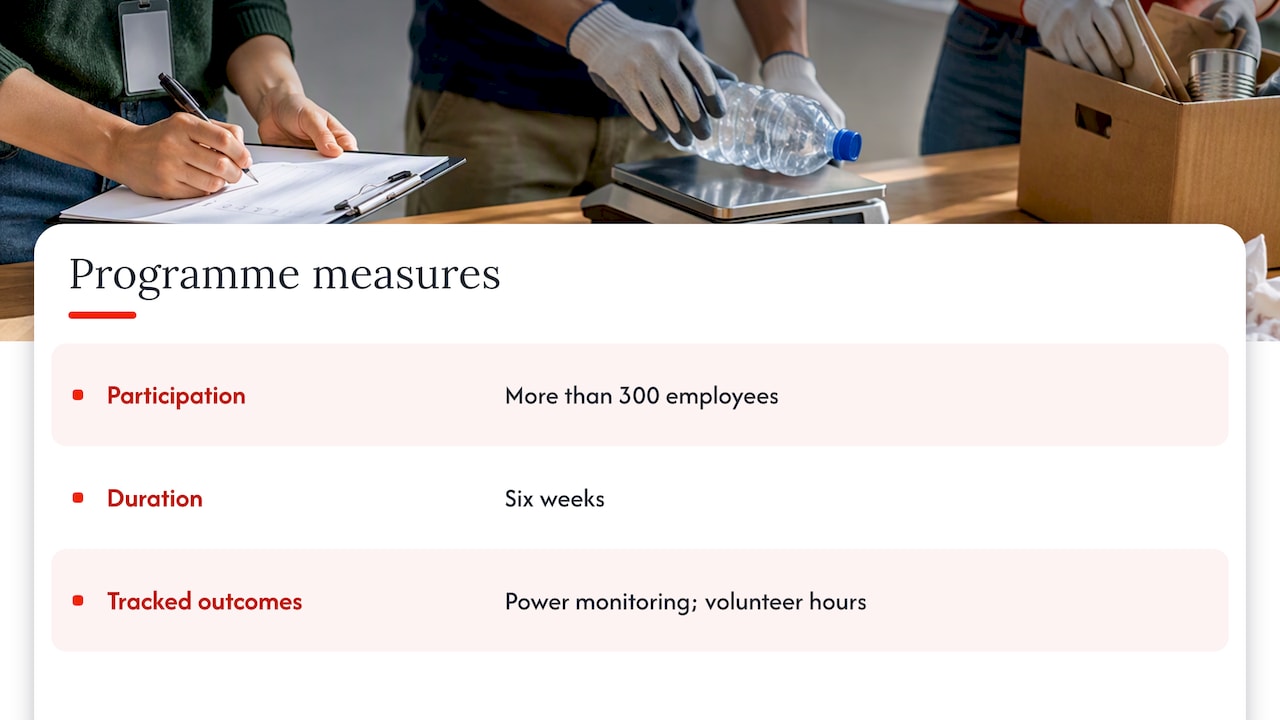
Schneider Electric partnered with Ground-Up Initiative on a multi-week Volunteering Season that mobilised more than 300 employees, supporting a community sustainability space with technical and volunteering input over six weeks rather than a single afternoon. The programme tracked outcomes like power monitoring and volunteer hours, giving the company a data-driven record of its community impact rather than a single feel-good photo.
The pattern holds across other large-scale programmes too. The A Better Way sustainability strategy shows that integrating sustainability goals across a company’s operations, rather than treating them as a side project, can divert the bulk of operational waste from landfill over time.
What both examples share is structure: a named partner, a defined timeframe longer than a single event, and a metric tracked consistently enough to report on later. A single clean-up or farm visit can absolutely deliver this kind of outcome, but it works best as the first instalment of something repeated, not a standalone event filed away and forgotten.
Make sustainability a habit, not an event
Structured, multi-week programmes consistently produce deeper engagement than one-off events, as Schneider Electric’s six-week volunteering season with Ground-Up Initiative shows. Pilot one format, measure the result, fold it into your CSR calendar, and appoint an internal champion to keep it running.
— Joshua
A sustainable, measurable option for your next corporate event
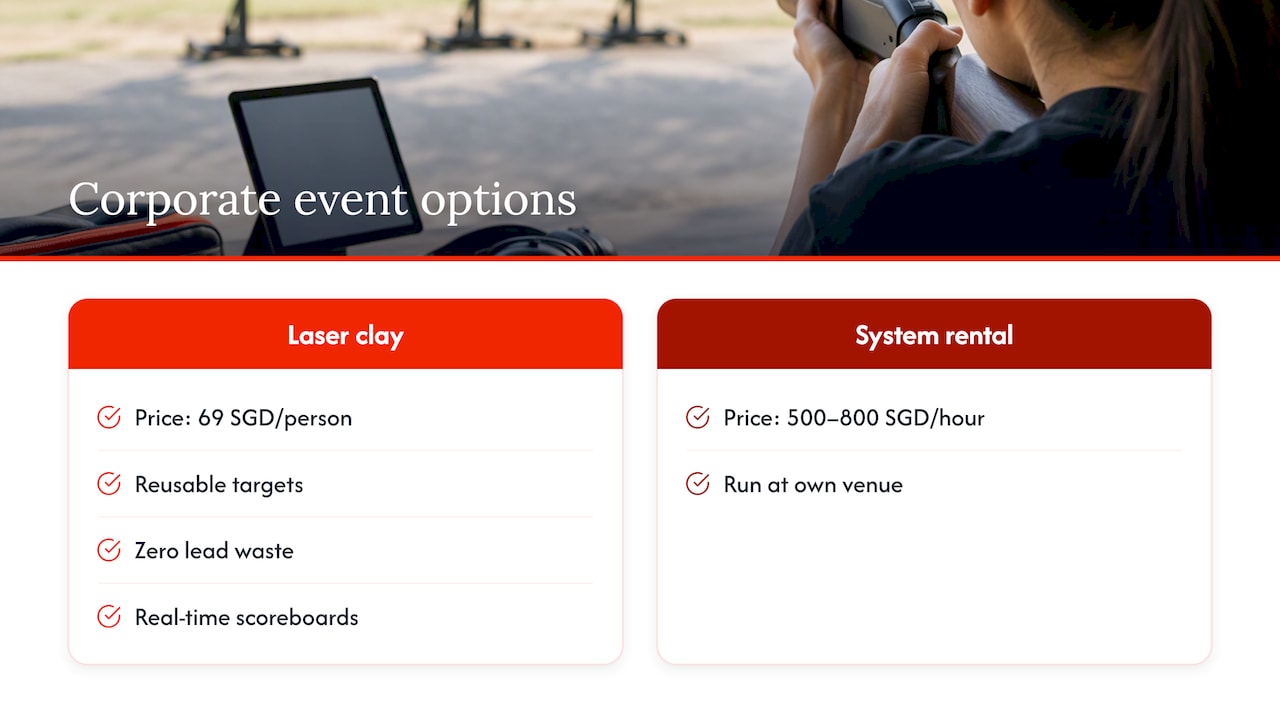
If your team building calendar already includes a beach clean-up or a farm visit, a facilitated laser clay session fills the gap when the weather won’t cooperate or the schedule won’t stretch to half a day outdoors. Our Corporate Laser Clay Package runs at 69 SGD per person, uses reusable targets and sound-simulated equipment with zero lead waste, and produces a measurable team score through real-time electronic scoreboards, so the environmental and CSR-reporting logic holds up alongside your other sustainable formats.

Before booking, ask about team size limits, indoor venue requirements, and how scoring data is exported for your own reporting. We also offer a System Rental from 500 to 800 SGD per hour for organisers who want to run the equipment at their own venue.
Get in touch through our corporate team-building page for a quote tailored to your group size and date.
FAQ
What are the top team building activities for sustainability?
The strongest options are beach clean-ups, urban-farming workshops, CSR challenge games, zero-waste repair sessions, guided eco-trails, and low-footprint competitive formats such as laser clay shooting. Each pairs genuine collaboration with a measurable output like kilograms collected, meals donated or trees planted.
What are some examples of sustainability activities?
Common examples include shoreline clean-ups, tree-planting days, composting demonstrations, upcycling workshops, and farm-to-table harvest sessions. Digital formats like eco escape rooms and GPS-verified scavenger hunts also count, since they tie team performance to a real donation or verified action.
What are the 5 C’s of sustainability?
Definitions vary across industries and no single authoritative version applies to corporate team building. A commonly cited version includes commitment, communication, collaboration, community and continuity, but it’s best treated as a loose framework rather than a fixed standard.
What are some good team activities for team building generally?
Beyond sustainability-focused formats, strong team activities combine a shared goal, clear roles and a visible result the group can point to afterwards. CSR-linked formats like clean-ups or charity puzzle races tend to outperform generic icebreakers because the outcome feels concrete rather than symbolic.
How do I measure the impact of a sustainable team building event?
Decide the metric before the event, whether that’s kilograms of litter, items repaired, or a donation total, and capture it with a weigh-in, receipt, or GPS-verified checkpoint log. This single habit is what makes an event genuinely reportable for ESG purposes rather than just a good afternoon.
Sources
- Clean and Green Singapore 2025: Encouraging ground-up action to protect the environment
- Corporate social responsibility team building: Complete guide | CrackAndReveal
- Schneider Electric partners Ground-Up Initiative to promote sustainable efforts | EDB Singapore