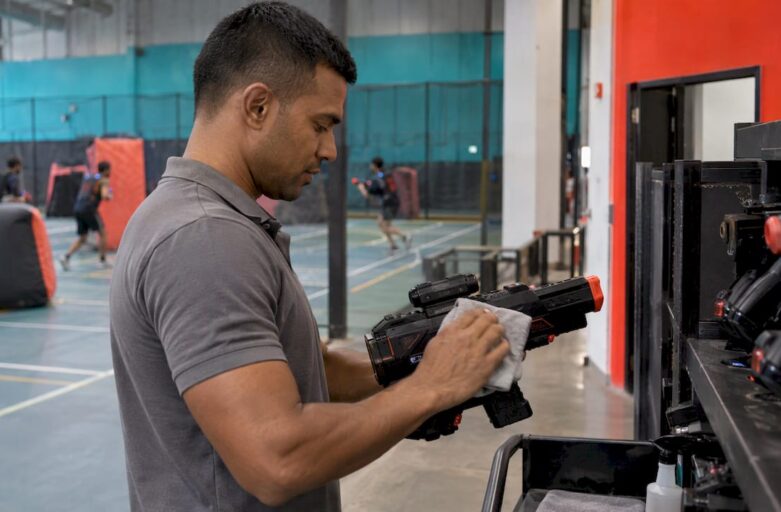
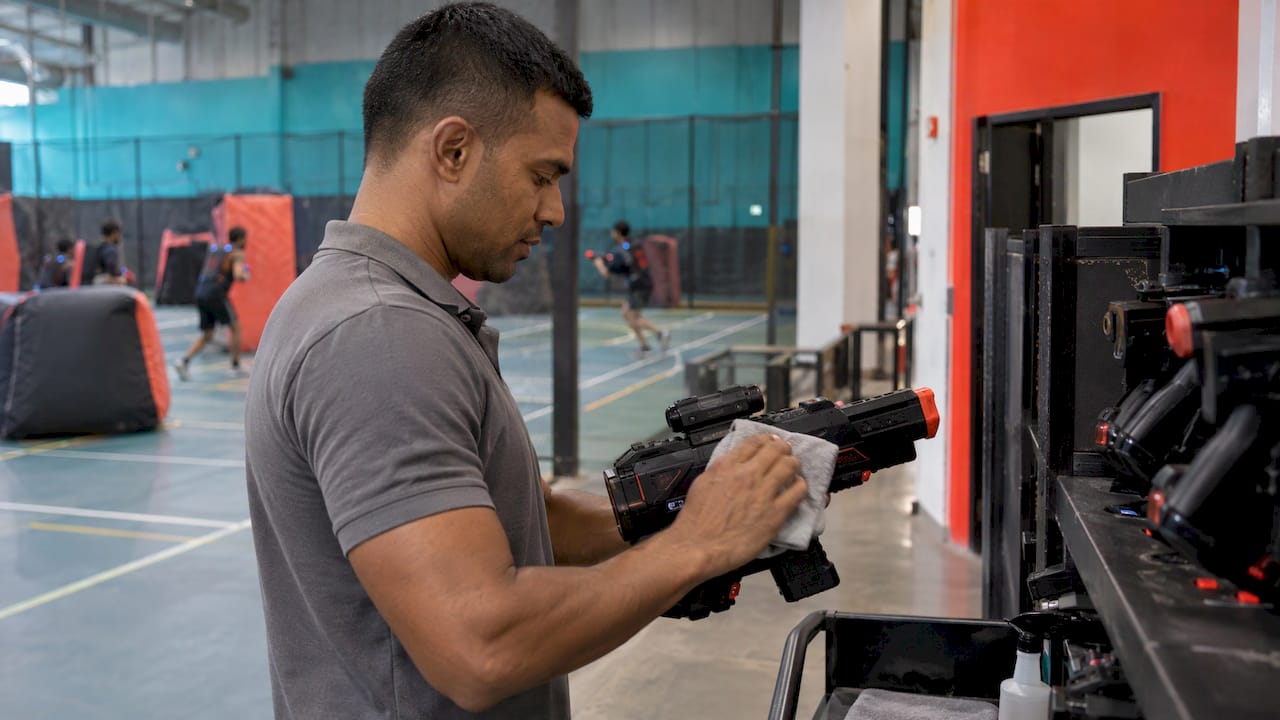
Good hygiene at a laser clay event comes down to three habits: wipe the shared touch points between groups, give every player a clear moment to wash or sanitise their hands, and keep each group’s flow through the venue orderly. Because laser clay has no lead shot, no powder and no clay debris, the cleaning job is closer to running a games room than a firing range. This guide sets out what to do before, during and after a session, using Singapore’s own cleaning and workplace guidance.
TL;DR
- Treat the laser guns, scoreboard tablets, headsets, handles and door touch points as high-touch surfaces and wipe them between groups.
- Use a disinfectant such as diluted bleach or an alcohol-based product with at least 70% alcohol, and allow the contact time on the label.
- Spray onto a cloth, not onto the equipment, and wipe from clean areas towards dirty ones.
- Ask players to wash hands with soap for 20 seconds before and after, and not to share personal items.
- Lead-related range precautions such as washing off residue do not apply to laser clay, but laser licensing and crowd planning still do.
Table of Contents
- What laser clay involves, and why hygiene still matters
- Which surfaces need attention
- How to clean shared laser clay equipment
- What players should do before and after
- Group flow and crowd planning
- Do conventional range hygiene rules apply?
- Laser safety and licensing for Singapore organisers
- A simple hygiene checklist for your event
- Our perspective on laser clay hygiene
- Book a laser clay session
- FAQ
- Sources
What laser clay involves, and why hygiene still matters
Laser clay is a simulated form of clay shooting. Players use laser guns instead of shotguns to hit round clays released from a trap, and the hits are recorded electronically, usually with simulated gun and clay-breaking sounds. The guns use infrared technology and sensors, and the clay targets can be reused.
That last point is the reason hygiene deserves a plan. A group of 10 to 40 people passes the same few guns from hand to hand, taps the same scoreboard and queues at the same station. Nothing about the activity is dirty, but shared objects and close contact are how colds and stomach bugs travel at any group event.
Singapore’s workplace guidance for the entertainment sector says it plainly: staff are in frequent close contact with guests, which promotes the spread of infectious diseases. The controls it lists are simple: good personal hygiene, hand washing with soap and water or an alcohol-based sanitiser, and frequent disinfection of common areas.
Which surfaces need attention
The National Environment Agency (NEA) tells premises to pay special attention to high-touch surfaces, including electronic devices, doorknobs and handles. Map that to a laser clay setup and the list is short.
| Touch point | Why it needs wiping | When |
|---|---|---|
| Laser guns (grips, triggers, stocks) | Held by every player in turn | Between groups, and between rounds in a long session |
| Electronic scoreboard or scoring tablet | Tapped by facilitators and players | Between groups |
| Ear or sound accessories, if used | Close contact with face and hair | Between users |
| Door handles, gate latches, railings | Touched on entry and exit | Before the session and at the end of the day |
| Tables, chairs and registration area | Where bags, drinks and food are placed | Before and after the session |
| Reusable clay targets and the trap area | Handled when reset by staff | At setup and pack-down |
If the venue is a sports facility or school hall, the same logic applies. During the pandemic, SportSG and MOE required that all touch points be wiped down at the end of each day of public use, on top of regular cleaning. That rule was written for a specific period, but it is a sensible baseline for any shared hall.
How to clean shared laser clay equipment
Follow NEA’s method rather than inventing your own. It is built to avoid spreading germs while you clean.
- Choose the right product. NEA recommends an appropriate disinfectant, such as diluted bleach or alcohol-based products with at least 70% alcohol. Check the equipment maker’s care instructions first, since bleach is not suitable for every plastic, finish or electronic surface.
- Respect contact time. The disinfectant has to stay wet on the surface for the time on its label. Wiping it off at once defeats the purpose.
- Spray onto the cloth. With a spray bottle, NEA advises spraying onto a cloth instead of directly onto the surface, to avoid splashes that can spread pathogens. This also keeps liquid away from sensors and scoreboard electronics.
- Wipe in one direction. Use a steady motion from clean to dirty areas, not scrubbing back and forth.
- Change the cloth when it is soiled, and keep a dedicated bag for used cloths.
The Football Association of Singapore’s return-to-play guidance used a similar principle for sport: training equipment disinfected after each use, with personal equipment not shared. For laser clay, the practical version is a rotation. Keep a few spare guns so one set can be wiped and dried while another is in play.
What players should do before and after
Most of the hygiene benefit comes from the players themselves, so make it easy and visible.
Before the session
- Brief the group at the start: wash hands, or use sanitiser at the entrance, before picking up a gun.
- Ask anyone who is unwell to sit out. HealthHub’s advice is to wash hands frequently with soap and water for 20 seconds, including when unwell, and not to share personal items such as towels.
- Tell players to bring their own water bottle and keep it away from the shooting lane.
After the session
- Make hand washing part of the exit routine, before food, drinks or cake are served. This matters most at birthday parties, where children go straight from the activity to the table.
- Wash hands after using public toilets, as the football guidance says, and keep handling of shared equipment to what the game needs.
- Facilitators wipe the guns and scoring device before the next group takes them.
None of this slows a session noticeably. A sanitiser stand at the entrance and a two-minute wash break before refreshments cover most of it.
Group flow and crowd planning
Hygiene is also about space. The more people bunch at a lane, the more contact there is. Singapore’s workplace guidelines for crowded events recommend that staff are trained to handle crowds, that organisers gather information such as crowd size in advance, and that clear in-and-out procedures and an emergency plan exist.
For a laser clay event, that translates into:
- Splitting a large group into squads that rotate, rather than everyone queuing at once.
- Marking a waiting area away from the shooting line, with its own hand sanitiser.
- Naming one person from the host organisation who stays present throughout. The school-facility rules of 2020 also required the person who booked the facility to be present during play.
- Keeping bags, food and drinks in a separate zone.
Our own planning notes cover the staffing side in one operator and one marshal per 10 players, and the setup side in three checks planners must run.
Do conventional range hygiene rules apply?
People searching this topic often land on pages about real clay shooting, so it helps to separate the two.
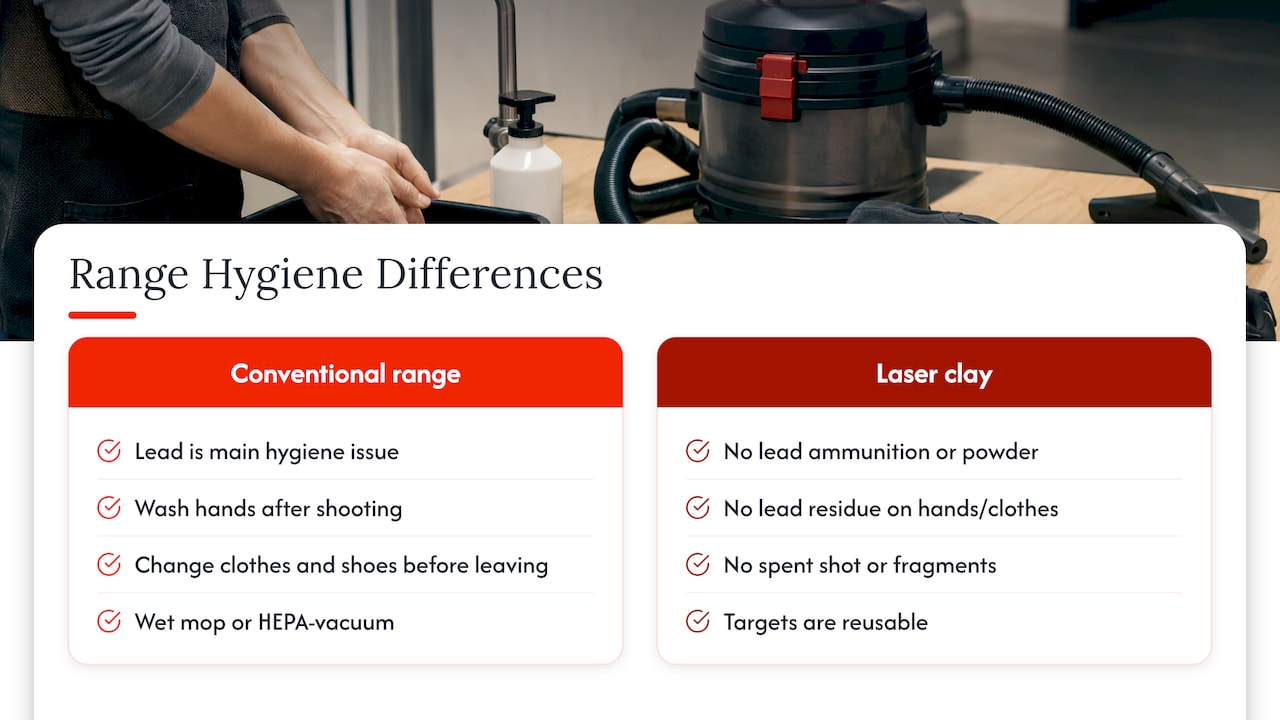
At a conventional range, lead is the main hygiene issue. Public health guidance for shooting ranges says to wash hands, wrists and forearms immediately after shooting, before contact with others or eating and drinking, and to change clothes and shoes before leaving. Cleaning inside a firing range calls for wet mopping or HEPA vacuuming and respirators, because of lead dust.
Laser clay uses no lead ammunition and no powder, so there is no lead residue on hands, clothes or floors, and no spent shot or broken target fragments to clear away. Our targets are reusable. What remains is ordinary shared-equipment hygiene, which is what the rest of this guide covers. Hand washing before refreshments is still a good habit, simply for the reason it is at any group activity.
If you want to know how the activity works with no protective gear, see how laser clay works without protective gear.
Laser safety and licensing for Singapore organisers
Hygiene is one side of safe operation. The other is the laser itself, and Singapore regulates it.
- Licensing. Licences are required to manufacture, sell, possess, use, import or export Class 3b or Class 4 laser apparatus. An organisation possessing a controlled apparatus needs an N2 licence for each one, and the operator needs an N3 licence unless an exemption applies. The manufacturer is responsible for classifying the laser correctly.
- Operators. NEA states that a laser radiation worker must be at least 18 years old, adequately trained and licensed to operate controlled lasers.
- Penalties. Dealing with controlled apparatus without a licence can bring a fine of up to $100,000, imprisonment of up to 5 years, or both.
- Why it matters. NEA notes that eyes and skin are the two main organs at risk, and that infrared beams are invisible, which adds to the hazard.
These rules concern the equipment supplier and operator, not the guests. As an organiser, the useful step is to ask your provider which laser class and licensing apply to the system you will be using. Our guide to laser shooting safety for offices walks through the planner’s side, and the child-safe shooting activity guide covers parents.
A simple hygiene checklist for your event
One week before
- Confirm group size, venue type (indoor or outdoor) and whether there are children, so squads and sanitiser points can be planned.
- Tell participants in the invitation that anyone unwell should stay home.
- Agree who from your side stays present throughout.
On the day, before the first group
- Wipe door handles, tables and registration points.
- Place sanitiser at the entrance and at the waiting area.
- Set out the cloths, disinfectant and a bag for used cloths.
Between groups
- Wipe guns, grips, triggers and the scoring device, spraying onto the cloth first.
- Let the contact time pass before the next squad picks them up.
After the event
- Wipe all touch points again, as the SportSG and MOE rule required of shared sports facilities at the end of each day.
- Pack reusable clays and equipment, and leave the space clean for the next booking.
Our perspective on laser clay hygiene
Hygiene at a laser clay event should be easy for the host, not a burden. That is one reason the format suits groups: there is no lead, no powder and no broken debris, so the cleaning task is small and clear.
Our sessions are fully facilitated, and the format works for ages 10 and up, indoors or outdoors. A facilitator running the lane means one trained person controls who holds the equipment and when, which is the most practical way to keep a shared set of guns orderly.
Our advice to organisers is to plan hand hygiene into the programme the same way you plan the refreshments. Put the sanitiser where people will see it, build a short wash break before food, and ask for the squads to rotate. Players enjoy the game more when the logistics are calm.
Because the clays are reusable and the activity is quiet and lead-free, we think laser clay is a sound choice for schools, offices and parties that care about safety and the environment. If you have specific venue or hygiene requirements, tell us when you book and we will plan around them.
Joshua
Book a laser clay session
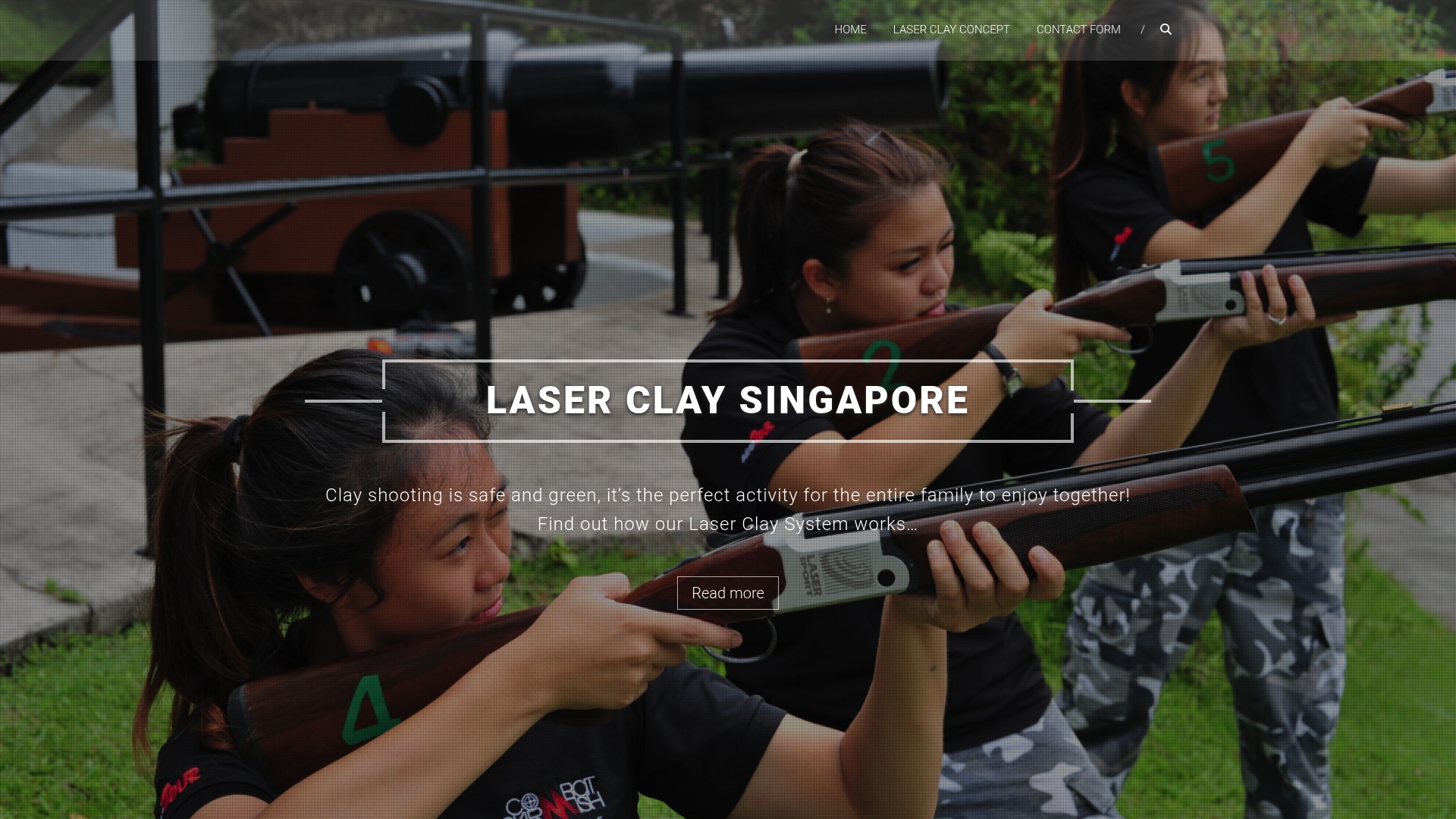
If you are planning a team event, party or school camp, we bring the equipment, facilitators and setup to your venue, with game formats and scoring tailored to your group. Our Corporate Laser Clay Package is S$69 per person, our birthday party package starts from S$49 per person, and system rental is S$500 to S$800 per hour.
To discuss venue-specific hygiene needs, use our contact page and we will respond with a plan for your group.
FAQ
Do laser clay guns need to be disinfected between players?
Shared guns are high-touch items, so wiping them between groups, and between rounds in a long session, is a sensible routine. NEA’s guidance is to use diluted bleach or a product with at least 70% alcohol, applied with a cloth and left for the contact time. Check the equipment maker’s instructions for what the surfaces tolerate.
Should players wash their hands after laser clay?
Yes, as they would after any shared group activity, especially before eating. HealthHub recommends washing with soap and water for 20 seconds. Laser clay leaves no lead or powder residue, so the reason is general hygiene, not contamination from ammunition.
Is there lead or dust in laser clay shooting?
No. The activity uses laser guns and reusable targets, not lead ammunition, so the lead precautions used at conventional ranges do not apply. Standard cleaning of shared surfaces still does.
Do I need a licence to run a laser clay event in Singapore?
NEA requires licences for possessing and using Class 3b or Class 4 laser apparatus, with an N2 licence for the organisation’s apparatus and an N3 licence for the operator unless exempt. Ask your provider how the system they supply is classified and licensed, and check NEA’s pages for the current rules.
How can a parent keep a birthday party hygienic?
Place sanitiser at the entrance, hold a short hand-washing break before the cake and food, and ask children who are unwell to stay home. Keep bags and drinks away from the shooting area and let the facilitator manage who holds the equipment.
Sources
- Laser clay pigeon shooting, Scouts UK
- NEA: Guidelines for Cleaning and Disinfecting Premises
- WSH Guidelines on Hospitality and Entertainment Industries 2022
- CNA: Selected school sport facilities to reopen for public use
- FAS: Safe Return to Football
- HealthHub: Protect Yourself and Others Against the Flu
- NEA: Frequently Asked Questions on Lasers
- NEA: Summary of Non-Ionising Radiation Regulations
- NEA: Advisory on non-ionising irradiating apparatus under the Radiation Protection Act 2007
- Georgia DPH: Lead poisoning, shooting range exposure