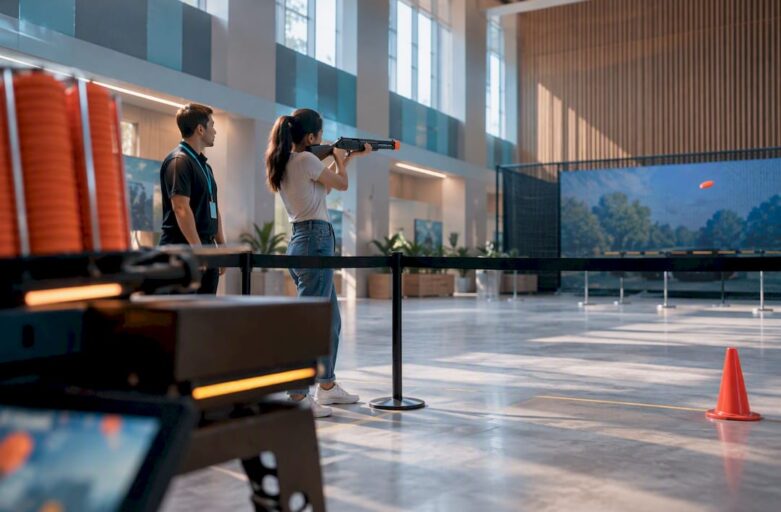
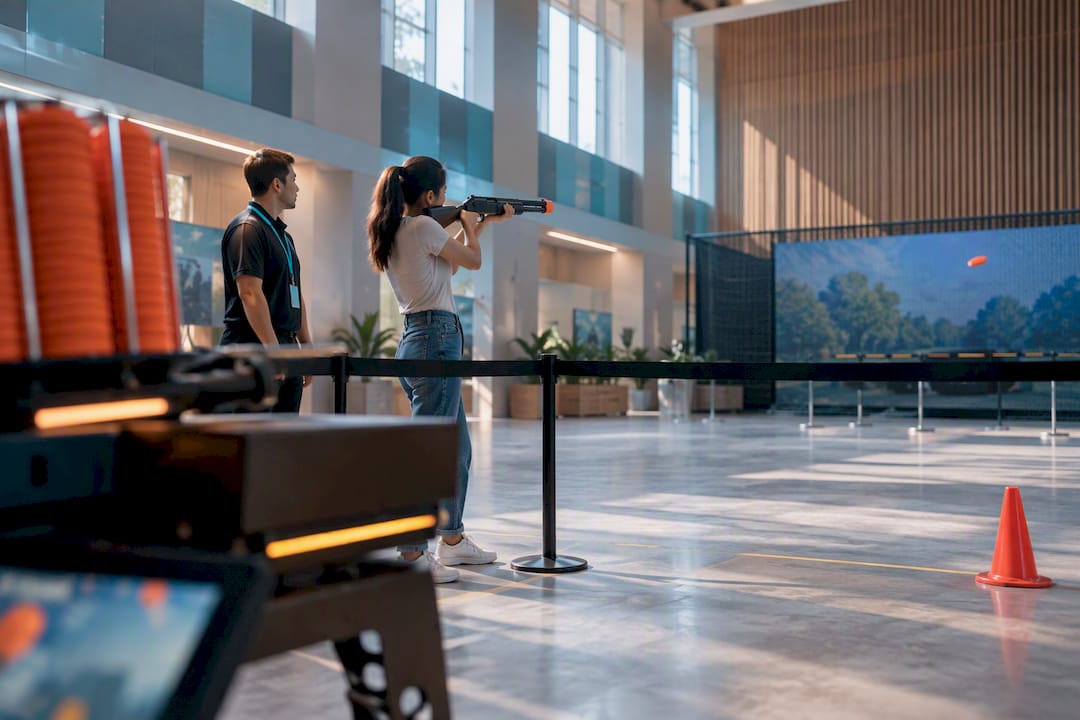
Before booking a single laser clay session in Singapore, check the laser classification of your equipment against NEA rules and confirm whether SPF venue approval applies under GEWCA. Most low-power infrared systems clear both hurdles quickly. Higher-powered kit does not. Get the classification in writing from your equipment supplier or organiser before you send out invitations, let alone take deposits.
TL;DR:
- Most low-power laser systems used for laser clay in Singapore do not require NEA licensing, but higher-powered equipment does and must be confirmed in writing beforehand.
- SPF approval is separate and applies if equipment resembles firearms or if the setup mimics a shooting range, regardless of laser classification.
- Organisers need to get written laser classification from suppliers, and if necessary, apply for possession and user licences, which include medical eye-examinations for operators.
- Venue approval and range licences are required if deactivated firearms or live-fire mimicking setups are involved, with documents like safety and emergency plans needed beforehand.
- Starting the licensing process early, especially securing the medical certificate, is crucial to meet event timelines and avoid financial or legal risks.
Table of Contents
- Which Singapore laws and authorities govern laser clay events
- How laser classes decide which licences you need
- When venue approvals or range licences kick in
- Step-by-step checklist for getting licences and venue approvals
- Risk management and insurance before you apply
- Practitioner notes on delivering compliant events
- What the rules actually mean for event planners
- Book a compliant event instead of managing the paperwork yourself
- Official pages to start an application or confirm rules
- Sources
- FAQ
Which Singapore laws and authorities govern laser clay events
Two separate legal frameworks can apply to a laser clay event, and organisers regularly confuse them. The first is radiation safety law, enforced by the National Environment Agency (NEA), which governs the laser device itself. The second is weapons law, enforced by the Singapore Police Force (SPF) under the Guns, Explosives and Weapons Control Act 2021 (GEWCA), which governs anything that looks, functions, or is used like a firearm.
NEA’s remit kicks in the moment your equipment uses a laser above a certain power threshold. The agency classifies devices into risk classes and requires licences for manufacturing, possessing, using, importing or exporting anything in the higher-risk bands, according to NEA’s own guidance.
SPF’s remit is separate and turns on the equipment’s form and the activity’s format, not the laser inside it. If your setup uses deactivated shotguns, replica firearms, or a range-style layout resembling airsoft or paintball, GEWCA licensing and venue approval can apply regardless of the laser classification, per SPF’s gun and weapon licence guidance.
Practically, this means:
- Contact NEA first if your only question is about the laser device’s power and classification.
- Contact SPF if your equipment includes anything resembling a firearm, regardless of laser output.
- Assume both may apply if you are running a public or ticketed event with replica shooting equipment and a laser targeting system.
- Ask your equipment provider for written classification and licence status before signing a venue contract.
How laser classes decide which licences you need
Singapore follows the standard international laser risk scale: Class 1, 2, 3a, 3b and 4, running from essentially harmless to genuinely dangerous to the eye. Classes 1 and 2 cover low-power devices such as laser pointers and most consumer laser tag systems, and they typically sit outside NEA’s licensing net. Classes 3b and 4 are a different matter entirely.
Statistic to know: NEA requires a licence for the manufacture, sale, possession, use, import or export of any Class 3b or Class 4 laser apparatus, with no exceptions for one-off or short-term events, according to NEA’s FAQ page.
If your equipment falls into that controlled bracket, two licence types govern it:
- N2 (possession licence): held by the organisation that owns or stores the laser apparatus.
- N3 (user licence): held by the individual operating it, and this one has a real gating step: applicants must submit a medical eye-examination certificate (form MC-2) from an ophthalmologist before approval, as GoBusiness explains/N3—Licence-to-use-laser).
N3 fees scale with the licence validity period, available in various term lengths, so match the licence length to your event calendar rather than defaulting to the longest option.
When venue approvals or range licences kick in
A venue hosting laser clay shooting can be treated the same way SPF treats an airsoft or paintball range, particularly when the equipment includes deactivated firearms or a fixed shooting layout. That triggers a separate approval track from the laser licensing above, and it is the one organisers most often overlook until a venue manager asks for paperwork they don’t have.
Under GEWCA, SPF requires a licence for possessing, using, storing or transporting guns or weapons, and this extends to venue-level approval for entertainment activities that mimic live-fire shooting sports, per SPF’s licensing directory. The supporting paperwork SPF typically asks for includes:
- A company letter confirming the applicant’s identity and purpose.
- GEW (guns, explosives, weapons) information specific to the equipment used.
- A layout plan of the venue and shooting area.
- A safety management plan (SMP) covering exclusion zones and emergency procedures.
- Security plans and an emergency response plan.
- Staff training records showing operators know the equipment and the protocol.
These documents come straight from SPF’s own gun licence application guideline. Fee examples on the SPF/GoBusiness pages include an $80 range operator licence and venue approval fees around $500 per range for non-firearm shooting setups, though exact figures depend on your specific configuration.
Step-by-step checklist for getting licences and venue approvals
Getting this right is mostly a sequencing problem. Do the steps in the wrong order and you’ll find yourself booking a venue before you know if you’re even allowed to use the equipment there.
- Confirm the laser class first. Get written classification from the manufacturer, and don’t assume “low power” without documentation, since NEA can measure output independently.
- Decide who applies. The organisation typically holds the N2 possession licence, while the individual operator applies for N3. Filing runs through GoBusiness using Singpass or CorpPass.
- Assemble your documents early. You’ll need a UEN or company letter, GEW information if firearms-style equipment is involved, a layout plan, an SMP, an emergency response plan, staff training logs, and, for N3, the medical eye-examination certificate.
- Submit and expect follow-up. GoBusiness applications can trigger inspections or requests for clarification, so build buffer time into your event timeline rather than applying the week before.
Pro Tip: Book the ophthalmologist eye exam for N3 applicants the moment you decide to run the event. It’s the one step with a fixed external appointment, and it has derailed more event timelines than any paperwork delay.
Importing your own high-class laser equipment without prior licensing carries real financial risk. NEA notes that customs can seize misclassified devices, and licence fees can exceed the cost of the device itself, so renting from a provider that already holds N2/N3 status is usually the lower-risk route, per NEA’s guidance.
Risk management and insurance before you apply
Licences confirm you’re legally allowed to run the event. They don’t make it safe. That’s a separate job, and it’s the one venue managers and insurers will actually scrutinise.
Build these controls into your event plan before you approach NEA or SPF, because both authorities expect to see them documented:
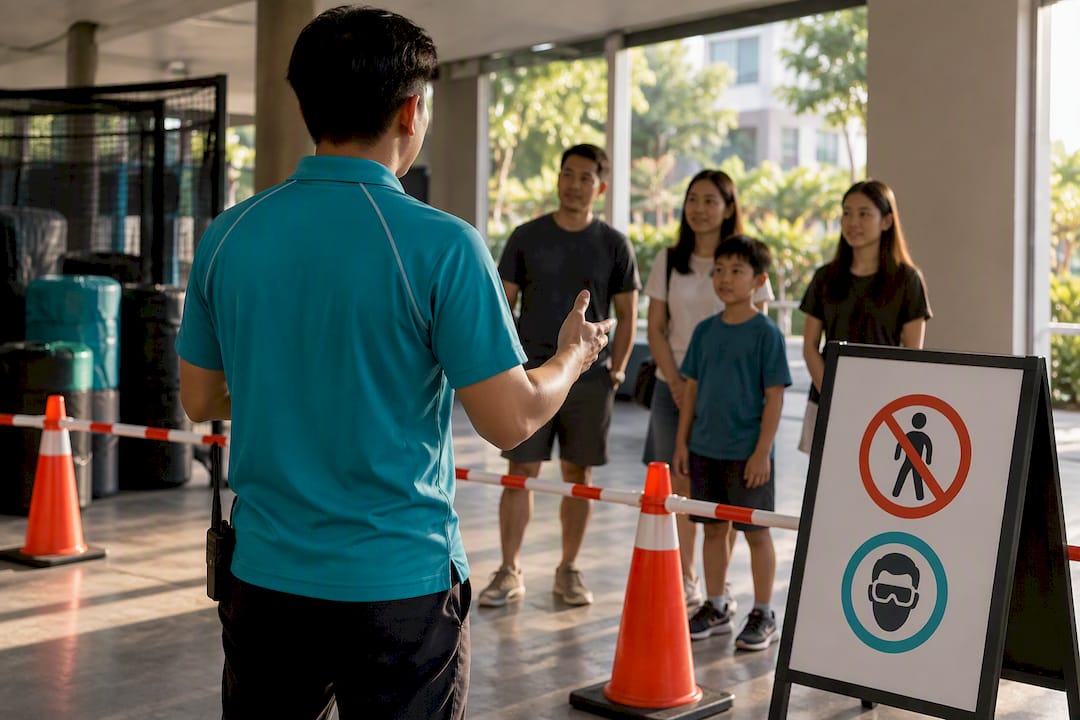
- Clear exclusion zones separating shooters from spectators and staff.
- Labelled equipment showing laser class and safe-handling instructions.
- Trained operators briefed on the specific setup, not generic safety training.
- Safe backstops or traps positioned to contain any stray beam or projectile.
- First-aid provision and a written emergency procedure for the venue.
Public liability and event insurance matter here too. Many venues in Singapore won’t confirm a booking without proof of cover, and it protects you if an attendee is injured regardless of how tight your NEA or SPF paperwork is.
Pro Tip: Photograph your exclusion zone signage and safety briefing before doors open. If an incident report ever needs filing, dated evidence of your controls is worth more than any verbal assurance.
Practitioner notes on delivering compliant events
Joshua covers regulatory and safety topics for event organisers across Singapore, with a particular focus on activities that sit at the intersection of entertainment and controlled equipment.
Laser Clay runs facilitated events using trained operators, reusable eco-friendly clays, and sound-simulated deactivated shotguns, an approach that sidesteps much of the classification complexity above by design. Safety management plans and staff training records are built into how each event is set up, mirroring what NEA and SPF expect to see on paper.
If your event involves imported Class 3b/4 equipment, a complex multi-vendor venue, or cross-border equipment hire, get a specialist or legal adviser involved before you sign contracts. The paperwork gets genuinely complicated fast, and the cost of getting it wrong is higher than the cost of a proper check.
What the rules actually mean for event planners
Most of the compliance anxiety around laser clay events in Singapore is misplaced. Organisers worry about NEA licensing when their equipment is Class 1 or 2 and needs none of it, then skip the SPF venue documentation that actually applies because their gear includes deactivated shotguns. The classification question and the venue-format question are separate, and treating them as one blurs both.
The conventional advice, “check if you need a permit,” is too vague to act on. The real task is narrower: get written laser classification, then separately assess whether your equipment or venue layout resembles a shooting range under GEWCA. Skip either check and you’re gambling with a booking, not planning one.
What should come first? Classification, always. It’s the cheapest, fastest step, and it tells you immediately whether you’re dealing with a five-minute confirmation or a multi-week licensing process. Everything else, venue documents, insurance, staff training, follows from that answer.
— Joshua
Book a compliant event instead of managing the paperwork yourself
Laser Clay exists precisely for organisers who want the fun of clay shooting without navigating NEA classification tables or SPF venue documentation themselves. Because the system runs on low-risk laser technology with reusable targets and deactivated shotguns, most of the regulatory weight described above simply doesn’t land on your event.
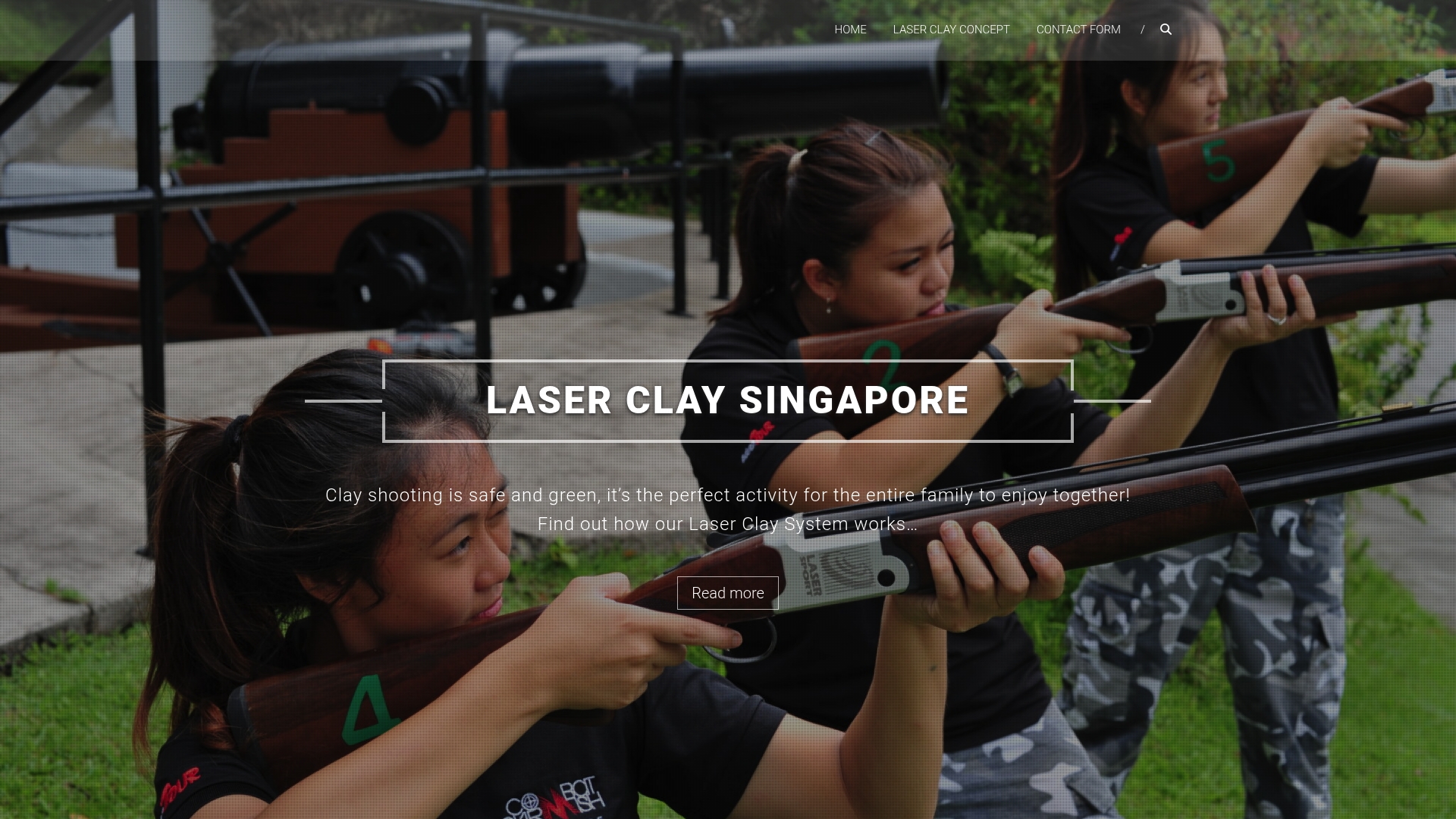
For corporate teams, the Corporate Laser Clay Package at 69 SGD per person includes facilitators who manage setup and safety briefings on-site. Planning a birthday celebration instead? The birthday party package starts from 49 SGD per person and covers the same facilitated, compliant delivery. If you need equipment on your own venue with support, the System Rental option runs 500 to 800 SGD per hour, with facilitators handling the operational side.
Get in touch through the contact page to talk through your event format and confirm what, if anything, still needs checking before you book.
Official pages to start an application or confirm rules
Bookmark these before you file anything, since requirements do get updated:
- NEA’s laser FAQ for classification rules and licence types.
- SPF’s gun or weapon licence directory for GEWCA approvals and venue documentation.
Treat these as your final word over any third-party summary, including this one, since agencies do revise fee bands and document requirements.
This article is general information, not a substitute for advice from a qualified lawyer. Consult a qualified legal professional about your own circumstances before acting on anything here.
Sources
- NEA | Frequently asked questions on lasers
- Gun or Weapon Licence | Licence & Accreditation – GoBusiness
FAQ
Do I need an NEA licence for laser clay shooting in Singapore?
Only if your equipment uses a Class 3b or Class 4 laser. Most laser tag and laser clay systems, including Laser Clay’s setup, use lower-power lasers that fall outside NEA’s licensing requirement, but always confirm classification in writing with your provider.
What is the difference between an N2 and N3 licence?
N2 is a possession licence held by the organisation owning controlled laser apparatus, while N3 is a user licence held by the individual operator, which requires a medical eye-examination certificate, as detailed on GoBusiness.
When does SPF approval apply to a laser clay event?
SPF approval under GEWCA typically applies when equipment resembles firearms, such as deactivated shotguns, or when the venue is set up like a shooting range, per SPF’s guidance. This runs separately from any laser classification check.
How much does Laser Clay cost for a corporate event?
The Corporate Laser Clay Package is 69 SGD per person, covering facilitated setup and equipment for team-building events. Full details are available on the corporate package page.
How long does it take to get the necessary approvals?
Timelines vary by licence type and venue, but the N3 medical certificate and document assembly for SPF approval are usually the slowest steps. Start the process several weeks ahead of your event date rather than assuming a quick turnaround.