Setting up a laser clay shooting range typically takes 60 to 90 minutes from arrival to first shot, with most sessions running 30 to 120 minutes depending on group size and format. Compact single-lane systems can be staged faster, sometimes in a matter of minutes, while multi-lane outdoor setups generally take longer. Site access, power distance and the number of lanes are the biggest swing factors. These variables are generally included in event quotes.
TL;DR:
- Setting up a laser clay shooting range usually takes 60 to 90 minutes, with indoor installs generally requiring about an hour for testing and calibration.
- Small, compact systems can be prepared in under 15 minutes if venue access and equipment placement are straightforward.
- Larger outdoor or multi-lane setups demand more time for site setup, equipment positioning, safety buffers, and environmental adjustments.
- Group size and event format significantly impact shooting time, with corporate events lasting up to two hours and small parties needing around 30 minutes of active shooting.
- Staffing should arrive 45 to 90 minutes before the first session, focusing on safety briefings, equipment calibration, and site setup to stay on schedule.
Table of Contents
- How session duration scales with group size and event format
- From arrival to first shot: a realistic setup timeline
- Site and equipment requirements that affect setup time
- Indoor vs outdoor: which setup is faster?
- Staffing and safety: who needs to be on site, and when
- Copy-ready run-sheets for common event formats
- Planner perspective: three lessons from running multiple events
- Book a setup that stays on schedule
- Sources
- FAQ
How session duration scales with group size and event format
Setup time only tells half the story. The other half is how long people actually spend shooting once the range is live, and that depends far more on group size and format than most planners expect.
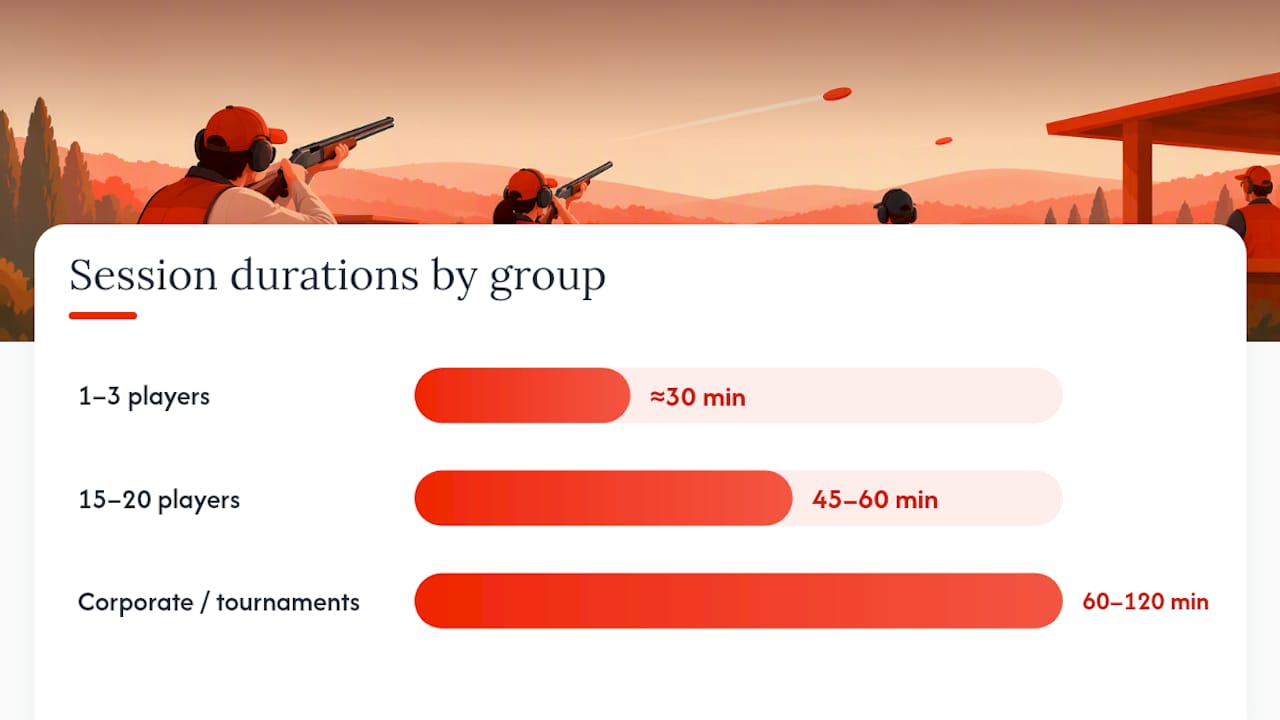
A single player or a small huddle of two or three friends needs about 30 minutes to get a real taste of the activity: a briefing, a few practice shots, then a scored round. Push the group to 15 or 20 people and you’re looking at 45 to 60 minutes, because rotation through the lane becomes the bottleneck rather than the shooting itself. Corporate team-building days or bracket-style tournaments regularly run 60 to 120 minutes, since they involve heats, scoreboard tracking and a break for prize-giving or debrief.
Lane count changes the maths directly. One lane processes one shooter (or one relay team) at a time; two lanes roughly halve the wait for the same headcount, though running two lanes adds around 1.2 times the single-lane setup time because there’s more kit to position and calibrate.
Format matters just as much as lane count:
- Relay format (teams take turns, scores tracked per round): predictable timing, easy to schedule back to back.
- Free-play format (guests drift in and out over an open window): better for parties and mixers, harder to timebox precisely.
- Competitive brackets: add 15 to 20 minutes for seeding and finals.
A safe rule of thumb: pad 10 minutes between booked slots for scoreboard resets and quick briefings for new arrivals.
From arrival to first shot: a realistic setup timeline
Setup isn’t one task, it’s a sequence, and knowing where the minutes go helps you spot where delays actually happen.
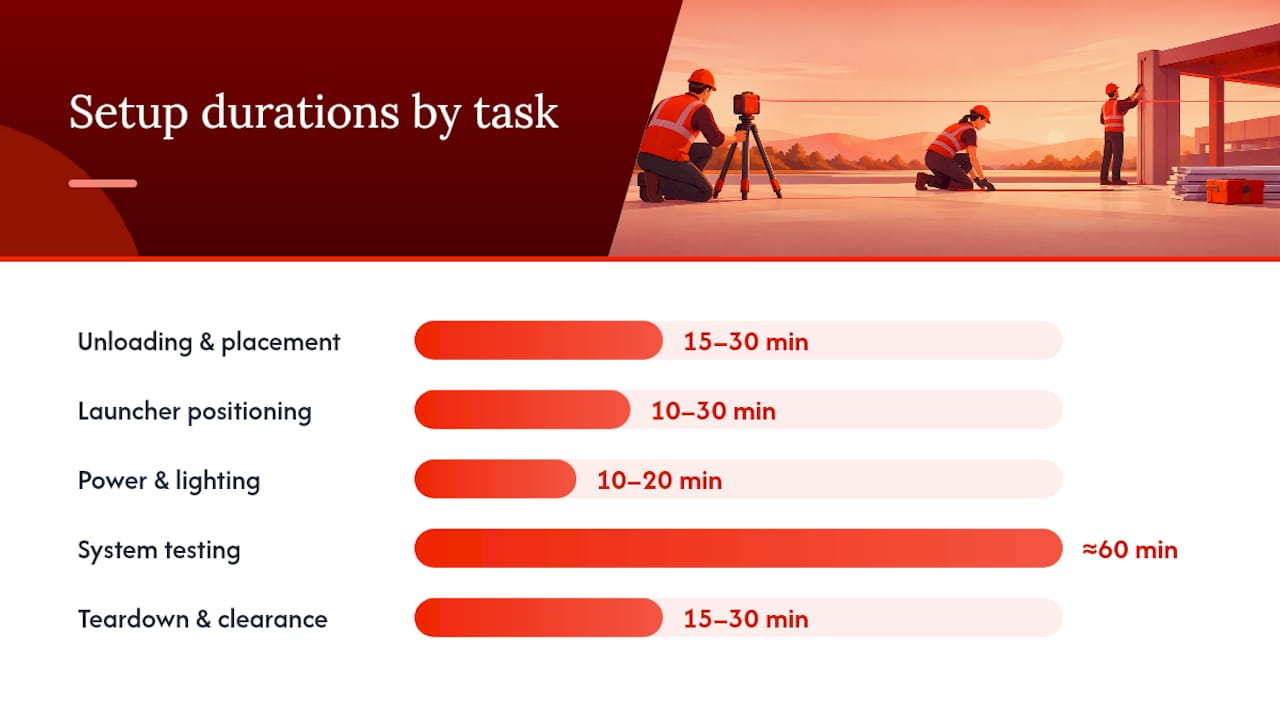
- Unloading and equipment placement (15 to 30 minutes) — depends heavily on lift access, loading bay distance and whether stairs are involved.
- Launcher positioning, anchoring and run-line marking (10 to 30 minutes) — longer runs and uneven ground both add time here.
- Power and lighting checks, cable routing (10 to 20 minutes) — this stretches out fast if the nearest power point is far from the shooting line.
- System testing and calibration, including gun pairing and scoreboard checks — indoor installs typically need about an hour in total once testing is included, and this step is where most of that hour goes.
- Safety briefing, equipment fitting and trial shots (5 to 15 minutes) before guests are allowed to shoot competitively.
- Teardown and site clearance (15 to 30 minutes), which planners often forget to budget into the venue’s booked hours.
Add it up and industry guidance consistently points to a 60 to 90 minute window for a full professional setup, testing included.
Pro Tip: Book your venue slot to include teardown, not just play time. A 90-minute activity block with no clearance buffer almost always runs into the next event’s setup window.
Site and equipment requirements that affect setup time
The venue itself can add or remove 20 minutes from your setup before anyone even touches the launcher. A few checks before booking day save real time on the day itself.
- Space footprint: full systems commonly need a run of 30 metres by 10 to 40 metres depending on configuration; compact alternatives can work in a function room or condo common area with a much smaller footprint.
- Longer runs take longer to rig: extra shooting-line length means more time marking boundaries and positioning safety buffers.
- Surface type: flat, stable ground speeds up launcher siting; uneven grass or sloped terrain adds 10 minutes or more.
- Access constraints: stairs, narrow lifts or a strict load-in window can turn a 20-minute unload into 40.
- Power and permissions: confirm a power point within reasonable cable-run distance, and check whether the venue requires a permit or noise clearance before you commit to a booking.
Our pre-event checklist for venue checks covers exactly these points before you sign off on a space.
Indoor vs outdoor: which setup is faster?
Neither environment is universally quicker; each trades one kind of delay for another.
- Wind, rain and direct sunlight all affect launcher calibration outdoors, sometimes adding a recalibration pass mid setup.
- Indoor venues offer controlled conditions but often demand longer access approval, especially in shared buildings with security desks or lift bookings.
- Outdoor sites usually allow faster load-in on open ground, but need wider safety buffers and, ideally, a shelter for the scoring desk.
- Backup plans matter: have an alternate indoor room or a marquee on standby, and build a flexible reschedule window into any outdoor booking made more than a few weeks out.
Staffing and safety: who needs to be on site, and when
A laser clay range isn’t self-running, and the people on site are part of what makes setup time predictable rather than chaotic.
At minimum, expect a lead technician, a safety marshal or facilitator, and a scoring assistant. Facilitators treat clear shooting lines, safety buffers and a full safety briefing as fixed parts of the setup sequence, not optional extras, because supervised trial shots before open play catch equipment issues before guests do.
- Staff should arrive 45 to 90 minutes before the first public slot, scaled to venue complexity.
- Extra hands shorten turnaround between rotations but add to the staffing cost, so weigh headcount against how tightly you need to pack the schedule.
- One dedicated venue contact who can unlock doors and point out power points removes most of the guesswork on arrival.
Pro Tip: If your event has back to back slots, request one extra scoring assistant. The equipment doesn’t need it, the queue does.
Copy-ready run-sheets for common event formats
Three timelines you can drop straight into an event schedule, adjusted for your own call times.
- Short party slot (30 to 45 minutes): arrival and brief (5 minutes), two to three rotations of shooting (20 to 30 minutes), wrap and prize moment (5 to 10 minutes). Works well for our birthday party package.
- Corporate slot (60 to 90 minutes): setup buffer already completed before guests arrive, warm-up round (10 minutes), competitive heats (30 to 50 minutes), debrief and scoreboard reveal (10 to 15 minutes). See our guide on organising a competitive office shooting event for bracket structures.
- Festival or all-day model: staggered shift handovers every two to three hours, a 10-minute maintenance and recalibration check between shifts, and staff breaks scheduled around natural lulls in footfall.
Whatever the format, pad your printed schedule and signage by 10 minutes either side, and confirm staff call times the night before, not the morning of.
Planner perspective: three lessons from running multiple events
Most delays trace back to one thing: nobody on site knew where the power point was. A five-minute call with the venue contact before load-in day fixes that. Beyond that, the only shortcuts worth taking are ones that skip admin, never the safety briefing or the calibration pass. Cut those and you’re not saving time, you’re borrowing risk.
— Joshua
Book a setup that stays on schedule
This service offers a combined staffed setup, tested equipment and a fixed slot duration in one booking, helping events stay on schedule. One Corporate Laser Clay Package at 69 SGD per person brings staffed setup, tested equipment and a fixed slot duration in one booking, so your run-sheet holds up on the day.
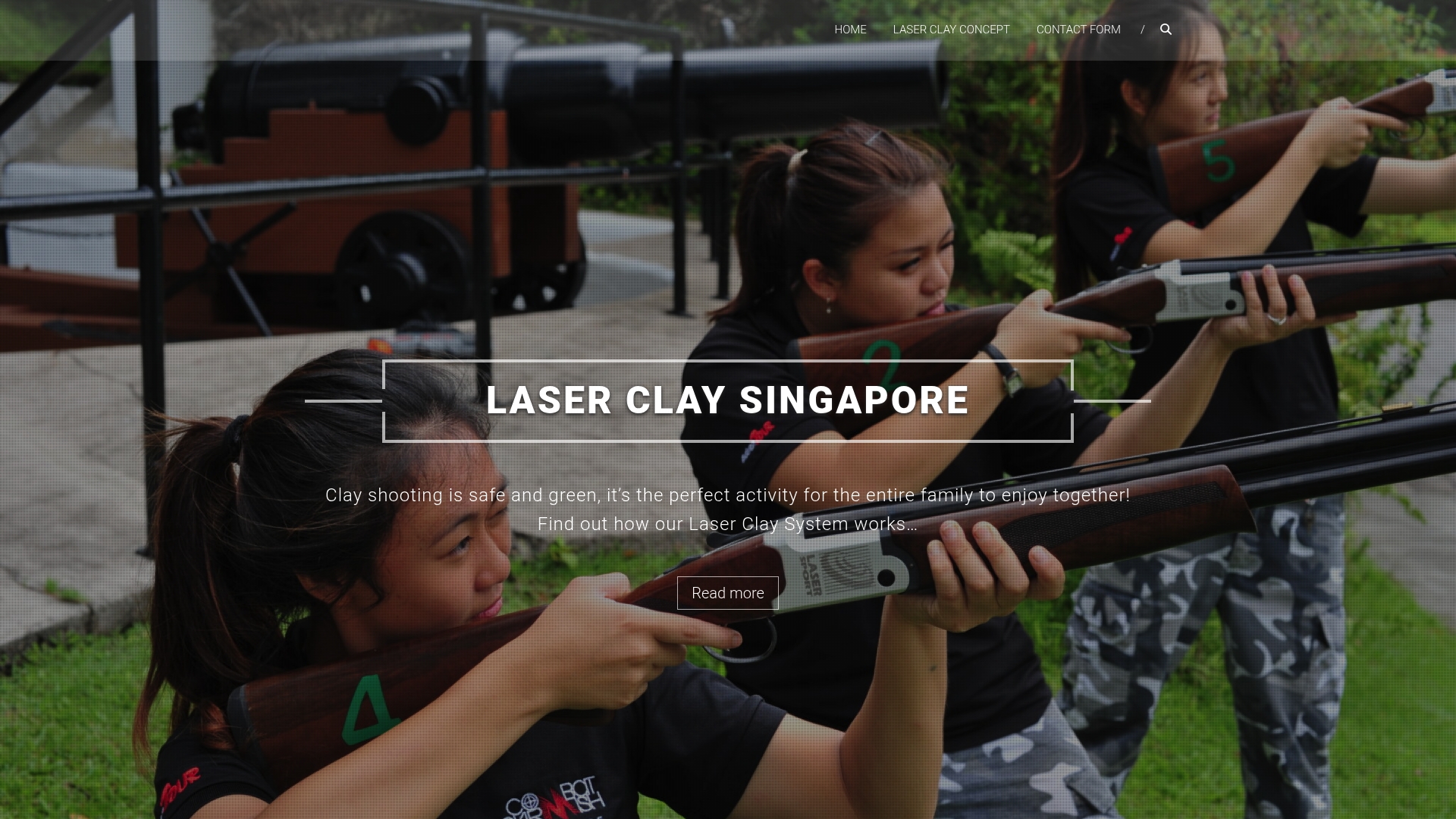
Bookings often include a facilitator-led safety briefing and system calibration as part of the setup period. Planning a birthday instead? The birthday party package starts from 49 SGD per person with the same staffed structure. If your venue already has trained staff on hand and you only need the kit, System Rental runs 500 to 800 SGD per hour. Get in touch through our contact page for a venue-specific timing quote before you lock in your event date.
Sources
For deeper venue pre-checks, the event-format guide confirms typical setup windows, indoor hire specifications detail install timing, and compact system listings show the lower bound for minimalist kit.
- Indoor Laser Clay Pigeon Shooting Hire | Laser Clay Hire
- Laser Clay Shooting Indoor – Matthews Leisure Gloucester
FAQ
How long does laser clay setup usually take?
Most professional setups take 60 to 90 minutes, covering equipment placement, testing and calibration, and a safety briefing. Compact single-lane systems can sometimes be ready in under 15 minutes if the venue is pre-checked.
How long should a laser clay session run?
Standard sessions run 30 to 120 minutes depending on group size, with small groups needing 30 minutes and corporate or tournament formats running 60 to 120 minutes. Multiple lanes reduce per-person wait time considerably for larger groups.
Does indoor or outdoor setup take longer?
Neither is consistently faster; outdoor setups avoid indoor access approvals but need wider safety buffers, while indoor venues offer controlled conditions with sometimes longer building access checks. Weather is the main outdoor variable that can add recalibration time.
What space does a laser clay range need?
Full systems typically need a footprint around 30 metres by 10 to 40 metres depending on configuration, while compact alternatives fit smaller function rooms or condo common areas. Confirm the exact run length required with your provider before booking a venue.
How much does Laser Clay cost for an event?
The Corporate Laser Clay Package costs 69 SGD per person, and the birthday party package starts from 49 SGD per person, both covering staffed setup. System Rental for organisers with their own staff runs 500 to 800 SGD per hour.