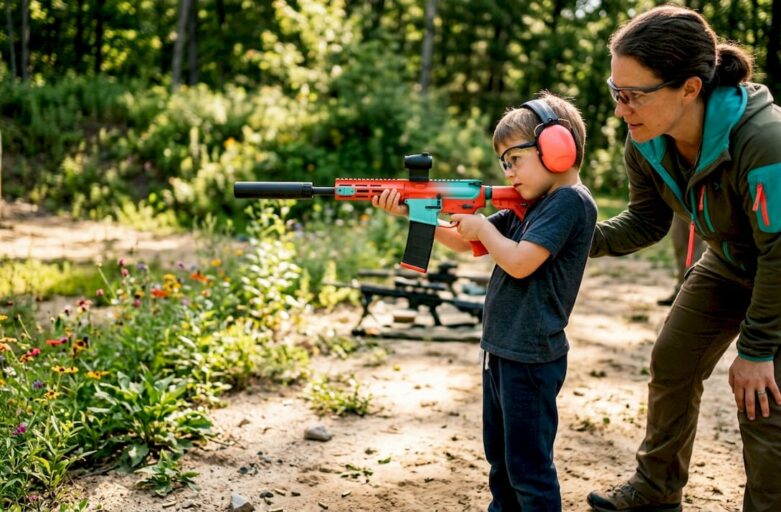
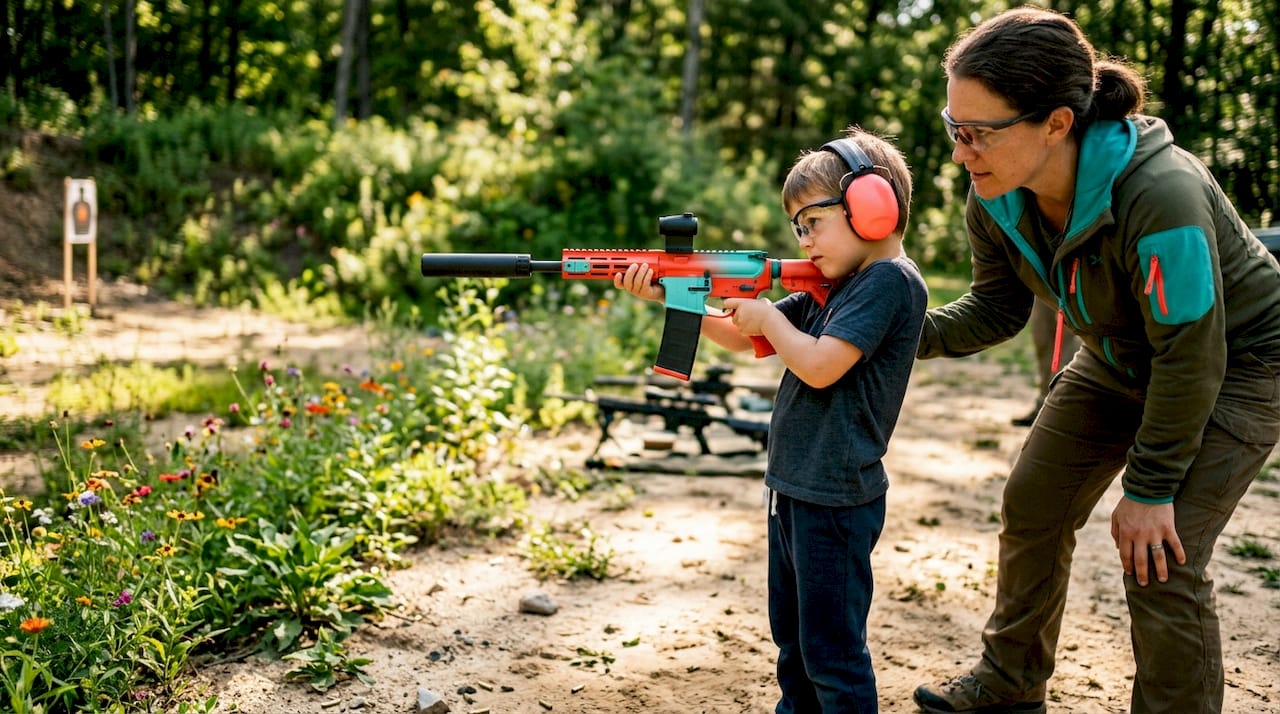
Noise-reduced shooting is defined as the use of suppressors, hearing protection, or both to lower the sound level of gunfire to a safer range for young ears. Standard unsuppressed rifles produce noise exceeding 140 decibels, enough to cause permanent hearing damage from a single shot. For children, whose ears are still developing, that risk is not theoretical. It is immediate. Understanding why noise-reduced shooting is safer for children is the first step every parent should take before introducing a child to shooting sports.
Why noise-reduced shooting is safer for children: the hearing damage risk
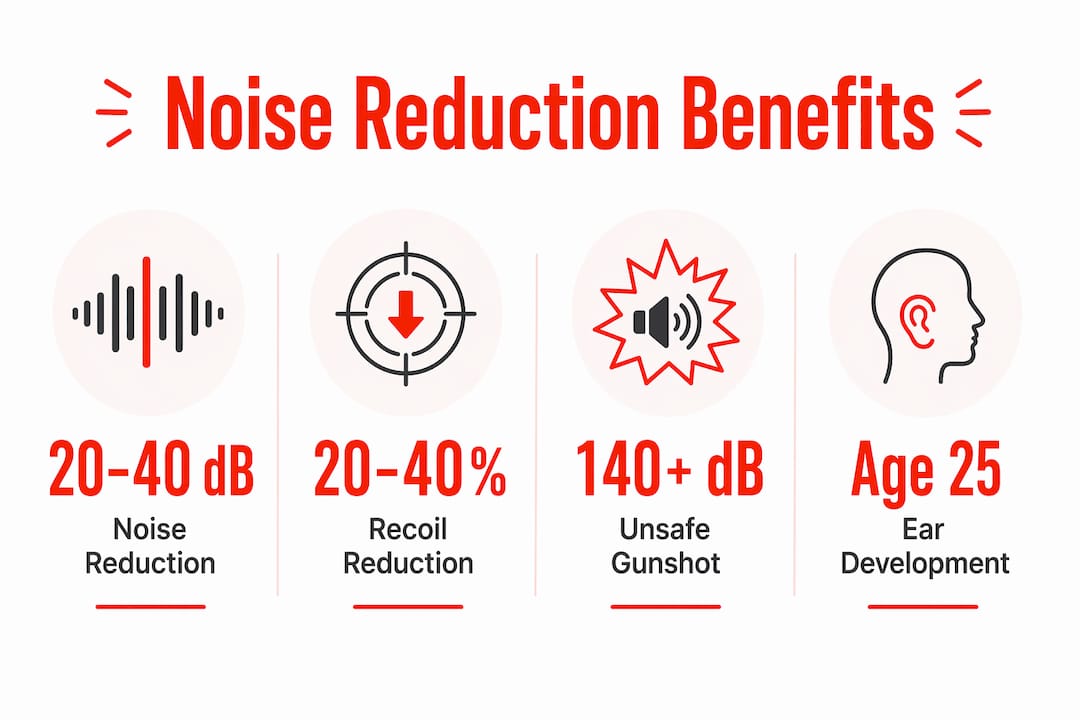
Children’s ears are not simply smaller versions of adult ears. Children’s ears develop until about age 25 and are measurably more sensitive to loud noise than adults’. Noise-induced hearing loss is permanent and cumulative. Damage often goes unnoticed for years after it occurs, which makes early prevention the only reliable strategy.
The core problem is the sheer volume of an unsuppressed gunshot. A standard rifle shot exceeds 140 decibels at the shooter’s ear. For context, the World Health Organisation identifies 85 decibels as the threshold above which prolonged exposure causes damage. A single shot at 140 decibels sits well above the level that causes instant, irreversible harm.
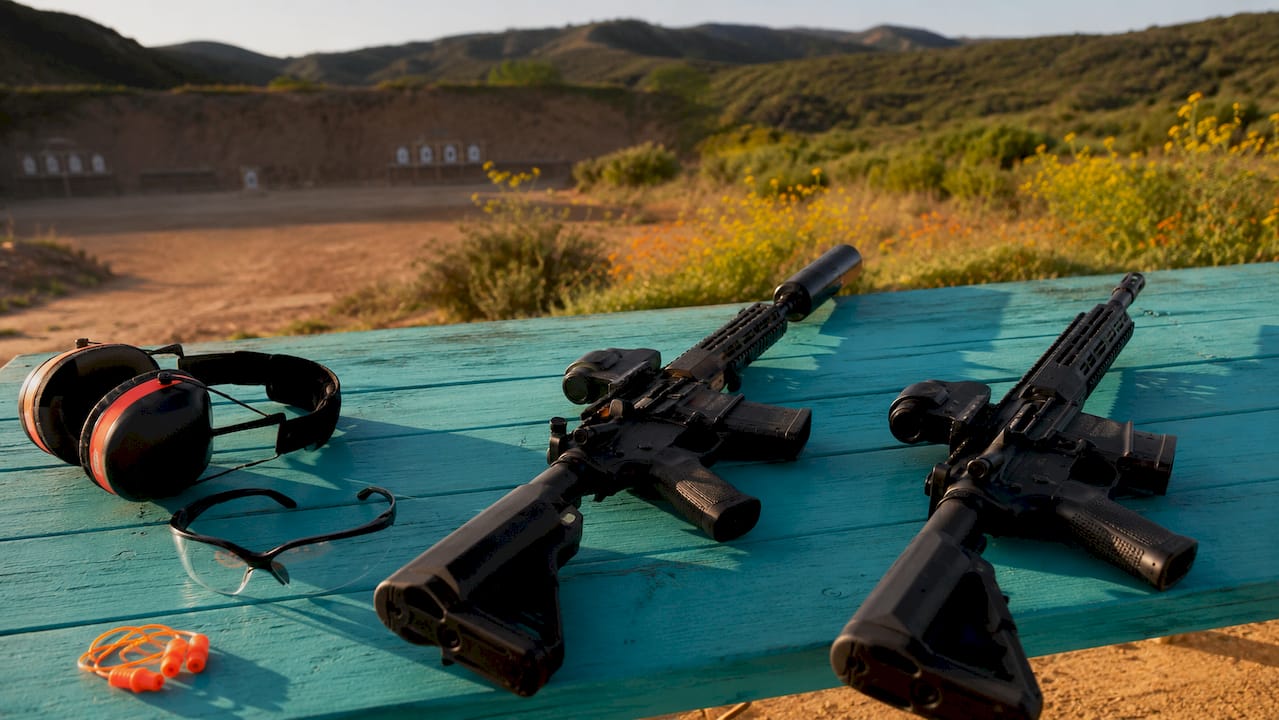
Suppressors address this at the source. Suppressors reduce noise by 20–40 decibels, bringing many firearms into a range that is far safer for young ears. That reduction does not make a suppressed firearm silent, but it removes the most dangerous peak of the sound wave. This is the difference between a noise that can cause instant damage and one that falls within a manageable range when combined with hearing protection.
| Protection method | Typical noise reduction | Reliability | Communication impact |
|---|---|---|---|
| Suppressor alone | 20–40 dB reduction | High (always active) | Preserves ambient sound |
| Earmuffs alone | 15–30 dB reduction | Moderate (fit dependent) | Muffles all sound |
| Ear plugs alone | 10–25 dB reduction | Low (fit dependent) | Muffles all sound |
| Suppressor and earmuffs combined | 35–65 dB reduction | Highest | Best balance |
Pro Tip: Always pair a suppressor with correctly fitted youth earmuffs. Suppression alone reduces the peak danger, but combined protection gives the widest safety margin for a child’s developing ears.
How does noise reduction improve training outcomes for children?
Flinch is a physiological reflex, not a bad habit. Flinch is triggered by loud noise and recoil, causing an involuntary muscular contraction that disrupts trigger control and shooting form. In children, this reflex develops quickly and is difficult to reverse once established. The good news is that reducing the stimuli that cause flinch prevents it from forming in the first place.
Suppressors reduce both noise and felt recoil. Suppressors reduce felt recoil by 20% to 40%, which directly lowers the physical shock a child feels with each shot. Less shock means less anticipatory flinch. Less flinch means a steadier cheek weld, cleaner trigger pull, and faster skill acquisition.
The psychological benefit is equally significant. Noise reduction enables faster skill development and better confidence in young shooters by removing the fear and surprise that loud shots create. A child who is not bracing for a loud bang can focus on the fundamentals: stance, sight picture, and breath control. That focus is what builds competence.
Creating success-heavy environments with noise reduction also encourages ethical shot selection and discipline. When a child feels calm and in control, they make better decisions. They are more likely to stay engaged with the sport long term. Parents consistently report more positive experiences when suppression is used, which matters for sustaining a child’s interest in shooting sports and discipline.
Key training benefits of noise-reduced shooting for children:
- Reduced flinch reflex: lower noise and recoil prevent the conditioned muscular response that ruins trigger control.
- Better focus: without the fear of a loud bang, children concentrate on technique rather than bracing for impact.
- Shorter learning curve: calmer sessions produce faster improvement in accuracy and form.
- Longer engagement: children who enjoy sessions return to practise, building consistent habits.
- Safer session structure: recommended training sessions of 20–35 minutes stay productive when noise fatigue is removed from the equation.
Pro Tip: If a child has already developed a flinch reflex, use dry-fire exercises to reset it. Dry-fire removes all noise and recoil stimuli, allowing the child to practise trigger control without any anticipatory response.
Suppressors versus traditional hearing protection: which is better for children?
The distinction between suppressors and earmuffs is not a matter of preference. It is a matter of engineering versus behaviour. Suppressors are engineering controls. They reduce noise at the source, regardless of what the child does. Earmuffs and ear plugs are personal protective equipment. They depend entirely on correct fitting and consistent wearing.
Children often remove or adjust ear protection due to discomfort, increasing their exposure to harmful noise even when protection is available. Children’s smaller ear canals make sealing hearing protection correctly a genuine challenge. An imperfect seal on a pair of earmuffs can reduce their effectiveness substantially, leaving a child exposed to damaging sound levels without either the child or the parent realising it.
Suppressors act as engineering controls that protect children even if ear protection fit is imperfect or the child temporarily removes their earmuffs. This built-in safety margin is the critical advantage. Suppressors as passive, always-active safety nets are more reliable than ear plugs, which depend entirely on user behaviour.
There is also a communication advantage. Suppressed shooting preserves ambient sound, allowing children to hear safety instructions clearly. Traditional earmuffs muffle all sound, including a range officer’s commands or a parent’s guidance. That isolation creates its own safety risk. A child who cannot hear instructions cannot respond to them.
What safe shooting practices should parents follow with children?
Safe shooting practices for kids are not complicated, but they require consistency. The following steps give children the best protection when shooting.
- Use a suppressor on any firearm a child shoots. This is the single most effective step a parent can take. Source-level noise control protects hearing regardless of how well ear protection fits.
- Select youth-specific hearing protection. Standard adult earmuffs do not seal correctly on a child’s smaller head. Choose products designed for children with adjustable headbands and a confirmed noise reduction rating.
- Supervise ear protection wearing throughout every session. Children remove earmuffs when they feel uncomfortable. Check fit before every shot and correct any gaps immediately.
- Keep sessions to 20–35 minutes. Fatigue reduces attention and increases the likelihood of safety errors. Short, focused sessions produce better results than long, tiring ones.
- Incorporate dry-fire practice. Dry-fire exercises build trigger control and reset any flinch reflex without any noise or recoil. They are particularly useful at the start of a session to establish calm focus.
- Monitor for signs of discomfort or anxiety. A child who appears tense, reluctant, or distressed is showing early signs that the environment is too stressful. Address this immediately rather than pushing through.
- Choose open-air ranges where possible. Outdoor ranges allow sound to dissipate naturally, reducing the overall noise environment. They also allow for easier communication between parent and child.
- Combine suppression with hearing protection for maximum safety. Neither method alone provides the best outcome. Used together, they offer the widest protection margin for a child’s developing ears.
Parents looking for a structured introduction to child-safe shooting can find detailed guidance in this parent’s guide to child-safe shooting, which covers engineered safety measures alongside practical session planning.
Key takeaways
Noise-reduced shooting protects children’s hearing and training outcomes by lowering sound and recoil at the source, making suppressors the most reliable safety tool available to parents.
| Point | Details |
|---|---|
| Hearing damage is immediate | A single unsuppressed shot above 140 dB can cause permanent hearing loss in a child. |
| Suppressors reduce noise at the source | A 20–40 dB reduction brings gunfire into a safer range, independent of ear protection fit. |
| Flinch is preventable | Reducing noise and recoil before a flinch reflex forms is far easier than correcting it later. |
| Ear protection alone is unreliable | Children’s smaller ear canals and tendency to remove earmuffs make behavioural controls insufficient on their own. |
| Combined protection is the gold standard | Suppressor plus correctly fitted youth earmuffs provides the widest safety margin for young shooters. |
What I have learned from watching children shoot with and without suppressors
The difference between a suppressed and unsuppressed session is visible within the first few shots. Children who shoot without noise reduction visibly brace before each shot. Their shoulders rise, their eyes close slightly, and their trigger pull becomes a jab rather than a squeeze. That is flinch forming in real time.
Switch to a suppressed firearm and the change is immediate. Children relax. They stop anticipating the bang and start focusing on the target. Their form improves without any additional instruction. The noise was the obstacle, not their ability.
What strikes me most is how parents underestimate the role of engineered safety features. There is a tendency to rely on telling a child to keep their earmuffs on and assuming that is sufficient. It is not. A child who removes their earmuffs for ten seconds during a session has been exposed to a damaging noise level. A suppressor removes that risk entirely, regardless of what the child does.
The technology available in 2026 makes this easier than ever. Youth-specific suppressors and hearing protection are widely available, and the combination is not expensive relative to the cost of treating noise-induced hearing loss later in life. My honest view is that no child should be introduced to shooting sports without suppression. The hearing damage risk is too serious and too permanent to manage with behavioural controls alone.
— Joshua
Try a noise-reduced shooting experience with Laserclay
Laserclay offers families a shooting experience that removes the noise and safety concerns of traditional firearms entirely. Using advanced laser technology, Laserclay replaces live ammunition with a system that produces no harmful sound, no lead, and no recoil. Children can learn the fundamentals of clay shooting in a calm, controlled environment without any of the auditory risks described in this article.
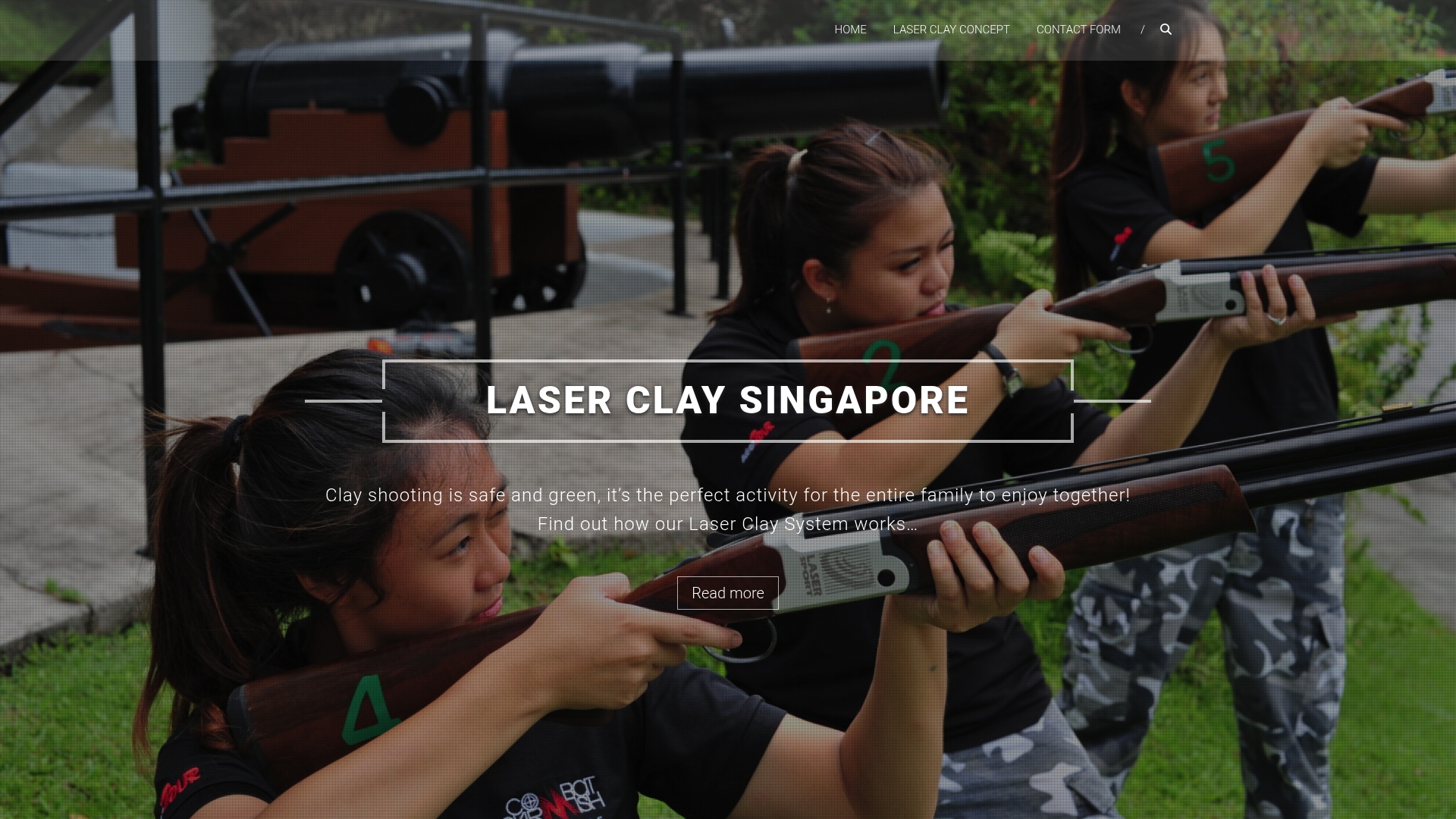
Laserclay events are designed for all ages and skill levels, making them an ideal starting point for families who want to introduce children to shooting sports safely. Sessions are available across Singapore, and the format suits birthday celebrations, school groups, and family outings equally well. Find out how to get started with a family-friendly laser clay session and give your child a positive first experience in the sport.
FAQ
What decibel level does an unsuppressed gunshot reach?
Standard unsuppressed rifles produce noise exceeding 140 decibels. A single exposure at that level is sufficient to cause permanent hearing damage in a child.
How much does a suppressor reduce gunshot noise?
Suppressors reduce gunshot noise by 20–40 decibels. That reduction brings many firearms into a range that is significantly safer for young ears, particularly when combined with hearing protection.
Why is traditional hearing protection not enough for children?
Children’s smaller ear canals make it difficult to achieve a correct seal with standard earmuffs or ear plugs. Children also frequently remove or adjust protection due to discomfort, creating intermittent exposure to harmful noise levels.
What is flinch and how does noise reduction prevent it?
Flinch is an involuntary muscular contraction triggered by loud noise and recoil that disrupts trigger control and shooting form. Suppressors reduce both stimuli, preventing the reflex from forming in young shooters before it becomes a conditioned habit.
At what age do children’s ears stop developing?
Children’s ears continue developing until approximately age 25, making them more vulnerable to noise-induced damage than adult ears throughout childhood and adolescence.