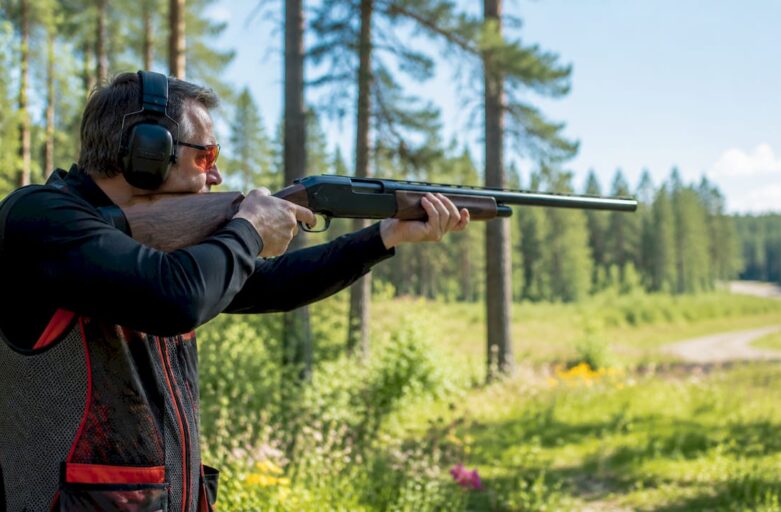
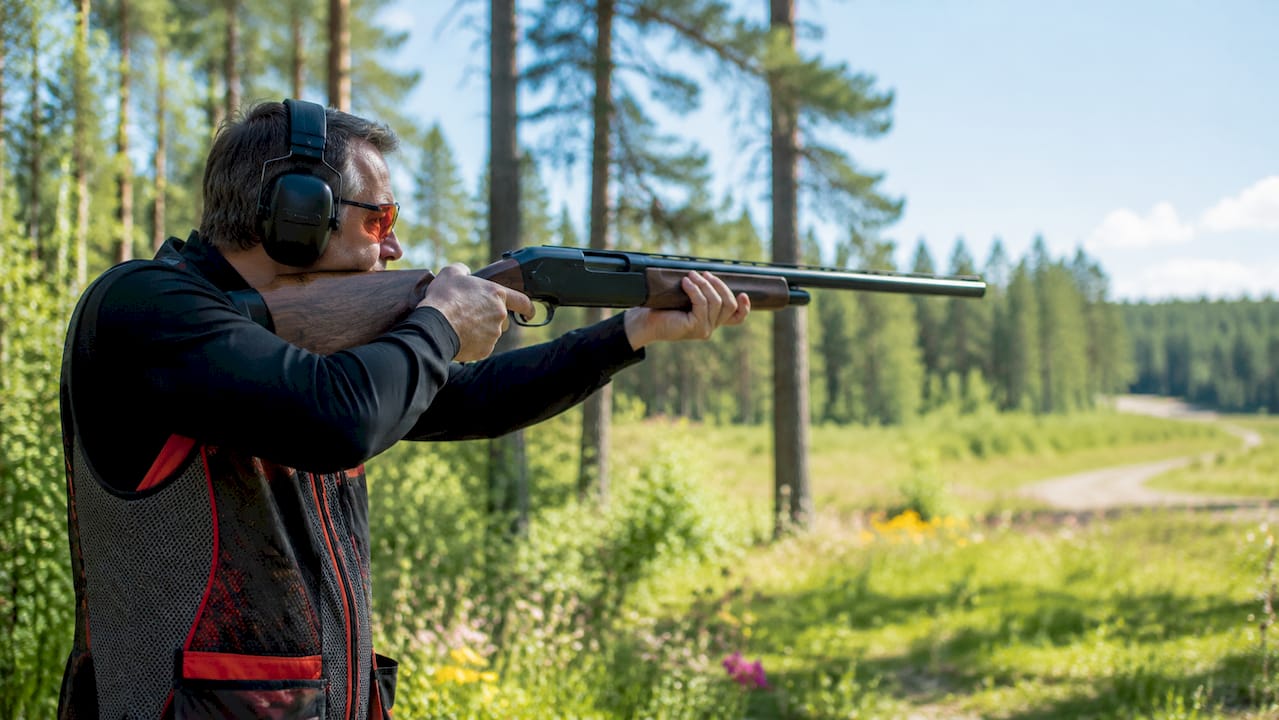
Eye-hand coordination is defined as the coordinated control of eye and hand movement, using visual input to guide precise hand actions toward a target. In shooting sports, this visuomotor synchronisation is the single most important physical skill governing accuracy. Without it, even technically sound grip and stance produce inconsistent results. Research published in 2026 across Frontiers in Neuroscience, Frontiers in Psychology, and PLOS ONE confirms that the role of eye-hand coordination in shooting extends far beyond simple muscle control. It involves gaze behaviour, attentional focus, and the brain’s ability to translate what the eyes see into exact hand movement at the right moment.
How does eye-hand coordination affect shooting accuracy?
Visuomotor control is the technical term for what most shooters call “feel.” It describes how the eyes gather information about a target, how the brain processes that information, and how the hands respond with a precise movement. When this chain works efficiently, shots land where intended. When it breaks down, accuracy collapses regardless of physical strength or equipment quality.
Gaze behaviour sits at the centre of this process. Specifically, two metrics matter most: fixation duration (how long the eyes hold steady on a target) and fixation number (how many times the eyes shift during a shot sequence). A 2026 PLOS ONE study on elite female basketball players found that exercise intensity and shooting position both alter fixation behaviour, directly affecting shot success. Fewer, longer fixations correlate with better accuracy. More frequent gaze shifts correlate with missed shots.
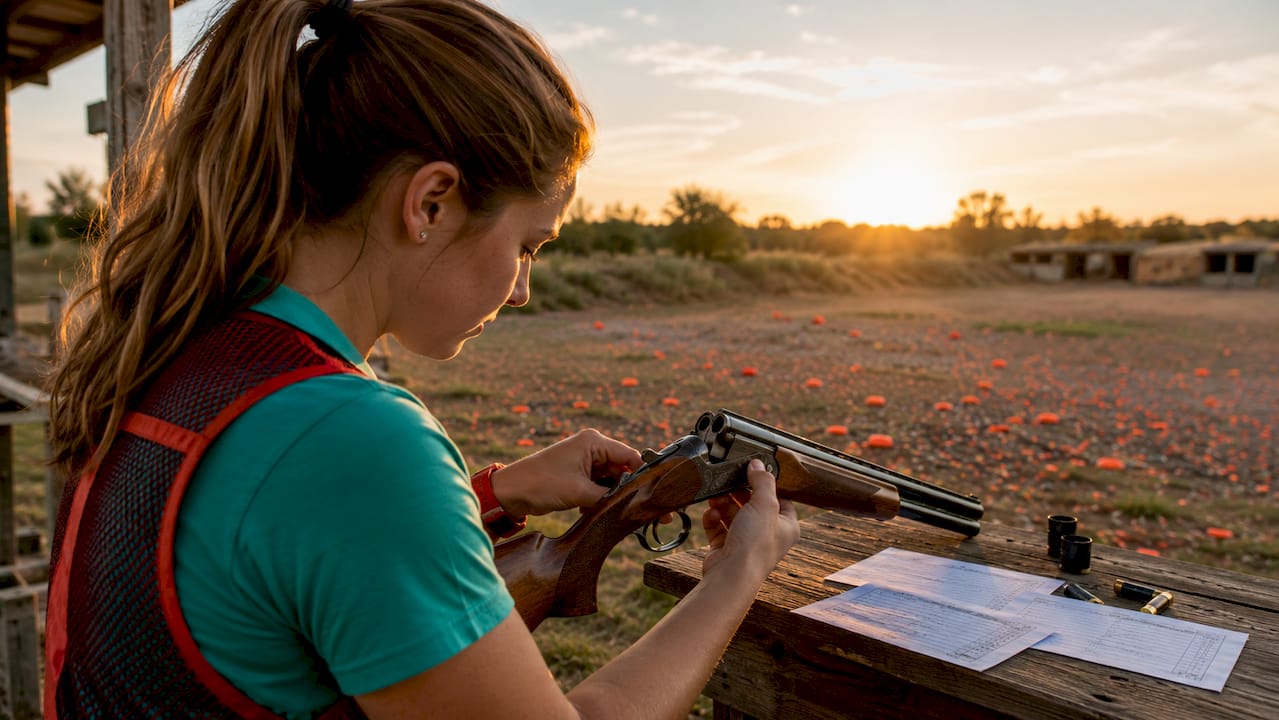
Visual search efficiency is the third variable. Shooters with efficient visual search locate the target quickly, lock gaze onto the critical zone, and hold that fixation through the moment of release. Shooters with poor visual search scan broadly, shift gaze repeatedly, and trigger too early or too late. The eyes are not passive sensors. They are active directors of hand movement, and training them is as important as training grip strength.
Key mechanisms linking gaze to accuracy include:
- Fixation duration: Longer holds on the target give the motor system more time to calibrate hand position before firing.
- Saccade frequency: Fewer rapid eye movements between fixations reduce noise in the visuomotor signal.
- Gaze stability: A steady gaze trajectory during the final phase of aiming allows the hand to track the target without correction errors.
- Attentional focus: Directing attention to the correct visual cue, such as the leading edge of a clay target, determines which information the brain uses to time the shot.
Expert vs novice gaze patterns: what the research shows
The clearest evidence for the importance of coordination in sports comes from comparing how skilled and unskilled shooters actually use their eyes. The differences are striking and largely invisible to casual observation.
A 2026 Frontiers in Neuroscience study on two-way skeet shooters found that expert performers exhibit fewer fixations, longer fixation durations, and more stable gaze trajectories than novices during simulated target viewing. This means experts are not just better shots. They are fundamentally more efficient visual processors.
| Characteristic | Expert shooters | Novice shooters |
|---|---|---|
| Fixation count | Low (fewer gaze shifts) | High (frequent gaze shifts) |
| Fixation duration | Long (sustained target lock) | Short (brief, unstable holds) |
| Gaze trajectory | Stable and predictable | Erratic and reactive |
| Visual search area | Narrow and targeted | Broad and unfocused |
| Motor timing | Synchronised with gaze | Inconsistent with gaze |
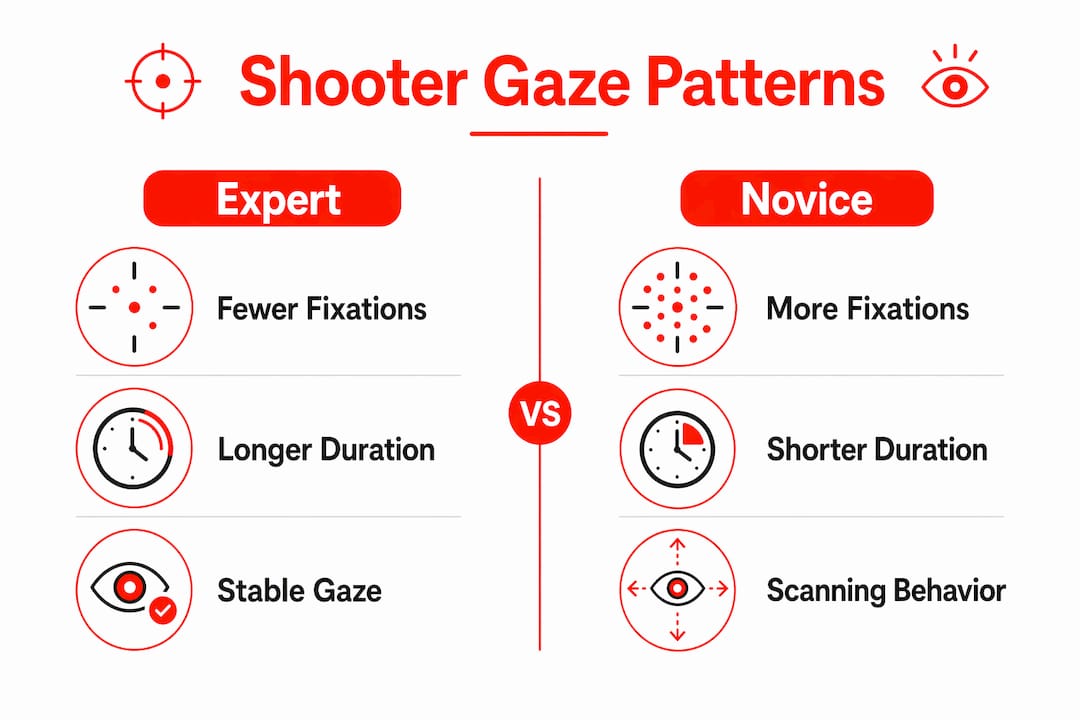
Novices tend to scan the entire shooting environment, gathering information that is largely irrelevant to the shot. Experts filter that noise out automatically. Their efficient gaze patterns lead to more accurate visuomotor coordination because the motor system receives a cleaner, more consistent signal from the visual system.
The Quiet Eye concept, developed by sports scientist Joan Vickers, describes the final stable fixation before a movement is initiated. Research confirms that a longer Quiet Eye period correlates with better aiming outcomes across shooting sports. Experts achieve this naturally. Novices can learn it deliberately through structured gaze training.
Pro Tip: When practising, deliberately hold your gaze on the target’s leading edge for a full beat before pulling the trigger. This conscious pause mimics the Quiet Eye pattern and begins to rewire your visual habits over time.
The practical implication is significant. Expert-novice differences are primarily visible in gaze behaviour, not hand mechanics. This means gaze training is the highest-leverage intervention for improving shooting performance, particularly for athletes who have already developed solid physical technique.
How to train eye-hand coordination for better shooting
Training visuomotor coordination requires a deliberate approach to both visual strategy and motor execution. Practising shots without attending to where and when you look is the single most common training error in shooting sports.
-
Visual-attention training: A 2026 Frontiers in Psychology study found that an 8-week visual-attention training programme improved fixation duration on targets and increased 3-point shooting percentage in semi-professional basketball players. The protocol involved structured drills that directed athletes to specific visual cues at specific moments. Shooters can apply the same principle by identifying the exact point on a target they intend to fixate and practising holding that fixation through the shot.
-
Mindfulness and attentional regulation: The MAIC (Mindfulness-Acceptance-Insight-Commitment) programme is a structured 7-week protocol designed to improve attentional neural efficiency under competitive stress. A 2026 study found that elite rifle shooters who completed MAIC showed increased alpha power in EEG recordings, indicating improved cortical focus, alongside trends of accuracy improvement. Mindfulness is not a soft skill. It is a measurable neurological training tool for enhancing athletic focus under pressure.
-
Fatigue-state practice: Coordination trained only in rested, low-pressure conditions does not transfer reliably to competition. Deliberately practising under physical fatigue forces the visual and motor systems to maintain synchronisation when resources are depleted. This is where sustainable training methods that allow high repetition without physical risk become particularly valuable.
-
Simulated target tasks: Technology-assisted training, including laser clay shooting, allows shooters to repeat target-acquisition sequences at high volume without the cost, safety concerns, or environmental impact of live ammunition. High repetition is necessary because visual-attention training causes a temporary rise in fixations mid-course as athletes consciously change habits, before efficiency consolidates. Patience through this adjustment phase is critical.
Pro Tip: Do not judge your progress by accuracy alone during the first four weeks of gaze training. The temporary increase in fixations is a sign that your visual system is actively restructuring. Stay with the protocol.
How do stress, fatigue, and intensity disrupt coordination?
Coordination breakdown under pressure is one of the most misunderstood problems in shooting sports. Most athletes attribute missed shots under fatigue to tired muscles. The research tells a different story.
High-intensity exercise alters gaze behaviour in ways that impair shot precision independently of muscular fatigue. The visual control system, which governs fixation stability and attentional focus, is highly sensitive to cognitive load. When physical intensity rises, cognitive resources are redirected toward effort management, and gaze behaviour deteriorates first.
The consequences for shooting accuracy are direct:
- Fixation instability: Under high load, the eyes shift more frequently and hold targets for shorter durations, degrading the visuomotor signal.
- Attentional narrowing: Stress causes athletes to focus on irrelevant cues, such as body sensation or outcome anxiety, rather than the target itself.
- Timing errors: When gaze is unstable, the motor system receives inconsistent information, causing the hand to fire at the wrong moment.
- Recovery lag: Even after physical intensity drops, visual control states take time to restabilise, meaning accuracy remains impaired longer than muscle fatigue alone would predict.
Fatigue management is therefore a visuomotor challenge as much as a physical one. The MAIC mindfulness protocol addresses this directly by training the attentional regulation systems that maintain gaze stability when cognitive resources are under pressure. Shooters who train this system deliberately perform more consistently in competition than those who rely on physical conditioning alone.
Key takeaways
Eye-hand coordination in shooting is a trainable visuomotor skill governed by gaze efficiency, attentional control, and motor timing, not muscular strength alone.
| Point | Details |
|---|---|
| Gaze efficiency is the core skill | Fewer, longer fixations on the target directly improve shooting accuracy. |
| Experts differ in visual strategy | Expert shooters use stable, narrow gaze patterns; novices scan broadly and shift frequently. |
| Visual-attention training works | An 8-week structured programme improves fixation behaviour and shooting percentage. |
| Stress disrupts gaze before muscles | Coordination breakdown under pressure is primarily a visual control failure, not muscular fatigue. |
| Mindfulness builds neural resilience | MAIC and similar protocols improve attentional efficiency and accuracy under competitive stress. |
What I have learned watching shooters train their eyes
Most shooters I have observed spend 90% of their training time on physical mechanics and almost none on visual strategy. That imbalance is the single biggest obstacle to improvement beyond an intermediate level.
The misconception is understandable. Grip, stance, and trigger control are visible and measurable. Gaze behaviour is invisible unless you are using eye-tracking equipment. But the discipline that shooting sports build is fundamentally attentional, not just physical. The shooters who improve fastest are those who start treating their eyes as trainable instruments rather than passive observers.
What surprises most people is how quickly gaze habits change with deliberate practice. Within four to six weeks of structured visual-attention work, shooters begin to notice they are finding targets faster and holding them more steadily. The motor system follows the eyes. When the visual signal improves, the hand responds more accurately without any change to physical technique.
My recommendation is simple. Before your next session, identify one specific visual cue on your target and commit to fixating only that point through the shot. Do this for every repetition. Track your accuracy over four weeks. The results will tell you more about the role of gaze in your shooting than any amount of grip training ever could.
— Joshua
Practise your coordination with Laserclay
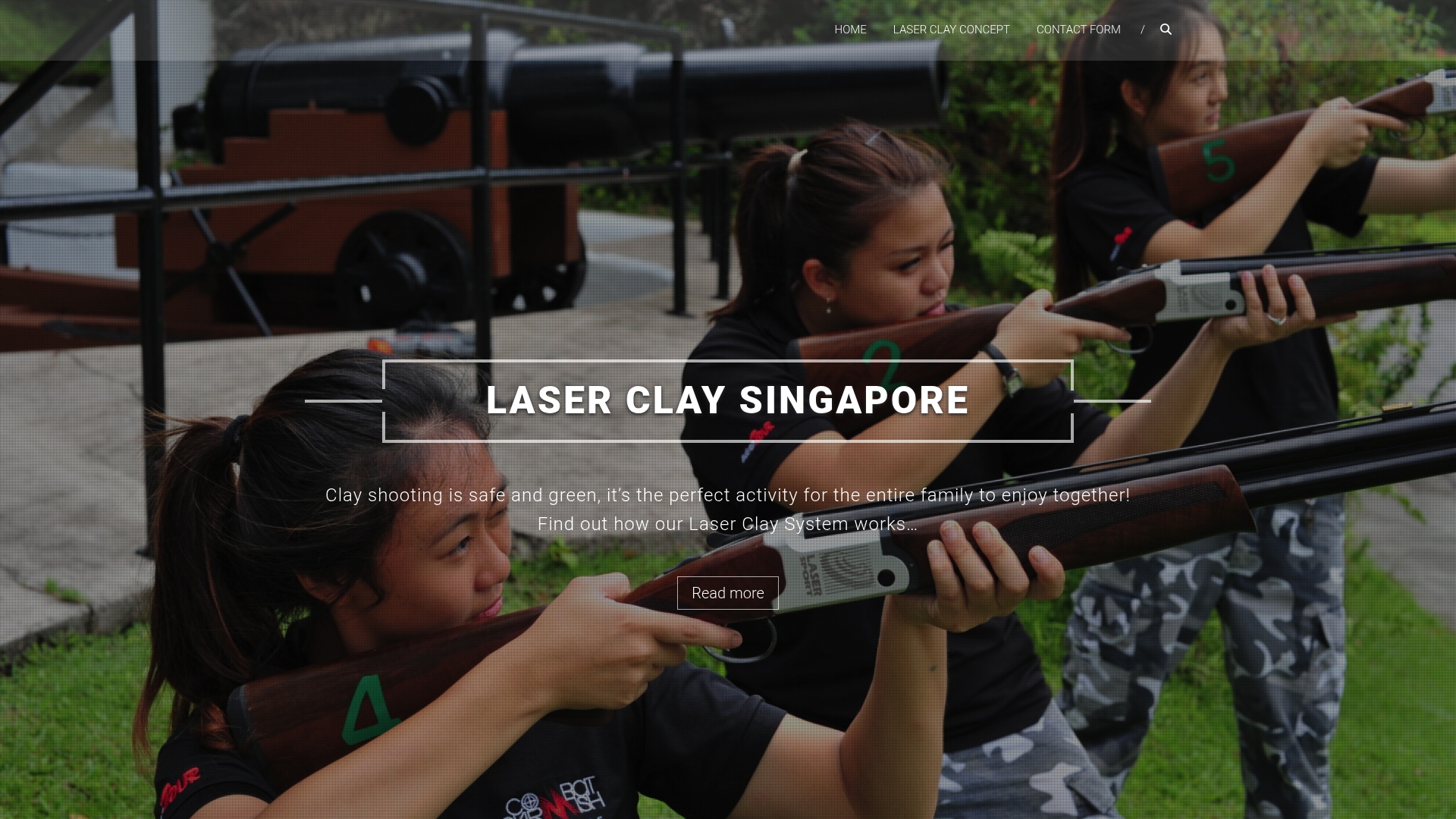
Laserclay offers a training environment purpose-built for developing the visuomotor skills that shooting accuracy demands. Using advanced laser technology instead of live ammunition, participants can play laser clay in Singapore and repeat target-acquisition sequences at high volume, in a safe and eco-friendly setting. High repetition is exactly what gaze training requires, and Laserclay removes every barrier that makes traditional clay shooting impractical for frequent practice. Whether you are an individual athlete working on fixation habits or a group looking for a genuinely skill-building team activity, Laserclay provides the structured, immersive experience that translates directly into better coordination and sharper accuracy on any range.
FAQ
What is eye-hand coordination in shooting?
Eye-hand coordination in shooting is the visuomotor process by which visual information about a target directs precise hand movement to aim and fire accurately. It involves gaze stability, fixation duration, and attentional control working together in real time.
Why do expert shooters outperform novices in coordination?
Expert shooters use fewer, longer fixations and more stable gaze trajectories than novices, giving their motor systems a cleaner signal for timing and accuracy. This gaze efficiency advantage is the primary difference between skill levels, not hand mechanics.
How long does visual-attention training take to show results?
Research shows that an 8-week training programme produces measurable improvements in fixation behaviour and shooting accuracy, though a temporary increase in fixations occurs mid-course as new visual habits form.
Does fatigue affect eye-hand coordination in shooting?
Yes. High-intensity exercise alters fixation behaviour and impairs visual control independently of muscular fatigue, meaning coordination breaks down under stress even when the body feels physically capable.
Can mindfulness training improve shooting accuracy?
A 7-week MAIC programme was shown to increase alpha power in EEG recordings in elite rifle shooters, indicating improved attentional neural efficiency and a measurable trend toward better accuracy under competitive stress.