

Shooting disciplines transfer to laser training because laser systems replicate the core mechanics of marksmanship, including trigger control, grip, and sight alignment, without requiring live ammunition or a formal range. The result is faster skill acquisition, lower costs, and a safer training environment that suits shooters at every level. Understanding this transfer is not just useful for competitive marksmen. It matters for anyone exploring laser shooting advantages as a modern route into the sport.
Why shooting disciplines transfer to laser: the core mechanics
Laser systems work as training tools because they replicate the physical inputs that define good marksmanship. Trigger control, grip pressure, breath management, and sight picture all produce the same result whether a live round is fired or a laser pulse is emitted. The discipline transfers because the body does not distinguish between the two at the level of muscle memory.
Students develop fundamentals 30–40% faster with laser training than with traditional iron sight practice. That acceleration happens because laser feedback is immediate and unambiguous. A shooter sees exactly where the dot lands at the moment of trigger break, with no recoil to obscure the result.
Laser technology is most effective when integrated thoughtfully, enabling faster neural pathway development for trigger mechanics. Neural pathways are simply the brain’s wiring for repeated physical actions. The more quality repetitions a shooter completes, the more automatic those actions become.
How does laser training improve core marksmanship skills?
Laser training exposes errors that live fire conceals. Recoil masks a multitude of faults: a slight flinch, a grip shift, or a trigger pull that drags left. Remove the recoil, and every imperfection becomes visible on the target.

Laser systems reveal micro-errors in trigger press and grip that live fire masks, leading to faster and more accurate skill improvements. This diagnostic function is one of the strongest arguments for incorporating laser practice into any training programme. A shooter who identifies a consistent drag to the left can correct it in a single dry fire session rather than burning through hundreds of rounds at the range.
Laser dry fire also solves the volume problem. Thousands of repetitions are possible at nearly zero cost, with daily sessions of 10–15 minutes building high-quality reps over months. Volume is what builds muscle memory, and laser training delivers volume at a fraction of the cost of live fire.
Key benefits of laser training for core skills include:
- Immediate visual feedback on trigger break, showing exactly where the shot lands
- Error diagnosis that reveals grip faults and flinching hidden by recoil
- High repetition volume at minimal cost, accelerating muscle memory formation
- Consistent grip and trigger control reinforced through immediate visual feedback
- Mental composure training without the distraction of noise and blast
Pro Tip: Begin each laser session with slow, deliberate repetitions. Rushing early reps reinforces bad habits. Speed follows accuracy, not the other way around.
Laser shooting vs traditional shooting: benefits and limitations
Both disciplines develop the same foundational skills, but they do so through different mechanisms. The table below sets out the key differences.
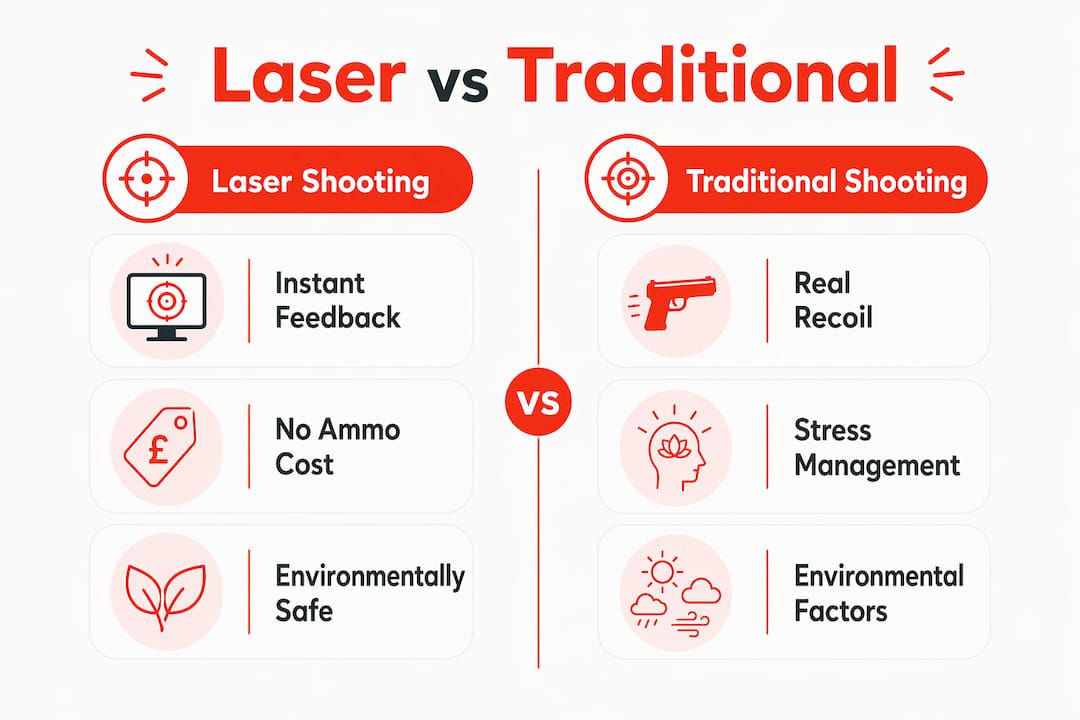
| Factor | Laser shooting | Traditional live fire |
|---|---|---|
| Feedback speed | Instant visual confirmation | Delayed by recoil and noise |
| Cost per session | Near zero after equipment purchase | Ongoing ammunition and range fees |
| Accessibility | Practise at home, any time | Requires a licensed range |
| Recoil management | Not replicated | Direct and realistic |
| Environmental impact | No lead, minimal noise | Lead pollution, significant noise |
| Stress inoculation | Limited without physical exertion | High, especially in live scenarios |
Shooters using laser-assisted systems hit first shots 25–40% faster in defensive scenarios. That improvement is measurable and consistent. The reason is simple: the shooter has completed far more quality trigger repetitions than a live-fire-only counterpart.
The limitations of laser training are equally clear. Recoil management, environmental wind and light conditions, and the physiological stress of a live range are not replicated by a laser system. Lasers supplement rather than replace traditional sight skills and live fire sessions. Neglecting iron sight proficiency in favour of laser-only practice creates a gap that shows up under real conditions.
The practical conclusion is that laser training handles volume and diagnosis, while live fire handles stress, recoil, and environmental variables. Neither replaces the other. Training specificity matters: skills trained with lasers transfer best when aligned with the tactical or sporting environment intended.
What are the environmental and safety advantages of laser shooting?
The shift toward laser disciplines is driven partly by performance and partly by responsibility. Lead ammunition leaves a measurable environmental footprint. Laser shooting removes lead pollution and significantly reduces noise compared to live ammunition use. Those two factors alone make laser training attractive to clubs, schools, and event organisers who cannot or will not operate a live fire range.
Safety is the other major driver. A live range requires strict protocols: ear protection, eye protection, range officers, and controlled access. Laser practice removes those constraints. Safe practice without strict range rules expands training opportunities for various skill levels and ages. A teenager learning the basics of clay shooting can complete hundreds of repetitions in a school gymnasium before ever handling a live firearm.
The practical advantages for participants include:
- No lead exposure for shooters, coaches, or bystanders
- No hearing damage risk from repeated muzzle blast
- No range fees after the initial equipment investment
- Flexible training locations, from community halls to corporate venues
- Accessible to all ages, including youth and beginners who benefit from laser-based youth training
Pro Tip: If you are introducing a new shooter to the sport, start with three to five laser sessions before any live fire. The fundamentals will be cleaner, and the first live fire experience will be far less overwhelming.
How to integrate laser shooting into your training routine
Effective integration follows a simple principle: use laser training for volume and diagnosis, use live fire for stress and recoil. Mixing the two without a clear purpose produces neither benefit reliably.
A practical weekly structure for a competitive shooter might look like this:
- Daily laser sessions of 10–15 minutes focusing on trigger control and grip consistency
- Two live fire sessions per week to maintain recoil management and environmental awareness
- Monthly diagnostic review using laser footage or dot trace data to identify recurring errors
- Gradual speed increases in laser drills only after accuracy is consistent at slower tempos
Laser shooting decouples shooting mechanics from the logistics of ammunition and range access, letting athletes focus on mental composure under physical exertion. Biathlon athletes have used this principle for years, completing laser rifle sessions during aerobic training to simulate the challenge of shooting with an elevated heart rate.
One pitfall deserves specific attention. Dot watching is a common training error where shooters fixate on the laser dot, causing anxiety and poor trigger control. The fix is straightforward: slow the repetitions, focus on the front sight or target, and let the dot confirm the result rather than drive the action. Rushing past this stage embeds a fault that is difficult to unlearn.
Shooters who want to practise clay shooting without live ammo will find that laser clay formats replicate the target acquisition and swing mechanics of traditional clay shooting with surprising fidelity.
Key takeaways
Laser shooting disciplines accelerate skill transfer from traditional marksmanship because they deliver immediate feedback, high repetition volume, and a safe training environment that live fire alone cannot match.
| Point | Details |
|---|---|
| Faster skill acquisition | Laser training develops fundamentals 30–40% faster than iron sight practice alone. |
| Error diagnosis | Laser systems expose grip and trigger faults that recoil conceals in live fire. |
| Cost and access | Daily laser sessions cost near zero after equipment purchase, removing range dependency. |
| Environmental benefit | Laser shooting eliminates lead pollution and noise, making it suitable for any venue. |
| Balanced integration | Laser handles volume and diagnosis; live fire handles recoil and stress inoculation. |
Why I think most shooters underestimate laser training
I have watched experienced clay shooters dismiss laser practice as a beginner’s tool. That view is wrong, and the evidence is clear. The shooters who improve fastest are not the ones who spend the most time at the range. They are the ones who complete the most quality repetitions, and laser training is the most efficient way to do that.
The mindset shift required is modest but real. You have to accept that a 15-minute laser session in your living room is legitimate training. It is not a substitute for the range. It is a different tool that solves a different problem. The range builds toughness and realism. Laser training builds precision and consistency.
The environmental argument also deserves more weight than it typically receives. Lead contamination at shooting ranges is a documented problem, and noise complaints have closed more than a few clubs over the years. Laser disciplines offer a path to continued participation that does not depend on tolerating those costs. For the sport to grow, particularly among younger participants, that matters enormously.
My advice is straightforward. Spend the first 20 minutes of every training week with a laser system before you touch live ammunition. Track your dot placement. Review your errors. Then go to the range with a specific problem to solve rather than a vague intention to shoot more. The improvement will be faster than you expect.
— Joshua
Try laser clay shooting with Laserclay
Laserclay brings the skill and excitement of clay shooting into a format that is safe, accessible, and free from the environmental concerns of live ammunition.
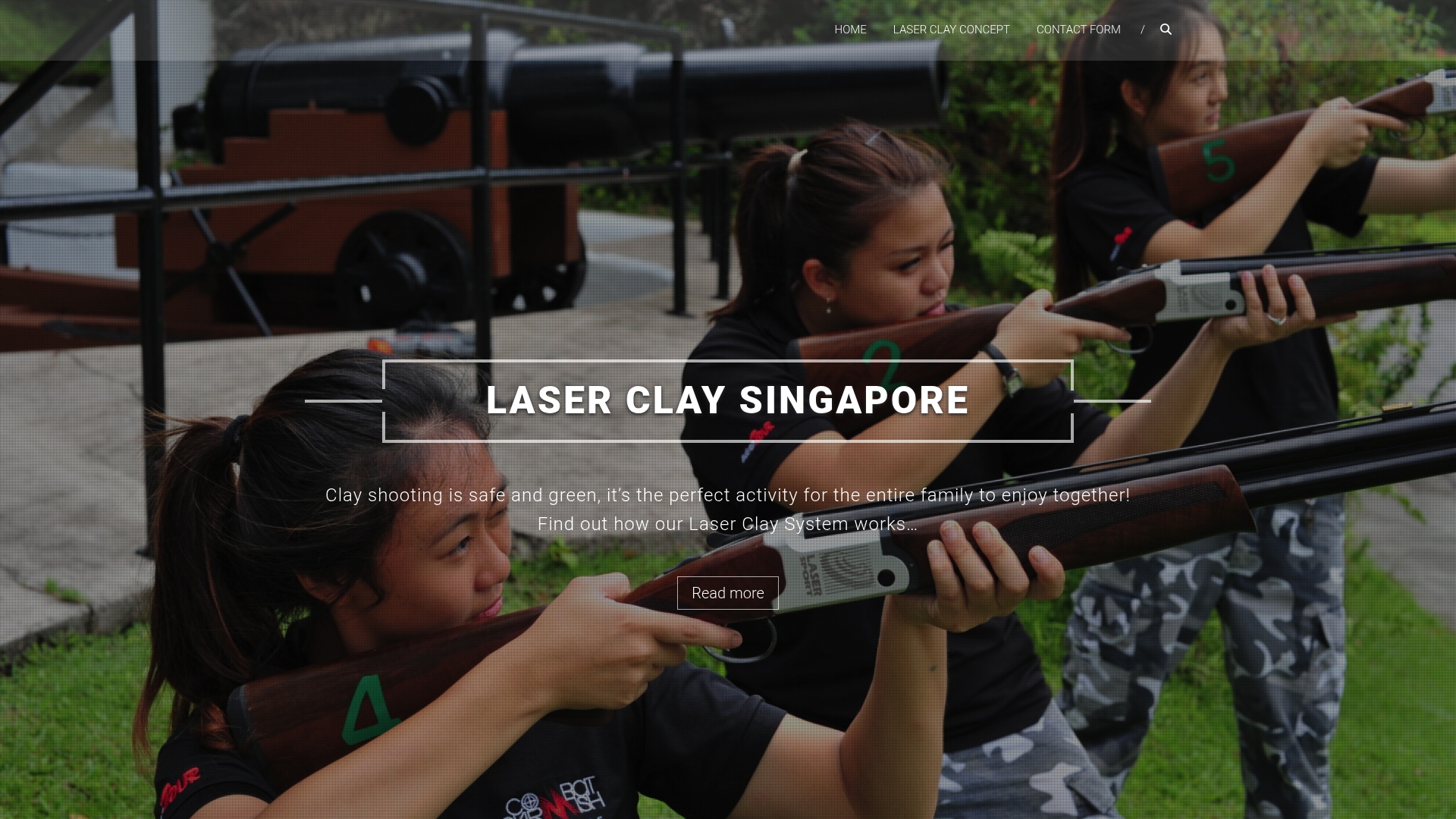
Whether you are a seasoned shooter looking to sharpen your fundamentals or a complete beginner taking your first shots, Laserclay’s sessions are designed to build real marksmanship skills in a controlled setting. The format suits corporate team building, school events, and recreational groups equally well. Every session reinforces the same trigger control, target acquisition, and swing mechanics that define traditional clay shooting. Visit Laserclay Singapore to learn more, or go straight to the how to play guide to book your first session.
FAQ
Does laser training actually transfer to live fire shooting?
Yes. Students develop fundamentals 30–40% faster with laser training, and the trigger control and grip habits built in laser sessions carry directly into live fire performance.
What are the main benefits of laser shooting over traditional practice?
Laser shooting provides instant feedback, eliminates ammunition costs, removes lead and noise pollution, and allows practice in any location without range safety requirements.
Can laser shooting replace live fire training entirely?
No. Lasers supplement rather than replace live fire. Recoil management, environmental variables, and stress responses require live fire to develop properly.
Is laser shooting suitable for beginners and young shooters?
Laser disciplines are increasingly used in youth and beginner training because they build core shooting skills without the safety constraints of live ammunition, making the sport accessible to a much wider audience.
What is dot watching and how do I avoid it?
Dot watching is the habit of fixating on the laser dot rather than the target, which causes tension and poor trigger control. Slow your repetitions, focus on the target, and treat the dot as confirmation rather than guidance.