

Digital scoring in shooting sports is defined as the use of electronic targets and computer vision to calculate shot results automatically, instantly, and without human interpretation. The role of digital scoring in shooting sports goes well beyond convenience. It replaces subjective manual measurement with objective data, delivers results to judges, athletes, and spectators in real time, and captures detailed shot information that coaches can use for long-term performance analysis. Platforms such as Orion 2.25 have set a new standard for what competition accuracy looks like. Understanding how these systems work, and where they fall short, is the difference between using digital scoring well and being caught off guard by it.
How does digital scoring technology improve competition accuracy?
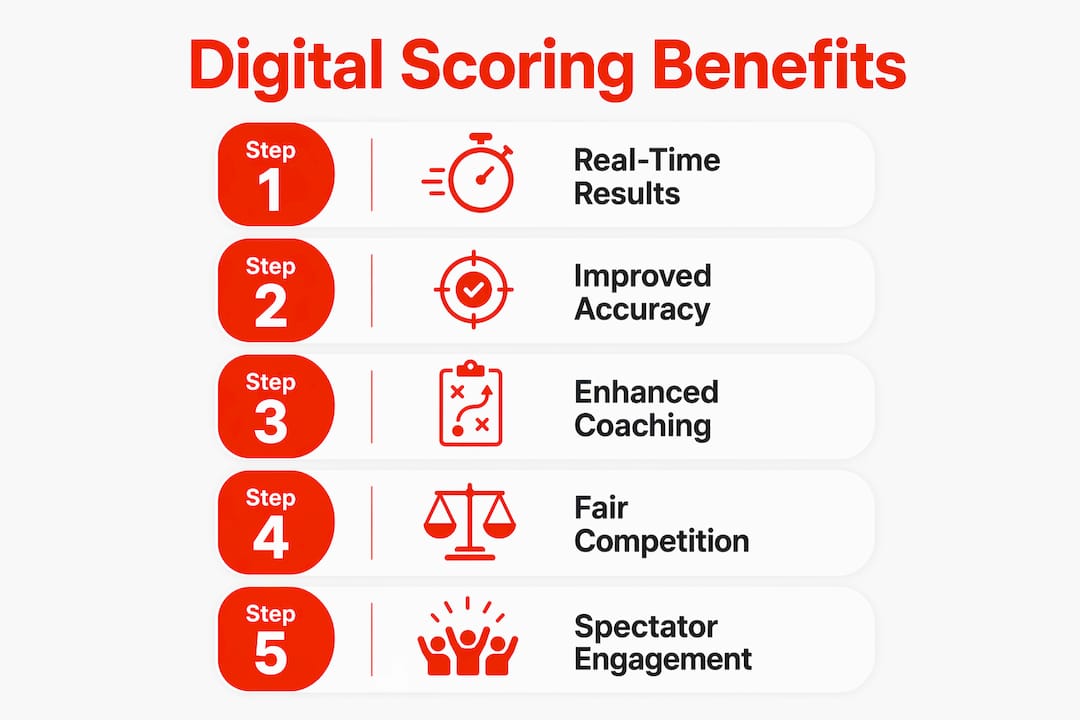
Electronic scoring systems improve match efficiency by automatically calculating scores and providing real-time competitor standings, removing every delay associated with manual scoring. That single change transforms the pace and fairness of a competition. Judges no longer walk to targets, athletes no longer wait for paper results, and disputes over illegible marks disappear entirely.
The precision these systems deliver is genuinely striking. Shot placement is measured to hundredths of a millimetre, a level of accuracy no human scorer can replicate consistently. That precision matters most in elite competition, where the margin between a gold and silver medal can be a fraction of a point.
Key technical advantages digital scoring brings to competition include:
- Automatic shot detection registers each shot the moment it lands, with no manual input required.
- Real-time leaderboards display live standings for judges, athletes, and spectators simultaneously.
- Objective measurement removes scorer fatigue, bias, and human error from the result.
- Instant feedback loops allow athletes to adjust technique between shots rather than waiting until after the round.
- Consistent standards apply the same measurement criteria to every competitor in every round.
Pro Tip: If you are coaching at a digitally scored event for the first time, ask the organiser for a live feed of your athlete’s shot data during the round. Most platforms display this in real time, and it gives you coaching cues you simply cannot get from paper targets.
The need for modernisation in shooting sports has been clear for years. Digital scoring is the most direct answer to that need, replacing a process that relied on human consistency with one that relies on calibrated sensors.
In what ways does digital scoring change the experience for athletes and coaches?
Digital scoring platforms act as performance advisors, capturing detailed shot data that coaches can use for trend analysis over time. That is a fundamentally different relationship with data than paper targets allow. A paper target tells you where the shot landed. A digital platform tells you where every shot landed, across every session, over months of training.

Coaches who treat digital scoring as a pure analytics tool gain a clear edge. The data reveals patterns that are invisible in single-session review: a tendency to pull left under pressure, a drop in grouping consistency in the final stage of a competition, or a measurable improvement in centre-hit rate after a technique change. None of that is visible on paper.
For athletes, the shift requires adjustment in three specific areas:
- Trusting the algorithm. Digital scores are calculated by the system, not a judge. Athletes who understand this accept results faster and spend less mental energy on disputes.
- Reading shot data actively. Platforms like Orion 2.25 use difficulty weighting and decimal scoring to produce projected rankings even early in multi-stage events. Athletes who understand how that weighting works can make smarter tactical decisions mid-competition.
- Using feedback between rounds. Digital systems provide shot placement data immediately. Athletes who review that data between stages arrive at the next stage with a concrete adjustment to make, not a vague feeling about what went wrong.
Pro Tip: Build a simple shot log from your digital scoring data after each competition. Track your average shot value, your worst stage, and your best stage. Three months of that data will show you exactly where your training time should go.
The discipline that shooting sports build is reinforced, not replaced, by digital scoring. The technology adds a layer of analytical rigour that sharpens the mental side of the sport.
How does digital scoring enhance spectator engagement and event flow?
Spectators see shots scored live on screens, with leaderboards updating in real time and difficulty-weighted projected scores showing who is on track for a medal. That transparency changes the atmosphere of a shooting competition entirely. Events that once felt opaque to casual viewers become genuinely exciting to watch.
The practical benefits for event flow are equally significant:
- Live leaderboards remove the gap between performance and result, keeping spectators engaged throughout.
- Large-screen displays show shot placement visually, so non-expert audiences understand what they are watching.
- Mobile-accessible results let spectators follow the competition from anywhere on the venue.
- Instant results eliminate the post-round wait that traditionally breaks competition momentum.
Reducing disputes also improves event flow in a way that is easy to underestimate. When a result is displayed instantly and objectively, there is no queue of athletes waiting for a manual recheck. The competition moves forward. That efficiency matters for broadcasters, organisers, and spectators alike.
Pro Tip: If you are organising a digitally scored event, invest in at least one large display positioned where spectators gather naturally. The visual impact of watching a live leaderboard shift after each shot is the single most effective way to grow audience interest in the sport.
What are the key challenges and controversies surrounding digital scoring systems?
Digital scoring introduces a fundamental incompatibility with manual methods that catches many athletes and coaches off guard. Manual scoring measures edge to edge; digital scoring measures the distance from the target centre to the shot centre. These are different measurements. They produce different results. Rechecking a digital score with a manual method is not a recheck. It is a different measurement entirely.
That incompatibility has direct consequences for competition policy.
| Issue | Digital scoring position |
|---|---|
| Measurement method | Shot centre to target centre distance |
| Manual recheck validity | Not valid; incompatible measurement framework |
| Challenge policy | Challenges often prohibited or penalised |
| Dispute resolution | Algorithm output is the final result |
| Human oversight role | Rule enforcement and management, not scoring |
Some competitions penalise challenges to digital scores, treating them as a disruption to fair play rather than a legitimate appeal. That policy exists because the alternative, allowing manual rechecks of digital scores, would introduce a less accurate measurement into a more accurate system.
“AI and digital scoring excel in accuracy and transparency but cannot fully replace human officials for rule enforcement and competition management.” — AI in sports judging
Algorithmic transparency and clear visual evidence of decisions build trust and reduce perceptions of unfairness. The systems that earn athlete confidence are the ones that show their working, displaying shot placement visually so the result is self-evident rather than simply declared.
How to integrate digital scoring into shooting sports practice and competition
Effective adoption starts with communication. Organisers must communicate scoring policies clearly, especially regarding challenge rules and the acceptance of algorithmic rulings. Athletes who understand the rules before they compete accept results more readily and dispute them less.
A practical integration process follows these steps:
- Brief all participants on the scoring system before the event. Explain how shot placement is measured, how rankings are calculated, and what the challenge policy is. Thirty minutes of pre-event briefing prevents hours of post-round disputes.
- Train coaches to read digital scoring outputs. Shot data is only useful if coaches know how to interpret it. Platforms that display grouping patterns, average shot values, and stage comparisons require a basic level of data literacy to use well.
- Set up displays in locations that serve both athletes and spectators. Athletes need access to their own data. Spectators need a view of the live leaderboard. These are different requirements and often need different screen placements.
- Use stored data for training cycles, not just competition review. The long-term value of digital scoring is in the trend data it accumulates. Coaches who review that data monthly, not just after each event, make better training decisions.
- Maintain human oversight for rule enforcement. Digital scoring handles measurement. Human officials handle conduct, safety, and rule interpretation. Sustainable training practices in shooting sports depend on both working together.
Key takeaways
Digital scoring in shooting sports delivers objective, real-time results that improve competition fairness, coaching analysis, and spectator engagement, but requires clear policy communication and acceptance of algorithmic measurement standards.
| Point | Details |
|---|---|
| Accuracy beyond human capability | Digital systems measure shot placement to hundredths of a millimetre, removing scorer error entirely. |
| Coaching data advantage | Platforms capture detailed shot trends over time, enabling performance analysis not possible with paper targets. |
| Spectator engagement | Live leaderboards and real-time displays make shooting competitions transparent and exciting to watch. |
| Incompatible measurement methods | Manual and digital scoring use different frameworks; manual rechecks of digital scores are not valid. |
| Policy communication is non-negotiable | Organisers must brief participants on challenge rules and algorithmic rulings before competition begins. |
Why digital scoring is changing the sport faster than most coaches realise
I have watched coaches spend years perfecting their athletes’ technique while paying almost no attention to the data sitting in their scoring platform. That is the most common mistake I see at digitally scored events. The technology is not just a faster way to get a result. It is a coaching tool that most people are using at about ten percent of its capacity.
The incompatibility between manual and digital measurement is the issue that generates the most friction, and I understand why. Athletes who have trained under manual scoring feel that digital results are somehow less legible, less human. That feeling is understandable. It is also wrong. The digital measurement is more accurate. The discomfort is about unfamiliarity, not about fairness.
What I find genuinely exciting is where this goes next. Platforms that weight stage difficulty and project rankings in real time are already changing how multi-stage competitions feel to watch. As that technology becomes more accessible, the gap between elite and grassroots events will narrow. A club competition will eventually offer the same scoring quality as a national championship. That is a significant shift for the sport, and coaches who start building data literacy now will be well ahead when it arrives.
The human element does not disappear with digital scoring. Coaches still read athletes. Officials still manage conduct. The technology handles measurement. Everything else remains a human judgement call, and that balance is exactly right.
— Joshua
Laserclay and the future of scored shooting experiences
Laserclay brings digital scoring into a format that removes every traditional barrier to the sport. No lead ammunition, no safety concerns, and no experience required. Every session generates immediate, objective results that participants can see in real time, which is exactly what makes the experience work for groups of all sizes and skill levels.

Whether you are planning a corporate team-building day or looking for a genuinely engaging group activity, Laserclay’s laser clay shooting experience puts real-time scoring at the centre of the action. The live results create natural competition, keep energy high, and give every participant a clear measure of their performance. Visit Laserclay to find out more or book your session.
FAQ
What is the role of digital scoring in shooting sports?
Digital scoring in shooting sports provides automatic, objective shot measurement using electronic targets and computer vision. It delivers real-time results to athletes, judges, and spectators, removing manual scoring delays and human error.
How does digital scoring improve accuracy in competitions?
Digital systems measure shot placement to hundredths of a millimetre, a precision level no manual scorer can match consistently. That accuracy produces fairer results and removes disputes caused by subjective human measurement.
Can manual scoring be used to recheck digital scores?
Manual and digital scoring use incompatible measurement methods, so manual rechecks of digital scores are not valid. Many competitions prohibit challenges to digital results for this reason.
How do coaches benefit from digital scoring data?
Digital platforms capture detailed shot data across multiple sessions, allowing coaches to identify performance trends over time. That long-term data supports training decisions that single-session paper targets cannot inform.
What should organisers do before adopting digital scoring?
Organisers should brief all participants on the scoring system, explain the challenge policy, and train coaches to interpret shot data outputs. Clear communication before the event prevents disputes and builds trust in the system.