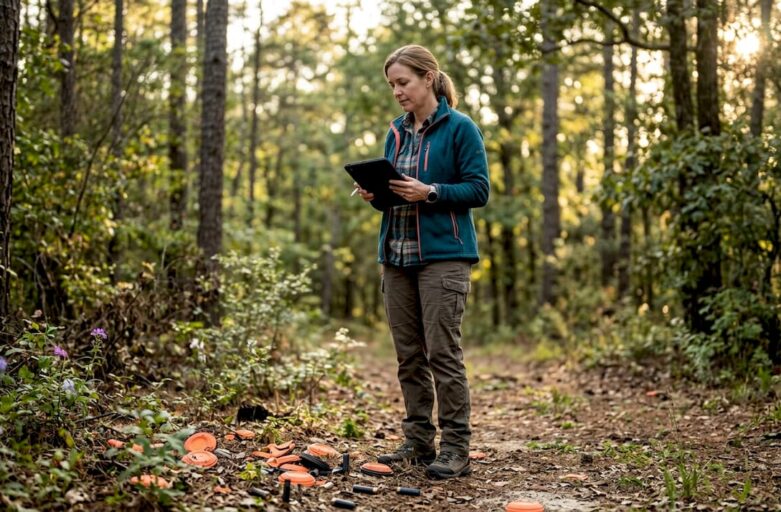
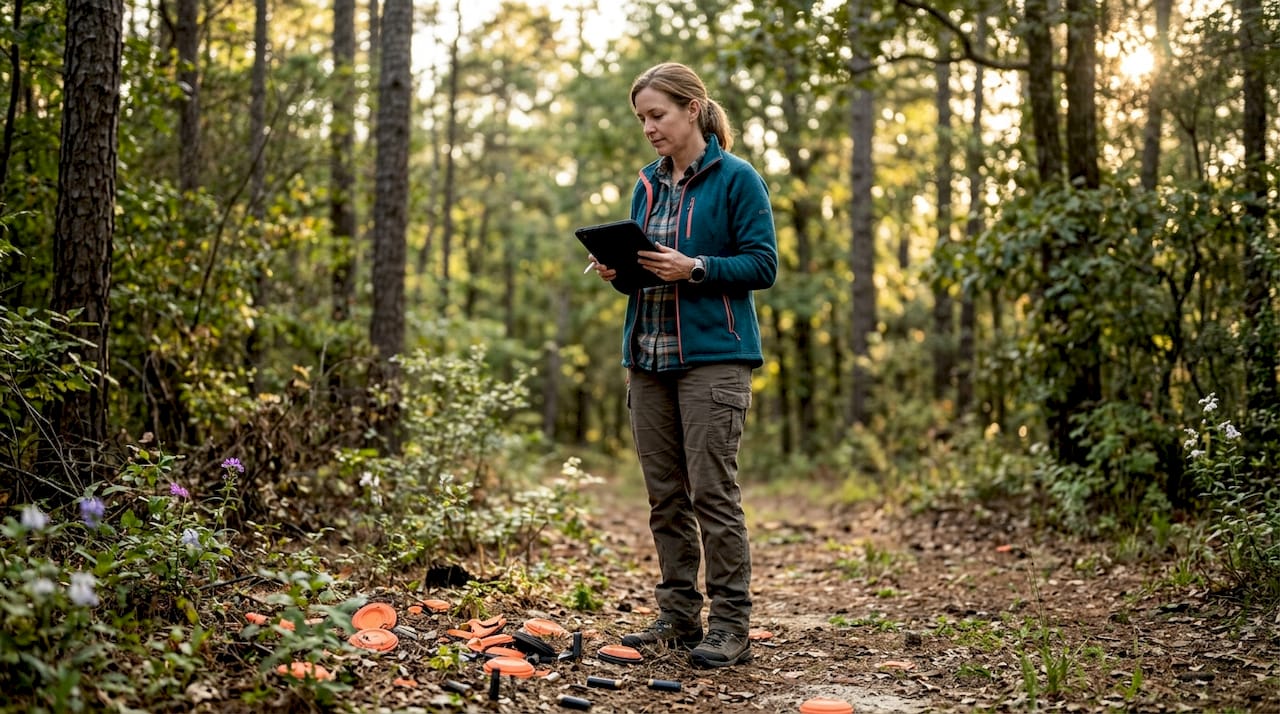
The carbon footprint of shooting sports is defined as the total environmental impact generated by shooting activities, covering lead contamination, airborne emissions, energy consumption, and material waste from ammunition and facilities. This footprint is far larger than most participants realise. Shooting sports are the second-largest source of global lead contamination in soils, after the battery industry. The International Shooting Sport Federation (ISSF) has responded by committing to measurable emission reductions ahead of the 2028 and 2032 Olympic Games. Understanding the full scope of this impact is the first step toward meaningful change.
What is the carbon footprint of shooting sports?
The carbon footprint of shooting sports covers several distinct pollution categories, not just greenhouse gas emissions. Lead contamination is the dominant concern, but energy use, plastic waste, and airborne particulates all contribute to the overall environmental toll.
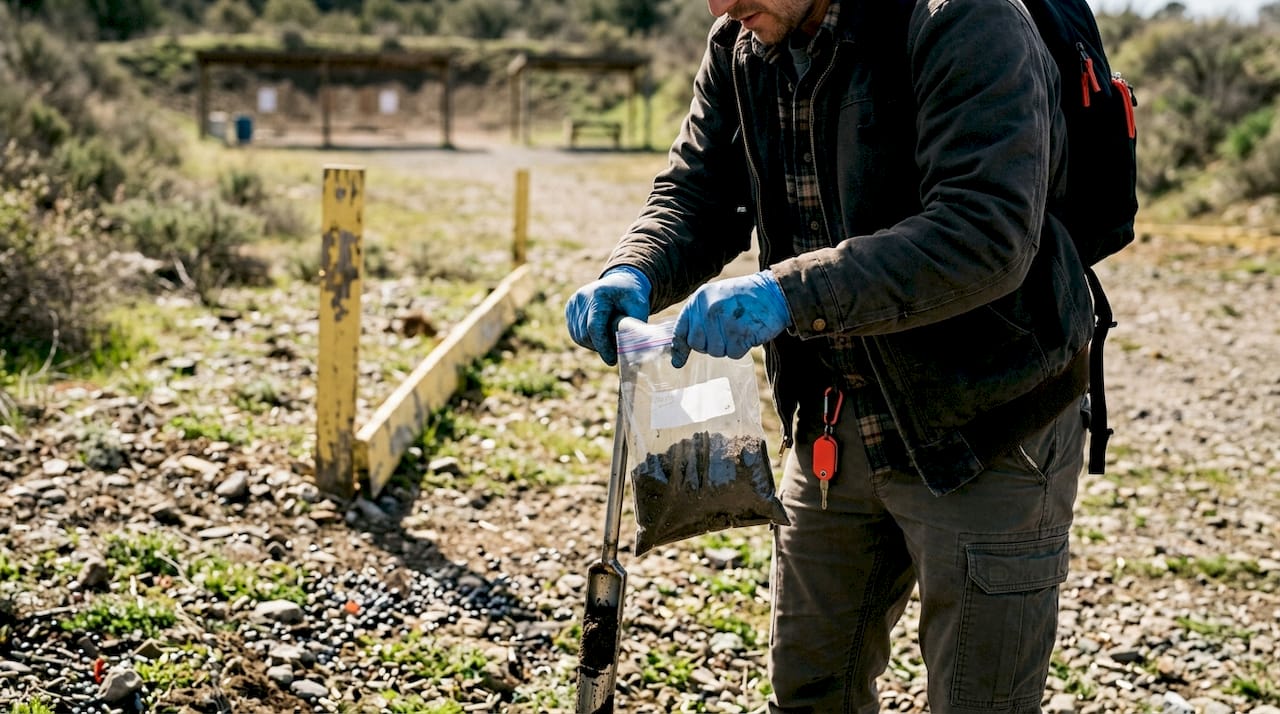
The term “carbon footprint” is commonly used to describe all environmental impacts from an activity, not solely CO₂ output. In shooting sports, the industry standard framework groups impacts into three areas: soil and water contamination from lead, air quality degradation at ranges, and resource consumption from materials and energy. Each category carries measurable, long-term consequences.
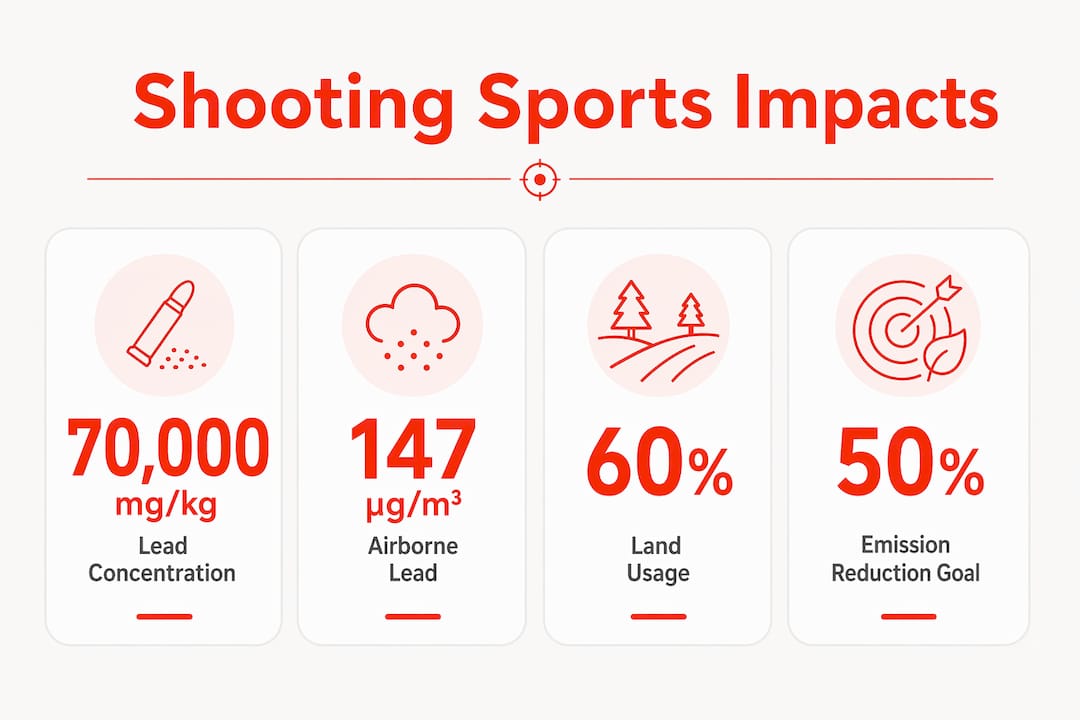
Soil lead concentrations at shooting ranges can reach 10,000–70,000 mg/kg, with 10–80% of that lead in an exchangeable form that can leach into groundwater. Those figures mean a single well-used range can contaminate surrounding land for generations. A single shotgun shell holds up to 36 g of lead, and ranges receive thousands of rounds each week.
What are the main sources of environmental impact in shooting sports?
Four sources account for the bulk of the carbon and environmental impact from shooting activities. Each operates differently and requires a different response.
Lead from ammunition
Lead shot and bullets are the primary source of soil contamination at outdoor ranges. Lead contamination can spread beyond the range boundary, attaching to crops and entering livestock through grazing, which puts human food chains at risk. The scale of this problem is not trivial. A single active outdoor range accumulates tonnes of lead in its soil over decades.
Airborne lead at indoor ranges
Indoor ranges create a concentrated air quality problem. Conventional bullet traps generate up to 147 µg/m³ of airborne lead particulate. Advanced cushioning traps reduce that figure to 4.7 µg/m³, well below the French national safety threshold of 10 µg/m³. That reduction matters enormously for the health of instructors and regular shooters who spend hours inside these facilities each week.
Energy consumption
Indoor ranges consume significant energy to heat and ventilate large air volumes. Maintaining comfortable temperatures of around 16–17°C in colder climates requires continuous heating, while high-volume ventilation systems run constantly to manage airborne lead. This energy demand produces a hidden carbon emissions burden that rarely appears in discussions about shooting sports’ environmental effects.
Plastic waste from wads and targets
- Approximately three billion shotgun wads are produced globally each year, the vast majority made from non-biodegradable plastic.
- Traditional clay targets contain bitumen and petroleum-based compounds that persist in soil.
- Biodegradable wads can degrade in soil in under two years, but adoption remains gradual.
- Plastic wad fragments scatter across fields and hedgerows, creating microplastic contamination that standard range clean-up programmes miss entirely.
Pro Tip: When reviewing your club’s environmental impact, count wad and target waste separately from lead. Clubs often focus solely on lead reclamation and overlook the plastic accumulation that builds up across their land each season.
How does lead contamination from shooting ranges affect ecosystems and human health?
Lead from shooting ranges does not stay where it lands. Its persistence and mobility make it one of the most serious environmental effects of shooting on record.
Lead in bullets and pellets can take 30 to 300 years, and in certain soils up to 700 years, to fully oxidise and degrade. That persistence means contamination from ranges closed decades ago still poses active risks today. Remediation is not a one-off exercise. Effective clean-up requires integrated soil sampling, repeated lead reclamation, and environmental monitoring carried out over decades.
The contamination does not stay within range boundaries. Research shows that honeybees detect heavy metals including lead, barium, and copper from shooting ranges up to 500 metres away. Honeybees act as bio-indicators, revealing atmospheric dispersion of metals that standard soil tests at the range perimeter would never capture. This evidence confirms that the environmental footprint of a shooting range extends well beyond its fences.
| Contamination pathway | Key finding | Implication |
|---|---|---|
| Soil lead concentration | 10,000–70,000 mg/kg at active ranges | Long-term land use restrictions required |
| Lead degradation rate | 30–700 years depending on soil type | Contamination persists across generations |
| Airborne spread | Detected up to 500 m via honeybee analysis | Adjacent farmland and communities at risk |
| Food chain entry | Lead attaches to crops and enters livestock | Human health risk beyond the range site |
Pro Tip: If your club owns or leases land adjacent to a shooting range, commission a soil and water test that extends at least 500 metres from the range boundary. Standard range-only sampling misses the contamination that bio-indicator research now confirms.
What sustainability initiatives are emerging in shooting sports?
The shooting sports sector is responding to environmental pressure with a combination of regulatory alignment, material innovation, and operational reform. Progress is real, though uneven.
-
ISSF carbon reduction commitment. The ISSF committed in 2025 to measure and reduce carbon emissions by 50% towards the 2028 and 2032 Olympic Games. This includes Carbon Literacy training for staff and alignment with the UN Sports for Climate Action Framework. The ISSF’s commitment signals that sustainability in shooting sports is now a governance priority, not a voluntary afterthought.
-
Biodegradable ammunition components. Manufacturers are developing biodegradable shotgun wads that degrade in soil within two years. Regulatory pressure on single-use plastics is accelerating this transition, though full market adoption remains years away. Clubs that switch early gain both environmental and reputational benefits.
-
Lead reclamation and Best Management Practices (BMPs). The US Environmental Protection Agency (EPA) has published Best Management Practices for lead at outdoor shooting ranges, covering soil sampling, lead reclamation, and groundwater protection. Proactive BMP implementation reduces soil contamination and protects clubs from legal liability. Clubs that treat lead reclamation as routine maintenance rather than emergency response see significantly lower long-term remediation costs.
-
Carbon Literacy training. Range operators and club managers are beginning to adopt Carbon Literacy training, a structured programme that builds understanding of carbon emissions and practical reduction methods. This training, aligned with the UN Sports for Climate Action Framework, equips staff to make informed decisions about energy, materials, and waste.
-
Energy-efficient range engineering. Advances in ventilation design reduce the energy cost of maintaining safe air quality in indoor ranges. Balancing filtration efficiency with ventilation rate is technically complex, but energy-efficient engineering solutions now exist that cut both carbon emissions and operating costs simultaneously.
Pro Tip: Clubs seeking to reduce their carbon impact should start with a BMP audit before investing in new equipment. Identifying where lead accumulates and how energy is used gives you a clear baseline and a prioritised action list.
How can individuals and clubs reduce the carbon impact of their shooting activities?
Reducing the carbon impact of shooting activities does not require a complete overhaul of how the sport is practised. Targeted changes at the participant and club level produce measurable results.
- Switch to lead-free ammunition. Steel, bismuth, and tungsten-based alternatives eliminate the primary source of soil and water contamination. The environmental benefits of lead-free shooting are well documented, and regulatory bans on lead shot in wetland areas are already in force across much of Europe.
- Use biodegradable targets and wads. Replacing petroleum-based clay targets and plastic wads with biodegradable alternatives removes the microplastic burden from range land. Clubs can phase this in gradually without disrupting competition schedules.
- Implement a lead reclamation programme. Regular soil sampling and lead collection, following EPA BMP guidelines, prevents contamination from reaching groundwater. Reclaimed lead can be sold for recycling, partially offsetting the cost of the programme.
- Audit and reduce range energy use. Reviewing heating and ventilation systems against current efficiency standards identifies quick wins. Upgrading to energy-efficient ventilation reduces both carbon emissions and operating costs.
- Educate members and engage them in sustainability. Clubs that run sustainability workshops and share environmental data with members build a culture of responsibility. Members who understand the environmental challenges in shooting sports are more likely to support investment in cleaner practices.
- Explore laser-based alternatives for training and events. Laser clay shooting produces no lead, no plastic wad waste, and no soil contamination. For training sessions, corporate events, and introductory experiences, it removes the environmental footprint of traditional shooting entirely.
Land managed for shooting in the UK covers about 60% of rural land, contributing to habitat conservation and biodiversity. That conservation value is real, and it gives the shooting community both the incentive and the credibility to lead on environmental reform.
Key takeaways
The carbon footprint of shooting sports is dominated by lead contamination, with soil concentrations reaching 70,000 mg/kg at active ranges and persistence of up to 700 years, making proactive remediation and material substitution the most urgent priorities.
| Point | Details |
|---|---|
| Lead is the primary pollutant | Soil concentrations at ranges can reach 70,000 mg/kg, with contamination persisting for centuries. |
| Plastic waste is underestimated | Three billion shotgun wads are produced annually; biodegradable alternatives degrade in under two years. |
| Indoor ranges carry hidden emissions | Heating and ventilation of indoor ranges produce significant carbon emissions beyond visible lead pollution. |
| ISSF has set a 50% reduction target | The ISSF committed to halving carbon emissions by the 2028 and 2032 Olympic Games under UN alignment. |
| Laser alternatives eliminate the footprint | Laser clay shooting produces no lead, no plastic wad waste, and no soil contamination for events and training. |
Why I think shooting sports are at a turning point on sustainability
I have spent years watching the shooting sports community wrestle with its environmental reputation, and my honest view is that the sector has been too slow to confront the scale of the problem. The lead contamination data is not new. Soil concentrations of tens of thousands of milligrams per kilogram have been documented at ranges for decades. What is new is the regulatory and cultural pressure that is finally forcing the issue into the open.
The conservation argument is legitimate. Shooting estates in the UK manage vast areas of countryside that would otherwise face agricultural intensification or neglect. That habitat value is real and should not be dismissed. But it does not cancel out the lead problem. A range that supports biodiversity above ground while poisoning groundwater below it is not a conservation success story.
What gives me genuine optimism is the pace of material innovation. Biodegradable wads, lead-free ammunition, and laser-based alternatives are no longer niche experiments. They are commercially available, increasingly affordable, and backed by growing regulatory pressure. The clubs and organisations that move now will be ahead of legislation rather than scrambling to comply with it.
The ISSF’s 50% emission reduction target is a meaningful signal. When the governing body of Olympic shooting commits to Carbon Literacy training and UN framework alignment, it changes the conversation for every club below it. The question for individual shooters and club managers is no longer whether to act, but how quickly.
— Joshua
Laserclay: clay shooting with no environmental cost
Traditional clay shooting carries a measurable environmental burden. Lead in the soil, plastic wads across the fields, and energy-heavy indoor ranges all add up. Laserclay removes those costs entirely.

Laserclay uses advanced laser technology to replicate the clay shooting experience without ammunition, lead, or plastic waste. There is no soil contamination, no airborne lead risk, and no remediation bill at the end of the season. It works for corporate team-building events, birthday celebrations, and introductory shooting experiences where environmental responsibility matters as much as the activity itself. For organisations that want the excitement of clay shooting the greener way, Laserclay delivers it without compromise. You can also explore how to play laser clay to see exactly how the experience works.
FAQ
What is the carbon footprint of shooting sports?
The carbon footprint of shooting sports covers lead contamination in soil and water, airborne lead particulates at indoor ranges, energy consumption from heating and ventilation, and plastic waste from wads and targets. Lead pollution is the dominant impact, with soil concentrations at active ranges reaching up to 70,000 mg/kg.
How long does lead from shooting ranges stay in the soil?
Lead from bullets and pellets takes between 30 and 300 years to oxidise and degrade in most soils, and up to 700 years in certain soil types. This persistence means contamination from historic ranges remains an active environmental risk today.
What are the best ways to reduce the environmental effects of shooting?
Switching to lead-free ammunition, using biodegradable wads and targets, implementing EPA Best Management Practices for lead reclamation, and auditing range energy use are the most effective steps. Laser-based shooting alternatives eliminate lead and plastic waste entirely for training and events.
What is the ISSF doing about carbon emissions from shooting sports?
The ISSF committed in 2025 to measure and reduce carbon emissions by 50% towards the 2028 and 2032 Olympic Games, including Carbon Literacy training for staff and alignment with the UN Sports for Climate Action Framework.
Can shooting sports have positive environmental effects?
Land managed for shooting in the UK covers approximately 60% of rural land, supporting habitat conservation and biodiversity. This conservation contribution is genuine, but it operates alongside, not instead of, the obligation to address lead contamination and material waste.