
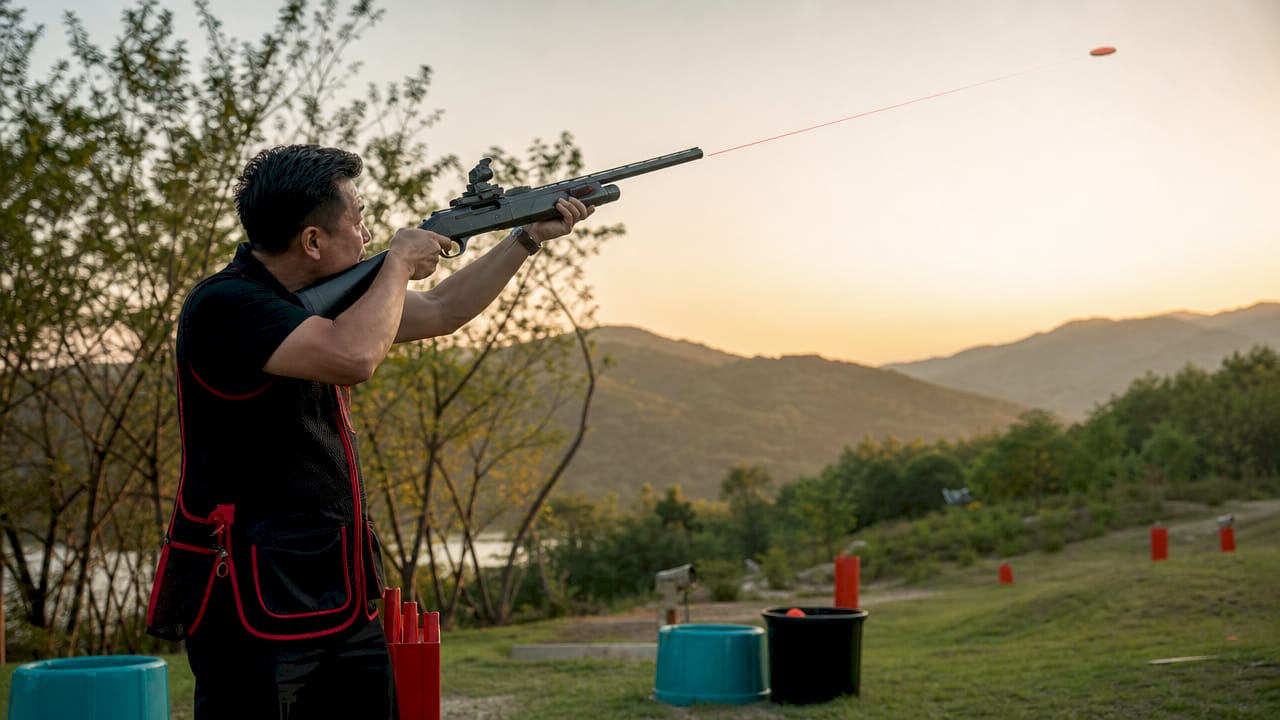
Reaction time training with laser clay is defined as a structured method of improving perceptual and motor speed by responding to randomised laser-projected targets in a safe, feedback-rich environment. Unlike repetitive drills that let the brain predict what comes next, laser clay systems force genuine decision-making on every shot. Individuals can improve reaction time by 15–30ms after just 5–10 sessions of consistent, unpredictable training. That figure matters because even a 20ms gain translates to a measurably faster response in real shooting scenarios. Laserclay combines this science with interactive scoring and trajectory tracking to make every session count.
How does reaction time training work with laser clay?
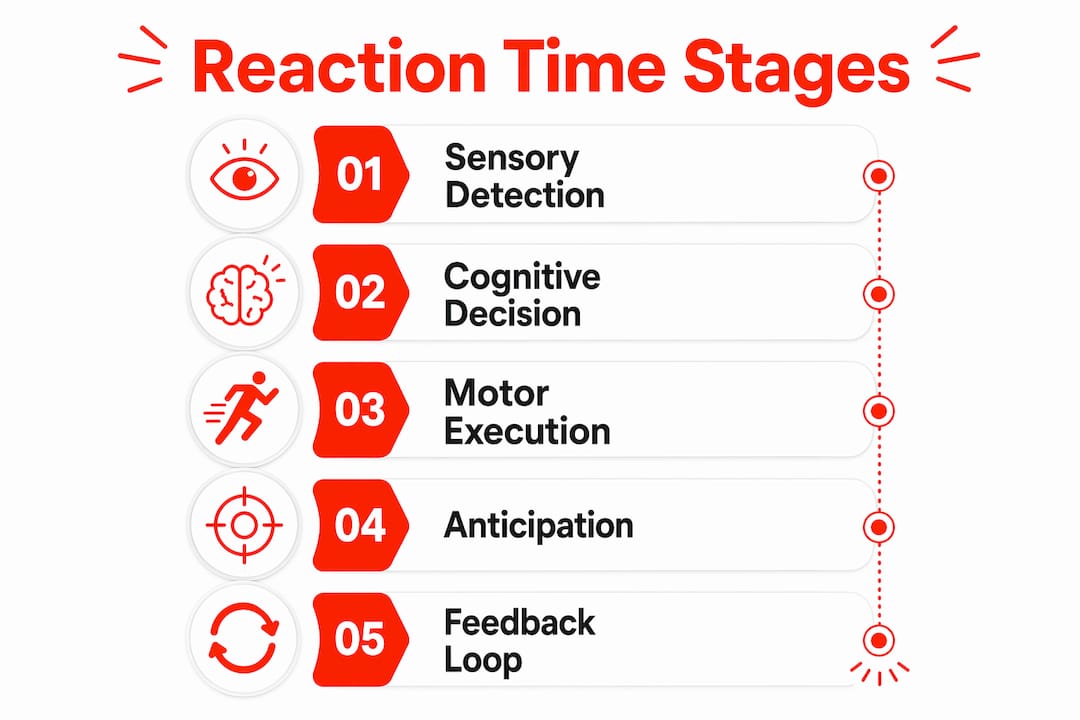
Reaction time training works by cycling through three stages: sensory detection, cognitive decision-making, and motor execution. Laser clay systems engage all three simultaneously, which is what separates them from simple reflex drills. When a clay target appears at an unpredictable angle and moment, your visual cortex processes the stimulus, your prefrontal cortex selects the correct response, and your motor system fires the movement. Each stage adds latency, and training compresses that latency over time.

The critical insight from cognitive science is that anticipatory reading matters more than raw reflex speed. Elite shooters do not simply react faster. They read pre-target cues, such as the launcher’s angle or the target’s early trajectory, and initiate movement earlier. Laser clay training builds this skill by presenting varied target paths that reward pattern recognition rather than guesswork.
Randomness is the engine of this improvement. When stimulus timing, location, and type are fixed, the brain pre-programmes a response and stops actively engaging. That is called habituation, and it kills genuine reaction time gains. Laser clay systems prevent habituation by varying every parameter across each session.
Physical conditioning also plays a direct role. Six to eight weeks of aerobic exercise improves reaction time by 5–20ms across tasks by increasing neural efficiency and blood flow to the prefrontal cortex. Sleep deprivation, by contrast, adds 30–50ms to reaction times. Both facts point to the same conclusion: laser clay training works best when it sits inside a broader programme of physical health.
Key physiological factors engaged during laser clay training:
- Visual processing speed: the time from target appearance to signal reaching the brain’s decision centres
- Perceptual anticipation: reading cues before the target fully appears to shorten effective reaction time
- Motor execution speed: the time from decision to trigger pull, shaped by muscle memory and movement smoothness
- Cognitive load management: maintaining focus across unpredictable stimuli without mental fatigue
- Sleep and recovery: directly governing how quickly neural signals travel between brain regions
Pro Tip: Practise your breathing pattern before each session. A controlled exhale before the target appears lowers physiological arousal and measurably tightens your response window.
Why does randomised stimulus design improve training outcomes?
Fixed drills produce fast improvements that plateau quickly. The brain learns the pattern rather than the skill. Randomised laser clay systems solve this by ensuring no two targets follow the same timing, location, or flight path. The result is sustained cognitive engagement across every session, which drives deeper neural adaptation.
Interactive laser targets use precision sensors and timing logic similar to athletic laser timing gates. They measure reaction time to the millisecond, record hit ratios, and track barrel trajectory. That data tells you exactly where your response chain is breaking down, whether at the detection stage, the decision stage, or the motor execution stage.
Basic laser targets without timing logic cannot do this. They confirm a hit but provide no information about when or how the shot was delivered. The difference in training value is substantial.
Recommended training protocol for consistent gains:
- Session frequency: three sessions per week, spaced to allow neural consolidation between efforts
- Session structure: three blocks of five minutes each, with two-minute rest intervals between blocks
- Stimulus variety: rotate between pop-up targets, crossing targets, and doubles within each session
- Feedback review: spend five minutes after each session reviewing your timing data to identify patterns
- Progressive difficulty: increase target speed or reduce presentation time every two weeks to prevent adaptation
| Training approach | Stimulus type | Feedback quality | Reaction time gains |
|---|---|---|---|
| Repetitive fixed drills | Predictable, single location | None | Short-term only |
| Basic laser targets | Varied location, fixed timing | Hit or miss only | Moderate |
| Interactive laser clay systems | Random timing, location, and type | Millisecond timing and trajectory | Sustained and measurable |
Pro Tip: Add an auditory cue variation to your sessions. Mixing visual-only targets with targets that include a sound signal trains your brain to process multiple sensory channels, which mirrors real shooting conditions far more closely.
How does laser clay training build shooting skills beyond reaction speed?
Reaction time is only one component of shooting performance. Laser clay training also develops muscle memory, movement smoothness, and the complex motor skills needed for disciplines like doubles shooting. These gains come from the ability to practise without recoil fatigue, which means shooters can complete far more quality repetitions per session than live-fire allows.
One critical caution applies here. Proper shotgun mounting must be practised even in laser sessions. Neglecting the mount creates a “lazy mount” habit that can cause shoulder injury when returning to live-fire. Laser clay training is not an excuse to skip physical technique. It is an opportunity to refine it without the noise and recoil that mask errors in a live environment.
Doubles shooting is a specific area where laser clay delivers exceptional value. Training rapid eye transitions between two targets is difficult to isolate on a live range because the first shot’s recoil disrupts the visual field before the second target is fully tracked. Laser systems remove that disruption entirely, allowing shooters to focus purely on the eye movement and barrel transition sequence.
High-end laser clay systems also provide trajectory tracking, which visualises barrel movement across the shot. Errors that are invisible in a noisy, recoil-heavy live environment become immediately apparent on screen. That level of diagnostic detail accelerates technical correction significantly.
Key physical skills developed through laser clay training:
- Mount consistency: repeating the same shoulder and cheek position across hundreds of repetitions without fatigue
- Swing smoothness: developing fluid barrel movement that tracks target flight without jerking or stopping
- Trigger timing: learning to fire at the precise moment of barrel-target alignment rather than rushing or hesitating
- Eye transition speed: shifting visual focus rapidly between targets in doubles scenarios
- Off-season maintenance: 30 minutes of daily laser practice maintains lead feel and movement smoothness between seasons
How should individuals and teams structure their laser clay training?
Effective laser clay training follows a structured weekly rhythm rather than ad hoc sessions. Three sessions per week with three blocks of five minutes each represents the evidence-backed protocol for sustained reaction time improvement. That structure balances stimulus volume with the neural recovery time needed for adaptation to consolidate.
Teams benefit from an additional layer: competitive drills and scenario-based practice. When participants compete against each other’s reaction time scores in real time, attentional readiness increases because the stakes feel genuine. Laserclay’s team training format uses this dynamic to build both individual skill and group cohesion simultaneously.
A practical training plan for individuals and teams:
- Warm-up (5 minutes): slow, deliberate target tracking with no time pressure to activate visual processing pathways
- Block one (5 minutes): single targets with randomised timing and location, reviewing scores between repetitions
- Rest (2 minutes): step away from the system, breathe, and mentally review the previous block
- Block two (5 minutes): doubles targets to train rapid eye transitions and sequential motor execution
- Rest (2 minutes): hydrate and note any timing patterns from the scoring data
- Block three (5 minutes): mixed stimulus types including auditory cues, increasing cognitive load
- Data review (5 minutes): compare reaction times and hit ratios against previous sessions to track progress
Aerobic fitness directly supports these gains. High-intensity sport with unpredictable stimuli supports general attentional readiness and broad reaction time improvement. Running, cycling, or circuit training three times per week alongside laser clay sessions accelerates neural efficiency in ways that laser training alone cannot achieve.
Performance data is the most underused tool in laser clay training. Most participants check their score and move on. The more effective approach is to track reaction time trends across four to six weeks, identify which target types produce the slowest responses, and dedicate specific blocks to those weaknesses. Laserclay’s skill development guide outlines how to structure this kind of data-driven progression.
Pro Tip: Schedule your most demanding training block for the time of day when you are naturally most alert. Reaction times vary by as much as 15% across the day depending on circadian rhythm, so timing your sessions strategically is free performance.
Key takeaways
Laser clay reaction time training works because it combines randomised stimuli, real-time data feedback, and physical skill conditioning to drive measurable improvements in both perceptual speed and shooting technique.
| Point | Details |
|---|---|
| Randomness drives adaptation | Varying stimulus timing, location, and type prevents habituation and sustains cognitive engagement. |
| Three sessions per week is optimal | Three blocks of five minutes each, three times weekly, matches the evidence-backed protocol for reaction time gains. |
| Aerobic exercise amplifies results | Six to eight weeks of aerobic training improves reaction time by 5–20ms beyond what laser drills alone achieve. |
| Proper mount technique must be maintained | Neglecting shotgun mounting in laser sessions creates injury risk when returning to live-fire. |
| Data review accelerates progress | Tracking reaction time trends across sessions identifies specific weaknesses faster than subjective self-assessment. |
Why I think most shooters are training reaction time the wrong way
Most shooters treat reaction time as a fixed trait. They assume you either have fast hands or you do not. That belief leads to training that focuses entirely on volume: more shots, more sessions, more repetitions of the same drill. The science says the opposite. Volume without variability produces habituation, not improvement.
The real lever is anticipatory reading. Elite athletes initiate movement earlier by pattern-matching kinematic cues before the target fully appears. That skill is trainable, but only if your training system forces you to read cues rather than react to fully visible targets. Laser clay systems that randomise target presentation are the only practical way to train this at scale without live ammunition.
I have also seen teams underestimate the diagnostic value of objective data. Laser clay systems act as a laboratory for isolating micro-errors that live-fire masks entirely. A shooter who consistently shows a 40ms delay on crossing targets but not on incoming ones has a specific visual tracking problem, not a general reaction time problem. That distinction changes everything about how you train.
The one caution I would add is this: laser clay should complement live-fire, not replace it. The physical conditioning of mounting a real shotgun, managing recoil, and shooting in outdoor conditions builds attributes that no simulator fully replicates. The best performers use laser clay for cognitive and technical refinement, then transfer those gains to the range.
— Joshua
Laserclay Singapore: where reaction time training meets real results
Laserclay brings together laser technology and interactive scoring to create a training environment that works for individuals and teams alike. Every session uses randomised target presentations and real-time performance data, giving you the feedback loop that reaction time improvement actually requires.
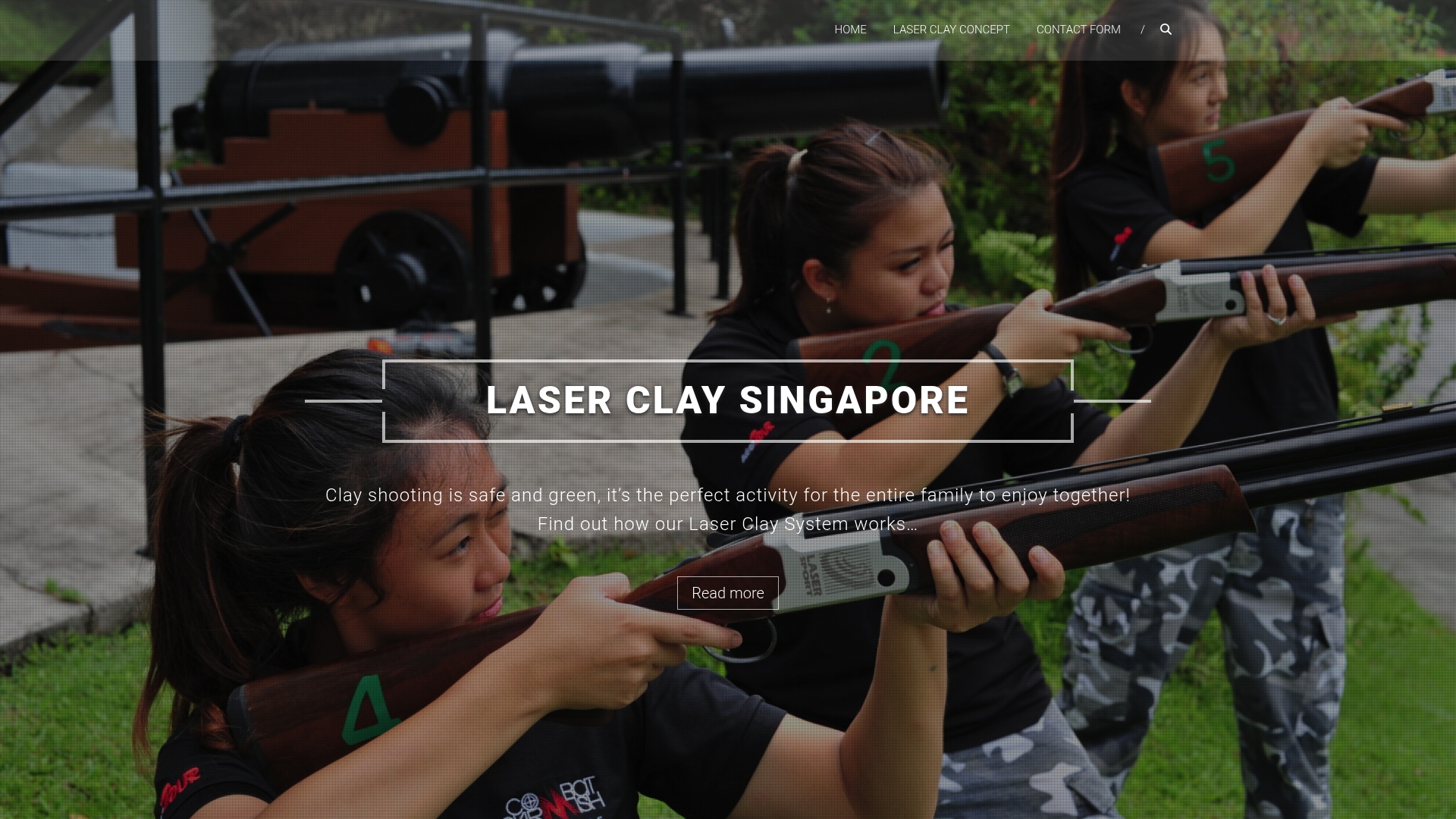
Whether you are building shooting skills for competition or looking for a corporate team building activity that develops genuine cognitive and physical performance, Laserclay delivers a measurable experience. The format is safe, lead-free, and accessible to all skill levels, making it as effective for beginners as it is for experienced shooters. Find out how to get started and book your session today.
FAQ
What is reaction time training in laser clay shooting?
Reaction time training in laser clay shooting is a structured method of improving perceptual and motor speed by responding to randomised laser-projected targets with real-time feedback. It engages sensory detection, decision-making, and motor execution simultaneously to compress total response time.
How many sessions per week does laser clay reaction time training require?
The evidence-backed protocol recommends three sessions per week, each structured as three blocks of five minutes with short rest intervals. This frequency balances training volume with the neural recovery time needed for adaptation to consolidate.
Can laser clay training replace live-fire shooting practice?
Laser clay training complements live-fire practice but does not fully replace it. Simulated training builds muscle memory and movement smoothness without recoil fatigue, but live-fire develops physical conditioning and outdoor performance attributes that simulators cannot replicate entirely.
How quickly can reaction time improve with laser clay training?
Individuals can improve reaction time by 15–30ms after 5–10 consistent sessions of unpredictable reaction training. Broader transfer across tasks accelerates further with six to eight weeks of supporting aerobic exercise alongside laser clay sessions.
Is laser clay reaction time training suitable for teams?
Laser clay training is well-suited to teams because competitive drills and shared performance data increase attentional readiness and motivation. The format supports both individual skill development and group dynamics, making it effective for corporate and sporting team environments.