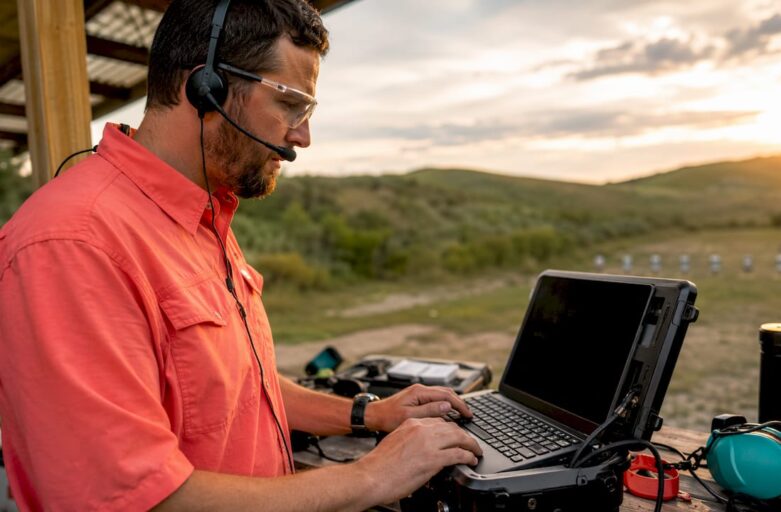
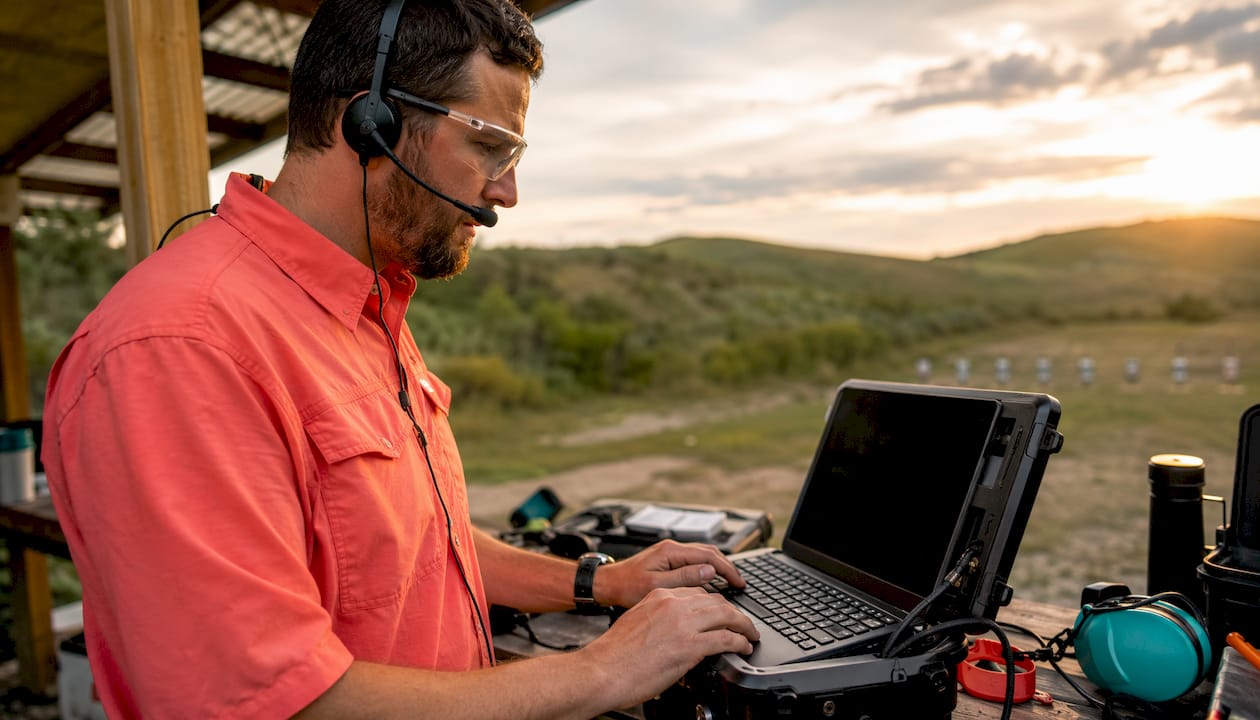
A laser shooting performance system is defined as a training tool that records shot placement and analyses firearm movement during every trigger press. These systems give shooters and coaches objective data that replaces guesswork and subjective observation. To track shooting performance, a laser system must do two things: show where the shot landed and explain why it landed there. AI-assisted training systems improved trainee shooting performance by 24.6% over six months across 5,200 training sessions. That figure tells you these are not novelty gadgets. They are serious training tools that produce measurable results.
How does a laser system track shooting performance?
Laser performance tracking works through two complementary mechanisms. The first is shot placement tracking, which uses a laser cartridge inserted into the firearm’s chamber. When the trigger is pressed, the cartridge emits a laser pulse that registers on a target, recording exactly where the shot would have landed. The second mechanism is motion analysis, where a sensor mounted on the firearm records every movement during the trigger press. Hit location shows ‘what happened’, while motion sensors explain ‘why it happened.’ Together, they give a complete picture of each shot.
The distinction between these two data streams is the most important concept in laser shooting training. A shooter can see a tight group on target and still have a serious flinching problem that live fire will expose. Conversely, a scattered group without motion data leaves a coach guessing whether the cause is trigger jerk, poor grip, or breath control. Combining shot placement with motion sensors via app integration offers the most complete dry fire training feedback available. A late 2025 update to leading sensor platforms enabled a combined view of shot location and trigger diagnostics in a single session.
What types of laser shooting systems are available?
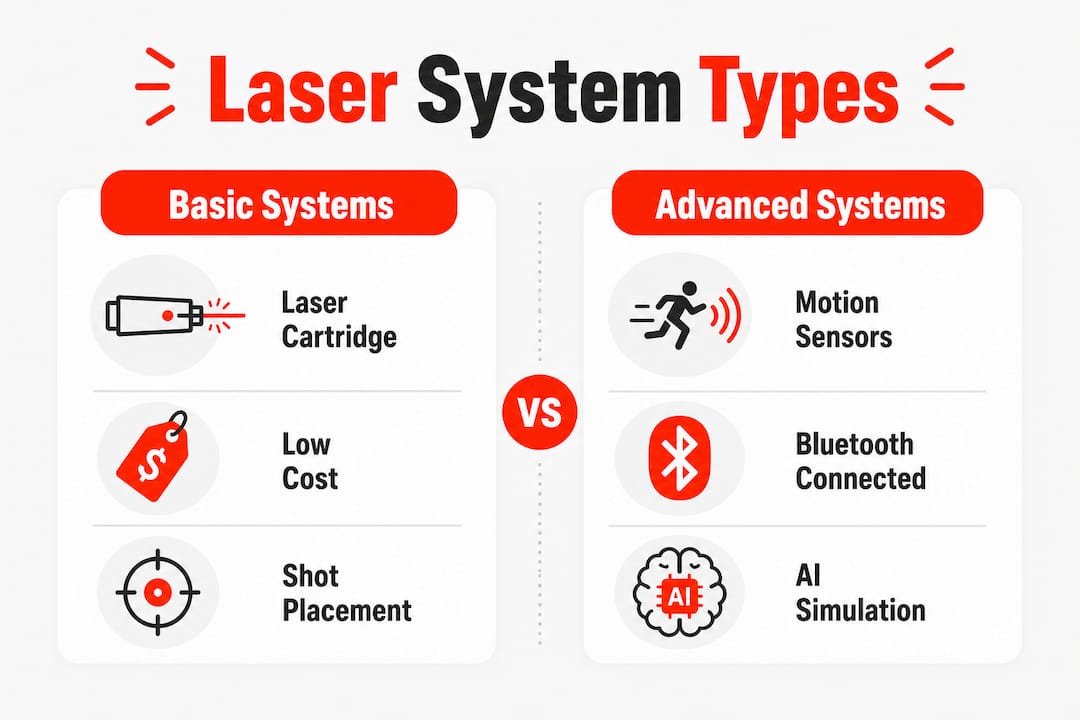
Laser shooting systems fall into three broad categories based on capability and cost.
Entry-level laser cartridge systems use a chamber-inserted laser that fires when the striker or firing pin hits it. They record shot placement on a compatible target or screen. These are the most affordable option, with basic laser training systems costing approximately £80–£125, with advanced analytics subscriptions around £8 per month. They suit beginners and those focused purely on shot placement.
Integrated sensor systems add a Bluetooth-connected motion sensor to the firearm’s rail or trigger guard. The sensor tracks firearm movement during the trigger press and sends data to a companion app. The app rates each shot, identifies error types such as pushing, pulling, or anticipation, and provides coaching prompts. Machine-learning classification of air pistol shots achieved 83% accuracy in identifying high versus low performance using this type of sensor data. That accuracy level makes the coaching feedback genuinely reliable.
AI-assisted simulation platforms represent the top tier. These systems combine laser cartridges, motion sensors, and machine-learning analytics to classify shot quality, track longitudinal progress, and generate personalised coaching recommendations. They are used in military and elite sport contexts.
| System type | Approximate cost | Key feature | Best for |
|---|---|---|---|
| Laser cartridge only | £80–£125 | Shot placement on target | Beginners, dry fire basics |
| Integrated sensor system | £150–£350 + subscription | Motion analysis + placement | Intermediate shooters, coaches |
| AI simulation platform | £500+ | Full analytics, longitudinal tracking | Elite athletes, academies |
Pro Tip: Choose your system based on your primary training gap. If you already know your shots are scattered but cannot identify why, prioritise a motion sensor system over a basic laser cartridge.
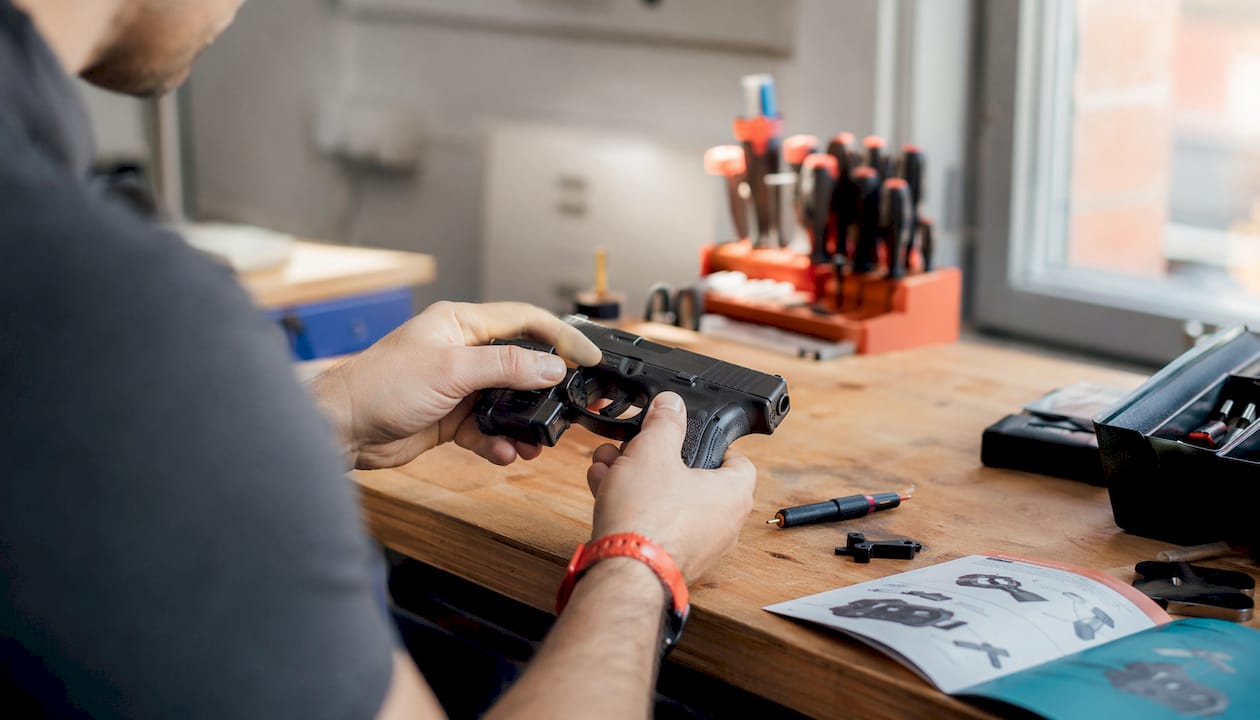
How to set up a laser tracking system for shooting training
Setting up a laser tracking system correctly determines whether the data you collect is useful or misleading.
Hardware you will need:
- A laser cartridge matched to your firearm’s calibre
- A motion sensor compatible with your firearm’s rail or trigger guard
- A smartphone or tablet running the companion app
- A stable target mount at the correct distance for your training discipline
- A tripod or sensor mount that eliminates movement unrelated to the shooter
Calibration steps:
- Insert the laser cartridge and confirm it seats flush with the chamber
- Mount the motion sensor and connect it to the app via Bluetooth
- Fire three dry fire shots at a calibration target and adjust the laser’s zero point in the app
- Confirm the app is recording both shot placement and motion data before beginning a session
- Set the target distance to match your competition distance for relevant data
Environmental considerations matter more than most shooters expect. Bright sunlight can wash out laser dots on standard paper targets. Use a dedicated laser-reactive target or shoot in a shaded area. Reflective surfaces near the target can create false readings. Ensure the sensor mount is tight, as any play in the mount introduces noise into the motion data.
Pro Tip: Run a five-shot calibration group at the start of every session. If the placement data does not match your known zero, recalibrate before collecting training data. Dirty data produces wrong conclusions.
Common setup errors include using a laser cartridge in the wrong calibre, failing to update the app before a session, and mounting the sensor on a loose rail. Each of these produces data that looks plausible but is systematically wrong.
How to integrate laser tracking into shooting training drills
Laser tracking data is only useful when it connects to specific drills and coaching decisions. Raw numbers without a training context produce no improvement.
Dry fire trigger control drills
Dry fire practice with laser systems removes recoil anticipation, which reduces trigger jerking and flinching. The laser cartridge shows exactly where the muzzle was pointing at the moment of trigger break, and the motion sensor shows whether the firearm moved during the press. Run sets of ten shots, review the motion data after each set, and identify the dominant error type before continuing. This structured approach prevents reinforcing bad habits through aimless repetition.
Rapid-fire group tracking
Set a par time using a shot timer and fire five-shot strings. The placement system records each shot’s location, while the motion sensor logs whether movement increased under time pressure. Coaches can use this data to identify shooters who maintain trigger discipline at slow speed but break down under time constraints. That is a fundamentally different problem from a shooter who has poor trigger control at all speeds, and it requires a different coaching response.
Aiming stability analysis
Machine-learning derived metrics like final-second aiming stability are stronger predictors of shooting performance than simple group size averages. Use your system’s aiming trace feature, if available, to review the last second of each shot. A shooter whose muzzle wanders widely before settling at trigger break needs different work than one who is stable but breaks the shot at the wrong moment.
Best practices for consistent use and data analysis:
- Review session data immediately after training, not the following day
- Track one metric per session rather than trying to improve everything at once
- Export session reports and compare them week on week to identify trends
- Share motion data with your coach before discussing corrections, so the conversation is grounded in evidence
- Use digital scoring records to build a longitudinal performance log that reveals patterns invisible in single-session review
Automated scoring systems enable objective, data-rich analytics and digital longitudinal tracking that replaces subjective human assessment. That shift from opinion to evidence is the most significant change laser tracking brings to coaching.
Pro Tip: Physical conditioning affects shooting performance more than most shooters admit. Reviewing cardio training approaches alongside your motion data can reveal whether performance drops late in a session are a technique problem or a fatigue problem.
Common problems with performance tracking laser systems
Even well-set-up systems produce problems. Knowing the most common issues saves hours of frustration.
| Problem | Likely cause | Solution |
|---|---|---|
| Shot placement drifts across session | Laser cartridge shifting in chamber | Re-seat cartridge; check for debris in chamber |
| Motion sensor drops Bluetooth connection | App running in background; low battery | Keep app in foreground; charge sensor fully before sessions |
| Placement and motion data do not sync | App version mismatch | Update app; restart both devices before session |
| Scores appear higher than live fire results | Target distance too short | Match target distance to competition standard |
| Motion data shows no errors despite poor groups | Sensor mounted incorrectly | Confirm sensor orientation matches app settings |
Sensor misalignment is the most common and least obvious problem. A sensor mounted upside down or rotated 90 degrees produces error classifications that are the mirror image of the real problem. Always confirm the sensor orientation in the app’s setup screen before the first session.
Pro Tip: After any firmware or app update, run a full calibration session before using the data for coaching decisions. Updates sometimes reset sensor orientation settings without warning.
Optimising system performance means focusing on the metrics that predict improvement rather than those that feel good. Final-second aiming stability and trigger press duration are more meaningful than overall score averages. Year-round laser training builds these metrics consistently, which is why serious coaches use tracking systems throughout the off-season, not only before competition.
Key takeaways
A laser shooting performance system delivers its greatest value when shot placement data and motion analysis are used together, not in isolation.
| Point | Details |
|---|---|
| Two data streams are essential | Shot placement shows results; motion sensors reveal the cause of each error. |
| System choice depends on training goals | Entry-level cartridges suit beginners; integrated sensor systems suit coaches and intermediate shooters. |
| Calibration determines data quality | Run a five-shot calibration group at the start of every session to confirm accuracy. |
| Drill structure matters | Structured dry fire and rapid-fire drills produce usable data; aimless repetition reinforces errors. |
| Longitudinal tracking drives improvement | Weekly comparison of session reports reveals trends that single-session review cannot show. |
What I have learned from combining laser tracking with motion analysis
The most common mistake I see shooters make with these systems is treating shot placement as the primary metric. A tight group feels like success, and the motion data gets ignored. That is backwards. The motion sensor tells you whether your technique is sound or whether you are compensating in a way that will collapse under pressure. I have watched shooters with excellent paper scores fall apart in competition because their trigger control was inconsistent and they never knew it.
Technology works best when it validates fundamentals rather than replacing them. A shooter who has not yet developed a consistent grip and stance will generate motion data that is too noisy to interpret. The system cannot teach you to shoot. It can only show you what you are already doing. That distinction matters enormously for coaches who are tempted to hand a new shooter a sensor system and expect the app to do the coaching.
The trend I find most significant is the shift toward digital performance records as the standard for evaluating shooting improvement. Coaches who rely on memory and subjective observation are working with incomplete information. A six-month motion data log is a far more honest account of a shooter’s development than any coach’s recollection. The shooters who improve fastest are the ones who treat their data with the same seriousness as a competitive athlete treats training load metrics.
Final-second aiming stability is the single metric I watch most closely. It predicts competition performance better than group size, score averages, or any subjective assessment. If that number is improving, the shooter is improving. If it is not, no amount of live fire will fix the underlying problem.
— Joshua
Laserclay and laser shooting in Singapore
Laserclay brings laser shooting technology to Singapore in a format that is accessible, safe, and free from the environmental concerns of traditional clay shooting. Lead ammunition and the associated soil contamination are removed entirely from the equation.
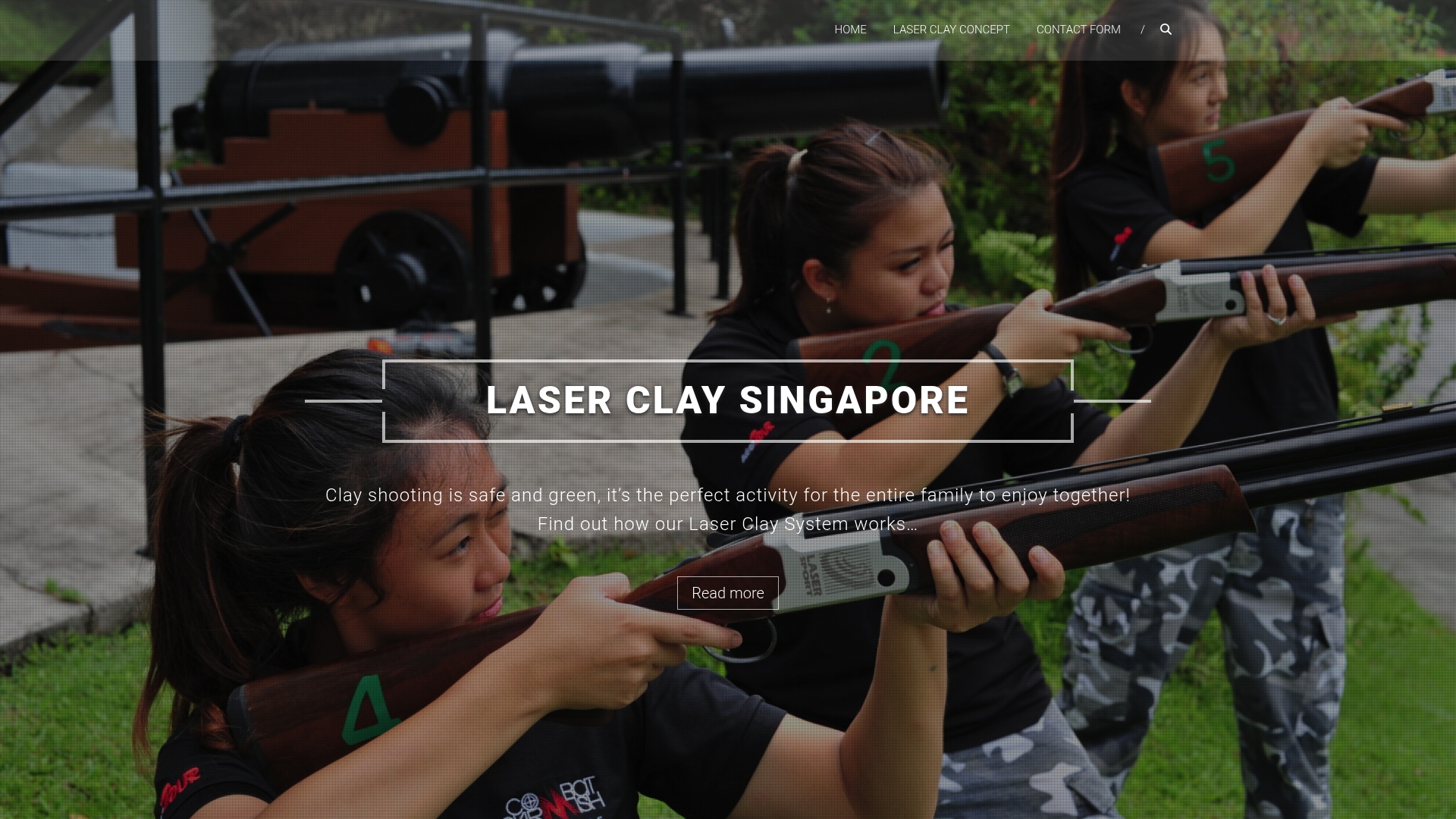
Laserclay’s laser clay shooting experience uses the same core principle as performance tracking systems: a laser replaces the projectile, and the system records the result. Whether you are a coach looking to introduce clients to laser training or a group seeking a structured outdoor activity, Laserclay provides a practical entry point. Visit Laserclay Singapore to see available sessions, group formats, and booking options.
FAQ
What does a laser shooting performance system measure?
A laser shooting performance system measures shot placement on a target and firearm motion during the trigger press. Together, these two data streams identify both the result and the cause of every shot.
How much does a basic laser training system cost?
Basic laser training systems cost approximately £80–£125. Advanced analytics subscriptions add around £8 per month for motion analysis and coaching features.
Can laser tracking systems replace live fire training?
Laser tracking systems complement live fire training but do not replace it. Dry fire with laser tracking removes recoil anticipation and builds trigger discipline, while live fire confirms whether those gains transfer under real conditions.
What is the most important metric to track in laser shooting training?
Final-second aiming stability is the strongest predictor of shooting performance. Machine-learning analysis of air pistol data confirms it outperforms simple group size averages as a performance indicator.
How often should I calibrate my laser training system?
Calibrate at the start of every session with a five-shot group. After any app or firmware update, run a full calibration before using the data for coaching decisions, as updates can reset sensor orientation settings.
Recommended
- Why shooting disciplines transfer to laser: the full picture | Laser Clay Singapore
- Precision in laser clay sport: your performance guide | Laser Clay Singapore
- What is laser clay shooting? A complete guide | Laser Clay Singapore
- Benefits of laser shooting team events explained | Laser Clay Singapore