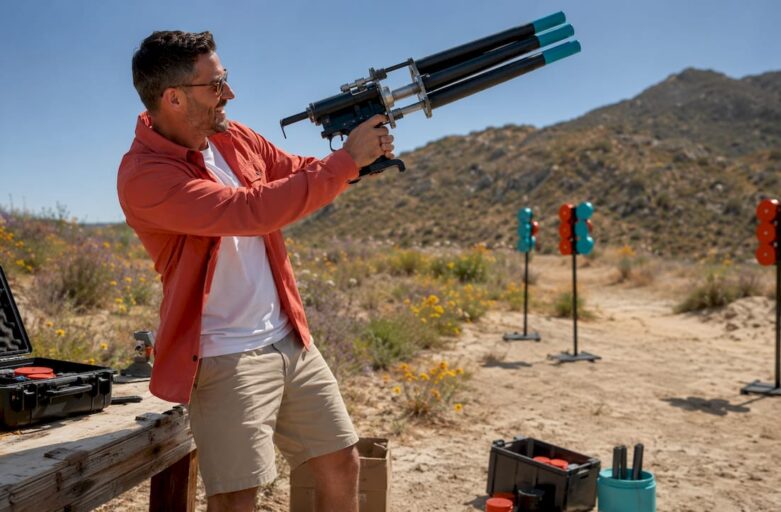
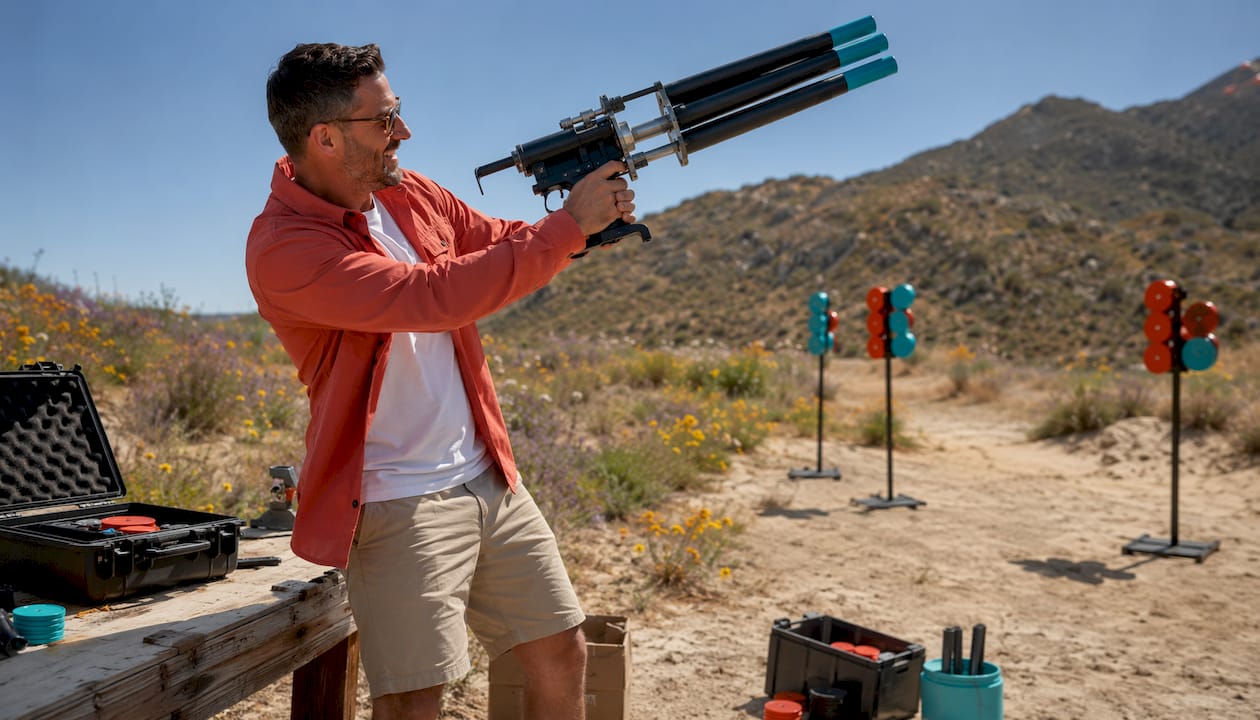
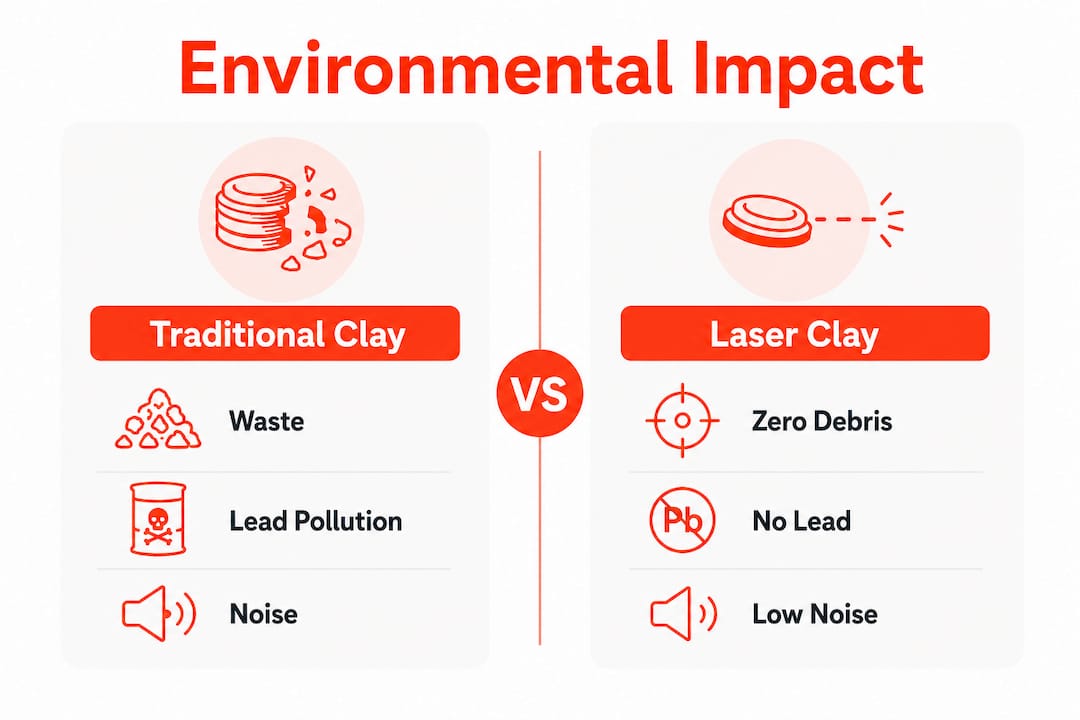
Laser clay technology reduces environmental harm in shooting sports by eliminating physical debris, cutting noise pollution, and avoiding lead contamination altogether. Where traditional clay pigeon shooting leaves broken fragments, spent casings, and chemical residue across the ground, laser clay uses infrared beams and reusable clays that generate no waste whatsoever. The result is a shooting experience that actively teaches participants about ecological responsibility simply by operating differently.
Key ways laser clay supports environmental awareness:
- No physical debris: Reusable fluorescent clays do not shatter, so nothing accumulates on the ground after a session; this ties in well with innovations in eco-friendly helmet materials that highlight the importance of sustainable sports equipment.
- Zero lead or shell casings: No live ammunition means no soil or water contamination from lead shot.
- Reduced noise: Adjustable, simulated sound effects replace the high-decibel report of a shotgun, protecting wildlife and local residents.
- Battery-powered operation: Internal batteries remove the need for gas generators, lowering emissions at event sites.
- Habitat protection: Quieter, cleaner operation makes laser clay suitable for eco-sensitive locations where traditional shooting would be prohibited.
What makes traditional clay shooting so damaging to the environment?
Traditional clay pigeon shooting carries a heavier ecological cost than most participants realise. The non-biodegradable materials used in standard clay targets, typically pitch and limestone compounds, shatter on impact and scatter across fields, woodland edges, and waterways. Cleanup is rarely complete, and the fragments persist in the soil for years.
The problems compound quickly:
- Lead shot contamination: Lead pellets from shotgun cartridges leach into soil and groundwater, posing risks to wildlife that ingest them directly or through the food chain.
- Shell casing litter: Spent cartridge cases accumulate at shooting grounds, requiring regular collection and disposal.
- Noise disturbance: Shotgun fire routinely exceeds 140 decibels, disrupting local wildlife behaviour and driving animals from their habitats. Noise complaints from neighbours also restrict where and when the sport can take place.
- Resource-intensive production: Manufacturing traditional clay targets, transporting them, and then disposing of the remnants all add to the carbon footprint of each session.
- Negative public perception: Visible litter and audible disturbance erode community support for the sport, limiting its long-term sustainability.
You can read more about these common environmental concerns and how they compare with laser alternatives.
What do the results actually show?
The environmental gains from switching to laser clay are concrete, not theoretical. Because the clays are not destroyed on impact, multiple shooters can target the same clay simultaneously, which means far fewer physical resources are consumed per event. A single set of fluorescent clays serves an entire group session rather than being replaced after every shot.
Noise reduction is equally measurable in practical terms. Systems like those used by Laserclay feature fully adjustable external speakers, so volume can be dialled down to near silence for indoor venues or ecologically sensitive outdoor sites. That flexibility opens up locations that would be off-limits to a shotgun range.
Broader laser technology reinforces this picture. Research into laser-based wildlife management shows that remote-controlled lasers can cover large areas while causing no noise or physical harm to animals, demonstrating the non-invasive potential of the technology across ecological contexts. In vegetation management, precision laser systems preserve 85% of trees that would otherwise be removed, with preliminary studies suggesting a 70% reduction in carbon release compared to conventional clearing. The same underlying principle, doing more with a beam of light and far less physical disruption, applies directly to how laser clay preserves natural habitats around shooting venues.
Pro Tip: When evaluating a shooting event for an eco-sensitive venue, ask the provider whether their system runs on internal batteries and whether the sound can be muted entirely. Both features are standard on quality laser clay setups and are the clearest indicators of genuine environmental suitability.
How do the two systems compare across their full lifecycle?
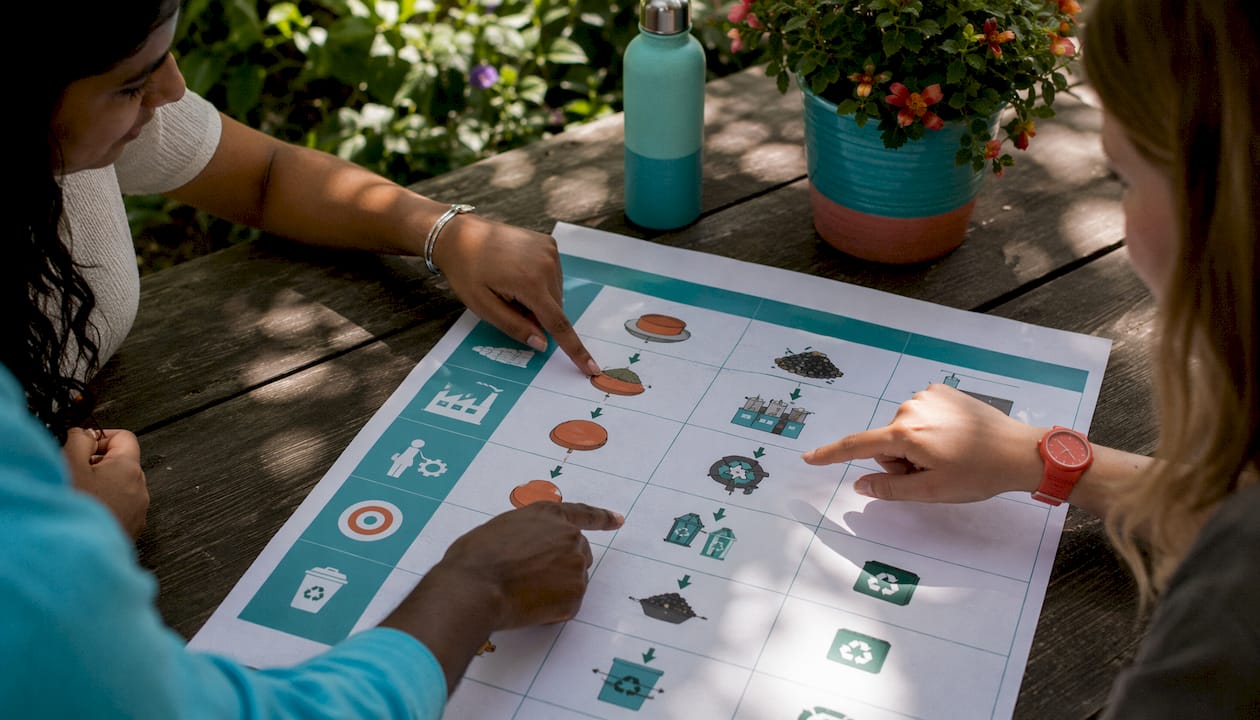
Comparing laser clay and traditional clay shooting from production through to disposal reveals a consistent pattern: laser clay carries a lighter footprint at every stage.
| Lifecycle stage | Traditional clay shooting | Laser clay shooting |
|---|---|---|
| Target production | Energy-intensive manufacture of pitch/limestone targets; single use | Reusable fluorescent plastic clays; produced once, used repeatedly |
| Ammunition | Lead shot and powder cartridges consumed per round | No ammunition; infrared beam only |
| In-session waste | Broken clay fragments, spent casings, wads | Zero physical waste generated |
| Noise output | 140+ decibels per shot; wildlife disturbance | Adjustable simulated sound; near-silent operation possible |
| Power source | Often requires generators for remote sites | Internal battery; no fossil fuel on-site |
| Post-session cleanup | Significant; fragments persist in soil | None required |
| Disposal burden | Ongoing; lead and clay debris require management | Minimal; clays are recyclable plastic |
The eco-friendly approach of laser clay removes the disposal burden entirely at the usage stage, which is where traditional shooting creates the most persistent damage. Pair that with battery power and reusable equipment, and the lifecycle gap between the two systems is substantial. For anyone thinking about reducing their shooting hobby’s footprint, the lifecycle comparison alone makes the case clearly.
Laserclay: the greener choice for UK shooting events
Laserclay delivers the full shooting experience without the environmental cost that puts traditional clay pigeon shooting at odds with eco-conscious venues and communities.
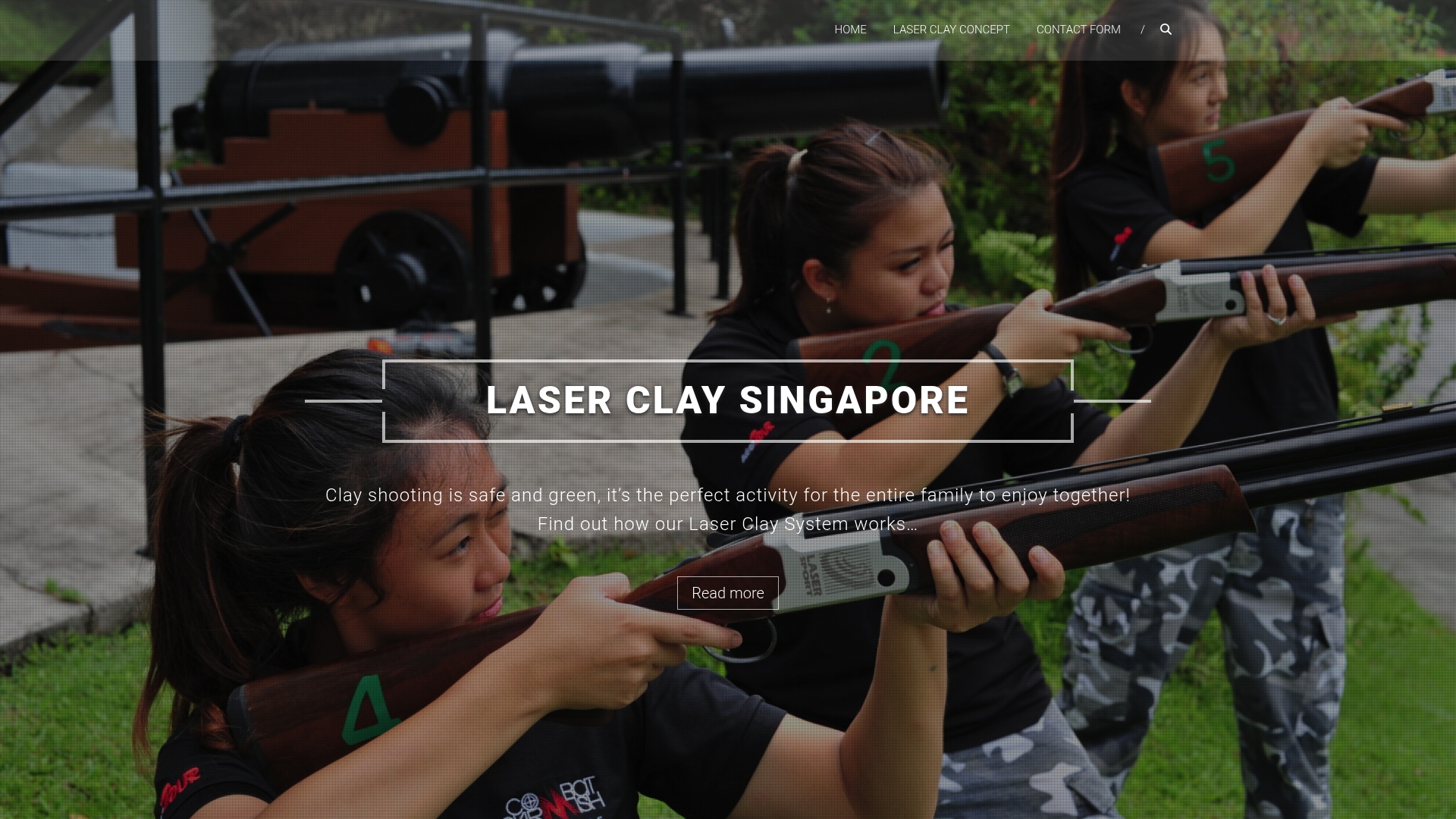
No debris, no lead, no noise complaints. The system runs on internal batteries, uses reusable fluorescent clays, and adjusts sound levels to suit any location, from a corporate estate in the Cotswolds to a school sports day. Groups of 2 to 20 can shoot simultaneously at the same clay, which means fewer resources consumed per participant and a genuinely shared experience. For event organisers who want sustainability built into the activity rather than bolted on as an afterthought, laser clay shooting is the straightforward answer. See how it works in practice at the Laserclay play guide.
Key takeaways
Laser clay technology removes the three biggest environmental costs of traditional clay shooting: physical waste, lead contamination, and noise pollution, making it the most practical eco-friendly option for UK shooting events.
| Point | Details |
|---|---|
| Zero debris at source | Reusable fluorescent clays do not shatter, eliminating ground pollution after every session. |
| No lead or casings | Infrared beams replace live ammunition, removing soil and water contamination entirely. |
| Noise control | Adjustable sound effects allow near-silent operation in wildlife-sensitive or residential locations. |
| Battery-powered events | Internal batteries remove the need for gas generators, cutting on-site emissions. |
| Laserclay for UK events | Laserclay’s system suits eco-sensitive UK venues and group formats from corporate days to family activities. |