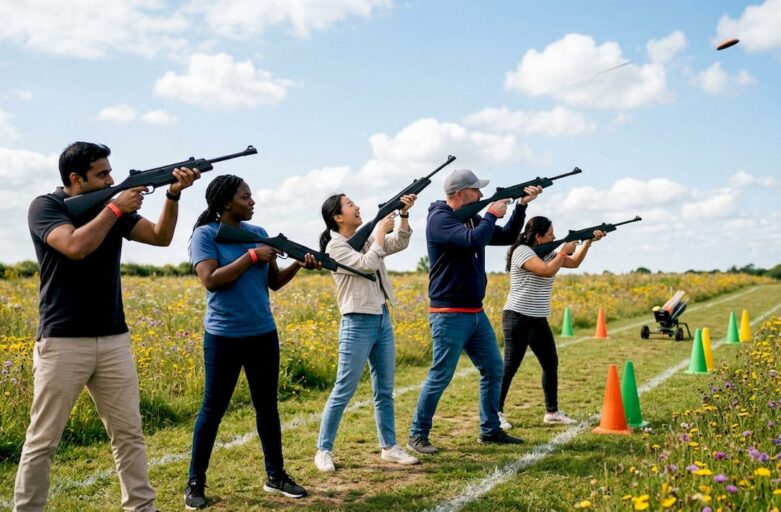
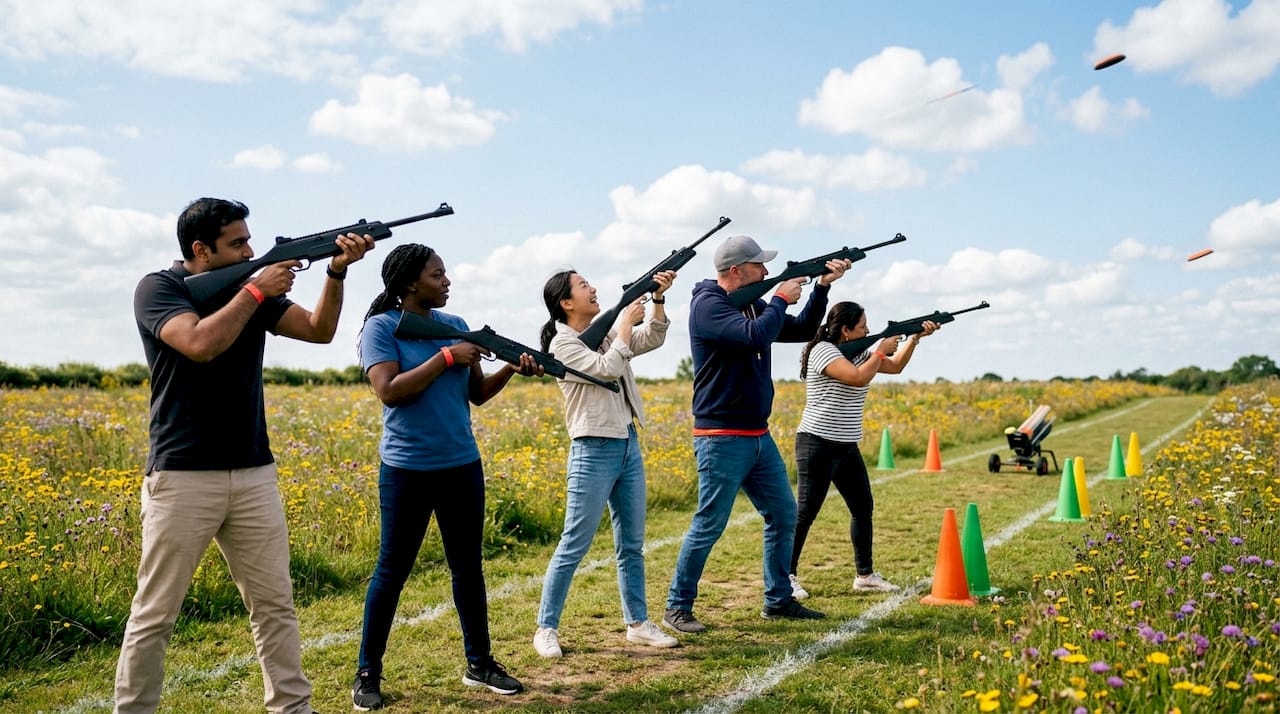
Laser clay shooting is defined as a simulated clay pigeon shooting activity that uses infrared laser technology to replicate the experience of traditional clay shooting, without live ammunition, recoil, or noise. For event organisers, this distinction matters enormously. Laserclay brings together safety, inclusivity, and genuine competitive excitement in a format that scales from a six-person birthday party to a 200-person corporate festival. Understanding how laser clay fits event formats is the first step to programming an activity that participants actually remember.
How laser clay fits event formats and group sizes
Laser clay shooting adapts to event formats through one core mechanism: scalable session duration. Session length scales directly with group size. Groups of 1–6 participants need 30 minutes. Groups of 8–10 need 45 minutes. Groups of 11–20 require a full hour to give everyone adequate shooting time.
Standard systems accommodate up to 5 shooters simultaneously, using modified 12-bore shotguns with no recoil or noise, and are suitable for participants aged 10 and over. That combination of safety and low barrier to entry makes it practical for mixed corporate groups, school events, and public festivals alike.
The format works across four common event types:
- Corporate team-building days where laser clay serves as the headline activity, with teams competing on a shared leaderboard.
- Multi-activity festivals where it runs as one station in a rotation alongside other attractions.
- Private social events such as birthday parties or hen dos, where the competitive element drives the atmosphere.
- Charity fundraisers where participants pay per round and scores are displayed publicly.
For groups larger than 15–20, integrating laser clay into a rotation with other activities prevents boredom and keeps energy levels high. A single station running continuously works well for smaller groups. Larger events benefit from two stations running in parallel or a timed rotation system.
Pro Tip: Plan your queue flow before the event, not on the day. Map out where participants wait, where they shoot, and where they go afterwards. Dead time between turns kills momentum faster than any other factor.
What are the site and equipment requirements?
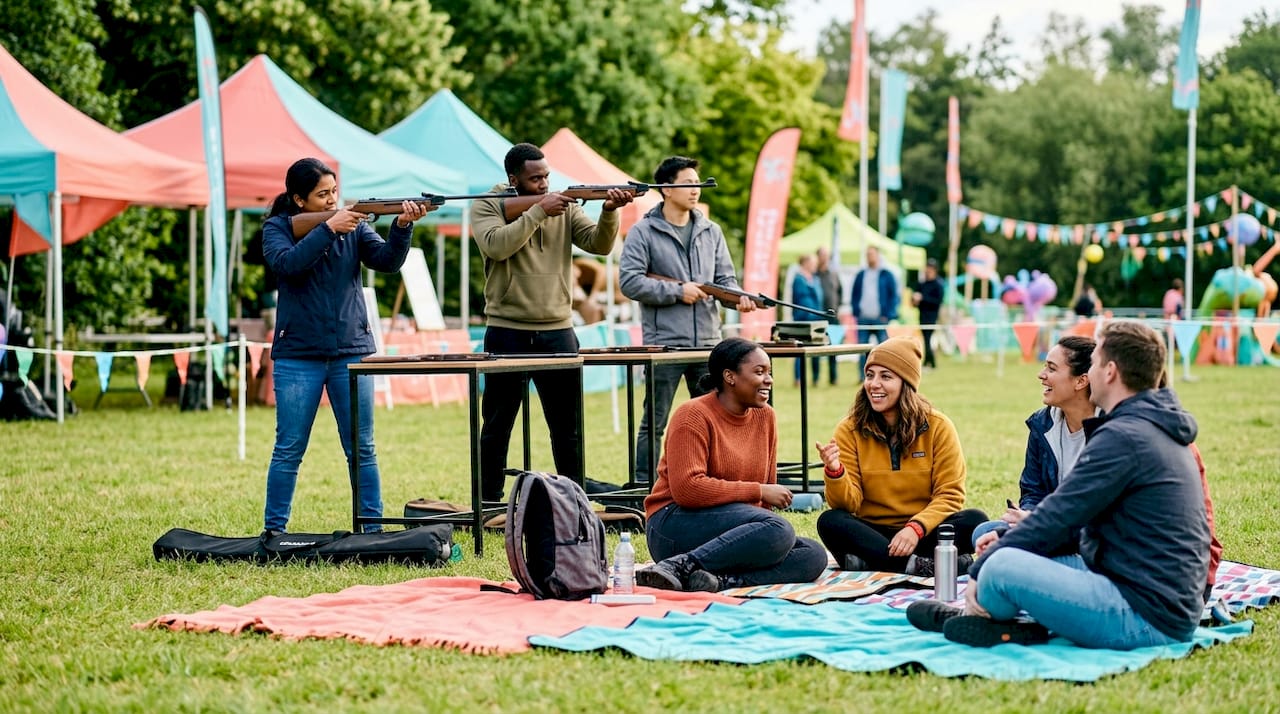
Laser clay shooting requires approximately 50m x 20m of outdoor space, or roughly 60ft x 60ft, to safely operate the trap and shooting line. That footprint fits comfortably in most corporate car parks, open fields, and large indoor venues with high ceilings.
The equipment itself is built for field deployment. Key features include:
- Modified 12-bore shotguns fitted with infrared emitters that replicate the weight and feel of real firearms.
- Weather-resistant trap launchers that project clay-shaped targets at realistic trajectories.
- Digital scoring systems that register hits in real time and display results on a leaderboard.
- Mobile rigs that pack into a van and set up within 60–90 minutes on site.
Ground quality is the single most overlooked logistical factor. Uneven ground or slope impedes trap calibration and destabilises shooting stance, which ruins the experience even when the minimum area requirement is met. A flat, stable surface is non-negotiable.
| Requirement | Specification |
|---|---|
| Minimum outdoor space | 50m x 20m (or 60ft x 60ft) |
| Maximum simultaneous shooters | 5 |
| Minimum participant age | 10 years |
| Typical setup time | 60–90 minutes |
| Surface requirement | Flat and stable |
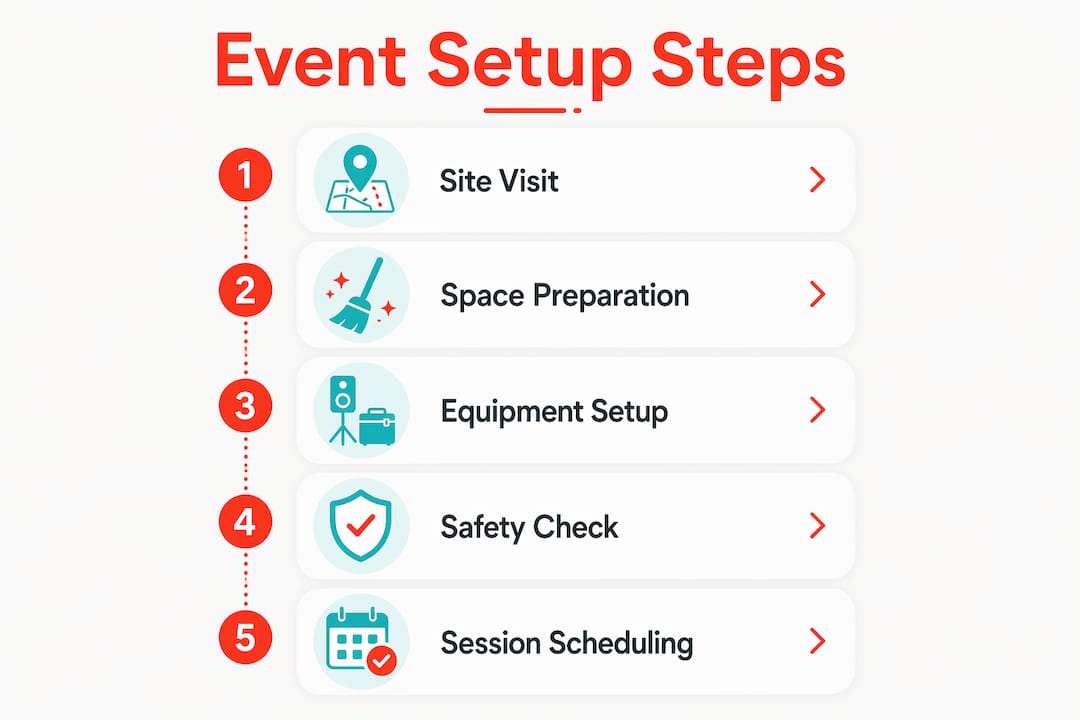
Pro Tip: Visit the site in person before confirming the booking. Walk the shooting line and check for slopes, drainage channels, or uneven paving. A five-minute site check prevents a day of calibration problems.
What are the benefits of laser clay as a central event attraction?
The strongest argument for laser clay as a centrepiece activity is what event specialists call return on engagement. One high-impact, customisable attraction builds team spirit more effectively than several smaller passive activities running simultaneously. Participants remember the moment they hit a target far longer than they remember a networking lunch.
Inclusivity is a genuine operational advantage, not just a marketing point. Laser clay is intentionally designed as an equaliser, requiring minimal physical strength and no prior shooting experience. A 60-year-old director and a 22-year-old graduate start on exactly the same footing. That dynamic breaks down workplace hierarchies in a way that few other activities achieve.
The branding potential is equally practical. Custom in-game software accepts corporate logos and product images as target icons, turning every hit into a brand interaction. Physical wraps on the equipment carry sponsor colours. Leaderboards display company names. For event organisers working with sponsors or internal marketing teams, this converts an entertainment budget into a measurable brand touchpoint.
“The best laser clay events position the activity as a shared focal point. Friendly competition levels hierarchies and encourages natural socialisation in ways that structured icebreakers rarely achieve.”
Laser clay also removes the common misconceptions that hold back participation. No fitness level is required. No experience with firearms is needed. The benefits of laser shooting for team events come precisely from this low barrier, which means organisers spend less time persuading reluctant participants and more time running the activity.
How does laser clay integrate into team-building programmes and festival lineups?
The most effective team-building formats using laser clay follow a clear structure. Competition drives engagement, but the format must balance scoring with fun so that less competitive participants stay involved throughout.
Three formats work consistently well:
- Individual leaderboard competition. Each participant shoots a set number of clays. The top three scores win. Simple, fast, and easy to run across large groups in timed rotations.
- Team relay format. Groups of four or five take turns shooting, with scores pooled. This format rewards communication and encouragement, which makes it genuinely useful for corporate team building objectives beyond entertainment.
- Shoot-off challenges. Two participants face off head-to-head on a single clay. The winner stays on. This format generates the loudest crowd reactions and works brilliantly as a festival finale.
Laserclay positions the activity as a beacon attraction that draws participants together and sustains energy across an event. At festivals, this means placing the laser clay station in a high-traffic area where passing attendees can watch and join spontaneously. Visibility drives participation more reliably than any printed schedule.
For festival formats specifically, scheduling matters as much as placement. Running continuous open sessions works for the first two hours. After that, switching to timed slots of 15–20 minutes per group prevents queues from building and keeps the experience feeling exclusive rather than rushed.
Pro Tip: Add a brief skills tutorial at the start of each session. Two minutes of instruction from the operator dramatically improves first-time hit rates, which directly increases participant satisfaction and word-of-mouth within the event.
Understanding why laser clay outperforms traditional sports days comes down to one factor: it requires no prior skill to enjoy, but rewards improvement immediately. That feedback loop keeps participants engaged for the full session rather than drifting away after their first attempt.
Key takeaways
Laser clay shooting works as a central event attraction because it scales to any group size, requires minimal space, and delivers genuine competitive engagement without excluding any participant.
| Point | Details |
|---|---|
| Session duration scales with group size | Plan 30 minutes for up to 6 people, 45 minutes for 10, and 60 minutes for up to 20. |
| Site surface quality is critical | Flat, stable ground is required for trap calibration; always verify in person before confirming. |
| Up to 5 shooters simultaneously | Plan rotations carefully for groups over 15 to prevent downtime and maintain energy. |
| Inclusivity drives participation | No fitness or prior experience is needed, making it effective for mixed-ability corporate groups. |
| Branding converts entertainment into marketing | Custom target icons, leaderboards, and equipment wraps turn participant hits into brand interactions. |
What I have learnt from organising laser clay events
The detail that catches most organisers off guard is not the equipment or the space. It is the flow. You can have the right site, the right kit, and the right group, and still lose the room if participants spend more than three minutes waiting between turns. The activity itself is excellent. The gaps around it are where events succeed or fail.
The second lesson is about competition calibration. Laser clay works for everyone, but the format you choose determines whether it stays fun or becomes intimidating. I have seen relay formats transform a hesitant group into a genuinely enthusiastic team within 20 minutes. I have also seen individual leaderboards discourage less confident participants from trying again. Match the format to the group, not to what looks impressive on a programme.
Weather and venue flexibility are genuine strengths of laser clay that organisers underuse. The mobile rigs deploy indoors and outdoors. A corporate event that moves inside due to rain does not have to lose its centrepiece activity. That reliability is worth more than most organisers realise until they need it.
Finally, treat the provider as a planning partner, not just a supplier. Laserclay and similar operators have run hundreds of events. They know which formats work for which group sizes, which site configurations cause problems, and which branding options generate the most participant interaction. Use that knowledge early in the planning process.
— Joshua
Laserclay event solutions for your next booking
Laserclay delivers customised laser clay events across corporate team-building days, festivals, private parties, and charity fundraisers. Every event is configured to the group size, venue, and format you need, with full equipment setup and operator support included.
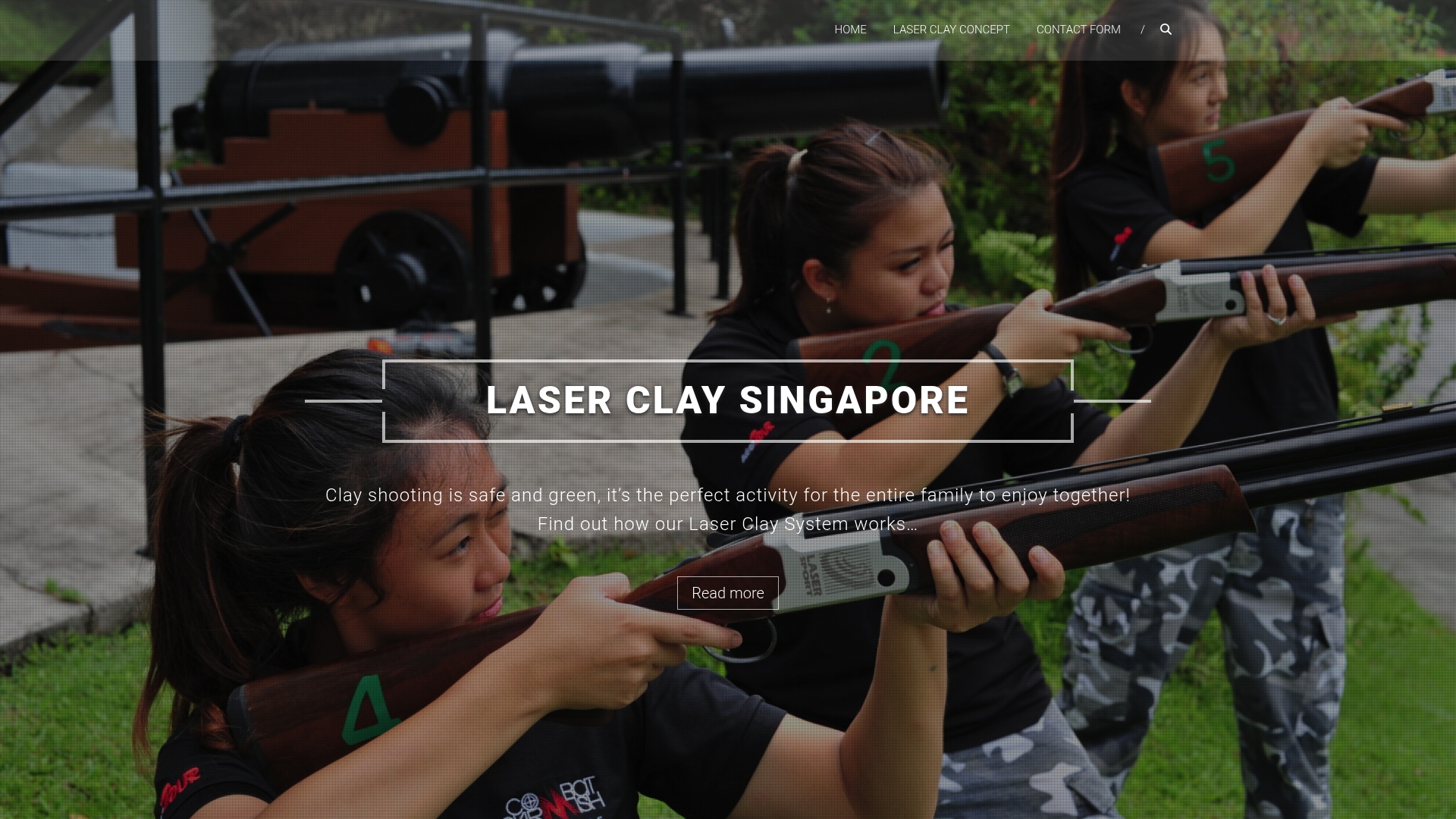
Whether you are planning a corporate outdoor programme for 50 colleagues or a festival station for several hundred attendees, Laserclay provides the equipment, operators, and branding options to make the activity work as a centrepiece or as part of a wider event rotation. Booking is straightforward: visit the how to play page to review formats, session options, and availability, then contact the team directly to confirm your date and requirements.
FAQ
What is laser clay shooting?
Laser clay shooting is a simulated version of clay pigeon shooting that uses infrared laser technology instead of live ammunition. Participants use modified 12-bore shotguns with no recoil or noise to target clay-shaped projectiles launched by a trap machine.
How many people can shoot at once?
Standard laser clay systems accommodate up to 5 participants simultaneously. For larger groups, operators run timed rotations to keep everyone engaged throughout the session.
What space does a laser clay event require?
A laser clay setup requires approximately 50m x 20m of flat, stable outdoor space. The surface must be level to allow accurate trap calibration and safe shooting stance for all participants.
Is laser clay suitable for all fitness levels?
Laser clay is designed as an equaliser and requires no physical strength or prior shooting experience. It is suitable for participants aged 10 and over, making it accessible for mixed-ability corporate and social groups.
How long does a laser clay session last?
Session duration depends on group size. Groups of up to 6 need 30 minutes, groups of 8–10 need 45 minutes, and groups of 11–20 require approximately one hour to give every participant adequate shooting time.