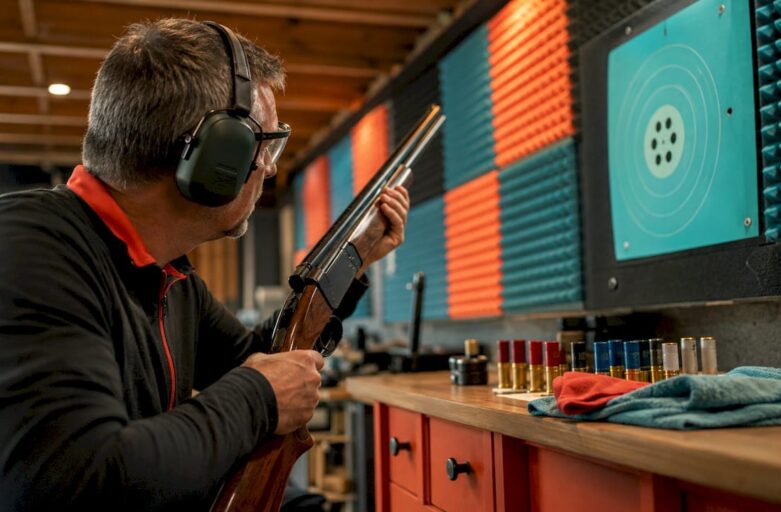
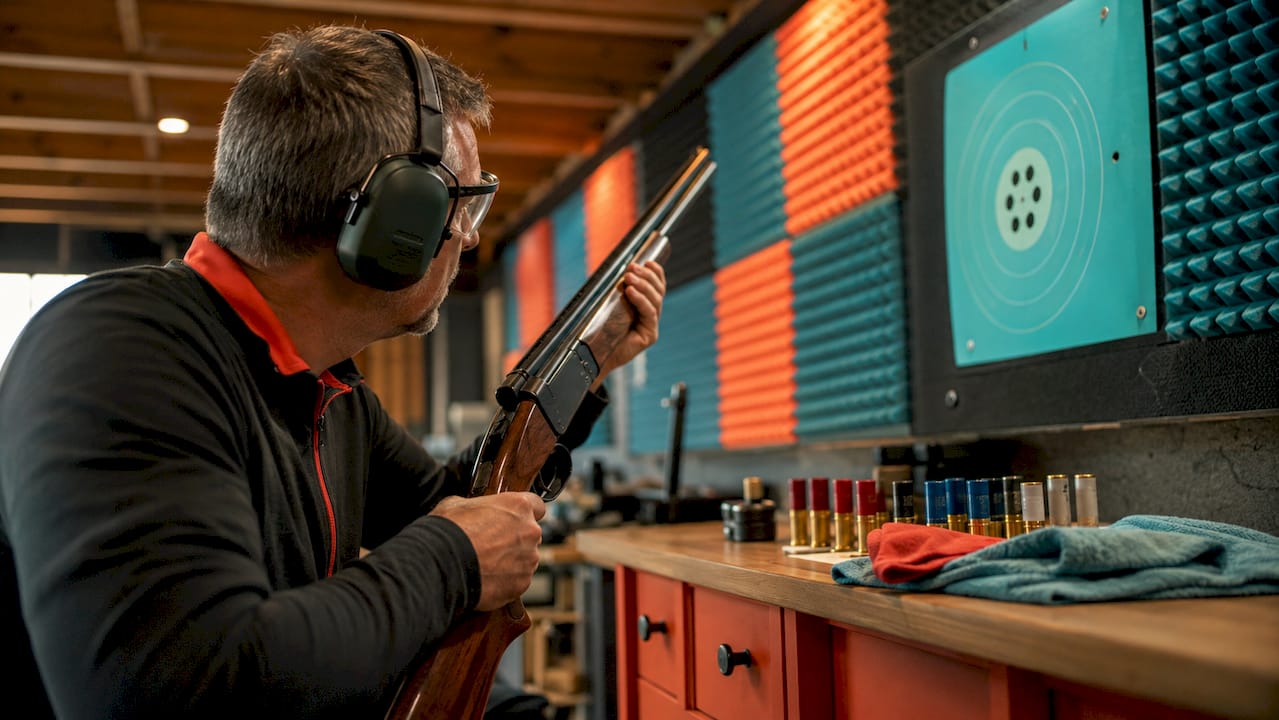
Safe indoor clay shooting training is defined as the practice of developing shotgun sport skills within a controlled environment using strict safety protocols, appropriate equipment, and structured drills. Whether you are a beginner building your first gun mount or an experienced shooter maintaining form between seasons, the ability to train clay shooting indoors safely gives you a year-round advantage without the cost or logistics of a live range. This guide covers the safety essentials, the best training tools available in 2026, skill-level-specific routines, and the most common mistakes that undermine both progress and safety indoors.
What safety equipment and environment do you need for indoor clay shooting?
Safe indoor shooting practice begins with the right protective gear and a properly prepared space. No amount of technical skill compensates for a poorly controlled environment.
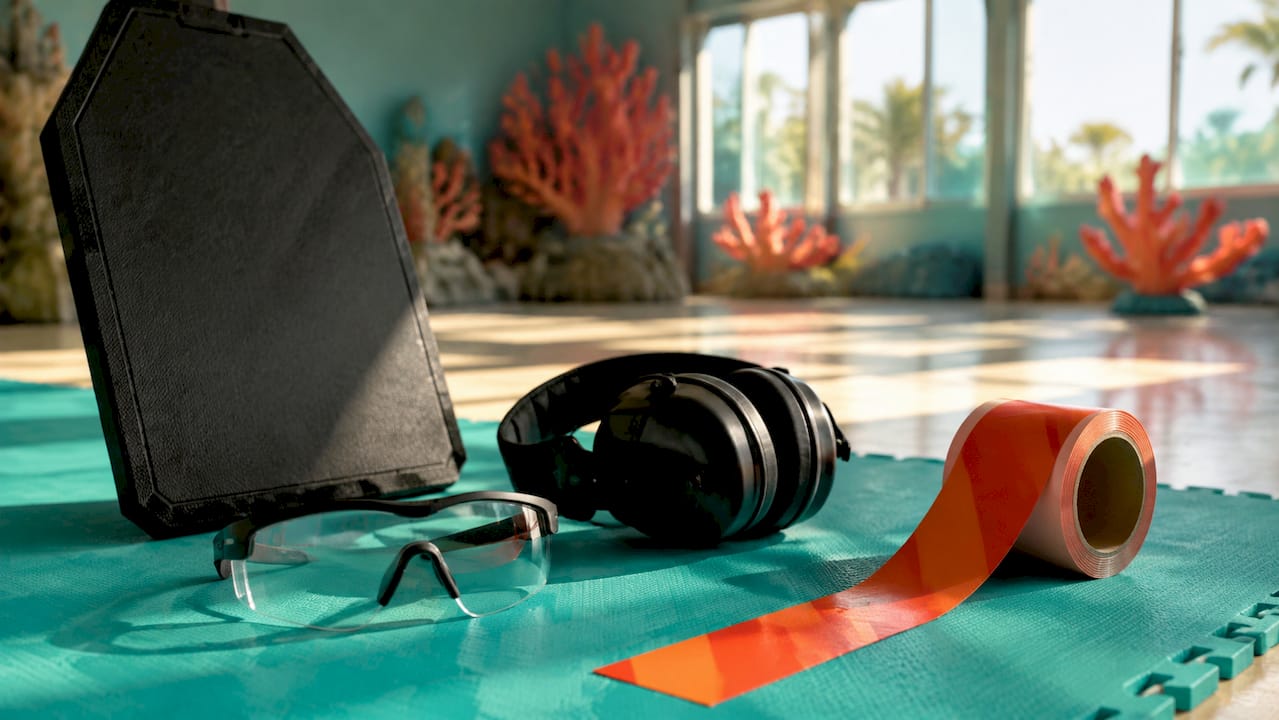
Eye and ear protection are non-negotiable for any live-fire indoor session. Ballistic-rated glasses and ear defenders rated to at least 25 dB NRR protect against ricochets and sustained noise damage. For simulator or laser-based sessions, eye protection remains advisable even without live ammunition.
Environmental controls matter as much as personal kit. Any indoor space used for live-fire training requires:
- Adequate ventilation to prevent lead particulate build-up
- A certified backstop or ballistic trap rated for the cartridge being used
- Clear sight lines with no obstructions behind the shooting position
- A designated safe zone for loading, unloading, and resting the firearm
Gun handling protocols are the backbone of indoor range safety. The four universal rules apply without exception: treat every gun as loaded, never point the muzzle at anything you are not willing to destroy, keep your finger off the trigger until ready to shoot, and know your target and what lies beyond it.
“The most preventable accidents in indoor shooting environments come from skipping the basics. A structured safety briefing before every session is not optional. It is the session.”
Pro Tip: Mark a physical loading and unloading station on the floor with tape. This creates a visual habit cue that reinforces safe gun handling every single time.
For simulator and laser-based training, the physical risks are lower, but gun handling discipline must remain identical to live-fire standards. Treating a deactivated or laser-equipped firearm with the same respect as a loaded shotgun is what separates safe practitioners from those who develop dangerous habits.
Which indoor training tools are most effective for clay shooting practice?
The indoor training market now offers several credible options, each with distinct trade-offs in cost, realism, and safety.
VR shooting simulators
Home-based VR training systems require compatible hardware such as Meta Quest headsets and support disciplines including Trap, Skeet, and Sporting Clays. They allow multiplayer sessions and indefinite practice without range fees. The limitation is physical feedback. VR cannot replicate shotgun recoil or the precise weight of your own gun, which means muscle memory transfer to live shooting is partial rather than complete.
Laser clay systems
Laser clay shooting uses a modified or replica firearm that emits a laser pulse instead of a shot charge. Systems like those offered by Laserclay replace physical clays with projected or electronic targets, removing lead, noise, and backstop requirements entirely. Indoor simulators reduce costs associated with ammunition and clays while allowing year-round practice. This makes laser clay one of the most accessible formats for organisations running group training or corporate events.
Dry-fire practice
Dry-fire training with a mirror or simulator aids in developing a safe gun mount and swing without any ammunition. The cost is essentially zero beyond the firearm itself. The limitation is feedback. Without a target response, you rely on self-assessment or a coach to identify faults.
| Training method | Safety level | Cost | Recoil feedback | Best for |
|---|---|---|---|---|
| VR simulator | High | Medium | None | Beginners, pattern recognition |
| Laser clay system | Very high | Low to medium | None | All levels, group sessions |
| Dry-fire practice | High | Very low | None | Technique refinement |
| Indoor live-fire range | Medium | High | Full | Advanced shooters |
Pro Tip: Standalone simulator sessions at professional facilities typically cost around $69.95 per hour. Booking a block of sessions in advance usually reduces the per-session cost significantly.
Indoor simulator practice is most effective when used for deliberate, focused drills rather than casual repetition. Unfocused volume reinforces poor habits just as efficiently as good ones.
How should shooters at different skill levels train indoors?
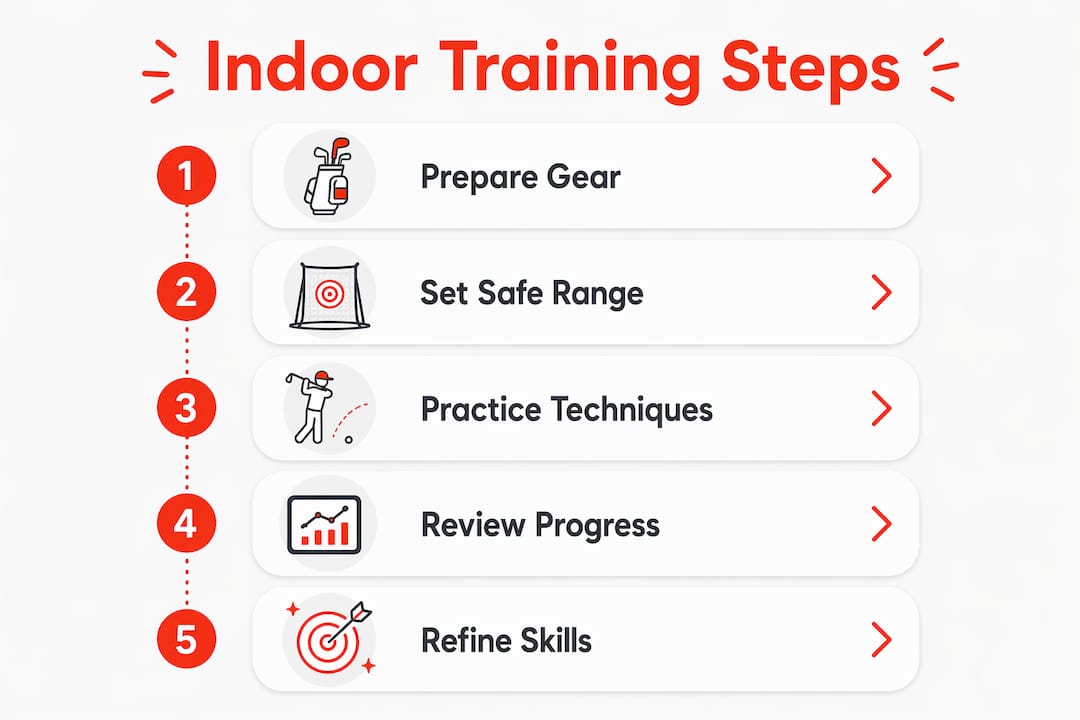
Skill-level-appropriate drills are what separate productive indoor sessions from wasted time. The structure below applies to simulator, laser, and dry-fire formats.
Beginner routine: build the fundamentals
- Stance and address. Stand with your weight slightly forward on your leading foot. Practise this position for two minutes before picking up the gun.
- Gun mount repetitions. Mount the gun to your cheek and shoulder 20 times without a target. Focus on consistent cheek weld and a natural point of aim.
- Introduce a stationary target. Call for a target only after your mount feels automatic. Beginners benefit from starting with Trap before Skeet because the more predictable flight paths allow you to focus on the mount and swing rather than target reading.
- Follow-through drill. After each shot, hold the gun position for two full seconds. This prevents the habit of dropping the gun immediately after pulling the trigger.
Intermediate routine: isolate and refine
At this level, the goal is to isolate specific target presentations and lead techniques. Choosing the right lead method depends on target type. Swing Through works best for fast crossing targets, while Maintained Lead suits more predictable presentations. Practise each method in separate blocks rather than mixing them in a single session.
Run 25-bird sequences on a single target type. Review your results, identify the presentation causing the most misses, and dedicate the next block entirely to that target. This is how isolated target practice builds technical precision rather than just confidence.
Advanced routine: pressure and first-shot precision
Advanced shooters use indoor sessions to sharpen the mental side of the sport. Set a par time for each target and track your first-shot hit rate across a 50-bird session. Olympic Trap expert Nathan Hales advises that holding the gun too high causes timing issues that are difficult to correct later. Indoor sessions are the right place to audit and correct your hold point before those habits become permanent.
Pro Tip: Record your sessions on a phone mounted behind your shooting position. Reviewing footage reveals head position, mount consistency, and follow-through faults that feel invisible in the moment.
What are the most common safety mistakes in indoor clay shooting training?
Even experienced shooters make predictable errors when training indoors. Knowing them in advance is the most efficient way to avoid them.
Muzzle awareness failures are the most serious category. Indoors, the confined space means a momentary lapse in muzzle direction can endanger everyone in the room. Designate a muzzle direction rule for your space and enforce it without exception.
Head lifting is the most common technical fault that also carries a safety implication. Lifting the head off the stock to peek at the clay during the swing disrupts aim and creates an inconsistent gun position. Indoors, the immediate feedback from a simulator makes this fault easy to identify and correct quickly.
Poor pre-shot routines undermine both safety and performance. A rushed or inconsistent routine leads to rushed gun handling. Practising pre-shot routines indoors, including breathing, stance check, and visualisation, transfers directly to live shooting and builds the kind of disciplined muscle memory that holds under pressure.
Additional mistakes to avoid:
- Skipping the safety briefing for returning participants who “already know the rules”
- Using a firearm with a known mechanical fault during dry-fire or simulator sessions
- Allowing distractions such as phones or conversations during active shooting sequences
- Failing to unload and open the action before moving between stations
“A structured pre-shot routine, even in simulated environments, is what separates shooters who improve from those who simply repeat their current level.”
Key takeaways
Safe indoor clay shooting training works because it combines strict safety protocols with deliberate, skill-level-appropriate drills and the right training tools.
| Point | Details |
|---|---|
| Safety gear is non-negotiable | Eye and ear protection, a certified backstop, and clear gun handling rules apply to every indoor session. |
| Match the tool to your goal | Laser clay suits group and beginner sessions; VR simulators support pattern recognition; dry-fire refines technique at near-zero cost. |
| Train by skill level | Beginners should start with Trap for predictable targets; intermediates isolate lead methods; advanced shooters track first-shot precision under pressure. |
| Pre-shot routines transfer to live shooting | Practising breathing, stance, and visualisation indoors builds muscle memory that holds on a live range. |
| Common faults are correctable indoors | Head lifting, poor mount, and muzzle awareness failures are easier to identify and fix in a controlled indoor environment with immediate feedback. |
Why I think most shooters underestimate indoor training
Most shooters treat indoor training as a compromise. They use it when the weather is bad or the range is closed, and they approach it with lower expectations than a live session. That is a mistake.
The controlled environment indoors is actually a better place to fix technical faults than a live range. On a live range, the noise, recoil, and social pressure of other shooters all compete for your attention. Indoors, you can slow everything down, repeat a single mount 30 times, and get immediate feedback from a simulator without burning through a box of cartridges.
What I have found is that shooters who commit to structured indoor sessions, even just once a fortnight, develop more consistent gun mounts than those who only shoot live. The reason is simple. Repetition without distraction builds cleaner habits. A fluid mount and follow-through prevent the gun from stopping prematurely, which is the leading cause of misses behind the clay.
The one genuine limitation is recoil. No simulator replicates the physical push of a 12-bore, and that matters for timing at the highest levels. My advice is to use indoor sessions for technique and mental preparation, then use live range time to integrate those skills under realistic conditions. The two formats are not in competition. They are complementary.
— Joshua
Try safe indoor clay shooting with Laserclay
If you want to train clay shooting indoors safely without the cost, noise, or environmental concerns of live ammunition, Laserclay offers a practical and accessible solution.
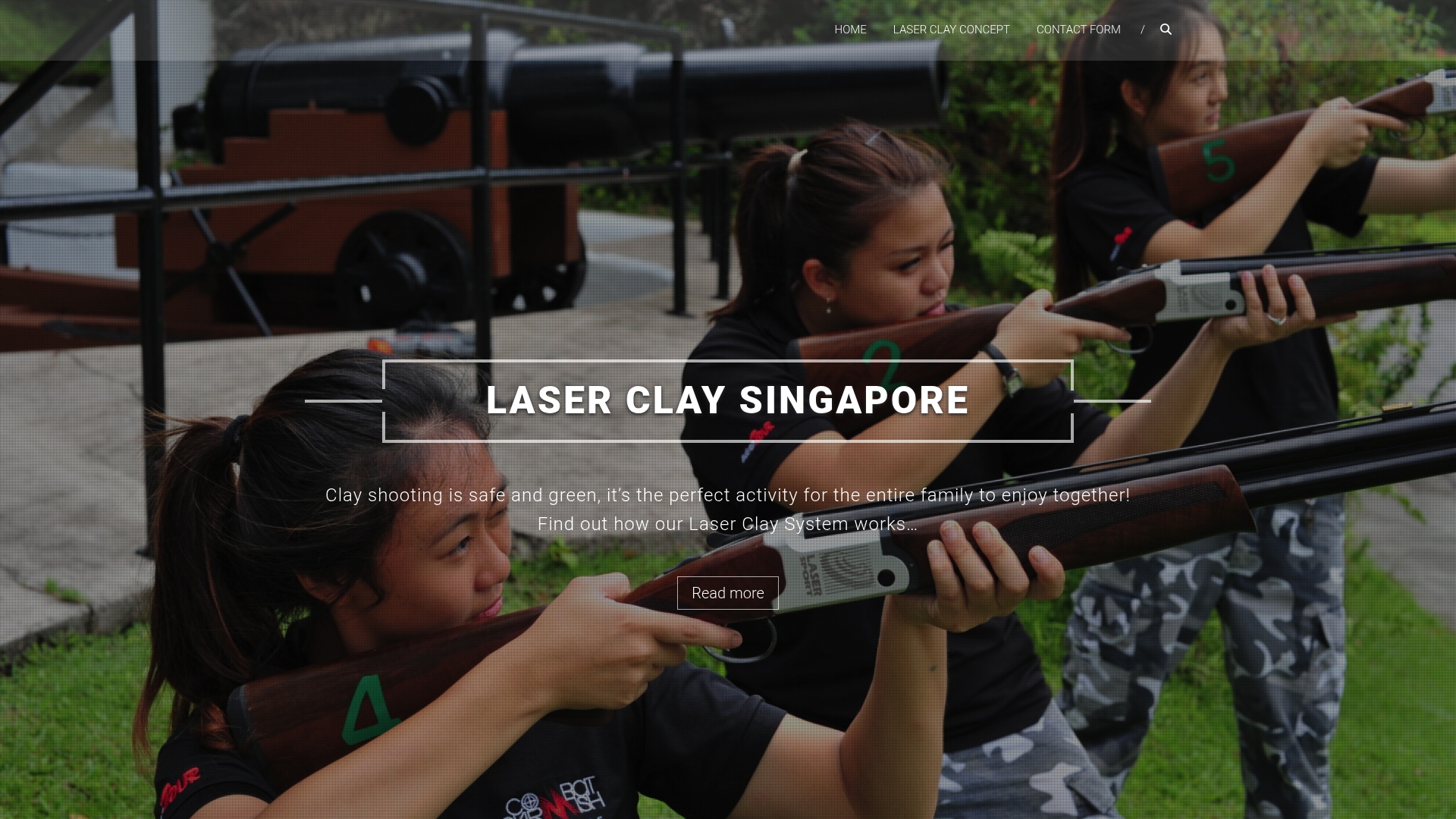
Laserclay uses laser technology to replicate the clay shooting experience without lead shot, meaning no specialist backstops, no ventilation requirements, and no minimum skill level needed to participate. Sessions are structured for individuals, corporate groups, and events of all sizes. Whether you are a first-time shooter or an experienced competitor looking to improve your clay shooting skills between range visits, Laserclay provides a safe, repeatable, and genuinely enjoyable format. Book a session or explore event options to see how laser clay fits your training or event goals.
FAQ
What is the safest way to train clay shooting indoors?
The safest approach combines strict gun handling rules, appropriate eye and ear protection, and a controlled shooting environment with a certified backstop or a laser-based system that eliminates live ammunition entirely.
Can beginners train clay shooting indoors effectively?
Beginners benefit significantly from indoor training because the controlled environment allows focused repetition of fundamentals like gun mount and cheek weld without the distractions of a live range. Starting with Trap-style targets provides more predictable flight paths for skill development.
How much does indoor clay shooting simulator training cost?
Professional simulator sessions typically cost around $69.95 per hour for individual access. Home-based VR systems require a compatible headset such as a Meta Quest but remove ongoing range fees entirely.
What is the most common mistake in indoor clay shooting training?
Head lifting, where the shooter raises their head off the stock to watch the clay, is the most frequently observed fault. Indoor simulators provide immediate feedback that makes this error easy to identify and correct.
Do indoor training sessions transfer to live clay shooting performance?
Yes, provided the sessions are structured and deliberate. Practising pre-shot routines, consistent gun mounts, and isolated lead techniques indoors builds muscle memory that transfers directly to live shooting performance.