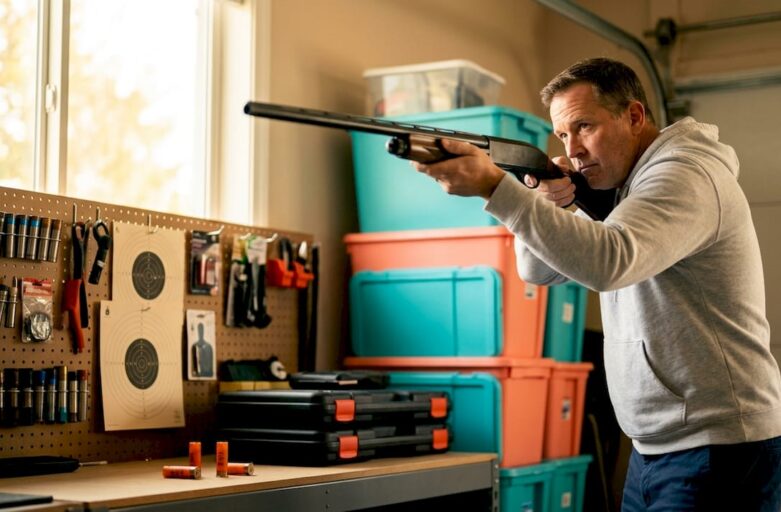
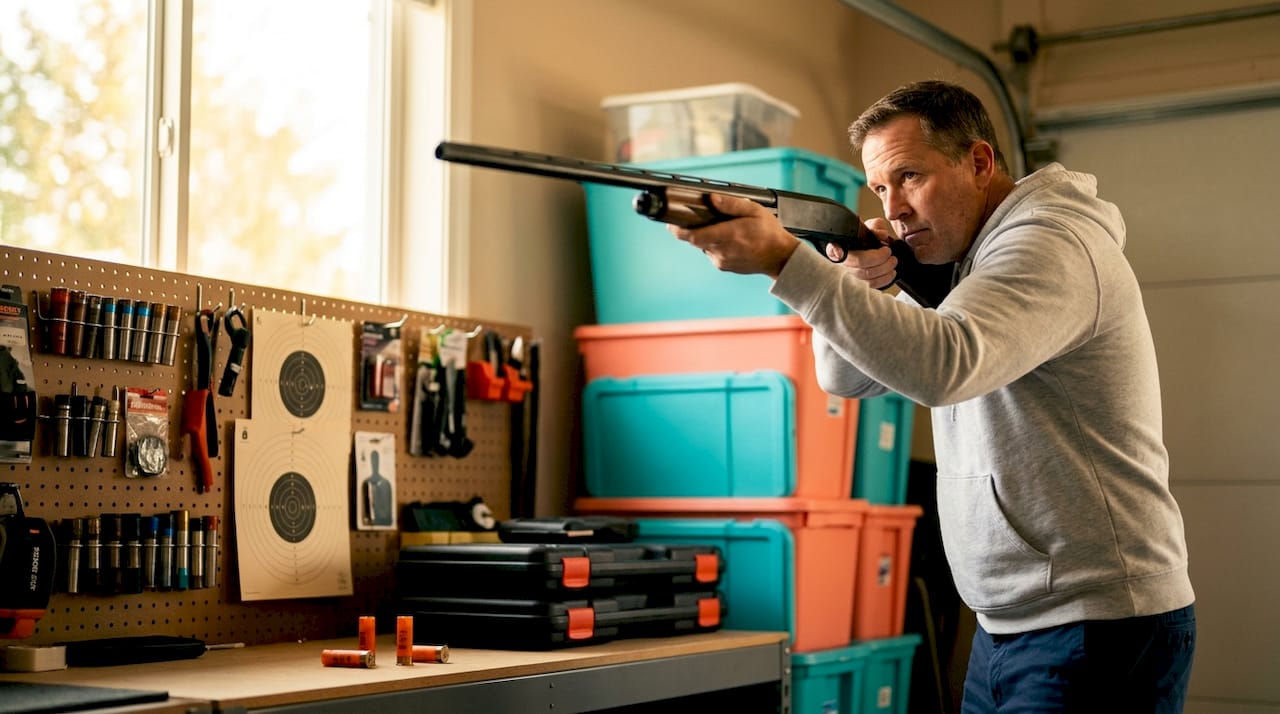
Improving clay shooting skills without range access is achievable through dry-fire practice, visual training, and simulation technology that build your mechanics, timing, and target recognition at home. Most shooters assume progress requires live ammunition and a physical range, but the fundamentals that separate good shots from great ones — gun mount consistency, swing timing, and visual opportunity — are all trainable away from the range. Whether you are preparing for a competition or simply want to shoot more confidently, structured at-home practice delivers measurable gains. The methods in this guide cover clay shooting drills without a range, technology-assisted simulation, and the mental routines that experienced coaches prioritise above all else.
What essential skills can you develop without live shooting?
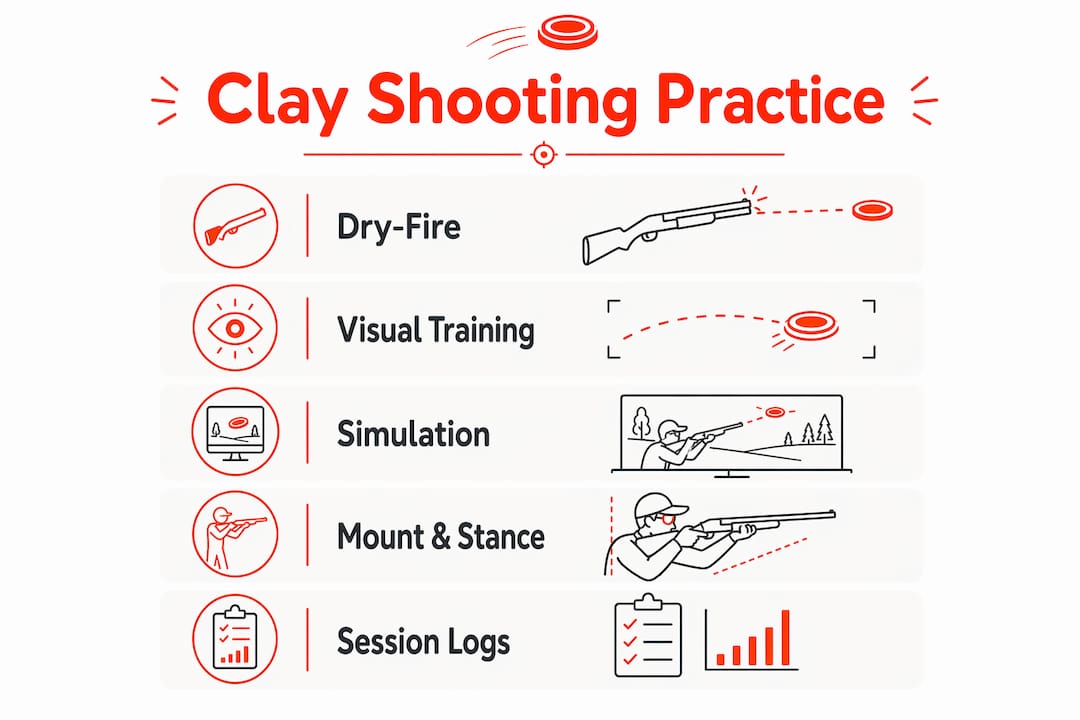
The most transferable clay shooting skills are mechanical and psychological, not ammunition-dependent. Gun mount, stance, swing, and visual focus are all trainable at home with no targets, no shells, and no range booking required.
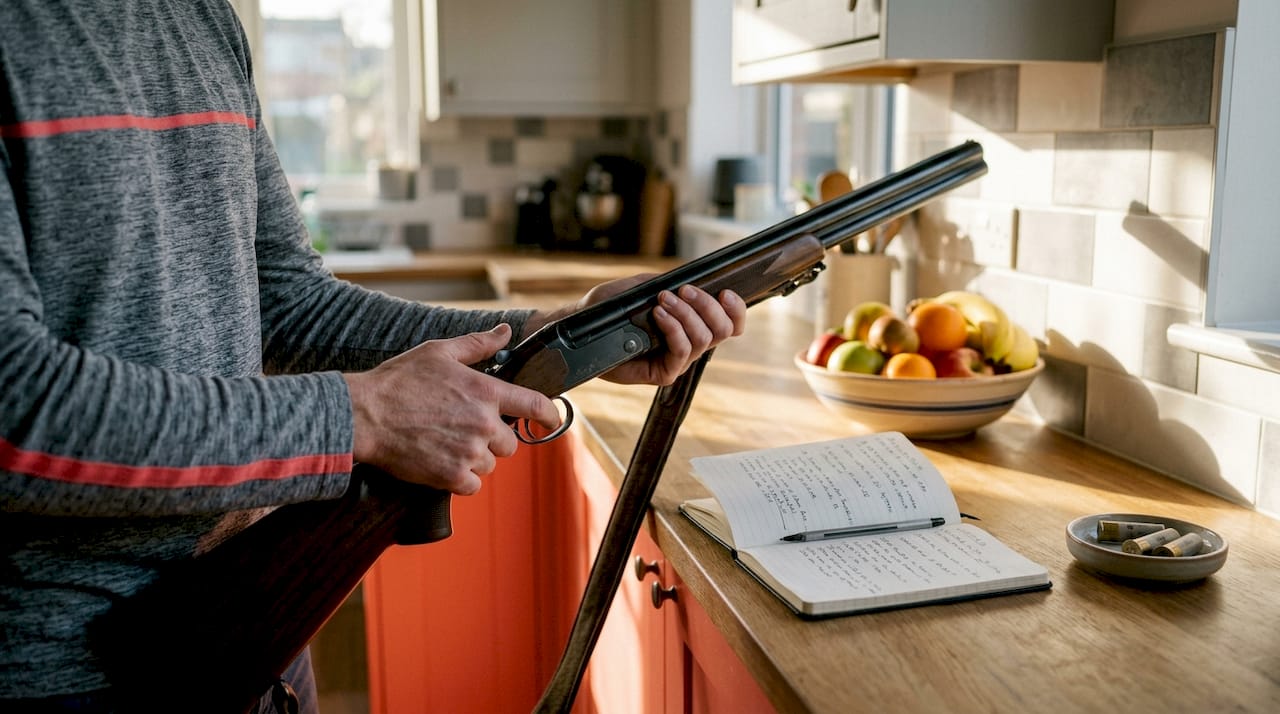
Consistent gun mount and stance form the foundation of every successful shot. A mount that varies by even a few millimetres shifts your point of impact significantly. Practising the mount in front of a mirror or against a blank wall reveals asymmetries in shoulder placement, cheek weld, and grip pressure that you would never notice under the noise and adrenaline of live fire.
Eye focus and swing timing are equally critical. Visual opportunity refers to the window of time in which a shooter clearly sees the clay before pulling the trigger. Many misses are timing errors during this short visual window, and training pre-shot visualisation routines that mentally frame the clay at its break point builds consistent timing. This is a skill you can rehearse in your living room.
The mental side of clay shooting is often underestimated. Your pre-shot routine, the sequence of thoughts and physical checks you run before calling for the bird, directly affects how cleanly you execute under pressure. Rehearsing this routine at home, without distraction, programmes it into muscle memory so it runs automatically on the range.
- Practise gun mount 20 to 30 times per session, focusing on identical cheek and shoulder contact each time
- Rehearse your pre-shot routine verbally or mentally before each dry mount
- Use a mirror to check stance width, weight distribution, and muzzle alignment
- Visualise specific clay presentations, including crossing birds and incoming targets, and mentally track them to the break point
Pro Tip: Film your mount practice on a phone propped against a wall. Reviewing footage reveals grip and posture errors that feel invisible in real time.
Which dry-fire drills are most effective for clay shooting practice at home?
Dry-fire training is the single most cost-effective method to train for clay shooting at home. It removes ammunition, recoil, and noise from the equation, leaving only the mechanics that actually determine whether you hit or miss.
The following drills are structured by difficulty and purpose:
-
Wall drill. Stand approximately one metre from a blank wall and mount your unloaded shotgun, aiming at a small sticker or mark at eye level. Press the trigger slowly while watching the muzzle for any movement. Trigger control errors become immediately visible because there is no recoil to mask them. Perform 30 to 50 repetitions per session, focusing entirely on keeping the muzzle still through the press.
-
Penny drill. Balance a small coin on the barrel near the muzzle. Mount the gun and press the trigger without dislodging the penny. This drill exposes flinching, grip tension, and inconsistent trigger finger placement. It sounds simple, but most shooters fail it repeatedly before their mechanics clean up.
-
Draw and presentation routine. Starting with the gun in your natural low-gun position, practise mounting smoothly to a specific point on the wall while simultaneously shifting your visual focus to that point. This trains the coordination between eye movement and gun movement that is critical for crossing targets.
-
Swing-through simulation. Pick two points on opposite walls of a room. Mount the gun, focus on the left point, then swing smoothly to the right point while maintaining cheek weld and trigger-finger discipline. This replicates the swing-through technique used on fast crossing clays.
-
Timed mount sessions. Once your mount is mechanically consistent, introduce a timer. Set it for 10 seconds and complete as many clean mounts as possible. This builds the speed and automaticity needed under competition pressure.
Short, frequent sessions of 10 to 15 minutes, three to five times per week, produce better motor learning results than infrequent long sessions. The brain consolidates motor skills during rest, so spacing your practice matters as much as the practice itself.
Pro Tip: Keep a simple log of each session. Note which drills you completed, how many reps, and any specific errors you noticed. Structured dry-fire with measurable criteria is superior to unstructured repetition because it gives you a baseline to improve against.
How can technology like VR and simulators aid no-range training?
Virtual reality and shooting simulators have moved well beyond novelty. They now offer a genuinely effective way to enhance shotgun skills indoors, with target tracking, reaction time data, and post-shot analysis that most range sessions cannot match.
VR shotgunning improves focus, target tracking, and reaction times through instant analytic feedback. This means you receive data on where your muzzle was at the moment of the shot, how your swing speed compared to the target, and whether your visual pick-up point was early or late. That level of feedback is rare even with a professional coach watching.
SimPro is one of the most capable home simulation options available. The SimPro clay pigeon simulator provides unlimited access to varied clay target scenarios, including skeet, trap, and sporting clays presentations, with detailed shot analysis to help you understand and correct performance patterns. Setting it up at home requires a compatible screen and a laser-equipped replica gun, but the investment pays off quickly for serious shooters.
The key benefits of simulation training are:
- Instant visual feedback on muzzle position and timing at the moment of the shot
- Ability to repeat identical target presentations until a specific skill is mastered
- No range fees, no ammunition costs, and no weather dependency
- Safe practice environment suitable for beginners and experienced shooters alike
| Simulation tool | Primary benefit | Key limitation |
|---|---|---|
| SimPro | Varied scenarios with shot analytics | Requires dedicated screen setup |
| Clay Hunt VR | Immersive target tracking practice | Limited recoil feedback |
| Mirror and wall drills | Zero cost, immediate mechanical feedback | No moving target simulation |
One honest limitation of VR training is the absence of recoil. VR training lacks recoil, which makes it less physically realistic, but this actually benefits beginners by removing the flinch response and allowing full concentration on fundamentals. Experienced shooters should supplement simulator sessions with occasional live fire to maintain their recoil management.
What common mistakes should you avoid when training without a range?
The most damaging mistake in no-range training is prioritising speed before mechanics are clean. Without a clean trigger press, increasing speed only amplifies errors. Beginners who rush through dry-fire reps to feel productive are reinforcing bad habits at high speed, which is far harder to undo than starting slowly.
“Slowing down at home to nail fundamentals without the pressure of competition is the real advantage of no-range training. Range sessions then become about execution under stress, not learning under stress.”
A second common pitfall is neglecting the mental side of practice. Shooters who focus exclusively on physical drills without rehearsing their pre-shot routine and visual opportunity training often find that their mechanics work perfectly at home but fall apart on the range. The pre-shot routine is what transfers your home practice into live performance.
Lack of structure is the third major error. Turning up to a dry-fire session without a specific drill, rep count, or goal produces minimal improvement. Treat each session like a training block with defined objectives, not a casual warm-up.
- Never skip the mount check. Sloppy mounts in dry-fire become sloppy mounts under pressure.
- Do not ignore fatigue. Ten focused reps beat fifty tired ones every time.
- Avoid training only your dominant side. Practise stance and mount from both natural and awkward positions.
- Validate your progress with live shooting periodically. Dry-fire builds the skill; live fire confirms it transfers.
The competition-style round format is worth incorporating into your home practice structure. Standard trap rounds use 25 targets, and most competitions run two rounds of 50. Practising in blocks that mirror this format builds the rhythm, endurance, and mental pacing that competition demands.
Key takeaways
Improving clay shooting skills without range access requires consistent dry-fire practice, structured visual training, and simulation technology working together to build mechanics, timing, and mental routine.
| Point | Details |
|---|---|
| Dry-fire is the core method | Wall drills and penny drills expose mechanical errors that live fire masks with recoil and noise. |
| Visual opportunity drives accuracy | Training pre-shot routines that frame the clay at its break point corrects timing errors, not just mechanical ones. |
| Short, frequent sessions work best | Sessions of 10 to 15 minutes, three to five times weekly, outperform infrequent long practice blocks. |
| Simulation adds real feedback | Tools like SimPro provide shot analytics and varied presentations that most range sessions cannot replicate. |
| Speed before mechanics causes harm | Rushing dry-fire reps before mechanics are clean reinforces errors at pace, making them harder to correct. |
Why I think most shooters waste their off-range time
I have watched a lot of shooters put in genuine effort between range visits and still plateau. The pattern is almost always the same: they practise movement without practising precision, and they rehearse the physical without rehearsing the mental. The pre-shot routine gets treated as a formality rather than the actual skill being trained.
The insight that changed how I think about off-range practice came from understanding visual opportunity. Performance gaps in clay shooting often stem from visual, not just mechanical, issues. When I started treating my visual pick-up point and my mental framing of the break point as skills to practise deliberately, my consistency on the range improved faster than any amount of trigger work had managed.
My honest recommendation is to spend the first two weeks of any no-range training block doing nothing but slow, deliberate mounts and pre-shot routine rehearsal. No timers, no complexity. Just high-quality reps of mount, swing, and eye placement to programme muscle memory before you introduce any pressure. The shooters who resist this because it feels too simple are usually the ones still struggling six months later.
Patience in the fundamentals phase is not a weakness. It is the fastest route to consistent performance when you do get back on the range.
— Joshua
Try laser clay shooting as your next practice session
If you want a practice format that bridges the gap between dry-fire drills and live range shooting, Laserclay offers exactly that. Laser clay shooting replicates real clay target presentations using advanced laser technology, with no ammunition, no lead, and no range booking required.
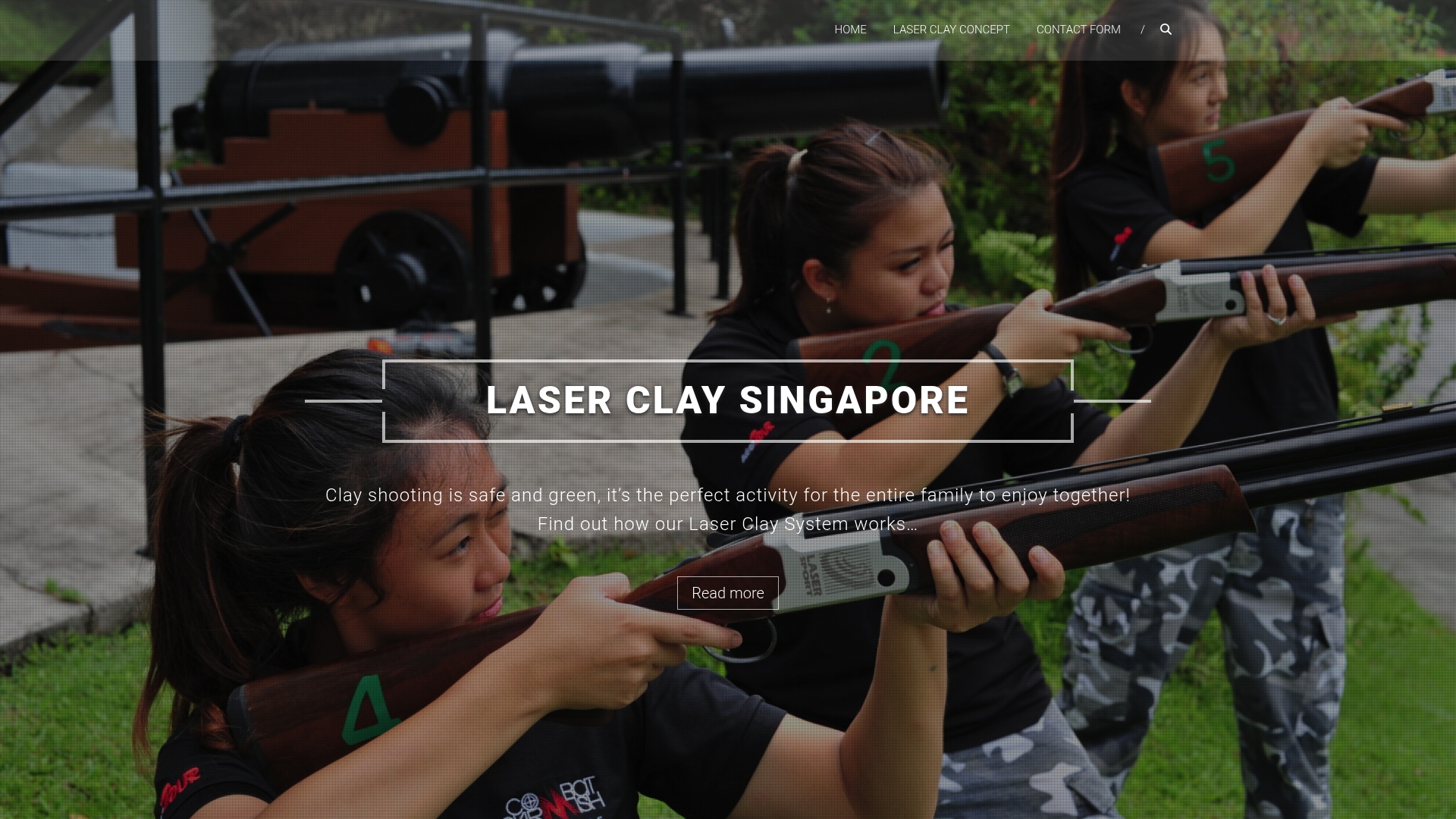
Laserclay is designed for shooters at every level, from beginners building their first consistent mount to experienced competitors sharpening their timing between competitions. Sessions are social, safe, and structured around the same target presentations you face on a real range. You can play laser clay as a standalone training session or as part of a group event, making it one of the most flexible practice options available in Singapore. For a full breakdown of how to build precision using the laser clay format, the performance guide covers technique, timing, and drill structure in detail.
FAQ
Can you genuinely improve clay shooting skills without a range?
Yes. Dry-fire drills, visual routine rehearsal, and simulation tools all develop the mechanical and mental skills that determine shooting accuracy, none of which require live ammunition or a physical range.
How often should you practise dry-fire drills at home?
Sessions of 10 to 15 minutes, three to five times per week, produce the best results. Short, frequent practice consolidates motor skills more effectively than occasional long sessions.
What is visual opportunity and why does it matter?
Visual opportunity is the window of time in which a shooter clearly sees the clay before shooting. Training pre-shot routines that mentally frame the clay at its break point corrects timing errors that mechanical drills alone cannot fix.
Is VR simulation worth investing in for clay shooting practice?
VR simulators like SimPro provide shot analytics and varied target presentations that most range sessions cannot match. The absence of recoil is a limitation, but for building fundamentals and tracking progress, the feedback quality justifies the investment for serious shooters.
How do you know when home practice is working?
Validate your dry-fire progress with a live shooting session every three to four weeks. If your mount is cleaner, your timing is more consistent, and your pre-shot routine runs automatically, the home practice is transferring correctly.