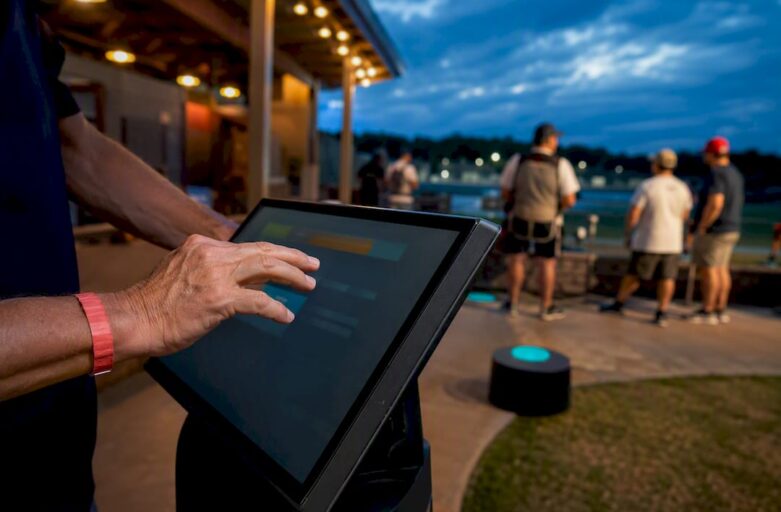
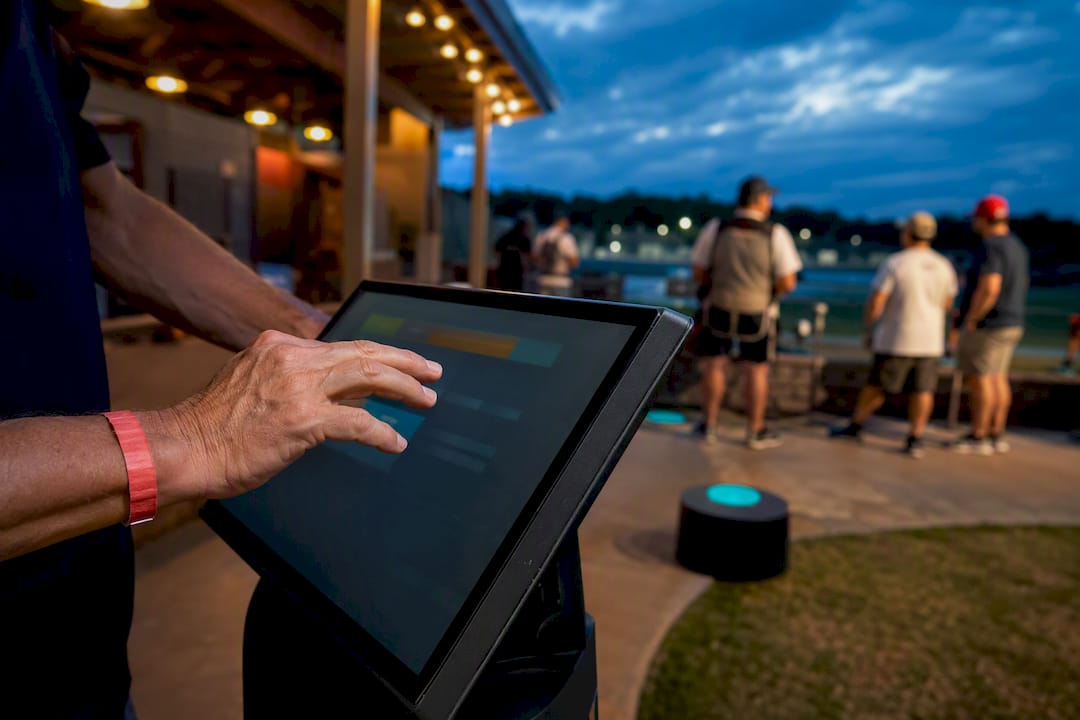
A laser clay scoreboard is the electronic display that tracks hits in real time during laser clay pigeon shooting, linking microchipped guns to a control module that registers every shot the instant it lands. It converts infrared beam detection into a live point tally, sorts shooters into rounds or leaderboards, and drives the visual and sound feedback that makes a session feel like a proper competition. Systems built on this principle, including the setup Laserclay runs at events, are what turn a row of targets into a scored match.
TL;DR:
- Laser clay scoreboard systems support multiple shooters with unique transmitter IDs, ensuring accurate individual scores during fast-paced rounds.
- Proper calibration involves starting with laser targets, checking muzzle alignment, and ensuring optimal lighting and signal range, preventing false misses.
- The system can automatically sort results into leaderboards in real-time, reducing disputes and saving operators from manual calculations.
- Indoor setups require subdued lighting and precise target distance to avoid false readings, and daily pre-session checks help detect faults early.
- Typical event costs start at 49 SGD per person for private parties or 69 SGD for corporate packages, with equipment rental at 500 to 800 SGD per hour.
Table of Contents
- How does a laser clay scoreboard actually track hits?
- What are the main parts of a laser clay scoreboard system?
- How are scores worked out during a laser clay round?
- How do you set up and calibrate a laser clay scoreboard?
- How does the scoreboard work during a live event?
- What makes a laser clay scoreboard reliable and safe to run?
- How much does a scoreboard actually change the outcome of an event?
- Book a scoreboard-equipped laser clay session
- Sources
- FAQ
How does a laser clay scoreboard actually track hits?
Every shot starts as an infrared pulse fired from the muzzle of an instrumented gun, not a projectile. That pulse travels to the target or launcher, where a sensor picks it up and passes the signal to the control module, the small brain of the whole rig.
The control unit does three things almost instantly: it identifies which gun fired (each transmitter carries a unique ID, so five people can shoot in the same round without their hits getting muddled), assigns a point value based on where the beam landed, and pushes that value to the scoreboard. The Lasersport system documents this exact chain, microchipped shotguns feeding a control unit that updates a shared display, and supports several game modes off the same signal architecture.
What the shooter experiences is simpler than the wiring behind it:
- Pull the trigger, and a synchronised “bang” sound effect fires alongside the beam.
- A hit triggers a visual flash on or near the target, confirming the shot before the score even updates.
- The scoreboard refreshes within a second or two, showing the new tally against the shooter’s name.
- Replay data, where the software supports it, logs each shot for a post-round breakdown, a feature common to simulator scoring software.
What are the main parts of a laser clay scoreboard system?
Four components do the work, and knowing what each one does helps you spot a fault fast when something misbehaves mid-event.
- The gun assembly. A microchipped or trigger-switch unit sits inside a deactivated shotgun shell, sending a unique transmitter ID with every pull so the control module always knows who fired.
- The control module. This is the scoring brain, handling player assignment, game mode selection, timing windows, and the translation from “beam detected” to “points awarded.”
- The scoreboard or display. Ranges from a large LED board visible to a whole crowd, to mobile mirroring on a tablet or phone, to a replay screen for reviewing a round shot by shot.
- Launchers and targets. Reusable or fluorescent clays, either flying from a launcher outdoors or fixed indoors, with the hardware differing depending on whether the session runs under natural light or in a controlled room.
Each part depends on the others working cleanly, which is why calibration (covered below) matters more than most first-time operators expect.
How are scores worked out during a laser clay round?
Scoring hinges on timing as much as accuracy. Most formats give a clay a short “alive” window after launch, and only shots landing within that window register, which stops shooters from scoring on a clay that has already dropped.
- First-shot priority rewards the fastest accurate hit in modes where speed matters more than volume.
- Multi-shot variants let a shooter fire two or three times at one clay, with points weighted toward the first successful hit.
- Squad rounds rotate through a group, commonly up to five shooters per round, each logged separately by the control module.
- Rapid-fire and team relay modes stack scores across a squad rather than an individual, useful for competitive team-building formats.
- Once a round closes, the scoreboard automatically sorts results into a leaderboard, ranking shooters or teams before the next group steps up.
That automatic sort is the real time-saver. Nobody is doing mental arithmetic between rounds, and disputes over “who hit what” mostly disappear because the system logged it the moment it happened.
How do you set up and calibrate a laser clay scoreboard?
Get the sequence wrong and you will spend the first twenty minutes of an event chasing phantom misses instead of running the session. The fix is to build up in layers rather than switching everything on at once.
- Start with laser targets only. Confirm hits register correctly before adding projection, graphics, or any visual overlay, since DryFire’s setup guidance treats this as the first checkpoint, not an optional step.
- Run the muzzle alignment sequence. Aim at a fixed point, fire, and confirm the tone or indicator light matches. Repeat two or three times to rule out a one-off misfire.
- Check lighting indoors. Direct or reflected light near the sensor causes false reads, so subdued lighting and correct distance ranges between the target and shooting line matter more indoors than most people assume.
- Check signal range outdoors. Confirm the control module holds a stable connection to every transmitter across the full shooting distance before the first squad steps up.
- Run a daily pre-session checklist. Battery levels, transmitter pairing, and a test shot on each gun catch most faults before a participant ever notices.
Pro Tip: If the scoreboard shows a delay of more than a second or two between shot and score, re-pair the transmitter before assuming the sensor has failed. Sync lag is almost always the quicker fix.
How does the scoreboard work during a live event?
A typical session follows a fixed shape: a safety and equipment briefing, a calibration check on each gun, a handful of practice pulls so shooters get a feel for the timing window, then scored rounds feeding straight into a live leaderboard, closing with results and awards.
- Squads of up to five keep throughput moving, since one group can be scoring while the next lines up.
- Spectators watching a large board or a mirrored tablet display stay engaged even when they are not shooting, which matters at corporate events where half the room is watching.
- Round-by-round breakdowns let organisers pull out a “most improved” or “closest match” moment for awards, something a paper scorecard never gives you cleanly.
- Because the gun assemblies are sound-simulated and lead-free, the format opens up to a wider age and skill range than live ammunition shooting ever could.
What makes a laser clay scoreboard reliable and safe to run?
Laserclay’s own positioning is worth stating plainly here: the system is presented as a safer, environmentally friendly alternative to traditional clay shooting, with no lead ammunition and no noise pollution, built to suit both competitive and casual sessions from age ten upward.
Reusable targets, sometimes built from durable materials similar to steel target systems used in wider shooting sports, cut down on the waste that traditional clay pigeon shooting generates round after round. This article draws on the operational detail published by Joshua, and readers wanting service-specific confirmation, pricing, or coverage detail should check Laserclay’s own pages directly rather than take a general explainer as the final word.

How much does a scoreboard actually change the outcome of an event?
The honest answer: more than most organisers expect before their first session. A live leaderboard turns a quiet team-building afternoon into something people actually talk about afterwards, because nobody wants to be last on a screen everyone can see.
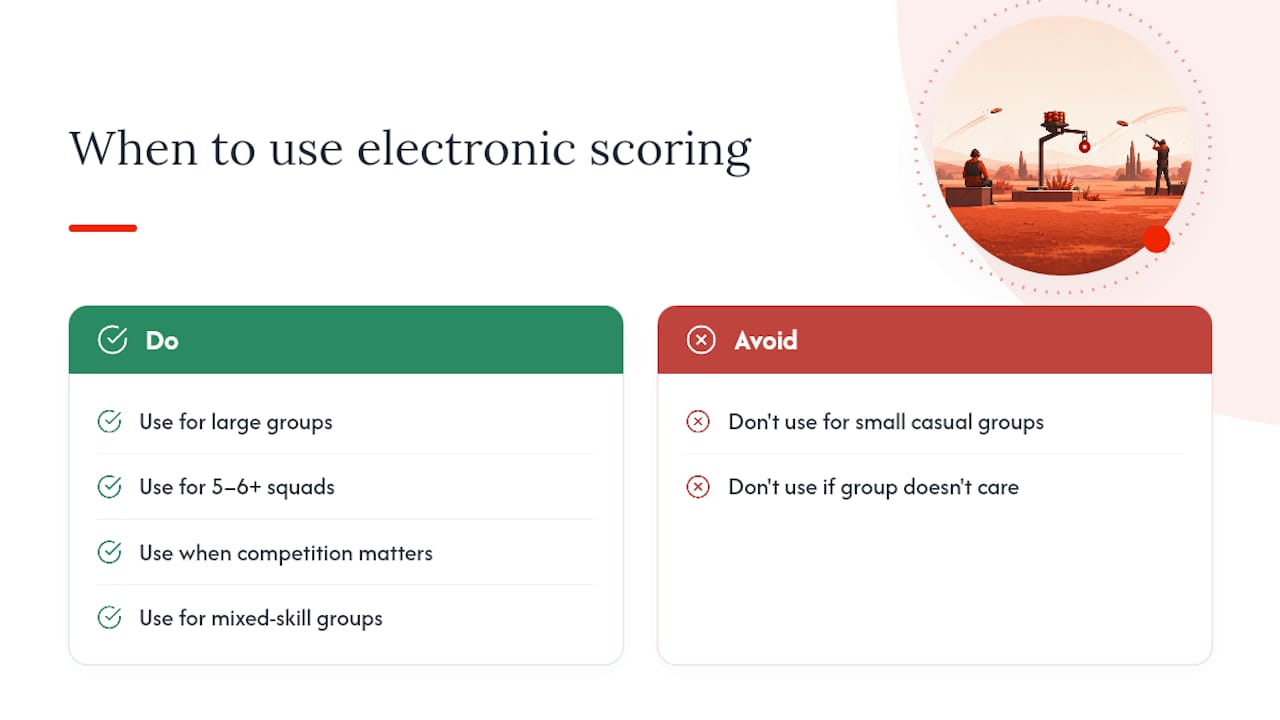
Electronic scoring earns its place when you have a group large enough to need fair, fast round tracking, five or six squads deep, competitive stakes, or a mixed-skill crowd where manual scoring would slow things to a crawl. A smaller, casual gathering can get away with simpler scoring. The gap between the two setups is rarely the equipment. It is how much the group cares about the result.
— Joshua
Book a scoreboard-equipped laser clay session
Laserclay runs every one of its formats on the same live scoring setup described above, so you are never choosing between a fun event and a properly tracked one. The Corporate Laser Clay Package costs 69 SGD per person and includes facilitators, equipment, and a real-time scoreboard display built into the session. The birthday party package starts from 49 SGD per person for private bookings, and organisers who already have a venue sorted can go straight to system rental at 500 to 800 SGD per hour, hardware only, scoreboard included.
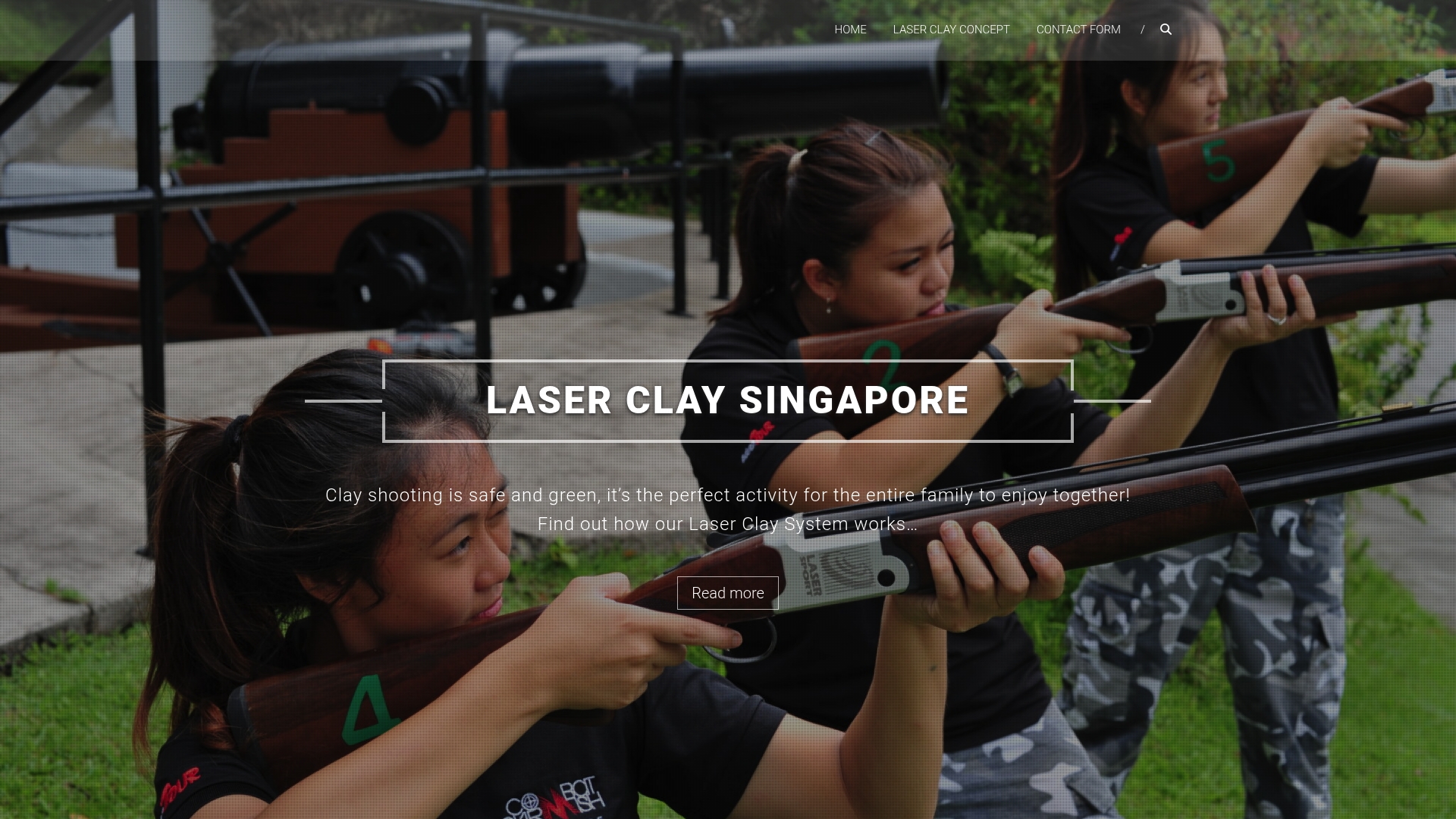
Every package covers setup, calibration, and the facilitation needed to keep squads moving without an operator on your own team learning the equipment on the day. If you are planning a session and want to see how the scoring format fits your group size, get in touch through Laserclay’s contact page and ask about dates.
Sources
- DryFire: Clay & Game Shooting Simulators — setup guide
- DryFire: Clay & Game Shooting Simulators — typical setup
FAQ
What Is a Laser Clay Scoreboard?
It is the electronic display that shows live scores during laser clay shooting, fed by a control module that reads infrared hits from microchipped guns. It updates in real time, so shooters and spectators see results as each round happens.
How Many Shooters Can Compete in One Round?
Most systems, including the format Laserclay runs, support squads of up to five shooters per round, each identified by a unique transmitter ID. That keeps individual scores accurate even when several people are shooting close together.
Do I Need Special Lighting for an Indoor Setup?
Yes. Direct or reflected light near the sensor can cause false reads, so subdued lighting and correct distances between the shooting line and target improve detection accuracy indoors.
How Do I Calibrate the System Before an Event?
Start with laser targets only, confirm hits register correctly, then run a muzzle alignment check by firing at a fixed point and confirming the tone matches. Repeat this on every gun before the first scored round.
How Much Does a Laser Clay Event Cost?
The Corporate Laser Clay Package runs 69 SGD per person, the birthday party package starts from 49 SGD per person, and equipment-only rental sits between 500 and 800 SGD per hour. Full details are listed on Laserclay’s booking pages.