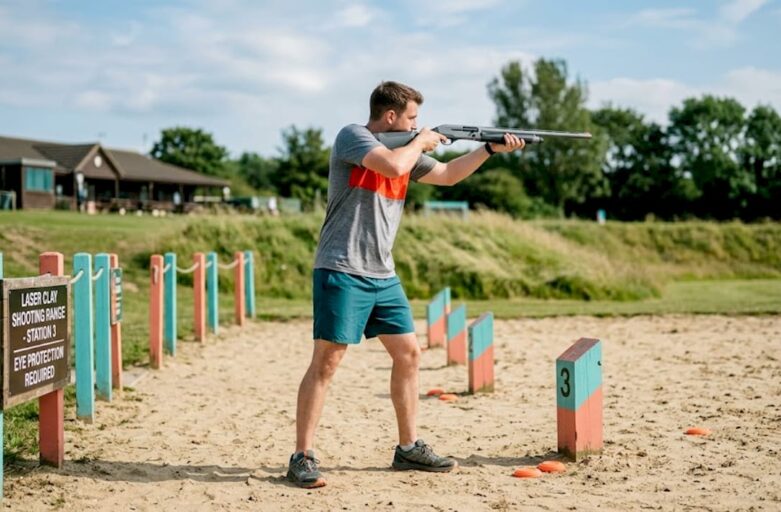
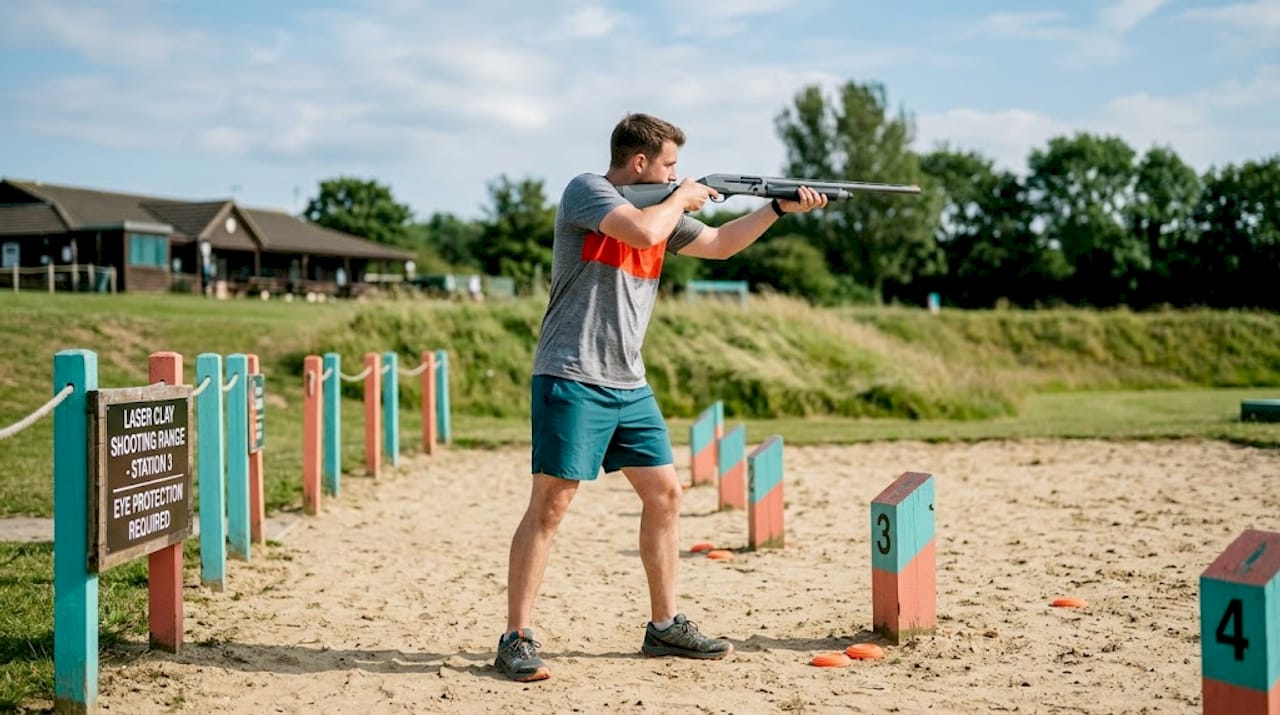
Laser clay shooting is often mistaken for a sport where the technology does the heavy lifting. Point, pull the trigger, let the kit handle the rest. That misconception costs shooters real scores. The role of precision in laser clay sport is as demanding as in any traditional shooting discipline, requiring correct stance, calculated lead, sharp timing, and mental discipline under pressure. What the technology actually does is give you better feedback so you can refine your precision faster. This guide breaks down every layer of that precision, from physical fundamentals to mental resilience, so you can use that feedback to genuinely improve.
Table of Contents
- Key takeaways
- The role of precision in laser clay sport
- Technology that supports precision
- Mental precision under competition pressure
- Training methods that build reliable precision
- Laser clay versus traditional clay shooting
- My honest take on precision and progress
- Start building your precision with Laserclay
- FAQ
Key takeaways
| Point | Details |
|---|---|
| Lead and timing are foundational | Aiming ahead of the moving clay with correct timing is what separates consistent shooters from occasional ones. |
| Technology sharpens, not replaces, technique | Digital scoring and simulators give objective feedback, but your core mechanics determine the outcome. |
| Mental focus is a trained skill | Pre-shot routines and rapid reset after misses are learnable habits that protect your score across all stations. |
| Simulators accelerate improvement | VR and simulator training builds muscle memory without live ammo costs, making deliberate practice more accessible. |
| Laser clay differs meaningfully from traditional shooting | No recoil and digital scoring change how you learn precision, making it more measurable and less physically disruptive. |
The role of precision in laser clay sport
Precision in laser clay shooting rests on three interconnected pillars: your physical mechanics, your equipment setup, and your ability to apply both consistently under competitive pressure. Get one wrong and the other two cannot compensate.
The physical foundation starts with stance and posture. Shooting fundamentals require attention to stance, posture, and shooting mechanics like lead and timing. Stand with your weight slightly forward on your front foot, shoulder-width apart. Your body should be able to swing through the target’s flight path without stiffening at the hips. A locked, upright stance is one of the most common causes of missed shots.
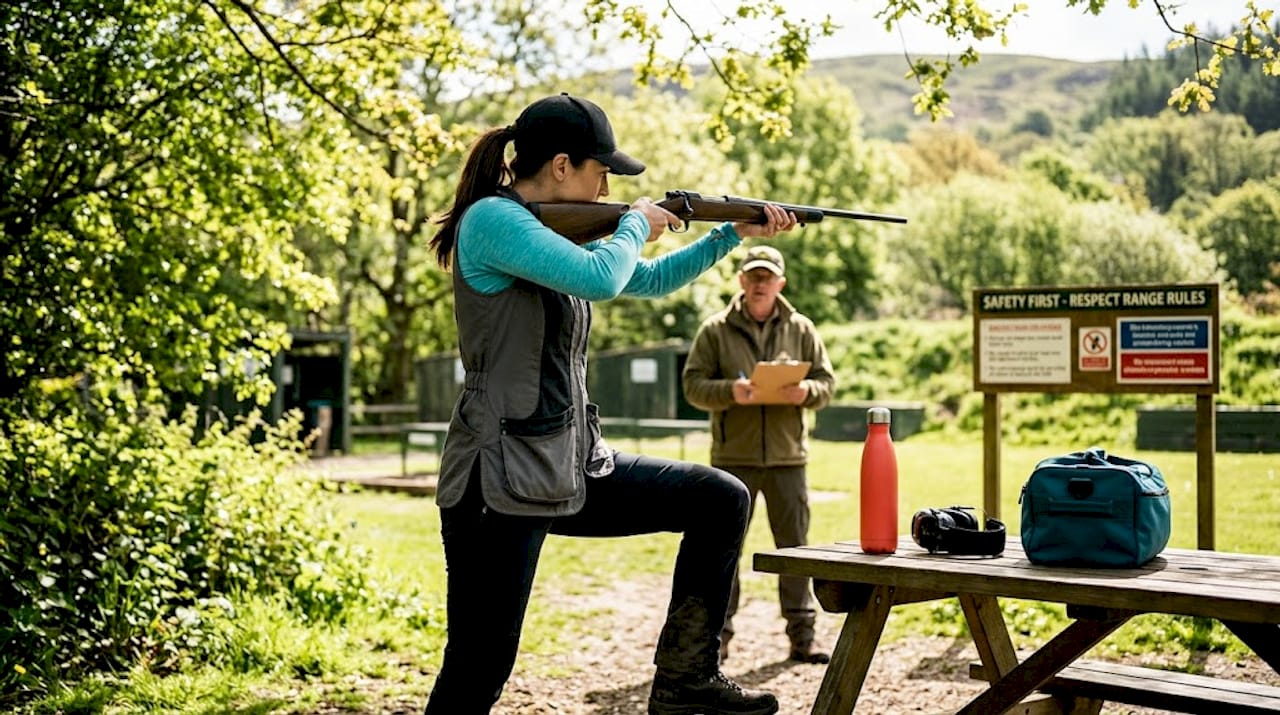
Lead is the concept that trips up most beginners. You are not aiming at the clay. You are aiming at where the clay will be when your laser registers contact. The amount of lead required changes with target angle, speed, and distance. Crossing targets require more lead than driven targets coming directly toward you. Developing an intuitive feel for this is the single biggest precision skill you can build.
Timing the shot release matters just as much. Shoot too early in your swing and you will fire behind the target. Shoot too late and the same happens as your barrel decelerates. The release point sits at the moment your swing speed matches or slightly exceeds the apparent speed of the clay in your field of view.
- Keep both eyes open to maintain full depth perception and field of view
- Mount the shotgun consistently in the same shoulder position before every shot
- Track the clay from the moment it emerges from the trap, not partway through its flight
- Swing through and keep moving after the shot, rather than stopping the barrel at the moment of firing
Pro Tip: Film your mount and swing from behind during practice. Most shooters are shocked to discover their muzzle stops at the moment of release. That single habit, if corrected, can add several targets to your score immediately.
Technology that supports precision
Modern tools have changed what is possible in precision training for laser clay shooting, but they function best as support systems rather than shortcuts.
Sights and target acquisition
Fibre optic sights improve precision by enhancing ambient light gathering, brightness, and aiming point clarity. In variable outdoor lighting, which is typical of clay shooting events, a standard bead sight can disappear against a bright sky or shadowed treeline. A fibre optic sight remains visible across those conditions and reduces eye strain over a full round of twenty-five or more targets. That reduction in visual fatigue translates directly to maintained precision through the later stations.
Digital scoring and shot analysis
Systems like ClayTracer by Travision record shot trajectories at 500 frames per second with millisecond accuracy. That level of detail means you can review exactly where your laser registered relative to the clay’s flight path. It removes guesswork entirely. Instead of asking “was that close?”, you can see precisely how far ahead or behind your shot registered, then adjust your lead calculation for the next attempt.
| Feature | Traditional clay shooting | Laser clay shooting |
|---|---|---|
| Shot feedback | Visual observation only | Digital trajectory data, instant scoring |
| Recoil impact | Disrupts follow-through analysis | No recoil, cleaner post-shot review |
| Environmental concern | Lead ammunition, noise | No ammunition, quieter operation |
| Training cost per session | Higher (ammunition, targets) | Lower, repeatable without consumables |
| Precision data available | Subjective referee calls | Objective millisecond-level tracking |
Simulators and VR
Professional simulators replicate real shotgun ballistics to help athletes refine lead and swing timing without using live ammunition. Entry costs vary, with high-fidelity systems beginning at around £11,500, but club access and hire options make them reachable for serious amateurs.
VR-based training removes recoil distraction entirely, allowing targeted diagnosis and correction of shooting errors. With entry-level VR apps available from around £24, this is one of the most cost-effective precision training tools currently available. The ability to repeat the same target presentation dozens of times in a single session builds the muscle memory that live range practice cannot replicate at the same volume.
Pro Tip: Use simulator sessions immediately before live or laser clay rounds, not as a replacement for them. The mental calibration you develop in the simulator will transfer most effectively when applied within the same session.
Mental precision under competition pressure
Physical technique falls apart under pressure if the mental side is not trained with equal seriousness. Top competitors consistently highlight concentration as the deciding factor between first place and runner-up. The score differences are often a single target.
One of the most underestimated threats to precision is the “easy” target. Maintaining form consistency on targets that appear simpler prevents the accumulation of unforced errors that typically derail good rounds. Shooters lose focus on targets they subconsciously dismiss as routine, and that is exactly when technique slips.
“Precision is not what you do on the hard stations. It is what you refuse to stop doing on the easy ones.”
Digital scoring systems create an additional psychological layer. The instant, public nature of laser clay scoring means every miss is immediately visible. Top-level performers train themselves to reset focus rapidly after a miss. That reset is a learnable technique, not a personality trait.
Practical mental habits that protect your precision score:
- Develop a consistent pre-shot routine of three to five seconds that anchors your focus before calling for each target
- Visualise the clay’s full flight path and your barrel’s interception point before you call the pull
- After a miss, take one controlled breath, physically reset your stance, and treat the next target as the first of the round
- Avoid reviewing your running score mid-round. Check it at the halfway point only, if at all
Training methods that build reliable precision
Consistent improvement in laser clay shooting comes from structured, deliberate practice rather than high-volume repetition without a clear aim. Here is a training progression that actually works.
- Start with stationary mount drills. Before you shoot at moving targets, practise mounting the shotgun to the same spot on your cheek and shoulder repeatedly until it is automatic. Inconsistent mount position is responsible for more misses than poor lead judgement.
- Move to swing timing drills. Using a partner or a simple pendulum target, practise matching your swing speed to a moving object and releasing at the correct moment. Do this without shooting first to isolate the timing element.
- Introduce simulator sessions for lead work. Use a clay shooting simulator to practise specific target presentations with instant replay. Focus on one presentation type per session rather than mixing all angles.
- Review your analytics regularly. If you have access to digital scoring data, look for patterns. Missing consistently behind on crossers suggests insufficient lead. Missing above on driven targets suggests your mount is rising through the shot.
- Reintroduce competition pressure in practice. Arrange small internal competitions with your training group to simulate the psychological environment of public scoring. Your precision under these conditions will tell you more than any solo drill.
Pro Tip: Athletes who supplement for focus and endurance during competition training report better attention across full rounds. Cognitive fatigue is a real factor by the fifteenth target in a twenty-five-target round.
Laser clay versus traditional clay shooting
Understanding what is different about precision in laser clay versus traditional clay pigeon shooting helps you set realistic expectations and transfer skills appropriately.
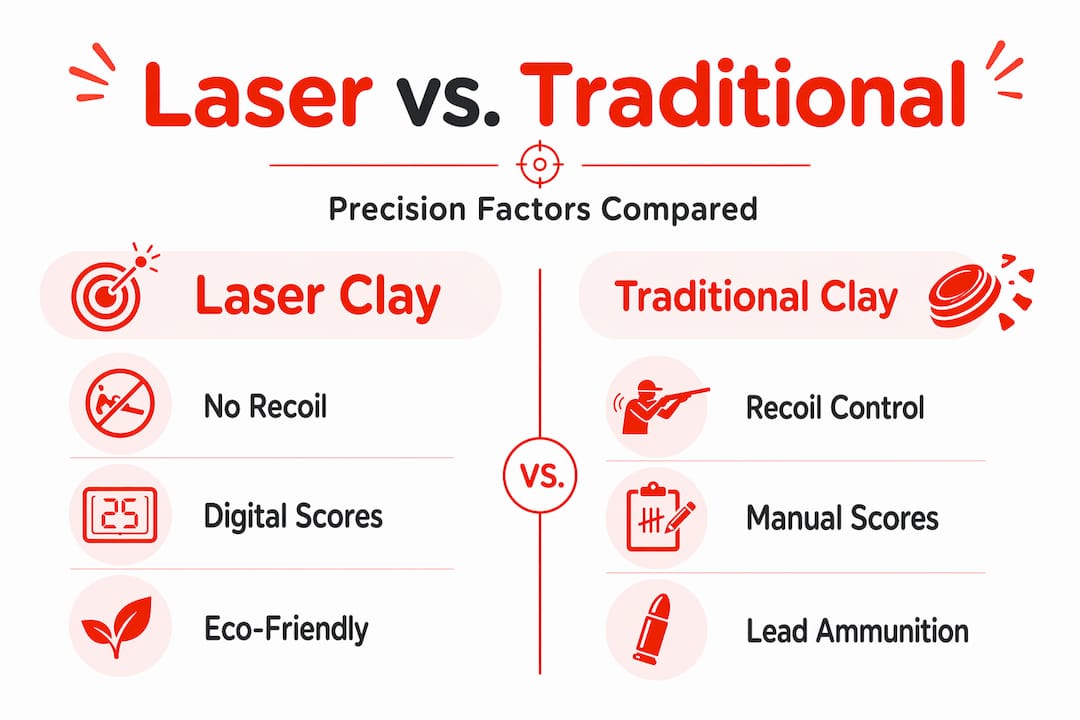
The most significant practical difference is the absence of recoil. In traditional shooting, recoil disrupts follow-through and can create flinch habits that take months to correct. Laser clay removes that variable entirely, which means your mechanics are cleaner to analyse and easier to correct without physical conditioning interfering.
| Precision factor | Laser clay | Traditional clay |
|---|---|---|
| Recoil management | Not required | Requires physical conditioning |
| Scoring objectivity | Electronic, immediate | Referee judgement, delayed |
| Feedback quality | Trajectory data available | Limited to hit or miss |
| Skill transferability | High to traditional | Partial, recoil skills differ |
The environmental benefits of laser clay shooting also affect how you approach precision. Without the concern of lead ammunition, noise, and site restrictions, shooters can focus purely on mechanics. More access to more practice environments means more opportunities to build the consistent repetitions that precision requires.
My honest take on precision and progress
I used to assume precision in clay shooting was mostly about the equipment. Better sights, a lighter trigger, a well-fitted stock. Those things matter, but I have found they matter far less than I expected when the fundamentals are missing.
What genuinely changed my performance was accepting that my mental routine was the weakest part of my game. I was technically competent but inconsistent, and the inconsistency came from how I responded to misses mid-round. Once I introduced a deliberate three-breath reset after every miss, regardless of where I stood in the score, my results levelled out noticeably over four to six weeks.
The other thing I would say to anyone serious about precision: use the technology, but do not hide behind it. Digital scoring tells you what happened. It does not tell you why. That why lives in your mechanics and your mindset. Simulators and tracking systems are genuinely powerful, but they amplify what you bring to them. Show up with sloppy habits and the data just confirms them faster.
Precision in laser clay sport is as much about process as it is about outcome. Build the routine, train the reset, use the tools to inform rather than replace your judgement, and the scores will follow.
— Joshua
Start building your precision with Laserclay

If this article has you thinking seriously about precision, Laserclay in Singapore gives you the environment to put these techniques into practice. Their sessions use digital scoring and laser technology that make the feedback immediate and objective, precisely what you need when you are working on specific mechanical changes. Whether you are preparing for competition or simply want to improve your consistency, their events are structured to give you real range time with meaningful data. Book a session and experience firsthand how precision-focused laser clay shooting works. You can also visit the Laserclay homepage to explore upcoming events and find the format that suits your current skill level.
FAQ
What is the role of precision in laser clay sport?
Precision governs every aspect of laser clay shooting performance, from lead calculation and swing timing to mental focus under competitive pressure. Without deliberate precision techniques, technology alone does not produce consistent scores.
How does digital scoring improve precision in laser clay?
Digital scoring systems record shot trajectories with millisecond accuracy, giving shooters objective data on lead and timing errors rather than relying on subjective observation. This allows faster, more targeted corrections during training.
Can VR training genuinely improve laser clay accuracy?
Yes. VR training removes recoil distraction and allows high-volume repetition of specific target presentations, which builds the muscle memory and swing timing that transfer directly to live precision performance.
How is precision different in laser clay versus traditional clay shooting?
Laser clay removes recoil from the equation, making mechanics cleaner to analyse and easier to correct. Digital feedback also replaces referee judgement, giving more objective and detailed precision data than traditional clay shooting provides.
What mental techniques help maintain precision during competition?
A consistent pre-shot routine, target trajectory visualisation, and a deliberate reset process after each miss are the three most effective mental techniques for protecting precision across a full competitive round.