What are the top alternatives to TriggerInteractive.com in the UK?
The strongest UK-accessible alternatives to TriggerInteractive.com are wireless smart target systems that combine real-time hit detection, mobile app control, and measurable training metrics. If you are researching triggerinteractive.com competitors, the core question is not which system looks most impressive in a brochure, but which one actually tracks your performance and adapts as your training evolves.
Key options available to UK-based shooters and organisations include:
- Laser Clay — laser-based interactive shooting that replaces live ammunition entirely, with real-time performance feedback, app integration, and a strong safety and sustainability focus.
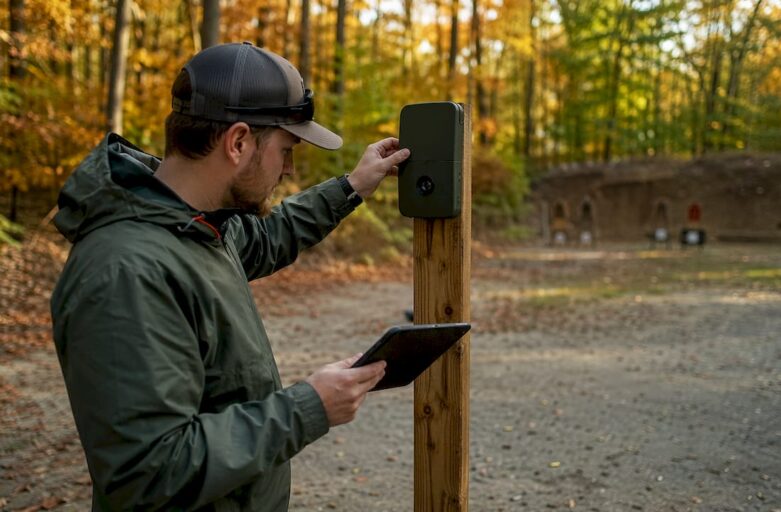
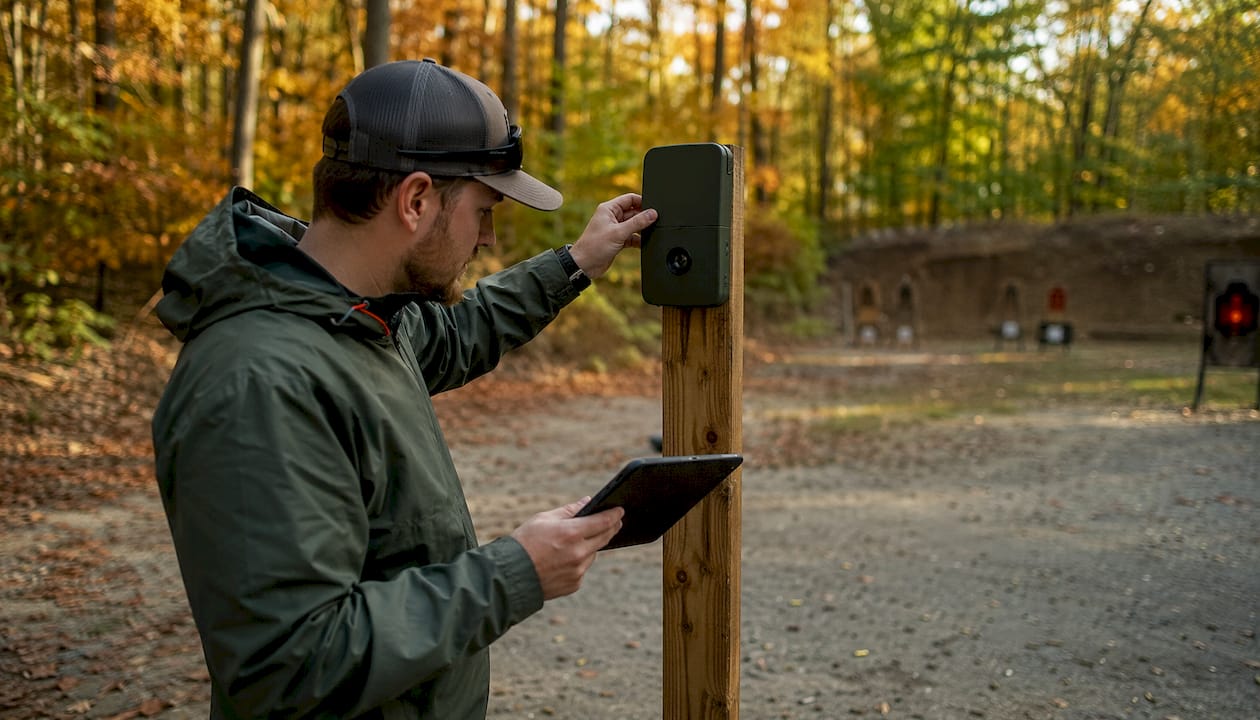
- Wireless smart target systems (mesh-networked, shock-activated) — attach to existing steel targets, connect via Bluetooth to a smartphone app, and report reaction time and draw speed after each drill.
- Virtual reality firearms simulators — screen-based systems used by law enforcement and military training units across the UK, offering shoot/no-shoot scenarios without any live fire.
- Laser dry-fire training systems — compact, ammunition-free tools that plug into existing firearms and pair with a tablet app for home or range use.
Connectivity varies across these categories. Some systems still lack full iOS support, so confirming device compatibility before purchase is worth doing.
Comparing leading UK interactive firearms training systems
The systems below differ most sharply on training depth, portability, and how well they age once you have bought them.

| System | Functionality / Features | Training metrics | Connectivity and app support | Pricing | Long-term support | Best for |
|---|---|---|---|---|---|---|
| Laser Clay | Laser-based clay shooting, real-time hit detection, event and group modes | Reaction time, hit accuracy, session scores | App-integrated, wireless | Not publicly listed | Active development; eco-focused updates | Safety-conscious events, corporate groups, all skill levels |
| Wireless smart target attachments | Mesh-networked shock-activated targets, shoot/no-shoot drills, adjustable drill parameters | Reaction time, draw speed, split times, missed-target rate | Bluetooth, smartphone app (iOS support varies) | Starter packs from $799; single-unit from $399 | Firmware updates add features without new hardware | Live-fire range training, self-defence scenario work |
| VR firearms simulators | Screen-based scenarios, branching shoot/no-shoot decisions, instructor controls | Accuracy, decision speed, scenario outcomes | Proprietary software, PC or dedicated hardware | High upfront cost; institutional pricing | Vendor-dependent; varies widely | Law enforcement, military, institutional training |
| Laser dry-fire systems | Plug-in laser cartridge, pairs with app, home or range use | Reaction time, accuracy at distance | Bluetooth or Wi-Fi, tablet or phone app | Low to mid-range | App update frequency varies by vendor | Solo practice, home dry-fire, budget-conscious users |
Scenario flexibility separates the better systems from the basic ones. Shoot/no-shoot training lifts training quality well beyond static target work because it forces decision-making under time pressure, not just marksmanship. VR simulators do this best in controlled environments; wireless smart target systems bring it to the live-fire range.
Laser Clay sits in a distinct category. Rather than attaching to steel targets, it replaces the clay shooting format altogether with laser technology, removing lead ammunition from the equation. That makes it the natural choice for eco-friendly shooting events and any setting where live fire is impractical or unwanted.
How to choose the right interactive firearms training system alternative
Choosing among these triggerinteractive.com alternatives comes down to five practical questions.
- What metrics do you actually need? Systems that track reaction time, draw speed, and split times give you data to train against. A system that only tells you whether you hit the target is not much better than a paper round.
- Is the app compatible with your devices? Some wireless target systems still do not support iOS fully. Check before you commit.
- How portable does it need to be? Wireless smart targets pack down into a range bag. VR simulators require a dedicated space. Laser Clay works outdoors at events with minimal setup.
- What is the battery strategy for long sessions? Internal rechargeable batteries via USB are convenient, but heavy use demands a plan for in-field recharging or swapping. Durability against spalling impact matters too if you are running live-fire drills at close range.
- Does the system support modular expansion? Starting with a single target and adding units later is far more cost-effective than buying a full kit upfront, especially for organisations trialling a new training format.
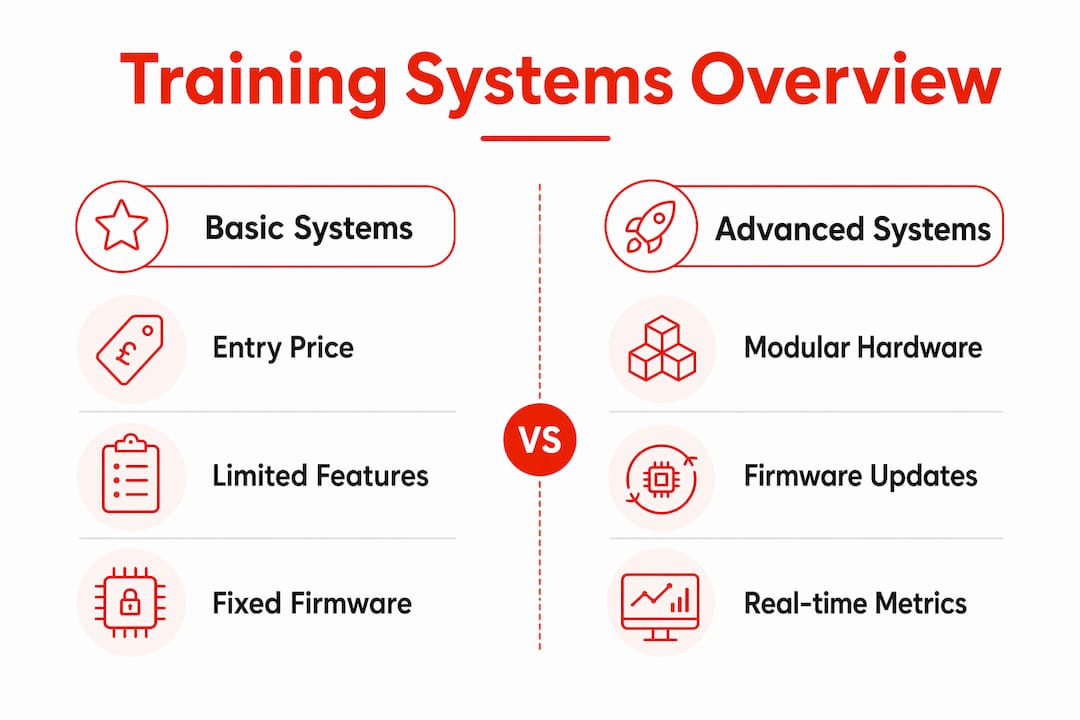
Pro Tip: Check whether the system receives regular firmware updates before you buy. Firmware updateability lets vendors add features like random target selection and adjustable hit counts without requiring new hardware, which protects your investment over time.
Long-term support is where many cheaper systems fall short. A system that ships with a fixed feature set and no update roadmap will feel dated within two years.
Regulatory and safety considerations in the UK
UK firearms law governs which training systems you can legally use, and the category of system matters. Laser-based and dry-fire systems that do not use live ammunition or blank cartridges generally fall outside the scope of the Firearms Act 1968, making them far simpler to deploy for events, corporate days, and public-facing activities. VR simulators carry no firearms-specific restrictions either.
Live-fire smart target systems are a different matter. Using them requires a valid firearms certificate or shotgun certificate for the relevant calibre, and the range itself must comply with Home Office guidance on approved ranges. Any organisation planning to run live-fire training with wireless target attachments should confirm compliance with their local police firearms licensing department before purchasing hardware.
Safety at the physical level also deserves attention. Shock-activated targets must be mounted securely, and the system’s hit-detection sensitivity should be calibrated to avoid false triggers from nearby impacts or vibration.
What UK users say about interactive training systems
Feedback from UK shooters on wireless smart target systems consistently highlights two things: the setup simplicity and the immediate performance data. The single-button pairing process on mesh-networked systems gets mentioned repeatedly as the reason people actually use the kit rather than leaving it in the boot of the car.
For group and event use, Laser Clay draws positive responses for its accessibility. Participants with no prior shooting experience engage quickly because there is no recoil, no noise, and no safety briefing that runs longer than the activity itself. That accessibility is particularly valued by event organisers running corporate team-building days where mixed groups need an activity that works for everyone.
The consistent criticism across categories is app quality. Several systems ship with apps that feel unfinished, with limited drill customisation or poor data export options.
Laserclay: a different kind of shooting experience
If the systems above feel like more hardware than your situation needs, Laserclay offers a genuinely different route. Rather than attaching electronics to steel targets, Laserclay transforms the clay shooting format itself using laser technology, removing live ammunition, lead, and the associated safety overhead entirely.
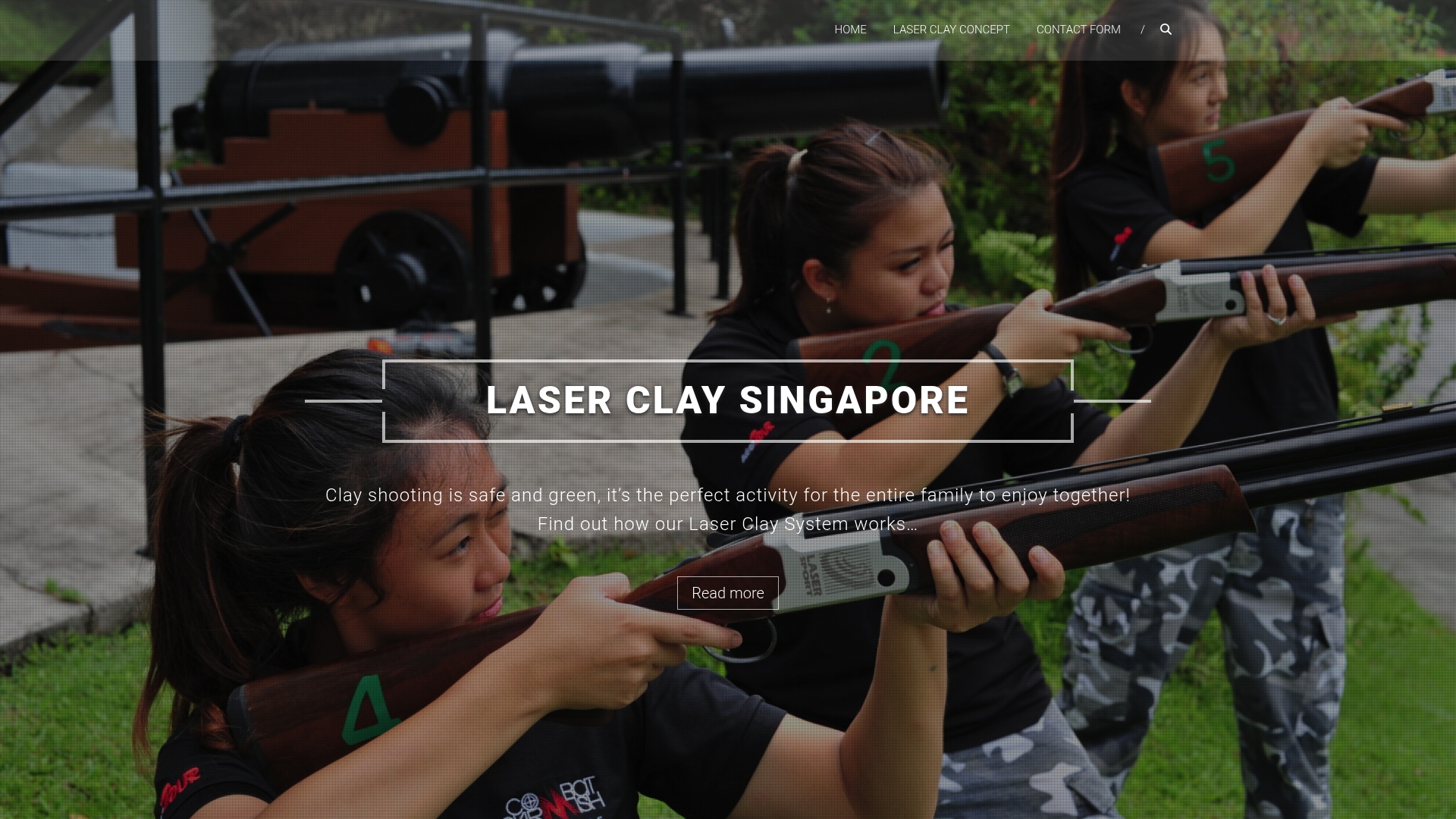
That matters for a specific type of user: event organisers, schools, corporate teams, and recreational groups who want the engagement of shooting sport without the regulatory and logistical weight of live fire. Laserclay works across skill levels, sets up quickly outdoors, and produces real performance data through app integration. For anyone looking at training without ammunition, it is worth a direct look at what Laserclay offers.
Key takeaways
The strongest interactive firearms training alternatives combine real-time metrics, modular hardware, and regular firmware updates — without those three, any system will underperform within two years.
| Point | Details |
|---|---|
| Metrics drive progress | Systems tracking reaction time, draw speed, and split times produce measurable training gains beyond basic hit/miss feedback. |
| Firmware updates protect value | Regular software updates add features like random target selection without requiring new hardware purchases. |
| Scenario flexibility matters | Shoot/no-shoot drills markedly improve training quality compared to static target practice. |
| UK regulatory context | Laser and dry-fire systems avoid firearms licensing requirements; live-fire smart targets require valid certificates and approved ranges. |
| Laserclay for events | Laserclay suits groups, corporate days, and events where live ammunition is impractical or unwanted. |