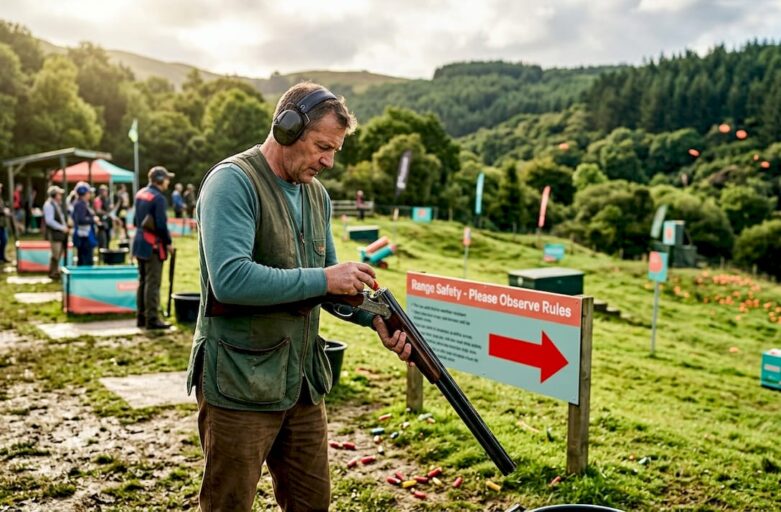

Clay shooting has a reputation for being a self-governing sport where participants simply turn up, shoot, and leave. The reality is considerably more complicated. Understanding why traditional clay shooting faces regulation requires looking at overlapping legal duties, significant environmental pressures, and an evolving debate about technology in competition. Whether you operate a shooting ground, compete regularly, or are simply trying to make sense of what the law expects of you, the regulatory picture has sharpened considerably in recent years. What follows is a clear-eyed look at the forces shaping clay shooting rules today.
Table of Contents
- Key takeaways
- Why traditional clay shooting faces regulation
- The lead shot ban and environmental pressure
- Safety protocols and operational rules
- Technology restrictions in competitive shooting
- Practical implications for individuals and organisations
- My honest take on regulation and tradition
- Shoot smarter with Laserclay
- FAQ
Key takeaways
| Point | Details |
|---|---|
| No single governing law | Clay shooting is covered by multiple overlapping statutes, including health and safety, firearms, and environmental law. |
| Lead shot ban incoming | UK REACH regulations require a full transition away from lead shot by 2029, with key restrictions from 2028. |
| Safety failures carry liability | Operators and landowners can face enforcement action and lose insurance cover if safety duties are neglected. |
| Technology rules tightening | The NSCA banned shotgun-mounted cameras and communication devices from tournaments in 2026 to protect competitive fairness. |
| Documentation is your defence | Ongoing risk assessments and written records are the primary protection against nuisance complaints and enforcement action. |
Why traditional clay shooting faces regulation
The first thing to understand about clay shooting regulations explained clearly is this: there is no single Clay Shooting Act. Instead, operators must manage multiple overlapping legal responsibilities spanning health and safety, firearms licensing, environmental protection, and land use planning. That complexity is precisely why regulation catches so many participants off guard.
The Health and Safety at Work Act 1974 applies directly to shooting grounds and clubs that have employees or volunteers. It requires a structured approach to risk management, written assessments, and clear procedures. Even grounds run entirely by volunteers carry duties toward participants and visitors under general duty of care principles.
Firearms legislation adds another layer. Shooters using a shotgun in the UK must hold a valid shotgun certificate issued by their local police force. Grounds have their own obligations around storage, access, and supervision. A failure in either area does not just create a legal problem; it can trigger a police review of all licences held by the club.
Landowner liability is often the least understood element. If a member of the public is struck by shot from an improperly designed or poorly managed range, legal duty of care and compliance fall squarely on whoever controls that land. Delegating the shooting to a third-party operator does not transfer that responsibility away automatically.
Pro Tip: If you manage a shooting ground, commission a formal legal review of your site layout and land use permissions before any new stands are opened. Retrospective compliance is far more costly than getting it right from the start.
The reasons for clay shooting rules at this structural level come down to one principle: the sport involves firearms, live projectiles, and members of the public sharing rural space. That combination requires proportionate, documented oversight.
The lead shot ban and environmental pressure
No single issue better illustrates the impact of regulations on clay shooting right now than the forthcoming lead shot ban. Under UK REACH regulations, lead shot will be prohibited for clay shooting use by 1 April 2029, with restrictions on lead projectiles at outdoor ranges taking effect from 1 April 2028. This is not a distant concern. It affects purchasing decisions, training, and ground management starting now.
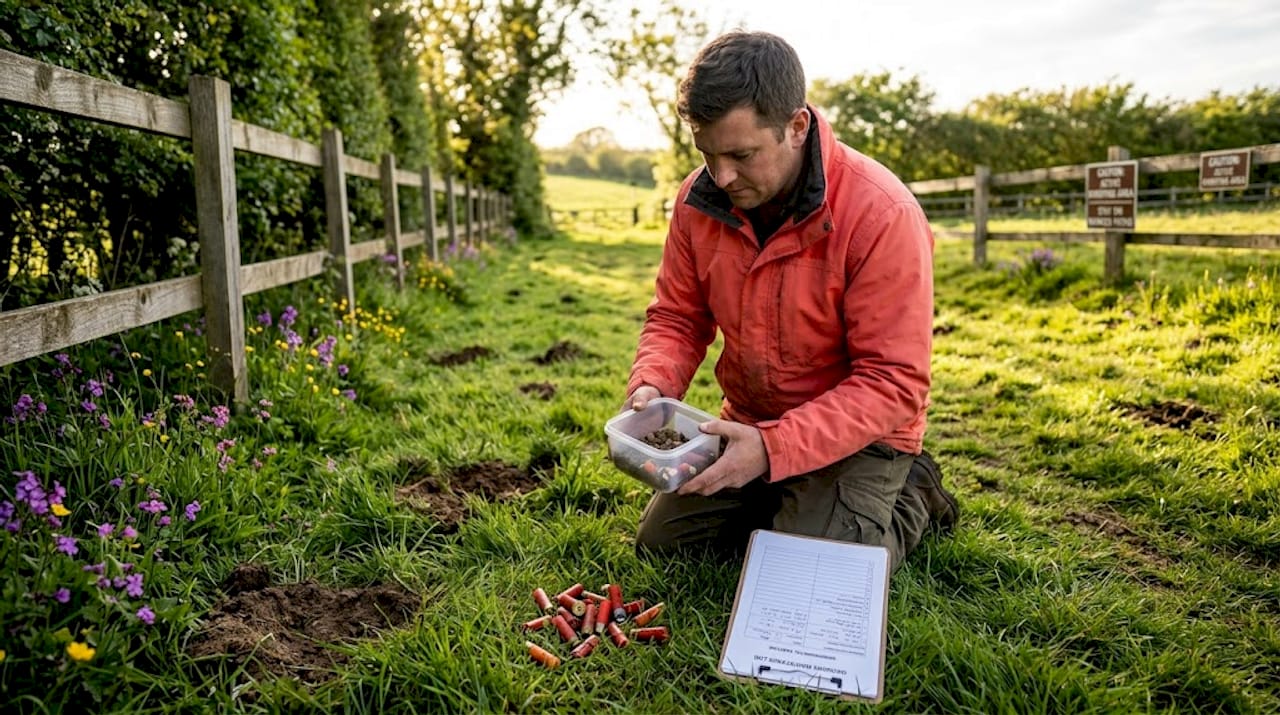
The environmental rationale is grounded in hard evidence. Lead ingestion and soil contamination pose documented risks to wildlife, particularly birds that ingest spent pellets while foraging. Accumulation in soil and drainage into water systems creates long-term ecological harm that regulators can no longer ignore. The scientific consensus on these risks has hardened over the past decade and the shooting industry has largely accepted that transition is unavoidable.
Here is how the main ammunition types compare for clay shooting applications:
| Ammunition type | Environmental impact | Performance notes |
|---|---|---|
| Traditional lead shot | High: toxic to wildlife, contaminates soil | Long-established ballistics, familiar recoil |
| Steel shot | Low: non-toxic, does not accumulate | Harder material, different choke requirements |
| Bismuth shot | Very low: biodegrades safely | Closer to lead ballistics, higher cost |
| Tungsten-based shot | Very low: dense and non-toxic | Excellent performance, significantly more expensive |
Shooting grounds face a more demanding transition than individual shooters. Grounds must manage risks for employees, volunteers, participants, and the public, and may be required to submit documentation of how they are handling existing lead contamination on site. That means soil surveys, remediation plans in some cases, and equipment audits.
Pro Tip: Start trialling steel shot cartridges now rather than waiting until 2028. Steel requires different chokes and can affect barrel wear. Early testing gives you time to retrain shooters and adapt your range infrastructure without deadline pressure.
The shift to non-lead ammunition reflects not just regulatory enforcement but a wider expectation from the public and landowners that shooting sports justify their environmental footprint. Grounds that proactively adopt alternatives are better positioned with both regulators and the communities they operate within. If you want a deeper look at the environmental case for lead-free shooting, the environmental benefits explained by Laserclay are worth reviewing.
Safety protocols and operational rules
When it comes to on-the-day operations, the reasons for clay shooting rules become very practical very quickly. The following requirements apply across most regulated clay shooting environments in the UK:
- All shooters and spectators must wear appropriate ear and eye protection at all times on the shooting ground.
- Range layout must be designed to contain shot fall within designated zones, preventing pellets from reaching public footpaths, roads, or neighbouring properties.
- Operational hours must be managed to minimise noise disturbance, particularly near residential areas. Noise complaints are one of the primary triggers for local authority enforcement action against shooting grounds.
- Signage warning non-participants of the shooting range must be clearly displayed at all access points.
- A designated safety officer or responsible person must be present whenever shooting takes place.
These rules are not arbitrary. A negligence claim arising from a spectator injury, or enforcement action following persistent noise complaints, can invalidate a ground’s public liability insurance. Without that insurance, the ground cannot legally operate. The compliance chain is tight and the consequences of gaps within it are serious.
Understanding why are shooting sports regulated through the lens of safety reveals that most rules exist because previous incidents or near-misses demonstrated a specific gap. Regulation in this sport, as in most others involving weapons, tends to be reactive. Compliance today is the best protection against contributing to the next tightening of the rules.
Technology restrictions in competitive shooting
The most recent chapter in traditional clay shooting laws involves technology rather than ammunition. In 2026, the NSCA banned shotgun-mounted cameras and all communication devices from registered sporting clays tournaments. The stated aim was to preserve the traditional “read and react” skill set that defines the sport at the competitive level.
The specific concern was that devices like the ShotKam, a shotgun-mounted camera, could be used to analyse shot patterns in real time, giving technology-assisted competitors an advantage over those relying purely on instinct and trained skill. Equally, the ability to receive remote coaching via communication devices during a round was seen as fundamentally altering the nature of competition.
What remains permitted is telling. Electronic hearing protection and scoring technology are still allowed, drawing a clear line between safety aids and performance aids. The ban targets devices that affect the outcome of competition, not those that protect the shooter or facilitate administration.
Several points are worth noting for competitive shooters and clubs:
- The ban applies to registered tournaments. Recreational shooting and practice sessions are not directly affected, though clubs may adopt similar rules locally.
- Video analysis conducted off the range, after a session, remains perfectly legal and can still support training development.
- The tension between preserving tradition and embracing technology will not go away. As wearable technology becomes more capable and affordable, governing bodies will face ongoing pressure to define the boundaries more precisely.
- Competitive shooting regulation at this level reflects broader societal debates about technology in sport, where the question is always whether innovation enhances the game or changes what the game fundamentally is.
Practical implications for individuals and organisations
Knowing the regulatory framework is one thing. Applying it to day-to-day decisions is another. The following areas require active attention from anyone involved in clay shooting, whether as a participant, club officer, or event organiser.
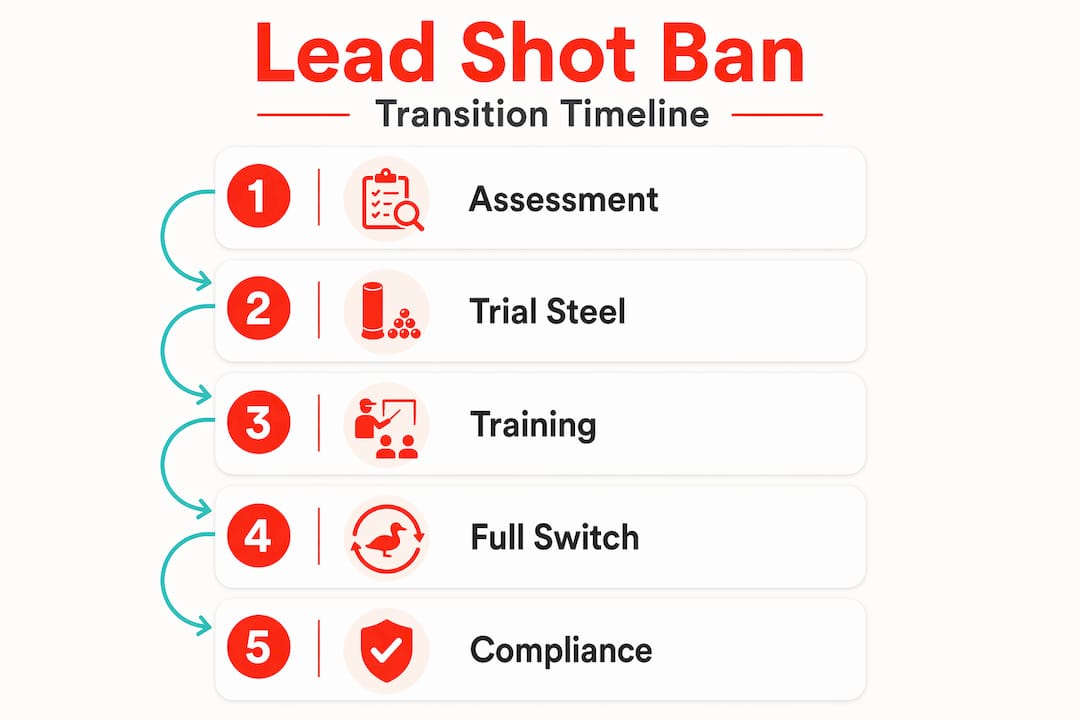
The lead shot transition demands a timeline. Work backwards from April 2028 and establish when you need to have trialled alternatives, retrained shooters, and updated your equipment inventory. Grounds should begin soil surveys now if they have not done so already, particularly if they have been operating on the same land for decades.
Noise and land management complaints are the most common enforcement trigger. Nuisance complaints and land management needs are what bring regulators to a ground’s door in practice, not abstract legal compliance failures. Proactive community engagement, agreed operating hours, and buffer zones are more effective deterrents than reactive legal responses after a complaint has been lodged.
Documentation is not optional. Risk assessments, shooting records, maintenance logs, and ammunition transition plans all serve as evidence of responsible operation. In the event of an incident, enforcement action, or insurance dispute, written records are often the difference between a manageable outcome and a catastrophic one.
Pro Tip: Schedule a quarterly compliance review covering safety, ammunition, noise management, and documentation. Treat it like a financial audit. Small gaps caught early are far easier and cheaper to address than systemic failures discovered during enforcement.
My honest take on regulation and tradition
I’ve spent enough time working alongside shooting grounds and event operators to have a clear view on this. The most common mistake I see is treating regulation as optional until something goes wrong. There is a persistent belief that clay shooting is a low-risk rural activity that regulators largely leave alone. That belief is outdated and, in my experience, actively dangerous for anyone running a ground or organising events.
The lead shot ban is the clearest example. I’ve spoken with ground managers who planned to address it “closer to the deadline” and are now scrambling because their soil surveys revealed contamination requiring remediation before they can continue operating. Proactive management would have cost a fraction of what they’re dealing with now.
What I’ve also noticed is that the operators who thrive long-term are not the ones who do the minimum to comply. They are the ones who use compliance as a credibility signal with landowners, insurers, local authorities, and the communities they sit within. That reputation is worth considerably more than the short-term cost of doing things properly.
The technology debate is where I think the sport gets most interesting. The NSCA ban reflects a genuine and important question about what clay shooting is actually testing. I think they got it right. The value of the sport is in trained human skill, not in who has the better device. But this is a conversation the sport will need to keep having as technology advances.
— Joshua
Shoot smarter with Laserclay
If the regulatory pressures around traditional clay shooting have you thinking about alternatives, Laserclay offers a completely different approach. Using advanced laser technology, Laserclay delivers a genuine clay shooting experience without live ammunition, no lead contamination, and no firearms licensing complications.

It is the ideal solution for corporate events, team-building days, and group celebrations where you want the excitement of clay shooting without the compliance overhead. For anyone exploring ammunition-free shooting options, Laserclay makes the experience accessible to every skill level, fully indoors or outdoors, with zero environmental footprint. Explore what Laserclay can offer for your next event at laserclay.com.sg and discover why organisations across Singapore are choosing the greener way to shoot.
FAQ
Why is traditional clay shooting so heavily regulated?
Clay shooting involves firearms, live projectiles, and public land, which means it falls under health and safety law, firearms legislation, and environmental regulation simultaneously. There is no single governing act. Operators must comply with multiple overlapping frameworks.
When does the UK lead shot ban come into effect?
UK REACH regulations require the full transition away from lead shot for clay shooting to be complete by 1 April 2029, with restrictions on outdoor range use of lead projectiles beginning 1 April 2028.
What devices did the NSCA ban in 2026?
The NSCA banned shotgun-mounted cameras and all communication devices from registered tournaments to preserve the traditional skill-based nature of competitive clay shooting.
What triggers enforcement action against a shooting ground?
In practice, nuisance complaints related to noise are the most common enforcement trigger, followed by safety incidents. Maintaining written risk assessments and engaging proactively with local residents significantly reduces exposure to enforcement action.
Do recreational shooters face the same rules as competitive ones?
Recreational shooters must still comply with firearms licensing requirements, safety equipment rules, and the forthcoming lead shot transition. The 2026 technology bans applied specifically to registered NSCA tournaments, not to recreational or practice sessions.