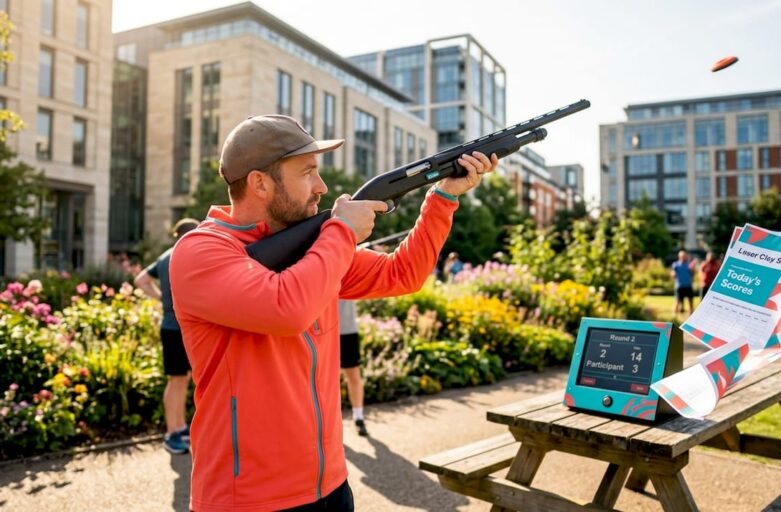
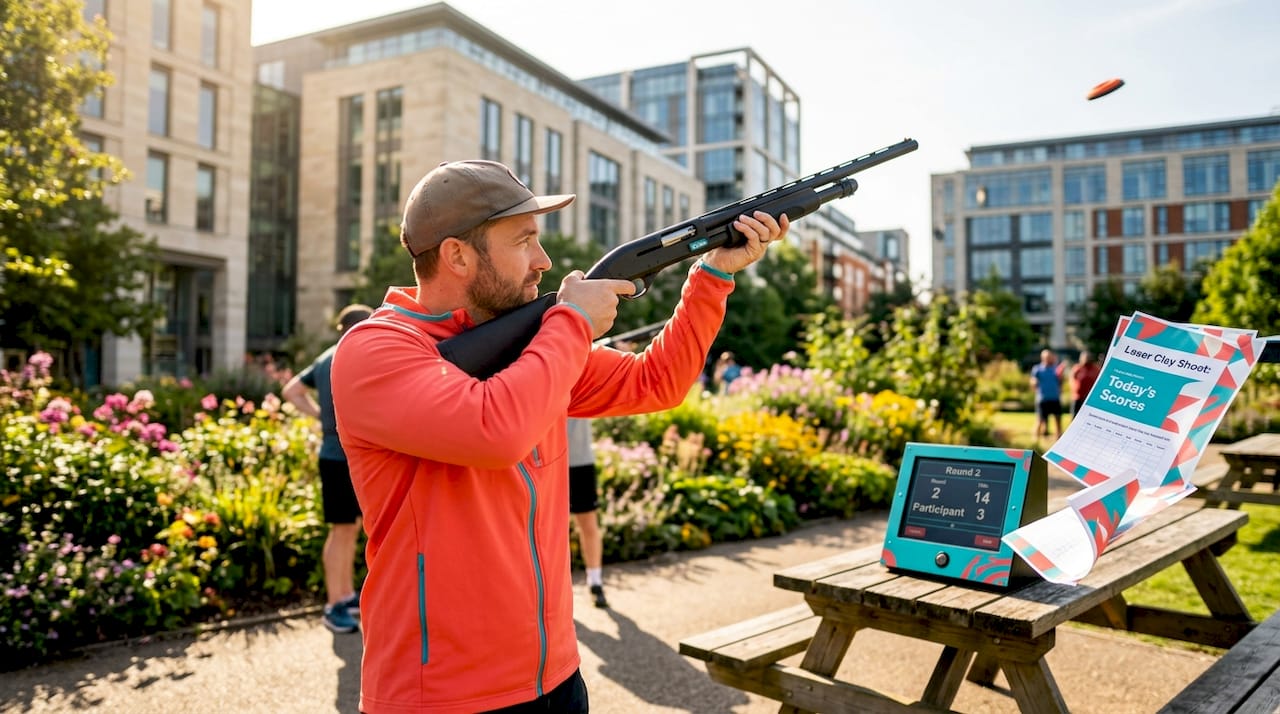
Competitive laser clay leagues are organised shooting events where participants use laser-equipped guns to hit electronically registered clay targets under codified rules, classifications, and structured formats. Known formally within the sport as laser clay shooting competitions, these leagues replicate the dynamics of traditional sporting clays without lead ammunition or live firearms. Understanding how competitive laser clay leagues work matters whether you are a first-time shooter, a seasoned clay competitor, or an event organiser planning a structured programme. The format is more precise than most people expect, and the rules governing scoring, classification, and target presentation are drawn directly from established clay shooting bodies.
How competitive laser clay leagues work: formats and structures
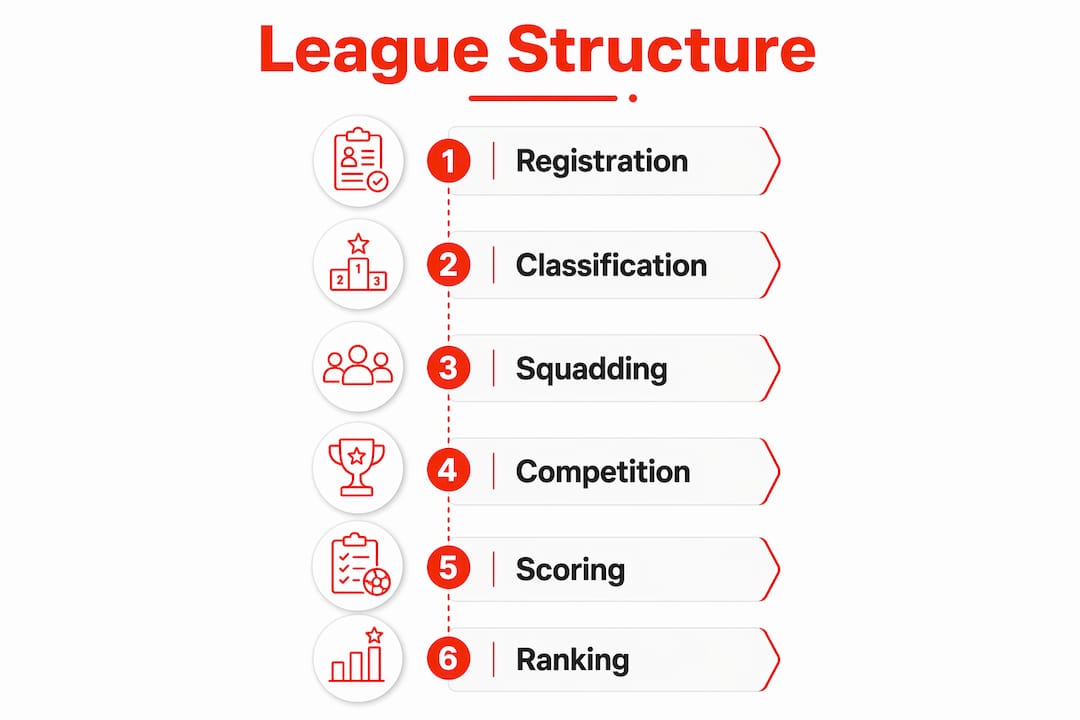
Laser clay shooting leagues follow a season-based model, with participants competing across multiple rounds or matches over a defined period. Each round typically involves a set number of shooting stations, with competitors moving through them in squads. This squadding system groups players together for orderly, fair progression through the course, mirroring the structure used in traditional sporting clays competitions.
The most common formats in competitive laser clay leagues include Five Stand and pairs-based layouts. Five Stand places five shooting stations in a line, with each station presenting a different combination of target trajectories. Pairs formats introduce two targets either simultaneously or in sequence, adding a layer of complexity that rewards both speed and accuracy. USA Clay Target League operates season-based competitions across sporting clays and 5-stand formats, demonstrating how these structures scale to large organised leagues.
- Season structure: Leagues run across a fixed number of weeks or events, with cumulative scores determining final standings.
- Shooting stations: Each station presents a defined target sequence, and competitors must complete all presentations before moving on.
- Squadding: Groups of four to six shooters rotate through stations together, maintaining pace and fairness.
- Format variety: Leagues may use single-target rounds for beginners and pairs formats for advanced divisions.
- Score reporting: Results are submitted after each round, with online tracking updating standings in real time.
Pro Tip: If you are organising a laser clay league for the first time, start with a Five Stand format. It is straightforward to set up, easy for new shooters to understand, and scales well from six participants to sixty.
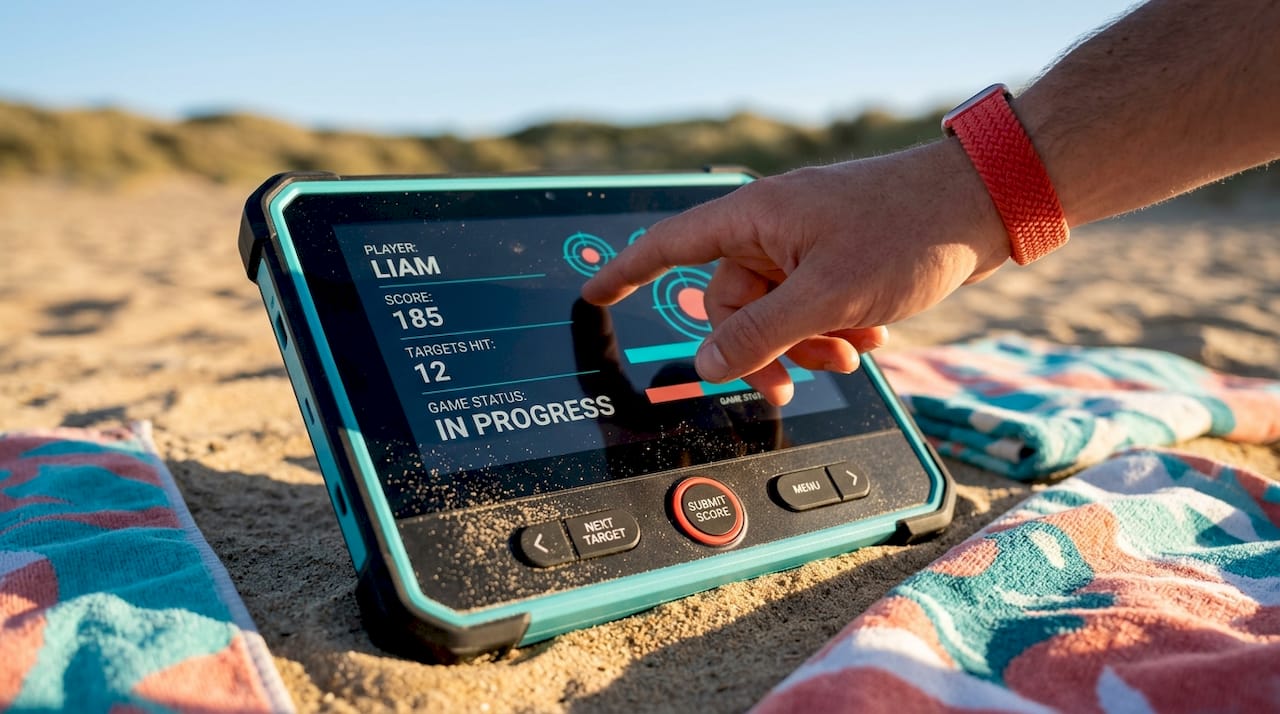
Electronic laser clay systems automate target launch and scoring, integrating with consoles that provide event management functionality. This removes the manual scoring errors that can affect traditional leagues and gives organisers instant data after every round.
How are skill classifications and handicaps applied?
Classification is the mechanism that makes competitive laser clay leagues genuinely fair. Without it, experienced shooters would dominate every event, and newer participants would have little incentive to compete seriously. The CNSCA classification system provides a well-established model that laser clay leagues can adopt directly or adapt for their own formats.
Under the CNSCA framework, shooters are placed into one of seven classes based on their hit percentage across registered shoots. The classes run from Masters at 82.12% and above, through AA, A, B, C, and D, down to E class for those hitting below 57.11%. This means a shooter hitting 70% of targets competes against others in the same performance band, not against a Masters-level competitor. The practical effect is that every class has a genuine contest at the top, regardless of overall skill level.
| Class | Hit percentage threshold | Typical competitor profile |
|---|---|---|
| Masters | 82.12% and above | Elite, experienced competitors |
| AA | 76.00% to 82.11% | Advanced club-level shooters |
| A | 70.00% to 75.99% | Consistent intermediate shooters |
| B | 64.00% to 69.99% | Developing intermediate shooters |
| C | 60.00% to 63.99% | Regular beginners with some experience |
| D/E | Below 60.00% | New entrants and casual participants |
Handicap systems add a further layer of fairness, particularly in mixed-ability events. A weekly-updated handicap tied to par scores adjusts each shooter’s effective target count, so a C-class shooter competing alongside an AA-class shooter starts from a more level position. This approach is especially useful in corporate or community laser clay leagues where participants span a wide range of experience.
Pro Tip: Track every participant’s hit percentage from the first session. Even in casual leagues, having three or four rounds of data allows you to assign fair classifications before the competitive rounds begin. It prevents the frustration of mismatched groupings later in the season.
Online score tracking is the practical tool that makes classification manageable. Platforms that update rankings after each round allow both organisers and participants to monitor progression, spot classification changes, and plan squad groupings accordingly. For laser clay leagues, this is particularly straightforward because electronic scoring systems provide instant, accurate data without manual tallying.
What are the core scoring rules in laser clay shooting?
Scoring in competitive laser clay leagues follows the same binary logic as traditional clay shooting. A target is either dead (hit) or lost (missed). There is no partial credit. This simplicity is deliberate. It keeps scoring transparent and removes any subjectivity from the process.
The rules become more nuanced in pairs formats. CNSCA registered shoot rules define three distinct pairs presentations, each with different shooting and scoring implications:
- Report pairs: The second target launches when the shooter fires at the first. A missed first target can still be attempted with the second shot, but the shooter must call for the second target before it launches.
- Following pairs: Both targets are launched in quick succession. The shooter fires at the first, then the second, in order.
- True pairs (simultaneous pairs): Both targets launch at the same moment. The shooter chooses which to engage first, adding a tactical dimension to the presentation.
Penalties in competitive formats are structured and escalating. NSCA rule updates confirm that infractions such as leaving a station early, firing out of turn, or improper shot timing result in warnings first, then score deductions, and ultimately disqualification for repeated or serious violations. This escalation model protects competitive integrity without immediately punishing honest mistakes.
Malfunctions and void targets are handled through a no-target ruling. If a clay target breaks on launch, flies at an irregular angle, or fails to appear, the referee calls no-target and the presentation is repeated. In laser clay formats, organisers must decide in advance how their electronic systems handle void presentations, since the logic differs slightly from mechanical clay traps. Setting this rule before competition begins prevents disputes mid-round.
What strategies and organisation tips improve league success?
For players, the most consistent improvement in laser clay competitions comes from managing pairs rather than single targets. Single targets reward reaction speed. Pairs formats reward pre-planned target selection and disciplined shot timing. Practising the decision of which target to engage first in a true pairs presentation is a skill that separates B-class shooters from A-class competitors.
For organisers, three areas determine whether a laser clay league runs well or falls apart: equipment reliability, rule standardisation, and participant communication.
- Equipment selection: Choose laser clay systems that integrate scoring consoles with target launch control. Systems that hold multiple clays and provide event management functionality reduce setup time and eliminate manual errors.
- Safety certification: USA Clay Target League mandates firearm safety certification before participation, with a clear priority order of safety first, fun second, and marksmanship third. Laser clay leagues should adopt equivalent safety briefings even though live ammunition is not involved.
- Rule documentation: Publish the league’s rules before the first round. Specify how pairs formats work, how malfunctions are handled, and what penalties apply. Ambiguity mid-competition damages trust.
- Balanced handicaps: Review classifications after every three rounds and adjust handicaps where a shooter’s performance has clearly moved beyond their assigned class.
- Real-time reporting: Use online score tracking to publish results within 24 hours of each round. Participants who can see their standings stay engaged across the full season.
Pro Tip: For corporate laser clay leagues, consider running a parallel leaderboard that tracks improvement percentage rather than raw score. A participant who moves from 45% to 62% accuracy over a season has achieved something genuinely impressive, and recognising that keeps motivation high across all skill levels.
Understanding why laser clay beats traditional sports days for structured competition comes down to accessibility. No shooter needs prior firearms experience, and the absence of recoil and noise means participants focus entirely on technique and target reading.
Key takeaways
Competitive laser clay leagues succeed when classification, scoring rules, and format structure are defined clearly before the first round begins.
| Point | Details |
|---|---|
| League format matters | Season-based structures with squadding and defined stations create fair, orderly competition. |
| Classification drives fairness | Seven-class systems based on hit percentage ensure shooters compete against peers, not outliers. |
| Pairs rules are complex | Report, following, and true pairs each carry distinct scoring logic that must be set in advance. |
| Penalties protect integrity | Escalating penalties from warnings to disqualification maintain competitive standards across all rounds. |
| Technology enables accuracy | Electronic scoring consoles remove manual errors and provide real-time standings for participants. |
Why laser clay leagues are closer to traditional competition than most people realise
I have spent considerable time studying how traditional clay shooting organisations structure their competitions, and the honest observation is that most people underestimate how much rigour sits behind a well-run laser clay league. The assumption is that removing live ammunition makes the format casual. It does not. The classification systems, pairs rules, and penalty structures borrowed from bodies like the CNSCA and NSCA are genuinely demanding, and they translate directly to laser formats without dilution.
What surprises me most is how quickly new participants adapt when the structure is explained clearly. Shooters who arrive expecting a fairground game leave understanding classification thresholds, target presentation types, and handicap logic. That shift in perception is what separates a one-off event from a league that people return to season after season.
The area where laser clay leagues still have room to develop is in standardising void target and malfunction rules specific to electronic systems. Traditional clay rules were written for mechanical traps. Laser systems behave differently, and adapting traditional rules for laser formats requires deliberate decisions that many organisers currently leave ambiguous. Addressing this is the single most important step for anyone building a serious competitive laser clay programme.
New entrants should not wait until they feel “ready” to join a classified league. The E and D classes exist precisely for developing shooters, and the fastest way to improve hit percentage is to compete under structured conditions rather than practise in isolation.
— Joshua
Experience competitive laser clay shooting with Laserclay
Laserclay brings the full structure of competitive clay shooting into a format that is safe, environmentally responsible, and genuinely accessible to every skill level. Whether you are looking to join an organised league, run a corporate shooting event, or simply understand the format before committing to a full season, Laserclay’s programmes are built around the same classification and scoring principles covered in this article.
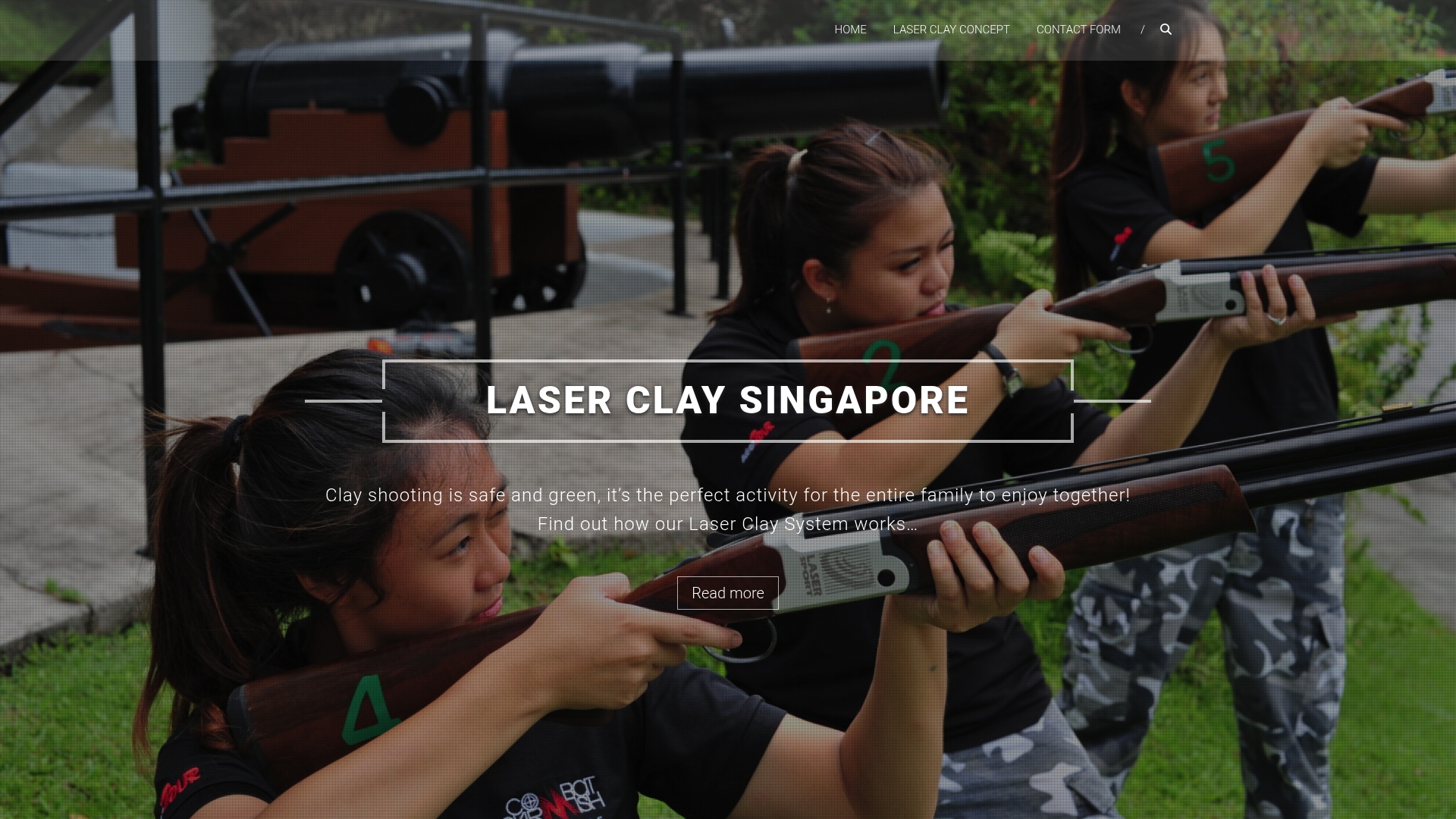
Laserclay operates in Singapore and caters to groups of all sizes, from small corporate teams to large competitive events. Every session uses electronic scoring for accurate, instant results, and the format can be adapted to Five Stand, pairs, or custom league structures depending on your group’s needs. Visit the Laserclay how-to-play page to explore packages, book a session, or get in touch with the team about setting up a structured league programme.
FAQ
What is a laser clay shooting league?
A laser clay shooting league is a structured competition where participants use laser-equipped guns to hit electronically registered clay targets across multiple rounds, with scoring, classification, and rules modelled on traditional clay shooting formats.
How are shooters classified in competitive laser clay leagues?
Shooters are classified by hit percentage into bands ranging from Masters (82.12% and above) down to E class (below 57.11%), following frameworks like the CNSCA classification system. This ensures competitors face others at a comparable skill level.
What is the difference between report pairs and true pairs?
In report pairs, the second target launches when the shooter fires at the first. In true pairs, both targets launch simultaneously and the shooter chooses which to engage first. Each format carries distinct scoring rules that must be defined before competition begins.
How does electronic scoring improve laser clay competitions?
Electronic scoring consoles automate target launch and result recording, removing manual errors and providing instant standings after each round. This accuracy is one of the core advantages laser clay systems hold over traditional mechanical trap setups.
Do laser clay leagues require safety certification?
Formal safety briefings are standard practice in well-run laser clay leagues, even without live ammunition. Organisations like USA Clay Target League mandate safety certification before participation, and this model applies equally to laser formats to protect all participants.