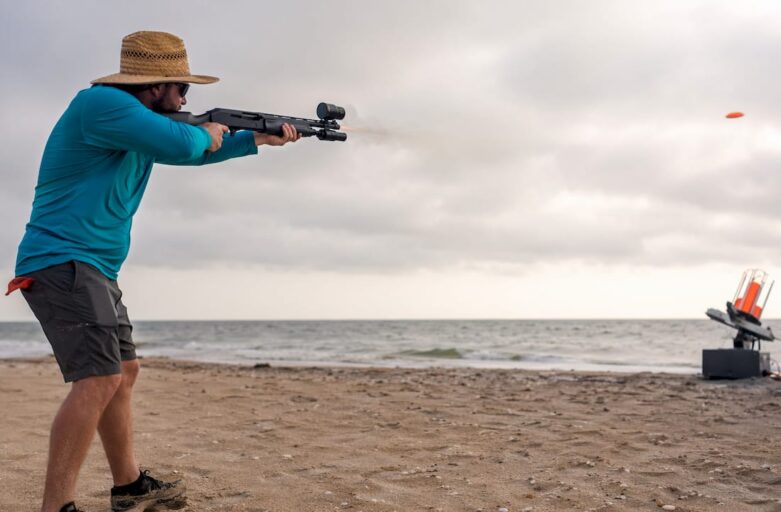
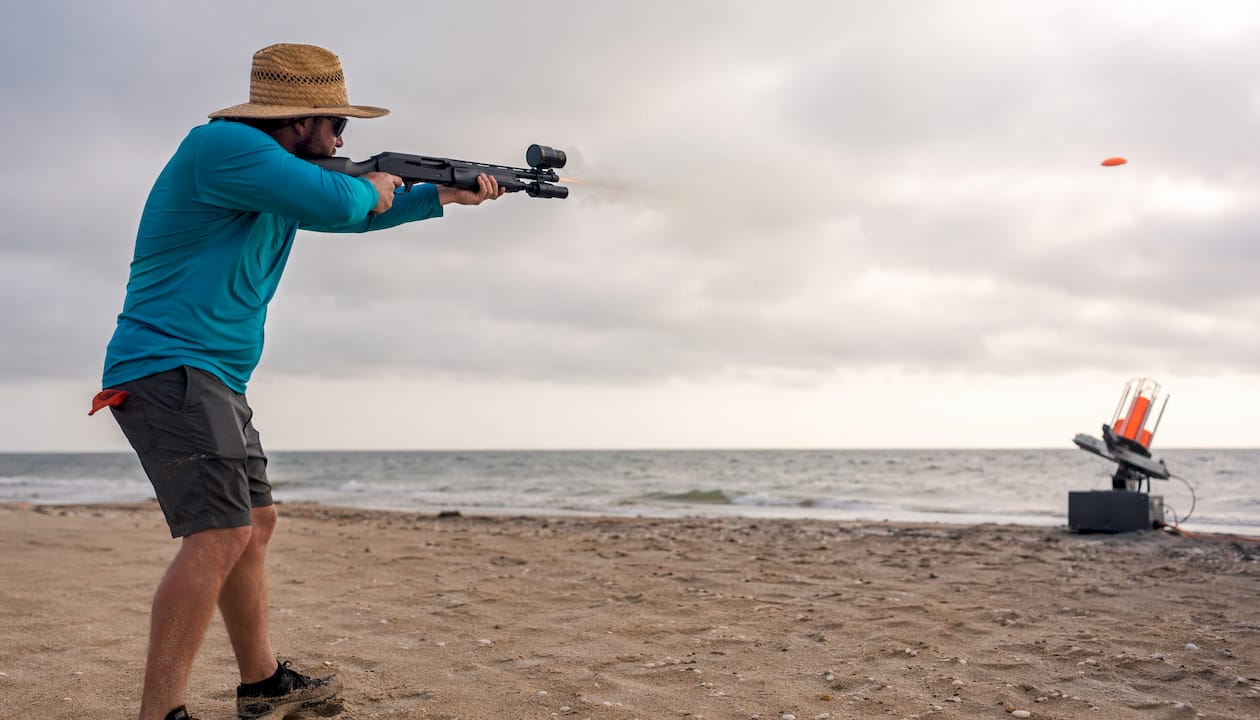
Laser clay shooting is defined as a sport that uses modified shotguns firing harmless infrared beams at sensor-equipped clay targets, making protective gear unnecessary. Unlike traditional clay pigeon shooting, there is no live ammunition, no gunpowder, and no recoil involved. That single fact changes everything about who can participate and how safely they can do so. Laserclay has built its entire experience around this principle, offering a realistic shooting activity that anyone can join without ear defenders, eye shields, or specialist clothing. Understanding how laser clay works without protective gear starts with the technology at its core.
What technology enables laser clay to work without protective gear?
Laser clay shooting replaces every hazardous element of traditional shooting with an electronic equivalent. The modified shotguns fire infrared beams rather than live rounds, which means there is no projectile leaving the barrel at any point. No projectile means no risk of impact injury, which is the primary reason eye protection becomes irrelevant.
The clay targets themselves carry the detection technology. Reflective tape on each clay allows infrared sensors to register a hit electronically the moment the beam makes contact. The result is instant feedback delivered to a digital scoring system, with no physical damage to the target or the surrounding environment. Participants see their score update in real time, which adds a competitive edge without any of the hazards.
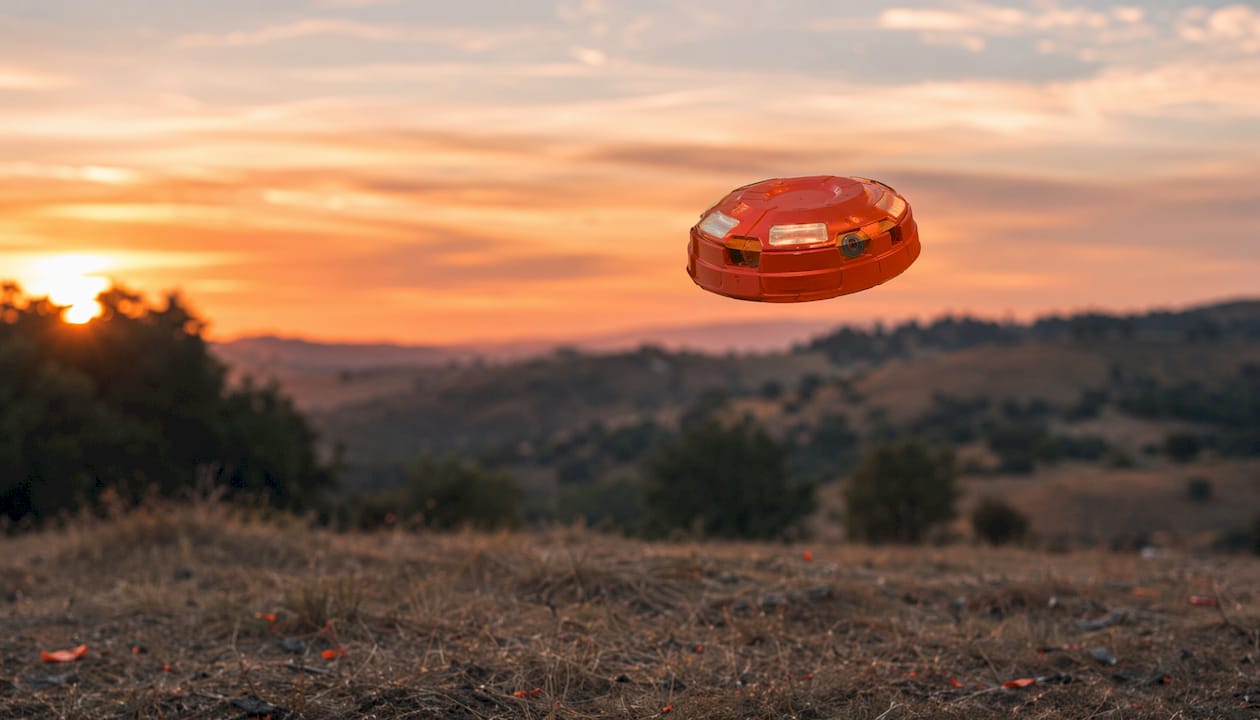
Noise is the other major factor. Traditional clay shooting produces firearm-level sound that demands hearing protection by law in most jurisdictions. Laser clay shooting produces only moderate electronic sound effects played at manageable levels. Ear protection is not required because the activity never generates the decibel levels that damage hearing. That distinction alone opens the sport to children, older participants, and anyone with sensory sensitivities.
Pro Tip: Ask your event host whether the scoring system displays individual or team totals. Knowing this before you start lets groups organise themselves into competitive formats from the first clay.
The absence of recoil is equally significant. Recoil in traditional shooting causes physical strain on the shoulder and wrist, which is why correct stance and protective padding matter in that context. With laser clay, the gun is inert in terms of physical force. Participants are advised to stand upright and hold the shotgun with two hands, not for safety from recoil, but to maintain the authentic feel of the sport and improve accuracy. The posture guidance is about experience quality, not injury prevention.
- Infrared beams replace live rounds entirely, removing projectile risk
- Electronic sensors on clays register hits without physical impact
- Sound effects replace firearm noise, eliminating hearing risk
- No recoil means no shoulder or wrist strain during sessions
- Real-time digital scoring keeps up to five shooters competing simultaneously
How does laser clay compare with traditional shooting on safety?
The safety gap between laser clay and traditional clay pigeon shooting is substantial. Traditional shooting requires ear defenders rated to reduce noise by at least 25 decibels, ballistic-rated eye protection, and strict safety zones to prevent stray shot injuries. Laser clay shooting requires none of these because the hazards that make them necessary do not exist.
| Safety factor | Traditional clay shooting | Laser clay shooting |
|---|---|---|
| Ammunition | Live shotgun shells | None |
| Recoil | Significant, requires stance training | None |
| Noise level | Firearm-level, hearing protection required | Moderate sound effects, no protection needed |
| Eye protection | Ballistic-rated glasses required | Not required |
| Age restrictions | Typically 12 and above with supervision | Suitable for all ages |
| Environmental impact | Lead shot and clay debris | No physical debris |
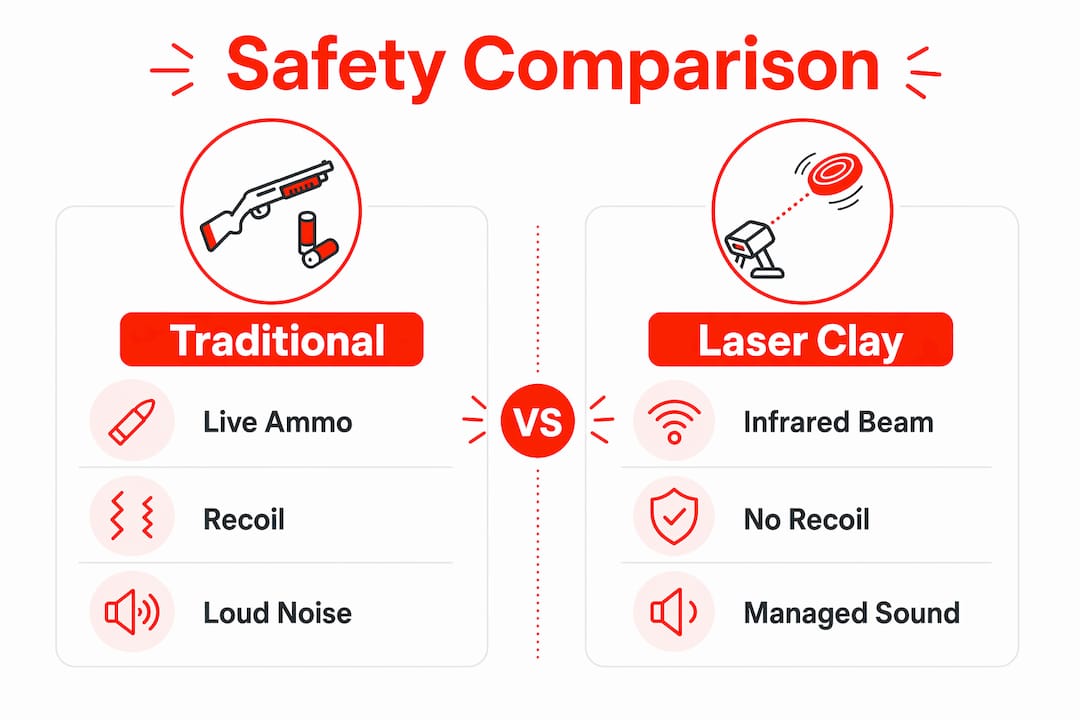
The environmental contrast is worth noting separately. Traditional clay shooting deposits lead shot and clay fragments across the shooting ground. Lead is a toxic metal that accumulates in soil and water over time, which is why traditional clay shooting faces increasing regulation in many countries. Laser clay produces no physical waste at all. That removes both the environmental liability and the regulatory complexity that traditional venues must manage.
The user experience also differs in ways that matter to first-timers. Traditional shooting carries a genuine learning curve around safe gun handling, ammunition loading, and recoil management. Laser clay compresses that curve dramatically. Because the equipment is inert and the risks are minimal, instructors can focus on technique and enjoyment rather than safety drills. Participants reach the fun part of the activity far faster.
What should participants wear and prepare when no protective gear is needed?
The absence of mandatory protective gear does not mean participants should arrive unprepared. The preparation simply shifts from safety equipment to personal comfort. Weather-appropriate clothing and sturdy closed-toe shoes are the two non-negotiable items for any outdoor laser clay session.
Outdoor venues expose participants to sun, wind, and uneven ground. A hat and sunglasses serve a comfort function rather than a safety one, but they genuinely improve the experience on bright days. Sunscreen is worth applying before arrival if the session runs longer than 30 minutes in direct sunlight. Layers are sensible for early morning or evening events when temperatures can shift.
Pro Tip: Wear clothing you can move freely in. Tracking a moving clay target requires you to pivot and swing the shotgun smoothly. Restrictive jackets or stiff collars will slow your reaction time noticeably.
Professional instruction is the most important preparation element that participants often overlook. Professional instructors provide a full briefing before any session begins, covering correct gun hold, stance, and target-tracking technique. This briefing replaces the safety induction that traditional shooting demands and focuses instead on helping participants perform well from their first shot.
- Wear layers suited to the weather and time of day
- Choose sturdy, closed-toe footwear for uneven outdoor ground
- Bring a hat and sunglasses for sun comfort, not eye protection
- Apply sunscreen before sessions held in direct sunlight
- Attend the full pre-session briefing given by the host instructor
- Inform the host of any mobility considerations before the session starts
Mobility considerations are worth raising with organisers in advance. Laser clay shooting is accessible for all ages and experience levels, but participants with limited shoulder mobility or balance challenges benefit from knowing the layout of the shooting station beforehand. Good organisers will adjust the station setup to accommodate different physical needs without any reduction in the quality of the experience.
What venue and environmental factors remove the need for protective gear?
The physical setup of a laser clay venue is what makes the no-gear approach work in practice. The technology functions safely only when the space and conditions meet specific requirements, and professional organisers manage these factors before participants arrive.
-
Minimum space dimensions. A safe operating area of approximately 50m by 20m is required for standard trap systems. This separation between the launch point, the shooting station, and the boundary ensures no participant is ever in the path of a launched clay, even though the clay itself carries no explosive charge.
-
Lighting conditions. Infrared sensors perform best in consistent light. Extreme sunlight or unusual lighting conditions can affect how reliably sensors register hits. Organisers account for this by positioning the trap launcher to avoid direct sun interference and by scheduling sessions during optimal daylight hours.
-
Noise management. The absence of firearm noise is not just a safety feature. It means laser clay sessions can run in locations where traditional shooting would be prohibited entirely, including urban parks, hotel grounds, and corporate campuses. That flexibility expands the range of venues available without any compromise on the participant experience.
-
Boundary management. Organisers mark clear boundaries around the shooting zone. Because there are no projectiles, these boundaries exist to manage participant flow and prevent interference with the infrared beam path rather than to protect bystanders from stray shot.
-
Organiser supervision. Organisers manage safety without traditional protective gear by maintaining active supervision throughout the session. The host monitors gun handling, station positioning, and participant behaviour continuously. This human oversight is the primary safety mechanism in a laser clay environment.
Key takeaways
Laser clay shooting eliminates the need for protective gear by replacing every hazardous element of traditional shooting with infrared technology, electronic sensors, and professional supervision.
| Point | Details |
|---|---|
| No protective gear required | Infrared beams, zero recoil, and managed sound levels remove all traditional gear requirements. |
| Technology drives safety | Sensors on clays register hits electronically, with no physical impact or projectile involved. |
| Venue setup matters | A minimum area of 50m by 20m and controlled lighting conditions keep the activity safe. |
| Preparation is about comfort | Weather-appropriate clothing and sturdy footwear are the only participant requirements. |
| Professional instruction replaces safety drills | A full host briefing covers technique and handling, making the session safe and enjoyable from the start. |
Why I think laser clay is the most underrated safe sport available right now
I have watched a lot of people try laser clay shooting for the first time, and the reaction is almost always the same. They expect it to feel like a compromise. They assume that removing the gunpowder and the recoil must remove the excitement too. They are wrong every time.
What surprises first-timers most is how quickly they improve. Without the flinch response that recoil training requires, participants focus entirely on tracking the clay and timing their shot. That focus produces visible improvement within a single session, which is genuinely satisfying in a way that many recreational activities fail to deliver.
The misconception I hear most often is that laser clay is only for people who cannot handle traditional shooting. The opposite is true. The safety and accessibility of laser clay make it the better choice for groups of mixed ability, not a lesser substitute. A corporate team with twelve people of varying fitness levels and zero shooting experience can all compete meaningfully within the same session. That inclusivity is the real achievement of the technology.
My advice to first-timers is simple. Attend the briefing properly, hold the gun with both hands, and trust the host to manage everything else. The activity is genuinely safe without any additional gear. The technology has already done the hard work for you.
— Joshua
Laserclay: safe, gear-free shooting for every occasion
Laserclay brings the full experience of clay pigeon shooting to participants of every age and ability, with no protective gear required and no compromise on the thrill of the sport.
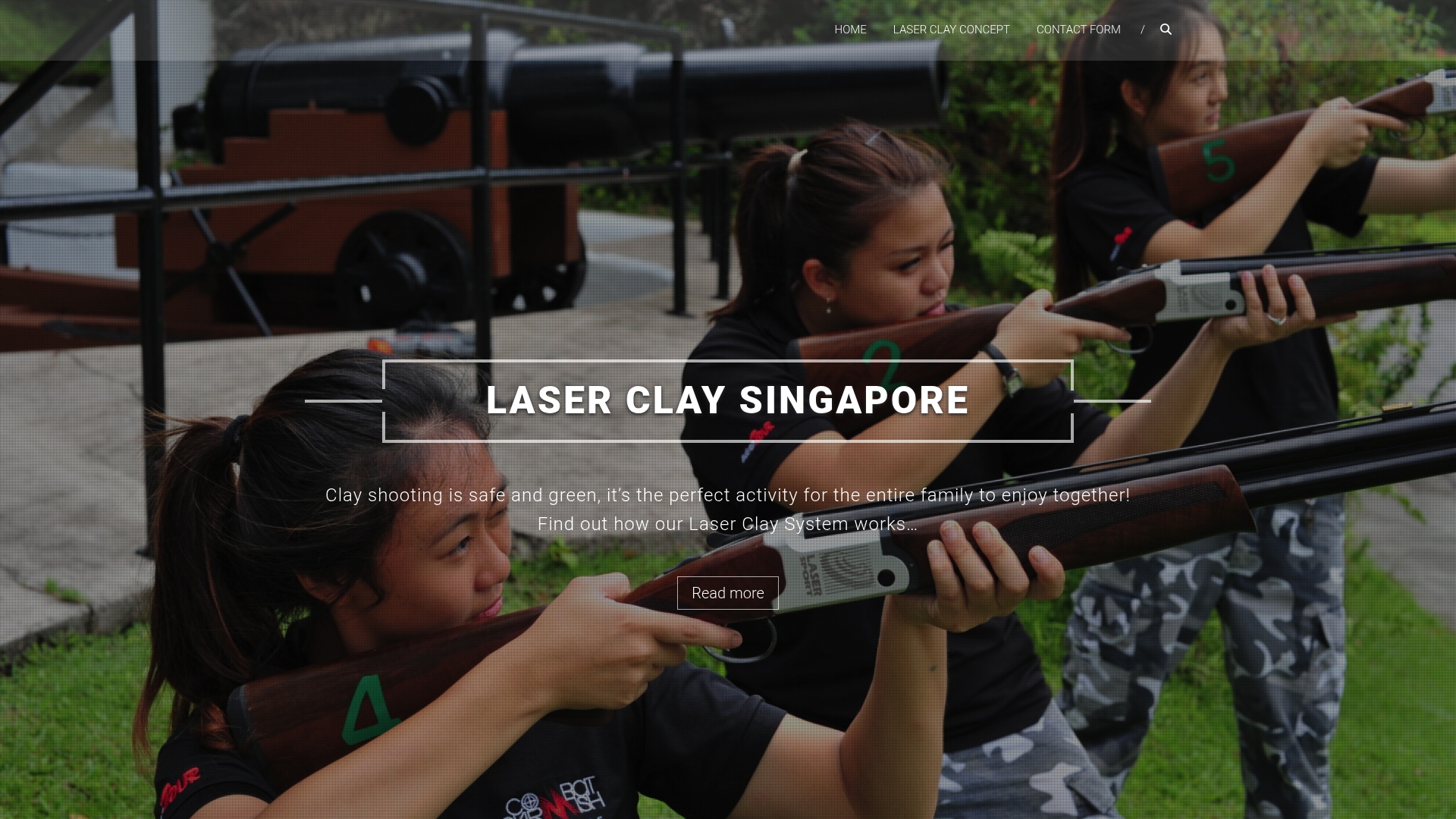
Whether you are planning a corporate team-building day, a birthday celebration, or a weekend activity with family, Laserclay provides expert hosts, full equipment, and a professionally managed session from start to finish. Every event is set up to meet the space and lighting requirements that keep the activity safe and the scoring accurate. You can book a laser clay session and get full details on formats, group sizes, and venue options directly through Laserclay Singapore. If you are new to the activity, the beginner’s guide to getting started covers everything you need to know before your first session.
FAQ
Does laser clay shooting require any protective gear?
Laser clay shooting requires no ear defenders, eye protection, or specialist safety clothing. The activity uses infrared beams rather than live ammunition, which removes all the hazards that make protective gear necessary in traditional shooting.
How does laser clay function without live ammunition?
Modified shotguns emit harmless infrared beams that are detected by sensors on the clay targets. Hits are registered electronically and displayed as real-time scores, with no physical projectile or impact involved at any stage.
Is laser clay shooting safe for children?
Laser clay shooting is suitable for all ages because there is no recoil, no loud firearm noise, and no risk of projectile injury. Professional hosts provide a full briefing and supervise every session to maintain safe gun handling throughout.
What do participants actually need to bring?
Participants need weather-appropriate clothing, sturdy closed-toe footwear, and optionally a hat and sunglasses for sun comfort. No specialist gear, licences, or prior experience are required to take part.
Can lighting conditions affect how the system works?
Extreme sunlight can reduce infrared sensor accuracy. Professional organisers account for this by positioning equipment carefully and scheduling sessions during optimal lighting conditions to maintain reliable hit detection.