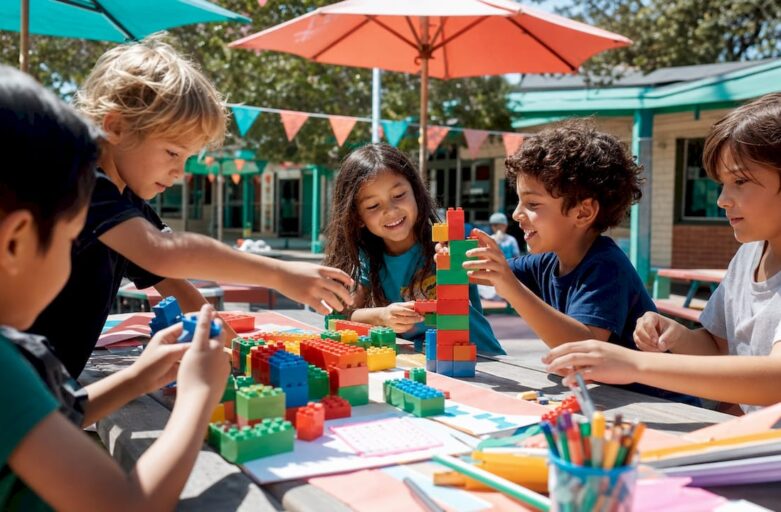
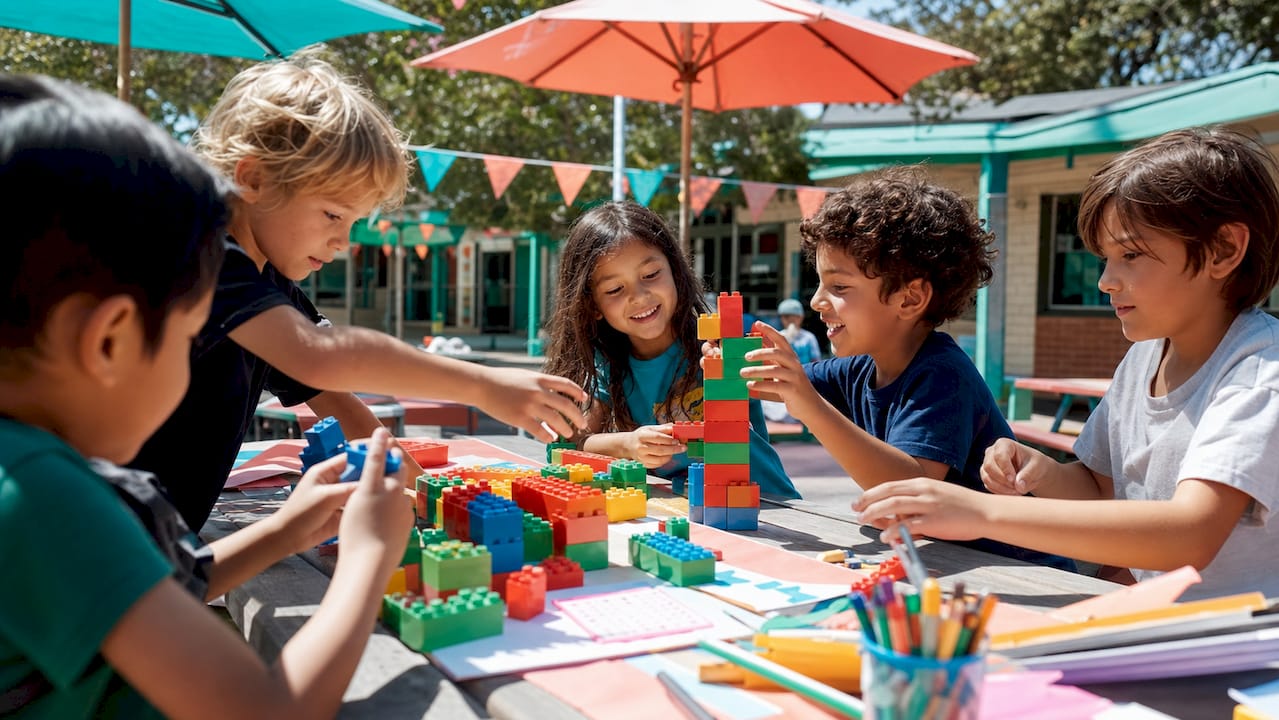
The safest after-school programmes draw from seven core categories: arts and crafts, hands-on STEM, active and gross-motor games, quiet homework and reading time, cooperative group games, low-risk cooking and snack activities, and outdoor or nature exploration. According to CDC out-of-school time guidance, a well-balanced programme mixes physical activity, creative learning and structured downtime rather than defaulting to a single format. Three ideas you can run today:
- Newspaper tower challenge (ages 6–12, 15 minutes): broadsheet newspaper, tape, scissors. Teams build the tallest freestanding tower. Safety rule: blunt-tipped scissors only, one adult per six children watching for paper cuts and ensuring no climbing on furniture.
- Feelings collage (ages 5–10, 20 minutes): old magazines, glue sticks, card. Children cut and paste images that match their mood. Safety rule: verify all magazines are age-appropriate before the session; use washable glue.
- Hula hoop pass (ages 6–14, 10 minutes): one hula hoop per team of six. Players pass the hoop along a linked chain without breaking hands. Safety rule: clear a flat, obstacle-free space of at least 3 metres per team before starting.
The universal safety rule across every activity: an adult must be actively watching, not passively present, with a clear line of sight to every child at all times.
Key takeaways
Safe, engaging after-school programmes balance structured activity, quiet time, and physical play within a predictable daily block, with active adult supervision and documented safety protocols at every stage.
| Point | Details |
|---|---|
| Use the four-block structure | Arrival and snack, homework, activity rotations, and free choice give children a predictable, balanced session. |
| Active supervision is non-negotiable | Staff must scan, move, and engage continuously, not stand passively at the edge of the room. |
| Build in a backup plan | Every activity needs a low-prep indoor alternative ready before the session starts. |
| Consent and communication | Update parental consent forms each term and send a brief weekly update to reduce pick-up queries. |
| Laserclay for special events | For school camps and carnival days, Laserclay provides a fully facilitated, mixed-age, zero-projectile group activity. |
Table of Contents
- What are the best safe after school programme activity ideas by category?
- How do you build a weekly after-school block schedule?
- What does a safety and staff training checklist look like?
- What mistakes do after-school programmes most commonly make?
- Copyable lesson-plan templates for after-school sessions
- What should parents and coordinators ask before enrolment?
- What actually matters when you run safe after-school activities
- Laserclay: a supervised, low-risk activity for school events and camps
- Sources
What are the best safe after school programme activity ideas by category?
Arts and crafts
Arts and crafts are a reliable staple because they scale easily from age 5 to 14 with minimal extra cost. RevTrak’s after-school activity guide highlights low-cost materials and sensory options as particularly effective for mixed-age groups.
Watercolour resist painting (ages 6–12, 20 min): white crayon, watercolour paints, thick paper. Children draw a hidden picture in crayon, then paint over it to reveal the design. Use non-toxic, washable paints; cover tables with newspaper. Younger children may need help pressing firmly with the crayon.
Friendship bracelets (ages 8–14, 25 min): embroidery thread, scissors. Teach a simple knot pattern. Safety note: use child-safe scissors; keep thread lengths under 60 cm to prevent tangling around fingers.
Cardboard box city (ages 5–10, 30 min): cereal boxes, masking tape, non-toxic paint. Children build and decorate a miniature town. Adaptation: pre-cut cardboard for children under 7; older children can cut with supervision.
STEM and hands-on experiments
Hands-on STEM activities build problem-solving skills without requiring expensive kits. The Science Buddies Junkbots lesson plan is a ready-made template using recycled materials that works well in a 45-minute after-school slot.
Baking soda and vinegar volcano (ages 5–12, 15 min): bicarbonate of soda, white vinegar, food colouring, a plastic cup. Place on a tray to contain overflow. Supervision: one adult per eight children; keep vinegar away from eyes and remind children not to lean over the cup.
Paper bridge load test (ages 8–14, 20 min): A4 paper, tape, small coins. Children design a bridge spanning two stacks of books and test how many coins it holds. No sharp tools needed; purely a design challenge.
Beginner coding station (ages 5–8, 20 min): tablets or laptops running ScratchJr. Children animate a character using drag-and-drop blocks. For ages 9 and up, Code offers guided puzzles that fit neatly into a 20-minute station. Supervision: one adult monitors screen content and assists with login.
Active and gross-motor games
Physical activity is a non-negotiable part of a healthy after-school session. The ChildCareEd after-school activities guide recommends dedicating at least 40 minutes of the session to active rotations.
Freeze dance (ages 5–10, 10 min): a Bluetooth speaker and a playlist. When the music stops, children freeze. Clear the floor of bags and chairs first; check for children with hearing difficulties who may need a visual cue (a raised hand) instead of the audio signal.
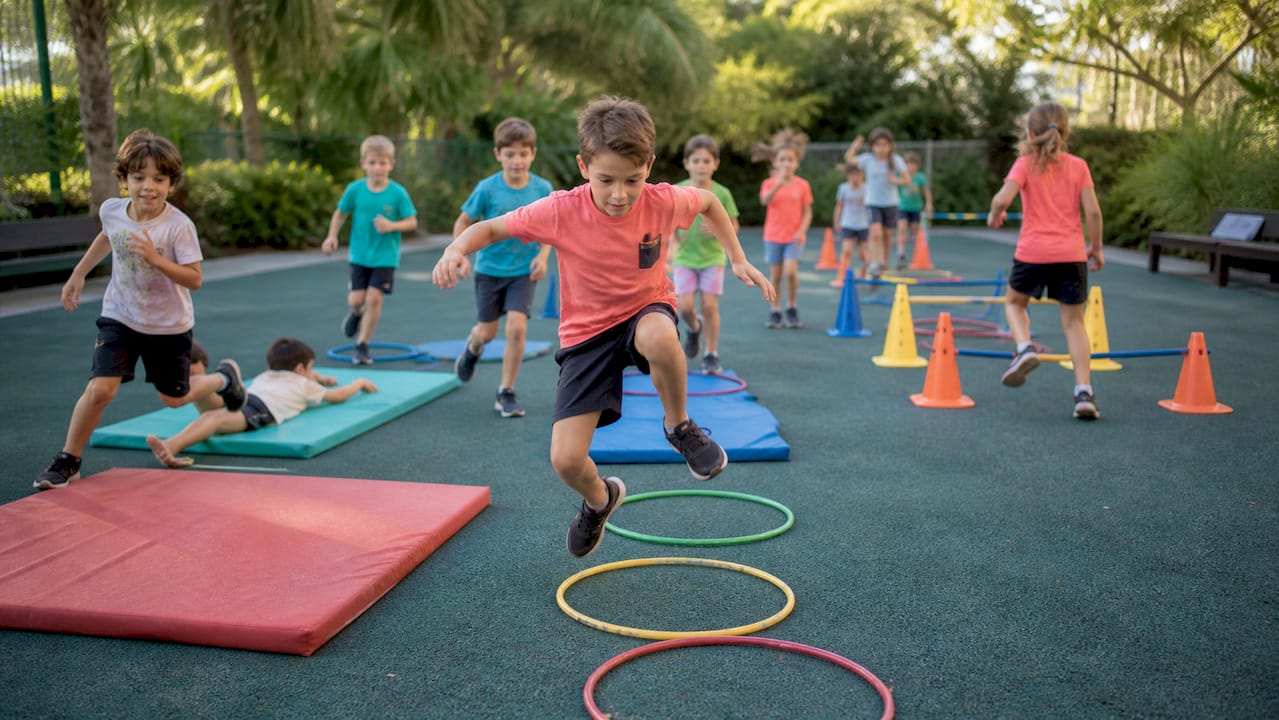
Obstacle course relay (ages 6–14, 20 min): cones, hula hoops, foam mats. Lay out a simple course. Check the surface for wet patches before starting; no jumping from heights above 30 cm.
Parachute games (ages 5–12, 15 min): one large play parachute. Mushroom lifts, wave-making, and colour-call games all work. Keep the group to a maximum of 16 children per parachute; remove shoes to prevent slipping.
Quiet time, homework and reading
Quiet blocks give children who have been in school all day a chance to decompress. SEDL’s afterschool homework toolkits offer structured literacy and homework support strategies that slot directly into a 20–30 minute quiet block.
Pair homework time with a reading corner stocked with books at varied levels. Children who finish homework early can choose a book independently, which avoids the disruptive gap between “done” and the next structured activity.
Cooperative group games
Cooperative games reduce competition-related conflict and teach children to communicate and problem-solve together. Purposeful play, where a simple learning outcome is embedded into the game (for example, counting steps for a maths link, or sequencing story cards), increases educational value without feeling like a lesson.
Human knot (ages 8–14, 10 min): no materials. A group of 8–10 children stands in a circle, grabs hands across the circle, then untangles without letting go. Check that no child has shoulder or wrist injuries before starting.
Mathematical games for children using board games or card sets work well as a cooperative station for ages 6–12, particularly for numeracy reinforcement during the structured activity block.
Low-risk cooking and snack activities
Cooking activities teach life skills and are genuinely exciting for children, but they require the most careful safety planning. Keep heat sources out of the equation for under-10s.
Fruit skewers (ages 5–12, 15 min): pre-washed fruit, blunt wooden skewers, paper plates. Children assemble their own skewers. Check allergy registers before selecting fruit; avoid whole grapes for children under 5 (cut them in half). No knives at this station.
Homemade trail mix (ages 6–14, 10 min): oats, dried fruit, seeds, chocolate chips. Children measure and mix their own portions. Nut-free ingredients only if any child has a nut allergy; display the ingredient list visibly for parents at pick-up.
Outdoor and nature activities
Outdoor sessions need a weather contingency plan. If rain or extreme heat makes the planned activity unsafe, have a direct indoor swap ready before the session starts. Outdoor play equipment and its benefits for students are well-documented, from improved concentration to stronger gross-motor development.
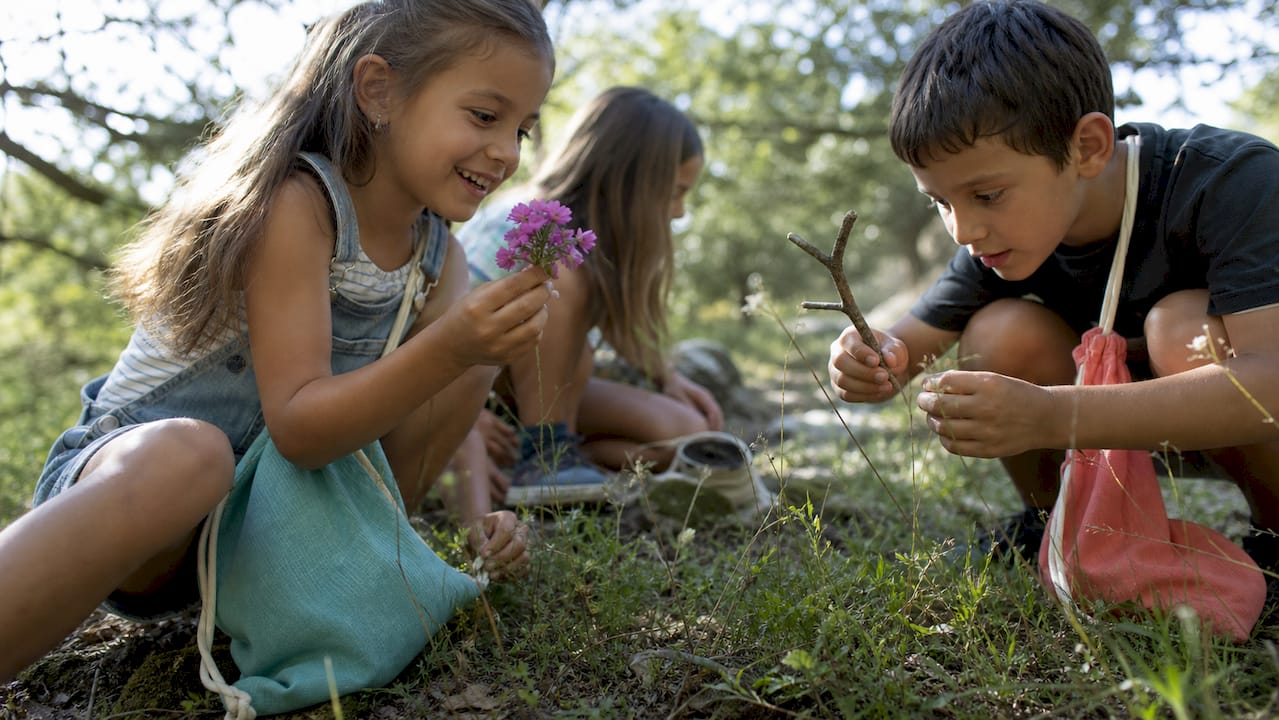
Nature scavenger hunt (ages 5–12, 20 min): printed checklist, pencils. Children find items from a list (a smooth stone, a yellow leaf, something with five sides). Set clear boundaries before starting; buddy-pair younger children with older ones.
Chalk maths hopscotch (ages 5–10, 15 min): chalk, a flat paved area. Draw a number grid instead of a standard hopscotch layout; children solve simple sums before hopping. Wet-weather swap: the same game on a large whiteboard indoors.
How do you build a weekly after-school block schedule?
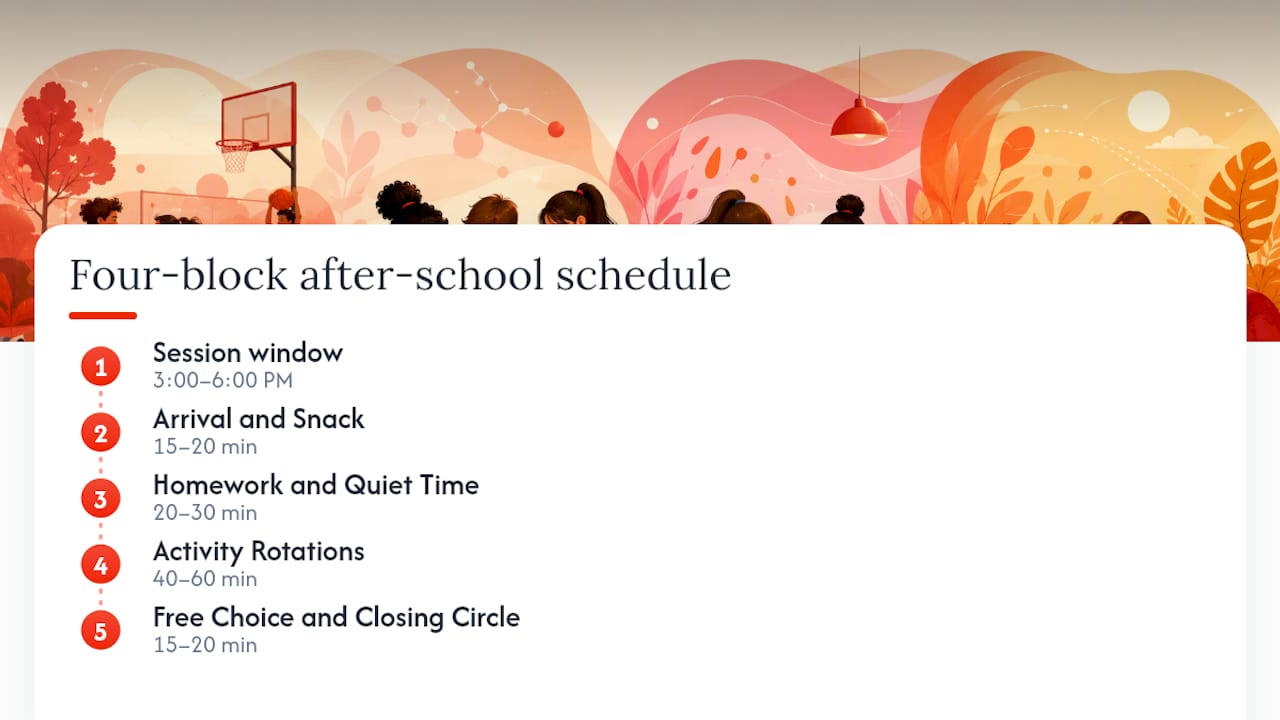
A predictable daily structure reduces behavioural issues and helps children settle quickly. ChildCareEd recommends a four-block daily structure: Arrival and Snack (15–20 min), Homework and Quiet Time (20–30 min), Activity Rotations (40–60 min), and Free Choice and Closing Circle (15–20 min). That framework fits a standard 3:00–6:00 PM session without feeling rushed.
Younger children (ages 5–7) need shorter activity blocks of around 15–20 minutes before attention drifts. Older children (ages 10–14) can sustain 30–40 minute blocks comfortably. Use a visual schedule posted at child eye-level and an auditory signal (a bell or a specific song) to mark transitions. Structured, predictable transitions cut the time lost between activities and reduce the low-level disruption that tends to spike during unstructured gaps.
Sample weekly block schedule (3:00–6:00 PM)
| Time | Monday | Tuesday | Wednesday | Thursday | Friday |
|---|---|---|---|---|---|
| 3:00–3:20 PM | Arrival, snack, free chat | Arrival, snack, free chat | Arrival, snack, free chat | Arrival, snack, free chat | Arrival, snack, free chat |
| 3:20–3:45 PM | Homework / quiet reading | Homework / quiet reading | Homework / quiet reading | Homework / quiet reading | Homework / quiet reading |
| 3:50–4:40 PM | STEM station: paper bridge | Arts & crafts: watercolour resist | Active: obstacle course relay | Cooperative: human knot + board games | Outdoor: nature scavenger hunt |
| 4:50–5:05 PM | Cooking: fruit skewers | Coding: ScratchJr | Parachute games | Low-risk cooking: trail mix | Freeze dance |
| 5:10–6:00 PM | Free choice + closing circle | Free choice + closing circle | Free choice + closing circle | Free choice + closing circle | Free choice + closing circle |
The closing circle is worth protecting. Five minutes of group reflection (“What did you make today? What was tricky?”) builds a sense of community and gives staff a natural moment to spot any child who seems upset before parents arrive.
What does a safety and staff training checklist look like?
Daily pre-session safety checks
Run through these before children arrive:
- First-aid kit stocked and accessible (plasters, antiseptic wipes, disposable gloves, emergency contact list).
- Allergy register reviewed; any food-based activity cross-checked against it.
- All materials checked: non-toxic paints confirmed, scissors are blunt-tipped for under-10s, no small parts for children under 5.
- Outdoor space inspected for hazards (broken glass, wet surfaces, wasp nests).
- Access control confirmed: entry and exit points are staffed or locked; sign-in and sign-out sheets are ready.
- Medication plans for any child with a known condition are on file and the relevant staff member knows the protocol.
Supervision guidance
Supervision ratios vary by jurisdiction. Check your local childcare authority or education department for the legally required ratio in your area before setting staffing levels. As a general planning benchmark, many programmes operate at one adult per eight school-age children for indoor activities and one per six for outdoor or higher-energy sessions, but local regulations take precedence. The U.S. Department of Education’s 21st Century Community Learning Centers programme sets quality standards that include staffing and supervision expectations for funded programmes.
Pro Tip: Active supervision means scanning the room continuously, moving between groups, and prompting positive interactions — not standing at the edge of the space. A staff member who is physically present but focused on their phone is not supervising. Build a rotation so no single staff member is the sole watcher for more than 20 minutes at a stretch.
Staff training and compliance prompts
- Background checks completed and documented for every staff member and regular volunteer before their first session.
- Emergency drill (fire evacuation, lockdown, missing child protocol) rehearsed at least once per term and logged with date and staff names.
- Written training log maintained per staff member: first-aid certification, food-safety training, safeguarding/child protection course, and any specialist training (e.g. allergy management).
- Incident report template on file; all staff know where it is and how to complete it within 24 hours of any incident.
- Behaviour management approach agreed and documented so all staff respond consistently.
The Drexel University after-school curriculum guide recommends that staff training extend beyond safety compliance to include lesson-planning skills, so that activities are purposeful rather than just time-filling.
What mistakes do after-school programmes most commonly make?
Most operational problems in after-school settings are predictable and fixable. Here are the ones that cause the most disruption:
- Activities that run too long. Children disengage after 20–30 minutes in most age groups. Split a 60-minute block into two shorter rotations rather than one extended task. If a group is visibly done, move on.
- Poor transitions. Moving 20 children from one activity to the next without a clear signal creates a five-minute chaos window. Use a consistent auditory cue and a posted visual schedule so children know what comes next.
- No backup supplies or plan B. Glue guns break, tablets run out of charge, rain cancels the outdoor session. Every activity plan needs a low-prep indoor alternative that requires nothing more than paper and pencils.
- One-size-fits-all tasks. A worksheet that bores a 12-year-old and overwhelms a 6-year-old serves neither. Build in at least two difficulty levels for any structured activity, and brief staff on which version to offer whom.
- Weak parent communication. Parents who do not know what their child did, ate, or experienced during the session cannot reinforce it at home. A brief daily note (paper or digital) and a clear pick-up protocol prevent most parent-staff friction.
- Unclear pick-up protocols. A child released to an unauthorised adult is a safeguarding failure, not just an administrative slip. Every child’s authorised collection list must be current, and staff must check ID for anyone unfamiliar.
Red flags that warrant immediate review: three or more incidents in a single week, a child who consistently refuses to participate, or any parent complaint about a pick-up or communication failure. These are not minor blips; they signal a systemic gap.
Copyable lesson-plan templates for after-school sessions
Template 1: STEM junkbot build
Learning objective: Children design and build a simple moving model from recycled materials, practising basic engineering thinking.
| Element | Detail |
|---|---|
| Age range | 8–14 |
| Duration | 45 minutes |
| Materials | Cardboard tubes, bottle caps, rubber bands, tape, pipe cleaners, recycled packaging |
| Supervision level | 1 adult per 8 children |
| Risk mitigations | No hot glue guns; use masking tape only. Check for sharp edges on packaging before distributing. |
Step-by-step:
- (5 min) Show a completed example. Ask: “What makes something move?”
- (5 min) Each child or pair selects materials from a central table. Limit to 10 items per person to encourage creative constraint.
- (25 min) Build phase. Staff circulate, ask questions (“Why did you choose that shape?”), and redirect unsafe material use.
- (5 min) Gallery walk: each builder places their model on the table; the group does a silent tour.
- (5 min) Closing question: “What would you change if you had five more minutes?”
Differentiation: Younger children (ages 6–7) work with a pre-sorted kit of five items. Older children (ages 12–14) add a constraint: the model must travel at least 10 cm under its own power.
Behaviour cue: If a child becomes frustrated and pushes materials away, offer a quiet role shift: “Can you be the materials manager and hand out supplies?” This keeps them engaged without forcing the build.
This template draws on the hands-on approach described in the Science Buddies Junkbots lesson plan.
Template 2: Feelings collage (arts and crafts)
Learning objective: Children identify and express emotions through visual art, building emotional literacy.
Step-by-step:
- (3 min) Brief discussion: “What does happy look like? What does calm look like?”
- (15 min) Children browse magazines and cut out images, colours, or words that match how they feel today. No wrong answers.
- (5 min) Children share one image from their collage with a partner.
- (2 min) Staff collect scissors; children write or dictate one sentence about their collage on a sticky note.
Differentiation: Non-readers can draw their own images instead of cutting from magazines. Children who find scissors difficult can tear images by hand.
Behaviour cue: If two children argue over the same magazine, introduce a “swap in two minutes” rule and set a visible timer. This teaches turn-taking without staff arbitrating the dispute.
Template 3: Cooperative outdoor game — cone tag
Learning objective: Children practise spatial awareness, communication, and fair play in a fast-moving group game.
Step-by-step:
- (3 min) Explain rules: cones are placed upright or knocked flat. One team knocks cones flat; the other stands them up. Both teams move simultaneously.
- (12 min) Play two rounds of 5 minutes each with a 2-minute rest between.
- (5 min) Debrief: “What strategy did your team use? Did it change between rounds?”
Differentiation: Children with mobility differences can take a “coach” role, directing teammates from a fixed position. Older children can add a rule that each player must tag a cone before tagging the same cone again.
Behaviour cue: If a child disputes a call, use a “rock, paper, scissors” resolution for minor disagreements rather than staff arbitration. It is fast, fair, and children accept the outcome.
What should parents and coordinators ask before enrolment?
Questions for parents to ask a programme
- What is the adult-to-child supervision ratio, and does it meet local childcare regulations?
- How are incidents and injuries reported, and how quickly will I be contacted?
- What qualifications do staff hold (first aid, safeguarding, food safety)?
- How is my child’s medication stored and administered if needed?
- Who is authorised to collect my child, and what ID is required from an unfamiliar adult?
- How do you handle food allergies, and can I see the allergy register process?
Red flags for coordinators to watch in their own programme
- A staff member who cannot name the emergency evacuation route.
- An allergy register that has not been updated since the start of term.
- Activities that regularly overrun, leaving no transition time.
- Children who are consistently left unsupervised during changeover periods.
- No written record of incidents from the past month.
Consent and communication protocols
Every outing, photograph, or food activity involving children requires documented parental consent. Keep a signed consent form on file for each child that covers: photography and social media use, off-site trips (with destination and transport details), and food participation (including allergy declaration). Update these at the start of each new term, not just at initial enrolment.
A simple weekly update, whether a printed sheet or a brief message through a parent communication app, keeps families informed and reduces the volume of individual queries at pick-up. The Drexel University curriculum guide notes that parent engagement is one of the strongest predictors of a programme’s long-term quality and retention.
What actually matters when you run safe after-school activities
Most after-school safety advice focuses on checklists. Checklists matter, but they do not run sessions. What actually determines whether a programme feels safe and engaging is the quality of the adult in the room: whether they are scanning, moving, noticing, and responding rather than waiting for something to go wrong.
The other thing that gets underestimated is transition design. The riskiest moments in any session are not the activities themselves but the two minutes between them, when children are neither occupied nor supervised with any real intent. A clean-up song, a posted visual schedule, and a clear signal for “move to the next station” cost nothing and prevent most of the low-level incidents that accumulate into a difficult afternoon.
For coordinators launching a new rotation, the most useful first step is a dry run with staff before children arrive. Walk through the activity, identify where the pinch points are (who hands out scissors, where the first-aid kit is relative to the cooking station, which child will need the adapted version), and brief every staff member on their specific role. A 15-minute rehearsal prevents 45 minutes of reactive problem-solving during the actual session.
Laserclay: a supervised, low-risk activity for school events and camps
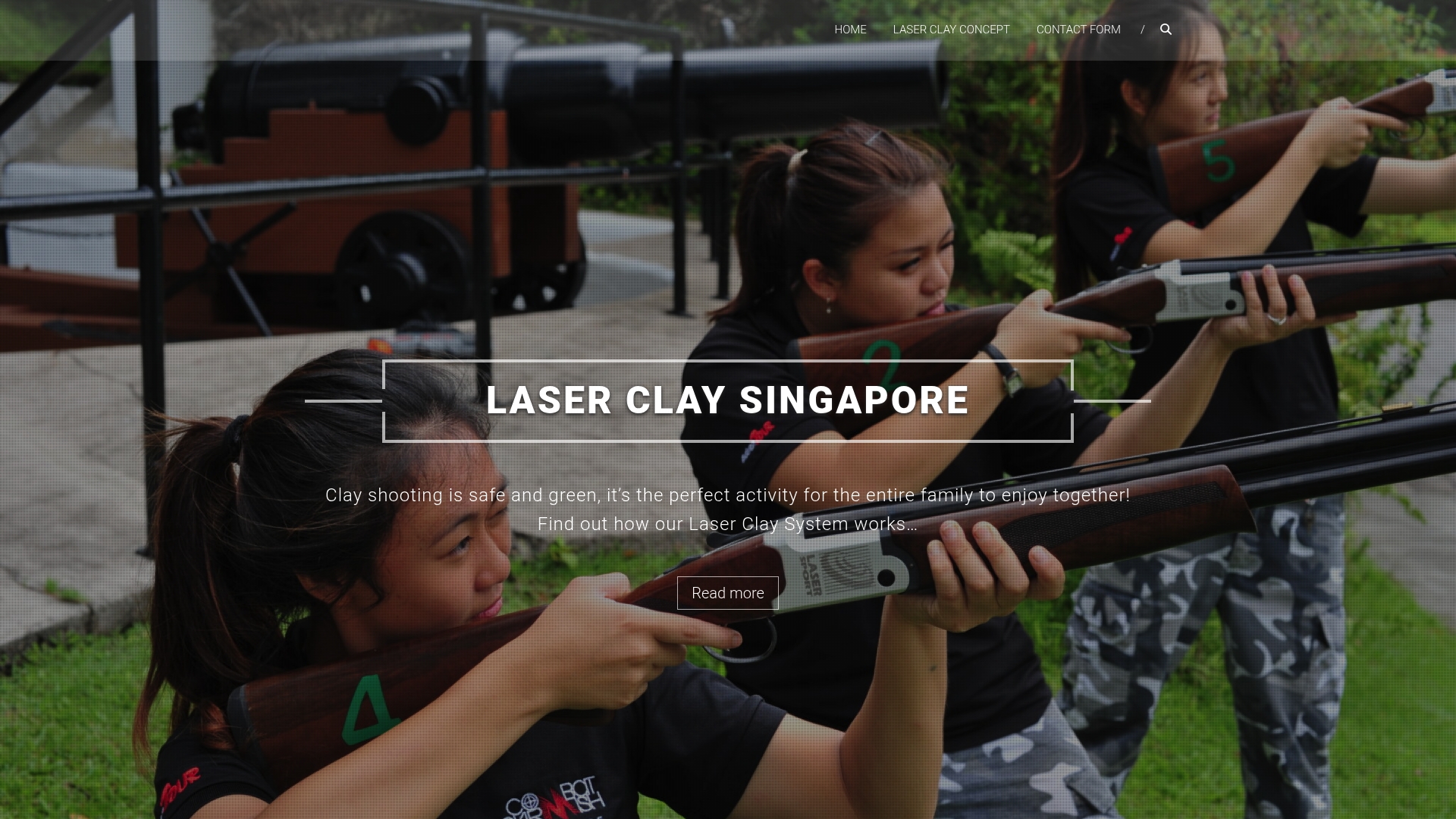
When you need a high-energy group activity that works for mixed ages and requires no specialist skill, Laserclay offers something genuinely different from the usual sports-day options. It uses sound-simulated, deactivated shotguns and eco-friendly reusable laser targets, so there is no ammunition, no physical contact, and no risk of injury from projectiles. The format works well for school camps, end-of-term events, and carnival days alike.
Key reasons it works for school groups:
- Fully facilitated: Laserclay brings staff, equipment, and setup, so your team does not carry the supervision load alone.
- Mixed-age friendly: the scoring system and game formats adjust so a Year 2 child and a Year 8 student can compete in the same session without one group dominating.
- Indoor or outdoor: the system sets up in most venues, which removes the weather-contingency problem entirely.
- No lead, no noise risk, no environmental impact: the benefits of laser games in school programmes include a clean safety profile that satisfies both parent and school administrator concerns.
For school camps and carnival days, the event rentals and camp packages page covers group sizes, logistics, and booking. If you want to understand how a session runs before committing, the how to play laser clay page walks through the format in plain terms.
Sources
These resources are worth bookmarking for programme planning, safety compliance, and curriculum development:
CDC — Out-of-school time resources
Best used for: physical activity guidelines, nutrition recommendations, and basic safety practices for after-school settings. The CDC’s framework is the clearest starting point for coordinators building a health-focused programme.
U.S. Department of Education — 21st Century Community Learning Centers
Best used for: programme quality standards, funding guidance, and understanding what a well-designed after-school provision looks like at a national level. Relevant for coordinators seeking grant funding or benchmarking their programme against recognised standards.
Drexel University — After-school lesson plans and curriculum
Best used for: structuring sessions, building copyable lesson plans, and staff training recommendations. Particularly strong on the practical side of curriculum design for school-age groups.
SEDL — Afterschool toolkits
Best used for: homework support strategies and literacy activities that integrate into a quiet block. The homework toolkit is especially useful for programmes serving children who need structured academic support alongside enrichment.
Science Buddies — Junkbots lesson plan
Best used for: a ready-made, low-cost STEM template that requires only recycled materials and basic supervision. Adaptable for ages 6–14 with minor differentiation.
- CDC — Out‑of‑school time resources
- After School Program Lesson Plans & Curriculum
- U.S. Department of Education — 21st Century Community Learning Centers
- Science Buddies — Junkbots lesson plan
Recommended
- How to plan safe outdoor activities for school groups | Laser Clay Singapore
- School sports day alternative activity ideas: 2026 guide | Laser Clay Singapore
- Child-safe shooting activity: a parent’s guide 2026 | Laser Clay Singapore
- Inclusive outdoor school sports: 10 examples for educators | Laser Clay Singapore