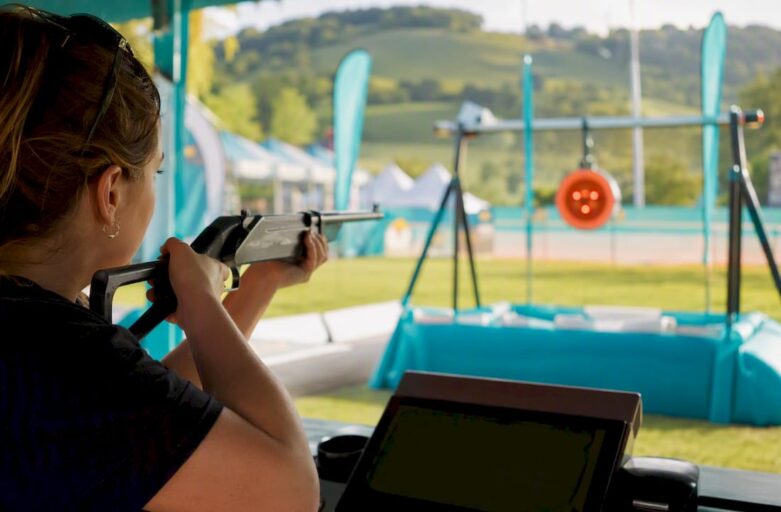
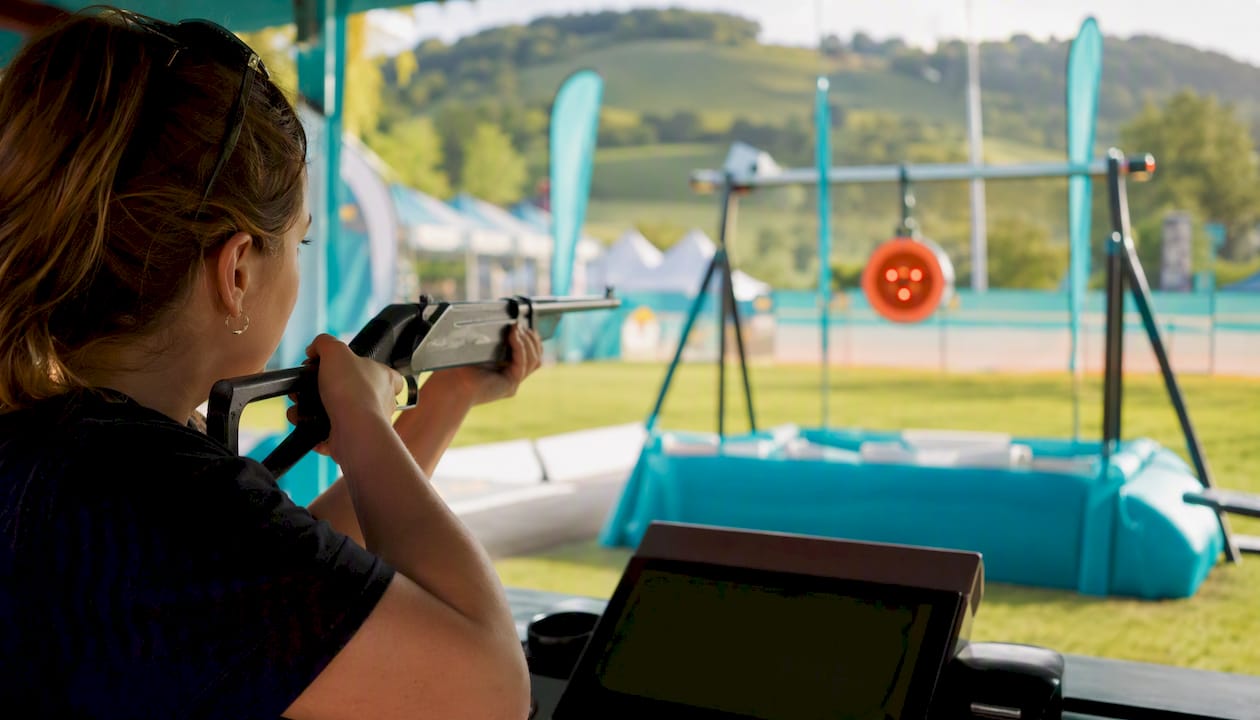
Mobile game shows, portable shooting galleries, pop-up escape rooms and roving performers cover most of what a corporate, family or school event needs, and they cover it without a fixed venue booking. If you organise events in Singapore and want one recommendation, pick something that scales from 10 people to 200, sets up in under an hour, and needs no more than a hard-standing patch of ground or a function room: that rules out most inflatables and points you towards mobile game shows, interactive floor games or a portable shooting activation like laser clay. Get vendor availability and a rough site sketch (dimensions, power points, load-in access) before you commit to a date, because the good operators book out weeks ahead.
Here’s the fast version, category by category:
- Mobile game shows (trivia, Family Feud style formats): best for 20 to 150 guests, needs a 4×4 metre clear space and a power socket, runs 45 to 90 minutes.
- Pop-up escape rooms: best for teams of 4 to 8 running in rotation, footprint around 10×10 feet per unit, sessions of 10 to 15 minutes each.
- Portable shooting/arcade stations (laser clay and similar): best for mixed-age corporate and family groups, works indoors or outdoors, sessions of 5 to 10 minutes per shooter with continuous rotation.
- Interactive floor games: best for high-energy, photogenic activations, needs roughly a 5×5 metre footprint and a 220V supply, runs continuously as a walk-up station.
Key Takeaways
Matching a portable activity’s footprint and throughput to your guest count matters more than picking the flashiest option on the list.
| Point | Details |
|---|---|
| Scope the space first | Sketch your venue’s dimensions and power access before contacting any supplier. |
| Send one brief to all suppliers | Use the same headcount, footprint and budget details so quotes are comparable. |
| Confirm the contract basics | Check public liability cover, cancellation terms and facilitator ratios before signing. |
| Parallelise for large groups | Run multiple stations side by side to avoid queues at a single popular activity. |
| Consider Laser Clay for a turnkey option | Its facilitator-led, eco-friendly format fits indoor and outdoor corporate and family events with a small setup footprint. |
Table of Contents
- Choosing the right portable event activities for your event
- A catalogue of portable activity ideas by type
- How do you choose the right portable activities?
- Logistics: setup, permits, timing and cost cues
- Where to find and hire portable event activities
- Why laser clay shooting fits the portable brief so well
- A planner’s quick note on what actually works
- Laser clay packages and how to book one
- Sources
Choosing the right portable event activities for your event
Every one of these formats solves a different logistics problem, so the real skill is matching the activity type to the physical constraints of your venue and the profile of your guests. This is where the industry term matters more than the loose phrase “portable activities” suggests: what you’re really shopping for is mobile event entertainment, a category that spans everything from a single roving magician to a multi-station carnival rig, unified by one requirement: it has to arrive, set up, run, and leave without a fixed installation.
Cvent’s rundown of event entertainment ideas is a useful sanity check here. Magicians, talent-show formats, interactive game shows and live music dominate the list precisely because they travel well and adapt to almost any room shape. That’s the filter worth applying to anything you’re considering: if it needs a custom-built stage or a permanent power supply, it isn’t really portable, no matter what the brochure calls it.
Space is usually the binding constraint, not budget. A hotel ballroom in the Central Business District and a void deck in a heartland estate impose completely different limits on what you can run, and the best portable formats are the ones that flex between both without a redesign.
A catalogue of portable activity ideas by type
Grouping activities by function, rather than alphabetically, makes it far easier to build a programme that doesn’t repeat the same energy twice in a row. Below is a working menu across six categories, each tagged with the practical details that actually determine whether something fits your event.
Competitive physical activities
- Laser clay shooting: best for corporate team-building and family days; indoor or outdoor; groups of 10 to 100+ rotating through stations; 5 to 10 minutes per shooter; medium cost.
- Bubble soccer: best for high-energy youth and corporate groups; outdoor or large hall; 6 to 10 players per match; 20 to 30 minute matches; medium cost.
- Archery tag: best for team-building and birthday parties; needs a marked outdoor or large indoor lane; 8 to 16 players per round; 15 to 20 minutes; medium cost.
Collaborative physical formats
- Pop-up escape rooms: best for small-team problem-solving; 10×10 foot footprint; 4 to 8 players; 10 to 15 minute sessions; medium to high cost depending on scale.
- Multi-room escape formats: best for large corporate days needing volume; can run several rooms in parallel and move up to 200 participants an hour in large setups; high cost.
- Scavenger hunts: best for team bonding across a whole venue or precinct; no fixed footprint; unlimited group size split into teams; 30 to 60 minutes; low cost.
Hosted quiz and game-show formats
- Mobile game shows: best for whole-crowd engagement at dinners or town halls; 4×4 metre stage area; 20 to 150 guests; 45 to 90 minutes; medium cost.
- Portable trivia rigs: best for smaller teams or breakout sessions; some formats such as Quizy run fully automated with minimal onsite technical setup, packing into a single transport case; 10 to 50 players; 30 to 45 minutes; low to medium cost.
- Karaoke stations: best for informal social mixers; needs a quiet corner and power; open group size; runs all event; low cost.
Performance and roving acts
- Magicians and close-up illusionists: best for cocktail hours and mingling segments; no fixed footprint; roams the room; continuous; medium cost.
- Roving musicians or live bands: best for ambience across the whole event; needs a small stage or floor space near power; unlimited audience; runs the full event; medium to high cost.
- Roaming characters or entertainers: best for family days and school carnivals; no footprint requirement; unlimited audience; continuous; low to medium cost.
Photo and creative stations
- Photo booths: best for branded activations and social sharing; 3×3 metre space and power; walk-up throughput; runs the full event; low to medium cost.
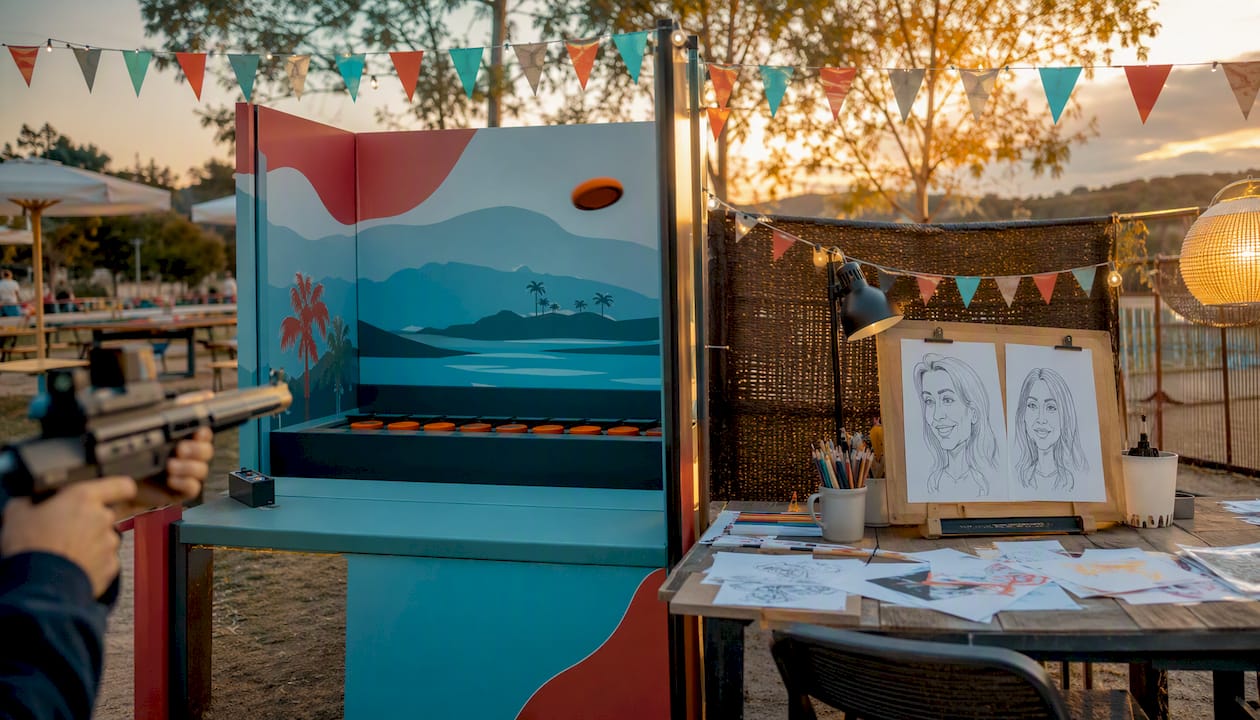
- Caricature or digital art stations: best for slower-paced networking events; small table footprint; one guest at a time; runs the full event; low cost.
Inflatables and funfair classics
- Inflatable obstacle courses: best for family days and school events; needs open outdoor ground and a blower power point; continuous walk-through; low to medium cost.
- Carnival midway games (ring toss, coconut shy): best for casual family fun; small footprint per stall; walk-up throughput; low cost.
| Activity type | Typical footprint | Group size per session | Session length |
|---|---|---|---|
| Laser clay shooting stations | Indoor or outdoor, flexible | 10 to 100+ rotating | 5 to 10 minutes each |
| Pop-up escape room | 10×10 ft per unit | 4 to 8 | 10 to 15 minutes |
| Interactive floor game | 5×5 m, 220V supply | Walk-up | Continuous |
| Mobile game show | 4×4 m stage | 20 to 150 | 45 to 90 minutes |
| Photo booth | 3×3 m | Walk-up | Full event |
Pro Tip: Stagger high-throughput and slow-throughput activities side by side rather than back to back. Pair a fast rotation like laser clay shooting with a slower creative station such as a caricature artist, so guests naturally spread themselves across the room instead of forming one long queue at the popular option.
How do you choose the right portable activities?
Start with the objective, not the activity list. An ice-breaker for people who’ve never met needs something low-skill and social; a high-energy team offsite wants competitive formats with a scoreboard; a family carnival needs variety across age groups; a sponsor activation needs a branded, photographable moment. Working backwards from the goal narrows a list of twenty options down to three fast.
Once you have a shortlist, put the same set of questions to every supplier so you’re comparing like for like:
- What’s the minimum floor space and ceiling height you need, and does it change indoors versus outdoors?
- What’s the power draw, and do you supply your own generator or cabling if there’s no mains access?
- How many facilitators do you bring, and what’s included in that staffing (briefing, safety marshalling, scorekeeping)?
- Do you carry public liability insurance, and can you provide a certificate on request?
- What’s your reset time between rotations or sessions, and does that change with group size?
- Can the activity be branded or themed for our event, and is there an extra cost for that?
A few warning signs should make you pause before signing anything:
- Vague or missing answers about insurance and safety briefings.
- Setup or “logistics” fees that only appear once you ask for a final quote.
- A requirement that every guest downloads an app before they can play; friction like this quietly kills participation in mixed-age groups.
- Lead times the supplier can’t commit to in writing, especially for weekend dates.
For three shortlisted suppliers, score each one out of five on space fit, staffing confidence, cost transparency and customisation flexibility. Anything that scores below three on staffing or cost transparency is worth dropping regardless of how good the activity itself looks.
Logistics: setup, permits, timing and cost cues
Most portable activity suppliers in Singapore need one to three weeks’ lead time for a straightforward booking, longer during peak corporate season around Q4 and school holiday periods. Delivery and setup on the day typically run 30 to 90 minutes depending on the format, and teardown is usually faster than setup, often half the time.
Space and power rules of thumb worth keeping in your back pocket:
- Indoor formats (mobile game shows, photo booths, karaoke) generally need a standard 13A socket and a flat floor; most function rooms handle this without modification.
- Outdoor formats (bubble soccer, archery tag, inflatables) need level, debris-free ground and a weather contingency, since wind and rain can force a last-minute cancellation of anything inflatable.
- Interactive floor games sit at the high end of power demand, needing a dedicated 220V supply and roughly 25 square metres of clear floor.
- Laser clay and similar shooting activations work in both settings with minimal power needs, which is part of why they slot easily into mixed indoor/outdoor programmes.
A quick sizing rule that saves headaches: for high-throughput events, planners who run parallel stations report far fewer queue complaints than those relying on a single big attraction, because guests spread out naturally instead of bottlenecking at one point.
On cost, expect hourly per-station rates for smaller activations and day rates for anything requiring multiple facilitators or specialist kit. Facilitator fees, transport, and a damage deposit are the three line items most often missing from a first quote, so ask for them upfront rather than discovering them on the invoice. Build in a weather backup for anything outdoor, confirm whether your venue requires a permit for amplified sound or open flame (relevant for some magician acts), and run a five-minute safety briefing with your facilitators before doors open, regardless of how experienced the crew is.
Where to find and hire portable event activities
Three channels cover most of the market: dedicated event rental marketplaces, specialist activity providers who own their own kit, and general event production firms who subcontract activities as part of a bigger package. For Singapore specifically, resources like GetOut’s rundown of local team-building formats are a good starting point for price cues and format ideas before you start contacting suppliers directly.
Searching “portable event activities Singapore,” “mobile party activities,” or “outdoor event games rental” alongside your event type (corporate, birthday, school) usually surfaces the specialist providers faster than generic event agency directories.
Once you’ve got two or three candidates, send them the same brief so quotes come back comparable:
- Event type and date (corporate offsite, birthday, school camp, carnival).
- Expected headcount and age range.
- Venue name and available footprint, including ceiling height if indoors.
- Power access (mains sockets, generator needed, or neither).
- Primary objective (ice-breaker, high-energy engagement, family entertainment, sponsor activation).
- Budget range and whether it’s per-hour or per-day.
- Onsite contact name and number for the day.
- Preferred load-in and load-out window.
Before signing, confirm four contract items regardless of which supplier you pick: public liability cover, a clear cancellation policy, the facilitator-to-guest ratio you’re being charged for, and exact set-up and pack-down hours (some suppliers charge these separately from the activity time itself). If throughput matters to your event, ask the supplier directly how many participants per hour their setup can realistically handle. A good operator will have that number ready; a vague answer is a red flag worth chasing down before you book.
Why laser clay shooting fits the portable brief so well
Laser clay shooting solves the safety and environmental objections that traditional clay shooting always raises for event organisers. Laser Clay’s setup replaces live ammunition with laser-based sound-simulated shotguns and reusable electronic targets, which removes the lead-ammunition and live-fire concerns that rule traditional clay shooting out of most corporate and family venues entirely.
That eco-friendly, reusable equipment model does double duty: it lowers the environmental footprint of the activity and removes the biggest liability concern planners raise when shooting-style activities come up in a planning meeting.
The format works because it keeps the same competitive structure that makes real clay shooting appealing, minus the risk:
- Facilitator-led sessions mean no participant needs prior shooting experience.
- Indoor and outdoor package options mean the same activity fits a hotel ballroom, a school hall, or an open field.
- Real-time electronic scoring and leaderboards give the activity a measurable, competitive edge that plain “fun” activities often lack.
- Sessions run in short rotations, so throughput scales from a small birthday group to a large corporate day without redesigning the format.
Real-time scoreboards turn a shooting activation from a novelty into a genuinely competitive event centrepiece, because guests can see exactly how they rank against colleagues or family members while the session is still running, not after the fact.
For event days juggling several activity stations, laser clay’s compact footprint and short per-shooter session time make it easy to run alongside other formats, such as an escape room rotation or a photo booth, without one station holding up the rest of the schedule; this is why proper outdoor event seating tips for comfort and portability are essential for attendee comfort throughout. Planners looking for indoor team activities that need no prior experience tend to land on this format precisely because the entry barrier is so low, and it stays interesting for repeat corporate clients because the scoring format can be tailored round-to-round.
A planner’s quick note on what actually works
The activities I keep seeing succeed aren’t the flashiest ones on paper. They’re the ones with the shortest gap between “guest arrives at the station” and “guest is actively doing something.” Every extra minute of instruction or app download before someone can play is a minute they might just wander off instead, and mixed-age corporate crowds are especially unforgiving of friction like that.
The one tip I’d genuinely push on anyone planning a multi-activity day: stagger your start times by five to ten minutes per station rather than opening everything at once. It sounds like a small thing, but it stops the entire guest list arriving at the most popular station simultaneously, which is how queues form in the first place. Open your quietest, slowest-throughput activity first, let it absorb the early arrivals, then bring the high-demand stations online once the crowd has naturally spread out. It costs nothing and it’s the single easiest fix for the queuing complaints that dominate post-event feedback forms.
Laser clay packages and how to book one
If you’ve been comparing mobile game shows, escape rooms and inflatables against your venue’s floor plan, laser clay is worth putting on the same shortlist: it needs less floor space than most interactive floor games, works indoors or outdoors without a redesign, and comes with a facilitator team rather than a self-serve kit you have to run yourself.
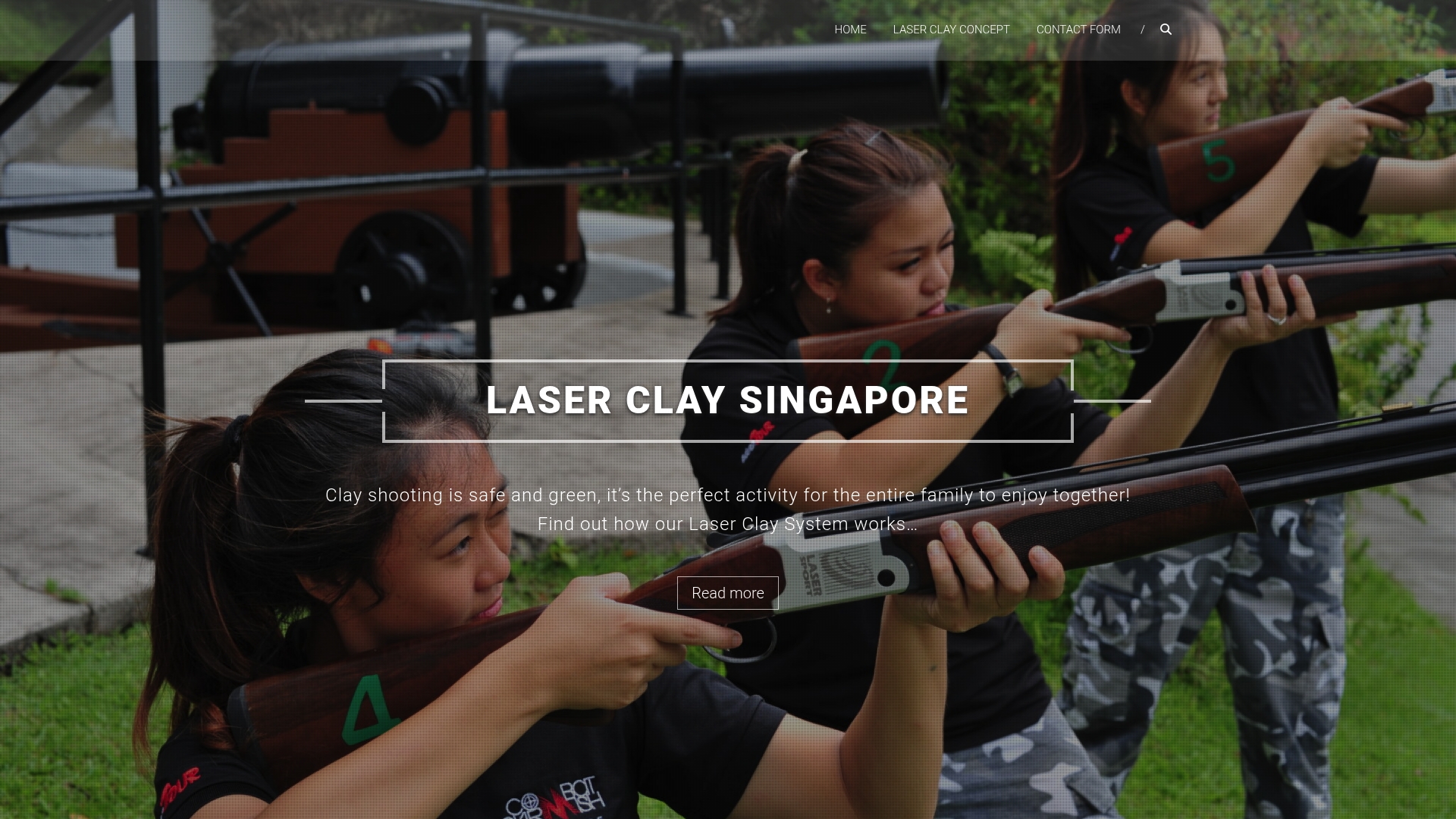
Laser Clay’s packages are built around three common event types. Corporate bookings get team-building formats with facilitator-led rounds, real-time scoreboards and customisable scoring formats that suit anything from a small offsite to a large company day. Birthday and family bookings get a scaled-down version of the same equipment with simpler formats suited to mixed ages. School camps and carnivals get rental packages that include facilitator support and setup, detailed on the event rentals page, so organisers aren’t left running the equipment themselves.
What makes it a strong fit for mixed-age and corporate groups specifically: no shooting experience is required, the safety profile removes the concerns live ammunition raises, and the compact setup footprint means it slots into an existing multi-station programme instead of demanding its own dedicated zone. If you want to see how the mechanics work before you book, the how-to-play guide walks through a typical session. To move forward, get in touch through the event rentals enquiry page with your date, headcount and venue details, and ask about a site visit or site-measure support if you’re unsure whether your space will work.
Sources
- 30 Event Entertainment Ideas to Wow Attendees
- 50 Singapore Team Building Ideas: Outdoor, Indoor & Creative 2026
Recommended
- Indoor team activities that need no experience at all | Laser Clay Singapore
- How to plan safe outdoor activities for school groups | Laser Clay Singapore
- How laser clay fits event formats: a practical guide | Laser Clay Singapore
- How laser clay scales for large events: planner’s guide | Laser Clay Singapore