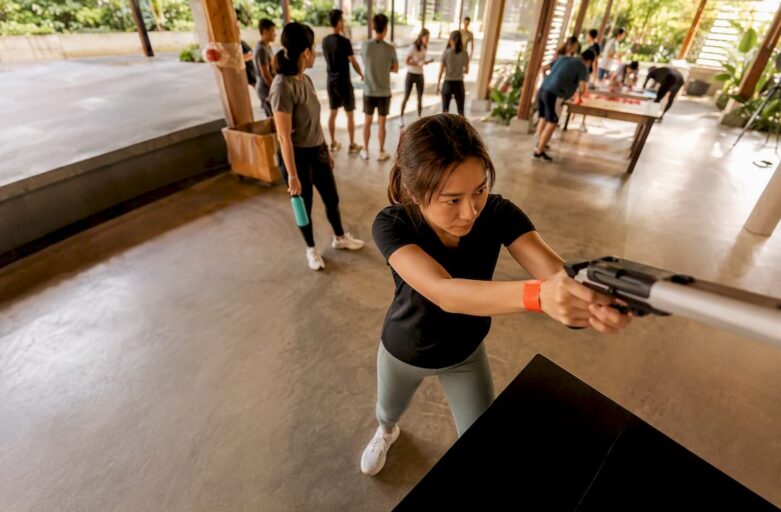
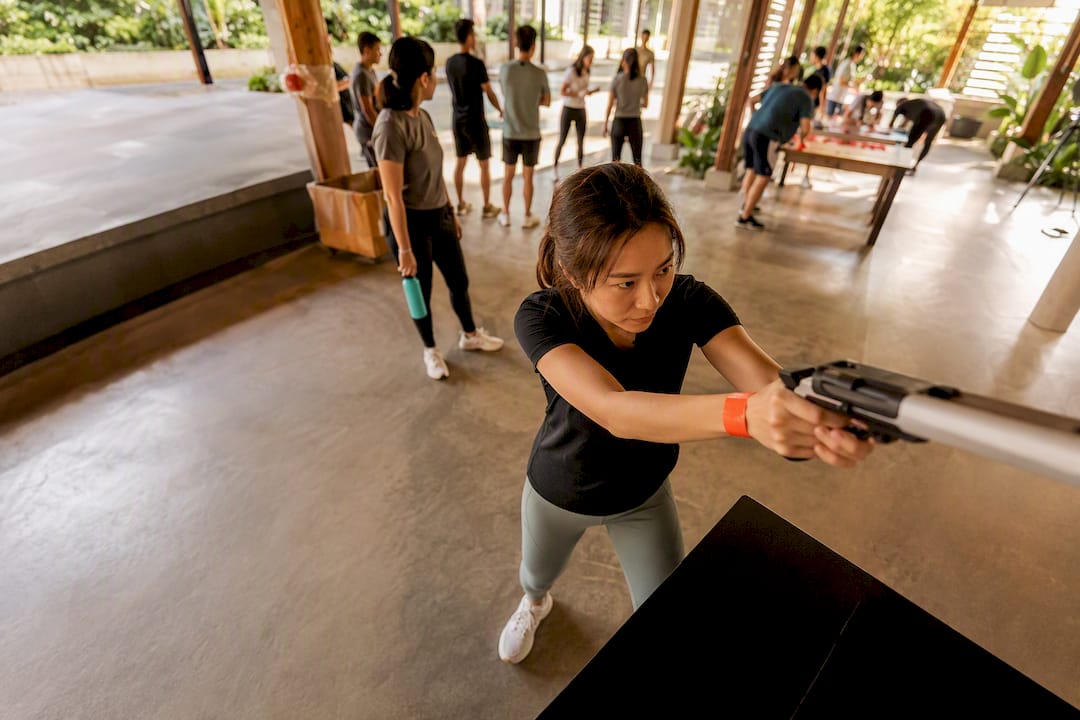
Effective Singapore corporate retreats commonly include an active session, a creative or workshop block, and a reflective or strategic discussion, typically arranged over multiple days. For 2026, five formats top the shortlist: Laser Clay for measurable team competition, a Sentosa beach Olympics, a terrarium or leather craft workshop, a guided breathwork session, and a beach clean-up for CSR points. Budget roughly $80 to $250 per person for local, single-day options.
TL;DR:
- Laser Clay offers a scalable, eco-friendly competitive activity suitable for groups from 10 to over 100 participants, with real-time scoring to measure team performance.
- Most events in Singapore should budget $80 to $250 per person for daytime activities, or $600 to $2,500 per person for overnight packages depending on the venue and inclusions.
- Active formats like laser shooting or beach Olympics work best for energizing large groups in zone rotations, while workshops like leathercraft or cooking provide quieter bonding over 1.5 to 3 hours.
- Outdoor activities require NParks permits with a lead time of 6 to 8 weeks, and indoor or flexible formats like Laser Clay are recommended in case of rain.
- For large or remote teams, hybrid activities like VR challenges or app-based scavenger hunts ensure participation across multiple locations, with facilitator ratios of approximately one per 15 to 20 participants.
Table of Contents
- What activities work best for different retreat objectives?
- Activity ideas by category for Singapore retreats
- What does a 2-day or 3-day retreat itinerary actually look like?
- Sentosa, Bintan, Batam, or Johor Bahru: which venue fits?
- How do you choose the right activities for your retreat?
- Why Laser Clay works as a Singapore retreat activity
- What should you budget per person for a Singapore retreat?
- How many people should join each activity, and how do you scale it?
- How long should your retreat run: half-day, full-day, or overnight?
- How do you find and book the right vendors?
- How do you customise a retreat for your company’s size and goals?
- How do you make sure activities actually build team cohesion?
- How do you plan for weather and other disruptions in Singapore?
- What running retreats in Singapore actually teaches you
- Ready to book Laser Clay for your next retreat?
- Sources
- FAQ
What activities work best for different retreat objectives?
Every retreat has a primary job to do, and the mistake most organisers make is picking activities they find fun rather than activities that match what the day actually needs to achieve. A leadership offsite needs different energy from a morale-boosting escape after a rough quarter. Match the format to the objective first, and the budget conversation gets much easier.
Here’s a working shortlist by objective, with typical group sizes and per-person cost bands in Singapore dollars.
- Best for morale after a tough period: A Sentosa beach Olympics or relay day. Low-stakes, high-laughter, works for groups of 20 to 200 when run in zone-based rotations. Budget $60 to $120 per person for a half-day including facilitators and equipment.
- Best for measurable teamwork and friendly competition: Laser Clay. Scoring is electronic and real-time, so leaders can see exactly who communicated well under pressure and who didn’t. Works indoors or outdoors, scales from 10 to well over 100 participants across rotating stations, and runs roughly 45 minutes to 2 hours depending on format. Expect $50 to $100 per person for a standard corporate session.
- Best for leadership and quieter bonding: A leatherwork or perfume-making workshop. These low-intensity formats encourage conversation without the forced-bonding backlash that high-intensity sports sometimes trigger among senior staff. Groups of 15 to 40 work best, running 1.5 to 3 hours at $25 to $120 per person.
- Best for wellness-led retreats: Guided breathwork or gentle yoga sessions are suitable for groups of various sizes, normally lasting under an hour, with costs varying by provider and setting.
- Best for tight budgets: A community cooking challenge or beach clean-up. Both double as CSR activities, need minimal equipment hire, and run well for 20 to 150 people at $20 to $60 per person.
- Best for hybrid or remote-inclusive teams: A short VR challenge or app-based scavenger hunt that lets dispersed staff join a shared leaderboard. Works for any group size split across locations, typically $40 to $90 per person.
Pick one from each row that matches your retreat’s actual goal rather than defaulting to whatever ran last year. If you’re unsure which objective matters most, ask your leadership team what they’d consider a wasted day. That answer tells you more than any planning template.
Activity ideas by category for Singapore retreats
A useful retreat catalogue isn’t a random list of fun things. It’s organised by the job each category does, so you can pull one item from each bucket and build a day that actually moves the needle on morale, skills, or strategy.
Active and energetic formats
These get people moving, competing, and laughing within the first ten minutes, which matters most on day one when the group is still finding its footing.
- Amazing Race-style scavenger hunts across Sentosa or the Marina Bay area work for 20 to 150 people, run 2 to 4 hours, and cost around $60 to $150 per person depending on prop complexity and staffing.
- Dragon boating on Kallang Basin or at East Coast Park suits groups of 20 to 60, runs 2 to 3 hours including briefing, and costs roughly $50 to $90 per person.
- Beach Olympics at Sentosa or Changi work for large groups when run as rotating stations rather than one big free-for-all, keeping queueing down and every team active simultaneously.
- Laser Clay sits comfortably in this category too. It’s a laser-based clay shooting format using sound-simulated deactivated shotguns and reusable eco-friendly targets, so there’s no lead ammunition, no live rounds, and none of the safety clearances a real range would need. Sessions scale from small groups on a rooftop to 100-plus staff across multiple stations, and the electronic scoreboard turns “who’s the best shot” into a genuinely competitive, trackable game rather than a vague team exercise. It works indoors or outdoors, which matters enormously in a country where afternoon downpours are practically scheduled.
Pro Tip: If your group tops 60 people, run active formats as timed rotations through 3 to 4 stations rather than one mass activity. It keeps energy high and stops half your team standing around waiting for a turn.
Creative and workshop formats
Workshops give people something to make with their hands, which lowers social pressure compared with competitive games and tends to produce better conversation among people who don’t know each other well yet.
- Terrarium building is popular for a reason: quiet, tactile, and everyone leaves with something for their desk. Typically 1.5 to 2 hours at $25 to $60 per person.
- Leather craft workshops run longer, around 2 to 3 hours, and cost more per head, generally $60 to $120, but the finished item (a wallet or card holder) tends to get used for years, which extends the retreat’s memory value well past the day itself.
- Cooking challenges, often run as a MasterChef-style team format, work well for groups of 15 to 50 and typically cost $70 to $130 per person including ingredients and a chef facilitator.
- Art jamming is the cheapest creative option on this list, usually $30 to $50 per person for a 1.5 hour session, and needs almost no special venue requirements.
Most of these workshops scale between 1.5 and 3 hours and cost $25 to $120 per person depending on materials and group size, making them easy to slot into an afternoon block without disrupting the rest of the schedule.
Wellness and mindfulness formats
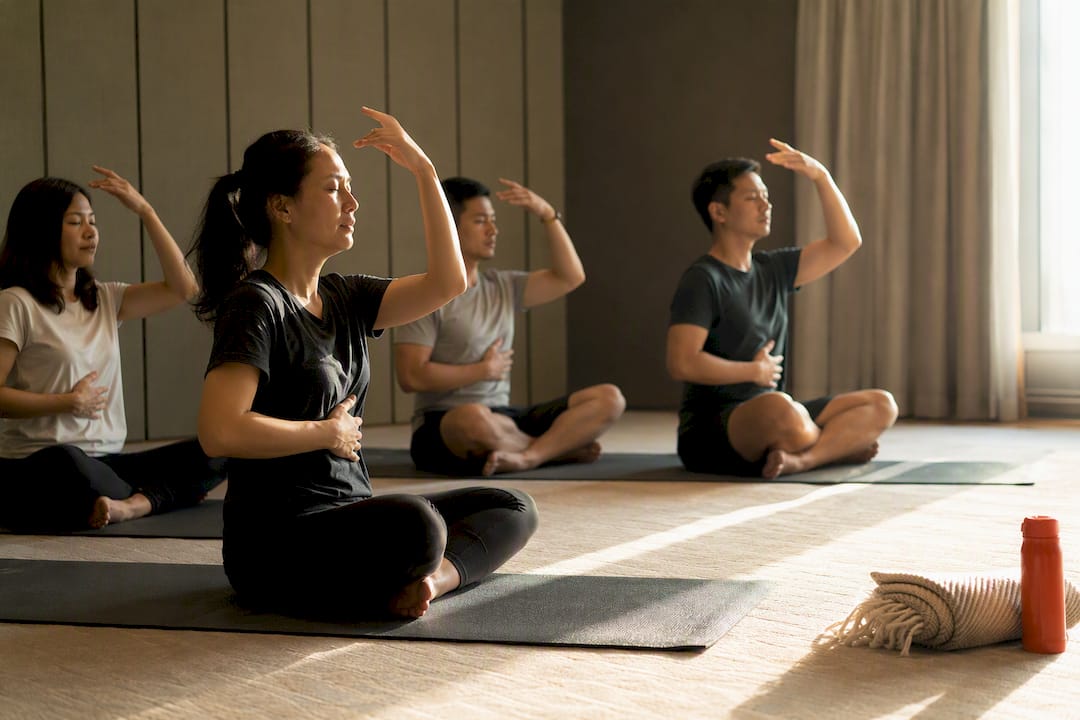
Micro-wellness sessions are having a genuine moment in Singapore retreat planning, and it’s not a fad. There’s rising demand for short breathwork, storytelling and mindfulness slots precisely because they deliver both immediate relief after a heavy day and habits people actually keep using back at their desks. Schedule a 45-minute guided meditation or breathwork block on the morning of day two, right after a demanding workshop day, rather than squeezing it in as a token gesture at the very start. Gentle yoga works the same way and needs only a shaded lawn or function room with mats, no special equipment hire. For teams whose wellness needs run deeper than a single session, wellness-focused corporate activities can be built into a broader retreat programme rather than treated as an afterthought.
CSR and community formats
CSR blocks do double duty: they satisfy corporate social responsibility reporting and they build genuine team cohesion around a shared external goal rather than an internal competition.
- Beach clean-ups at East Coast Park or Sentosa suit any group size, run 1.5 to 2 hours, and cost very little beyond gloves and bags, often under $20 per person.
- Community cooking drives, preparing meals for a local charity partner, work for 20 to 80 people and run 2 to 3 hours at $40 to $80 per person including ingredients.
- Charity builds, assembling care packages or simple furniture for donation, need more coordination lead time with the receiving charity but produce a strong emotional payoff at the end of the day.
Tech and virtual formats
For teams with remote staff, hybrid formats, or a genuine appetite for something different, tech-driven activities close the gap between in-room and dialled-in colleagues.
- VR challenges using headset stations work well as a novelty slot for 10 to 40 people at a time, typically $50 to $100 per person for a 30 to 45 minute rotation.
- Hybrid hackathons, where in-person and remote staff pair up to solve a mini business problem, suit teams of any size and run half a day to a full day.
- App sprint challenges, using a shared leaderboard app, let dispersed offices compete on the same scavenger hunt or trivia format regardless of physical location.
What does a 2-day or 3-day retreat itinerary actually look like?
Sequencing matters as much as activity choice. Front-load energy on day one, use day two for depth, and close with reflection rather than another game, because the reflective and strategic block is what turns a fun outing into a business investment leadership can point to afterwards.
2-day, 1-night retreat
- Day 1, morning: Arrival, icebreaker Amazing Race or Laser Clay session (2 hours) to get competitive energy up early.
- Day 1, afternoon: Creative workshop block, terrarium building or art jamming (1.5 to 2 hours), followed by an hour of genuinely unstructured free time.
- Day 1, evening: Social dinner with informal awards from the morning’s scores.
- Day 2, morning: Guided breathwork or short mindfulness session (45 minutes), then a facilitated strategic discussion or goal-setting workshop (1.5 hours).
- Day 2, midday: Wrap-up, group photo, checkout.
3-day, 2-night retreat
Most Singapore company retreats settle around two nights and three days, which gives enough runway to mix all three blocks without cramming.
- Day 1: Arrival and active icebreaker in the afternoon (dragon boating or beach Olympics), dinner and free time in the evening.
- Day 2: Full workshop and creative day, morning cooking challenge or leather craft session, afternoon CSR activity like a beach clean-up, evening downtime.
- Day 3: Morning wellness block followed by the reflective strategic session, closing with leadership remarks before departure.
Keep facilitator handoffs tight between blocks, ideally no more than a 15 minute gap, and always schedule genuine free time rather than treating “networking drinks” as a substitute. A frequent planning mistake is cramming the schedule so tight that unstructured time disappears, and that unstructured time is often where the retreat’s actual best conversations happen.
Sentosa, Bintan, Batam, or Johor Bahru: which venue fits?
Venue choice comes down to three things: how much travel disruption your team can absorb, group size, and budget. Sentosa suits premium retreats that want minimal logistics, since everything from transport to accommodation happens within Singapore. Bintan gives you a genuine “away” feeling with only a one-hour ferry crossing, useful when the goal is a psychological break from the office without a long flight. Batam runs cheaper again, often the pragmatic choice for cost-conscious mid-size teams. Johor Bahru is the value option for large groups, since coach transport across the Causeway keeps per-head costs down even for headcounts north of 100.
| Destination | Travel time from CBD | Best group size | 2026 per-pax band (overnight) |
|---|---|---|---|
| Sentosa | 20 to 30 minutes | Any size | $700 to $2,500 |
| Bintan | ~1 hour ferry + transfer | 20 to 100 | $600 to $1,400 |
| Batam | ~45 minute ferry + transfer | 20 to 150 | $400 to $700 |
| Johor Bahru | 1 to 1.5 hours by coach | 100+ | Lower than Batam per head for large groups |
These 2026 pricing bands cover accommodation, meals, and core activities, but always confirm what’s bundled versus billed separately before signing a package. For a 50-person SME retreat at Bintan mid-tier, expect a total budget somewhere around $35,000 to $50,000 for two nights, activities included.
One figure worth building lead time around: outdoor events in Singapore’s public parks generally need NParks permits with 6 to 8 weeks lead time for approval. Miss that window and you’re either paying rush fees or moving the whole retreat indoors.
Build your logistics checklist around these points:
- Confirm transport (coach hire, ferry tickets) at least 4 weeks out, earlier for group sizes above 80.
- Lock accommodation before activities, since room blocks vanish fastest during Singapore’s peak MICE season.
- File NParks permits the moment your date and venue are confirmed, never after.
- Arrange a wet-weather backup venue or indoor pivot for every outdoor slot, non-negotiable given Singapore’s rain patterns.
- Reconfirm final headcounts with vendors 5 to 7 days before the event to avoid overpaying for no-shows.
How do you choose the right activities for your retreat?
Run every activity idea through the same checklist before it makes the final schedule. This keeps decisions fast and stops planning meetings from turning into endless debate about what’s “fun enough.”
- Objective alignment: Does this activity actually serve the stated goal, morale, leadership development, or measurable teamwork, rather than just filling a time slot?
- Inclusivity: Can every attendee physically and comfortably participate, including anyone with mobility limitations or dietary restrictions for food-based formats?
- Measurable outcomes: Can you point to something concrete afterwards, a score, a completed project, a group photo of a finished build?
- Logistics fit: Does the venue have power access, shade, and ground surface suited to the activity, and has someone actually walked the site?
- Safety and insurance: Does the vendor carry public liability insurance and use equipment that doesn’t introduce real risk (an important reason laser-based formats have overtaken live ammunition for corporate use)?
- Budget realism: Does the per-person cost, including hidden extras like transport and materials, fit the approved budget with margin left for contingencies?
When talking to any vendor, ask directly: What are your facilitators’ credentials? What’s your setup and breakdown time? What’s your maximum and minimum group size? What happens if it rains?
Pro Tip: Ask every vendor for their wet-weather contingency in writing before you sign, not verbally on a phone call. A vendor without a clear rain plan for outdoor Singapore events is a red flag, full stop.
Watch for vague pricing (“contact us for a quote” with no ballpark), no visible insurance documentation, and facilitators who can’t answer basic group-size questions. Any of those should send you looking elsewhere.
Why Laser Clay works as a Singapore retreat activity
Laser Clay solves a specific problem that traditional clay shooting can’t: it delivers the competitive thrill of shotgun sports without lead ammunition, live rounds, or the safety clearances a real range demands. The sound-simulated deactivated shotguns and reusable eco-friendly targets mean zero environmental waste and no ammunition costs eating into your budget over repeat bookings.
- Real-time electronic scoring turns the session into a genuinely measurable competition, useful when leadership wants proof the day produced something beyond “everyone had a nice time.”
- Facilitator-led setup means Laser Clay’s team handles briefing, safety, and scoring, so your organisers can focus on the retreat, not on running equipment.
- Portable, scalable setups work indoors or outdoors, on a hotel lawn, a function room, or a Sentosa beach site, and scale from small groups to well over 100 through rotating stations, which keeps queueing down and every attendee involved.
- Eco-friendly credentials matter increasingly for companies reporting on sustainability commitments, since there’s no spent ammunition or lead residue to manage afterwards.
Slot it into the itinerary as the day-one active icebreaker, or as an afternoon competitive break between workshop sessions on day two. For mobile setups running directly on client premises, a quick site survey to confirm ground surface and power access keeps venue and transport costs down compared with hiring an external range. Planners weighing indoor versus outdoor formats can review how Laser Clay fits different event layouts before confirming a venue.
What should you budget per person for a Singapore retreat?
Budgeting gets easier once you separate local, single-venue options from near-regional trips that add ferry or coach costs. For a single-day retreat entirely within Singapore, mainland venues typically run $80 to $250 per person, covering venue hire, one or two activities, catering, and facilitator fees. That figure swings heavily on activity choice: a beach clean-up and simple workshop combination sits at the lower end, while a full-day programme with Laser Clay, a premium workshop, and a sit-down dinner pushes towards the top.
Overnight retreats change the maths substantially because accommodation dominates the budget. Sentosa overnight packages range from $700 to $2,500 per person depending on hotel tier and inclusions, while near-regional options like Bintan sit lower at $600 to $1,400 per person, and Batam lower still at $400 to $700.
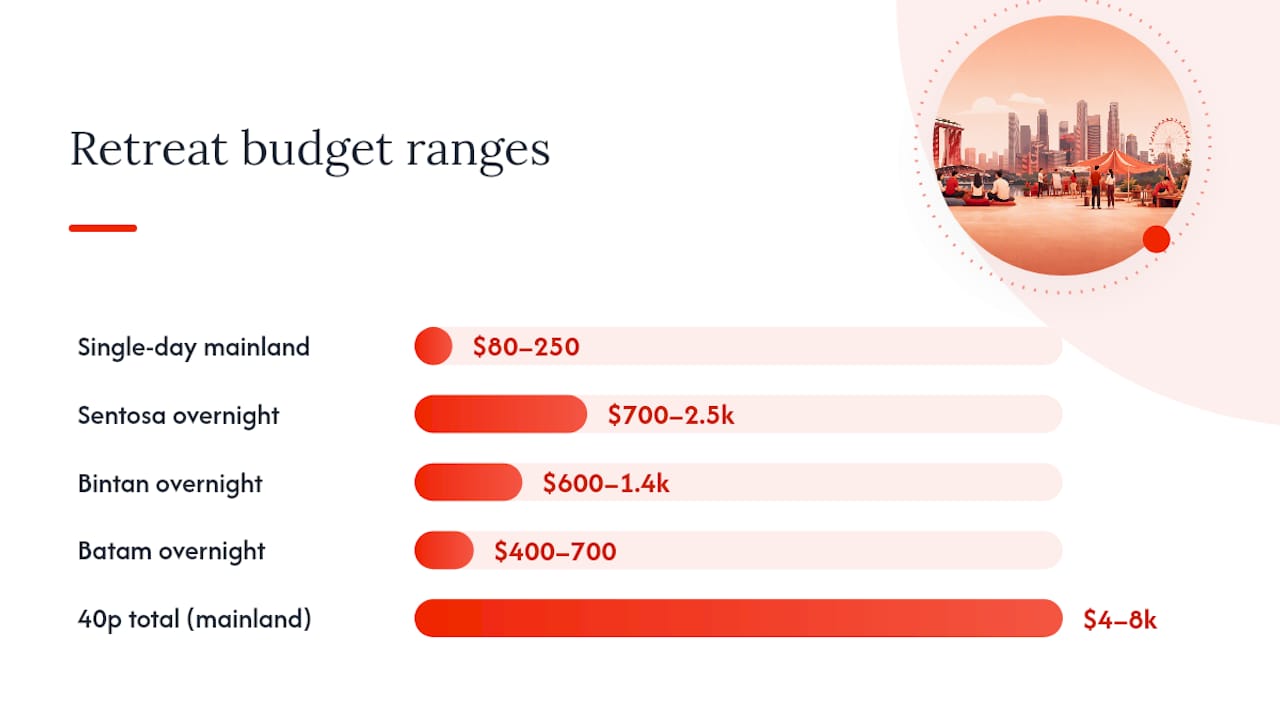
For a 40-person team running a single-day mainland retreat with Laser Clay as the anchor activity, expect a total in the region of $4,000 to $8,000 depending on catering choices and venue hire. Always request an itemised quote from vendors rather than a single bundled figure, since that’s the only way to spot which line items are negotiable.
How many people should join each activity, and how do you scale it?
Group size dictates format more than most planners expect. A workshop that works beautifully for 20 people falls apart at 100 unless you restructure it entirely.
For groups under 30, almost any format works as a single simultaneous session, whether that’s one cooking class, one workshop table, or one Laser Clay range. Between 30 and 80 people, start splitting into two parallel tracks so nobody stands around waiting, particularly for hands-on workshops with limited table space.
Above 80 people, zone-based rotations through multiple stations beat a single large setup every time. This applies directly to Laser Clay: rather than one range serving 150 people in a single queue, running 3 to 4 stations in rotation keeps everyone shooting rather than standing in line, and it simplifies facilitator ratios since each station only needs its own briefing team. The same logic applies to beach Olympics and scavenger hunts, where station-based rotations prevent the dreaded “half the group is bored while the other half competes” problem.
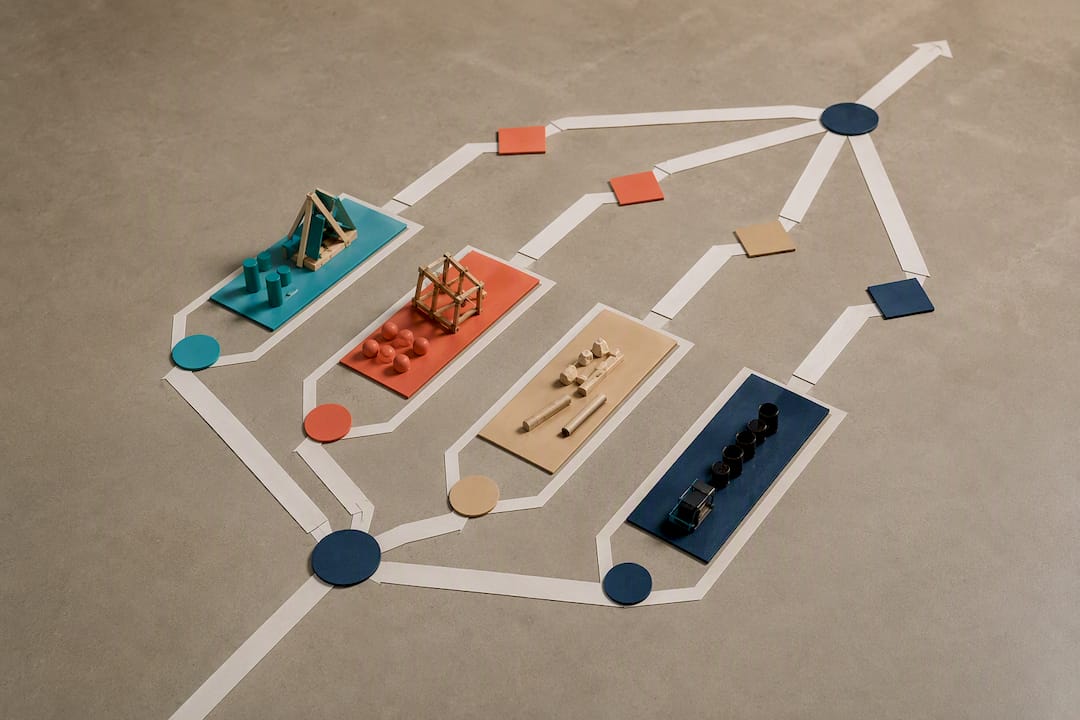
Facilitator ratios matter too. Budget roughly one facilitator per 15 to 20 participants for active and workshop formats, tightening to one per 10 for anything involving equipment safety briefings. If your headcount is genuinely uncertain until close to the date, choose formats that scale elastically, station-based activities and workshops with modular table counts, over fixed-capacity venues that lock you into a number weeks in advance.
How long should your retreat run: half-day, full-day, or overnight?
Duration should follow your objective, not the other way round. A half-day retreat, typically 3 to 4 hours, works well for morale boosts or a single team’s quarterly reset, and fits neatly into a working day without eating into annual leave. Pick one active format and one short reflective wrap-up; anything more feels rushed.
A full-day retreat, 6 to 8 hours, gives room for two full activity blocks plus a proper lunch break, making it the right length for cross-department bonding or a mid-sized workshop-heavy day. This is where a morning Laser Clay session paired with an afternoon creative workshop tends to land well, since it delivers both energy and depth without requiring anyone to pack an overnight bag.
Overnight retreats, whether one night or two, are where genuine culture shifts happen, because most Singapore company retreats settle at two nights and three days as the sweet spot for combining active, creative, and reflective blocks without cramming. Anything longer than three days risks diminishing returns as fatigue sets in and per-person costs climb without proportionate benefit.
How do you find and book the right vendors?
Start with vendors who publish clear group-size ranges, facilitator credentials, and pricing bands on their own site rather than requiring a call just to get a ballpark figure. That transparency alone filters out a surprising number of unreliable operators.
For Laser Clay bookings specifically, request a proposal that spells out setup time, group capacity per station, and whether the package includes facilitators or just equipment hire. Corporate team-building packages typically bundle facilitation, scoring, and setup into one quote, which simplifies comparison against workshop or active-format vendors quoting similarly bundled rates.
For workshop vendors (terrarium, leather craft, cooking), ask specifically about materials sourcing and whether take-home items are included in the quoted price or billed as an add-on, since this is where quotes often diverge most sharply between vendors offering seemingly similar sessions.
For venue-dependent formats like dragon boating or beach Olympics, confirm booking lead time separately from activity booking, since popular East Coast Park and Sentosa slots fill months ahead during Singapore’s peak retreat season (typically March to May and September to November, avoiding school holiday clashes).
Always get quotes in writing with a breakdown by line item: facilitators, equipment, materials, transport, and catering separately rather than as one bundled number. This makes it far easier to negotiate down a single inflated line rather than accepting or rejecting an entire package.
How do you customise a retreat for your company’s size and goals?
A 15-person startup and a 300-person enterprise division need fundamentally different retreat structures, not just scaled-up versions of the same plan.
Small teams (under 30) can run almost any single-format session without splitting groups, which means budget goes further per head since there’s no need for multiple simultaneous stations or extra facilitator teams. This is the sweet spot for premium workshop formats like leatherwork or perfume making, where the per-person cost sits higher but the intimacy pays off in genuine conversation.
Mid-size teams (30 to 100) benefit most from the three-block structure run across a full or multi-day schedule, since there’s enough headcount to justify hiring dedicated facilitators for each block without the cost per person climbing too steeply.
Large teams (100+) need station-based formats almost by default, whether that’s Laser Clay’s rotating ranges, multi-table workshops, or zoned beach Olympics. Customisation here means thinking in modules: four Laser Clay stations, three simultaneous cooking classes, or parallel breakout groups for the reflective session, run by multiple facilitators reporting back to one lead organiser.
Goal-based customisation matters just as much as size. A retreat aimed at post-merger integration needs more reflective and mixed-team creative time than a pure morale-boost day, which can lean harder into active, competitive formats. Match the ratio of active to reflective time to what leadership actually needs the day to fix.
How do you make sure activities actually build team cohesion?
Running an activity and building genuine cohesion are two different things, and the gap between them is almost always facilitation, not activity choice.
Brief every activity with a stated purpose before it starts. Telling a group “we’re doing this because it mirrors how we solve problems under deadline pressure” changes how people engage compared with simply announcing the next game on the agenda.
Mix teams deliberately rather than letting people self-select into existing cliques. This single decision does more for cross-department bonding than almost any activity format choice, since the whole point of a retreat is breaking people out of their usual working groups.
Debrief immediately after competitive or high-energy formats, even briefly. A five-minute “what did that show us about how we communicate” conversation right after Laser Clay or a scavenger hunt locks in the lesson while it’s still fresh, rather than letting the insight evaporate by dinner.
Protect unstructured time on the schedule rather than treating it as wasted space. Deliberate downtime consistently produces some of the retreat’s best outcomes because it’s where genuine, unscripted conversation happens between people who wouldn’t normally sit together at lunch.
Finally, close with a reflective session that ties activities back to work, not just a generic “thanks for coming” wrap-up. That final block is what turns a fun day out into something leadership can genuinely point to as a return on the retreat budget.
How do you plan for weather and other disruptions in Singapore?
Singapore’s weather doesn’t give much warning, and a retreat plan without a rain contingency is really just half a plan. Build the wet-weather backup into your booking from day one, not as an afterthought once the forecast looks bad.
For any outdoor activity, confirm an indoor alternative venue at the same site or nearby, ideally one the vendor can pivot to within an hour’s notice. Laser Clay’s indoor and outdoor flexibility makes it a natural swap-in when an outdoor beach Olympics or scavenger hunt gets rained out, since the equipment and facilitators transfer to a function room without losing the competitive format.
Build float time into the schedule, roughly 30 minutes of slack between major blocks, so a delayed activity doesn’t cascade into a rushed evening programme. This matters most on itineraries with tight facilitator handoffs, where one late start can push every subsequent session back.
Beyond weather, plan for transport disruption (MRT delays, traffic on the Causeway for Johor Bahru trips) by building a 20 to 30 minute buffer into any travel-dependent schedule. For outdoor public park bookings, remember that NParks permits require 6 to 8 weeks lead time, so a late permit application isn’t just an administrative headache, it can force a last-minute venue change entirely.
Finally, confirm cancellation and rescheduling terms with every vendor before signing, particularly for outdoor-dependent activities. A vendor with a clear, written rain policy is worth more than one offering a slightly lower price with no contingency plan at all.
What running retreats in Singapore actually teaches you
The biggest mistake I see in retreat planning isn’t activity choice, it’s sequencing. Organisers spend weeks debating whether to book a cooking workshop or a scavenger hunt, then throw both into a schedule with no logic to the order, and wonder why the day feels disjointed rather than purposeful.
Lead times catch people out more than budget does. Vendors, venues, and NParks permits all move on their own clocks, and the planners who start six to eight weeks out consistently get better vendor availability and pricing than those scrambling three weeks before the date.
If you’re planning for a genuinely large group and you’ve never run a station-based rotation before, pilot it with a smaller internal group first, even 15 or 20 people, before scaling to 150. It’s the fastest way to spot bottlenecks in facilitator handoffs before they become a problem on the actual day.
And don’t underestimate a quiet, low-intensity format’s ability to outperform the loud, expensive one. The debrief conversation after a competitive but low-pressure session often does more for team cohesion than the activity itself ever could.
— Joshua
Ready to book Laser Clay for your next retreat?
If you’ve read this far, you already know Laser Clay solves a specific gap: a genuinely competitive, measurable activity that works indoors or outdoors, scales from a small leadership huddle to a 150-person offsite, and skips the environmental and safety concerns that come with live ammunition entirely. No lead residue, no spent shells, no live-fire safety clearances, just sound-simulated shotguns, reusable eco-friendly targets, and a scoreboard that settles the office debate about who’s actually the best shot.
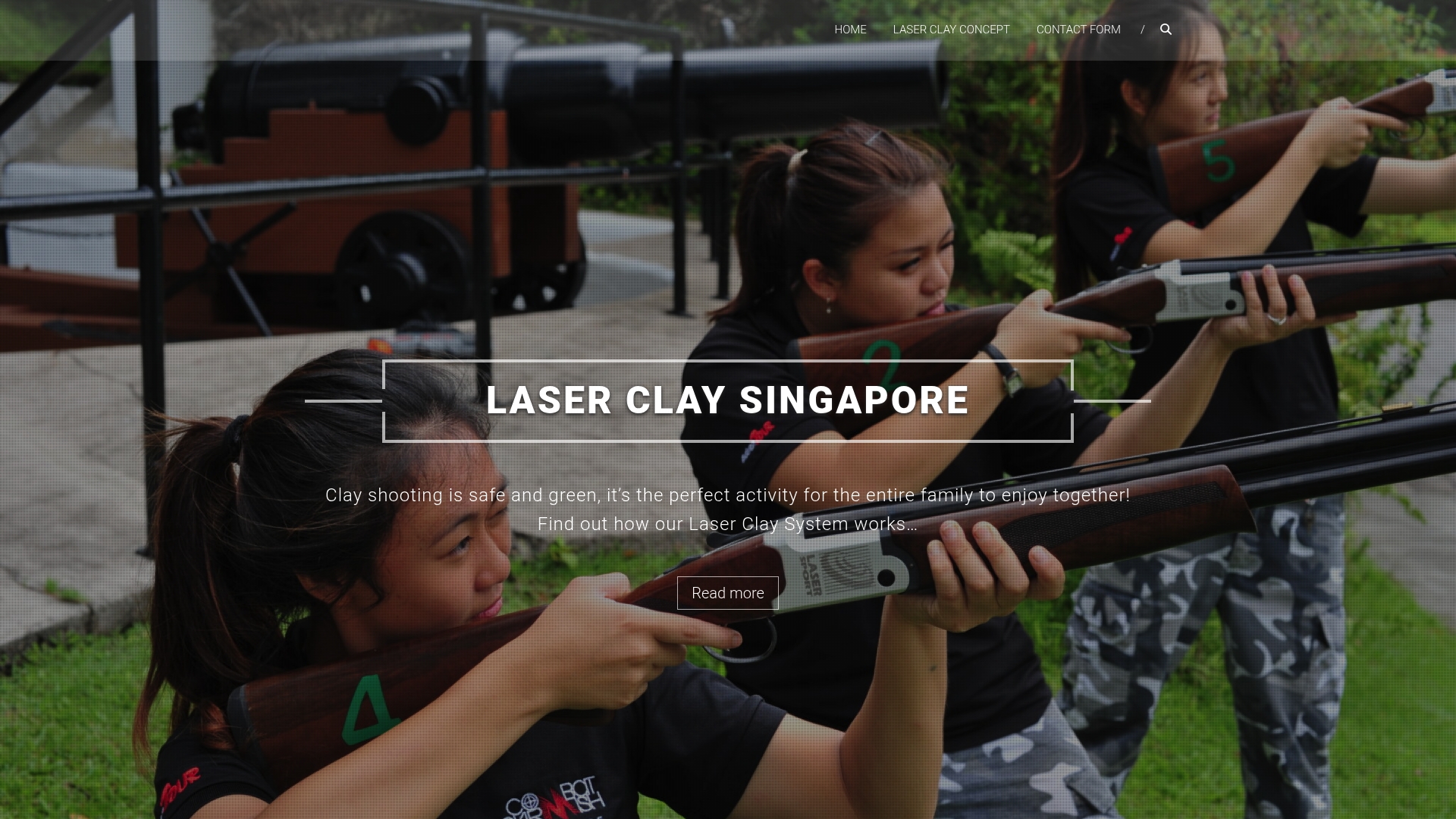
Booking is straightforward. Head to the Laser Clay corporate team-building page to request a proposal, and you’ll typically get a quote back covering facilitator costs, setup time, and station count for your headcount within a couple of working days. For a walkthrough of exactly how a session runs from briefing to scoring, the how to play Laser Clay guide covers what to expect on the day. Custom packages are available for group sizes above 100, multi-day retreats needing repeat sessions, or hybrid setups combining Laser Clay with another activity block from your itinerary. Get in touch early, ideally the same week you confirm your retreat date, so setup logistics and facilitator scheduling don’t become a last-minute scramble.
Sources
- Company Retreat Singapore: planning guide for teams (Get Out!)
- 24 Best Team Building Workshops Singapore Craft, Cooking & Corporate 2026
- Urban sanctuary: designing your own yoga & wellness retreat in Singapore
- 15 unique company retreat ideas in Singapore for 2026
FAQ
What’s the ideal length for a Singapore corporate retreat?
Most companies settle on two nights and three days, long enough to run active, workshop, and reflective blocks without the fatigue that longer trips can bring.
How much should we budget per person for a local retreat?
A single-day retreat within Singapore typically runs $80 to $250 per person, while overnight Sentosa packages range from $700 to $2,500 depending on hotel tier and inclusions.
Is Laser Clay suitable for large corporate groups?
Yes, Laser Clay scales from small teams to well over 100 participants by running multiple rotating stations, which keeps queueing low and every participant engaged.
Do we need a permit for an outdoor retreat activity in a public park?
Yes, outdoor events in Singapore’s public parks generally require NParks permits with 6 to 8 weeks lead time, so apply as soon as your date and venue are confirmed.
What’s a good wet-weather backup for outdoor activities?
Choose formats with genuine indoor flexibility, such as Laser Clay, which can pivot from an outdoor lawn to an indoor function room without losing the competitive scoring format.
Should we choose Sentosa, Bintan, or Johor Bahru for our retreat?
Sentosa suits premium, low-logistics retreats within Singapore, Bintan offers an offshore escape via a one-hour ferry, and Johor Bahru is the most cost-efficient option for large groups.