The fastest way to find eco friendly events in Singapore is to check Go Green SG, festival pages like GREEN‑HOUSE and Earthopia Fest, and Eventbrite listings tied to venues such as Singapore EXPO. Search these four sources, subscribe to their alerts, and expect workshops, festivals, and green runs built around low waste running, not vague “sustainability” branding.
TL;DR:
- Most eco-friendly events in Singapore can be found on Go Green SG for broad coverage, while festival sites like GREEN-HOUSE and Earthopia Fest offer scheduled activities.
- When selecting events, verify venue sustainability certifications, waste management plans, and transport guidance, and request post-event impact reports for genuine evaluation.
- Workshops, festivals, green runs, site tours, and professional training cover the main types of events, each with specific formats and participation expectations.
- Corporate events should prioritize venues with real infrastructure like Singapore EXPO, enforce post-event reporting, and implement low-waste logistics and communications.
- Focus on measurable outcomes like waste diverted or energy savings rather than vague labels, and ask organizers how they track actual sustainability impacts.
Table of Contents
- Where to find upcoming eco-friendly events in Singapore
- What types of eco-friendly events can you actually attend?
- How do you choose and prepare for a sustainable event?
- How can organisations host greener events in Singapore?
- Local examples worth knowing before you book
- What the eco-events scene in Singapore gets wrong
- Sources
- FAQ
Where to find upcoming eco-friendly events in Singapore
Most people give up after one Google search because they hit a dead festival page from two years ago. The trick is knowing which platform serves which purpose.
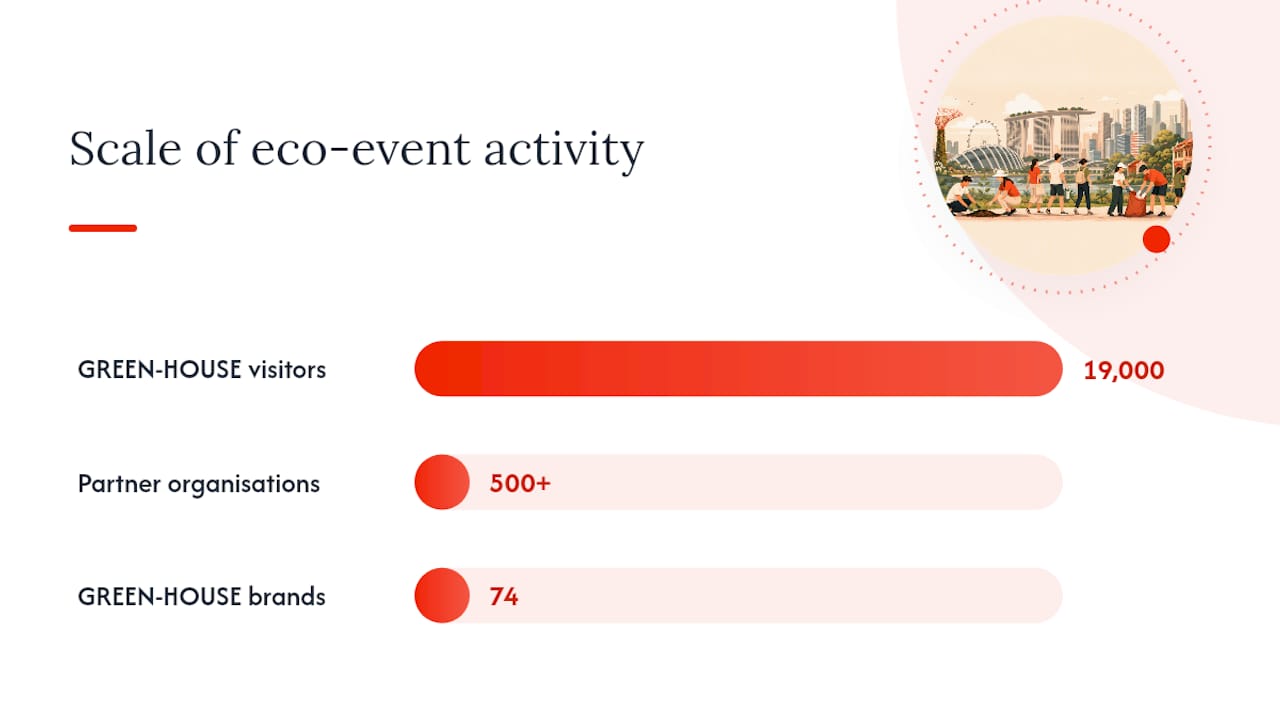
- Go Green SG (Ministry of Sustainability and the Environment) aggregates the national calendar. Its 2026 edition ran with over 500 partners and delivered more than 1,000 activities, from neighbourhood clean-ups to policy talks.
- Government events pages, including the Citizens’ Workgroup on Sustainability’s events hub, list recycling tours and waste-to-energy plant visits that are open to the public and bookable directly.
- Eventbrite Singapore is the best filter for standalone workshops and paid ticketed sessions. Search “sustainability,” “zero waste,” or “green” and sort by date.
- Festival websites, namely GREEN-HOUSE and Earthopia Fest, publish their own schedules months ahead and are worth bookmarking rather than relying on search engines to surface them.
- NParks activities pages cover nature-based volunteering: coastal clean-ups, tree planting, and biodiversity walks.
Use Go Green SG for breadth and national reach, Eventbrite for niche or recurring workshops, and the festival sites directly when you want confirmed dates rather than a rumour from last year’s programme.
What types of eco-friendly events can you actually attend?
Not every green event looks the same, and knowing the format tells you what to expect before you book.
- Workshops and maker sessions. These are hands-on: think natural dyeing, composting basics, or upcycled furniture builds. You usually leave with something you made and a skill you can repeat at home.
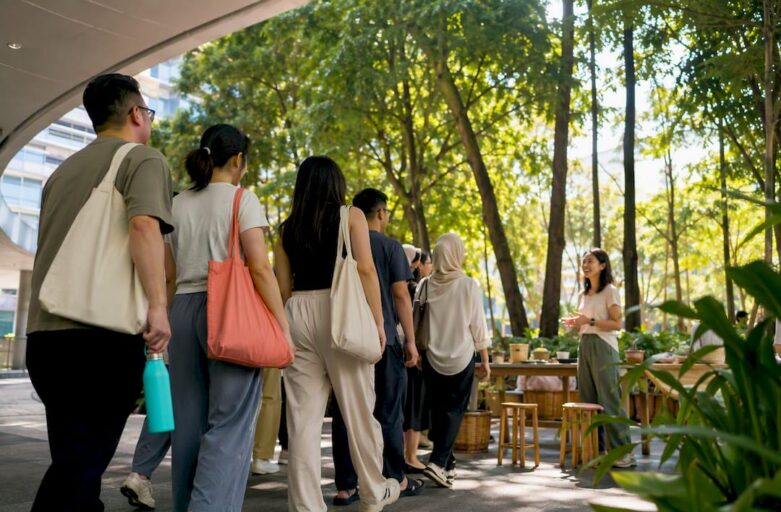
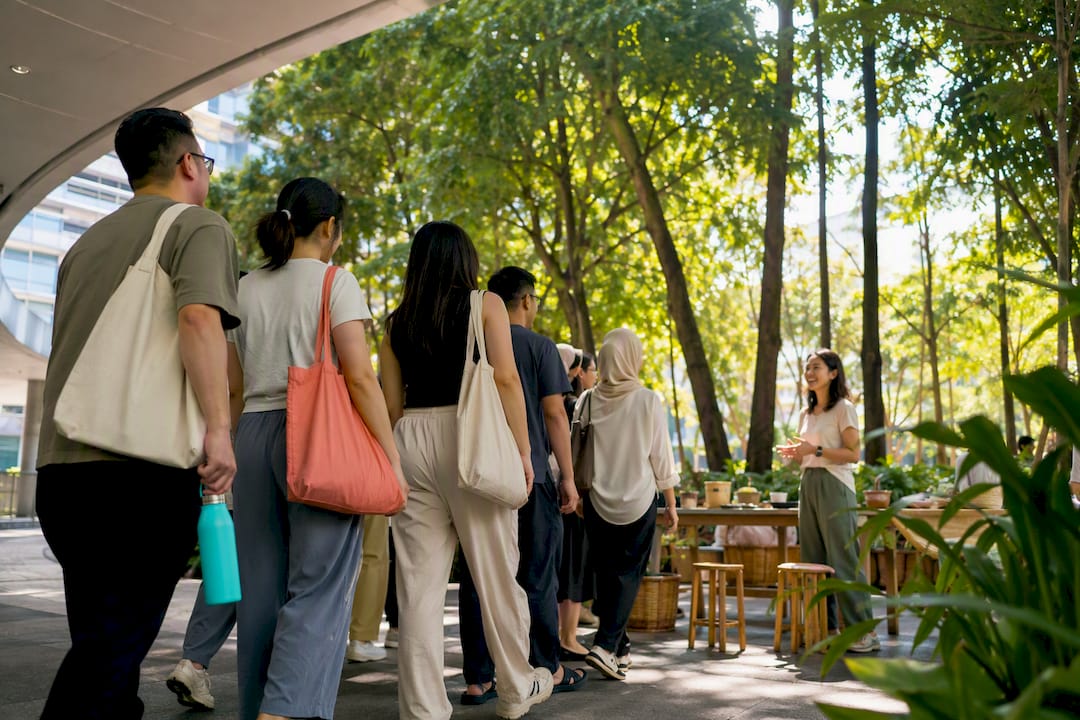
- Festivals and bazaars. GREEN-HOUSE is the clearest example, with roughly 74 local sustainable brands at its 2026 edition and family zones running alongside talks and market stalls. Expect a half-day to full-day event with staggered entry times.
- Mass participation events like green runs. The Great Green Run has adopted bag-less race kit collection for its 2026 edition, meaning you register your size and collect your kit without a single-use plastic bag attached. Look for a green bazaar alongside the finish line.
- Site tours and industry visits. Recycling plants and waste-to-energy facilities occasionally open for public tours, though these tend to have age restrictions and limited slots, so book weeks ahead.
- Professional events and training. Conferences and certification courses, including the SACEOS Certified Event Sustainability programme, sit here. These suit event planners and CSR teams more than casual attendees.
How do you choose and prepare for a sustainable event?
Booking a ticket is the easy part. Knowing whether the event lives up to its “eco friendly” label takes a bit more digging.
Run through this before you commit:
- Check whether the venue holds a recognised sustainability certification, such as EIC Gold, rather than a vague “green” self-description.
- Look for a stated waste and food plan. Compostable serveware, plant-forward catering, and clear recycling stations are good signs.
- Confirm transport guidance. Events near MRT stations that discourage private car parking are usually more deliberate about their footprint.
- Ask whether the organiser publishes a post-event report covering waste diverted or carbon estimates.
Before paying for tickets, it’s worth emailing the organiser directly with two questions: do you provide a post-event waste or energy report, and is the event bag-less or low-plastic by design? Genuine sustainable events answer these quickly and specifically. Vague replies are the clearest greenwashing signal you’ll get.
Once you’re registered, pack a reusable water bottle, tote, and utensils, plan your MRT or bus route in advance, and read any pre-event briefing emails, since many workshops specify what materials to bring.

Pro Tip: If an organiser can’t name a single measurable outcome, such as kilograms of waste diverted or the number of reusable kits distributed, treat their “eco friendly” claim with scepticism.
How can organisations host greener events in Singapore?
Corporate planners and CSR teams face a different set of decisions, mostly upstream of the guest list.
- Pick a venue with real infrastructure, not just intent. Singapore EXPO runs 11.4 MWp of rooftop solar and an onsite food digester, and offers event-level carbon reporting to organisers who ask for it. That reporting matters increasingly for corporate Scope 3 disclosures.
- Source locally and cut single-use materials. Favour local F&B suppliers, digital instead of printed collateral, and circular materials for signage and giveaways.
- Measure and certify. Request a post-event waste and carbon report as standard, apply the SEC Eco Event Assessment Framework where relevant, and consider putting event staff through the SACEOS Certified Event Sustainability programme, which is completed within 12 months and stays valid for three years.
- Nudge behaviour on the day. Bag-less kits, a two-minute sustainability briefing at check-in, visible recycling stations, and a short impact summary afterwards do more than any pre-event email.
If you’re weighing up activity options alongside the venue and catering brief, our round-up of competitive eco-friendly sports covers formats that fit neatly into a low-waste programme.
Local examples worth knowing before you book
Three names come up repeatedly once you start scanning Singapore’s green events calendar, and each demonstrates a different scale of sustainability commitment.
- GREEN-HOUSE brought together around 74 local sustainable brands in its 2026 edition, with prior years drawing crowds near 19,000 visitors, making it the closest thing Singapore has to a dedicated sustainable-living trade fair.
- Earthopia Fest runs family-oriented programming alongside talks and stalls, positioning itself as a lighter, community-first alternative to the bigger trade-fair format.
- Great Green Run ties directly into Singapore’s Green Plan 2030 and uses bag-less race kit collection as its headline operational change for 2026.
Singapore EXPO deserves a mention on its own, given its scale of MICE (meetings, incentives, conferences, and exhibitions) capacity paired with EIC Gold certification, which makes it the default choice when a corporate sustainability event needs both size and credibility.
All three examples sit inside the government’s 3P model, People, Private, and Public sectors working together, which is also why Go Green SG can coordinate over 500 partner organisations in a single national push. If you’re adding an activity to a programme like this, a low-impact option such as Laser Clay’s reusable-target format fits corporate, school, or private events, without the lead ammunition or noise pollution of traditional clay shooting.
What the eco-events scene in Singapore gets wrong
Most guides to sustainable events treat “eco friendly” as a label you either have or don’t. That’s backwards. The organisations doing this well, Singapore EXPO with its carbon reporting, Great Green Run with its bag-less logistics, treat sustainability as an operational choice made dozens of times per event, not a badge stuck on a poster.
The conventional advice tells attendees to “look for green certifications” and stops there. It should tell you to ask for numbers instead. An event that can name its waste diverted or its energy source is doing the work; one that can’t is probably just using the vocabulary.
If you’re an individual, prioritise transport and material choices, since those are the footprint decisions you actually control. If you’re an organiser, prioritise venue infrastructure and post-event reporting first, because everything else, the bazaar stalls, the bag-less kits, the briefings, only means something if you can measure the outcome afterwards. Singapore has the calendar density and the institutional backing to make this genuinely easy. What’s missing isn’t more festivals. It’s more people asking organisers how they measure impact beyond enjoyment.
— Joshua
Sources
Bookmark these before you plan anything else:
- Go Green SG returns in support of the Year of Climate Adaptation | Ministry of Sustainability and the Environment
- GREEN‑HOUSE festival 2026
- Event information | Great Green Run
- Our sustainable impact | Singapore EXPO
- Certified Event Sustainability (CES) | SACEOS
Use these to verify any sustainability claim before you take it at face value, and to catch new listings before they fill up.
FAQ
How Do I Find Eco-Friendly Events in Singapore?
Check Go Green SG for the national calendar, then look directly at festival sites like GREEN-HOUSE and Earthopia Fest, plus Eventbrite Singapore for standalone workshops.
What Makes an Event “Eco Friendly” in Singapore?
An event qualifies when it addresses venue sustainability, waste management, food sourcing, transport options, and offers transparent post-event reporting rather than a general green claim.
Is the Great Green Run Genuinely Sustainable?
It aligns with the Singapore Green Plan 2030 and has introduced bag-less race kit collection for its 2026 edition, alongside a sustainability-focused green bazaar.
How Can My Company Host a Certified Sustainable Event?
Choose a venue with credentials such as EIC Gold, request post-event carbon and waste reports, and consider putting staff through the SACEOS Certified Event Sustainability programme, which takes up to 12 months and stays valid for three years.
Can Low-Impact Activities Like Laser Clay Fit a Green Event Programme?
Yes. Laser Clay uses reusable targets and sound-simulated equipment with no lead ammunition, making it suitable for corporate, school, or private events built around a sustainability theme. You can book a corporate package or arrange equipment rental directly for your venue.