

Gamified team building works when it is built around a defined outcome, whether that is trust, problem solving, or a morale reset, and finished with a proper debrief. Skip either piece and you get a fun afternoon that leaves no trace by Monday. It fits in-person, virtual, and hybrid formats, and scales down to five minutes, but only if you keep an eye on who can actually join in.
TL;DR:
- Short activities of five minutes or less can strengthen trust and communication with regular repetition, especially if embedded into weekly routines.
- Activities should be matched to clear outcomes such as bonding, learning, or morale, based on available time, group size, and location, for maximum effectiveness.
- Proper planning, transparent scoring, and post-event debriefs are essential to convert fun sessions into lasting team improvements.
- Laser clay shooting offers a flexible, safe, and measurable gamified activity suitable for diverse groups, with built-in scoring and real-time feedback.
- Avoid high-stakes competition in low-trust or restructuring teams, as it risks amplifying tension instead of fostering genuine connection.
Table of Contents
- What gamified team building actually does for engagement and morale
- How do you match the game mechanic to the outcome you want?
- What are the best gamified team building activities by format?
- How do you plan, score, and measure a gamified event?
- Why does the debrief matter more than the game itself?
- How does laser clay shooting work as a low-risk gamified format?
- When gamified team building is not the right fit
- Book a facilitated laser clay session for your next team event
- Sources
- FAQ
What gamified team building actually does for engagement and morale
Gamified team building borrows scoring, competition, and structured play from games and applies it to workplace challenges, with the goal of building collaboration skills rather than just passing the time. The mechanism is simpler than most HR guides make it sound. Shared experiences outside normal work pressure are what build trust between colleagues, and Asana’s research on team building games backs this up: people who solve a problem together, even a manufactured one like a puzzle box or a scavenger hunt, remember each other differently afterwards.
The size of the activity matters less than you’d think. Even five-minute exercises can strengthen communication and trust when they’re used regularly rather than as a once-a-year set piece. A ten-minute trivia round every fortnight often does more for a distributed team than a single lavish offsite.
Pro Tip: Treat a five-minute icebreaker at the start of a weekly meeting as a repeatable habit, not a one-off. Consistency builds trust faster than intensity does.
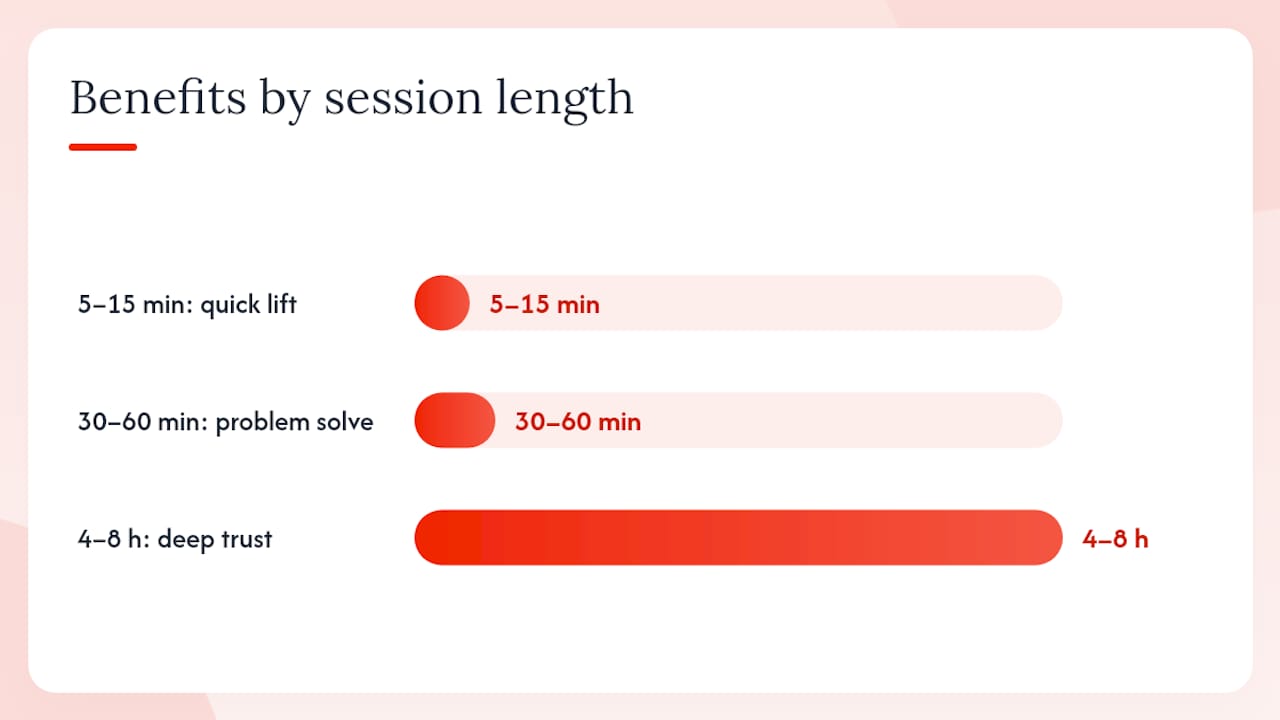
Here’s how the benefits typically map to time invested:
- 5 to 15 minutes: quick energy lift, light-touch bonding, works well as a meeting opener.
- 30 to 60 minutes: room for a proper problem-solving challenge, better for cross-team communication practice.
- Half-day to full-day: deeper trust-building, space for a facilitated debrief, and the best format for behaviour change that outlasts the event itself.
Don’t expect a single session to fix a broken team dynamic. What you can reasonably expect is a short-term morale bump every time, and cumulative trust gains from repeated, well-run sessions. The difference between the two is the debrief, covered further down, which is what turns a fun hour into an actual lesson people carry back to their desks.
How do you match the game mechanic to the outcome you want?
Start with the outcome, not the activity. Too many organisers pick a game because it looks fun on a vendor’s brochure, then try to retrofit a business reason afterwards. Facilitators generally sort desired outcomes into three buckets, and TeamRetro’s guide to team building games recommends matching the mechanic to the bucket rather than the other way round.
- Bonding and trust: pick storytelling exercises, shared-vulnerability icebreakers, or collaborative puzzles where success depends on listening to each other.
- Learning and problem solving: use simulations, timed challenges, or scenario-based games that force people to apply a work skill under mild pressure.
- Energy and morale: run scored, competitive, fast-paced games such as trivia or target challenges, where the point is a quick lift rather than deep reflection.
Once you know the bucket, run through four triage questions before booking anything: How much time do you actually have? How large is the group, and does the mechanic scale to it? Is everyone in one room, spread across sites, or fully remote? And are there physical, sensory, or language barriers that rule out certain formats?
Pro Tip: If you’re not sure which bucket applies, ask what you want people saying about the session a week later. “That was a laugh” points to energy and morale. “I didn’t know Sarah could think like that” points to bonding.
Getting this sequencing right, objective first, mechanic second, is the single biggest predictor of whether an activity earns its budget line or gets quietly dropped next year.
What are the best gamified team building activities by format?
The right activity depends entirely on where your people are sitting and how long you’ve got them for. Below is a working repertoire organised by format, with rough run times and group sizes, so you can match one to your triage answers from the section above.
In-person activities
- Target-based challenges (30 to 90 minutes, any group size): low-risk, scored games where accuracy and teamwork both count toward a shared result. A gamified interactive shooting session is a practical version of this, since it uses live scoring and rotating teams without any of the safety concerns of traditional ranges.
- Marshmallow-style prototyping (20 to 40 minutes, groups of 4 to 6): teams build a freestanding structure with limited materials, then present it. Good for surfacing quiet problem solvers.
- Outdoor scavenger hunts (45 to 120 minutes, larger groups): teams follow clues across a venue or campus, ideal for mixing departments that rarely interact.
Virtual activities
- Trivia rounds (15 to 30 minutes): straightforward, scored, and easy to run on any video platform.
- Virtual escape problems: a shared puzzle solved over chat or video, with a countdown clock to create urgency.
- Desk reveals: everyone shows one object from their workspace and explains it. Low effort, surprisingly good at humanising remote colleagues.
- Spec handoff exercises: one person describes a shape or structure verbally while a partner tries to recreate it without seeing the original, a sharp test of communication under pressure.
Hybrid and cross-location activities
Distributed teams need mechanics that don’t punish the remote half of the room. Synchronised scavenger hunts, where in-office and remote staff hunt for different clues that only combine when shared, work well here. QR-code and browser-based adventures let organisers build branching missions that update a shared leaderboard in real time. Platforms such as Mooveteam and AdventuriQ support exactly this kind of cross-location analytics, which is increasingly what clients ask for rather than a nice extra.
Micro activities (5 to 15 minutes)
- Quick values checks: one question, thirty seconds each, tied to a company value.
- Rapid-fire questions: “Would you rather” or “two truths and a lie” rounds that need zero setup.
- Two-minute pair rotations: swap partners every two minutes for a fast round of introductions or problem prompts.
- One-round trivia: five questions, no prizes needed, just a shared laugh before the real meeting starts.
If you want a low-effort starting point before committing budget to anything bigger, Laserclay’s low-risk team building playbook walks through exactly this kind of five-minute-first approach.
How do you plan, score, and measure a gamified event?
Good gamified sessions are planned like small projects, not surprises sprung on a Tuesday afternoon. Work through this checklist before you book anything:
- Confirm the objective and which outcome bucket it belongs to.
- Know your audience size and any accessibility needs in advance, not on the day.
- Assign a named facilitator, never leave the group to run itself.
- Test any tech (screens, QR scanners, video links) the day before, not the morning of.
- Timebox every segment, including the debrief, so the session doesn’t overrun.
- Build in at least one non-competitive way to contribute for people who don’t want to be scored.
Scoring itself deserves care. Keep it transparent, everyone should understand how points are earned in under a minute, and lean towards small recognitions rather than a single big prize. A “most creative solution” shout-out does more for morale than a £50 voucher that only one person walks away with, and heavy prize structures tend to demotivate everyone who didn’t win.
On measurement, you don’t need a data science team. Three signals are usually enough:
- Participation rate: what proportion of invitees actually took part, including partial or opt-out participation.
- Challenge completion: did teams finish what they started, and how close together did they finish?
- A short post-event survey: three questions is plenty, covering enjoyment, perceived usefulness, and one thing they’d change.
Purposeful planning with a clearly stated goal and real choice in how employees participate is consistently what separates activities that work from ones that don’t, according to guides built from office manager feedback. For a fuller framework on tying these signals back to business outcomes, Laserclay’s team building ROI guide breaks down how to link participation data to retention and engagement metrics over a longer period.
Why does the debrief matter more than the game itself?
The debrief is where a fun exercise turns into a lesson people actually take back to their desks, and facilitators consistently flag it as the single most important part of the session, not the game mechanic itself. Skipping it is the most common reason a well-run activity produces zero lasting change.
Run a short three-part debrief immediately after the activity, while the experience is still fresh:
- What happened? A factual recap, thirty seconds, no interpretation yet.
- What did we notice? Ask what surprised people about how the team communicated or solved the problem.
- What’s one thing to try at work? Push for a single, concrete action rather than a vague “communicate better” takeaway.
Ten minutes is usually enough for a short session; a full-day event deserves twenty to thirty.
Inclusion needs the same deliberate attention as the debrief. Build in non-speaking ways to contribute, written notes, a shared board, a nod-based vote, so people who dislike speaking up aren’t sidelined. Offer physical adaptations for anyone who can’t stand, move quickly, or handle certain equipment, and create at least one quiet role (scorekeeper, timekeeper, note-taker) for people who find high-energy games draining rather than energising. Event designers who favour low barriers to entry and multiple ways to contribute consistently see better participation from introverts and remote staff.
Pro Tip: Offer opt-outs by framing them around role choice, not exemption. “Would you rather play or keep score?” avoids singling anyone out.
Watch for red flags mid-activity: visible distress, someone being repeatedly excluded by teammates, or a competitive dynamic turning sharp. Any of these is a reason to pause, adjust the rules, or quietly offer someone a different role.
How does laser clay shooting work as a low-risk gamified format?
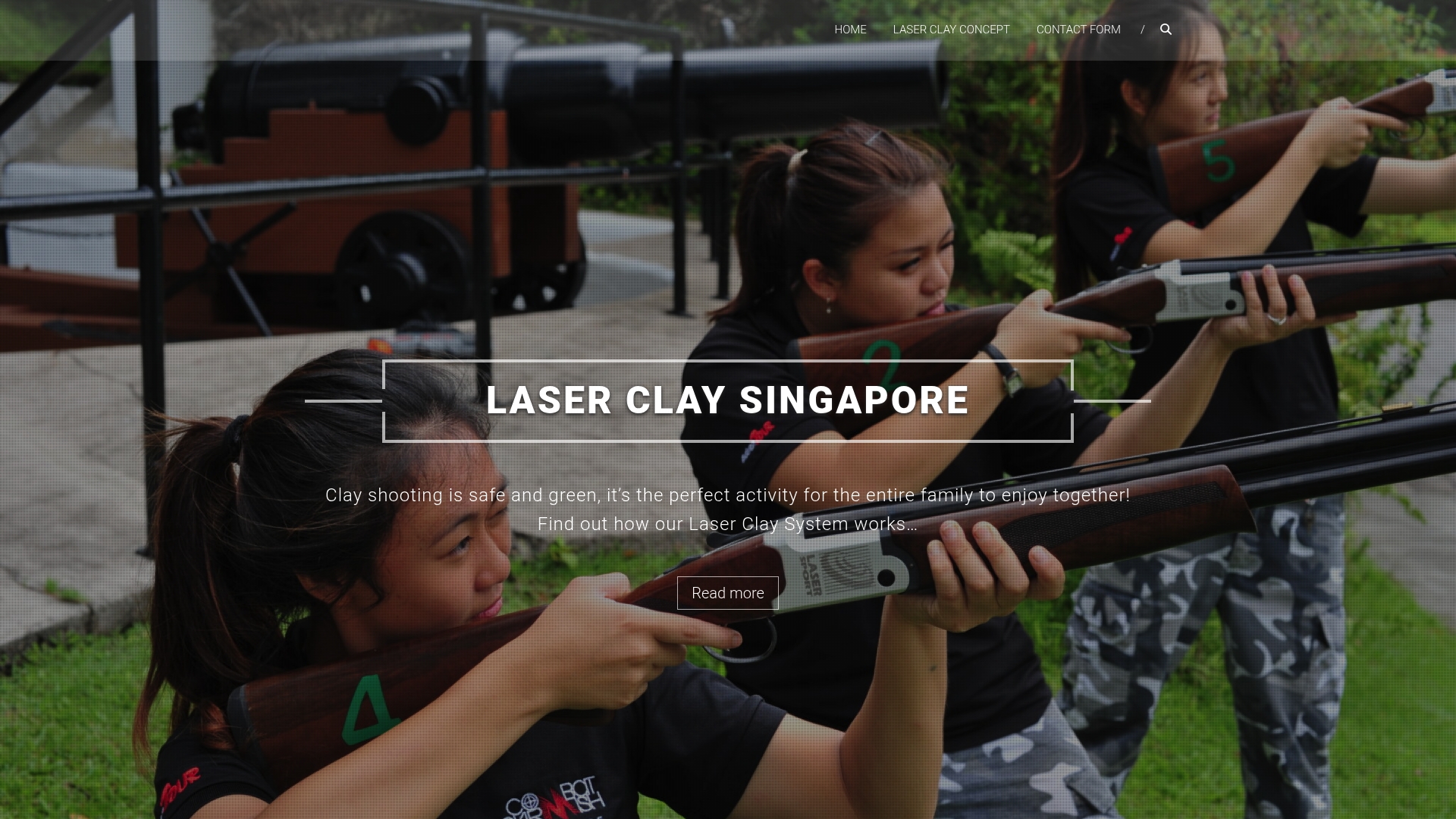
Laserclay’s facilitated events are a concrete example of what a well-scoped gamified activity looks like in practice. The format uses sound-simulated deactivated shotguns and reusable, eco-friendly clay targets, so teams get a genuine target-based competitive game without live ammunition, lead residue, or the noise concerns that come with a traditional range.
A typical corporate session runs with a facilitator managing rotations, real-time electronic scoreboards tracking each team’s results, and a format that can be dialled up for competitive scoring or kept casual depending on the group. That combination gives organisers several concrete outputs to capture afterwards: final scores, participation numbers across rotations, and facilitator observations about which teams communicated well under a timed challenge. Pairing that with the three-question survey from the measurement section above gives HR a genuinely useful before-and-after record, not just a set of nice photos.
Because it’s suitable for participants from age 10 upwards and adaptable to indoor or outdoor venues, it’s one of the more flexible options when a group spans skill levels or physical abilities. Details on how the format runs across different venue types are on Laserclay’s interactive shooting benefits page.
When gamified team building is not the right fit
Not every team needs a big set-piece event. If trust is already low or a team is mid-restructure, a single high-stakes competitive game can do more harm than good, since scoring tends to amplify existing tension rather than dissolve it. In those cases, run something small and repeated instead: a five-minute weekly icebreaker beats a one-off half-day event that people brace themselves for.
Competitive scoring and inclusive bonding pull in different directions more often than vendors admit. If your real goal is trust between people who barely speak, dial the competition down and let the mechanic carry less weight than the conversation around it.
My advice for anyone unsure: pilot one small session, ask three honest questions afterwards, and only scale up what the feedback actually supports. Guesswork dressed up as strategy is how most team-building budgets get wasted.
— Joshua
Book a facilitated laser clay session for your next team event
If your current options are a DIY quiz night, an expensive external facilitator, or an escape room booking that takes weeks to confirm, a facilitated laser clay session gives you a fixed, scored format without the setup headache. The Corporate Laser Clay Package includes a facilitator, equipment, real-time scoring, and a format you can adjust for competitive or casual play, indoors or outdoors.
Before booking any provider, run through Laserclay’s 8 booking questions for organisers to check facilitation quality, equipment safety, and how scoring is managed on the day. If you already have a venue and just need the kit, the System Rental option runs at 500 to 800 SGD per hour. Get in touch through the corporate team building page to check dates and lock in your next session.
Sources
For deeper activity libraries, SessionLab’s team building collection and Asana’s list of 45 games are solid starting points. For hybrid and location-based formats, Mooveteam’s guide to gamification in corporate events covers QR-based adventures in more depth than most HR blogs bother to.
- 45 team building games to bring teams together
- 25 team building games for work
- Team Building 2025: Gamification for Corporate Events
FAQ
What is gamified team building?
It’s the practice of applying game mechanics, scoring, competition, timed challenges, to workplace activities so that collaboration and communication skills get practised in a low-stakes setting.
How long should a gamified team building session last?
It depends on the outcome: five to fifteen minutes works for energy and morale, thirty to sixty minutes suits problem-solving practice, and half a day or more is better for deep trust-building with a full debrief.
Can gamified team building work for remote teams?
Yes. Virtual trivia, escape-style puzzles, and browser-based adventures with shared leaderboards all translate well to remote and hybrid teams when the mechanic doesn’t require everyone in one room.
Does laser clay shooting count as gamified team building?
Yes. Laserclay’s facilitated sessions use live scoring, team rotations, and a target-based challenge format, making them a practical example of a low-risk, measurable gamified activity for groups from age 10 upwards.
How do you measure the success of a gamified team building event?
Track participation rate, whether teams completed the challenge, and a short three-question post-event survey covering enjoyment, usefulness, and one improvement suggestion.