

The formats that consistently work are a family day or picnic, a multi-generation “bring your parents” event, a facilitated gamified competition such as Laser Clay, and a family skills workshop. None of these succeed on format alone: supervisor support and clear planning decide whether they land. Pick one, pilot it with a fixed budget and a short list of measures, and expand from there.
TL;DR:
- Family days and multi-generation events benefit from supervisor support and careful planning to ensure high engagement and safety, especially for children.
- Facilitated gamified activities like Laser Clay offer a clear, scored challenge that increases shared participation without physical risks and provides immediate engagement metrics.
- Running a small-scale pilot with one department and a single format helps validate return on investment before scaling up company-wide initiatives.
- Embedding family activities into ongoing policies and manager training sustains engagement and reinforces a supportive workplace culture over time.
- Using short surveys, attendance tracking, and qualitative feedback within 48 hours provides the necessary data to measure event impact and improve future family engagement efforts.
Table of Contents
- Top 12 family-inclusive activities with quick planner notes
- How to plan, permit and run a family engagement event
- Why manager behaviour and event design together determine impact
- How a facilitated, low-risk gamified activity fits family events
- Embedding family activities in policy and manager practice
- Laser Clay corporate package: a turnkey option for planners
- Sources
- FAQ
Top 12 family-inclusive activities with quick planner notes
Most HR teams do not need a longer list of ideas. They need a shortlist that has already been filtered for cost, risk and how easily it scales from a single department to the whole company.
- Family day or company picnic. Works for every age group and every family type, from a park afternoon to a full outdoor carnival. Logistics tip: book a rain contingency venue before you confirm the date.
- Multi-generation “bring your parents” day. Broadens participation among younger staff who may not have children of their own, since it welcomes parents, grandparents and siblings rather than assuming a nuclear family. Evaluations of these cross-generational initiatives point to measurable gains in how strongly employees identify with their employer.
- Skills workshops for adults and children together. Cookery classes, craft sessions or DIY workshops that pair an employee with a family member. Logistics tip: cap group size so every pairing gets hands-on time with the instructor.
- Active or sporty family sessions. Fun runs, non-contact sports days or community sport programmes give families a shared physical activity without competitive pressure.
- Facilitated gamified competitions. A scored, supervised game such as Laser Clay gives families a shared challenge with almost no physical risk and a leaderboard everyone can watch.
- Festival or fair format. Themed stalls, short performances and food corners turn a single activity into a half-day event that different departments can each own a slice of.
- Volunteer or community service day. Families pack care parcels or join a clean-up together, pairing engagement with a cause the company already supports.
- Hybrid or virtual family events. Useful for distributed teams: a cook-along, trivia night or virtual talent show that families join from home.
- Evening family learning sessions. Parenting talks or “tech for parents” clinics fit around school and work schedules better than a daytime event.
- Creative stations for children. Storytime corners and craft tables keep younger children occupied while parents attend the main programme.
- Family wellness sessions. Family yoga, stretching classes or health screening booths bring a preventative-care angle to the day.
- Condo or small-venue formats. Function-room activities of 45 to 90 minutes suit companies without access to a large outdoor space.
A few of these formats reward pairing with an existing community programme rather than building everything from scratch.
- Public programmes such as Families for Life, ActiveSG and the People’s Association Family PLAYGround offer ready-made activity themes and partner networks that reduce planning overhead for a festival-style day.
- School and community toolkits, including Project Appleseed’s activity templates, adapt well into corporate family stations and volunteer roles.
Pro Tip: Run one small-scale pilot (one department, one format) before committing budget to a company-wide family day.
How to plan, permit and run a family engagement event
A family event has more moving parts than a standard staff party: unfamiliar guests, mixed ages and, often, children on-site. A simple checklist keeps the risk manageable.
- Set objectives and target audience. Decide whether the goal is retention, onboarding of new hires’ families, or general goodwill, and name who the event is really for.
- Map outcomes to metrics. Tie the event to something you already track, such as engagement scores or voluntary turnover, so the pilot has a comparison point.
- Decide scale and budget bands. A departmental picnic and a company-wide festival need different budgets, headcounts and lead times.
- Choose a venue and confirm cover. Check public liability insurance, safety certificates and any permits the venue or activity provider requires.
- Collect age and needs data on RSVP. Ask about children’s ages, dietary restrictions and mobility needs so catering and activities can be adjusted in advance.
- Arrange supervision and safeguarding. Decide who is responsible for unaccompanied children during each activity block and brief them clearly.
- Build a run sheet with breakout zones. Separate active zones, quiet zones and food areas so families can self-select what suits them.
- Brief facilitators and supervisors. Everyone running a station should know the schedule, the safety rules and what to do if a child goes missing.
- Prepare a contingency plan. Weather, no-shows and equipment failure are the most common disruptions; have a fallback for each.
- Follow up after the event. Send a short survey within 48 hours while the experience is fresh.
Two things matter more than the rest of the checklist. First, safeguarding basics are not optional once children are on-site, even at an informal picnic. Second, the follow-up survey is where most companies drop the ball.
- Track attendance against RSVPs to see whether interest converts to turnout.
- Ask one Net Promoter Score-style question (“How likely are you to recommend this event to a colleague?”).
- Capture at least one open qualitative comment per family so you have a quote, not just a number, for the next budget request.
Why manager behaviour and event design together determine impact
A family day changes very little on its own. Family-friendly practices tend to improve employee outcomes only when supervisors behave in ways that support them, a pattern documented in research on family-supportive supervisor behaviours, including empathic listening and practical help with scheduling around the event. Put simply, the policy opens the door; the manager decides whether staff feel able to walk through it.
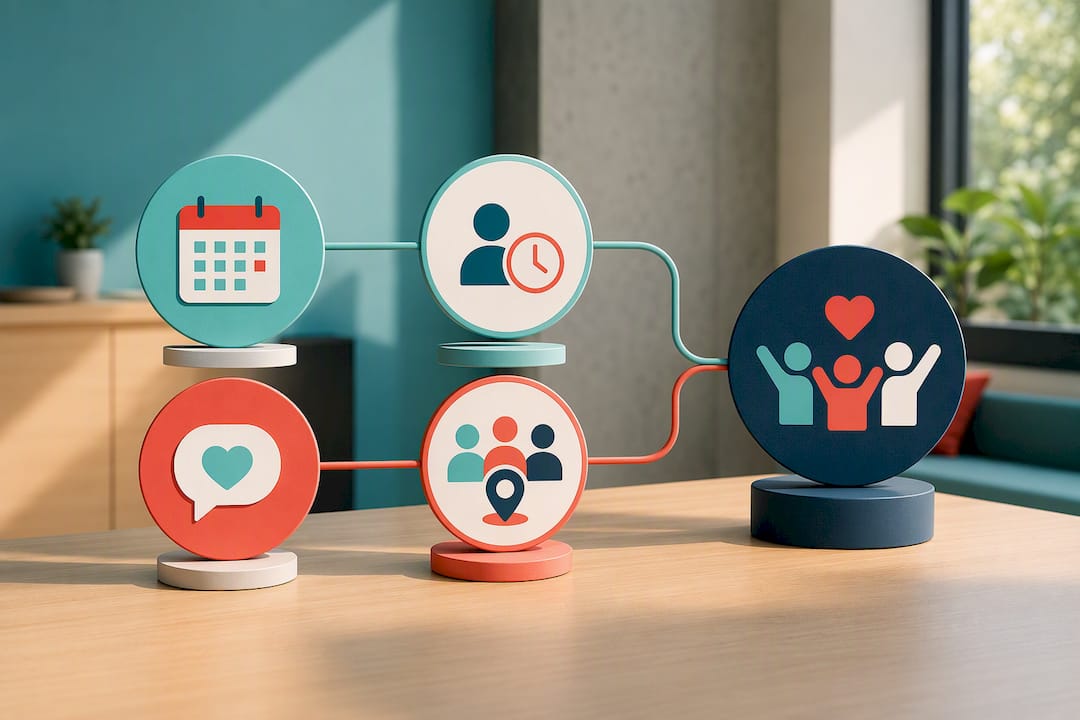
A longitudinal study found that family-supportive supervisory behaviour and work engagement reinforce each other over time, with each gain in support tending to predict a later gain in engagement, and vice versa. That reciprocal pattern is the practical argument for treating manager behaviour as part of event design, not a footnote to it.
Three actions make the difference between a well-attended event and one that actually moves engagement:
- Brief managers on the purpose of the event before it happens, not on the day.
- Ask managers to act as hosts or ambassadors at a station, rather than staying at the edges.
- Give managers two or three supportive conversation prompts to use with staff who mention scheduling conflicts or caring responsibilities.
A minimal measurement plan needs only two survey items (one on perceived supervisor support, one on work-to-family enrichment), attendance numbers and a note of any anecdotal comments about flexibility or scheduling that surface afterwards.
How a facilitated, low-risk gamified activity fits family events
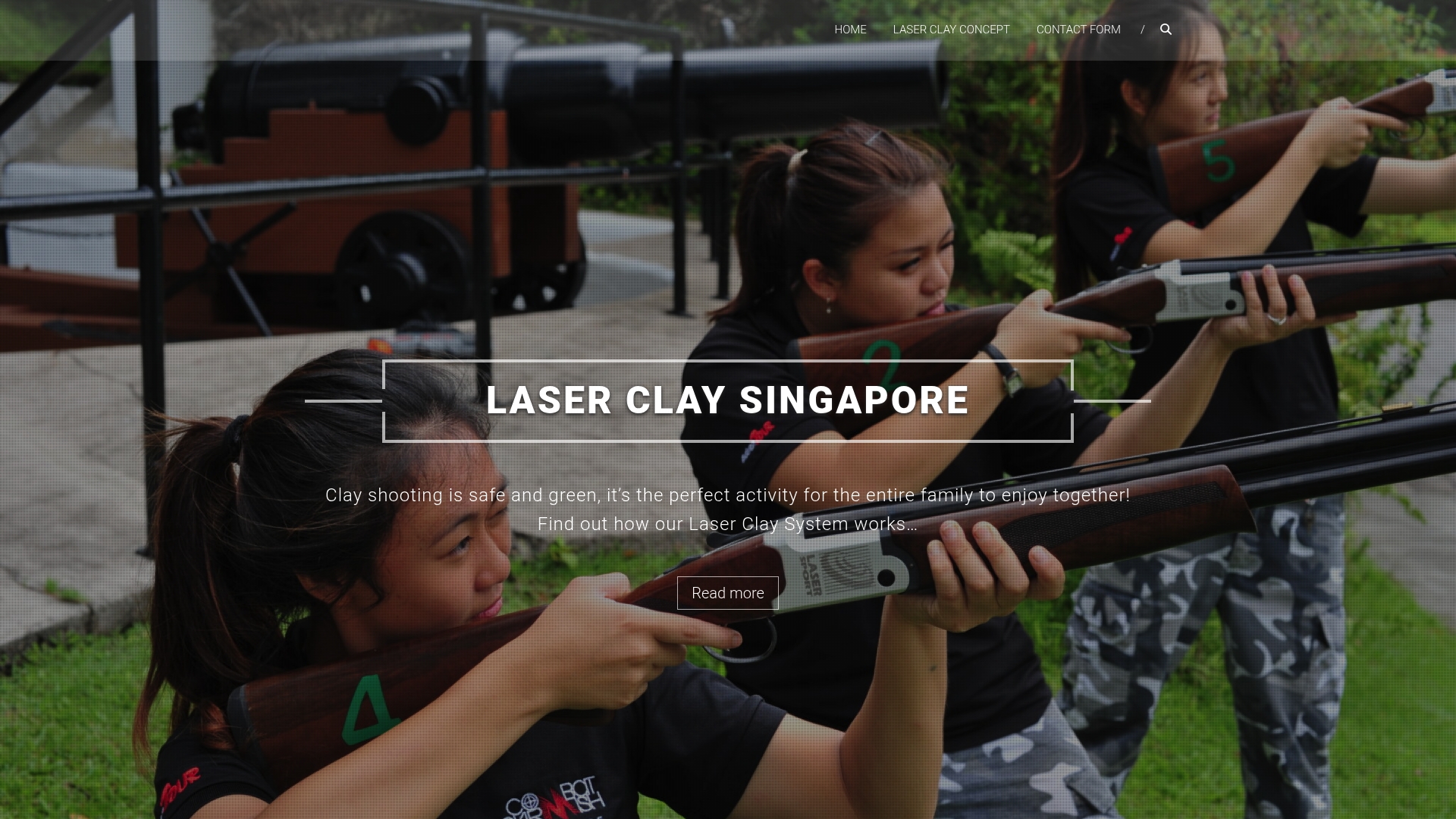
A facilitated, scored activity solves a problem that open-ended “mingling” events do not: it gives every family a shared task with a clear start and finish. Laser Clay is one example built for exactly this. It uses sound-simulated deactivated shotguns and reusable clay targets, so there is no lead ammunition and none of the noise or safety concerns of live clay shooting, which keeps it suitable for mixed-age groups from age 10 upwards.
For planners briefing a supplier or building their own run sheet, the checklist looks like this:
- Confirm indoor or outdoor space requirements and ceiling height where relevant.
- Assign one supervisor per station regardless of group size.
- Set session length at 45 to 90 minutes to fit within a broader family day schedule.
- Share age guidance with families on the RSVP form.
- Check accessibility needs (seating, standing time, sensory sensitivity to sound cues) in advance.
Electronic scoreboards give an immediate, visible measure of engagement during the event itself: how many teams played, how close the scores were, and how long people stayed at the station. Pair that with a short satisfaction question afterwards and you have both a real-time and a post-event data point from a single activity slot.
Pro Tip: Put the scored competition mid-event rather than at the start, once families have settled in and are ready to compete together.
Embedding family activities in policy and manager practice
The mistake most companies make is treating a family day as a one-off event rather than the first step in a routine. A workable roadmap runs from event, to manager training, to supportive policy, to quarterly family touchpoints. Guidance such as the Tripartite standards on family-friendly workplaces frames this as an ongoing commitment, not a single afternoon. Skip the roadmap and the goodwill from one good event fades within a quarter.
— Joshua
Laser Clay corporate package: a turnkey option for planners
For planners who want a family-ready activity without building it from scratch, the Corporate Laser Clay Package is priced at 69 SGD one-off per person and includes facilitation, scoring and full set-up and teardown, adapted for indoor or outdoor venues.
It suits several formats already covered above:
- A festival stall or scored competition slot within a larger family day.
- A condo or small function-room event where space and time are both limited.
- A standalone booking for a department that wants to pilot before scaling company-wide.
Get a quote or check dates through the contact page.
Sources
- SMU thesis on family-supportive supervisor behaviour and work-family practices
- Cross-lagged associations among family-supportive supervisory behaviours, leader–member exchange, and work engagement (BMC Psychology)
- Bring in your parents day: building inclusion and engagement
FAQ
What are the top employee engagement activities involving family?
The formats with the strongest track record are a company family day, a multi-generation “bring your parents” event, a facilitated gamified competition, and a family skills workshop. Each works best when paired with clear objectives and a short post-event survey rather than run as a one-off treat.
What are some examples of family engagement activities?
Examples include family picnics, cookery or craft workshops that pair employees with relatives, community volunteer days families join together, and scored games such as Laser Clay. Bring in your parents day formats are especially effective at including staff without children.
What are some fun activities for employee engagement that include families?
Active sessions, festival-style fairs with stalls and performances, and facilitated competitions such as Laser Clay all give families a shared, low-pressure task to do together. Laser Clay in particular runs on scored electronic leaderboards, which gives planners an immediate read on how engaged attendees were during the session.
What are the 5 C’s of employee engagement?
Definitions of the “5 C’s” vary across HR sources, and no single authoritative version applies universally. A common version covers care, connect, coach, contribute and congratulate, though companies should check which framework their own engagement survey provider uses before quoting it internally.
How do I measure the ROI of a family engagement event?
Track RSVP-to-attendance conversion, a short Net Promoter Score-style question, and at least one qualitative comment per family in a post-event survey sent within 48 hours. Pairing this with attendance data and any change in flexible-work uptake afterwards gives a fuller picture than attendance numbers alone.