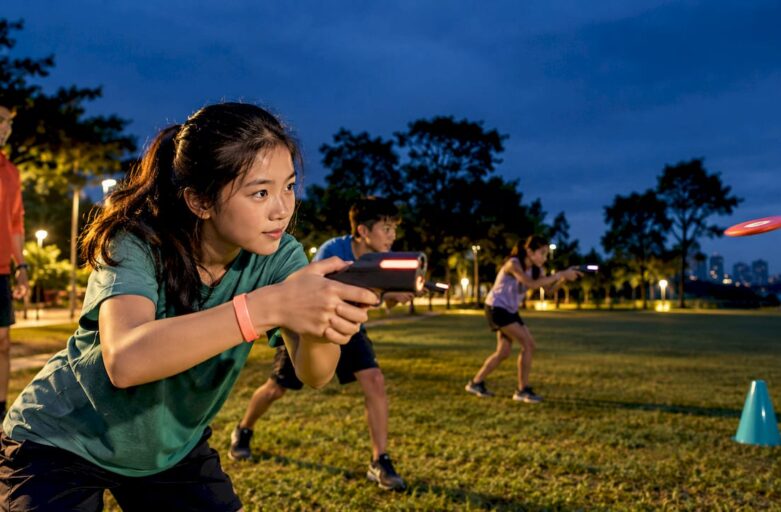
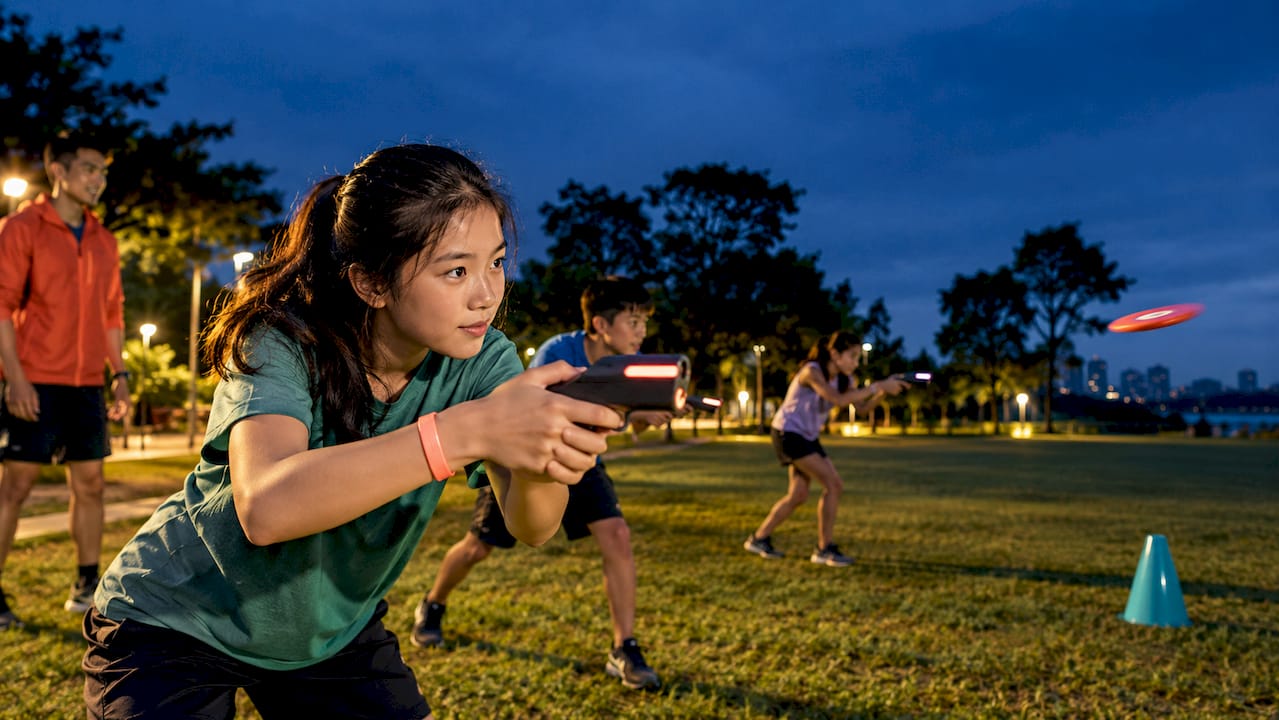
Night walks, quiet observation exercises, low-light team games and a facilitated equipment activity such as Laser Clay work best for Singapore camps, run alongside proper permits and clear supervision roles. This guide is built for parents and camp organisers planning nights for children roughly aged 6 to 13, covering exactly which games to run, the NParks paperwork required, and the kit list for a safe evening.
TL;DR:
- Night activities should be scheduled early in the evening, with high-energy games like capture the flag before campfire segments to help children settle down.
- Supervision ratios must include a designated leader, a tail staff member, and regular headcounts at key points to ensure children stay safe and within sight.
- Permits are required for camping in public parks, with backup plans needed for weather issues or the absence of fire permits, especially for open flame activities.
- Proper lighting, such as headtorches with red filters and glow sticks, is crucial for safety and wildlife preservation during night walks and torch relays.
- Facilitated activities like Laser Clay offer a low-noise, no-fire option with trained guides, suitable for groups of 10 or more, and should be booked well in advance to avoid availability issues.
Table of Contents
- 1. Night games and activities that work for Singapore camps
- 2. How to plan, brief and supervise night activities safely
- 3. Permits, venue rules and logistics for Singapore night camps
- 4. Equipment, lighting and eco-friendly kit for night activities
- 5. Aligning your programme with Singapore standards and expert guidance
- 6. Practical planner notes on running night camps well
- 7. Laser Clay packages for camps and how to book
- Sources
- FAQ
1. Night games and activities that work for Singapore camps
Camps in Singapore tend to run best with a mix of quiet nature activities, active team games, and one calmer campfire-style segment to close the evening. Here are the activities worth scheduling, with the practical detail organisers need to slot them into a run sheet.
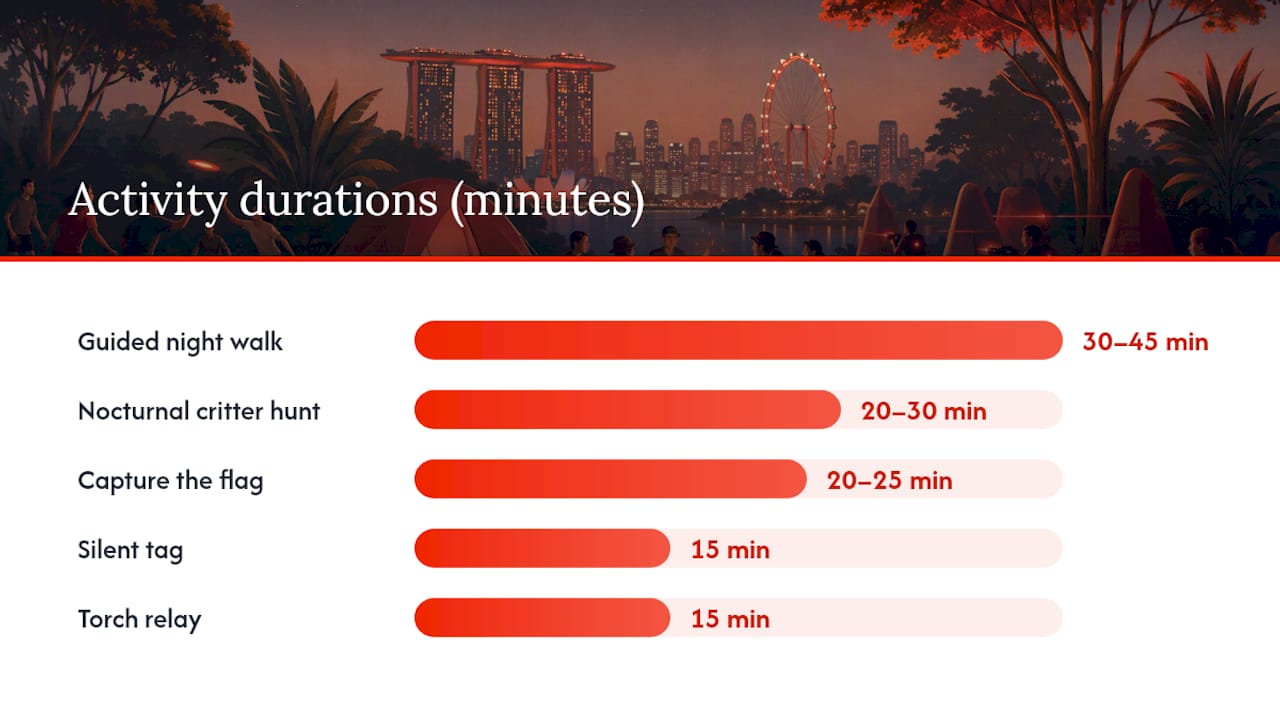
- Guided night walk: objective is nocturnal observation; needs headtorches with red filters and a staff lead plus tail; suits groups of 10 to 15, ages 6 to 13, 30 to 45 minutes; keep to marked paths and maintain a buddy system throughout.
- Nocturnal critter hunt: objective is spotting insects, frogs and birds using torches and a simple checklist; works for small groups of 6 to 8; 20 to 30 minutes; brief children on not touching wildlife and staying within sight of a staff member.
- Silent tag: a low-light tag variant where taggers move without speaking and rely on torchlight cues; ideal for open, cleared ground with 12 to 20 children aged 8 and up; 15 minutes; mark boundaries clearly and use whistles to signal stop.
- Capture the flag at dusk: a classic two-team format played as light fades; needs coloured armbands or glow sticks and a flat, open field; suits 16 to 30 children aged 9 to 13; 20 to 25 minutes; set a hard boundary and station one adult per team.
- Torch relay: teams pass a torch through a short obstacle course; needs cones, torches and a stopwatch; works for groups of 8 to 16; 15 minutes; keep the course short to avoid trips over uneven ground.
- Mini campfire circle: singalongs and storytelling: a seated, low-key segment for winding the evening down; needs a designated fire pit or a battery-powered “camplight” where open fires aren’t permitted; suits any group size split into circles of 15 to 20 children; 20 to 30 minutes.
- Marshmallow toasting with clear rules: only where a permit for open flame exists; one adult supervises the fire directly at all times; skewers checked for length and children seated at a fixed distance.
- Facilitated equipment activity (Laser Chip): a structured, low-noise station activity using laser-based equipment and real-time scoring, run by trained facilitators rather than camp staff; suits groups of 10 and older children; about half an hour to three quarters of an hour per rotation.
Pro Tip: Run high-energy games like capture the flag and silent tag before the campfire circle, never after, so children have time to settle before lights-out.
For camps splitting into rotating stations, keep each block to 15 to 20 minutes and cycle smaller groups through rather than running one large activity for everyone at once. This keeps supervision ratios manageable and stops children losing interest halfway through, a common issue when a single game runs too long for the age group.
2. How to plan, brief and supervise night activities safely
A safe night programme starts well before torches come out. Build your run sheet around these steps.
- Hold a pre-activity safety briefing covering wildlife encounters, torch etiquette (no shining in faces), the buddy system, and a strict no-personal-device policy during activities.
- Set supervision ratios before the trip: MOE camp examples typically split large cohorts into small groups, each with a named leader, a “tail” staff member walking last, and a designated medic or first-aider.
- Assign a radio or phone contact person who stays at base and holds an after-hours parent contact list, matching the practice seen in published school camp procedures.
- Run headcounts at three fixed points: pre-move, on arrival, and post-activity, a routine drawn directly from school camp planning documents.
- Confirm at least one staff member holds a recognised first-aid qualification; Wilderness First Aid is recommended given the outdoor, low-light setting.
- Prepare a wet-weather fallback (indoor games or a delayed start) and a light-failure contingency (spare torches staged at the base point).
- Set a hard return-by time and a clear escalation step if any group is late, with the base contact authorised to alert camp leadership immediately.
A practical headcount routine such as “pre-move, on arrival, post-activity” with named staff responsible for each count, paired with a buddy system, meaningfully reduces the chance of a child drifting from the group during a night walk.
3. Permits, venue rules and logistics for Singapore night camps
Running a night camp in a public park means dealing with NParks rules first. NParks requires a permit to camp in designated areas such as Pasir Ris Park and East Coast Park, applied for through Singpass, and these permits are generally non-transferable and cannot be cancelled once issued. Because permits are weather-inflexible once confirmed, book with a backup date or indoor fallback in mind, and consider a private venue when your group needs more control over layout, noise, or timing.
Before locking in a location, confirm this checklist:
- Toilets and washing facilities within reasonable walking distance of the campsite.
- Fixed lighting at gathering points, separate from the torches carried during activities.
- A dry shelter for briefings, wet-weather fallback, or first-aid needs.
- Transport access for late arrivals, early departures, or an emergency evacuation.
- Noise limits and curfew times, particularly near residential areas.
- Staff access to the site ahead of the children’s arrival for a full site check.
4. Equipment, lighting and eco-friendly kit for night activities
Good lighting decides whether a night programme runs smoothly or falls apart. Headtorches with red-light filters preserve night vision for wildlife spotting without startling animals or blinding other children, and every group leader should carry spares along with backup batteries. Reflective markers or glow sticks help mark boundaries for games like capture the flag without needing fixed lighting rigs.
- Headtorches with red filters, one per child where budget allows, plus spare batteries per group.
- Glow sticks or reflective armbands to mark team boundaries and quiet-zone edges.
- A battery-powered “camplight” for parks where open fires aren’t permitted, keeping the campfire circle atmosphere without breaching park rules.
- Reusable, low-impact game props (cones, ropes, cloth flags) rather than single-use materials.
Pro Tip: Pack double the batteries you think you need; night walks and torch relays drain them faster than expected, and a dead torch mid-activity is a common cause of delay.
Where a fire permit isn’t available, or where organisers want a station that needs no flame, no shouting, and minimal setup risk, Laser Clay offers a facilitated option built around laser-based equipment and real-time scoring. Organisers should expect the activity to arrive with trained facilitators, reusable targets, and a self-contained setup that avoids the noise and lead-ammunition concerns of traditional clay shooting.
5. Aligning your programme with Singapore standards and expert guidance
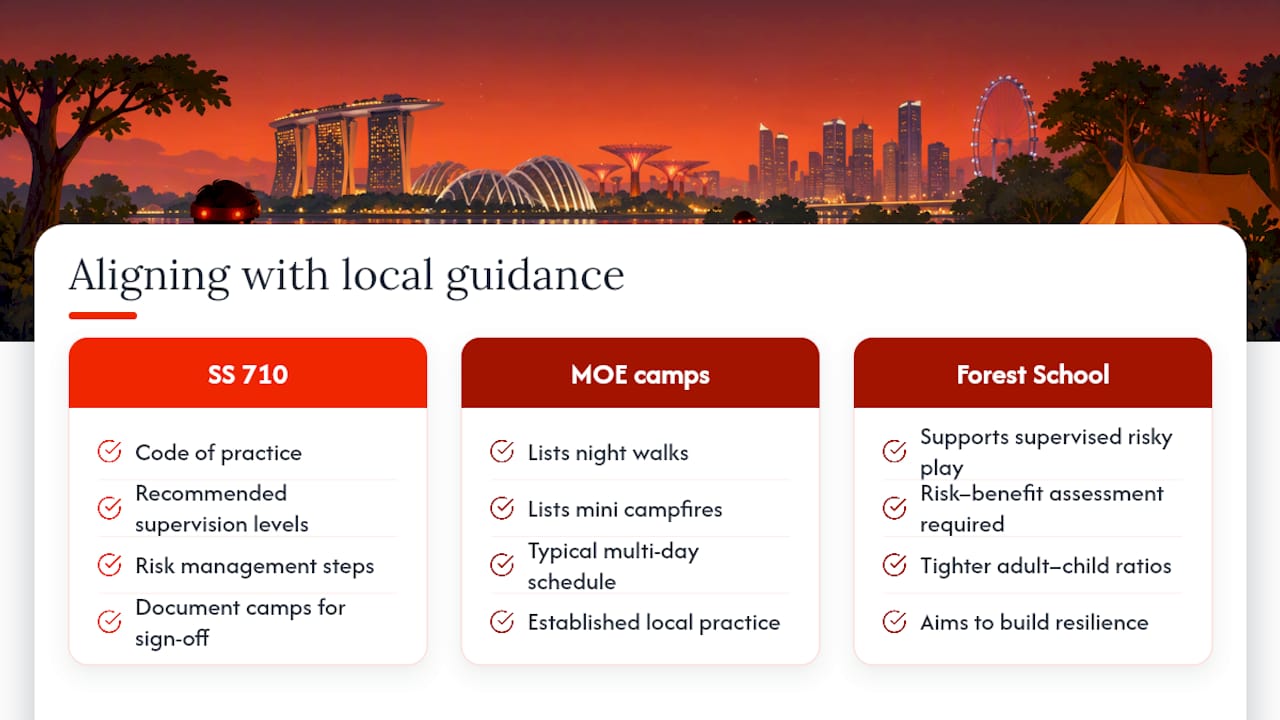
Singapore Standard SS 710:2024 sets out a code of practice for outdoor adventure education, including recommended supervision levels and risk management steps for activities like night walks. Documenting your camp against this standard makes sign-off with schools and parents considerably easier, since it maps roles and supervision expectations clearly rather than leaving them to individual judgement. MOE school camp materials list night walks and mini campfires as standard elements of a typical multi-day schedule, indicating these activities are well established in local practice. Forest School practitioners in Singapore argue that supervised risky play, backed by a proper risk-benefit assessment and tighter adult-to-child ratios, builds resilience that overly cautious programming tends to strip out.
6. Practical planner notes on running night camps well
The biggest mistake organisers make is booking lighting and equipment too late, then discovering headtorches or facilitated stations are unavailable on their date. This type of facilitated laser clay shooting activity tends to slot into a night schedule as a bounded 30 to 45 minute rotation, and organisers appreciate that it needs no fire permit and runs the same regardless of weather.
— Joshua
7. Laser Clay packages for camps and how to book
For school camps and youth groups, the Corporate Laser Clay Package at a package starting at around sixty-nine Singapore dollars per person includes facilitators, scoring, and reusable clays, adaptable for a camp night rotation rather than a full corporate event. Smaller birthday-style groups suit the birthday party package from $49 SGD per person. Before booking, confirm your site has flat ground and enough clearance for the equipment.
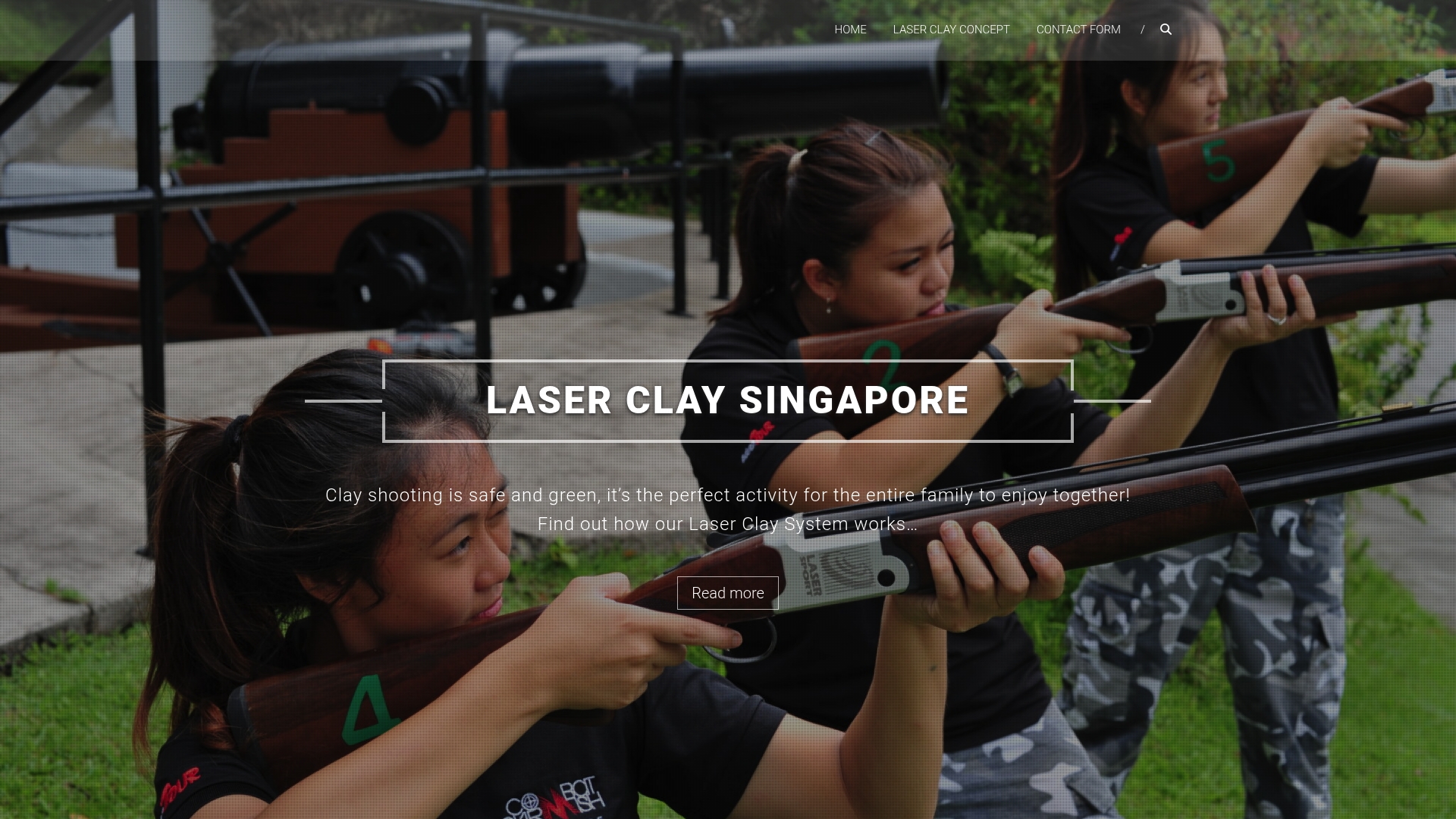
For larger camps wanting to run sessions across multiple stations, System Rental is available from $500 to $800 SGD per hour with facilitator support. Check current availability and get a quote through Laser Clay’s contact page.
Sources
For permit applications and campsite rules, go directly to NParks’ camping pages. For supervision and documentation standards, consult SS 710:2024. For real-world scheduling examples, MOE camp slides and Forest School commentary on risky play offer useful pedagogical context. Organisers looking for extra activity inspiration can also browse ideas for youth swim camp projects for station-format ideas that translate well to night rotations.
- NParks — camping information for public parks
- Radin Mas Primary School camp slides
- Forest School perspective on risky play (Wildlings Singapore)
FAQ
What are some fun nighttime activities in Singapore?
Guided night walks, nocturnal wildlife spotting, low-light team games like capture the flag, and campfire-style singalongs are common choices for camps. Facilitated station activities such as Laser Clay also work well where organisers want a bounded, low-noise segment.
What games can you play at camp?
Camps typically mix nature-based activities (night walks, critter hunts) with active team games (silent tag, torch relays) and a quiet closing segment such as a campfire circle. MOE camp schedules show these elements running together across a single evening.
What are some fun games to play in Singapore?
Beyond camp settings, torch relays, silent tag and team-based flag games work well in parks and open fields once light fades. For a facilitated, all-ages option, Laser Clay offers a structured game format with real-time scoring.
What are some fun activities I can do in Singapore with friends?
Group-friendly options include night walks in designated park areas, team relay games, and facilitated activities that need no personal equipment or experience. Laser Clay is one such option, suited to groups looking for a guided, low-setup activity.
Do I need a permit to run night activities in a Singapore park?
Yes, NParks requires a permit for camping in designated public park areas, and open fires are not allowed without explicit permission. Permits are generally non-transferable, so confirm your date and group size before applying.