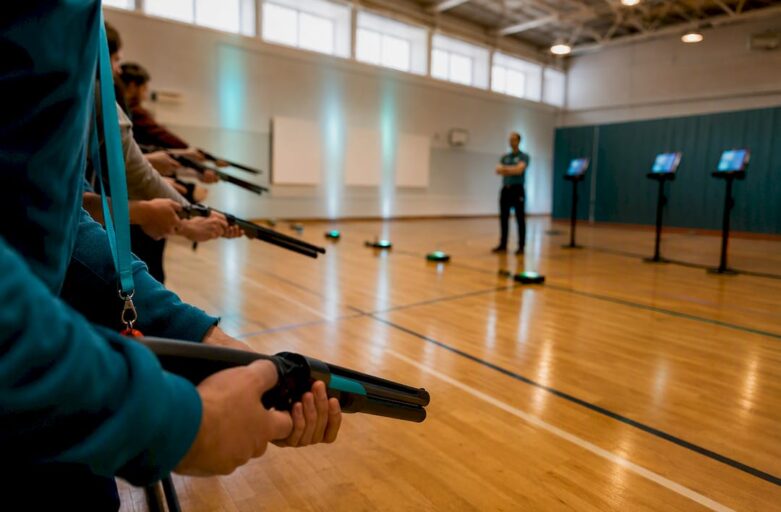
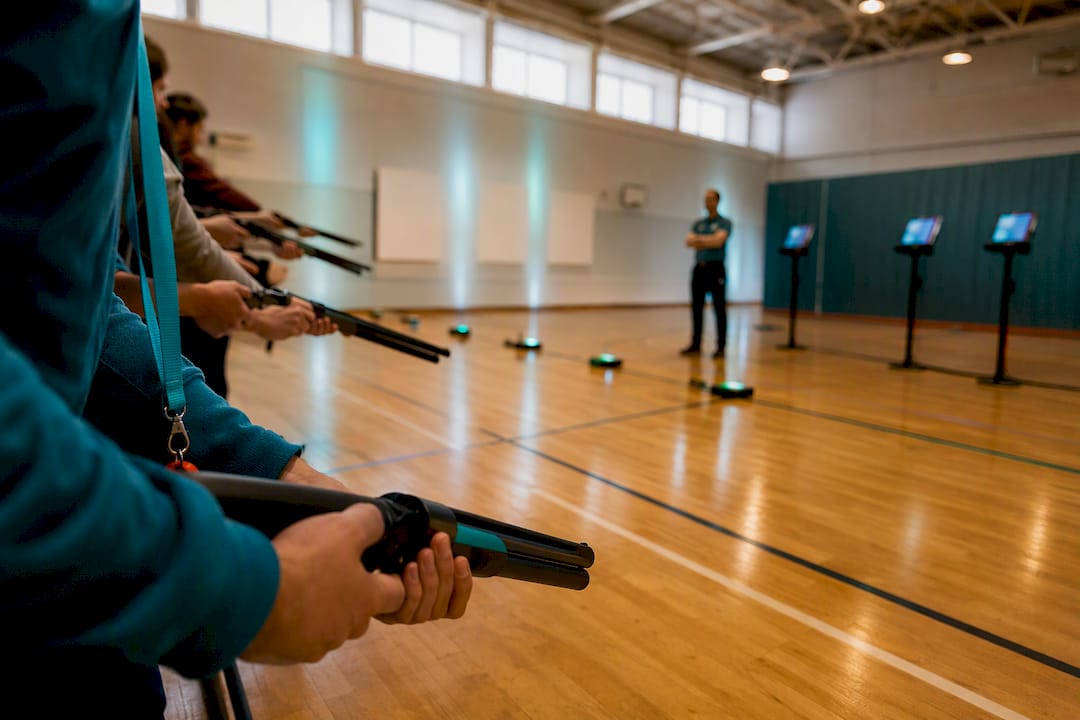
Fair scoring in laser clay means every participant shoots equal targets under equal conditions, watches their result register on a visible scoreboard, and knows the tie-break method before the first shot fires. The single action that fixes most disputes before they happen: publish your scoring rules and tie-break procedure at registration, borrowing structure from established frameworks like the CPSA rulebook and Sporting Clays Australia’s guidelines, without pretending a birthday party needs formal governing body oversight.
TL;DR:
- The scoring rules must be published before the event, with clear tie-break procedures and visible scoreboards to ensure transparency and consistency.
- Using simplified scoring methods, such as binary hit/miss for kids or entry-level groups, prevents confusion and speeds up the game.
- Tie-breaks should be pre-announced and involve identical target sequences, with shoot-offs favored over count-back to determine winners fairly.
- Electronic scoreboards and pre-set game modes help eliminate referee bias and reduce disputes, especially in short or casual events.
- Strict pre-event checks, clear communication, and balanced team formations are crucial for maintaining fairness in mixed-ability groups.
Table of Contents
- What does fair scoring actually mean for laser clay?
- Which scoring methods work best for laser clay events?
- How should tie-breaks and shoot-offs work?
- How do you keep records that hold up if someone disputes a score?
- What’s the pre-event fairness checklist every planner should run?
- How do you keep mixed-ability groups fair without overcomplicating it?
- How does Laser Clay’s system support fair scoring at events?
- What the rulebooks get right, and what most party planners get wrong
- Book an event where fair scoring is already built in
- Sources
- FAQ
What does fair scoring actually mean for laser clay?
Fairness isn’t a vibe. It’s three concrete guarantees, and each one is checkable on the day.
The first is procedural consistency: everyone shoots the same number of targets, under the same lighting, sound and layout conditions, with the same referee standard applied to every call. The CPSA’s technical rules treat this as more important than the scoring formula itself. Get the conditions equal, and most arguments about “who’s better” evaporate on their own.
The second is transparency. Your scoring formula should be published before anyone picks up a gun, the running total should be visible somewhere everyone can see it, and there should be a plain answer to “who do I talk to if I disagree with a call?”
The third is proportionality. A 45 minute birthday session doesn’t need the scoring complexity of a corporate league night, and forcing it usually confuses ten-year-olds more than it entertains them.
- Equal targets, equal conditions, consistent referee calls
- A scoring method announced before play, not explained after a dispute
- A visible scoreboard or running tally, not a scorer’s private notebook
- A scoring system that matches the event’s length and audience
Pro Tip: *Print the scoring rules on a single A5 card and hand one to each team captain at check-in.
Which scoring methods work best for laser clay events?
Most laser clay scoring borrows from live clay-shooting conventions, then simplifies them for shorter, mixed-ability sessions.
The most detailed option is a point-based system, adapted from patterns like the 3/2/0 model used in CPSA’s general and technical rules, where a first-barrel hit scores higher than a second-barrel hit and a miss scores zero. It rewards precision and works well for corporate groups who enjoy a competitive edge.
At the other end sits binary hit/miss scoring, a straight 1 or 0 per target. Sporting Clays Australia uses simplified scorecard notation like this for shorter or entry-level formats, and it’s the right call for children’s parties or anyone new to shooting sports. Nobody needs to explain “second-barrel value” to an eight-year-old.
Time or mode-based scoring, such as rapid-fire rounds or speed-shoot formats, suits energetic corporate icebreakers but only works fairly when the point values per hit are announced before the clock starts.
- Point-based (3/2/0 style): detailed, rewards accuracy, best for competitive corporate groups
- Binary hit/miss (1/0): simple, fast to explain, best for kids and beginners
- Time or mode-based: high energy, needs point values fixed and announced in advance
Match the system to the crowd, not the other way round. A school camp with 40 kids on a tight schedule needs binary scoring and nothing more.
How should tie-breaks and shoot-offs work?
Tied scores are inevitable once you run more than a handful of players, so decide the method before anyone asks.
- Announce the shoot-off format in advance. Rulebooks including the CPSA’s tie-break guidance recommend that tied competitors shoot an identical number of targets under identical conditions, with a fixed ten-target shoot-off used as a common example.
- Offer a short sudden-death round as the faster alternative. First miss loses. It’s quick, but only fair if both shooters face the same target sequence and speed.
- Avoid count-back entirely. Deciding a winner by comparing earlier round-by-round results rather than a live shoot-off is discouraged at registered events precisely because it rewards a lucky earlier round rather than current form.
- Set a rule for malfunctions and disputed hits before they occur. A dropped signal or a contested laser register should trigger an immediate reshoot of that target, not a debate.
Keep the shoot-off itself short. Nobody wants a five minute tie-break turning into a twenty-minute one at a corporate event with a bus waiting outside.
How do you keep records that hold up if someone disputes a score?
Every dispute gets easier to resolve when there’s a written or digital trail, and harder when there isn’t.
Run a primary record (a scorecard or electronic export) alongside a public display, and reconcile the two immediately after each round while memories are fresh. Sporting Clays Australia’s rules require electronic score recording at registered events for exactly this reason: paper alone invites arguments weeks later that nobody can settle.
- Keep a primary scorecard or digital export, not memory alone
- Reconcile the public display against the primary record after every round
- Retain records for a reasonable period after the event in case a query comes up later
- Test scoreboard equipment before guests arrive, not after the first miss
Electronic scoreboards close most of the gap between “the referee says you missed” and “you can see for yourself.” Lasersport’s scoreboard systems display each hit the moment it registers, which removes the delay that used to force groups to wait on a human scorer to catch up and call a result.
A well-run laser clay session shouldn’t lose more than a minute or two to scoring confusion per round. Most disputes trace back to a missing record, not a genuinely wrong call.
Set a simple dispute workflow too: one named person to approach, a short window to raise it (before the next round starts), and a clear answer either way.
What’s the pre-event fairness checklist every planner should run?
Fairness lives or dies in the ten minutes before anyone picks up a gun. Run through this in order:
- Publish the rules early. Put the scoring method, tie-break format and dispute process in the invitation or at registration, not verbally halfway through the session.
- Equalise the targets. If you’re running more than one layout or station, make sure everyone shoots the same number of targets, and rotate group order on a pre-set schedule rather than letting groups pick their spot.
- Name your scorer and a deputy. One person owns scoring decisions; a second can step in if the first is called away.
- Test the electronics before guests arrive. Run a full systems check on the scoreboard, not a glance at the power light.
- Run a two-minute demo round. Show the group exactly how a hit registers on screen and what a tie-break shoot-off actually looks like.
Pro Tip: Do the demo round with the least confident-looking person in the group, not your most enthusiastic volunteer. If they understand the scoring after watching one demo hit, everyone will.
How do you keep mixed-ability groups fair without overcomplicating it?
Corporate groups almost always mix first-timers with people who’ve shot before, and complex long-term handicap systems solve a problem you don’t have at a one-off event.
A simple grade band works better: split people into “new” and “some experience” after a quick warm-up round, rather than calculating individual handicaps. Sporting Clays Australia’s handicapping rules are built for repeat club competitors tracking rolling scores over months, not a two-hour team-building session.
- Use a brief assessment round instead of a calculated handicap
- Keep shoot-offs off-the-gun, meaning handicaps don’t carry into tie-breaks
- For short party formats, balance teams by mixing skill levels rather than adjusting scores
For a one-off event, balanced teams beat handicaps almost every time. It’s faster to explain and nobody feels like they’re being marked down.
How does Laser Clay’s system support fair scoring at events?
Electronic scoreboards and pre-set game modes remove most of the guesswork a human scorer introduces under time pressure. Laser Clay’s scoreboard system displays hits the moment they register, so groups aren’t waiting on someone to tally results by hand between rounds.
Facilitated packages carry this further: because the game format and scoring method are fixed before the event starts, there’s far less room for ad hoc referee judgement calls mid-session. Planners booking a package can request the rules sheet in advance, covering scoring method and tie-break procedure, and hand it to team captains before anyone picks up a gun. It’s the same principle rulebooks apply at a much larger scale, scaled down to fit a two-hour session.
What the rulebooks get right, and what most party planners get wrong
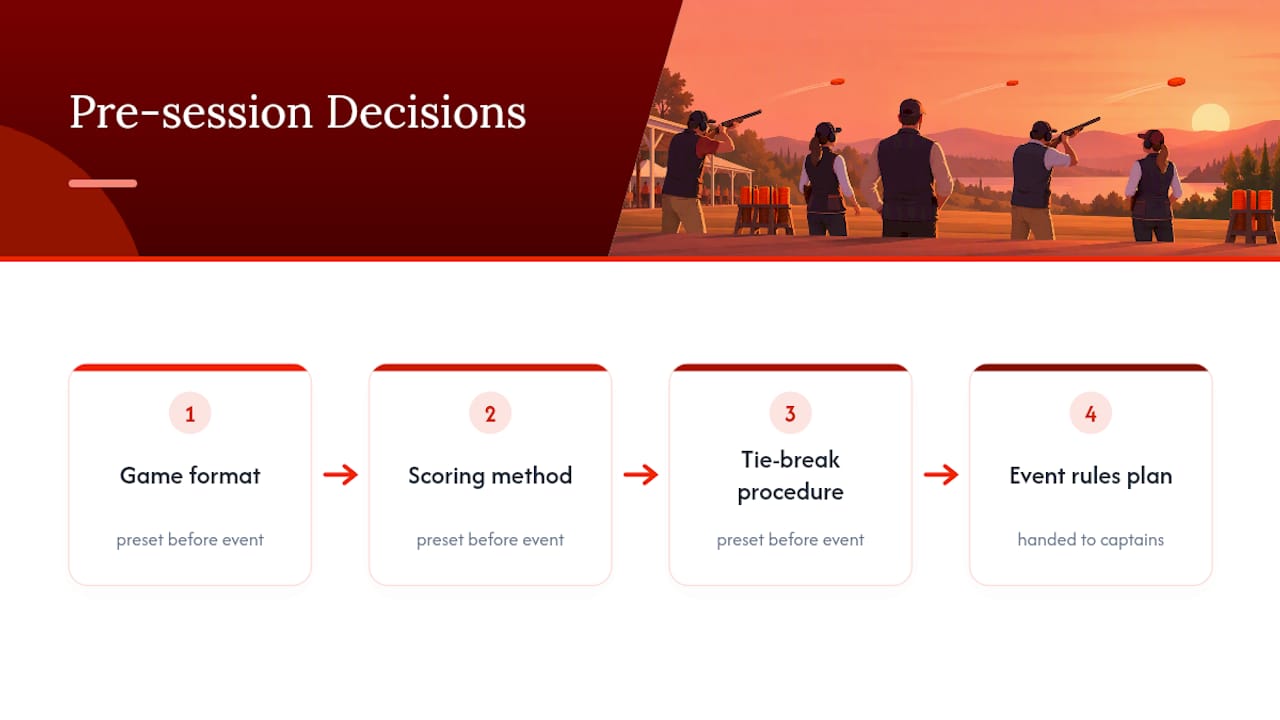
The clay-shooting rulebooks got one thing right that most recreational events ignore entirely: fairness is decided before anyone shoots, not after someone complains. CPSA and Sporting Clays Australia don’t waste time debating what’s fair mid-competition, because the rules, the tie-break format and the record-keeping method are locked in advance.
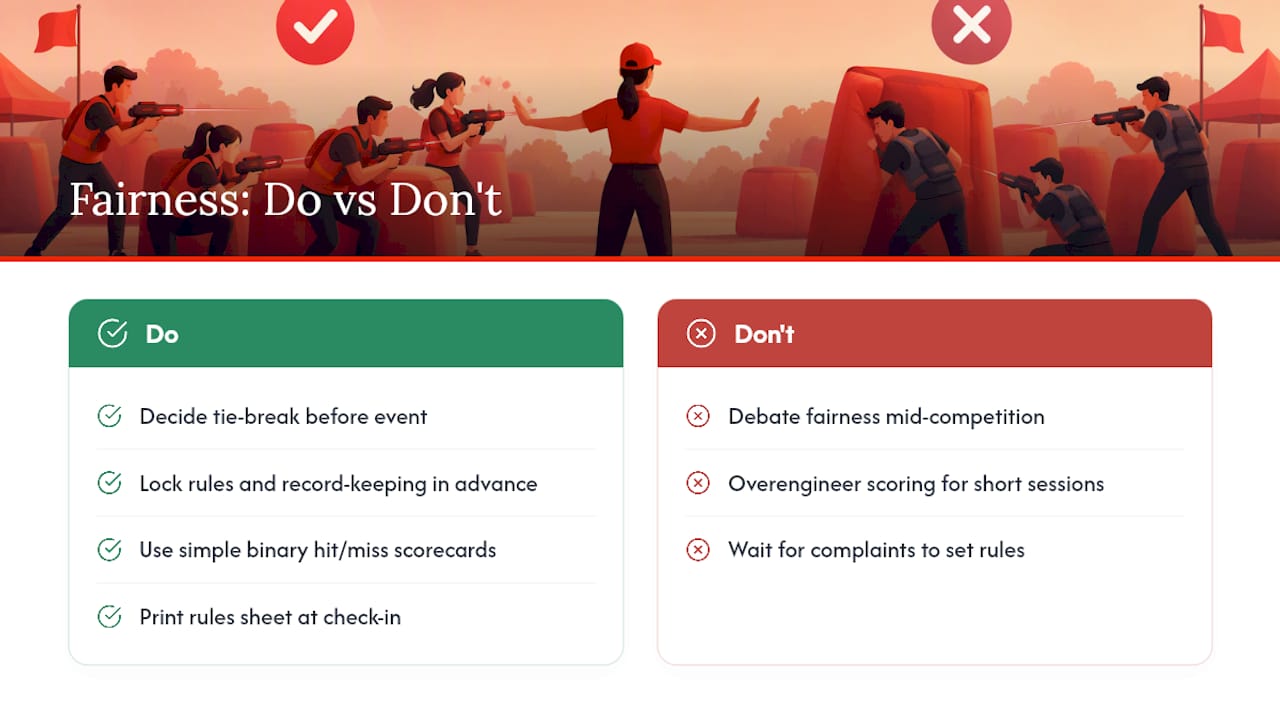
Where I’d push back on conventional event-planning advice is the assumption that fairness needs complexity to feel credible. It doesn’t. A binary hit/miss scorecard and a printed rules sheet handed out at check-in deliver most of what a full handicap system does, for a fraction of the setup time. Overengineering the scoring for a two-hour corporate session is a bigger mistake than underengineering it.
If you take one thing from the rulebooks and apply it Monday morning, make it this: decide your tie-break method before you need it, not while two directors are standing at the line waiting for a result. Everything else on this list is refinement. That single habit is what actually prevents the awkward five minutes where nobody can agree on what happens next.
— Joshua
Book an event where fair scoring is already built in
Laser Clay handles the scoring logistics most planners end up improvising on the day, using electronic scoreboards and pre-set game modes so the rules are fixed before anyone arrives, not negotiated mid-session.
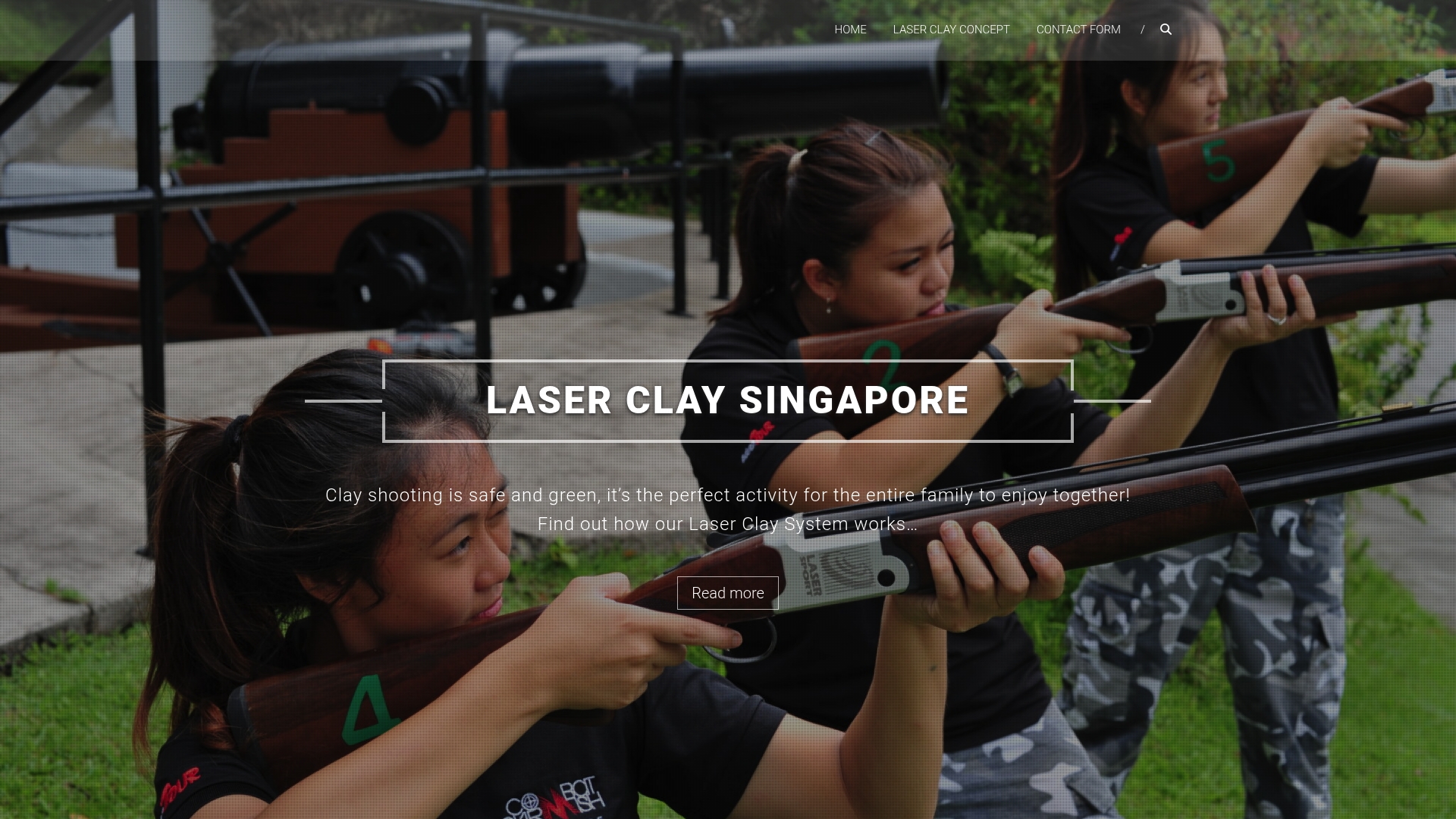
Every package, whether it’s a corporate team-building session or a birthday party, comes with predefined scoring rules and tie-break options you can request as a rules sheet before the event, so team captains know exactly what to expect at check-in. Corporate packages are priced per person, and birthday party packages start at a listed rate. Current prices are available on the pricing page. If you’d rather run the scoring yourself, system rental is available from 500 to 800 SGD per hour, with the same electronic scoreboard doing the heavy lifting. Get in touch to request your rules sheet and lock in a date.
Sources
- CPSA technical rules (scoring & tie-break examples)
- Sporting Clays Australia: rules for scorecards, handicapping and record-keeping
FAQ
What makes a laser clay scoring system fair?
Fairness comes down to equal targets under equal conditions, a scoring formula published before play begins, and a visible scoreboard everyone can check. Rulebooks like CPSA’s technical rules treat procedural consistency as more important than the exact points formula used.
How do you break a tie in laser clay shooting?
The most reliable method is a short, pre-announced shoot-off where tied competitors fire an equal number of targets, sometimes ten, under identical conditions, following the pattern in CPSA’s tie-break guidance. Count-back methods that compare earlier rounds are generally avoided because they reward an earlier lucky streak rather than current form.
Do you need handicaps for a corporate laser clay event?
Usually not. Simple grade bands based on a quick warm-up round, or balanced teams mixing skill levels, work better for one-off corporate sessions than calculated handicaps, which are designed for repeat club competitors tracking scores over months.
What scoring system suits a kids’ birthday party?
Binary hit/miss scoring (1 for a hit, 0 for a miss) is the simplest and fastest to explain to children, and it mirrors the simplified scorecard notation some rule variants use for entry-level events. Laser Clay’s birthday party packages use predefined, straightforward game modes suited to mixed-age groups.
How does Laser Clay make scoring fair at events?
Laser Clay uses electronic scoreboards that display hits the moment they register, alongside predefined game modes agreed before the event starts. Planners can request a rules sheet covering scoring and tie-break methods when they book a corporate or party package.