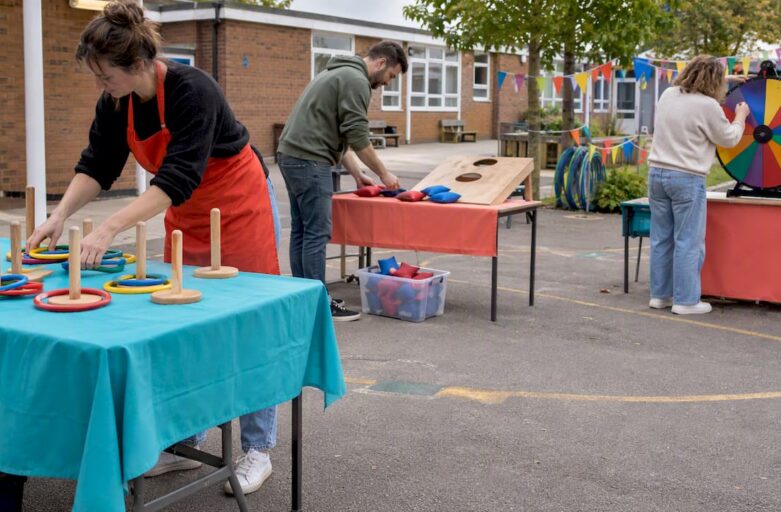
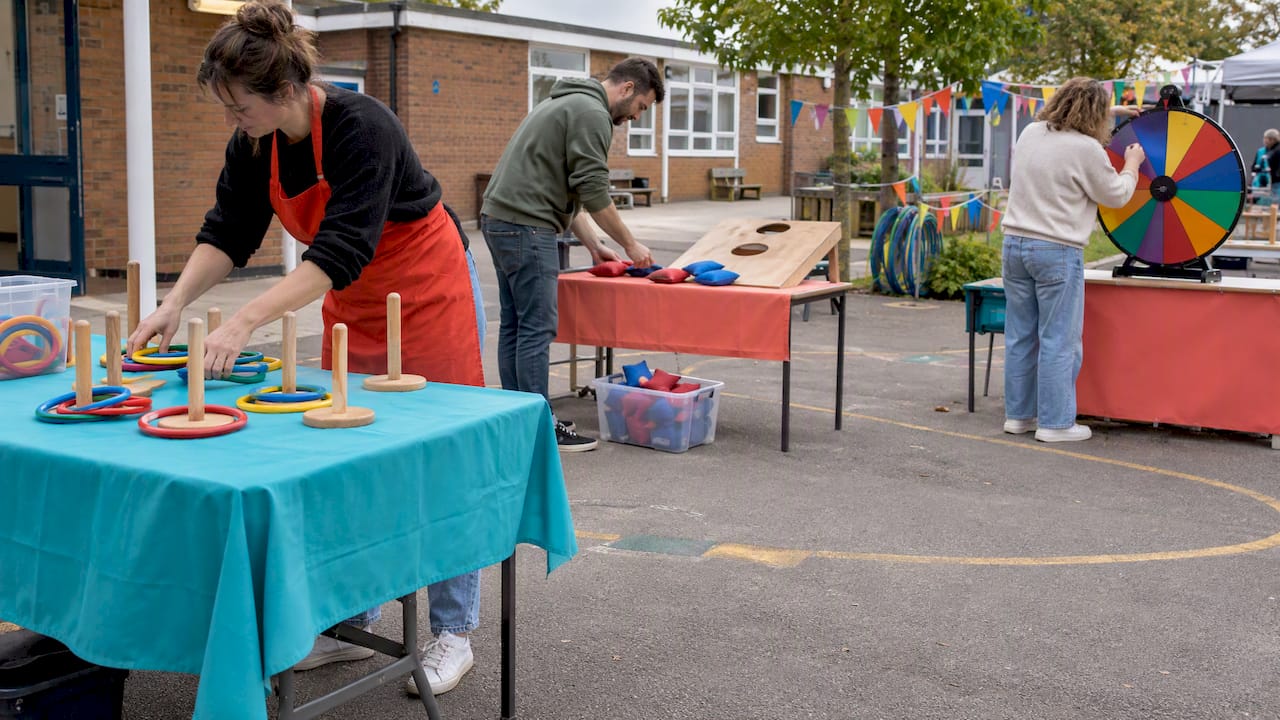
For a successful funfair, run a mix of 8 to 12 easy stations: four classic toss or throw games, two high-value attractions, and 2 to 4 free or low-cost activities. This spread suits school fairs, birthday parties, and community events alike, and every station can be set up in under 30 minutes. Below, we cover supplies, staffing, prize budgets, and safety so the whole thing runs smoothly.
TL;DR:
- Most events benefit from 8 to 12 reusable stations, with a mix of classic games, high-value attractions, and free activities to ensure flow and inclusion.
- Building simple, durable templates and storage solutions saves time and money for recurring fairs, emphasizing low-cost, volunteer-run setups like ring toss or balloon pop.
- Tiered prizes and bundled tickets help manage budgets and reduce queues while encouraging participation across different age groups and game difficulty levels.
- Staffing approximately one station per 30 to 40 children, with clear roles and accessible route planning, keeps the event safe and inclusive for all visitors.
- Adding a high-value attraction like staffed laser clay shooting offers a standout experience without increasing setup complexity or waste, provided by providers with reusable equipment and safety protocols.
Table of Contents
- 1. Twelve easy funfair games worth setting up
- 2. Supplies checklist and reusable setup templates
- 3. Ticketing, prize tiers and budgeting for prizes
- 4. How many stations and volunteers you actually need
- 5. Accessibility and safety checks that actually matter
- 6. What an events provider would check before doors open
- The DIY classics still do most of the work
- A staffed attraction without the setup burden
- FAQ
- Sources
1. Twelve easy funfair games worth setting up
Each of these works with volunteer staff, needs little specialist gear, and can be rebuilt year after year.
- Ring toss: use painted bottles or cones as targets. It suits mixed ages and the prizes can cost next to nothing.
- Bean bag toss or cornhole: a plywood board or a row of buckets gives you a game that scales from five players to fifty.
- Milk bottle knockdown: stack reusable plastic bottles and mark a throwing line far enough back to keep it fair, not frustrating.
- Balloon pop: tape balloons to a board, or use a pegboard-style balloon frame, for a cheap, high-energy favorite.
- Prize wheel: one operator can run this near the entrance, and it has outsized perceived value for very little setup, something PTA-style event guides point to as a reliable draw.
- Photo booth with props: low cost, high engagement, and it gives families a reason to linger and share the event afterwards.
- Face painting: a volunteer-run favourite with genuinely high perceived value, though it needs a hygiene routine between faces.
- Cake walk: minimal setup, and it tends to pull in older children and parents who skip the throwing games.
- Bottle flip or peg race: a low-prep skill game that rewards a steady hand rather than strength, so it suits a wider age range.
- Lucky dip or tombola: easy to run with one volunteer and a strong option when the event is also raising funds.
- Bubble station or chalk area: free, open-ended, and genuinely inclusive, since there is no ticket barrier to joining in.
- Seated target practice: a calmer alternative to the high-energy booths, useful for guests who want to play without standing or queueing for long.
That last category is where a staffed attraction can fill a gap the DIY stations cannot, such as interactive henna booths for community events. A seated or low-impact target setup gives organisers an idea of what a calmer, accuracy-based station can look like before deciding whether to run it themselves or book one ready-made.
2. Supplies checklist and reusable setup templates
Buying once and storing well saves more money over several events than hunting for the cheapest one-off deal every time.
- Favour PVC frames and painted plywood boards over cardboard, since they survive storage and repeated outdoor use.
- Stock durable prize stock (stickers, bouncy balls, small toys) bought in bulk rather than per-event.
- Source supplies through bulk online sellers, school donation drives, or sponsoring local businesses willing to cover a station’s costs.
- Build simple pre-build templates for each station and a one-page volunteer briefing card so new helpers can set up without hand-holding.
- Keep a labelled storage box per game so next year’s setup takes minutes, not hours.
Pro Tip: Laminate your volunteer briefing cards; they survive spills, get reused every year, and save someone re-writing instructions each time.
3. Ticketing, prize tiers and budgeting for prizes
A simple ticket system keeps queues moving and gives families a clear sense of value. Sell small packs (five tickets for younger children, larger family packs for bigger groups) rather than single tickets at the gate, since bundled pricing reduces the time spent at the ticket desk.
A tiered prize structure keeps the event fair without blowing the budget:
- Participation gifts: a sticker or small token for every player, regardless of outcome.
- Small-prize jar: low-cost items like bouncy balls or sweets for most wins.
- Medium prizes: slightly better toys for harder games or repeat visits.
- Rotating grand prize: one standout item per session to pull people toward the high-value stations.
Source prizes through parent donations, local business sponsorship, and bulk purchases well ahead of the event, rather than scrambling the week before.
4. How many stations and volunteers you actually need
Staffing follows the crowd size, not the number of games you’d like to run.
- Plan for roughly one station per 30 to 40 children expected, which keeps queues from building up at any one booth.
- Assign clear roles: a ticket desk, a supervisor per station, a runner to restock prizes, and a safety lead who checks the whole layout periodically.
- Sketch three layout scenarios (dry, wet, hybrid) in advance, and mark accessible routes on each so a weather change doesn’t derail the plan on the day.
- Write short, consistent volunteer scripts for greeting guests and explaining rules, so the experience feels the same at every booth.
5. Accessibility and safety checks that actually matter
Inclusion works best when it’s built into the plan from the start rather than bolted on afterwards, a point made directly in temporary event accessibility planning guidance, which recommends designing accessible routes and signing them clearly rather than treating access as an afterthought.
- Lower at least one table per station and keep clear, signed routes so wheelchair users and guests with limited mobility can reach every game.
- Offer a quieter hour, or a marked sensory-friendly corner, for guests who find crowds and noise overwhelming.
- Enclose throwing games with netting or barriers, set sensible age or height limits where needed, and run a hygiene routine between guests at face painting and food stalls.
- Document who holds each safety role on the day, so there’s no confusion if something needs an immediate decision.
A planning guide for temporary events notes that accessible routes and clear signage reduce exclusion more reliably than ad-hoc accommodations made on the day.
6. What an events provider would check before doors open
Run a final vendor and insurance check 72 hours out, not the morning of the event. Dry-run any equipment-based station, and have a backup activity ready if one booth falls through.
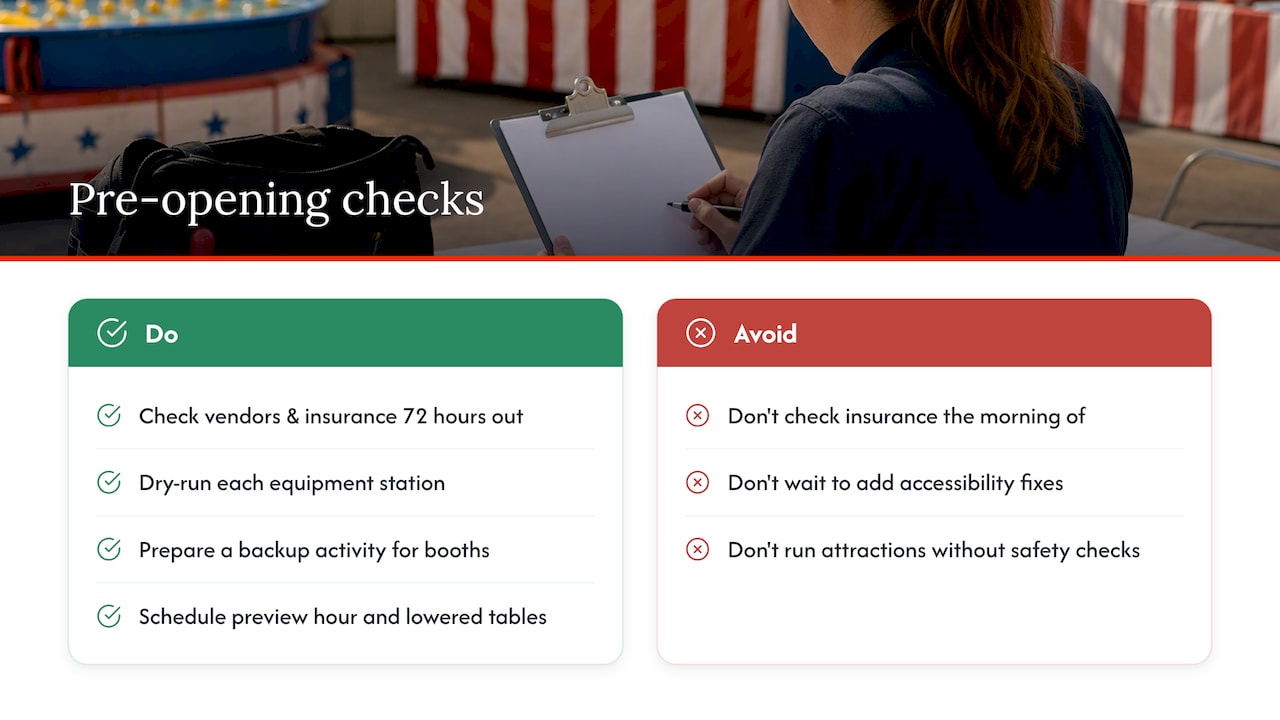
A preview hour for sensory-sensitive guests, paired with lowered tables for seated play, costs little and widens who can actually join in.
For staffed, higher-value attractions, our own packages cover laser-based activities for school events and birthday setups, both built around reusable equipment and documented safety checks.
Build in the quiet hour and the lowered table before the event day, not as a fix once someone asks.
— Joshua
The DIY classics still do most of the work
The temptation with funfair planning is to chase novelty: a new inflatable, a rented machine, something nobody’s seen before. The research doesn’t support that instinct. Ring toss, bean bag toss, and a prize wheel near the entrance still carry most events, because they’re cheap, familiar, and fast to queue through. What conventional advice underrates is how much a single accessibility tweak, a lowered table, a signed route, a quiet hour, changes who actually gets to play, for almost no extra cost.
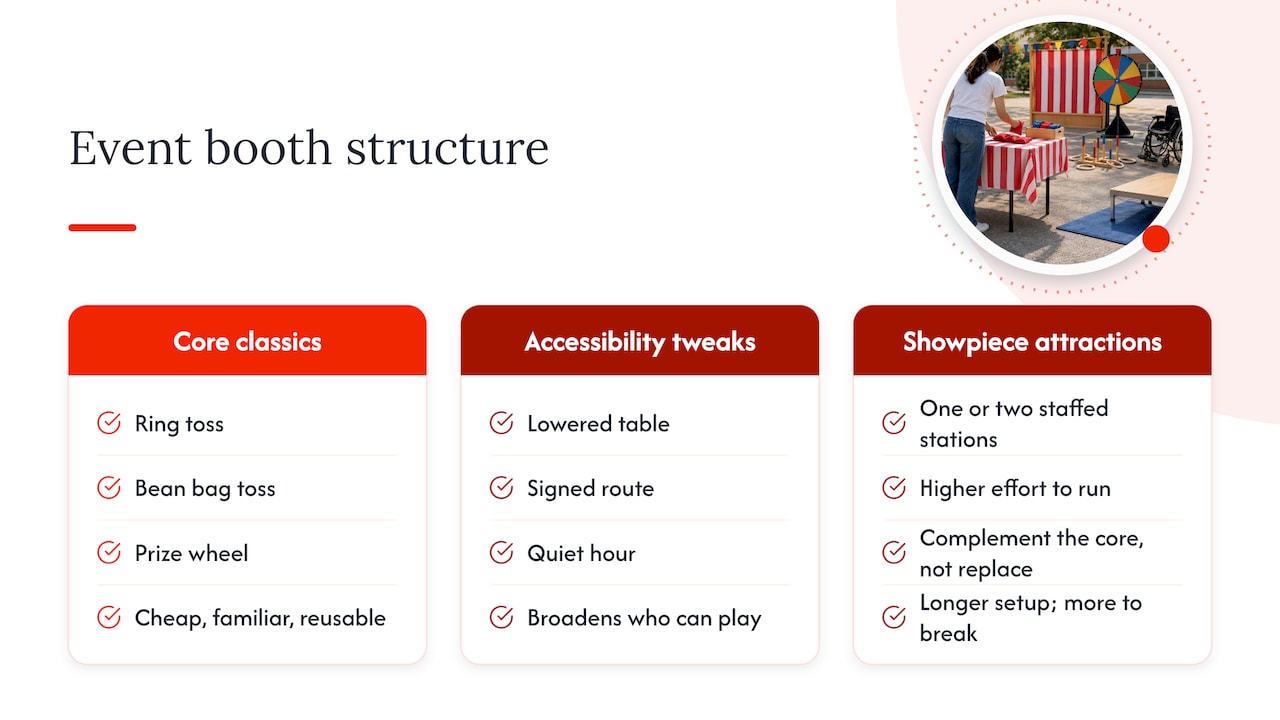
Where a high-value attraction earns its place is as a complement, not a replacement: one or two staffed, higher-effort stations alongside a base of reusable classics. Organisers who try to make every booth “special” end up with a longer setup, more things that can break, and no budget left for prizes. Prioritise the reusable core first. Spend the saved time and money on the one or two attractions that genuinely stand out.
A staffed attraction without the setup burden
When organisers want one high-value station without taking on extra setup work, we run fully staffed laser clay shooting as a ready-made booth. Our team brings the equipment, safety briefing, and reusable targets, so there’s no new gear to store or maintain after the event.
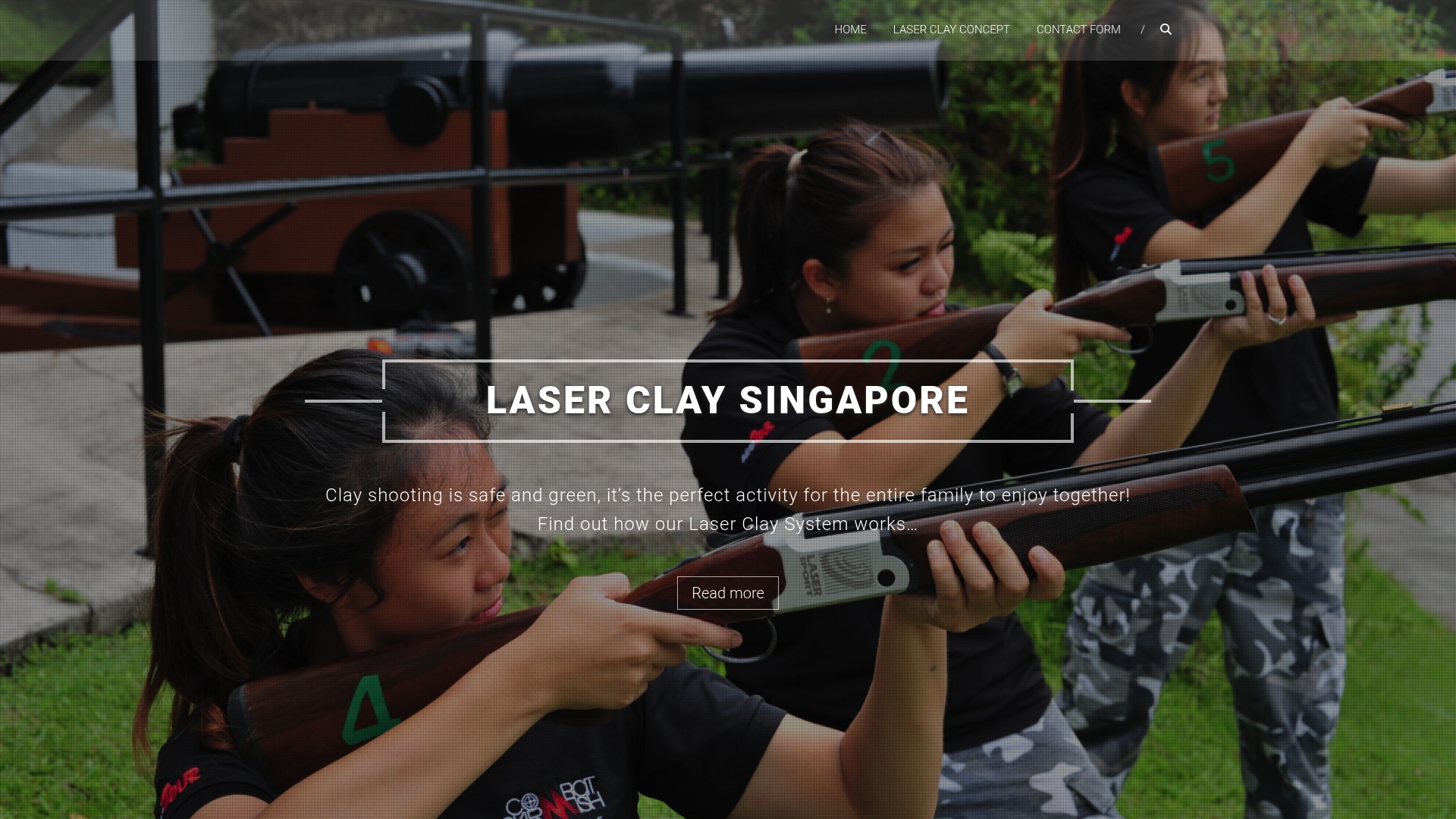
- Corporate Laser Clay Package: one-off per person, built for corporate and school events.
- Birthday party package: one-off per person, suited to birthday celebrations.
- System Rental: hourly rate for organisers who want the equipment and prefer to staff it themselves, detailed on our event rentals page.
Get in touch through our contact page to check availability for your date.
FAQ
What are some fun activities for a fair?
A strong mix includes classic toss games like ring toss and bean bag toss, a high-value attraction such as a prize wheel or photo booth, and free filler activities like a bubble station or chalk area. Pairing familiar games with one or two standout attractions keeps both budgets and queues manageable.
What are common fair games?
Ring toss, bean bag toss, milk bottle knockdown, and balloon pop are the most common throwing games, usually alongside a prize wheel, cake walk, and lucky dip. These games are popular because they need minimal equipment and little volunteer training.
What are some popular games for school fairs?
School fairs tend to lean on the same core games, ring toss, bean bag toss, and a prize wheel, plus a few that suit a school crowd specifically, such as a cake walk or face painting. Planning roughly one station per 30 to 40 children helps keep lines short across all of them.
What are some fun ideas for a fun fair at school?
Beyond the standard toss games, a photo booth, bottle flip race, and a seated target-practice station add variety without extra complexity. Including a couple of free activities, like chalk drawing, means pupils on a tighter budget can still take part fully.
Sources
- School Carnival Planning Checklist: Everything You Need
- A planning guide for making temporary events accessible to people with disabilities
- Always-updated guide to summer fair games and stalls