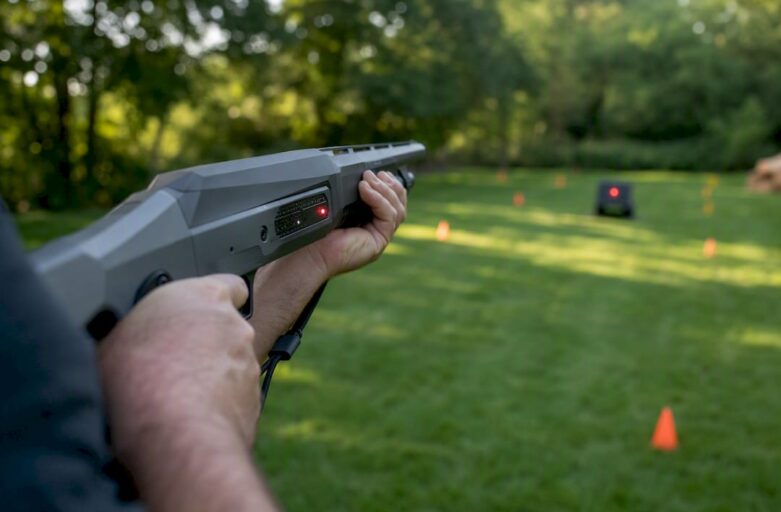
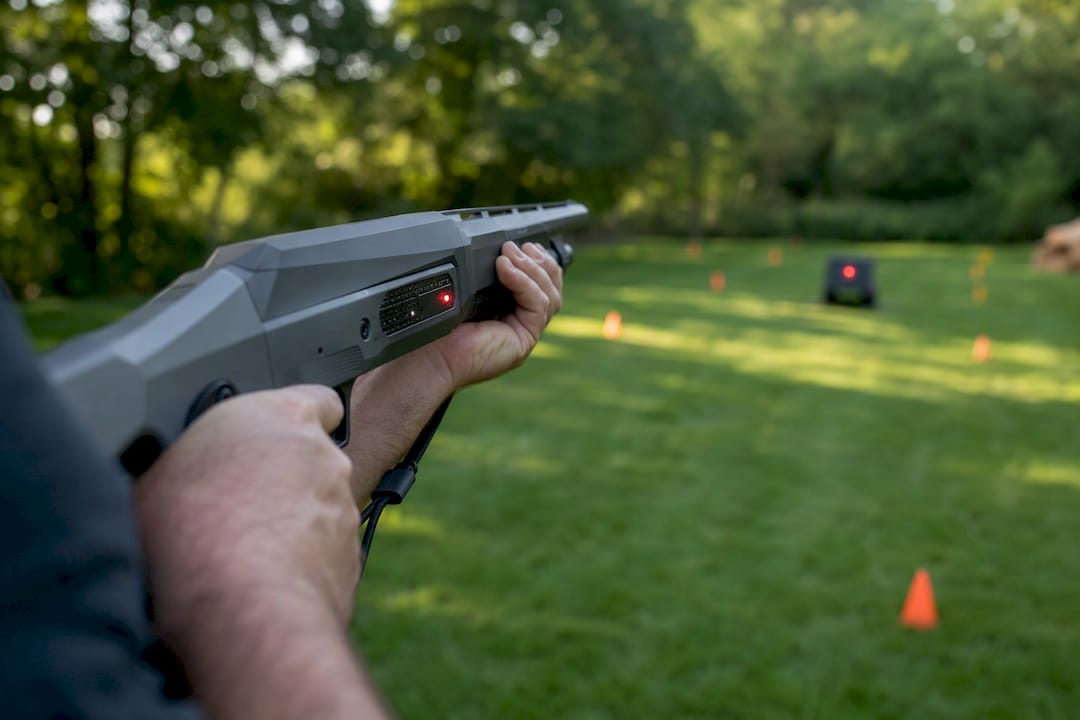
You can set up backyard laser shooting practice for a party, school event or corporate day, provided you book a supervised rental with trained facilitators rather than trying to run kit yourself. The format uses deactivated laser shotguns and reusable sensor clays, so there is no ammunition, no mess and no live projectile risk, which is why it works on lawns, courtyards and school fields where traditional clay shooting never could.
Before you call a supplier, do three things:
- Measure your available space and note any slopes, fences or overhead obstructions.
- Check with your venue or strata management whether outdoor group activities need written permission.
- Ask any shortlisted supplier for a quote that states the facilitator-to-guest ratio, not just the hourly rate.
Key Takeaways
A safe, enjoyable backyard laser shooting session depends on booking a supervised rental with trained facilitators, adequate space, and confirmed insurance rather than treating it as a DIY setup.
| Point | Details |
|---|---|
| Space needed | Plan for roughly 30m by 10m of clear, level run for a five-shooter layout, adjusted for indoor halls. |
| Facilitators are essential | Trained staff run briefings, manage scoring, adjust difficulty and troubleshoot kit on the spot. |
| Insurance and sound checks | Request a public liability certificate and test adjustable sound settings before the event. |
| Game formats scale easily | Open play, team tournaments, relays and shoot-offs all fit within a 60 to 90 minute session. |
| Laser Clay as the direct route | Laser Clay’s hire packages bundle delivery, setup, facilitators, scoring and sound configuration into one booking. |
Selected pages for booking and further reading
For booking details and package inclusions, see Laser Clay’s Singapore booking page or the company landing page for a broader view of services. For skills-focused reading, the beginner’s guide to getting started covers handling basics and participant briefings in more depth.
Table of Contents
- Quick venue checklist: area, sightlines and permissions
- What the hire kit and staff actually provide
- What safety checks should you demand from a supplier?
- Which game formats work for parties, schools and corporate events?
- What to ask suppliers before you book
- A day-of run order you can print and hand to staff
- How Laser Clay makes backyard sessions simple to book
- FAQ
Quick venue checklist: area, sightlines and permissions
Most single-range setups for laser target practice equipment generally need a clear run length and width suitable for five shooters, though this varies by supplier and some indoor halls work with adjusted layouts. That footprint gives shooters a clear line to the launch point and enough side clearance for a facilitator to move safely between stations.
Walk the space and check for:
- A reasonably flat surface. Gentle slopes are fine; steps or uneven paving are not.
- Clear sightlines with no low branches, washing lines or garden furniture in the firing arc.
- Fences or walls that can act as a natural backstop, reducing how far facilitators need to mark out exclusion zones.
- Vehicle access for a delivery van and a spot for staff to park during setup and takedown.
If your backyard is smaller than that, ask about indoor-hall configurations, which several suppliers can adapt for tighter footprints. For noise, get written confirmation from neighbours or your building management before the date, especially in terraced housing or shared condominium grounds.
Pro Tip: Photograph the space from shooter’s-eye level and send it to your supplier ahead of the quote. It saves a second site visit and speeds up confirmation.
What the hire kit and staff actually provide
A laser clay hire is not a box of parts you assemble yourself. It is a full outdoor laser shooting setup delivered, built and run by people trained on it.
- Deactivated laser shotguns — weighted to feel authentic, fitted with infrared emitters instead of any firing mechanism.
- Reusable sensor clays — auto-launched from a trap and registering hits without ever leaving debris behind, as Laser Clay explains in its guide to the format.
- Electronic scoreboard — tracks hits in real time so scores are visible to the whole group, not just the shooter.
- Speakers with adjustable sound — simulate the shotgun blast at a volume the venue can tolerate.
Standard installing laser shooting targets setups typically run several shooters concurrently on one range, often around five. For bigger groups, some suppliers link multiple systems side by side rather than making guests queue for a single lane.
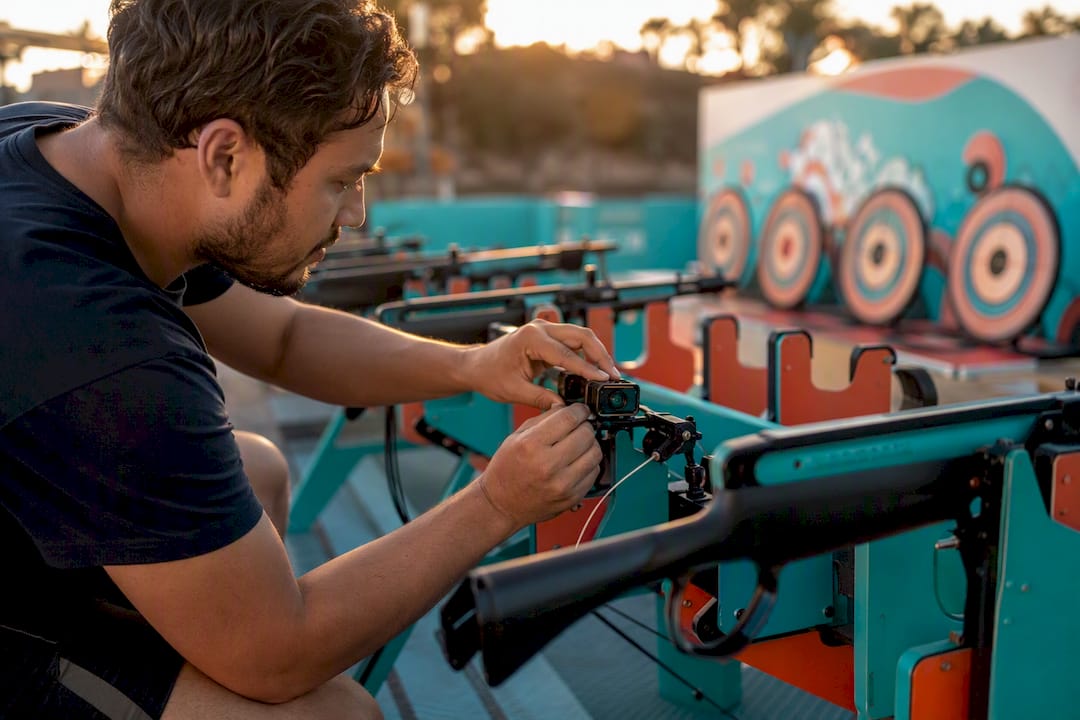
Facilitators do more than press buttons. They run the safety briefing, keep score, adjust difficulty for a nervous ten-year-old or a competitive sales director, and troubleshoot on the spot if a clay jams or a sensor drifts. Setup typically takes around an hour for a single five-shooter layout, with about half that for breakdown, and most kits run on battery or a standard outlet, so you rarely need special power arrangements.
What safety checks should you demand from a supplier?
Ask for proof, not promises. A credible supplier will hand over a public liability insurance certificate on request, without hesitation, and confirm that facilitators hold first-aid training alongside their equipment briefing.
Before you sign anything, confirm:
- Facilitator qualifications and first-aid cover, with a certificate you can keep on file.
- A clear participant briefing that covers handling rules, exclusion zones and crowd-control lines, especially where children are shooting alongside adults.
- Adjustable sound settings, tested against your venue’s actual noise limits rather than assumed.
- Onsite emergency arrangements: who calls for help, and from where.
- A post-event sweep that leaves the venue exactly as found. No shell casings, no debris, because there are none to begin with.
Pro Tip: Request a short sound test over the phone or on a video call before the event. Volume that feels fine in an office demo can feel very different bouncing off a garden wall.
Which game formats work for parties, schools and corporate events?
The scoring system is the whole point. Real-time feedback turns a simple shoot into a competition, and that changes how groups engage with each other.
- Open play — guests rotate through freely, good for younger children or drop-in party formats.
- Team tournament — split into sides, ideal for corporate team-building outdoor formats where department rivalries add energy.
- Relay or timed rounds — fixed windows per shooter keep queues moving at school events with large year groups.
- Best-shooter shoot-off — a knockout finale that gives every session a natural climax and a prize moment.
Rotate five shooters at a time through three to five minute slots, and a group of thirty clears a full round inside 45 minutes. Facilitators can dial difficulty up or down mid-session, tightening scoring for keen adults and loosening it for children, which is one of the underrated backyard shooting games advantages over fixed-target ranges. Pair it with a light lunch or a second attraction and you have a half-day event rather than a single activity.
What to ask suppliers before you book
Compare quotes on substance, not just price per hour. Ask directly:
- Can you send an insurance certificate before the event, not just on the day?
- How many facilitators come with the package, and what is the shooter-to-staff ratio?
- What is your setup and takedown time for my specific footprint?
- How many people can shoot simultaneously, and can you link systems for larger groups?
- Is sound adjustable, and can we test it in advance?
A proper package includes delivery, full setup, trained staff, the electronic scoreboard and a menu of ready-made game formats, not just a delivered crate of guns. Pricing is usually structured as a flat package for a set duration rather than a bare hourly rate, so ask what happens if the session overruns and what the deposit and cancellation terms look like. If a supplier cannot produce insurance documentation or staff credentials on request, treat that as a reason to keep looking.
A day-of run order you can print and hand to staff
A typical 60 to 90 minute session for a party or corporate booking follows a predictable shape.
- Before guests arrive — confirm the measured footprint, check signage, run a sound test, and have staff and first-aid kit on site.
- Welcome and briefing (10 minutes) — facilitator explains handling rules and exclusion zones.
- Rotation play (30 to 50 minutes) — groups of five shoot in timed slots while the scoreboard runs continuously.
- Finale and awards (10 to 15 minutes) — best-shooter shoot-off, scores announced, photos.
- Pack-down — equipment check, full site sweep, and sign-off with the client confirming nothing was left behind.
On-event duties split cleanly: one facilitator manages registration and safety, another runs rotations and calls scores. Keep a simple checklist on a clipboard covering these five stages and nothing gets missed under time pressure.
A short note from someone who has watched a lot of these sessions run
The single biggest predictor of a good event isn’t the kit, it’s whether the facilitator briefs children properly before the first shot. Rushed briefings cause more mid-session hiccups than any equipment fault. Test sound levels before guests arrive rather than during, and always ask a supplier for written proof of insurance, then request a short demo if you’re still unsure the format suits your space.
How Laser Clay makes backyard sessions simple to book
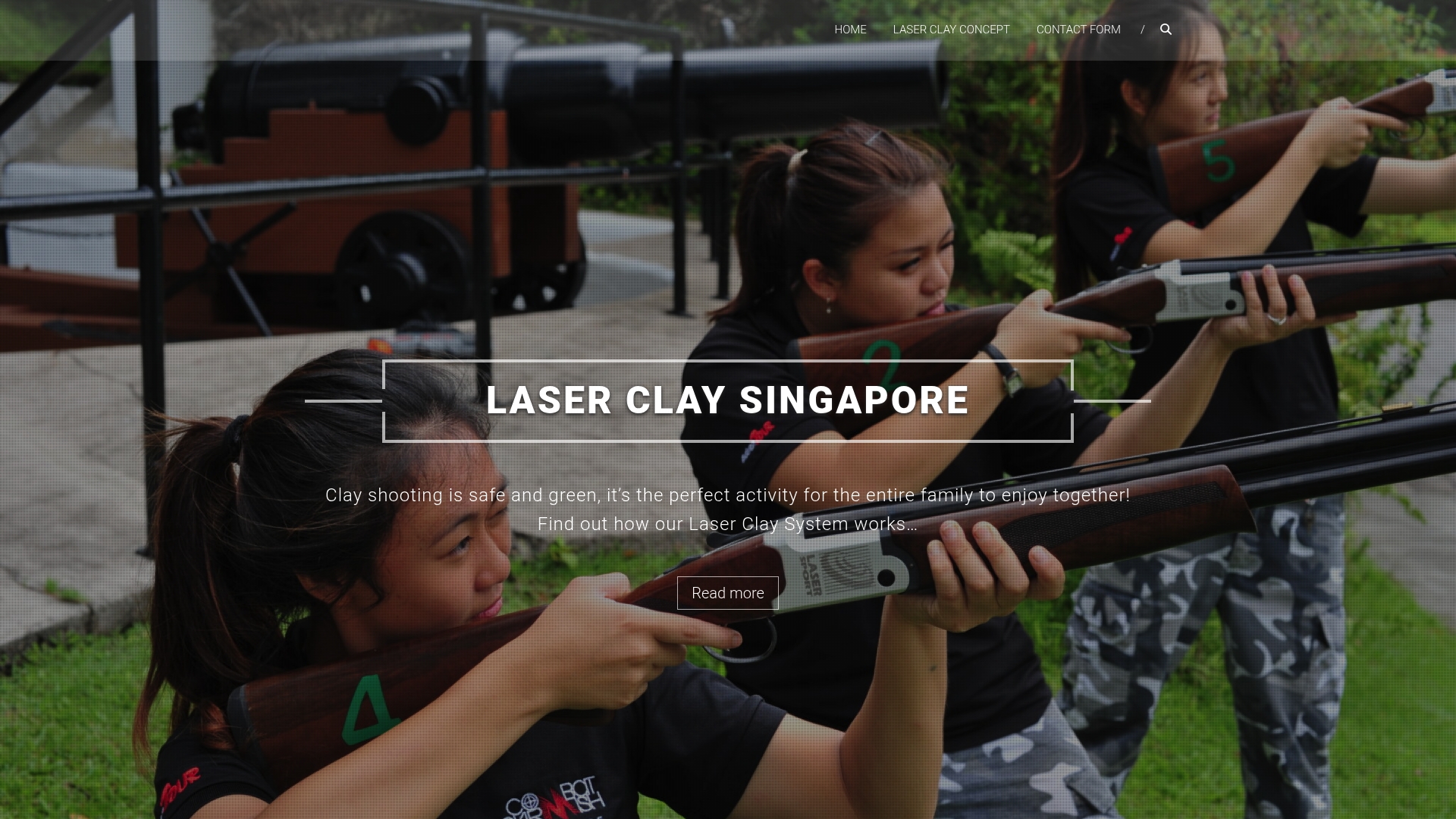
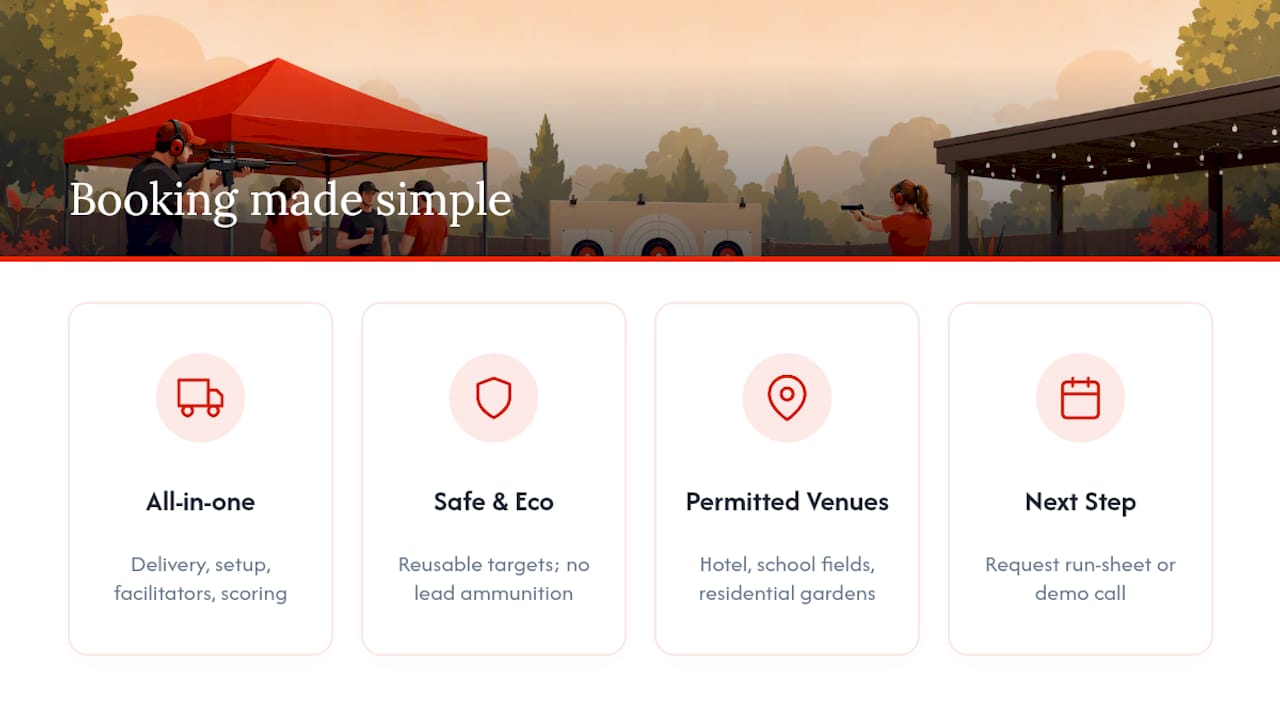
Every Laser Clay hire arrives as one package: delivery, full setup, trained facilitators, real-time scoring and sound levels adjusted to your venue, so you are never assembling a DIY laser shooting practice rig on your own. That matters most for schools and corporate planners who need a supervised, eco-friendly laser shooting setup that leaves no trace, works around children safely, and can be quoted with a fixed facilitator ratio rather than a vague hourly estimate.
Because the targets are reusable and there is no lead ammunition involved, the format suits hotel grounds, school fields and residential gardens where traditional shooting would never get permission. Pair a session with structured drills using laser training techniques to add a skills element for older groups, or draw on general precision shooting fundamentals if you want facilitators to run a light coaching segment before the games begin.
If you’re planning a party, school day or team-building session, the next step is straightforward: check how to book a Laser Clay session and ask for a sample run-sheet or a short demo call to confirm your space and headcount before you commit to a date.
FAQ
Can you really run laser clay shooting in a backyard?
Yes, provided the space offers a clear, level run of roughly 30 by 10 metres and a supervised rental supplies trained facilitators to manage safety and scoring.
How many people can shoot at once?
Most single-range setups handle five shooters concurrently, and suppliers can link multiple systems for larger school or corporate groups.
Do I need special permission for an outdoor session?
Check with your venue, strata management or neighbours in advance, particularly for noise, since sessions use adjustable sound settings rather than fixed volume.
What insurance should a supplier provide?
Ask for a public liability insurance certificate in writing before the event, along with confirmation of facilitator first-aid training.
Is laser clay shooting suitable for children?
Yes, because there is no live ammunition and the format uses deactivated shotguns with laser emitters, it suits mixed-age groups when a facilitator briefs participants properly beforehand.
Recommended
- How weather affects outdoor laser clay shooting | Laser Clay Singapore
- Benefits of laser shooting team events explained | Laser Clay Singapore
- Shoot laser at UK events: the event planner’s guide | Laser Clay Singapore
- Electronic shooting game for events: the UK planner’s guide | Laser Clay Singapore