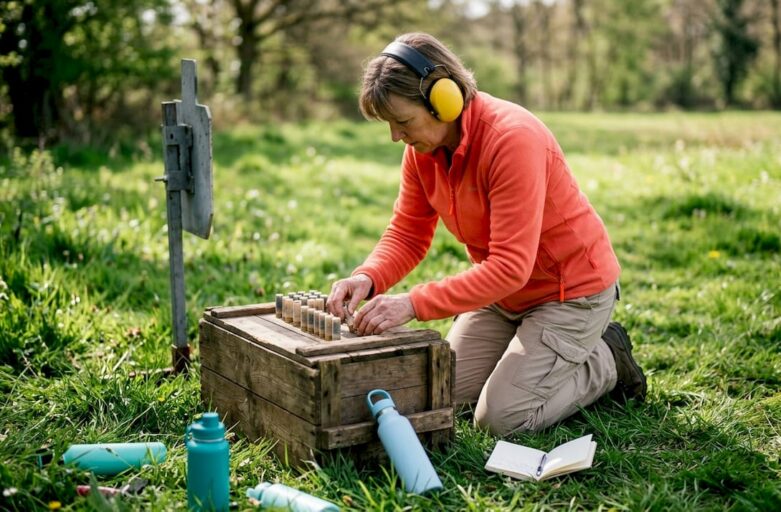
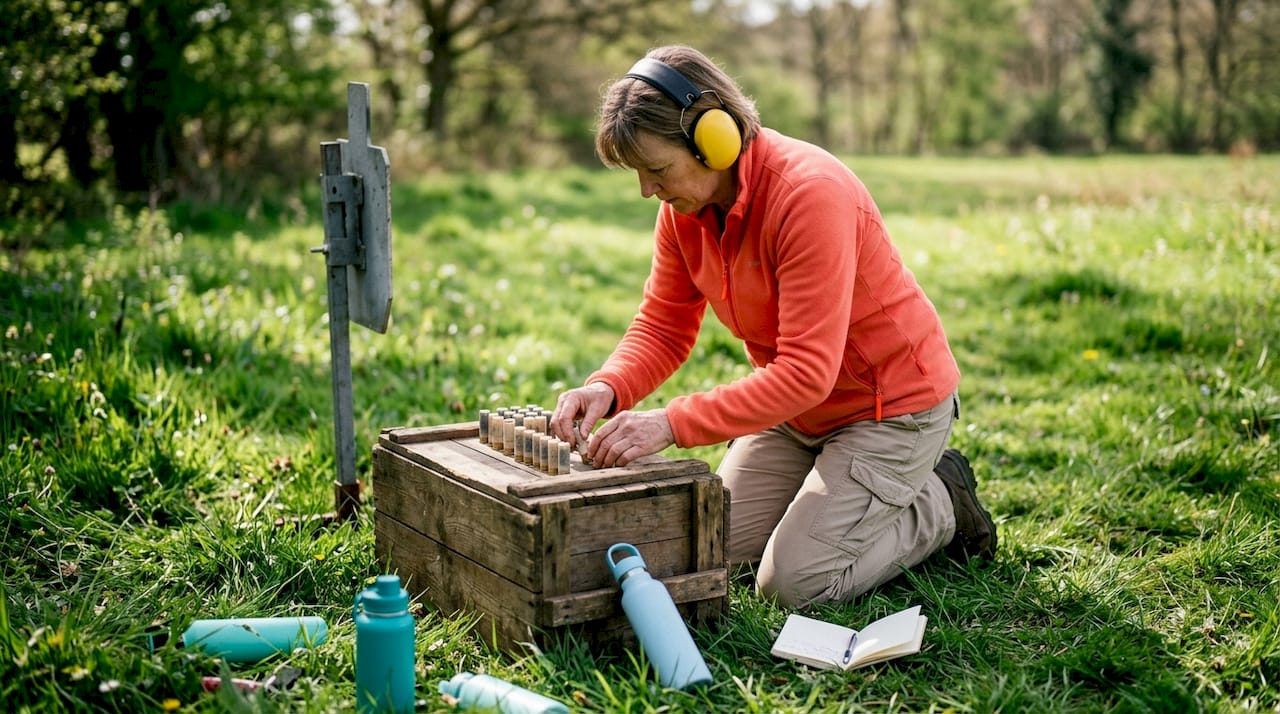
Reducing the environmental impact of your shooting hobby is achievable right now, without giving up the sport you love. Traditional clay shooting involves lead shot, plastic wads, spent cases, and noise, all of which carry real consequences for soil, water, and wildlife. UK REACH legislation, updated for 2026, now requires shooting ranges using projectiles with more than 3% lead to document and implement active measures to prevent lead migration. Biodegradable wads, non-toxic shot alternatives like Blue Shot, and responsible field management all offer practical routes forward. This guide covers each one clearly, so you can enjoy shooting while genuinely protecting the environment around you.
What does environmentally conscious shooting actually involve?
Environmentally conscious shooting, also called sustainable shooting, means managing every aspect of your time on the ground to reduce harm to soil, water, habitats, and wildlife. Most shooters focus on ammunition, but operational management such as shot fall distribution, layout rotation, and debris monitoring drives more of the environmental outcome than ammo choice alone. That insight changes how you should prioritise your efforts.
The core areas to address are:
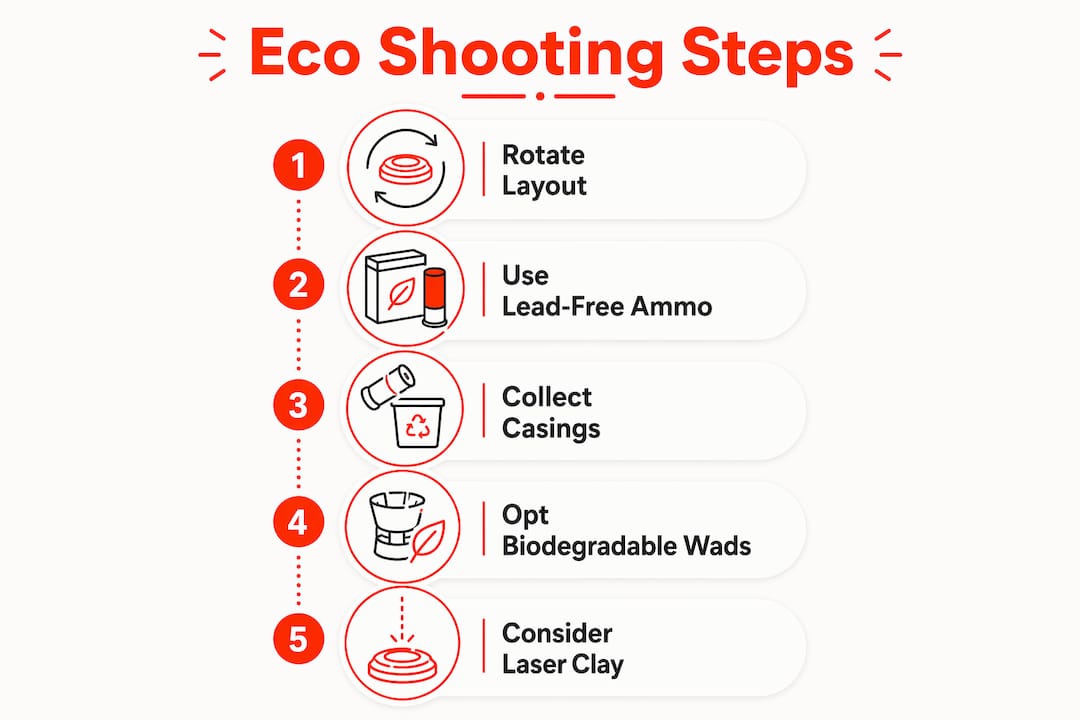
- Shot fall management. Concentrate firing in one area long enough and lead accumulates in the soil. Rotating your shooting layout spreads the load and gives ground time to recover.
- Peripheral waste. Spent cases, clay fragments, packaging, and single-use items all add up. Collecting debris after each session prevents it entering watercourses.
- Noise. Repeated gunfire disturbs nesting birds and neighbouring landowners. Scheduling sessions outside breeding seasons and using natural screening reduces this impact.
- Habitat protection. Avoid setting up near hedgerows, ponds, or known wildlife corridors. A 50-metre buffer from water is a sensible minimum.
Pro Tip: Keep a simple log of where you shoot on your ground each session. Rotating between three or four positions spreads shot fall and gives each area months to recover before you return.
Managing these factors consistently matters more than any single product swap. A shooter who rotates layouts, collects spent cases, and avoids sensitive habitats does more for the environment than one who buys premium eco-cartridges but never picks up their litter.
How do you choose eco-friendly ammunition?
Lead shot is the most studied environmental problem in shooting sports. Lead deposits from spent ammunition contaminate soil and water, harm scavenging wildlife that ingest pellets, and create airborne lead dust at indoor ranges that affects shooter health directly. Switching to non-toxic alternatives addresses all three risks at once.
Steel shot
Steel is the most widely available lead-free option and costs less than specialist alternatives. The trade-off is density. Steel is lighter than lead, so you typically need a larger shot size to achieve comparable energy at range. Steel also requires specific proof markings on your barrel and is not safe for use with tight chokes in older firearms.
Blue Shot
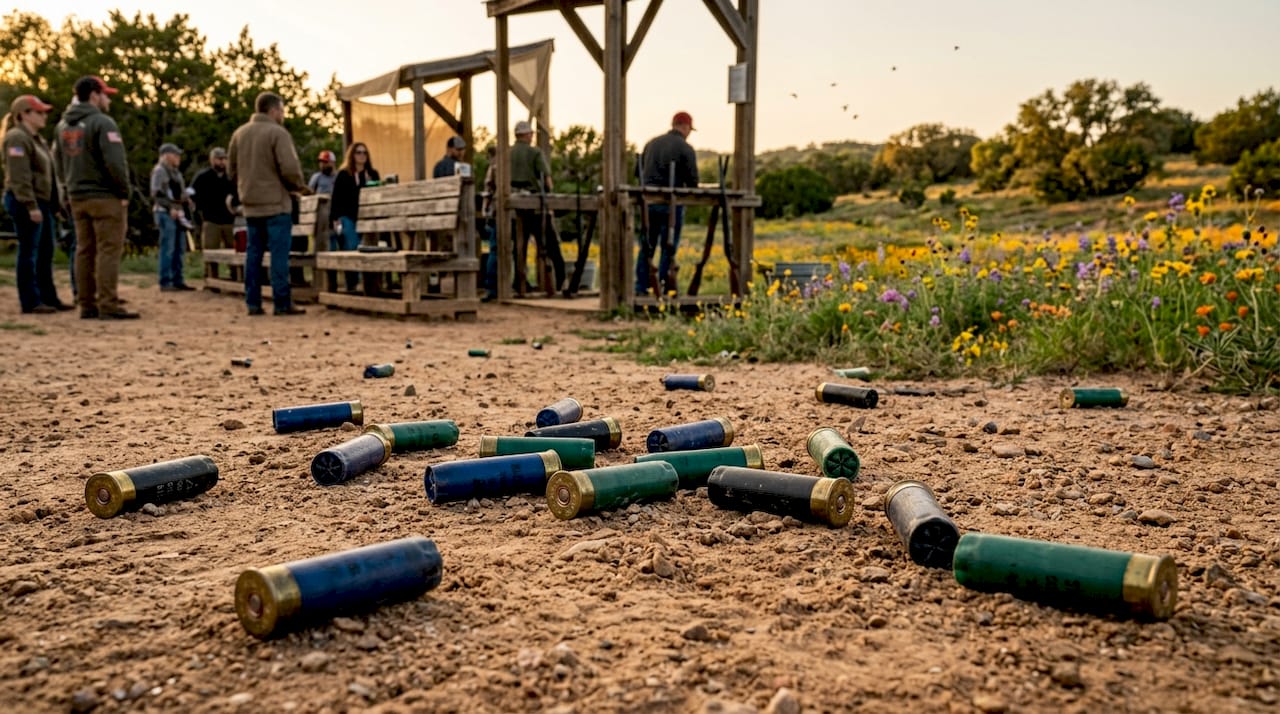
Blue Shot cartridges blend bismuth, aluminium, tin, and zinc into a pellet that is approximately 20% lighter than lead but retains ballistic energy better than steel at distance. Critically, Blue Shot is compatible with traditional chokes that cannot handle steel. This makes it the practical choice for shooters with classic side-by-side or over-and-under guns that predate modern steel-proof requirements.
Biodegradable wads
The wad is the plastic cup that sits between the powder charge and the shot. Standard plastic wads scatter across the ground and persist for years. Biodegradable wad technologies now dissolve fully in water within 24 hours and decompose within 3 months in natural environments. Switching to a biodegradable wad cartridge removes one of the most visible and persistent waste streams from your shooting ground.
| Ammunition type | Lead-free | Classic gun compatible | Wad options |
|---|---|---|---|
| Standard lead | No | Yes | Plastic or fibre |
| Steel shot | Yes | No (tight chokes) | Plastic or biodegradable |
| Blue Shot | Yes | Yes | Plastic or biodegradable |
| Bismuth | Yes | Yes | Fibre or biodegradable |
Pro Tip: Before switching ammunition, consult a qualified gunsmith. Gun and choke compatibility with non-toxic loads varies significantly between firearms, and using the wrong load in an older gun carries a real safety risk.
UK REACH regulations from april 2026 require ranges where projectiles contain more than 3% lead to implement documented measures such as earth bunds or rubber granulate capture systems to prevent lead migrating into soil and water. Simply switching to a different cartridge does not satisfy compliance. You need a written plan and physical mitigation in place.
How can you minimise peripheral environmental impact?
Ammunition gets most of the attention, but the gear you carry and the habits you practise in the field create a significant secondary waste stream. Replacing disposable items with reusable alternatives cuts single-use plastic and chemical waste without affecting your shooting at all.
- Switch to a canvas game bag. Single-use plastic bags for carrying game or clay fragments are unnecessary. A waxed canvas bag lasts years, wipes clean, and produces no waste.
- Use rechargeable hand warmers. Disposable chemical warmers contain iron powder and salt, which leach into soil if left in the field. A rechargeable electric warmer costs more upfront but produces no field waste.
- Carry a refillable lighter. Disposable plastic lighters are among the most common items found during countryside litter picks. A refillable butane lighter eliminates that waste stream entirely.
- Separate spent shotgun cases on site. Paper cases and plastic cases require different recycling streams. Sorting at the point of use improves upcycling potential and prevents landfill. Twenty Scottish estates adopted this practice in 2025 and 2026, demonstrating it works at scale.
- Choose clothing from natural or recycled fabrics. Synthetic fleeces shed microfibres when washed, which enter waterways. Wool, waxed cotton, and recycled polyester fleece with a microfibre filter bag are all better choices for regular field use.
- Collect clay fragments after each session. Calcium carbonate clays break down slowly and can alter soil pH in concentrated areas. A quick sweep of the fall zone after shooting keeps the ground in better condition.
These steps require no specialist knowledge and no significant expense. The environmental benefits of lead-free shooting are well documented, but the gains from reducing peripheral waste are just as real and far easier to achieve immediately. Joining a shooting club that already practises these habits accelerates your own adoption, and the community benefits of shooting clubs extend well beyond shared knowledge.
Is laser clay shooting a genuinely green alternative?
Laser clay shooting replaces physical projectiles with laser technology. A sensor-equipped clay target detects the laser beam from a modified replica shotgun, and the system registers hits electronically. No shot falls on the ground. No wads scatter across the field. No lead enters the soil or water.
The environmental benefits are direct and measurable:
- Zero projectile waste. Every round fired leaves nothing on the ground. There is no shot fall to manage and no soil contamination to monitor.
- No lead exposure. Shooters face none of the airborne lead dust risks associated with conventional ranges, which matters particularly for regular participants and younger shooters.
- Minimal noise. Laser clay systems produce a fraction of the sound of a live firearm. This removes disturbance to wildlife and eliminates most neighbour concerns entirely.
- Reusable equipment. The guns, targets, and scoring systems are used repeatedly across hundreds of sessions. The per-session material footprint is negligible compared to conventional shooting.
- Accessible to all skill levels. Because there is no recoil and no live ammunition, laser clay is suitable for beginners, children, and anyone who wants to practise technique without the full environmental cost of live rounds.
Laserclay positions laser clay shooting as a complement to traditional shooting rather than a replacement. Shooters who want to train sustainably use laser clay sessions to build technique between live shoots, reducing the total number of rounds they fire over a season. That reduction directly lowers their lead output, wad waste, and noise impact. For events, corporate days, and group activities, laser clay removes every environmental concern associated with live shooting while delivering the same competitive experience. You can read more about what laser clay shooting involves if you are considering it for your next event or training block.
Key takeaways
Sustainable shooting requires consistent operational habits, compliant ammunition choices, and a willingness to consider alternatives like laser clay that eliminate waste at the source.
| Point | Details |
|---|---|
| Manage shot fall first | Rotating your shooting layout reduces lead accumulation more than any single product swap. |
| Switch to biodegradable wads | Wads that dissolve within 24 hours in water remove one of the most persistent waste streams from your ground. |
| Verify gun compatibility | Always consult a gunsmith before switching to steel or Blue Shot, especially with older or classic firearms. |
| Separate spent cases on site | Sorting paper and plastic cases at the shooting point improves recycling outcomes and prevents landfill. |
| Consider laser clay for training | Laser clay sessions build technique with zero projectile waste, lead exposure, or noise impact. |
What I have learned from years of trying to shoot greener
The honest truth about sustainable shooting is that most people overcomplicate it at the start. They read about UK REACH compliance, look at the price of bismuth cartridges, and decide the whole thing is too involved to bother with. That is the wrong conclusion.
The changes that made the biggest difference in my own shooting were the boring ones. Rotating my layout. Picking up cases at the end of every session. Swapping to a canvas bag. None of those cost much or required any specialist knowledge. They just required the habit.
Where I see shooters go wrong is treating sustainability as an all-or-nothing decision. You do not need to overhaul everything at once. Start with one change, make it automatic, then add another. The carbon footprint of shooting sports is genuinely reducible, but only if you actually do the small things consistently rather than planning the big ones indefinitely.
Laser clay has also changed how I think about training. Using it between live sessions means I fire fewer live rounds overall without losing any sharpness. That trade-off is worth understanding properly, because it reframes laser clay not as a compromise but as a tool that makes your live shooting better while reducing your total environmental load.
The regulations are tightening. The 2026 UK REACH requirements are not the end of that process. Shooters who build good habits now will find compliance straightforward. Those who wait will find it disruptive.
— Joshua
Laserclay: clay shooting without the environmental cost
Laserclay brings the full experience of clay shooting to events, training sessions, and group activities without a single pellet hitting the ground.
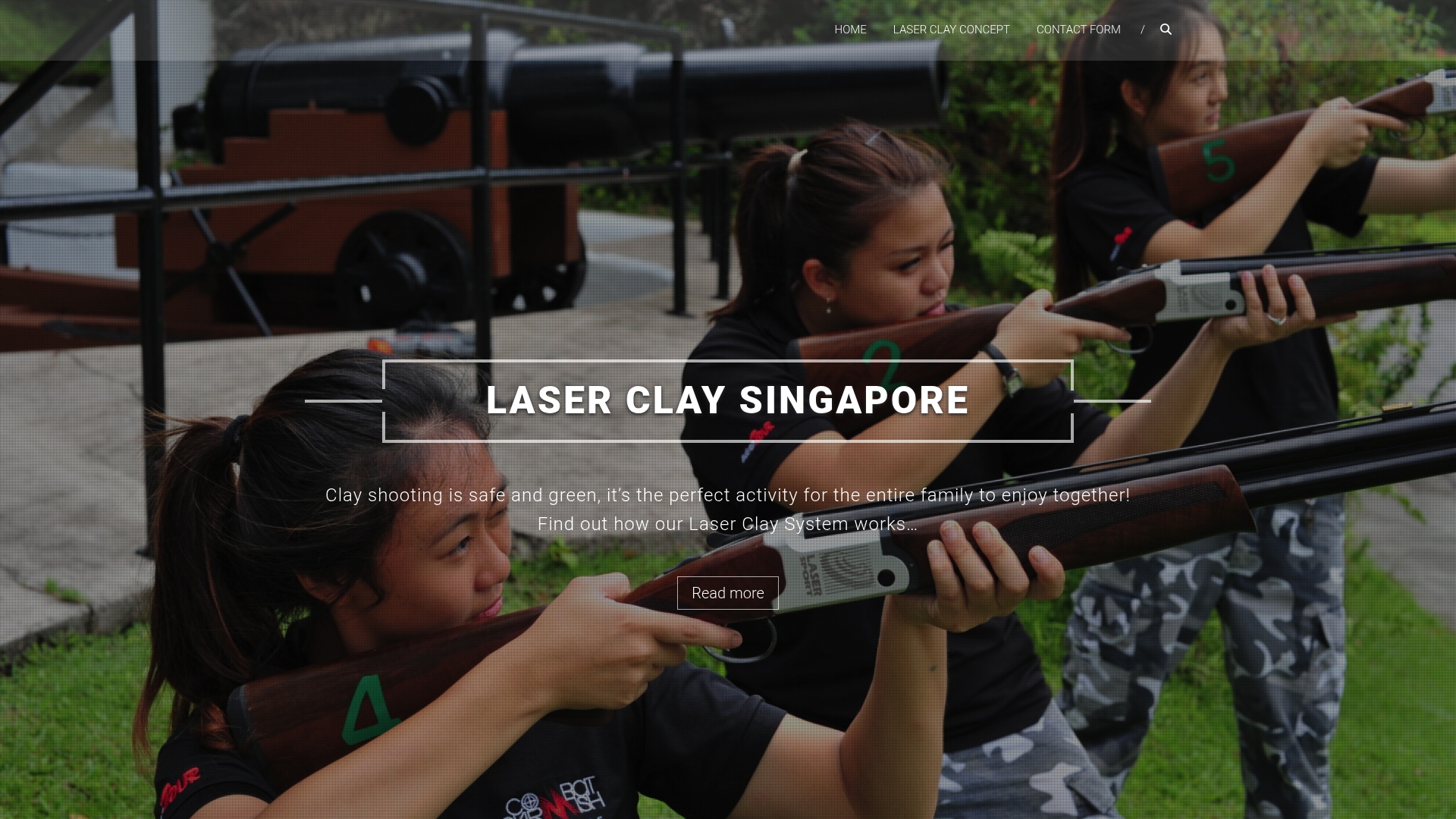
Every session uses laser-equipped replica shotguns and sensor-fitted targets that register hits electronically. There is no lead, no plastic wad waste, and no noise disturbance to manage. For shooters who want to enjoy the sport responsibly, or for event organisers who need a clean, safe, and engaging activity, Laserclay delivers the competitive thrill without the environmental overhead. Visit the Laserclay homepage to see the full range of experiences, or go straight to the how to play guide to understand exactly what a session involves.
FAQ
What is the biggest environmental problem with clay shooting?
Lead shot contamination of soil and water is the primary concern, compounded by plastic wad litter and noise disturbance to wildlife. Managing shot fall distribution and switching to biodegradable wads addresses both issues directly.
Does UK REACH apply to hobby shooters in 2026?
UK REACH regulations from april 2026 require any shooting range where projectiles contain more than 3% lead to document and implement physical measures to prevent lead migration. This applies to organised ranges, not casual private land use, but the guidance is worth reading regardless of your setup.
Is Blue Shot safe for older shotguns?
Blue Shot is compatible with traditional chokes that cannot handle steel, making it suitable for many classic firearms. Always verify compatibility with a qualified gunsmith before switching, as barrel proof markings and choke specifications vary between guns.
How does laser clay shooting reduce environmental impact?
Laser clay shooting produces zero projectile waste, no lead contamination, and minimal noise. The equipment is reused across hundreds of sessions, making the per-session environmental footprint negligible compared to conventional clay shooting.
Can I recycle spent shotgun cases?
Paper and plastic shotgun cases can both be recycled, but they require separate streams. Sorting them at the point of use, as practised by shooting estates across Scotland, significantly improves recycling outcomes and keeps cases out of landfill.