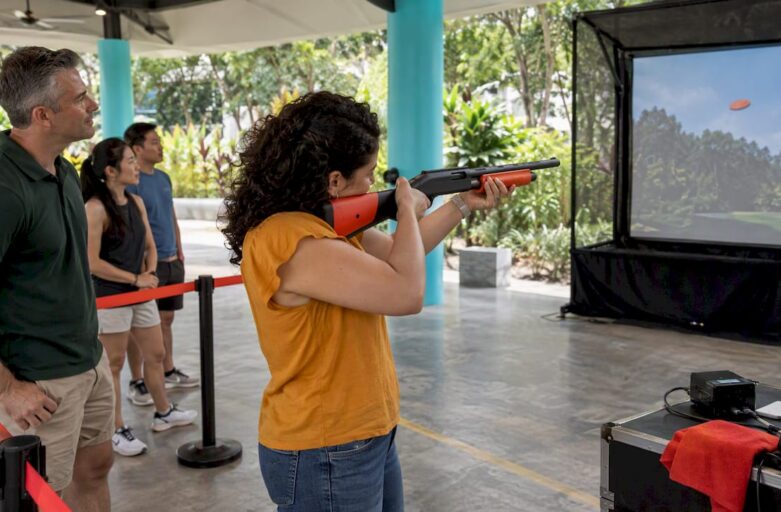
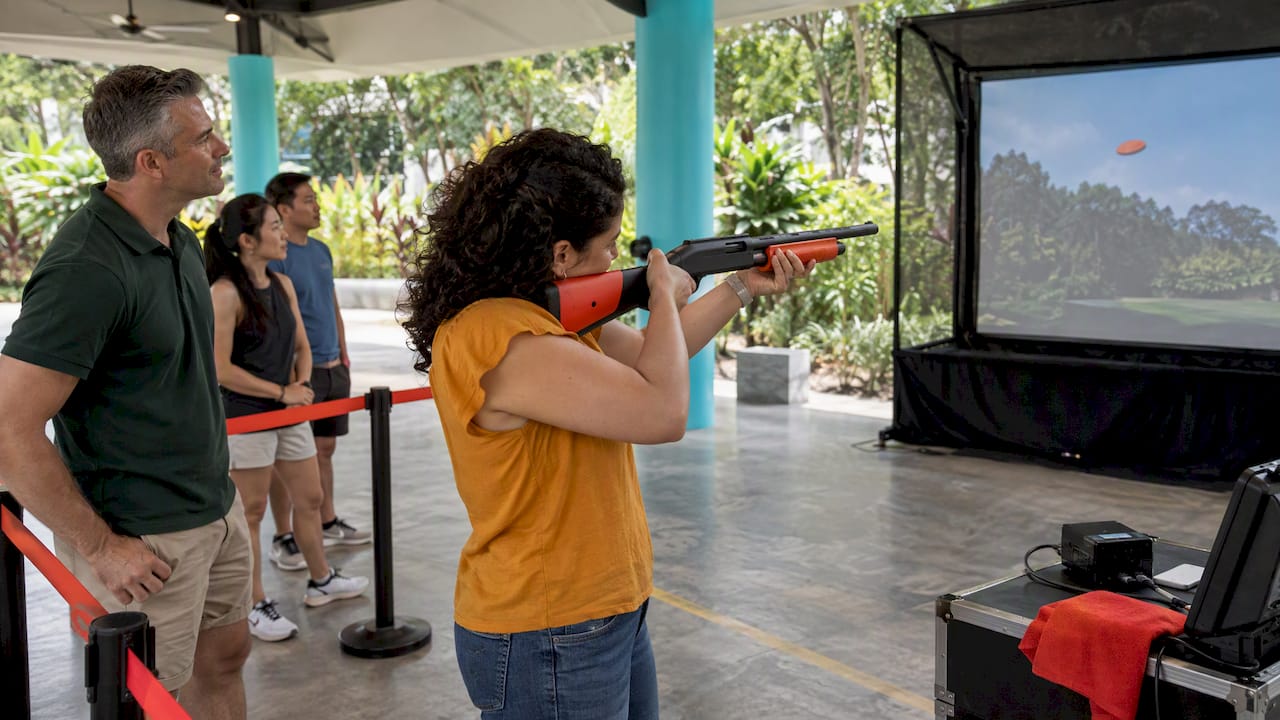
Precision games are games won by accuracy, not speed or strength: you score by hitting a target or landing closest to it. For an event in Singapore, the best ones are easy to explain in one minute, work for mixed ages and abilities, and fit your venue without special permits or heavy set-up. This guide shows how to choose, run and score them, and where laser clay shooting fits.
TL;DR
- Precision games reward aim and control, so a beginner and a veteran can both score. That makes them good for mixed groups.
- Pick by group size, age, ability and venue first, then by the game. Adjust the rules, such as sitting instead of standing or dropping head-to-head scoring for younger children, before you drop anyone.
- Laser clay is our precision format: S$69 per person for corporate groups, parties from S$49 per person, and system rental at S$500 to S$800 per hour.
- Outdoors, plan for heat and haze. Indoors, check space and power before you commit.
Table of Contents
- What counts as a precision game
- Precision games that suit different events
- How to choose: five questions
- Safety, heat and haze
- Making precision games work for mixed groups
- Laser clay: a precision game built for events
- Prices for precision games at events in Singapore
- Our perspective
- Plan your event with us
- FAQ
- Sources
What counts as a precision game
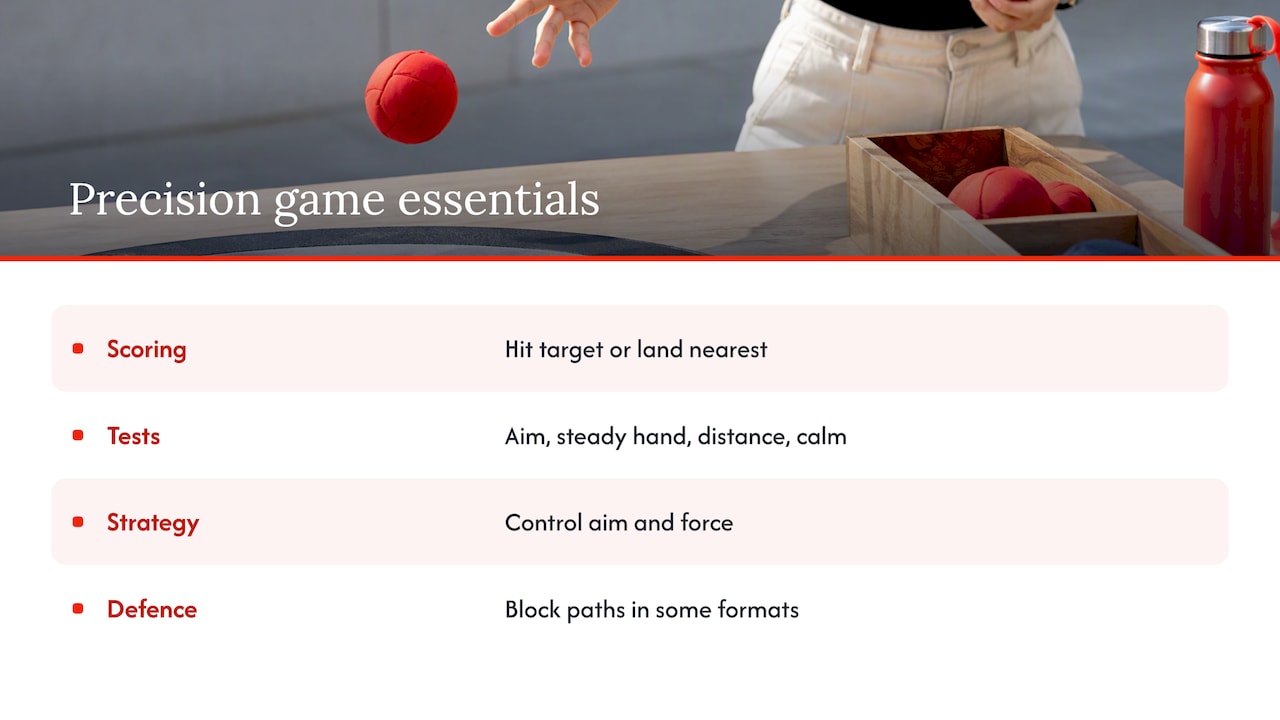
A precision game is scored by how accurately you place something, not by how far or fast it travels. The Encyclopedia of Games describes the category as games scored by hitting a target or landing nearest to it. Darts, archery, bowls, quoits and ring toss all belong. So does clay shooting, which is what we do with lasers.
What these games test is narrower than people expect. It is not fitness. It is aim, a steady hand, judging distance and keeping calm when others are watching. Sport New Zealand’s target games guide says good strategy comes from controlling aim and force. It also notes that defence in some formats means blocking paths rather than hitting targets.
That is why they suit events. The skill is learnable in minutes. The person from finance who has never played a sport can beat the sales director, and everyone cheers.
Opposed and unopposed games
The same Sport NZ booklet separates opposed and unopposed target games. In an unopposed game, you aim at a target and nobody interferes: archery, ring toss, a laser clay round. In an opposed game, an opponent’s actions change what you can do, as in boules or table games where you can knock the other side’s piece away.
For event planners the distinction is practical:
- Unopposed games move fast, need less explanation and keep waiting time low. They are safer for large groups and first-timers.
- Opposed games create more banter and tactics, but need more space per match and more refereeing.
Most corporate days work best with an unopposed game as the main activity and an opposed one as a side station.
Precision games that suit different events
No single game suits every crowd. This table compares common formats on the things planners ask about most. The notes are general planning guidance, not figures from a specific supplier.
| Game | Best for | Space | Team scoring | Watch out for |
|---|---|---|---|---|
| Laser clay shooting | Corporate days, parties, school camps, carnivals | Indoor hall or outdoor field | Easy: live electronic scoreboard | Needs power and a facilitator |
| Ring toss | Family days, carnivals | Small table or floor area | Easy | Quickly becomes too simple for adults |
| Darts or soft darts | Office socials, after-work events | A wall and a safe throwing line | Moderate | Needs supervision around younger children |
| Bean bag or bocce-style tossing | Mixed-age groups, community events | A flat strip of floor or grass | Moderate | Uneven ground changes the result |
| Tabletop precision games | Small groups, lounges | Table-sized | Easy | Few players at a time |
| Adaptive target sports such as boccia | Mixed-mobility groups, seniors | Flat indoor floor | Moderate | Needs equipment sourced in advance |
Singapore already uses precision games to include everyone. The 2026 Seniors National Games included Boccia, Disc Golf, Ladder Toss, Seated Floorball and Sport Stacking so that people with different mobility levels could take part. The lesson for an organiser is simple: choose a game where body strength matters little and the same rules work for everyone.
Space can be more demanding than it looks. As an example of a tabletop format, Table Star Cluster Ball is a two-player or two-team game on a sloped table. Its competition tables measure about 3.5 m by 2 m, with compact versions at 2.4 m by 1.4 m. Measure your room before you promise a game.
How to choose: five questions
1. Who is playing?
Write down the age range and the lowest ability in the room. Michigan State University Extension’s group games guide tells organisers to match activities to group size, ages and abilities. It also says competition is generally not appropriate for children under 10, and that activities can be modified, for example by sitting rather than standing.
Take that second point seriously. If you have a seven-year-old and a seventy-year-old in the same family day, do not drop the game. Change the rules: personal-best scoring instead of rankings, a seated option, shorter distances.
2. How many people, and how long can they wait?
A precision game usually has one or two people playing while the rest watch. That is fine for 8 players and a problem for 80. For larger groups, split into teams and rotate stations, or choose a format where several people shoot at once or where a scoreboard keeps spectators interested.
3. What is the venue?
Check ceiling height, floor surface, power points and whether the space is air-conditioned. Outdoor venues add weather. Singapore events often move indoors at short notice, so ask any supplier whether the game works in both settings.
4. How will you score it?
Scoring decides whether people enjoy the game or argue about it. Manual scoring slows things down and invites disputes. A real-time scoreboard keeps the energy up and gives you a result to announce at the end.
5. What does it cost?
Published prices for precision games at Singapore events are scattered and usually quoted per event. Compare on a per-person or per-hour basis, and ask what is included: facilitators, set-up, equipment and customisation. Our own prices are listed further down.
Safety, heat and haze
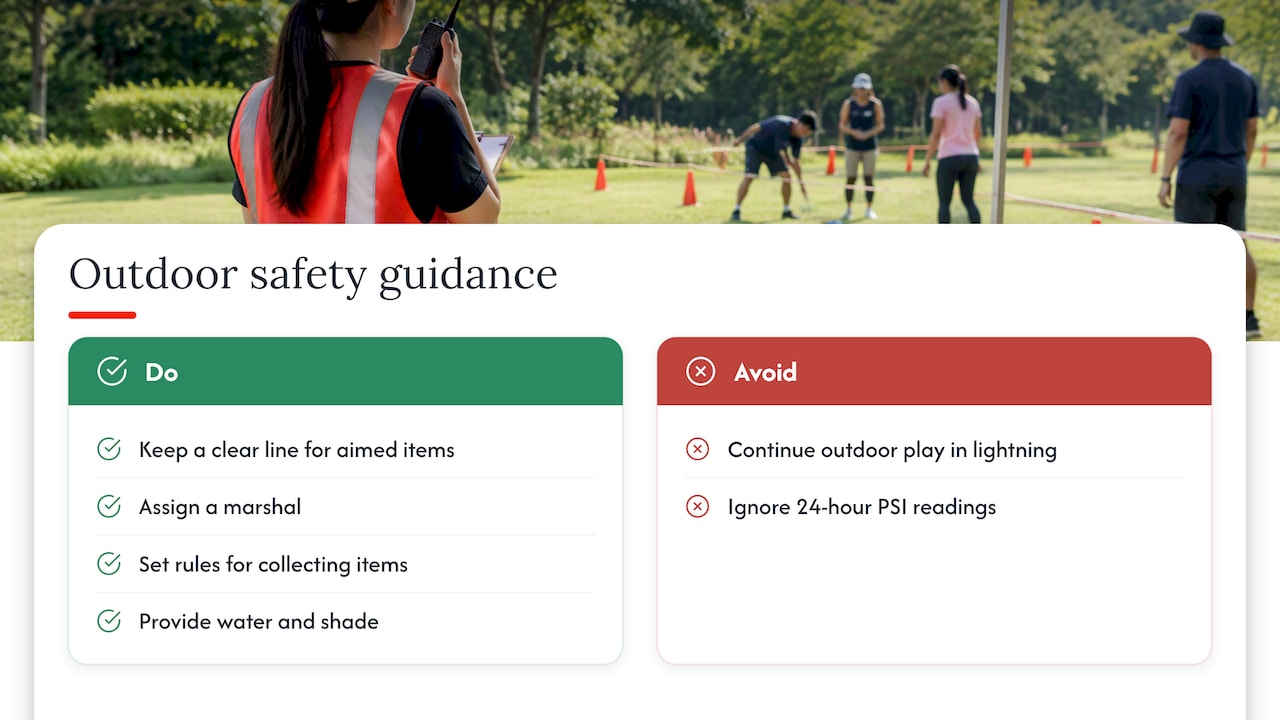
Precision games are low-risk compared with contact sports, but they are not risk-free. Anything thrown, fired or aimed needs a clear line, a marshal and a rule about when people may collect items.
Outdoors in Singapore, the weather matters as much as the equipment. The Workplace Safety and Health Council’s 2025 guidelines on adverse weather are written for outdoor work, not events. They are still a useful model. They advise stopping outdoor work in lightning conditions, monitoring the WBGT heat-stress reading, and using measures summed up as acclimatise, drink, rest and shade. Haze measures are tied to 24-hour PSI readings. An event organiser can borrow all of it: schedule outdoor games away from midday, provide water and shade, and agree beforehand on a wet-weather or haze fallback.
If you are booking a supplier, ask who supervises, what the briefing covers and what happens if play must stop.
Making precision games work for mixed groups
The strength of precision games is that rules bend easily. A few adjustments keep everyone in:
- Age bands. Give younger children their own scoring or a team goal rather than a ranking. MSU’s guidance points the same way: change the rules rather than exclude people.
- Mobility. Offer a seated position and a shorter distance. The adaptive sports at the Seniors National Games show how far this can go.
- Experience. Run a practice round that does not count. It lowers nerves and shows who needs a quick tip.
- Team mix. Build teams with a spread of ability. Add the scores of all members so no single star decides the result.
- Prizes. Reward more than first place: most improved, best team name, steadiest hand. If you want something more lasting for a tournament-style day, custom sports award rings are one way to mark a champion.
Laser clay: a precision game built for events
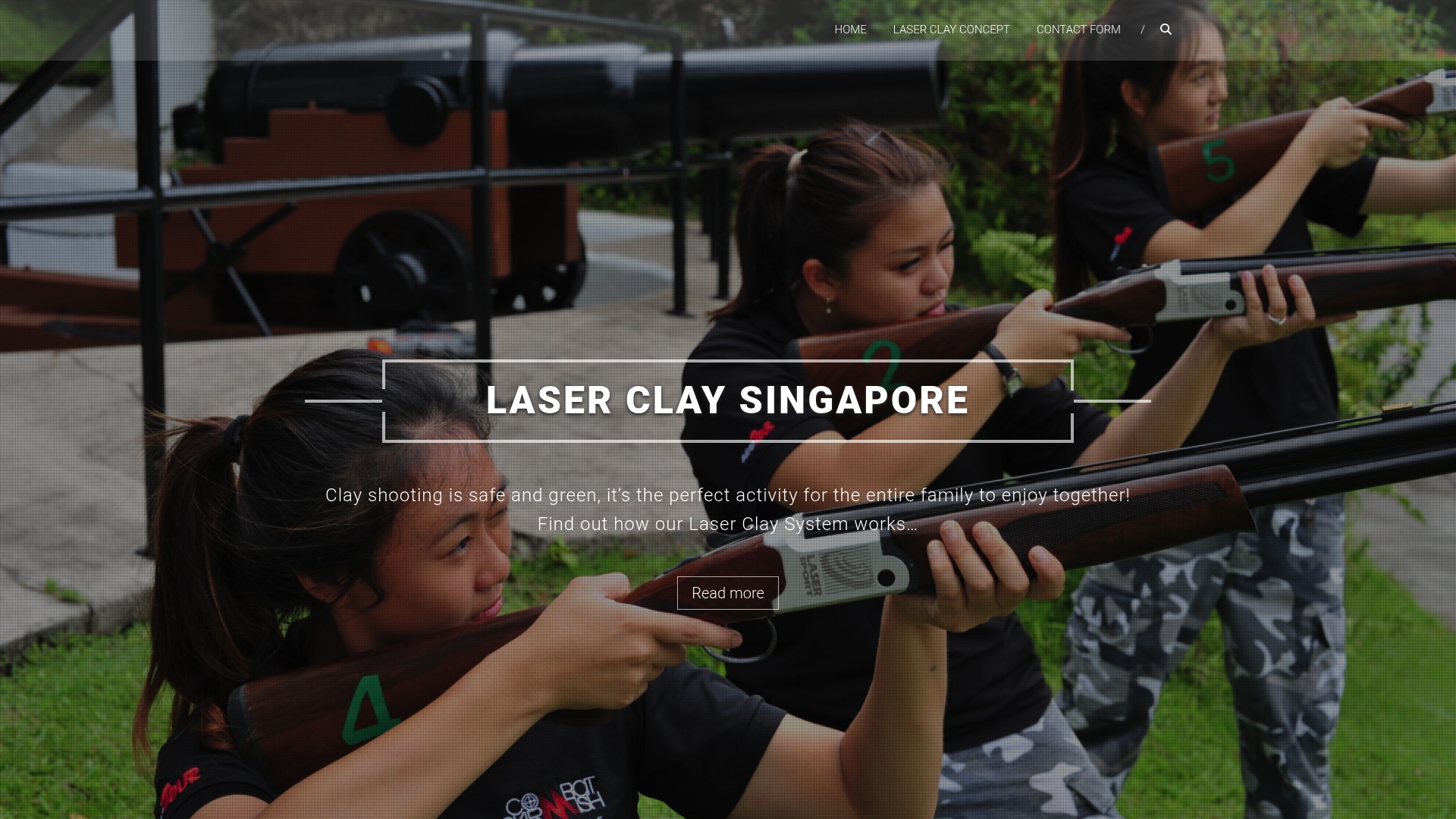
Clay shooting is a classic precision sport, but live ammunition limits who can try it and where. Laser clay keeps the experience and removes the limits. Participants use sound-simulated deactivated shotguns and reusable clay targets, with no lead and no live fire. Results appear on a real-time electronic scoreboard, so the game scores itself.
What that means for organisers:
- Open to most groups. The activity is fully facilitated and suitable from age 10, which lines up with the guidance that competition is best kept for older children.
- Flexible formats. Game formats and scoring can be customised for competitive or casual groups, indoors or outdoors.
- Set-up handled. Packages include facilitators, venue setup, event customisation and equipment.
If you are planning logistics, our guides cover set-up time and run sheets, the checks to run before set-up and power requirements. For staffing, see our note on operators and marshals per group. For a wider view of formats, see our competition ideas for planners and family day games.
A sample 90-minute corporate run
This is an example structure, not a fixed package. Adjust it to your headcount.
- Arrival and briefing (10 minutes). The facilitator explains the rules and the scoreboard.
- Practice round (15 minutes). Nobody is scored. Everyone gets a feel for the equipment.
- Individual round (30 minutes). Each player shoots in turn while teammates cheer and track scores.
- Team round (25 minutes). Combined team scores decide the leaderboard.
- Final and wrap-up (10 minutes). The top players or teams shoot off, then the results are announced.
While one group plays, others can rotate through a second station, such as a quiz or a tossing game, so that nobody stands idle.
Prices for precision games at events in Singapore
Prices for event games in Singapore vary by format and are often quoted only on request, so use per-person and per-hour figures to compare. Ours are published:
| Offer | Price | Good for |
|---|---|---|
| Corporate Laser Clay Package | S$69 per person | Team building and company days |
| Birthday party package | From S$49 per person | Children’s and teen parties |
| System Rental | S$500 to S$800 per hour | Carnivals, school camps and large social events |
For a fuller breakdown, see our page on laser clay costs in Singapore.
Our perspective
We built Laser Clay because clay shooting is one of the best precision games there is, and too few people can try it. Lead, noise and strict safety conditions put it out of reach for most office teams, school groups and birthday parties.
Laser technology removes those barriers without changing what makes the sport enjoyable. The gun feels authentic, the clay flies, and the shot is yours to get right. There is no lead and no noise pollution, and the targets are reusable.
What we see with groups is that precision games level the room. A new joiner can outscore a director, and the scoreboard makes it visible and fun. That is why we design formats for both competitive and casual crowds, and why we facilitate every session ourselves.
If you are choosing one centrepiece for your event, choose a game people talk about afterwards. For many of our clients, that is laser clay.
Joshua
Plan your event with us
If a precision game is the centrepiece of your day, we can handle the equipment, facilitators, set-up and customised scoring. Corporate groups can look at our team building package, parents at our birthday party package, and organisers of larger gatherings at system rental.
Tell us your headcount, venue and date through our contact page and we will suggest a format. If you are still comparing venues, our team building venues guide can help.
FAQ
What is the best precision game for a large corporate event?
Choose an unopposed game with fast turns and visible scoring, so large groups do not wait long. Laser clay fits well because the electronic scoreboard tracks results in real time, and teams can rotate through. Pair it with a second station if you have more than a few dozen people.
Are precision games suitable for children?
Yes, with adjustments. Michigan State University Extension’s guidance says competition is generally not appropriate for children under 10, so use team goals or personal bests for the youngest. Our laser clay sessions are suitable from age 10.
Can precision games work outdoors in Singapore?
They can, but plan for heat, rain and haze. Borrow the approach of the WSH Council’s adverse weather guidelines: provide water, rest and shade, avoid peak heat, and have an indoor fallback.
How much does a precision game cost per person?
It depends on the format and what is included. Our corporate laser clay package is S$69 per person, and birthday parties start from S$49 per person. Equipment-only rental runs S$500 to S$800 per hour.
Sources
- Precision games, Encyclopedia of Games
- Games5 target games, Sport New Zealand
- Seniors National Games 2026: adaptive sports
- Icebreakers, Team Challenges, and Other Group Games, Michigan State University Extension
- Workplace Safety and Health Guidelines on preparing for adverse weather, WSH Council
- What is Star Cluster Ball, Table Star Cluster Ball
- Custom sports award rings