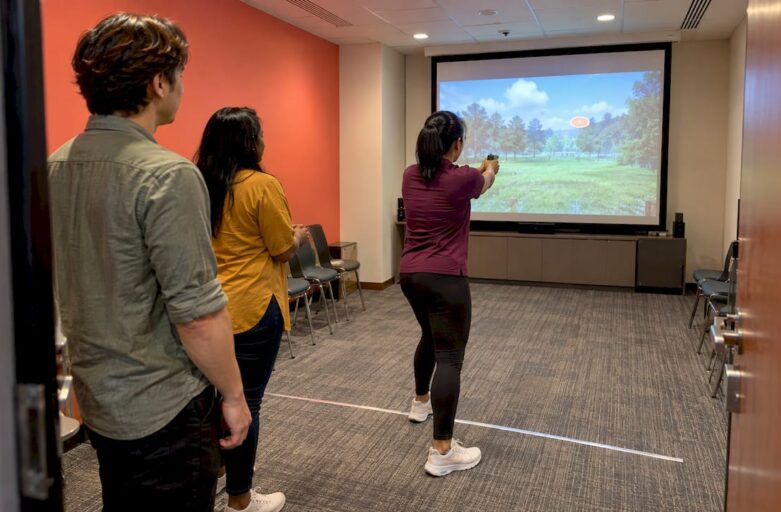
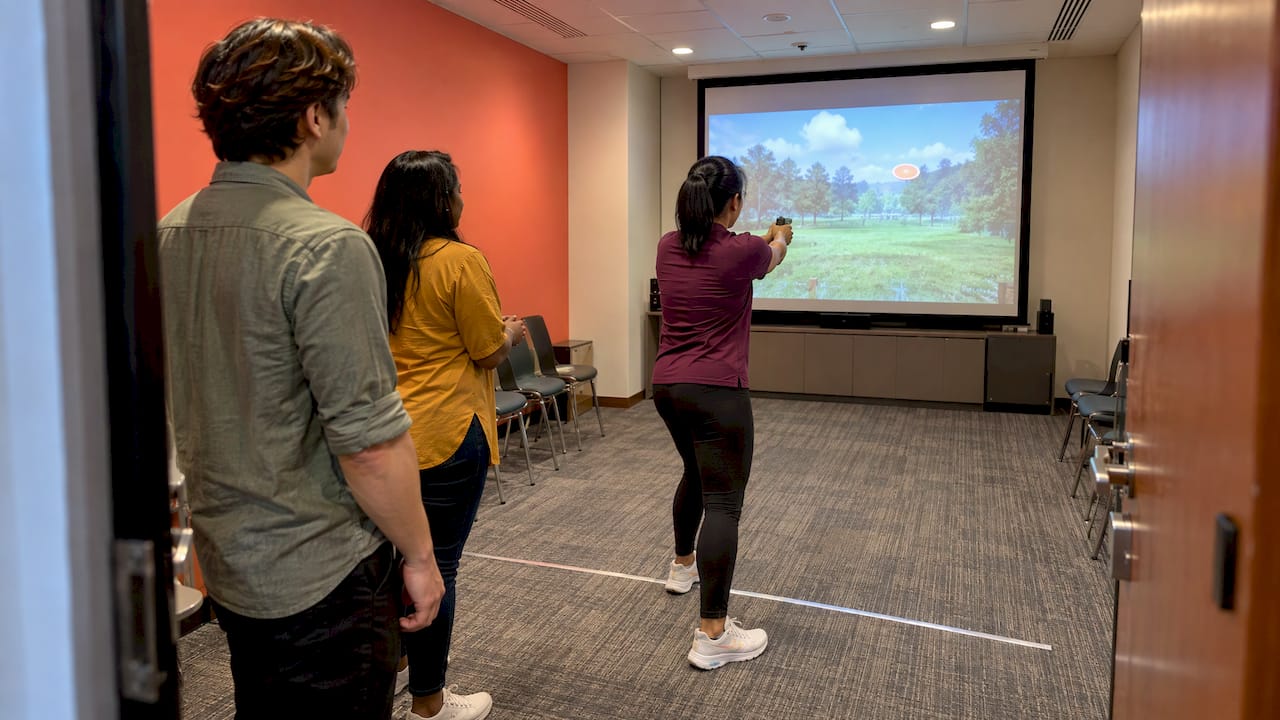
You can run good team building in a meeting room, a small function hall or a corner of the office. The trick is to choose activities by how much floor they need, how many people move at once and how long they take, then plan the room around that. This guide sorts the options by space, shows how to check a room before you book, and explains where a facilitated laser clay session fits when floor area is limited.
TL;DR
- Seated and station-based activities suit rooms that cannot fit the whole group standing and moving at once.
- Rotating small teams through stations gets more people involved than one big game in a tight room.
- Before you book, measure the room, count the power points and walk the exit routes. Singapore’s fire safety conditions for indoor events set clear rules on aisles and extinguishers.
- Pick formats where teams score together, so quieter colleagues are not left watching the loudest ones.
- We run facilitated laser clay sessions from S$69 per person for corporate groups. Ask us about your room before assuming it is too small.
Table of Contents
- What counts as a small space
- Activities that work in a limited indoor space
- How to measure a room before you commit
- Safety checks for tight indoor rooms
- Making it work for different ages, abilities and personalities
- Encouraging collaboration, not just competition
- Where laser clay shooting fits in a small venue
- Perspective
- What small group team building costs in Singapore
- Book a laser clay session for your team
- A simple 90-minute plan for a small room
- Common mistakes in small-space team building
- FAQ
- Sources
What counts as a small space
In Singapore, most companies are working with one of four rooms: a meeting room that seats 10 to 20, a pantry or open-plan area cleared after hours, a small function room in a serviced office or clubhouse, or a void deck or covered court. None of them is a ballroom, and that is fine. Small rooms can make for better team building, because people are close enough to talk and no one drifts to the back.
The real limits are not only floor area. Look at four things:
- Free floor, not total floor. Tables, pillars, partitions and projector screens all eat into the usable area.
- Noise. Glass-walled meeting rooms leak sound into the office next door. A loud game after 5 pm may be fine; at 2 pm it is not.
- Power and cabling. Anything with screens, scoreboards or speakers needs sockets in the right places.
- Access. Can equipment come up in a lift, and can you set up without blocking a fire exit?
Once you know these, the choice of activity gets much easier.
Activities that work in a limited indoor space
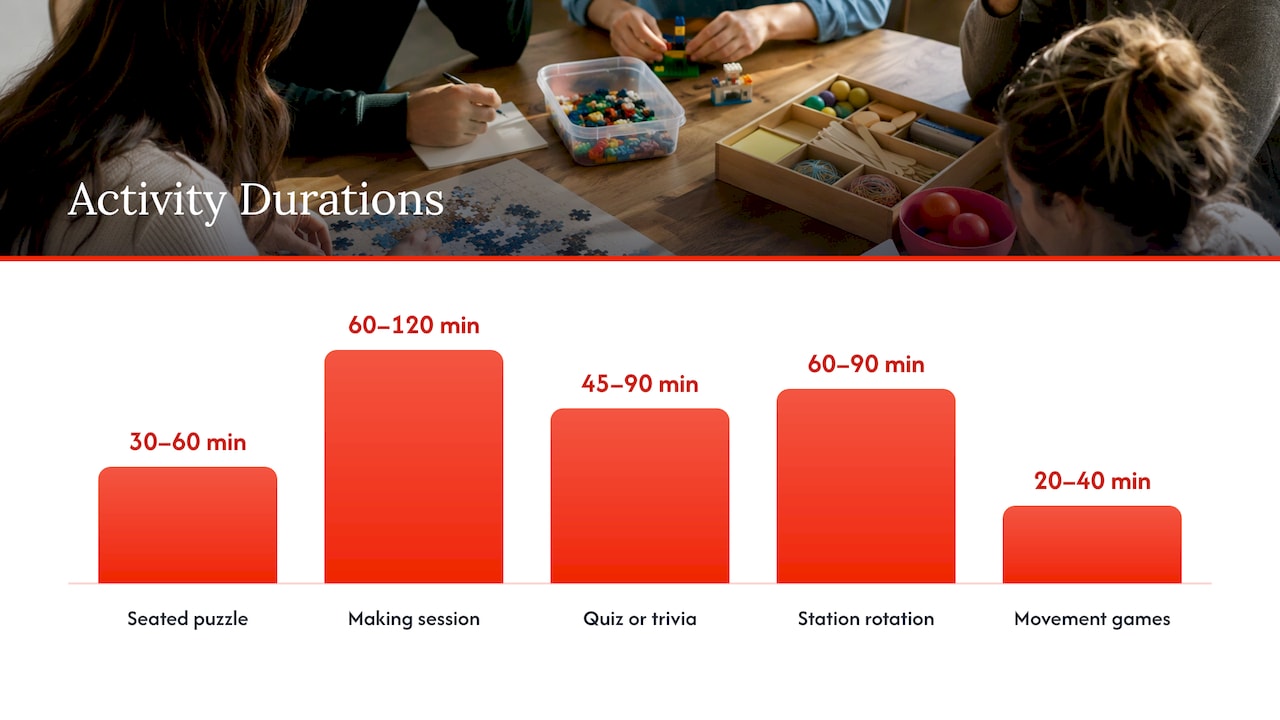
The table below groups common formats by how much room they take. Group sizes and timings are practical planning ranges from running sessions of this kind, not fixed rules, so adjust them to your own room and team.
| Format | Space it needs | Typical group | Typical time | Works best for |
|---|---|---|---|---|
| Seated puzzle or problem-solving challenge | Tables and chairs only | 6 to 24 | 30 to 60 min | Communication, mixed fitness levels |
| Workshop-style making session (craft, cooking, building) | Tables, some floor for supplies | 8 to 30 | 60 to 120 min | Creativity, relaxed bonding |
| Quiz or trivia with team scoring | Seating, one screen | 8 to 40 | 45 to 90 min | Large mixed groups, low setup |
| Station rotation (several mini-games) | A few clear corners | 12 to 30 | 60 to 90 min | Variety, keeping everyone busy |
| Indoor target-sport session (laser-based) | A lane or firing line plus a safe clear zone | 8 to 30 | 60 to 90 min | Friendly competition, a shared score |
| Movement games and relays | Open floor | 8 to 20 | 20 to 40 min | Energisers, short breaks in a day |
A few notes on how to read this.
Seated formats are the safe default. If the room is truly tight, a seated challenge with a clear goal lets everyone take part, whatever their age or fitness. It also suits colleagues who are not keen on physical games.
Station rotation beats one big game. When the floor is limited, split the group into teams of four to six and move them between stations every 10 to 15 minutes. Only one team uses each station at a time, so the room never fills up, and nobody waits long for a turn.
Mix a physical activity with a seated one. A 90-minute block that opens with a seated challenge and moves into a hands-on activity gives people time to warm up socially before anything competitive begins.
How to measure a room before you commit
Treat this as a five-minute checklist you can do with a tape measure and your phone.
- Measure clear floor. Measure wall to wall, then subtract furniture you cannot move. Photograph the room from two corners and send the photos to your supplier.
- Count the people who will be on their feet at once. For a station rotation, that is the teams currently playing, not the whole group.
- Mark the exits. Anything you set up must leave exit routes clear.
- Find the sockets. Note where they are and how far from the area you want to use. Extension leads across a walkway are a trip hazard, so plan routes along walls.
- Ask about loading. Check lift size, loading bay access and any building rules on deliveries, which in many Singapore offices need advance notice.
- Check sound. Tell building management if there will be music or amplified sound, and ask what hours are allowed.
If you want a sense of how this plays out for setup, our guides on laser clay setup requirements, power requirements and setup time go through the checks a planner should run.
Safety checks for tight indoor rooms
The smaller the room, the more a cluttered layout matters. Singapore’s Fire Safety and Shelter Department publishes fire safety conditions for indoor events, which cover set-ups such as booths and exhibits. They are written for events of that kind, so confirm with your venue whether they apply to you, but they are a sensible benchmark for any small-room layout. The conditions, updated as of 19 February 2026, call for the following:
- Escape routes kept unobstructed.
- Passageways of at least 1.2 metres between rows of booths.
- Booths no taller than 3 metres.
- Class AB portable fire extinguishers displayed every 15 metres within the set-ups.
For a team activity, translate that into plain habits: do not stack props in front of doors, keep a clear 1.2 metre walkway through any station layout, and know where the nearest extinguisher is before guests arrive.
Occupancy is the other number worth knowing. A fire safety manual from NUS explains that occupant load for indoor spaces is worked out from net floor area, using 7 square feet per person for concentrated events and 15 square feet per person for less concentrated ones. Your venue sets the actual limit, so ask building management for the permitted capacity of the room and keep your headcount, including facilitators, within it.
For anything sporty, it also helps to know there is a national standard behind safe organising. SS 681:2022 is a code of practice for sport safety that sets out organiser responsibilities for monitoring risk and covers heat injuries. The practical lesson: someone should own safety on the day, brief everyone at the start and be able to stop play.
Making it work for different ages, abilities and personalities
A small room often means a mixed group: a 24-year-old analyst, a 58-year-old director and someone recovering from a knee injury. Design for that from the start.
- Offer a role for everyone. In a team format, give each person a job: scorer, timekeeper, strategist, player. People who prefer not to be in the spotlight can still contribute.
- Prefer low-impact formats. Standing or seated activities with no running, jumping or lifting include almost everyone.
- Keep the pace adjustable. Short rounds of 5 to 10 minutes let you pause, swap people in and let anyone sit out a round without making a point of it.
- Ask beforehand. A simple line in the invitation, such as “let us know about any mobility or access needs”, prevents awkward moments on the day.
- Think about age limits. If family or interns join, check the minimum age. Our laser clay sessions are suitable for ages 10 and up.
Encouraging collaboration, not just competition
Competition can energise a team, but in a small room it can also leave some people feeling exposed. A few design choices keep the energy while making it feel safe.
Score as a team. Combine individual results into a team total, so a weaker round from one person is covered by a stronger one from another.
Rotate roles and teams. Re-draw the teams halfway through, so people work with colleagues outside their usual circle. This is especially useful when the group contains different departments.
Add a shared goal. Alongside the head-to-head score, set a target that every team can hit together, for example beating the group’s total from round one.
Keep rounds short and the leaderboard visible. A live scoreboard keeps the mood light because everyone can see movement and no single bad round decides the outcome.
Debrief for two minutes. Ask what worked in how the team communicated. It turns a fun hour into something people remember when they are back at their desks.
Our own ideas on this are in the guide to corporate competition ideas for Singapore planners.
Where laser clay shooting fits in a small venue
People assume clay shooting needs a field. Laser clay does not. It replaces live ammunition with laser technology, so there is no lead, no shot to contain and no live-fire noise. That is what lets the activity run indoors as well as outdoors. Our equipment includes sound-simulated deactivated shotguns, reusable clay targets and real-time electronic scoreboards, and every session is run by facilitators who handle setup and safety.
What that means for a small space:
- Rotation keeps the footprint small. Only a few people are at the firing line at once while the rest cheer, score or wait their turn, so you do not need room for the whole group to move.
- Game formats are customisable. We can shape scoring and rounds to suit a quick 60-minute slot or a longer programme, and to make it competitive or relaxed.
- Everyone can take part. There is no physical barrier and no experience needed, which suits mixed teams.
- A scoreboard builds the atmosphere. Real-time scores make a quiet room feel like an event.
Whether your room is suitable depends on its layout, power and access, which is why we look at photos and measurements before confirming. Our page on laser skeet indoors explains how an indoor set-up works and what to check in Singapore, and our team building venues guide covers venue types planners ask about most. For a closer look at the format itself, read laser clay team building explained for planners.
Staffing is part of the plan too. Our rule of thumb is one operator and one marshal per 10 players, covered in our staffing needs guide.
Perspective
We hear “our space is too small” almost every week, and most of the time the space is not the real problem. The problem is picking an activity designed for a big hall and then trying to squeeze a team into it.
Laser clay works in tighter places because it asks for a lane and a safe zone, not a field. Players take turns, the scoreboard shows the team total, and the rest of the group stays involved by scoring, cheering and planning who shoots next. People who have never held anything like a shotgun are hitting targets within minutes, and the quiet ones often surprise everyone.
There is also no lead, no live-fire noise and no environmental mess to worry about, which makes it easier to get approval from a venue manager or HR. Our advice: send us your room photos, tell us your headcount and your time slot, and let us tell you honestly what we can set up.
Joshua
What small group team building costs in Singapore
We can only speak for our own prices, which we publish. Check any other provider’s current rates on its own page, because they change with group size, venue and day of the week.
| Our offer | Price | Good for |
|---|---|---|
| Corporate Laser Clay Package | S$69 per person | Team-building sessions for companies |
| Birthday party package | From S$49 per person | Family and friends’ celebrations |
| System Rental | S$500 to S$800 per hour | Organisers who want the equipment for their own event |
The corporate package includes facilitators, venue setup and event customisation. For a worked breakdown of what changes the final figure, see our guide to laser clay costs in Singapore.
Book a laser clay session for your team
If your team is between small and mid-sized and your room is limited, the Corporate Laser Clay Package is built for exactly this brief: a facilitated, customisable session at S$69 per person, indoors or outdoors, at your venue or a designated location.
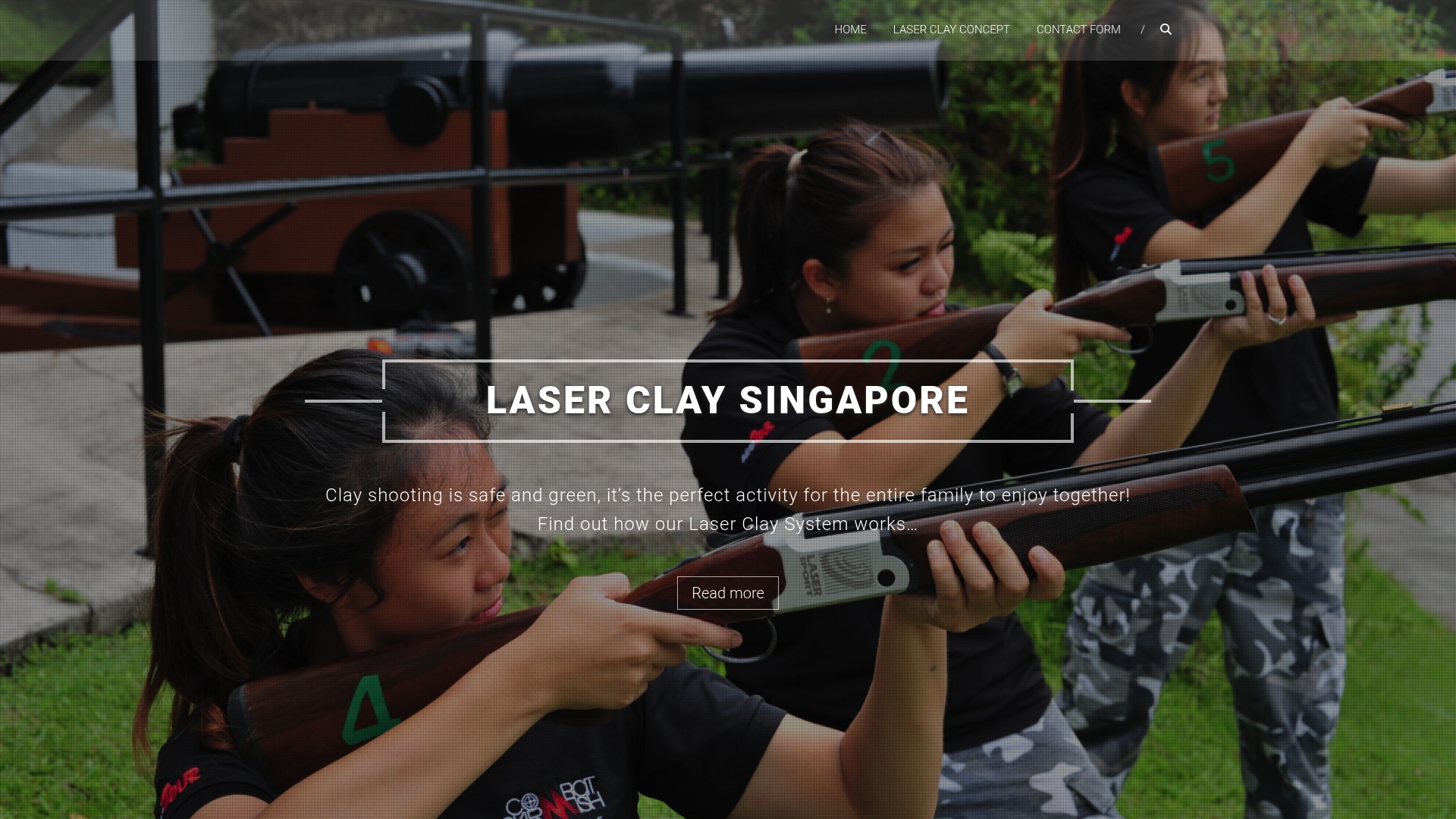
Send us your headcount, a few photos of the room and your preferred time. We will tell you how we would set it up and what the session would look like. You can also read how the game works on our how to play page, or contact us directly.
A simple 90-minute plan for a small room
Here is a template you can adapt for a group of 12 to 24 in a room with limited floor space.
- 0 to 10 minutes: arrival and briefing. Explain the plan, the safety rules and where the exits are. Split into teams of four to six.
- 10 to 25 minutes: a seated warm-up. A short puzzle or quiz that gets teams talking before anything physical.
- 25 to 70 minutes: main activity in rotation. For laser clay, teams take turns at the firing line, with scoring and cheering roles for the others. Keep rounds short and the scoreboard visible.
- 70 to 85 minutes: final round. Combine team totals and add a shared target.
- 85 to 90 minutes: debrief and photo. Two questions: what helped the team, and what would we do differently.
This keeps the number of people on their feet low, makes use of waiting time and lets you finish on time. If the room is booked until a fixed hour, remember setup and pack-down: ask your supplier how long each takes.
Common mistakes in small-space team building
- Choosing by headline group size. An activity that “fits 50” may need space for all 50 to move. Ask how many are active at once.
- Forgetting the fire exits. Props and equipment should never block a route out.
- Ignoring noise. Check neighbouring tenants and building rules.
- Over-filling the programme. Three well-run 25-minute blocks beat six rushed ones.
- No plan for the quieter people. Give out roles, and keep the scoring team-based.
- Leaving access needs until the day. Ask in the invitation.
FAQ
How much space does a small team need for team building?
It depends on the format. Seated challenges need little more than tables and chairs, while movement games need open floor. Ask your venue for its permitted capacity, which is set from net floor area, and plan so that only a few people are active at once.
Can we do laser clay in a meeting room or small hall?
Often yes, depending on the layout, power points and access. Send us photos and measurements of the room along with your headcount and time slot, and we will confirm what we can set up. Our indoor laser skeet page explains the checks.
How long should a small-group session run?
Most teams are happy with 60 to 90 minutes. That is long enough for several rounds and a short debrief, and short enough to fit a work afternoon or an evening before dinner.
Do we need a facilitator?
For anything with equipment, safety rules or scoring, a facilitator saves you from running it yourself and lets you take part. Our packages include facilitators and venue setup, so your team can play while we run the session.
Is laser clay suitable for mixed ages and fitness levels?
Yes. It involves no running or lifting and needs no experience, and our sessions are suitable for ages 10 and up. Tell us about any mobility or access needs in advance so we can adjust the setup.
Sources
- SCDF indoor event fire safety conditions, updated 19 February 2026
- SS 681:2022 code of practice for sport safety (preview)
- NUS Fire Safety Manual