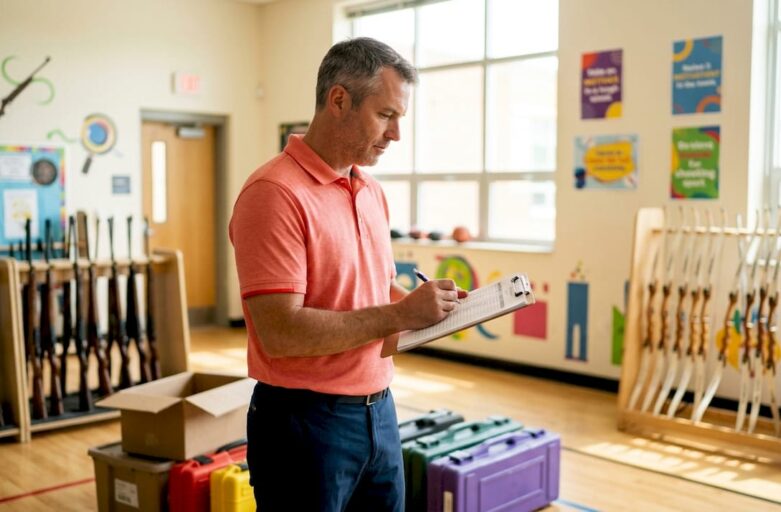
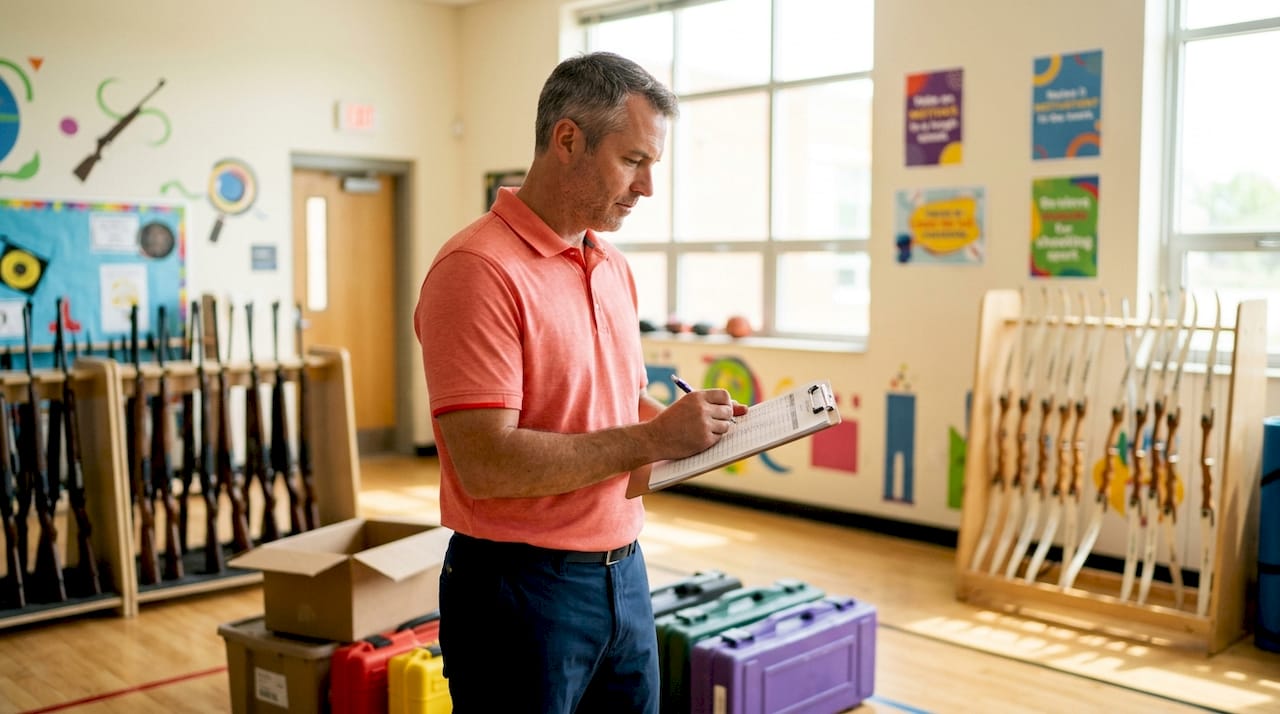
A school shooting sport programme is defined as a structured, supervised activity that teaches marksmanship, firearm safety, and discipline within an educational setting. Sourcing the right equipment for such a programme is the first practical step administrators must take, and it carries direct consequences for student safety, competition eligibility, and programme longevity. Established frameworks such as the USA High School Clay Target League (USHSCTL) and 4-H Shooting Sports provide the clearest models for schools building these programmes from scratch. This guide covers equipment requirements, safety funding, programme structure, and competition formats so you can build a programme that is safe, compliant, and genuinely valuable for students.
What equipment do you need to source for a school shooting sport programme?
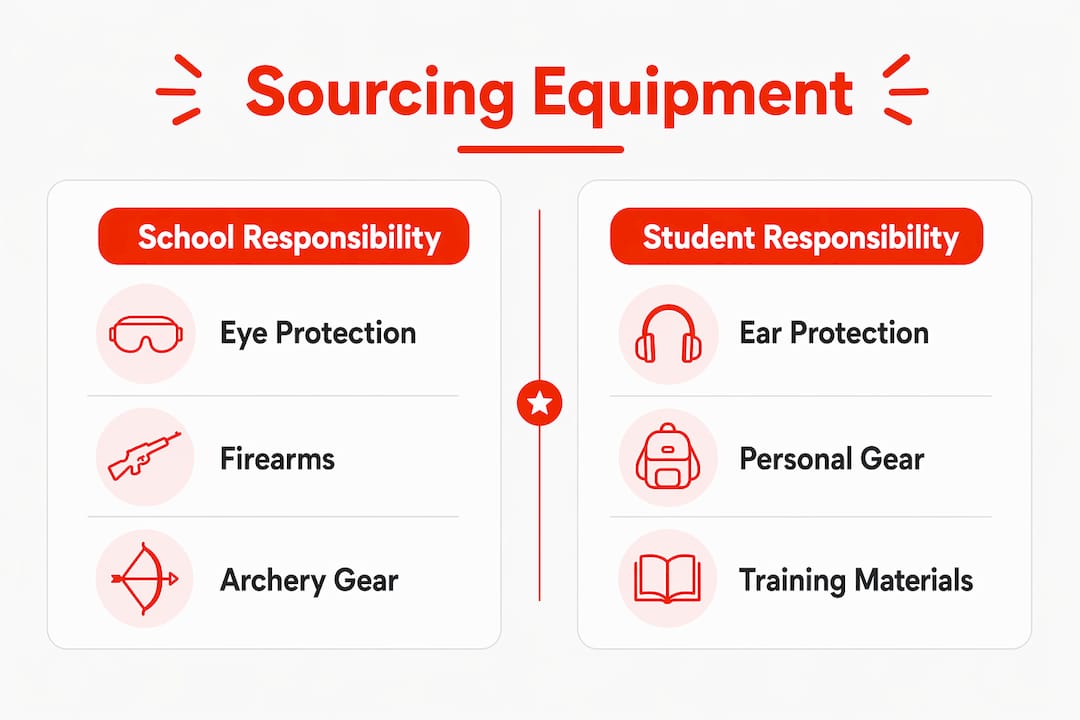
The non-negotiable starting point is personal protective equipment. Participants must supply their own eye and ear protection at competitive events, and this rule applies regardless of whether the school provides any other gear. That means administrators cannot treat protective equipment as optional or assume it will be available on the day. Every student must arrive with compliant safety glasses and hearing protection before they handle any firearm.
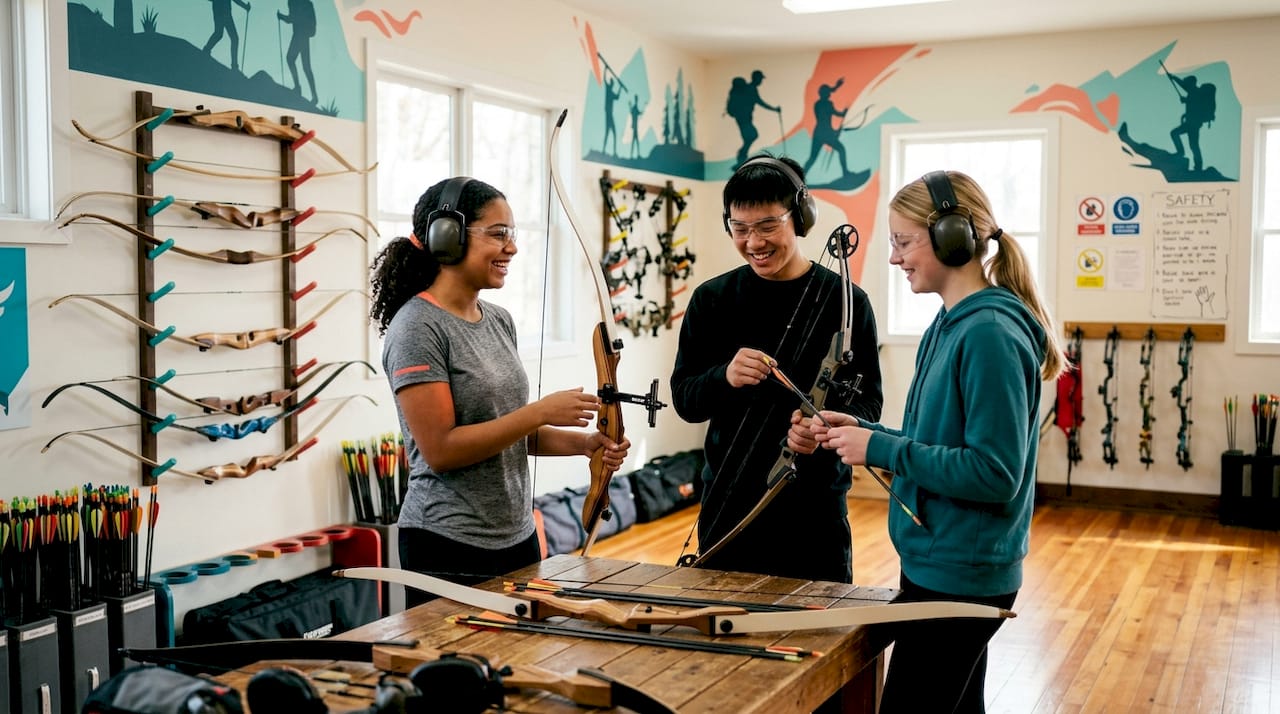
Firearms and archery equipment present a more complex sourcing challenge. Schools rarely hold enough equipment for every participant, and sharing firearms is tightly restricted under competition rules. No more than two shooters may share a rifle or pistol, and certain events, including silhouette and 3-position rifle, prohibit shared firearms entirely. Administrators must document all sharing arrangements during registration to avoid disqualification. This restriction effectively means that a growing programme needs a plan to acquire additional equipment over time, rather than relying on shared kit indefinitely.
Pro Tip: Build a simple equipment register before your first season. List every item the school owns, every item students are expected to bring, and every sharing arrangement that has been formally declared. This single document prevents disqualification disputes and helps you identify gaps before competition day.
Sourcing options for school programmes
Schools have three realistic sourcing routes for school safety equipment and firearms:
- School-owned equipment: Air rifles and shotguns purchased directly by the school through educational suppliers. This gives the programme full control but requires capital outlay and secure storage.
- Student-owned equipment: Students bring their own firearms under a declared and documented arrangement. This reduces school costs but increases administrative complexity around registration and compliance.
- Loan or grant programmes: Some state 4-H offices and shooting sports associations offer equipment loan schemes for new programmes. These are worth pursuing before committing to a purchase.
| Equipment category | School responsibility | Student responsibility |
|---|---|---|
| Eye protection | Recommended spare supply | Mandatory personal supply |
| Ear protection | Recommended spare supply | Mandatory personal supply |
| Air rifles / shotguns | Primary source for shared use | Optional personal supply |
| Ammunition | School or club purchase | Not permitted individually |
| Cleaning and storage kit | School | School |
Events frequently cap participation due to space and equipment limits. That reality reinforces the case for building a personal gear culture from day one, where students treat their protective equipment as their own responsibility rather than something the school will always provide.
How do you fund safety measures for a school shooting sport programme?
Federal grant funding is available and substantial. New federal grants provide £93 million in discretionary funds for school security upgrades, with individual awards ranging from £500,000 to £5 million per state. These funds cover door locks, visitor screening systems, and emergency communications, all of which directly support a safe shooting sport environment. Administrators who have not yet applied for these grants are leaving significant resources unused.
Physical security upgrades aligned with DOJ recommendations after the Robb Elementary incident include:
- Reinforced door locks on all access points to ranges and storage areas.
- Visitor screening systems at school entrances used during shooting events.
- Emergency communication systems that reach all areas of the range.
- Dedicated secure storage for all firearms and ammunition.
- Clear signage and controlled access routes for participants and spectators.
Emergency medical preparedness is equally critical. Most schools fail to document and share Cardiac Emergency Response Plans (CERP) and AED locations with visiting teams, which delays emergency responses during sports events. Project ADAM recommends sharing CERP documentation and AED locations with every visiting team before competition begins, and conducting regular emergency drills. This is a low-cost measure that carries high consequences if neglected.
Sharing your Cardiac Emergency Response Plan and AED locations with visiting teams before every event is not a courtesy. It is a safety standard that reduces response time when seconds matter most.
Pro Tip: Attach your CERP and AED location map to every event confirmation email sent to visiting schools. This takes two minutes and removes the single most common gap in youth sports emergency preparedness.
Staff and volunteer training rounds out the safety picture. Every adult supervising a shooting sport session needs documented training in firearm safety protocols, range commands, and emergency response. Programmes affiliated with 4-H Shooting Sports require volunteer certification, which provides a clear standard to meet and a credential that reassures parents and school boards alike.
What programme structures best support youth development in shooting sports?
The most effective shooting sport programmes operate as youth development education models rather than purely competitive clubs. NC 4-H Shooting Sports is the clearest example of this approach. The programme places adult-teen mentorship at its centre, with trained volunteer leaders guiding students through safety education, life skills, and peer leadership development. The competitive element exists within that framework, not above it.
Psychological skills training is a component that most school programmes underinvest in. Research shows that integrating stress response management, emotional regulation, and concentration training reduces injury risk and improves student performance. That finding matters because shooting sports demand a level of mental discipline that is different from most team sports. A student who cannot manage pre-competition anxiety is more likely to handle equipment carelessly. Addressing the psychological component is therefore a safety measure, not just a performance tool.
Effective programme structures share several characteristics:
- A clear code of conduct covering sportsmanship, range behaviour, and peer respect.
- Scheduled mentorship sessions where senior students coach newer participants.
- Firearm safety education delivered as a standalone module before any live shooting begins.
- Regular reflection sessions where students discuss what they learned, not just how they scored.
- Parental involvement through information evenings and open range days.
Shooting sports teach discipline in ways that transfer directly to academic and personal life. The focus required to shoot accurately mirrors the focus required to study effectively. Programmes that make this connection explicit, through discussion and structured reflection, produce students who carry those skills beyond the range.
Pro Tip: Introduce a peer leadership tier within your programme. Experienced students who take on coaching responsibilities develop faster than those who only compete. This structure also reduces the adult-to-student ratio you need to maintain safe supervision.
How do postal match formats increase accessibility and safety?
The postal match format is the most practical solution for rural schools and smaller programmes. USHSCTL allows schools to compete nationally by shooting at their local range and submitting scores electronically. States including Oklahoma, Georgia, Nevada, and Alabama have used this format to bring competitive shooting to schools that would otherwise be excluded by travel costs and distance.
Running a postal match programme requires clear logistics:
- Confirm your local range meets the safety and equipment standards required by the league.
- Register all participants and declare any equipment sharing arrangements before the event date.
- Appoint a certified range safety officer for every session, even when no opposing team is present.
- Record scores using the league’s official submission format and submit within the deadline.
- Retain all score sheets and safety logs for the full season in case of a dispute.
| Format | Travel required | Equipment needed | Competition scope |
|---|---|---|---|
| Postal match | None | Local range equipment | National |
| In-person invitational | Yes | Host school provides range | Regional |
| State championship | Yes | Centralised venue | State-wide |
Participation caps are common in postal formats because space and equipment limits apply at the local range level. Administrators should confirm capacity with their range contact before registering students, and build a waiting list process for oversubscribed sessions. Professional instruction at the local range level also raises the quality of scores submitted and reduces safety incidents during unsupervised practice sessions.
Key takeaways
A safe and effective school shooting sport programme requires sourcing personal protective equipment first, securing funding for physical security upgrades, and embedding youth development and psychological skills training into the programme structure from the outset.
| Point | Details |
|---|---|
| Personal protective gear is mandatory | Students must supply their own eye and ear protection; the school cannot guarantee this at events. |
| Equipment sharing has strict rules | No more than two shooters may share a firearm; document all arrangements during registration. |
| Federal grants fund physical security | Awards of £500,000 to £5 million are available for door locks, screening, and communications. |
| Emergency plans must be shared | Distribute CERP and AED locations to visiting teams before every event, not just internally. |
| Postal matches expand access | Rural schools can compete nationally by shooting locally and submitting scores electronically. |
Why psychological safety is the missing piece in most school shooting programmes
School administrators spend most of their planning time on physical safety, and rightly so. But after working closely with youth sport programmes, I have found that the schools with the fewest incidents are not necessarily the ones with the most equipment. They are the ones where students feel psychologically safe enough to ask questions, admit uncertainty, and flag concerns before they become problems.
The psychological skills training literature is clear on this. Emotional regulation and concentration training reduce injury risk in sports settings. Yet most school shooting programmes treat mental preparation as an afterthought, something addressed in the final five minutes of a session rather than built into the curriculum. That is a structural mistake.
Equipment sourcing challenges are real, but they are solvable with the right vendor relationships and grant applications. The harder problem is building a culture where students take safety seriously because they understand why it matters, not just because a rule says so. Programmes that invest in sportsmanship and peer leadership consistently outperform those that focus only on scores and compliance.
The future of school shooting sport programmes also points toward technology. Laser-based alternatives remove the ammunition variable entirely, making it easier to run introductory sessions in school settings where live-fire ranges are not available. Schools that start with laser formats and progress to live-fire programmes tend to produce students with stronger foundational safety habits, because the technology forces them to focus on technique before they ever handle live ammunition.
— Joshua
Laserclay: a safe starting point for school shooting activities
Schools looking to introduce a shooting sport programme without the complexity of live ammunition have a practical alternative worth considering.
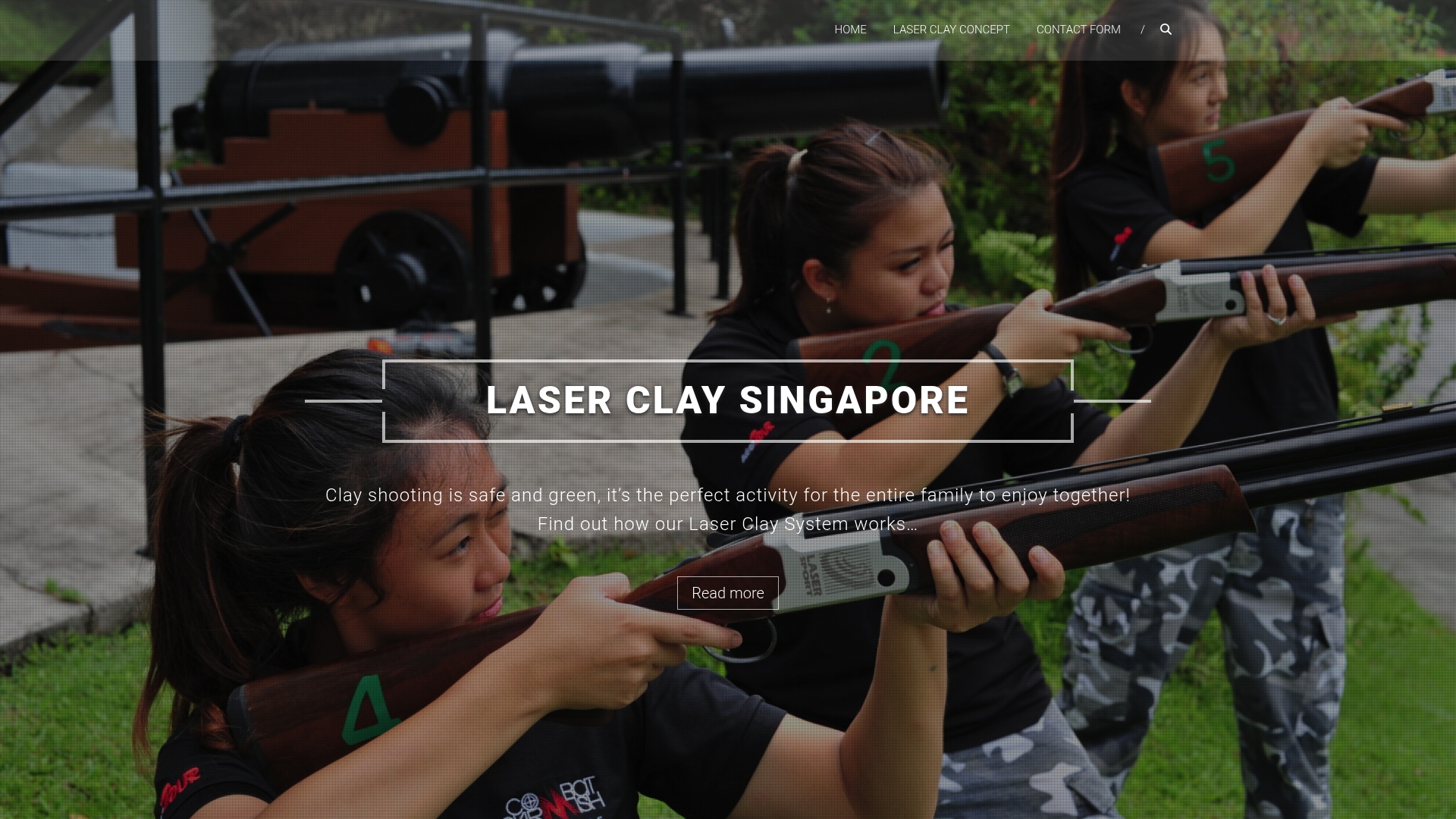
Laserclay uses advanced laser technology to replicate the clay shooting experience without lead ammunition, environmental risk, or the safety barriers that come with live-fire settings. For school administrators who want to build student interest, test programme viability, or run introductory sessions before committing to a full live-fire setup, Laserclay offers a format that is accessible to all skill levels and age groups. The activity builds the same teamwork, focus, and marksmanship fundamentals that underpin established youth shooting programmes, without the logistical overhead of range certification and ammunition storage. Schools across Singapore have used Laserclay events as a gateway into structured shooting sports, and the format works equally well for one-off taster days and recurring programme sessions.
FAQ
What personal protective equipment must students bring to shooting events?
Students must supply their own eye and ear protection at competitive shooting events. Schools cannot guarantee this equipment will be available, so personal supply is mandatory.
How many students can share a firearm at a competition?
No more than two shooters may share a rifle or pistol, and certain events prohibit sharing entirely. All sharing arrangements must be declared and documented during registration to avoid disqualification.
What federal funding is available for school shooting sport safety?
Federal grants currently provide £93 million in discretionary funds for school security upgrades, with individual awards from £500,000 to £5 million per state. Eligible uses include door locks, visitor screening, and emergency communications.
What is a postal match and why does it benefit smaller schools?
A postal match allows students to shoot at their local range and submit scores electronically, removing the need for travel. USHSCTL uses this format to enable rural schools in states such as Oklahoma and Georgia to compete nationally.
How does psychological skills training improve safety in shooting sports?
Psychological skills training covering stress response, emotional regulation, and concentration directly reduces injury risk in sport settings. It addresses the mental component of safe firearm handling that physical equipment alone cannot cover.