
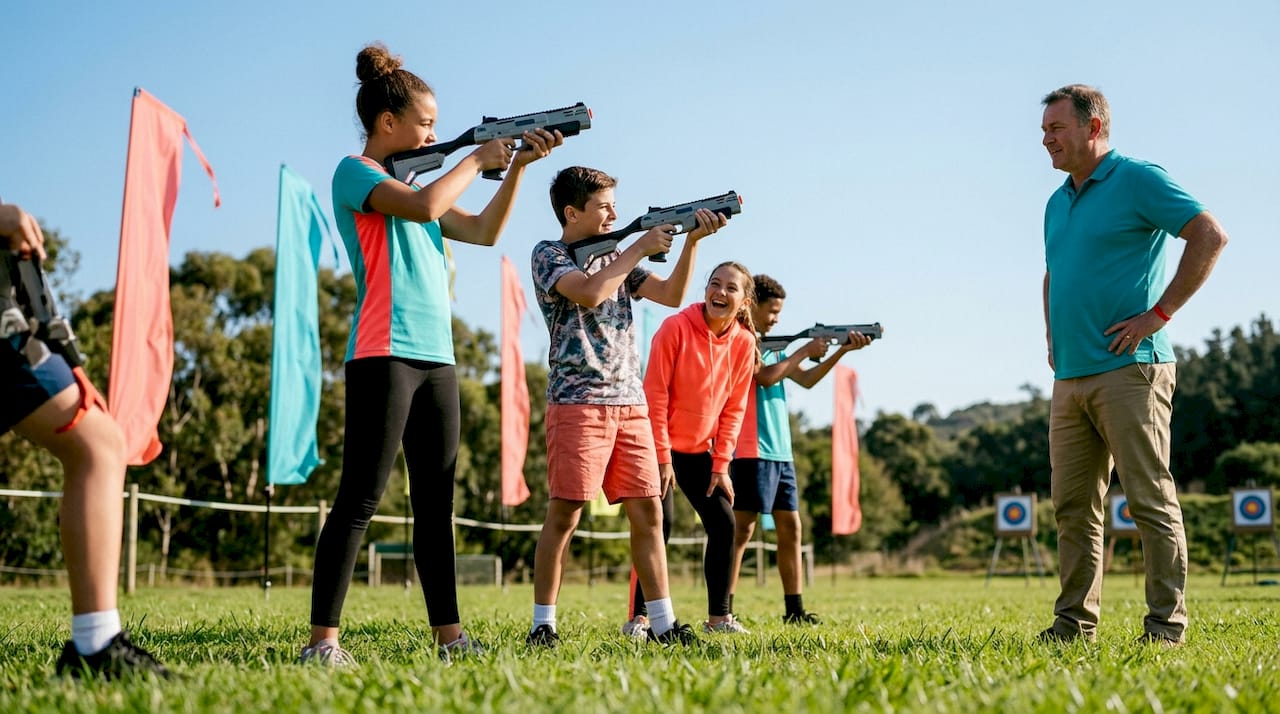
Non-contact shooting sports are defined as competitive physical activities where participants use projectile-free or safe-ammunition equipment to engage targets, eliminating physical collision and the injury risks tied to traditional contact sports. Schools across the United Kingdom, the United States, and beyond are choosing these programmes because they offer measurable safety records, full Title IX compliance, and documented improvements in student confidence and focus. The USA Clay Target League and the National Archery in the Schools Program (NASP) are the two most prominent examples of how structured, school-approved shooting sports deliver results. Understanding why schools adopt non-contact shooting sports means looking at the evidence across safety, inclusivity, student development, and practical implementation.
Why schools adopt non-contact shooting sports: the safety and inclusivity case
The single most compelling reason schools choose these programmes is the safety record. The USA Clay Target League reports over 56,000 students participating across more than 2,000 school-approved teams annually, with zero injuries recorded since 2001. That record is not accidental. It reflects a programme design that treats firearm safety as a continuous practice at every session, not a one-off induction.
Non-contact shooting sports are fully Title IX compliant, which means schools can run co-ed teams without the gender-segregation requirements that govern most traditional sports. This matters enormously for smaller schools where student numbers make single-gender squads impractical. The adaptive sport classification also means students with physical disabilities can compete alongside their peers without modification to the core competition format.
The inclusivity benefits extend further than most administrators initially expect:
- Co-ed participation removes the structural barriers that limit student access in traditional sports.
- Adaptive sport status accommodates wheelchair users and students with limb differences without creating a separate tier of competition.
- Safety certification is embedded in every practice, so students learn responsible handling as a condition of participation, not an afterthought.
- No minimum athletic profile is required. Students who would never make a football or netball squad can compete at a high level in shooting sports.
Pro Tip: When presenting this programme to your governing body, lead with the zero-injury record and Title IX compliance. These two facts address the two most common objections before they are raised.
What are the developmental benefits of shooting sports for students?
The benefits of shooting sports in schools go well beyond physical activity. NASP data shows that 84% of instructors reported improved self-confidence in students, and 78% saw increased motivation. Those figures come from instructors working directly with young people across diverse school settings, which makes them a reliable signal rather than a marketing claim.
The mental discipline required to shoot accurately transfers directly to academic performance. Participation in shooting sports strengthens mental control, focus, and emotional regulation, all of which improve problem-solving and exam performance. A student who learns to manage their breathing, block out distraction, and execute under pressure in competition is practising the same cognitive skills needed in a timed examination.
“Schools adopt shooting sports to provide students with opportunities for confidence, sportsmanship, and teamwork without the high costs or limited playtime of traditional sports. The mental focus and emotional regulation required by shooting sports translate directly into improved academic outcomes for participants.”
Sportsmanship and discipline are not incidental outcomes. The Scholastic Clay Target Program integrates ethics and responsibility into every practice session, treating the sport as a vehicle for character development. Students learn to handle setbacks without blaming equipment or opponents, a habit that carries into every other area of school life.
The developmental gains build in a specific sequence:
- Safety training establishes personal responsibility from the first session.
- Repetitive practice builds focus and patience, skills that transfer to study habits.
- Competition develops emotional regulation under pressure.
- Team membership cultivates sportsmanship and peer accountability.
- Recognition through lettering and school affiliation reinforces motivation to continue.
The most successful programmes are generational. Former students return as coaches and mentors, which strengthens community ties and creates a self-sustaining culture of engagement. That kind of continuity is rare in school sports and worth planning for from the outset.
How do schools implement shooting sports programmes?
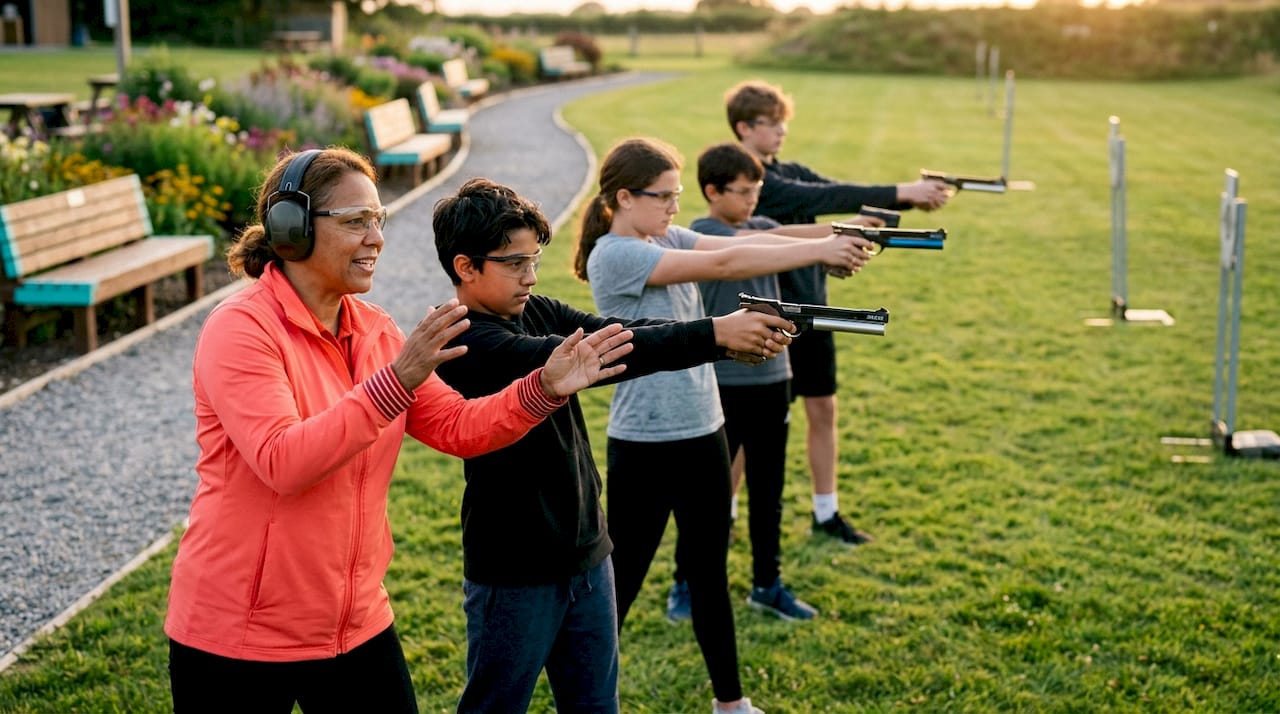
Implementation is more straightforward than most administrators assume. Programmes can begin as community or club-based teams before formal school adoption, which allows schools to observe the sport’s benefits and build familiarity before committing to official affiliation. This grassroots pathway has been used successfully by dozens of schools to reduce the perceived risk of adoption.
Once a school affiliates officially, the structural advantages become clear. Every registered student competes in every event. There is no bench. No student sits out because a coach prefers another player. This is a fundamental difference from traditional team sports and one that resonates strongly with administrators concerned about equitable participation.
Key practical considerations for school administrators include:
- Adult volunteer coaches run most programmes, reducing staffing costs significantly.
- School approval processes vary by region but typically require a safety audit and coach certification review.
- Equipment partnerships with established leagues can reduce upfront costs for schools with limited budgets.
- Scholarship opportunities exist at collegiate level for students who excel, giving the programme a long-term recruitment and retention argument.
- School affiliation grants students team lettering and yearbook inclusion, which builds school spirit and signals that the programme is a legitimate part of school life.
| Consideration | Detail |
|---|---|
| Start-up pathway | Begin as a community club before seeking formal school affiliation |
| Coaching model | Adult volunteers with certified safety training |
| Participation guarantee | All registered students compete in every event |
| Recognition | Team lettering and yearbook inclusion upon school affiliation |
| Cost support | Equipment partnerships and collegiate scholarships available |
How do shooting sports compare with traditional contact sports in schools?
The differences between shooting sports and traditional contact sports are significant enough to explain why many schools are adding them as a complement, or in some cases a replacement, for existing programmes.
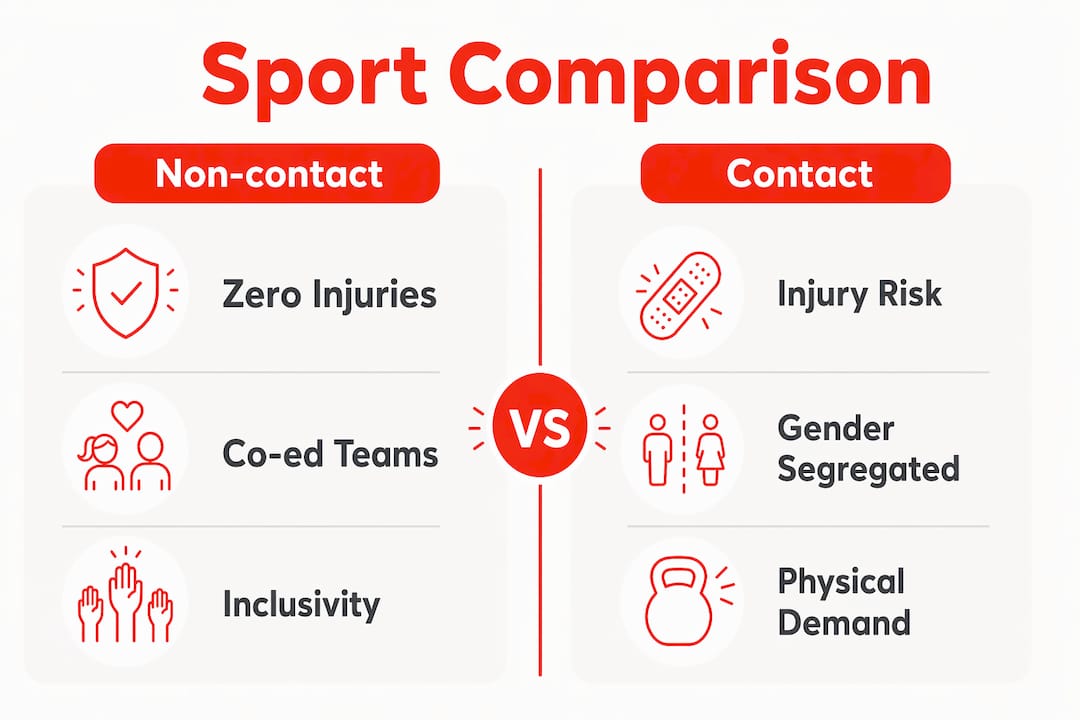
Injury risk is the most obvious distinction. Contact sports such as rugby, football, and basketball carry inherent collision risks that require insurance, medical staff, and parental consent processes. Non-contact shooting sports, by contrast, carry a zero-injury record across more than two decades of organised school competition. That difference alone simplifies the administrative burden considerably.
Inclusivity is the second major distinction. Traditional sports are almost universally gender-segregated and require a baseline level of physical fitness that excludes a significant proportion of students. Shooting sports are co-ed by design and accessible to students across a wide range of physical abilities, including those who use mobility aids. Schools that have struggled to meet participation targets in physical education find that shooting sports attract mixed demographics that other programmes cannot reach.
| Factor | Non-contact shooting sports | Traditional contact sports |
|---|---|---|
| Injury risk | Zero recorded injuries in organised school leagues | Moderate to high, depending on sport |
| Participation model | Every registered student competes every time | Bench system; selection limits participation |
| Gender structure | Co-ed by design, Title IX compliant | Typically gender-segregated |
| Accessibility | Adaptive sport classification included | Limited for students with physical disabilities |
| Cost model | Volunteer coaching; equipment partnerships available | Higher staffing and equipment costs |
Pro Tip: Frame shooting sports as an addition to your existing PE programme rather than a replacement. Schools that position it this way face less resistance from existing sports staff and parent groups.
The competitive pathway in shooting sports also suits a broader range of students. A student who lacks the speed for athletics or the height for basketball can still reach a high competitive level through technique, focus, and consistent practice. That pathway to excellence matters for student motivation and long-term engagement with physical activity.
Key takeaways
Schools adopt non-contact shooting sports because they combine a zero-injury safety record, full co-ed inclusivity, and documented improvements in student confidence, focus, and academic performance.
| Point | Details |
|---|---|
| Unmatched safety record | The USA Clay Target League has recorded zero injuries across school teams since 2001. |
| Full inclusivity | Title IX compliance and adaptive sport status make these programmes open to all students. |
| Student development | NASP data shows 84% of instructors report improved self-confidence in participating students. |
| Guaranteed participation | Every registered student competes in every event, eliminating the bench problem. |
| Practical to implement | Programmes can start as community clubs and grow into officially affiliated school teams. |
What I have learnt from watching these programmes grow
Schools that hesitate to adopt shooting sports almost always cite the same concern: they worry about perception. They fear that parents will object, that governors will push back, or that the word “shooting” will trigger a controversy before the programme has a chance to prove itself. I understand that concern. But the data tells a different story.
The schools that have moved forward, often starting with a small community club and letting results speak, consistently find that the objections dissolve once parents see their children coming home more focused, more confident, and more engaged with school life. The sport’s safety record is not just a statistic. It is a conversation-ender.
What I find genuinely compelling about these programmes is the participation guarantee. Every student competes. That is not a minor administrative detail. It is a philosophical commitment to inclusion that most traditional sports cannot match. For the student who has always been picked last, or who has never made a school team, that guarantee changes their relationship with sport entirely.
The generational aspect is the detail most administrators overlook. When former students return as coaches, the programme stops being a school activity and becomes a community institution. That is the kind of long-term engagement that school sports rarely achieve. If you are considering how shooting sports teach discipline and whether the investment is worth it, the answer from the evidence is clear: it is.
— Joshua
Laserclay: a safe, modern option for schools exploring shooting sports
Schools looking for a way to introduce shooting sports without live ammunition or environmental concerns have a practical option worth considering. Laserclay uses advanced laser technology to replicate the clay shooting experience without lead shot, making it suitable for school events, physical education days, and team-building activities.
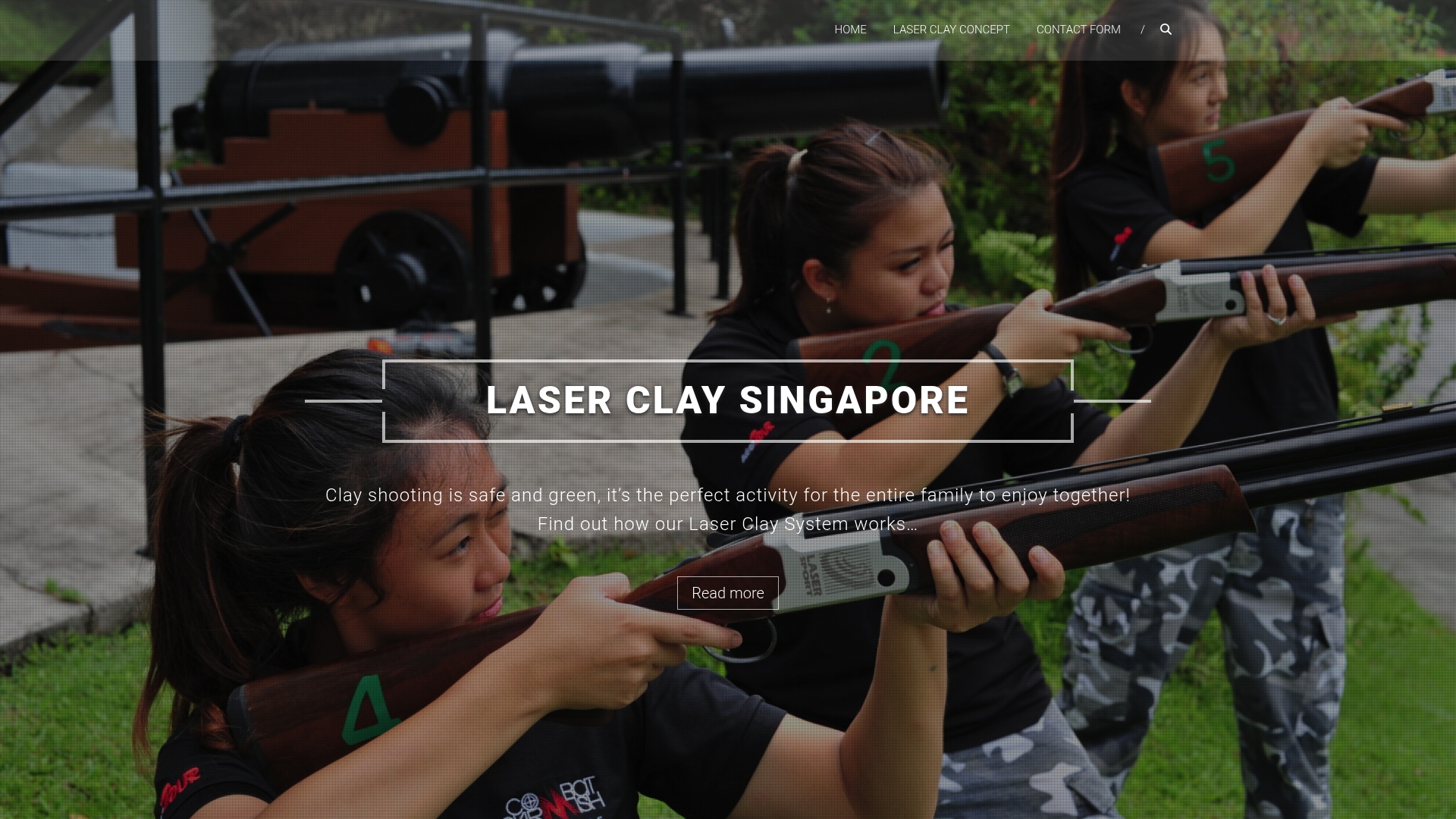
Laserclay’s approach removes the two barriers that most commonly stop schools from trying shooting sports: safety concerns around ammunition and the cost of specialist facilities. The experience is fully accessible, works across age groups, and requires no prior shooting experience. Schools that want to play laser clay as a taster session before committing to a formal programme will find it an effective and low-risk starting point. For a broader look at what the format involves, the complete guide to laser clay shooting covers everything from equipment to session structure.
FAQ
What are non-contact shooting sports in schools?
Non-contact shooting sports are competitive activities where students use safe equipment to engage targets without physical collision. Programmes such as the USA Clay Target League and NASP are the most widely adopted examples in school settings.
Are shooting sports safe for school-age students?
The USA Clay Target League has recorded zero injuries across its school teams since 2001, across more than 56,000 participating students. Safety certification and ongoing firearm safety education are built into every session.
Do shooting sports programmes comply with Title IX?
Non-contact shooting sports are fully Title IX compliant, allowing co-ed teams and adaptive participation for students with physical disabilities. This makes them one of the most inclusive sport options available to schools.
How do schools start a shooting sports programme?
Schools can begin with a community or club-based team before seeking formal affiliation. Once affiliated, adult volunteer coaches manage sessions, and all registered students are guaranteed to compete in every event.
What developmental benefits do students gain from shooting sports?
NASP data shows 84% of instructors report improved self-confidence and 78% report increased motivation in students. Participation also strengthens focus and emotional regulation, which supports academic performance.