Short, minute-style challenges beat long single-game formats for parties and group events because they rotate everyone through fast, keep energy high and need almost no downtime between turns. This guide gives you a ready-to-run shortlist of games, printable station scripts, rotation timetables and scoring systems, plus a facilitated alternative like Laser Clay for organisers who want one high-impact station instead of a dozen small ones.
TL;DR:
- Run each station for one minute, allow 30 seconds to rotate, and assign one marshal per station or one per three when staffing is tight.
- For 30 to 60 people, use 2 to 4 per station; 8 to 12 stations support 6 to 8 rotations in 45 to 90 minutes.
- Choose points, cumulative completion time, or win, draw, or loss tallies; settle ties with a final station rematch or a 10 second challenge.
- Adjust targets for age, offer seated play or alternate cues, and keep a marshal near stations with small props or spill risks.
- When space or volunteer staffing is limited, one facilitated station can replace a line-up of prop stations, with an operator handling equipment, safety, and electronic scoring.
Table of Contents
- 1. Top quick rotation games for parties and groups
- 2. Materials, props and low-cost setup options
- [3. How to run quick rotations and keep rounds moving – guidance on youth sports playing time frameworks can also help balance fair participation in games like these.](#how-to-run-quick-rotations-and-keep-rounds-moving-guidance-on-youth-sports-playing-timehttpsblogparentcoachdeskcomblogyouth-sports-playing-time-frameworks-can-also-help-balance-fair-participation-in-games-like-these)
- 4. Scoring methods, tie-breakers and quick adjudication
- 5. Age adaptations and accessibility tips
- 6. Ten ready-to-run game scripts for your station cards
- 7. Why some organisers prefer a facilitated station
- 8. Which quick rotation formats actually work best
- Book a facilitated option with Laser Clay
- FAQ
1. Top quick rotation games for parties and groups
Minute-to-win-it-style challenges work because each one has a single, obvious objective that a stranger can judge in seconds. Below is a shortlist you can mix and match depending on space, age range and how many props you are willing to carry.
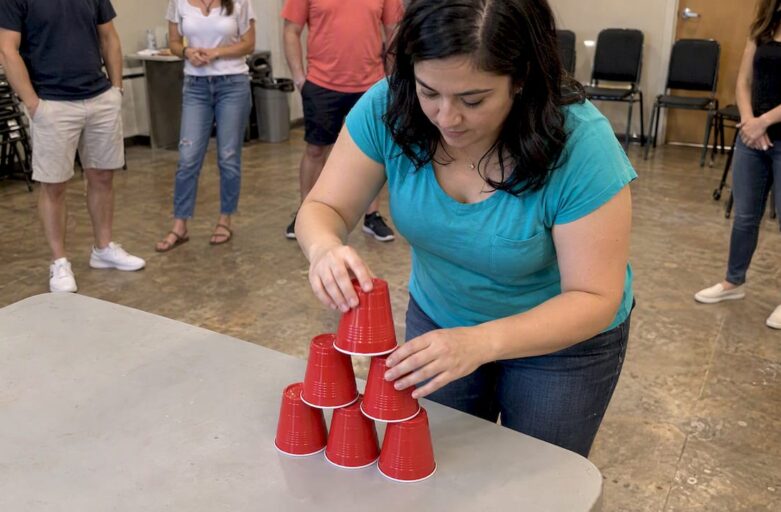
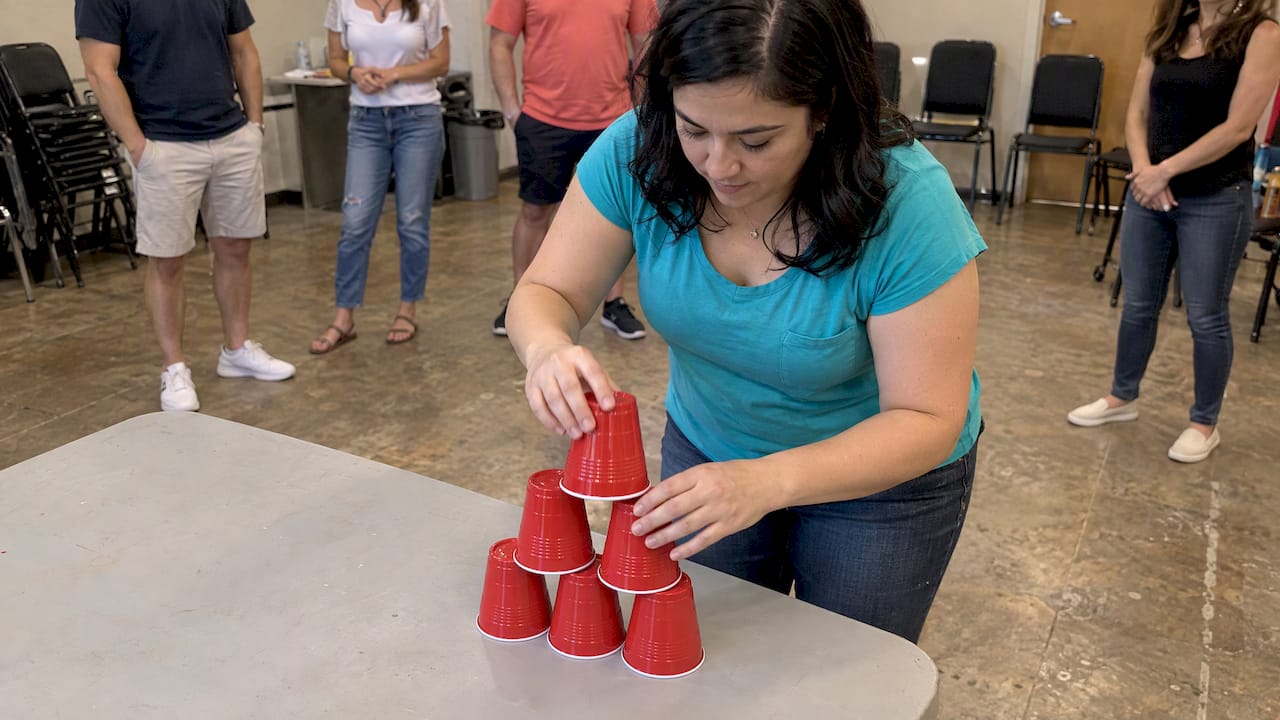
- Cup stack sprint: stack six cups into a pyramid and back down; 1 player per turn; all ages; needs plastic cups.
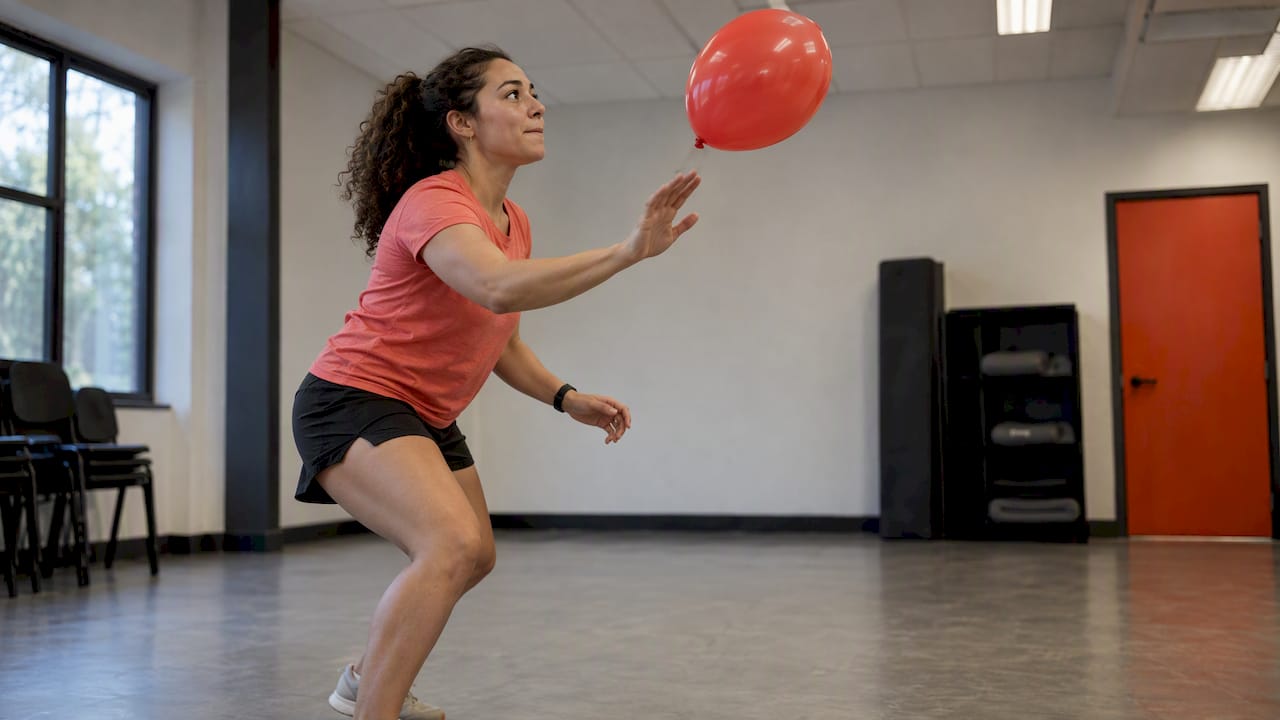
- Balloon keep-up: keep a balloon off the floor for the full round; 1-4 players; all ages; needs balloons.
- Cookie face: move a biscuit from forehead to mouth using only facial muscles; 1 player; teens and adults; needs biscuits.
- Spoon and ball relay: carry a ball on a spoon across a line and back; 2+ players; all ages; needs spoons and small balls.
- Tissue box shuffle: shake ping pong balls out of a tissue box strapped to your waist; 1 player; teens and adults; needs a tissue box and balls.
- Straw and cotton ball transfer: move cotton balls between bowls by suction through a straw; 1 player; children and mixed groups; needs straws and cotton balls.
- Balance book walk: walk a set distance balancing a book on your head; 1 player; all ages; no props beyond a paperback.
- Sticky note sprint: stick as many notes as possible on a partner in one minute; 2 players; all ages; needs sticky notes.
- Human ring toss: toss rings or hoops onto a willing teammate’s outstretched arms; 2+ players; teens and adults; needs rings.
- Marshmallow catapult: launch marshmallows from a spoon into a cup; 1-2 players; all ages; needs spoons, marshmallows, a cup.
- Paper aeroplane distance: fold and fly a paper plane for farthest distance; 1 player; all ages; needs paper.
- Balloon pop sit: pop a balloon by sitting on it, no hands; 1 player; teens and adults; needs balloons.
- No-prop charades dash: act out a word for your team to guess before time runs out; 2+ players; all ages; no props.
Mix no-prop games like charades with one or two prop-heavy stations to balance setup time against variety.
2. Materials, props and low-cost setup options
A multi-station quick rotation event does not need an expensive prop list. Most minute-style games run on items you already have at home, with a few cheap top-ups from a discount shop.
- Core kit: plastic cups, balloons, straws, cotton balls, sticky notes, spoons, small balls, paper for folding.
- Food props: biscuits, marshmallows, crisps for stacking or balancing challenges.
- Timing kit: a phone stopwatch or a simple kitchen timer per station, plus a whistle for marshals.
- Scoring kit: a clipboard, score sheets or a whiteboard per station cluster.
- Backup kit: spare balloons and cups, since these items tear or pop mid-round.
Household item substitutions work well when budgets are tight: use rolled socks instead of balls, kitchen tongs instead of specialised grabbers, and paper plates instead of bought targets. Low-cost prop substitutions reliably keep minute games accessible without a big shopping trip.
Pro Tip: Pack one spare of every consumable prop (balloons, cups, straws) because breakages are the main cause of rotation delays.
Before the event, print a one-page packing checklist listing props by station number, so whoever loads the car can tick items off without needing to remember the rules of every game.
3. How to run quick rotations and keep rounds moving – guidance on youth sports playing time frameworks can also help balance fair participation in games like these.
A one-minute play period with a 30-second swap window keeps momentum while still allowing brief setup and scoring between turns. This rhythm works whether you have 8 stations or 20, because the swap time scales with group size rather than game complexity.
- Divide participants into small teams or pairs sized to fill each station without long queues, typically 2-4 people per station for a group of 30-60.
- Run each game for exactly one minute, called by a marshal or timer app, then allow 30 seconds for teams to record scores and rotate to the next station.
- Assign one marshal per station (or one marshal per three stations if staffing is tight) to explain rules, start the timer and record the result.
- Brief marshals beforehand on their single game’s rules only, since trying to learn every station slows training and increases errors.
- For an 8-12 station event lasting 45-90 minutes, plan for 6-8 rotations of one minute plus swap time, which gives most groups a full circuit without fatigue.
A sample run sheet helps you spot bottlenecks before the event starts: list each station, its marshal, its prop count and its expected swap time, then walk the sequence once to check nothing clashes. Printable game cards at each station reduce marshal briefing time and cut confusion during swaps, a detail that matters most when volunteers are running the show rather than paid staff.
4. Scoring methods, tie-breakers and quick adjudication
Keep scoring simple enough that a volunteer marshal can record a result in the few seconds available during a swap. Three systems cover most quick rotation formats.
- Per-round points: award a fixed number of points for completing a challenge within the minute, with partial credit for close attempts.
- Fastest cumulative time: add up each team’s completion times across all stations and rank by lowest total.
- Win or lose tally: mark a simple win, draw or loss per station and total wins at the end, which suits very young children or large groups where precise timing is impractical.
Tie-breakers need to be just as fast as the main game. A sudden-death rematch on the final tied station, or a single tie-breaker challenge like a 10-second balloon keep-up, both resolve a draw without slowing the whole event down. For score tracking, a shared whiteboard app or a simple paper tally sheet per team avoids the need for specialised software, which matters most when several stations are reporting scores at once.
5. Age adaptations and accessibility tips
Most minute-style games flex easily across age groups with small rule tweaks rather than entirely different games.
- Shorten the target (fewer cups to stack, fewer points to reach) for younger children, and extend it slightly for competitive teens and adults.
- Allow seated play or a shortened reach distance for participants with limited mobility, and offer a verbal or visual cue alternative for games that rely on sound signals.
- Pair a less mobile participant with a teammate for relay-style games so the whole team still competes together.
Supervision matters most around choking hazards (small food props with young children) and slip risks (balloon or cup spills on hard floors), so keep a marshal within arm’s reach of any station using small or loose items. For mixed-ability groups, skill-based inclusivity principles from facilitated games are worth borrowing even in a DIY line-up, such as offering an easier variant alongside the standard rules rather than a separate “simplified” station.
6. Ten ready-to-run game scripts for your station cards
Print each of these on a single card so marshals never have to improvise the rules mid-event.
1. Cup stack sprint
Objective: build a 6-cup pyramid, then restack flat, before time runs out.
Materials: 6 plastic cups per player.
Steps: on “go”, stack cups into a pyramid, then disassemble back into a single stack.
Players: 1 per turn. Scoring: complete within 60 seconds for a point; fastest time wins ties.
2. Balloon keep-up
Objective: keep one balloon airborne for the full minute.
Materials: 1-2 balloons.
Steps: tap the balloon to keep it off the ground; restart the clock if it drops, or deduct a point per drop.
Players: 1-4. Scoring: most time airborne, or fewest drops.
3. Cookie face
Objective: move a biscuit from forehead to mouth, hands-free.
Materials: 1 biscuit per player.
Steps: place the biscuit on the forehead, then use only facial movement to walk it down to the mouth.
Players: 1 per turn. Scoring: fastest success wins; no completion within the minute scores zero.
4. Spoon and ball relay
Objective: carry a small ball on a spoon across a marked distance and back.
Materials: spoons, small balls (table tennis or similar), a start and turn marker.
Steps: hold the spoon in one hand, walk to the marker and back without dropping the ball.
Players: 2+ for a relay. Scoring: fastest total relay time, with a 5-second penalty per drop.
5. Tissue box shuffle
Objective: shake all balls out of a tissue box strapped around the waist.
Materials: a tissue box, string or belt, ping pong balls.
Steps: fill the box, strap it on, then shake using only hip movement until empty.
Players: 1 per turn. Scoring: fastest to empty the box, or most balls emptied in 60 seconds.
6. Straw and cotton ball transfer
Objective: move cotton balls between two bowls using only a straw and suction.
Materials: straws, cotton balls, two small bowls.
Steps: suck a cotton ball onto the straw tip and carry it to the second bowl, repeating for the full minute.
Players: 1 per turn. Scoring: most balls transferred in 60 seconds.
7. Balance book walk
Objective: walk a set distance with a book balanced on the head.
Materials: one paperback book, a marked start and finish line.
Steps: place the book flat on the head and walk the course without using hands to steady it.
Players: 1 per turn. Scoring: fastest completion without the book falling; restart on a drop.
8. Sticky note sprint
Objective: stick as many notes as possible onto a partner within the minute.
Materials: a pad of sticky notes per pair.
Steps: one player sticks notes anywhere on the other’s body or clothing until time runs out.
Players: 2 per team. Scoring: most notes stuck and still attached when time stops.
9. Human ring toss
Objective: toss rings onto a teammate’s outstretched arms.
Materials: 5-6 small rings or hoops.
Steps: one player stands still with arms out; the other tosses rings from a marked distance.
Players: 2 per team. Scoring: most rings landed and held in 60 seconds.
10. No-prop charades dash
Objective: act out as many words as possible for a teammate to guess correctly.
Materials: none, or a pre-written word list.
Steps: draw a word, act it out silently, move to the next word once guessed correctly.
Players: 2+ per team. Scoring: most correct guesses within the minute.
7. Why some organisers prefer a facilitated station
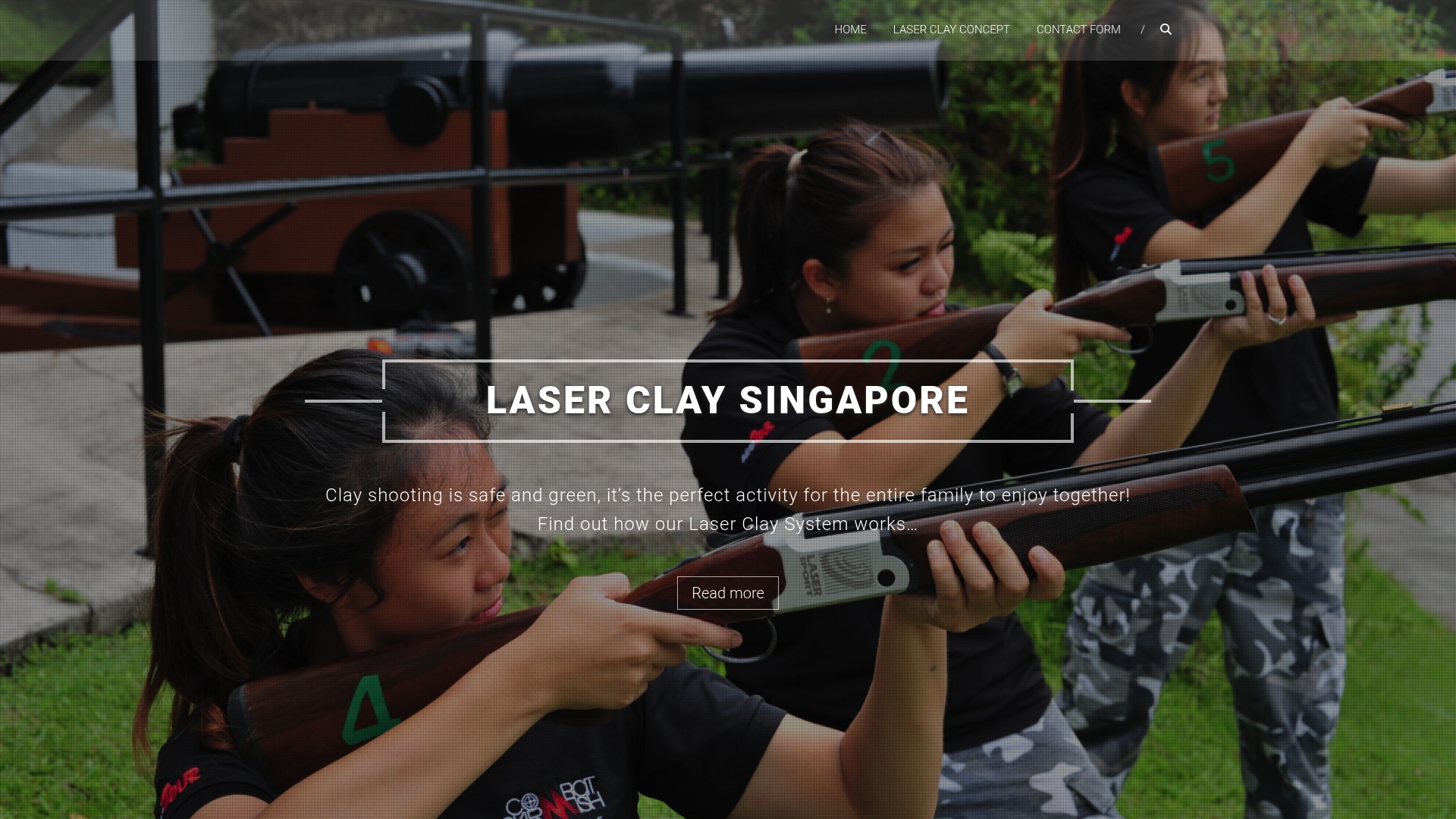
Running ten or more prop-heavy stations means ten sets of rules to brief, ten prop boxes to pack and ten marshals to train. Facilitated laser-clay stations replace that entire set-up with a single high-impact activity run by one operator, which cuts both prop logistics and marshal training to a fraction of a DIY line-up.
- A single operator manages scoring, equipment and safety briefing, so volunteer marshals are not needed for that station.
- A real-time electronic scoreboard removes manual tallying for that part of the event.
- Reusable clay targets and laser technology mean no props to replace between rounds, unlike balloons or biscuits.
- The format suits mixed-age groups from age 10 upwards, giving organisers one station that works across a wide guest list.
This suits larger events, venues with limited space for multiple prop stations, or any group where volunteer staffing is already stretched thin. How a facilitated session runs in practice is worth a look before deciding whether to swap several small stations for one centrepiece.
8. Which quick rotation formats actually work best
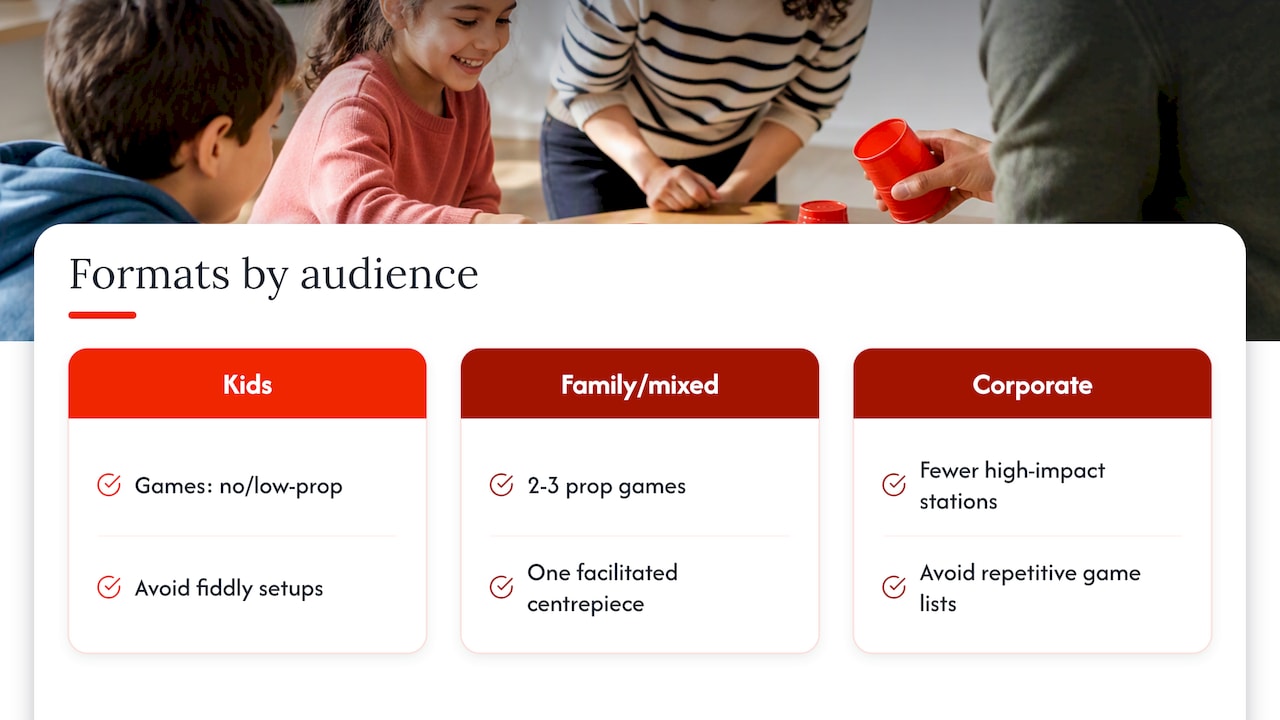
For kids’ parties, stick to no-prop or low-prop games like charades and balloon keep-up, since young children lose patience with fiddly setups. Family and mixed-age events do best with a blend, two or three prop games alongside one facilitated centrepiece that does not need constant refereeing. Corporate groups tend to prefer fewer, higher-impact stations over a long list of minute games, since adults disengage faster from repetitive silly challenges.
The trade-off worth expecting: more stations means more variety but also more setup time and more things that can break mid-event. Running 15 or more rotations also risks fatigue by the final stretch. My practical takeaway is to cap most events at 8-10 stations and let pacing, not prop count, carry the energy.
— Joshua
Book a facilitated option with Laser Clay
If packing twelve prop boxes and briefing a dozen marshals sounds like more admin than fun, we offer a single booked station that handles the setup, scoring and facilitation for you. Our Corporate Laser Clay Package runs at 69 SGD per person for team-building events, our Birthday party package starts from 49 SGD per person, and we also offer System Rental at 500-800 SGD per hour for organisers who want the equipment without the full facilitated package.
- The packages include reusable and environmentally considerate equipment.
- They are designed to accommodate a wide age range suitable for family and corporate groups.
- Venue setup and facilitation are provided to assist event organisers and volunteers.
Whether you are planning a corporate day out, a birthday celebration or simply want to hire the system for your own event, get in touch to check availability and talk through what fits your group size and venue.
FAQ
What are some games like Quick Draw?
Games with a similar fast-reaction format include balloon pop sit, cup stack sprint and any one-minute challenge where a single clear action decides the winner. These work well alongside Quick Draw style games because they share the same short, high-energy structure.
What are some fun Minute to Win It games for team building with adults?
Cookie face, tissue box shuffle and human ring toss all work well for adult team-building since they are quick to explain and genuinely test coordination under time pressure. For larger corporate groups, a single facilitated station such as a laser clay shooting session can replace several of these smaller games with one higher-impact centrepiece.
What’s the easiest game to make?
No-prop charades dash is the simplest to set up since it needs no materials and only a short list of words to act out. Balloon keep-up is a close second, requiring only one or two balloons per station.
What are 10 fun activities I can do at home?
A home-based quick rotation session can include cup stacking, balloon keep-up, spoon and ball relay, sticky note sprint, paper aeroplane distance, straw and cotton ball transfer, balance book walk, cookie face, marshmallow catapult and charades. Running these as one-minute stations with a short swap window keeps a group of any size moving without long waits between turns.
How do I keep score fairly across quick rotation games?
Per-round points, fastest cumulative time, or a simple win-loss tally all work, with the choice depending on group size and how precisely you want to rank results. For ties, a short sudden-death rematch or a 10-second tie-breaker challenge resolves the result without slowing the event down.