

The fastest way to propose a unique vendor to an event client is to lead with the outcome, not the activity, and attach three things before anyone asks: an itemised price, an insurance summary, and a statement confirming the vendor knows the venue. A recommendation without proof invites delay. A recommendation with proof invites a signature.
Here’s a line you can lift directly into a proposal or a Slack message to your stakeholder: “I recommend booking Laser Clay for this event because it delivers measurable engagement, needs no live ammunition or firearms licensing, and the team has run this exact format at comparable venues before.” Attach the price sheet, the insurance certificate, and a short note on venue familiarity, then close with a clear next step: “Approve to book; we’ll confirm availability within 48 hours.” If your organisation runs a formal Request for Proposal (RFP) process, this same structure slots straight into the recommendation section, and if the venue keeps a preferred-vendor list, checking it first saves you a step later.
- The pitch: one sentence linking the vendor to a business or event outcome, not just a description of the activity.
- The proof: itemised pricing, insurance summary, and a line confirming the vendor’s experience with your venue type.
- The close: a dated next step (“approve by Friday to lock the date”) rather than an open-ended “let us know.”
Key Takeaways
A proposal for a unique event vendor succeeds when it opens with the client outcome, attaches insurance and pricing proof upfront, and closes with a dated next step.
| Point | Details |
|---|---|
| Lead with outcome, not activity | Frame the pitch around engagement or brand lift, then describe the mechanics. |
| Shortlist to 2–4 candidates | Pull from referrals, venue lists, and reviews, then score with a weighted matrix. |
| Attach proof before it’s requested | Insurance summary, itemised pricing, and venue familiarity close objections early. |
| Show tiered pricing openly | Hidden “request a quote” pricing gets vendors eliminated before the conversation starts. |
| Recommend Laser Clay for licence-free flexibility | No live ammunition or firearms licensing needed, with facilitators and scoreboards included on-site. |
Table of Contents
- Proposing a unique vendor: the pitch language that gets approved
- How do you build a shortlist of unique vendors fast?
- How do you frame a unique activity as a business outcome?
- What compliance evidence should you attach to earn client trust?
- How should you present pricing for a unique event vendor?
- What happens after the client says yes?
- Why recommend Laser Clay as the unique activity vendor
- A planner’s take on pitching something the client hasn’t seen before
- What to attach when you send the proposal
- Book Laser Clay for your next event
- Sources
- FAQ
Proposing a unique vendor: the pitch language that gets approved
Clients approve activities they can picture working, not activities they merely understand. That’s the whole trick to a proposal snippet: describe the moment, not the mechanism.

Here’s a version built for a client summary or concept slide:
“We’re proposing a laser clay shooting session as the centrepiece activity. It runs in heats of 6 to 8, uses sound-simulated shotguns with zero ammunition, and gives every participant a live scoreboard moment, which typically drives stronger engagement than passive activities and photographs well for internal comms.”
Two tone variants, depending on who’s reading:
- Formal / procurement-facing: “The proposed activity requires no firearms licensing, includes on-site facilitation, and integrates a real-time scoring system suitable for team-based competition formats.”
- Casual / creative-facing: “Think clay pigeon shooting, but nobody’s holding a real gun and nobody’s cleaning up lead shot afterwards. It’s genuinely fun to watch.”
Run-of-show one-liner: “2:00 to 2:45pm: Laser Clay heats, facilitator-led, live scoreboard on the main screen.”
Drop this into the client summary or concept slide, not the appendix. Decision-makers rarely read past page two.
Pro Tip: Write the casual version first, then formalise it. Stripping tone out is easier than adding personality in.
How do you build a shortlist of unique vendors fast?
Building a shortlist should take days, not weeks, and it shouldn’t require twenty phone calls. Start with 5 to 8 initial candidates pulled from a handful of channels running in parallel, then narrow to a focused shortlist of 2 to 4 vetted candidates before you request final quotes.
Run these channels simultaneously rather than sequentially:
- Referrals from other planners or your network.
- Venue preferred-vendor lists, which often reflect real operational history.
- Curated marketplaces for the activity category.
- Targeted online search paired with verified reviews.
Once you’ve got candidates, score them. A weighted scoring matrix that balances experience, references, responsiveness and price keeps the decision defensible if anyone questions your choice later.
Before requesting final quotes, confirm availability for your date, ask for one reference you can actually call, and check the contract terms for cancellation and rescheduling language.
Pro Tip: A venue’s preferred-vendor status is worth more than it looks. Venues protect that list because a vendor who mishandles power, noise, or loading on-site reflects on them too. If a venue vouches for a vendor, that’s operational history you don’t have to verify yourself.
How do you frame a unique activity as a business outcome?
Clients don’t buy activities. They buy what the activity does for the room. Shift the pitch from “what it is” to what it achieves, and the conversation changes from persuasion to justification.
Build a one-page run-of-show that ties each activity moment to a measurable outcome:
- 1:45pm arrival and briefing → sets expectations, reduces no-shows at the activity slot.
- 2:00pm heats begin → drives peer engagement through friendly competition.
- 2:30pm live scoreboard → creates a shareable moment for internal comms or social content.
- 2:45pm wrap and photo op → reinforces brand presence if custom branding is applied to targets or signage.
Connect features to objectives directly: “No live ammunition means no firearms licensing delay for your event date.” “Every skill level competes fairly, which matters for a mixed-seniority team event.” “Branded targets put your logo in every photo without extra production cost.”
Pro Tip: If you have any comparable metric from a past event, however small, include it. Procurement teams justify spend with numbers, not adjectives.
What compliance evidence should you attach to earn client trust?
Corporate buyers score bids on administrative clarity as much as creative appeal, and a missing insurance document kills more proposals than a mediocre pitch ever does. Attach the paperwork before anyone has to ask.
- Certificate of insurance summary, including public liability limits stated in plain terms.
- Facilitator qualifications or a brief statement of staff training.
- Equipment safety statement, particularly relevant for anything resembling a firearm, even a sound-simulated one with zero ammunition.
- Confirmation of the vendor’s experience with your specific venue type (indoor, outdoor, marquee, school hall).
Before you finalise anything, confirm the practical details with the venue directly: loading access for equipment, power requirements, noise limits (relevant for anything sound-simulated), and the physical footprint the activity needs.
Add a short contingency line to the proposal itself: “In the event of technical failure, the vendor carries backup units and a facilitator trained to switch formats within minutes, with no interruption to the schedule.”
Novelty gets attention in the meeting. Operational familiarity is what actually gets the contract signed, because procurement teams have all sat through an event where the exciting vendor showed up without a backup plan.
How should you present pricing for a unique event vendor?
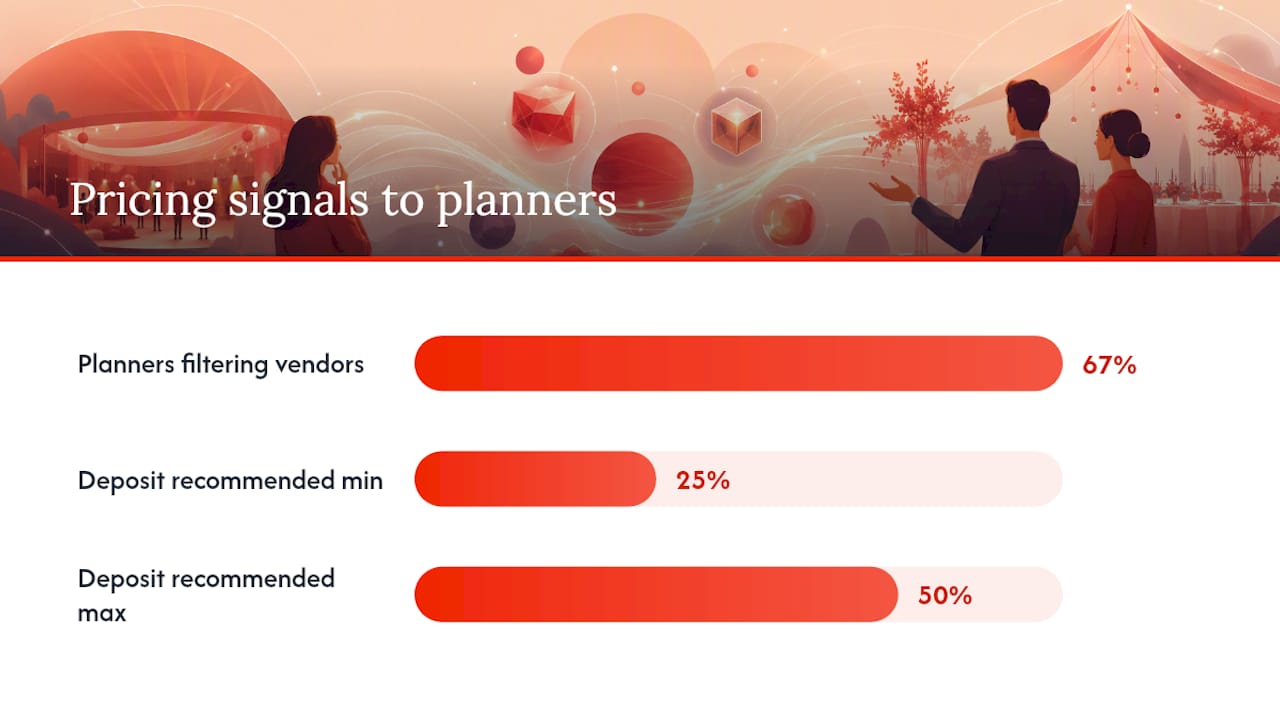
Hidden pricing kills deals before the conversation even starts. In a 2025 industry survey, 67% of planners eliminated vendors who required “request a quote” instead of showing numbers upfront. Show the tiers. Let the client choose scope, not haggle over price.
| Tier | Includes | Best for |
|---|---|---|
| Essential | Standard heats, one facilitator, base scoreboard | Small teams, tighter budgets |
| Professional | Custom formats, branded targets, two facilitators | Mid-size corporate events |
| Premium | Full customisation, multiple stations, dedicated event lead | Large-scale or flagship events |
State per-head pricing, minimums, and any setup or transport fees explicitly rather than folding them into a single lump sum. That transparency is itself a trust signal.
- Recommend a deposit of 25 to 50% to hold the date, with the balance due before or on the event day.
- Spell out cancellation terms in the proposal, not just the contract, so there’s no surprise later.
- If the client pushes back on price, move scope down a tier before discounting the tier they wanted. That protects margin and keeps the comparison honest.
Pro Tip: Publish the essential tier price even if most clients upgrade. It’s the number that stops a vendor being filtered out before the conversation starts.
What happens after the client says yes?
Approval is fragile until it’s a signed contract with money attached. Move fast and keep the sequence tight.
- Confirm the date in writing within 24 hours of verbal approval.
- Send the contract for signature, ideally same day.
- Collect the deposit per the payment terms already stated in the proposal.
- Schedule a kickoff call with the vendor to confirm run-of-show details and logistics.
Keep three short templates ready: a client approval confirmation, a vendor booking confirmation, and a polite keep-warm message for your second-choice vendor (“we’ve moved forward with another option for this date, but we’d like to keep you in mind for future events”). That last one matters more than planners think. A courteous close keeps a strong second-choice vendor available and willing next time, without any contractual ambiguity about who’s actually booked.
Timeline-wise, lock the vendor at least three to four weeks out for standard events, longer for peak seasons or large-scale bookings, then schedule a final run-through with the vendor a few days before the event date.
Why recommend Laser Clay as the unique activity vendor
Laser Clay replaces traditional clay shooting with sound-simulated, deactivated shotguns and reusable eco-friendly targets, which removes the lead ammunition disposal issue and the firearms licensing question entirely. That makes it viable for corporate offices, school camps, and indoor venues that would never clear a live-ammunition activity, and it works across skill levels since nobody’s handling a real weapon.
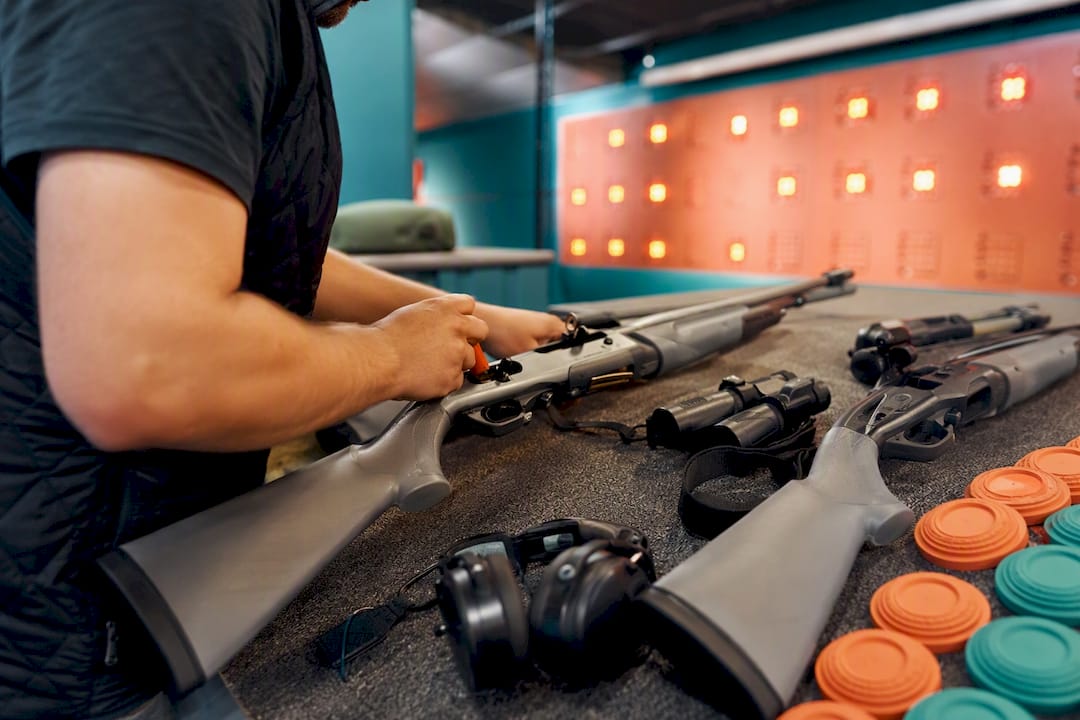
On-site, Laser Clay supplies facilitators, real-time electronic scoreboards, custom branding options for targets and signage, and full setup and teardown. You’re not managing logistics on event day; you’re running the room.
Testimonial placeholder for your proposal: “[Client name] rated the session [X]/10 for engagement and would rebook for [event type].” Replace the brackets once you’ve run your first session.
Place these proof points on your social proof slide, alongside the team building formats page, and keep the insurance and safety documentation as a separate appendix attachment.
Pro Tip: If Laser Clay runs slightly over budget against a generic alternative, show the comparison plainly: no ammunition disposal costs, no firearms licensing delay, and on-site safety oversight included. The higher line item usually reflects fewer hidden costs, not a worse deal.
A planner’s take on pitching something the client hasn’t seen before
Buyers approve reliability first and creativity second, in that order, no matter how the pitch meeting feels in the room. The instinct to lead with “look how fun this is” is understandable, but it’s backwards. In the live meeting, spend your first thirty seconds on the insurance summary and the venue-familiarity line, not the highlight reel. Once the room trusts the logistics, the creative pitch does the rest of the work on its own.
What to attach when you send the proposal
Send the full packet in one go so procurement doesn’t have to chase you for anything. Recommended attachments include:
- Insurance summary and public liability limits.
- Sample run-of-show with timings.
- One or two case studies or client testimonials.
- Itemised pricing sheet by tier.
- Direct contact sheet for booking and event-day questions.
- A link to how Laser Clay fits different event formats for venue-fit context.
Book Laser Clay for your next event
If you’ve been comparing generic team-building activities, escape rooms, or a standard sports day, the gap Laser Clay closes is licensing and liability, not just novelty. There’s no firearms permit to chase, no lead ammunition to dispose of, and no skill barrier that leaves half the room watching instead of playing. That’s a smaller operational lift than most “unique” activities you’ll have shortlisted, and it’s precisely the kind of detail procurement checks first.
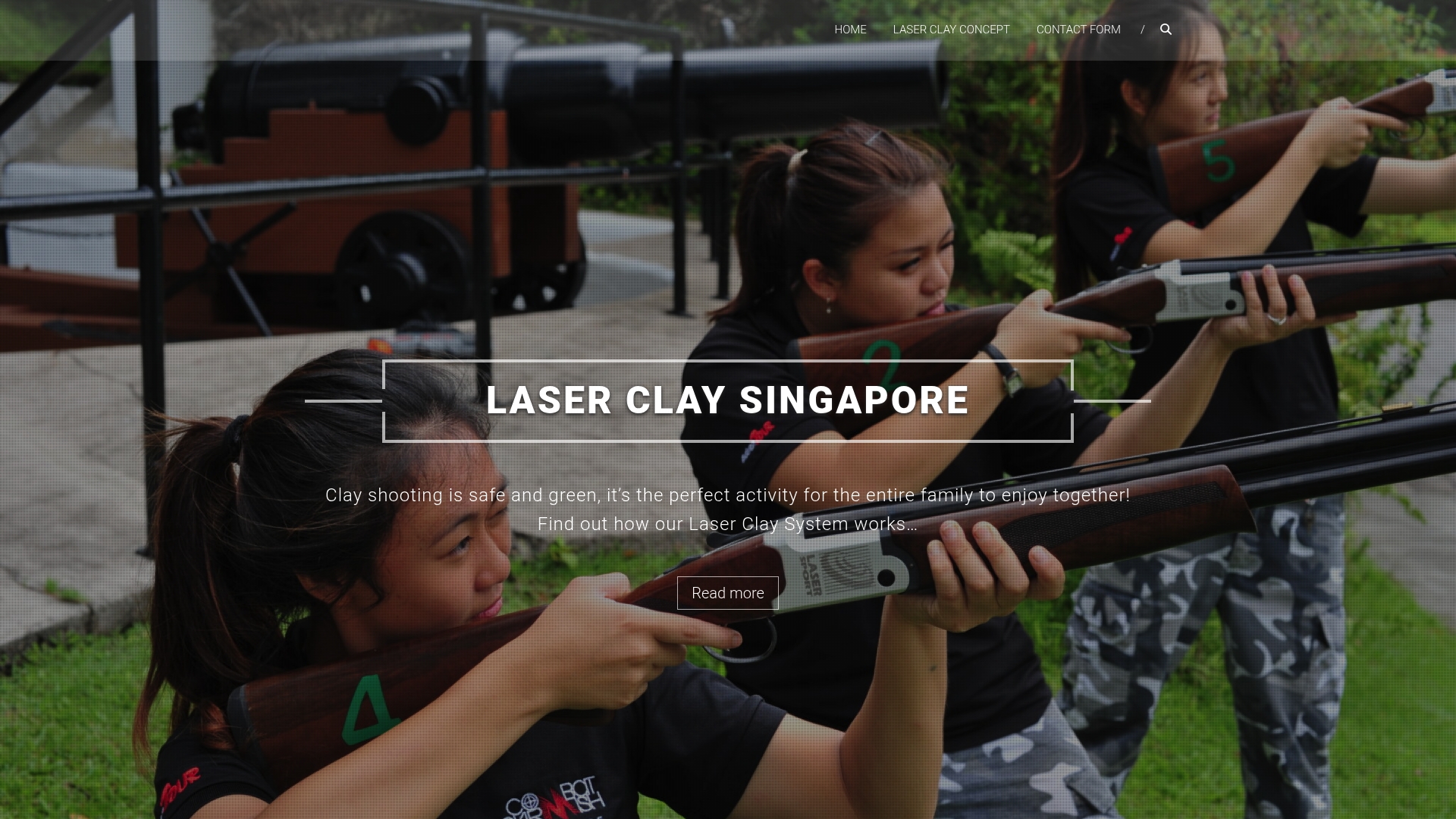
Laser Clay runs indoors or outdoors, adapts to corporate offices, school camps, birthday parties, and carnivals, and arrives with facilitators, scoreboards, and branding options already built in. Check available dates and get an itemised quote through the Laser Clay contact page, or browse full package details on the main site before you finalise your shortlist.
Sources
- How to manage event vendors | AMW®
- How to Create a Vendor Shortlist for Events | Abastio
- Strategic guide to event procurement | GoGather
- How to get more corporate team building bookings in 2026 | Events In Minutes
FAQ
How do I propose a unique vendor to an event client?
Lead with the business outcome the activity delivers, attach an itemised price, insurance summary, and venue-familiarity statement, then close with a dated next step for approval.
How many vendors should be on a shortlist before final selection?
Aim for 2 to 4 vetted candidates, narrowed down from an initial pool of 5 to 8 using a weighted scoring matrix.
What documents does a client’s procurement team usually ask for?
An insurance certificate with public liability limits, facilitator qualifications, itemised pricing, and a contingency statement covering technical or equipment backups.
Why is Laser Clay suitable for corporate or school events?
It uses sound-simulated shotguns with no live ammunition, removing the firearms licensing and disposal issues tied to traditional clay shooting, while including facilitators and live scoreboards on-site.
Should pricing be shown upfront in a vendor proposal?
Yes. Hidden pricing behind “request a quote” caused 67% of planners in a 2025 survey to eliminate a vendor before further discussion.