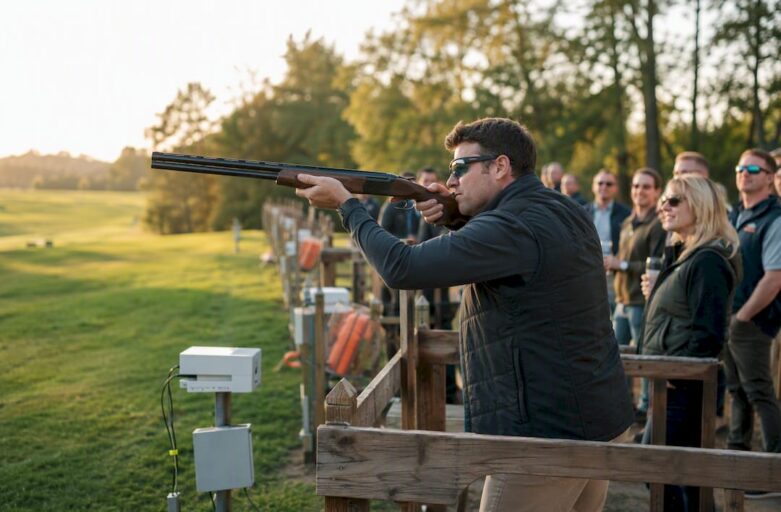
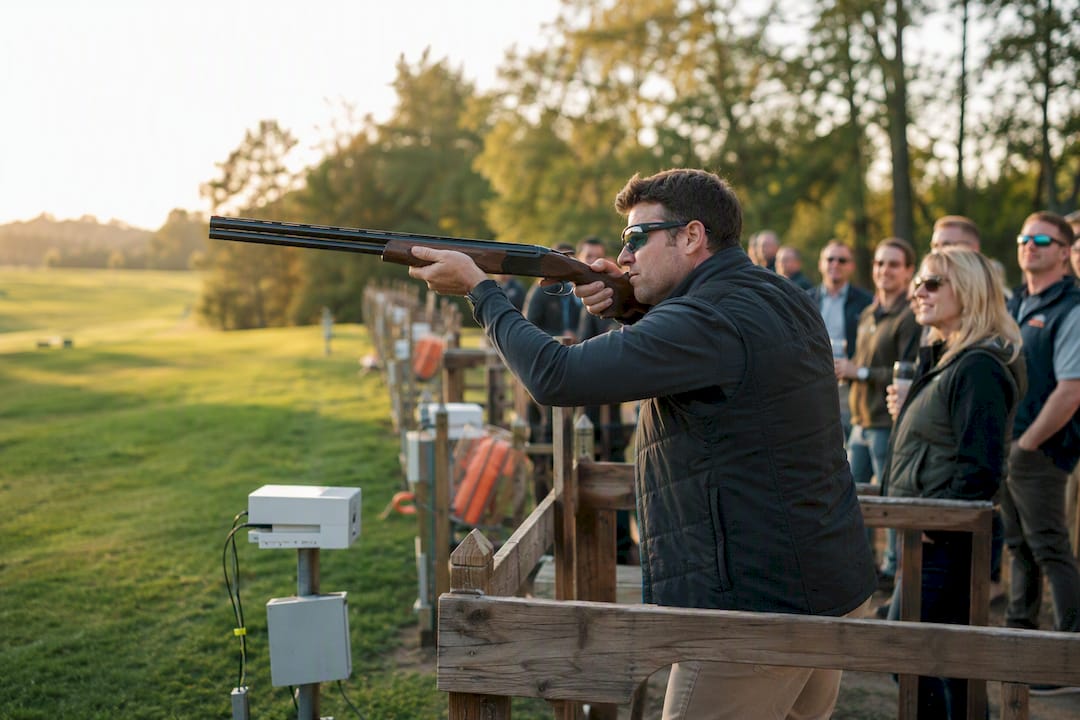
Corporate clients pick tech-enabled laser clay experiences because they deliver measurable, inclusive, safe learning outcomes that traditional team building rarely produces. The reason is not novelty. It’s evidence. Electronic scoring turns a fun afternoon into data a facilitator can use in a debrief, and that data connects the game to actual workplace behaviour.
Four things drive the booking decision:
- Objective measurement. Real-time scoreboards give facilitators something concrete to discuss, not just a vague “great energy today.”
- Inclusive gameplay. No prior shooting experience is needed, so mixed-fitness and mixed-seniority teams compete on equal footing.
- Safety and environmental profile. No live ammunition, no lead, no noise complaints from the office next door.
- Repeatable engagement. Teams ask to book again because the format holds up over multiple events, unlike a one-off escape room.
Laser Clay built its corporate packages around exactly this logic, pairing electronic scoring with facilitator-led rounds designed for the office, not the range.
Key Takeaways
Corporate clients choose tech-enabled laser clay events because they combine measurable scoring, inclusive gameplay, and a safer, eco-conscious format that traditional activities cannot match.
| Point | Details |
|---|---|
| Lead debriefs with team data | Team-level feedback speeds performance and avoids the information overload that individual scores can cause. |
| Design for inclusion | Low skill floors and short orientation let mixed-fitness teams compete fairly from round one. |
| Verify safety before booking | Confirm facilitator qualifications, equipment maintenance, and insurance in writing, not verbally. |
| Match session length to goals | Use 60 minutes for a warm-up, 90 for standard bookings, and 120 for leadership offsites. |
| Laser Clay as the booking option | Laser Clay offers reusable eco-friendly targets, electronic scoring, and facilitator-led corporate packages ready to quote. |
Table of Contents
- How real-time feedback data wins over data-driven organisations
- Do tech formats actually work for mixed-skill teams?
- Is laser clay shooting safer than a live-ammunition event?
- How do you fit a laser clay session into a corporate agenda?
- What should you ask a provider before booking?
- What psychological benefits does the format actually deliver?
- Can a laser clay session be tailored to specific business goals?
- Does tech team building actually outperform traditional activities on ROI?
- What do successful corporate laser clay events actually look like?
- What planners consistently underestimate about this format
- Ready to book a measurement-focused corporate session?
- Sources
- FAQ
How real-time feedback data wins over data-driven organisations
Electronic scoring works because it replaces gut-feel with numbers a manager can actually use. Every shot registers on a screen. Every round produces a leaderboard. By the time the debrief starts, the facilitator already has a printable record of who led, who improved, and where the team as a whole struggled.
The research angle: A study of 39 three-person teams working on a collaborative task found that presenting feedback mainly at the team level, rather than mixing individual and team data together, sped up task performance and cut information overload. Individual scores are fun in the room, but team-level summaries are what actually help a group learn faster.
That finding has a direct practical use for planners. If your goal is collaborative learning rather than individual bragging rights, ask your facilitator to lead the debrief with team scores first, and hold individual stats back for a lighter, closing moment. Live dashboards reinforce this further: visible leaderboards increase engagement and accountability because nobody can quietly coast when the screen updates after every round.
Before booking, it’s worth asking a few pointed questions:
- Can the provider export a scoring report you can circulate afterwards?
- Does the facilitator default to team-level feedback, or dump every individual number on the group?
- Is the leaderboard visible during play, or only revealed at the end?
Do tech formats actually work for mixed-skill teams?
Yes, and the reason is structural rather than magical. Laser and tech-based shooting has an unusually low skill floor. A ten-minute orientation is normally enough for someone who has never held a shotgun-shaped device to compete credibly against a colleague who shoots recreationally at weekends. That flattens the usual hierarchy that ruins some team activities, where the sporty extroverts dominate and everyone else watches.
Structured laser-tag and tech-shooting formats are widely used for corporate sessions precisely because they create shared pressure and objective outcomes while staying inclusive across fitness levels. Communication and leadership tend to emerge naturally once teams realise coordination beats individual heroics.
A few design choices push a session further towards collaboration and away from pure scorekeeping:
- Reward team accuracy averages instead of only the top individual shooter.
- Rotate “caller” roles so different people practise directing the group each round.
- Run a relay-style format where one person’s miss can be offset by a teammate’s next turn.
- Add a short strategy huddle between rounds rather than jumping straight back into play.
Short rounds matter here too. Attention spans in a work context drop fast, and a five-minute round with an immediate result keeps energy high without exhausting anyone. Explore how interactive shooting events build measurable engagement across groups of very different fitness and confidence levels.
Is laser clay shooting safer than a live-ammunition event?
For a corporate booking, the safety comparison is not close. Live clay shooting brings noise complaints, lead shot contamination, cartridge disposal, and an insurance conversation that can stall a booking for weeks. Laser-based systems remove the live ammunition entirely, which eliminates most of that liability at source.
That doesn’t mean “laser” automatically means “risk-free.” Any provider running an event on your premises or at a venue should be able to answer these checks without hesitation:
- Facilitator qualifications. Ask who is running the session and what training they hold in crowd management and equipment handling.
- Equipment maintenance records. Sound-simulated devices and sensors need regular checks, not just a working battery.
- Site risk assessment. A proper assessment covers trip hazards, sightlines, and space for safe target placement, indoors or outdoors.
- Insurance confirmation. Get this in writing before the event, not verbally on the day.
Laser Clay uses reusable targets and simulated shotguns with no lead shot and no live rounds, a point it details in its own review of eco-friendly alternatives to traditional clay shooting. That matters to procurement teams who now weigh environmental impact alongside cost when signing off supplier events.
Pro Tip: Ask any prospective provider for their risk assessment template before you sign, not after. A provider who cannot produce one on request is not ready for a corporate booking.
How do you fit a laser clay session into a corporate agenda?
Session length should match your objective, not the other way round. A 60-minute slot works as a warm-up activity bolted onto a longer offsite. A 90-minute session is the sweet spot for most standalone team-building bookings, long enough for multiple rounds and a proper debrief without eating the whole afternoon. A 120-minute session suits leadership days or annual offsites where you want deeper reflection time built in.
Group size shapes the format too. One facilitator can typically run a session comfortably for a single team of eight to twelve. Beyond that, splitting into parallel pods running simultaneous rounds keeps everyone active rather than queuing.
A sample 90-minute agenda looks roughly like this:
- 0 to 10 minutes: safety briefing and equipment orientation.
- 10 to 25 minutes: round one, followed by a five-minute active debrief on the scoreboard.
- 25 to 45 minutes: round two with a rotated format (relay or team-average scoring).
- 45 to 60 minutes: round three, final leaderboard reveal.
- 60 to 90 minutes: facilitated discussion connecting the scoreboard patterns to workplace behaviours.
That rhythm of short, high-intensity rounds followed by immediate debriefs is standard practitioner guidance for tactical and tech shooting formats, and providers commonly report total corporate session times, including briefing and debrief, landing in the 1.5 to 2 hour range. For a step-by-step version of this planning process, see how to organise a competitive office shooting event.
What should you ask a provider before booking?
Treat the quote conversation like a mini-audit, not just a price check. The strongest signal a provider is set up for corporate work is whether they can show you their reporting before you’ve even booked.
Ask for:
- A sample debrief report or scoring export from a previous corporate event.
- Facilitator CVs or a summary of relevant experience running group sessions.
- Written confirmation of insurance cover for the event date and venue.
- A copy of their health and safety standard operating procedures.
Expect a quote to break down into a handful of predictable cost drivers: setup and equipment transport, facilitator time for the session length booked, venue hire if you don’t already have suitable space, and post-event reporting if you want a leaderboard export to circulate. Provider planning pages for corporate team building usually list these components clearly, which is itself a good sign.
Watch for red flags. A provider who can’t produce any post-event data, who is vague about who exactly will facilitate on the day, or who dodges direct questions about safety procedures is not ready for a corporate client, however good their marketing looks. Live dashboards and visible scoring are reported to noticeably increase participant accountability compared with static end-of-day summaries, so a provider without any live-data capability is offering a weaker version of the format.
What psychological benefits does the format actually deliver?
The scoreboard does something quieter than entertain. It creates what practitioners describe as a kind of social contract: when everyone can see the same live numbers, peer reinforcement replaces top-down correction. Nobody needs a manager to point out who’s struggling. The team notices, and the team adjusts, usually by encouraging rather than criticising.
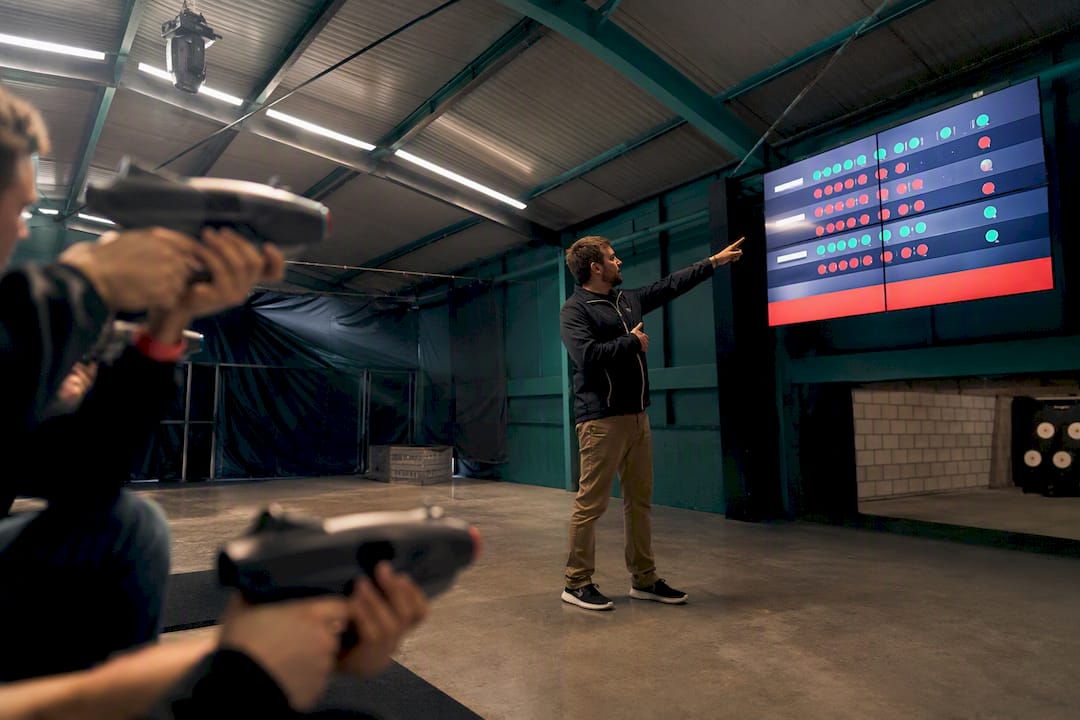
That shift matters for trust building specifically. Competitive pressure in a low-stakes, safe setting lets colleagues see how each other handle mild failure, in this case, a missed shot rather than a missed deadline. Watching a normally reserved colleague call out a tactical instruction, or a usually dominant one hand over the lead role after a poor round, tells a team more about each other’s working style than most icebreaker questions ever will.
Friendly competition also does useful work that raw collaboration exercises can’t replicate. A leaderboard gives permission to be openly competitive in a way office culture often suppresses, and that release tends to produce laughter rather than tension when the stakes are a shooting score rather than a sales target. Teams that compete lightly together in one context often report finding it easier to disagree constructively in another, because they’ve already practised winning and losing in front of each other without consequence.
The debrief is where this pays off. A facilitator who asks “who did you trust to call the next move, and why?” turns a game moment into a genuine reflection on delegation and communication at work.
Can a laser clay session be tailored to specific business goals?
Customisation is largely about which variable you adjust: scoring format, team composition, or session focus. A leadership team preparing for a merger might want scoring weighted towards collective accuracy rather than individual standouts, reinforcing a “we win together” message. A sales team might prefer individual leaderboards that mirror the competitive culture they already work in.
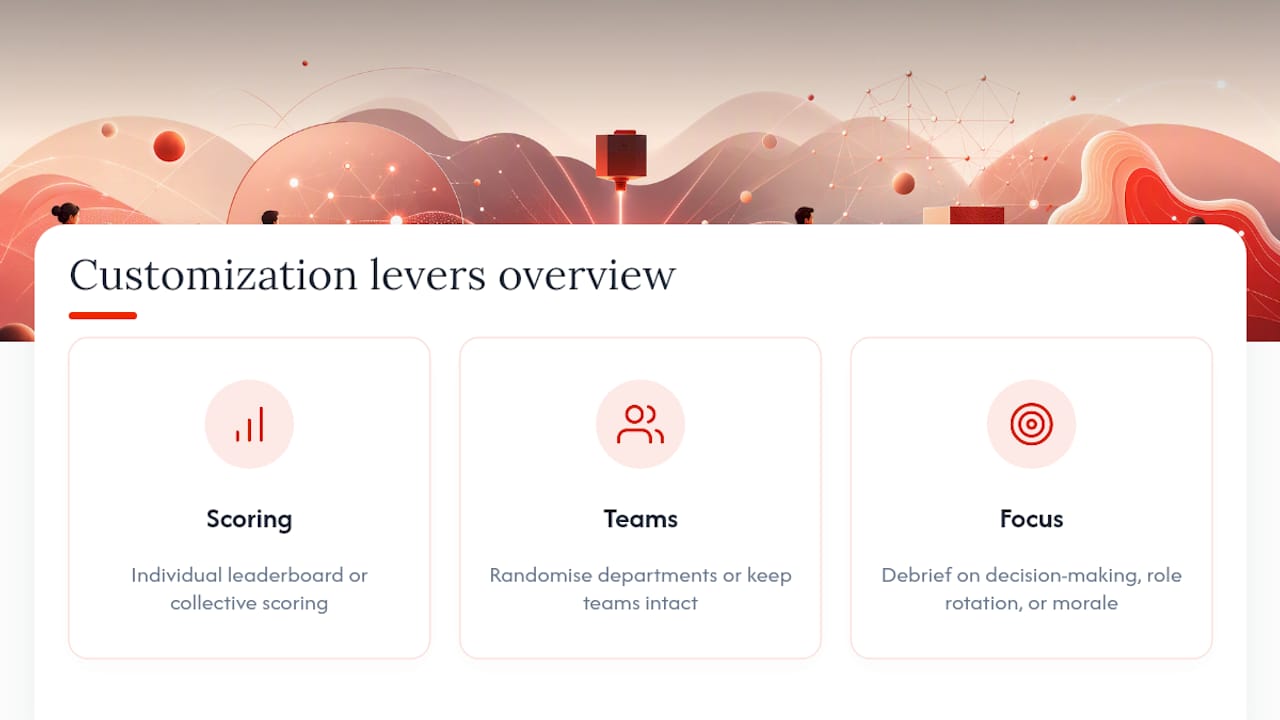
Team composition is another lever. Randomising teams across departments breaks up existing cliques and forces new working relationships, useful after a reorganisation or when two offices are merging. Keeping intact teams together, by contrast, suits sessions designed to surface and resolve existing friction within a group that already works together daily.
Session focus can shift the debrief entirely. A facilitator can steer discussion towards decision-making under pressure, role rotation and shared leadership, or simple morale and reward, depending on what HR actually wants the session to achieve. None of this requires different equipment, only a different briefing to the facilitator beforehand.
The practical takeaway for planners: don’t just book “a team building activity.” Tell the provider your actual goal, whether that’s rebuilding trust after a difficult quarter or simply rewarding a team for hitting targets, and ask how they’d adjust the format, scoring, and debrief questions to fit it. A provider who can’t answer that specifically is offering a generic package, not a tailored one.
Does tech team building actually outperform traditional activities on ROI?
Traditional team building often struggles with a simple problem: nobody can prove it worked. A trust fall or a pub quiz might generate a good afternoon and a vague sense of goodwill, but there’s rarely any data to bring back to leadership justifying the spend.
Tech-enabled formats solve that gap directly. A scoring export or debrief report gives HR something to show when asked what the budget achieved, beyond a few photos for the intranet. That alone changes the ROI conversation from “did people enjoy it” to “did we learn something we can point to.”
Impact also tends to be more durable. A cooking class or an escape room delivers a strong one-off experience, but has little natural mechanism for repeat engagement, teams have solved that puzzle once. A laser clay format with rotating game modes, team compositions, and scoring rules gives a reason to book again without repeating the exact same session, which is part of why providers report inclusivity and repeatable outcomes driving return bookings.
Cost comparison rarely favours one format outright, since venue, group size, and facilitation all move the number regardless of activity type. What differs is what you get for that spend. A traditional activity buys an afternoon. A measurement-backed tech session buys an afternoon plus a report you can actually use in a performance or culture conversation afterwards, which is the harder thing to put a price on but the easier thing to justify upward.
What do successful corporate laser clay events actually look like?
The pattern across well-run corporate sessions is consistent: short rounds, visible scoring, and a facilitator who treats the debrief as seriously as the game itself. A leadership offsite structured around three rounds and a closing discussion tends to surface more honest conversation about delegation and risk tolerance than a standard workshop slide deck ever manages, simply because people have just lived through a small, low-stakes version of both.
Sales teams tend to respond particularly well to the format, given the format’s natural fit with competitive cultures already comfortable with leaderboards and targets. Rotating team composition across departments during a company-wide event works especially well after a merger or restructuring, since the neutral, game-based setting removes the awkwardness of forced small talk between people who’ve never worked together.
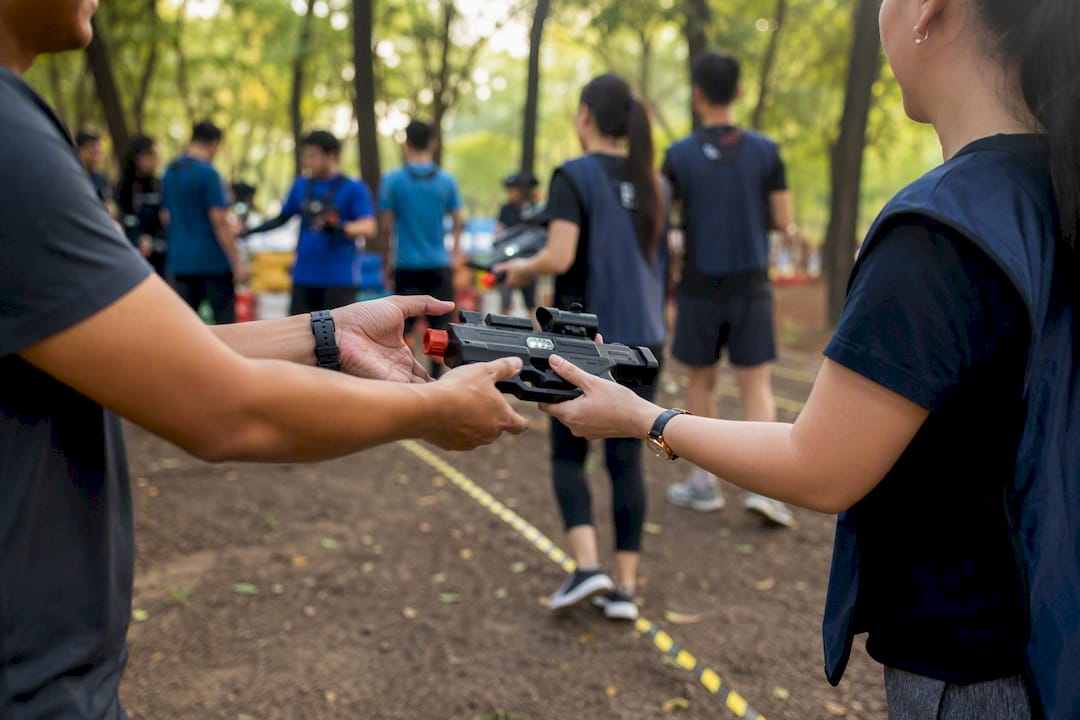
What separates a forgettable version of this event from a genuinely useful one isn’t the equipment. It’s whether the facilitator connects the scoreboard back to how the team actually behaves at work, rather than treating the debrief as an afterthought before everyone heads back to their desks. Providers running international shooting-based team building programmes, such as those offering shooting range sessions for corporate groups, consistently point to strong facilitation, not the technology itself, as the deciding factor in whether an event is remembered as a highlight or just an afternoon off.
What planners consistently underestimate about this format
The mistake I see most often isn’t choosing the wrong provider. It’s treating the debrief as optional. A facilitator who runs three good rounds and then says “great job, everyone, see you back at your desks” has wasted most of the value of the session. The rounds are just the data collection. The debrief is where that data becomes a lesson about how your team actually communicates under mild pressure.
The second thing planners underestimate is how much team-level, rather than individual, feedback matters for the tone of the room. Lead with team scores and the group leaves energised. Lead with a ranked list of individual misses and you risk turning a bonding exercise into a mild humiliation for whoever came last.
If you’re evaluating providers, ask to see a sample report before you book, not after.
Ready to book a measurement-focused corporate session?
If you’ve been comparing pub quizzes, escape rooms, or a standard laser tag arena, the trade-off is usually the same: fun on the day, nothing to show for it afterwards. Laser Clay is built around the opposite problem. Every session produces a scoring export and a debrief a facilitator can actually use, using reusable eco-friendly targets and simulated shotguns with no live ammunition, so procurement and health and safety sign-off tends to move faster too.
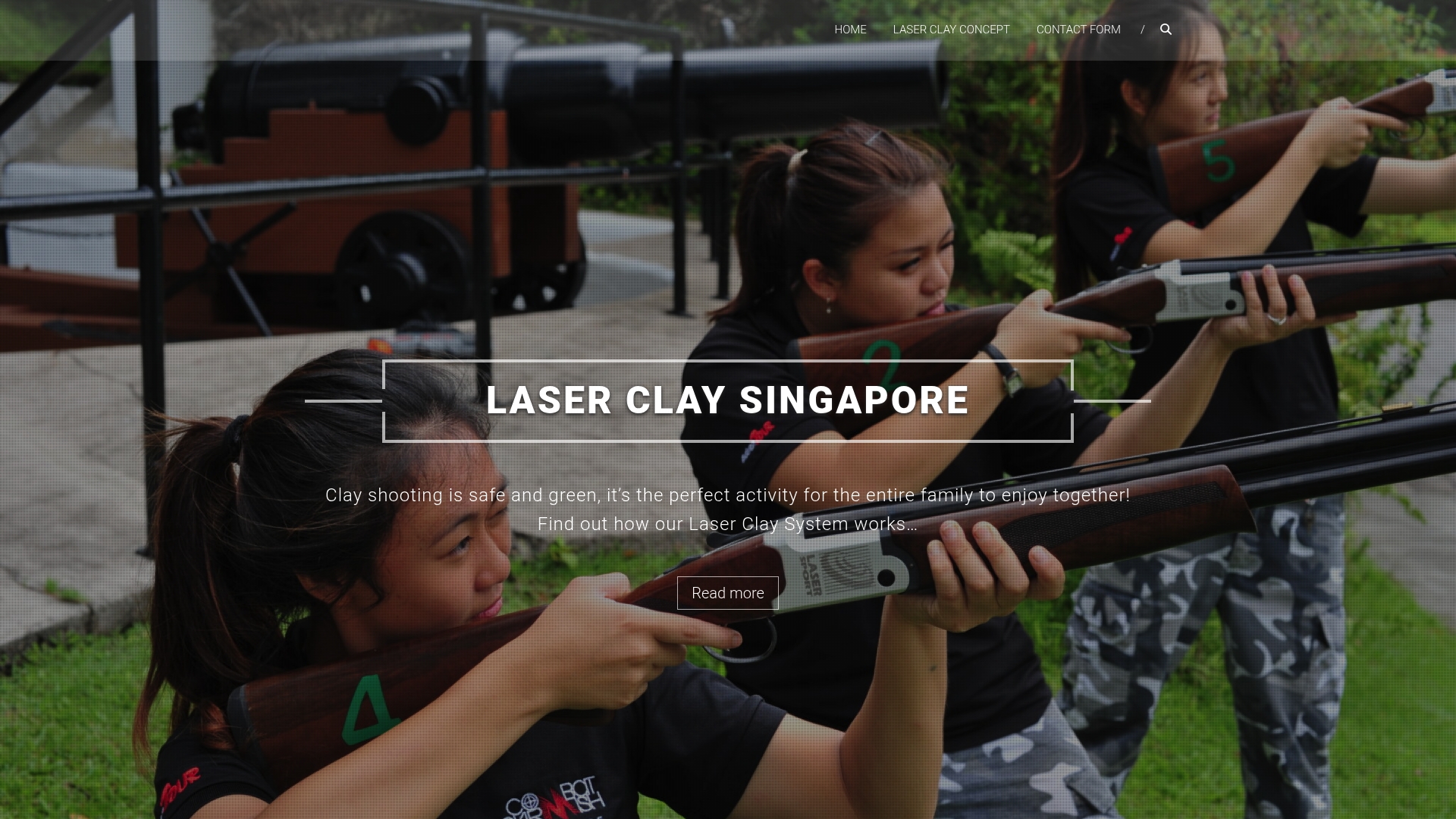
A typical corporate package includes facilitators, full equipment, and setup for your chosen venue, indoors or outdoors, along with the reporting you’ll need for a post-event debrief with leadership. When you request a quote, ask specifically for a sample scoring report and confirmation of insurance cover for your date. You can see exactly what’s included and book a laser clay session for your team to get a quote tailored to your group size and objectives.
Sources
- Computer‑Supported Collaborative Learning / persistent feedback study
- Why Laser Tag is perfect for corporate team building | Laser Tag Singapore
- Best corporate team building activity: laser tag | Tac Ops
- Why league‑style dashboards outperform static reports | HR Dash
FAQ
How long does a typical laser clay corporate session run?
Most corporate sessions run 90 minutes, though 60-minute add-ons and 120-minute leadership formats are common depending on your objective.
Is laser clay shooting safe for a mixed-skill office team?
Yes. Laser Clay uses simulated shotguns with no live ammunition and a short equipment orientation, so participants with no shooting experience can join safely.
Can we get a data report after the event?
Reputable providers, including Laser Clay, can supply a scoring export or debrief report, which is worth requesting in writing before you book.
How many people can one facilitator manage?
One facilitator typically runs a comfortable session for eight to twelve people; larger groups are usually split into parallel pods.
What drives the cost of a laser clay corporate event?
Quotes typically reflect setup and equipment transport, facilitator time, venue hire if needed, and any post-event reporting you request.