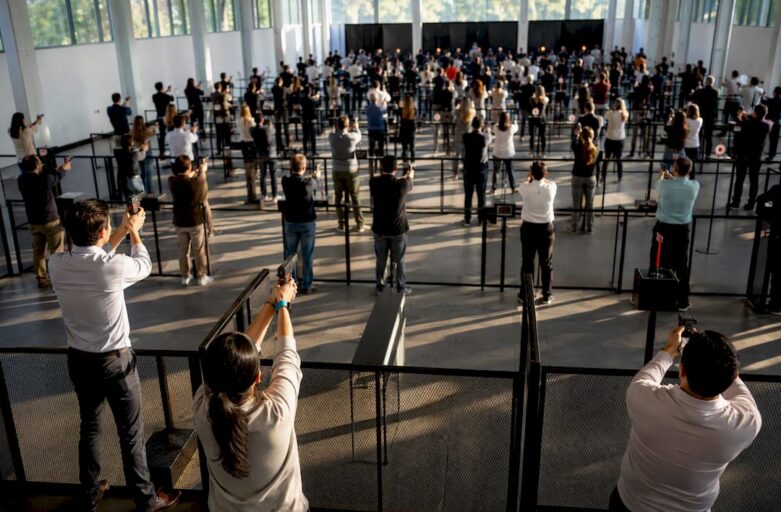
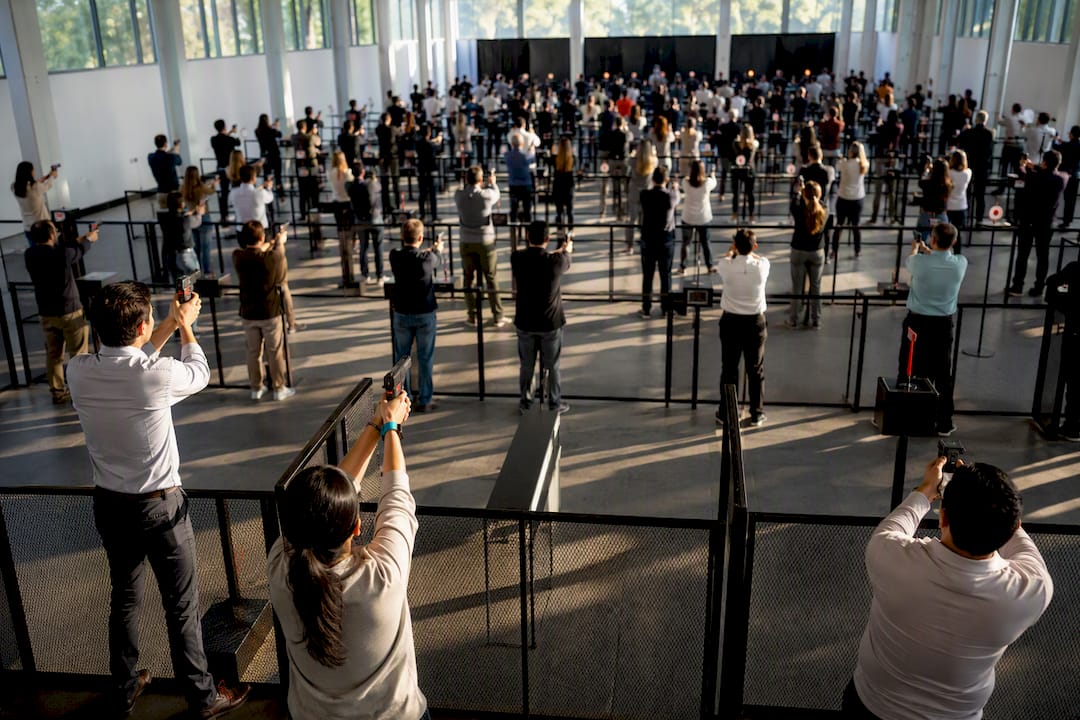
The activities that work best in large venues are high-tech immersive experiences, live-show team challenges, app-powered scavenger hunts, personalised quizzes, and multi-zone activations. Each scales differently: tech-driven formats like electronic scoring keep hundreds of guests engaged without more staff, live-show challenges use professional facilitation to hold energy across a big room, and app-based hunts manage crowd flow automatically. What follows is the practical detail behind choosing, staffing and running each one.
TL;DR:
- High-tech immersive experiences scale reliably because they track progress electronically without additional staff, making them suitable for hundreds of guests.
- Live-show challenges require a strong host and production values to engage 150 or more participants simultaneously, with pacing and structure being critical.
- App-powered scavenger hunts automatically manage crowd movement and reduce chaos, while personalised quizzes are quick to set up and require minimal physical space.
- Multi-zone activations effectively spread crowd density and offer tailored experiences but need careful planning for ventilation, staffing, and physical layout.
- Proper logistics, including zoning, AV redundancy, and pre-planning load-in, are crucial to prevent bottlenecks and operational failures in large-venue events.
Table of Contents
- Large venue activities that actually hold up at scale
- How to choose the right activity for your large venue
- Logistics and production essentials for large-venue activities
- Scaling mechanics that keep hundreds of guests moving
- How Laser Clay fits large-venue formats
- Think like a producer, not an icebreaker planner
- Book Laser Clay for large venues
- Sources
- FAQ
Large venue activities that actually hold up at scale
Most activity formats that work brilliantly for 30 people fall apart at 300. The ones that survive share a common trait: they were built for scale from the start, not stretched to fit it afterwards.
High-tech immersive experiences are the most reliable performers in large rooms. Laser shooting ranges with electronic scoreboards, AR trails, and VR pods all share a structural advantage: the technology, not a human facilitator, tracks every participant’s progress. Cvent’s rundown of event entertainment ideas notes that high-tech options like this scale reliably because they can be customised for both corporate team-building and social gatherings without losing safety or engagement. That’s why electronic scoring turns up again and again in the strongest large-venue formats.
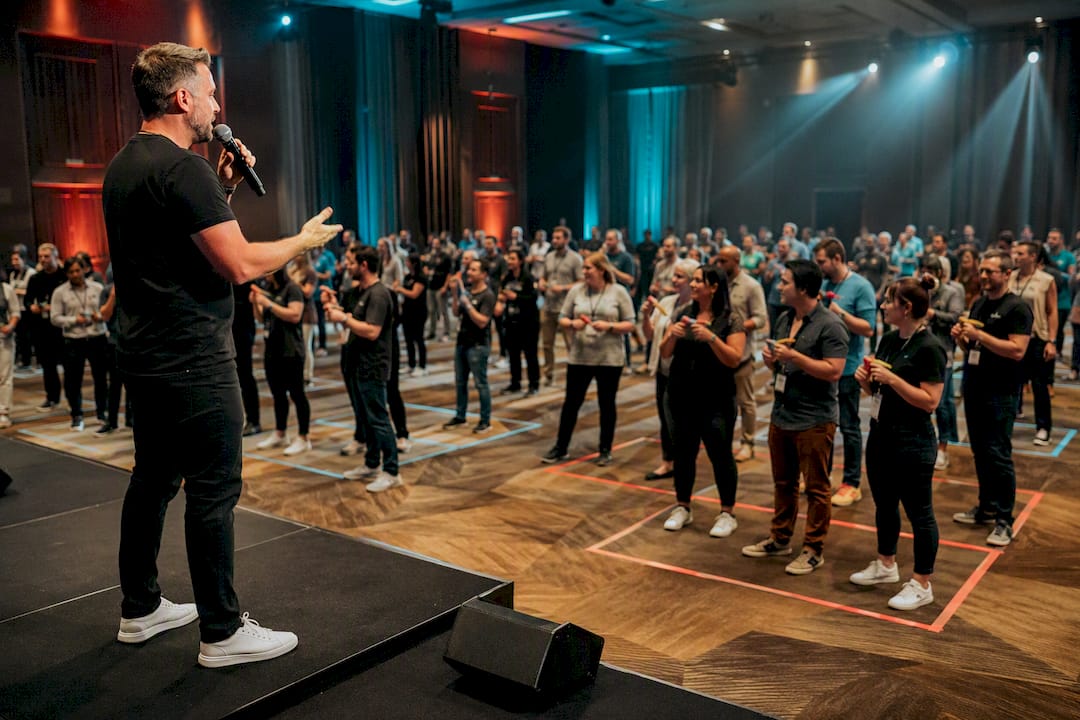
Live-show team challenges borrow from theatre production rather than office icebreakers. A single host with a wireless microphone can run a synchronised challenge across 150 or more guests at once, provided the teams are structured properly and the pacing is tight. This only works when the show has real production values behind it: lighting cues, sound design, a rehearsed run of show.
App-powered scavenger hunts and trails solve the biggest large-venue problem: movement without chaos. Teams navigate checkpoints on their own phones, scoring updates centrally, and nobody needs a facilitator standing at every station.
Personalised quizzes and game-show formats are the fastest to customise and the easiest to produce at scale, since they need a stage, a screen, and buzzer systems rather than a sprawling physical footprint. Branding a quiz round around company trivia or event-specific in-jokes measurably lifts engagement, according to observations from The Big Smoke Events on personalising large-group formats.
Multi-zone activations turn a single hall into several distinct experiences, each with its own theme, staff and equipment. Guests self-select and rotate, which spreads density and gives everyone something that feels tailored to them.
- High-tech immersive: scores itself, scales without extra staff
- Live-show challenges: needs a strong host, works for 150+
- App-powered hunts: solves movement and queueing automatically
- Personalised quizzes: fast to build, low physical footprint
- Multi-zone activations: spreads crowd density, offers real choice
Accessibility matters across all five. Seated or standing versions of quizzes, wheelchair-friendly hunt routes, and adjustable-height shooting lanes should be planned in from the design stage, not bolted on afterwards.
Pro Tip: Never run a single-zone activity for more than 200 guests without a backup format ready. If the primary activity queues up, a secondary zone absorbs the overflow instead of leaving guests standing around.
How to choose the right activity for your large venue
Start with the goal, not the game. A leadership offsite wants collaboration; a client-facing gala wants spectacle; a birthday party wants pure fun with minimal rules explanation. Matching format to goal first saves you from retrofitting a competitive challenge onto an event that actually needed a shared, low-pressure moment.
- Define the outcome first. Networking events favour rotating, mixed-team formats; celebrations favour lighter, faster-paced games; competitive corporate events reward structured scoring and leaderboards.
- Size your teams correctly. Sub-teams of 4 to 10 participants tend to perform best, giving everyone a role without letting anyone hide. Staggered starts become essential once you’re past roughly 80 to 100 guests, otherwise queues form at the first station.
- Check the venue’s physical limits early. Rigging points, power drops, load-in doors, and sightlines from the back row all need confirming before you commit to a format, not after.
- Match facilitation to format. Live-show challenges need one strong host and a small production crew; multi-zone activations need a staffed team per zone; app-based hunts need only a handful of roaming troubleshooters.
- Let format drive budget and timeline. A single-zone tech activation can often be confirmed inside a few weeks. A multi-zone takeover with custom AV usually needs a longer lead time and a bigger production budget, in line with the goals-to-follow-up sequence in the Warwick Conferences large-scale event planning guide.
Logistics and production essentials for large-venue activities
Get the operational layer wrong and even the best activity format falls flat. Four things cause most large-venue failures, and none of them are the activity itself.
Zoning and traffic flow come first. Map the room before you map the activity: entrances, exits, catering stations and the activity zone all need to sit apart from each other, or you’ll create bottlenecks exactly where you don’t want them. Producing multi-room, multi-zone events well requires careful coordination of audio bleed, power distribution and crew placement across every connected space, according to Wizard Studios’ breakdown of venue takeovers.
AV and production redundancy matter more as the guest count rises. Multiple screens and distributed audio zones keep sightlines fair for everyone, not just the front rows, and a backup power source or spare AV unit should be standard for anything over a few hundred guests.
- Confirm load-in doors and freight lift access before booking
- Build a bump-in and bump-out schedule with buffer time either side
- Assign a dedicated first-aid point and crowd-density plan
- Have a weather contingency ready for any outdoor element
- Use check-in apps and live leaderboards to monitor flow in real time
Locking bump-in and bump-out windows, crew call times, and freight movement early removes the single biggest source of day-of risk, according to Alive Events Agency’s checklist for large-scale events. Get that timeline wrong and everything downstream slips with it.
Scaling mechanics that keep hundreds of guests moving
Three mechanics do most of the heavy lifting once your guest count climbs past a couple of hundreds.
- Station rotation. Groups of 4 to 10 move through timed stations, typically 10 to 15 minutes each, so no single point of the venue ever holds everyone at once.
- Staggered starts. Releasing teams in waves rather than all at once avoids the queueing that kills momentum in the first 20 minutes.
- Central electronic scoring. A shared leaderboard turns individual station results into one collective moment, and it lets one production host manage many simultaneous teams without a facilitator standing over every group.
Track participation rate, completion rate, and a quick one-question satisfaction score on the day. All three are simple enough to gather without slowing anything down.
How Laser Clay fits large-venue formats
Modular lanes and electronic scoring systems suit this kind of multi-station setup, fitting naturally into the high-tech category above.
- Laser-based targets remove lead ammunition entirely, reducing safety risk and environmental impact, which can be advantageous for venues with sustainability commitments
- Facilitators run the equipment, so teams do not need previous shooting experience to take part
- Game formats adapt across corporate team-building, company picnics, and birthday zones within the same venue takeover
Organisers weighing it against traditional formats can check the event planner’s guide to laser shooting at UK events for a fuller picture of setup requirements.
Think like a producer, not an icebreaker planner
The mistake most organisers make is designing a scaled-up icebreaker instead of a purpose-built show. Icebreakers rely on one facilitator’s energy; production formats rely on lighting, sound, staggered timing and a scoring system that never needs a human referee. Build for the second, and the first 300 guests feel the same as the first 30.
— Joshua
Book Laser Clay for large venues
This type of activity suits corporate teams, birthday parties, and social organisers seeking a high-tech, safe activity that can scale without adding facilitators for every group. Electronic scoring and modular lanes enable one setup to handle varying group sizes, and eco-friendly targets avoid issues related to lead ammunition and range restrictions common in traditional clay shooting at venues.
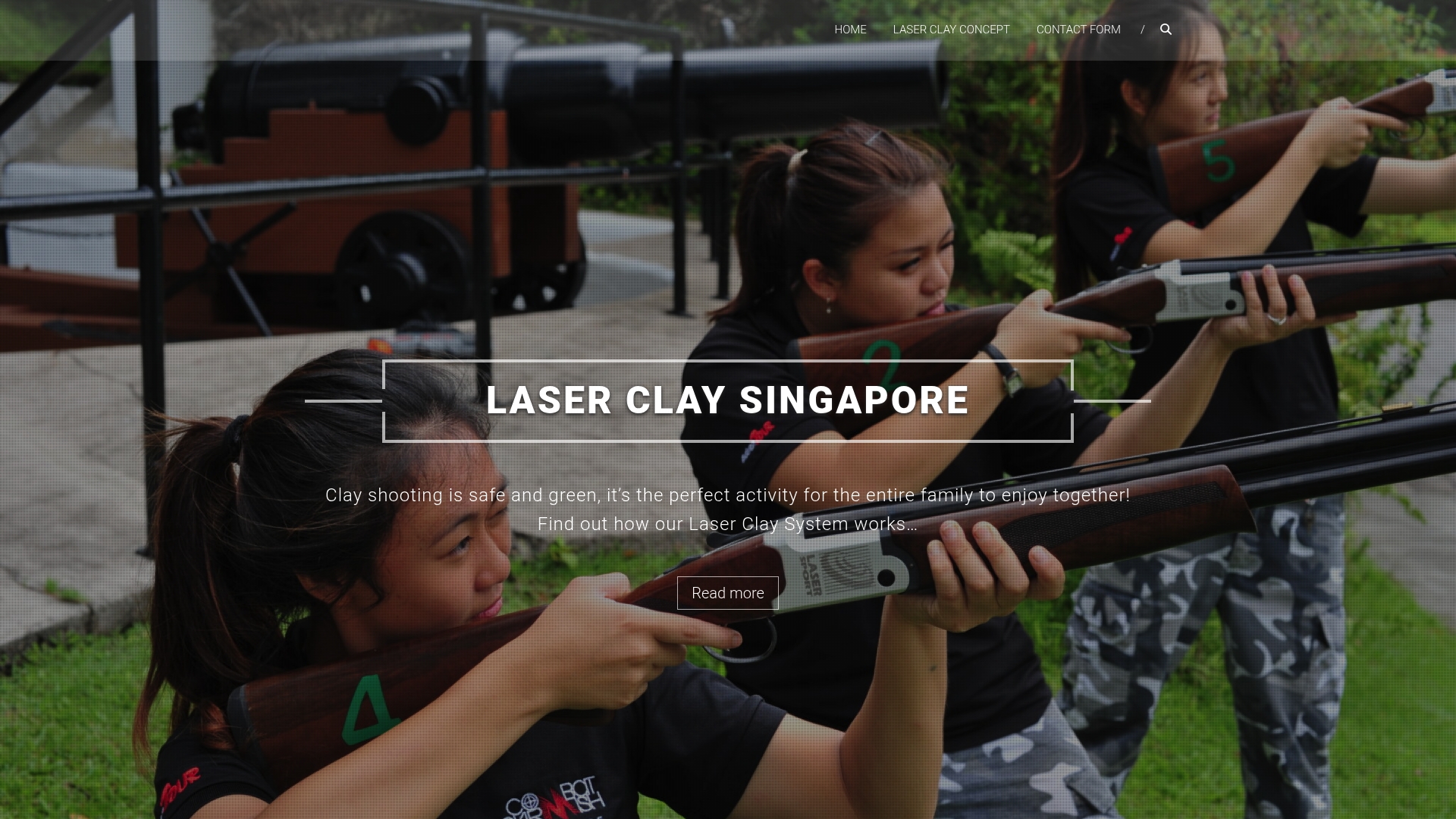
If you’re planning a large gathering and want to see whether it fits your space, the primary Laser Clay Singapore page covers setup options and sustainability details. For team-building specifically, the team building explained guide walks through programme templates you can drop straight into your event timeline. Request a quote, ask about custom scoring formats for your headcount, or book a walkthrough before you lock your venue date.
Sources
- Event entertainment ideas (Cvent)
- How to plan a large-scale event: a step-by-step guide (Warwick Conferences)
- Behind the scenes: how we run a high-energy live team building show for 150+ (The Big Smoke Events)
FAQ
How many guests can one large venue activity handle at once?
With station rotation and staggered starts, a single activity format can typically handle several hundred guests without queueing, provided sub-teams stay between 4 and 10 people.
What space do large venue activities usually need?
Requirements vary by format. Multi-zone activations need distinct areas per activity with clear traffic flow, while a single high-tech station like Laser Clay’s modular lanes can run within a defined footprint inside a larger hall.
What safety checks matter most for large-venue activities?
Crowd-density planning, a dedicated first-aid point, and weather contingencies for any outdoor element are the checks organisers miss most often. Laser Clay’s laser-based targets also remove the lead ammunition risks tied to traditional clay shooting.
How do I know if a large-venue activity actually worked?
Track participation rate, completion rate, and a quick satisfaction score gathered on the day. All three are fast to collect and give you a clear read without slowing the event down.
Is Laser Clay suitable for both corporate events and birthday parties?
Yes. Its adaptable game formats and on-site facilitators work across corporate team-building, company picnics, and birthday celebrations within the same booking.