Noise reduction in eco shooting is defined as the deliberate management of acoustic output from shooting activities to protect both wildlife and human participants from harmful sound levels. The role of noise reduction in eco shooting extends well beyond hearing protection. A 2026 study found that gunshots produce acoustic disturbance nearly three times greater than hunter presence alone, triggering severe stress responses in species like Bonelli’s eagle. Suppressors reduce rifle noise by 25–40 decibels, and laser simulation shooting eliminates acoustic output entirely. These are not marginal gains. They represent the difference between a shooting sport that coexists with nature and one that actively degrades it.
How does firearm noise affect wildlife and human participants?
Acoustic disturbance from firearms causes measurable physiological harm to both wildlife and shooters. The mechanism is direct: loud, sudden noise triggers the release of cortisol and adrenaline in humans and animals alike, disrupting normal behaviour and long-term fitness. For wildlife near shooting ranges, this is not a temporary inconvenience. It is a chronic stressor that compounds across breeding seasons.

The 2026 research on Bonelli’s eagles is particularly striking. The study recommends a 600 m buffer zone from nests to prevent breeding failure caused by gunshot noise. That figure reflects how far acoustic disturbance travels and how sensitively birds of prey respond to it.
The impact on human participants is equally serious. A standard rifle shot from a .308 Winchester produces approximately 167 dB at the shooter’s ear. That level causes irreversible hearing damage in a single exposure. Most shooters rely on ear protection, but field conditions reduce the effectiveness of earplugs significantly below their laboratory noise reduction ratings.
“Noise reduction is about ecosystem balance, not just hearing protection. Acoustic disturbance triggers stress hormones that affect behaviour and long-term fitness across entire species populations.”
The situation becomes more complex when visual and acoustic disturbance combine. Research shows that the synergistic effect of noise and visual presence nearly triples the duration of stress responses in birds of prey. Managing noise alone is necessary but not sufficient. Responsible eco shooting requires attention to both what wildlife hears and what it sees.
Key impacts on wildlife include:
- Elevated cortisol levels disrupting breeding cycles and parental behaviour
- Nest abandonment triggered by repeated acoustic events during sensitive periods
- Reduced foraging efficiency as animals remain in heightened alert states
- Population-level fitness decline in species with slow reproductive rates
What technologies and methods reduce noise in shooting?
Suppressors are the most widely adopted technology for noise reduction at source. They work by slowing and cooling the expanding gases that exit the barrel after a shot, reducing the acoustic peak. A suppressor fitted to a .308 Winchester drops the muzzle report from approximately 167 dB to around 133 dB. That 34 dB reduction brings the sound level below the threshold for immediate hearing damage.
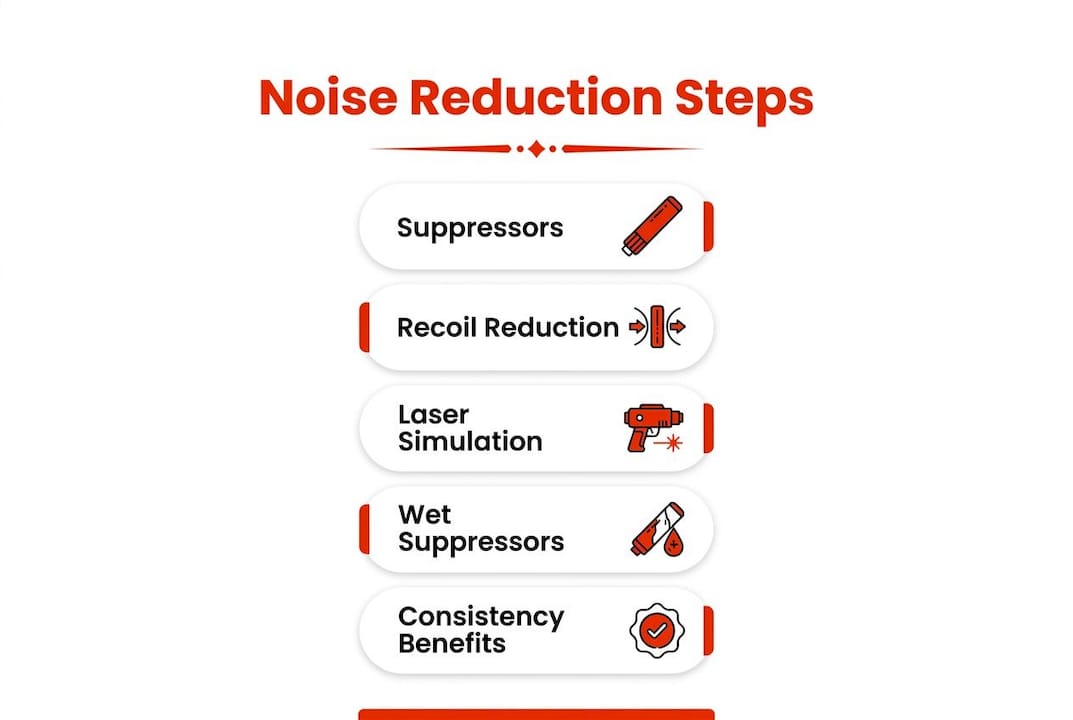
Suppressors also reduce recoil by at least 25%, which improves shooter accuracy and reduces the flinching that compounds hearing risk. Heavier rifles combined with suppressors further ease recoil effects. The benefits are cumulative: quieter shots, better control, and less physiological stress on the shooter.
The table below shows approximate noise levels across shooting configurations:
| Configuration | Approximate noise level | Notes |
|---|---|---|
| Unsuppressed rifle (.308 Win) | ~167 dB | Causes immediate hearing damage |
| Suppressed rifle (.308 Win) | ~133 dB | Below irreversible damage threshold |
| Unsuppressed pistol | ~160 dB | Still above safe exposure limit |
| Laser simulation shooting | 0 dB (acoustic) | No acoustic footprint whatsoever |
Laser simulation shooting represents a categorically different approach. Rather than reducing noise, it eliminates acoustic output entirely. Participants use laser-equipped replicas to engage targets, producing no sound that could disturb wildlife or damage hearing. For eco shooters aiming for zero noise pollution, this is the most complete solution currently available.
Pro Tip: When evaluating suppressors, check the wet versus dry performance ratings. Wet suppressors, which use a small amount of water or solvent, can reduce noise by an additional 5–10 dB compared to dry use, making them significantly more effective in field conditions.
One underappreciated advantage of source-level noise reduction is consistency. Real-world ear protection frequently underperforms because shooters insert earplugs incorrectly, remove them between shots, or experience seal failure in cold or wet conditions. A suppressor works regardless of user behaviour. That reliability matters enormously in field settings where compliance with personal protective equipment is difficult to enforce.
What are the ecological and safety benefits of noise reduction in shooting?
The ecological benefits of sound control in shooting extend well beyond the immediate vicinity of a range. Noise pollution contributes to stress, reduced concentration, and significant public health costs across entire regions. When shooting activities reduce their acoustic footprint, they contribute to healthier natural soundscapes that support biodiversity, pollinator activity, and predator-prey dynamics.
For breeding birds, the benefits are direct and measurable. Managing gunshot noise to below disturbance thresholds, combined with appropriate buffer distances, reduces the risk of nest abandonment and breeding failure. Species with slow reproductive rates, such as eagles and large raptors, are particularly sensitive. A single failed breeding season caused by acoustic disturbance can affect population recovery for years.
For human participants, the safety gains from noise management in eco shooting are substantial and long-term. Repeated exposure to unsuppressed gunfire accelerates hearing loss, increases tinnitus risk, and raises cortisol levels that affect cardiovascular health over time. Suppressors and silent alternatives protect shooters across entire careers in the sport.
Benefits to both ecosystems and participants include:
- Preserved natural soundscapes that support wildlife communication and navigation
- Reduced breeding failure rates in sensitive species near shooting venues
- Lower tinnitus and noise-induced hearing loss rates among regular shooters
- Decreased cognitive load and stress for participants during extended sessions
- Improved community relations for shooting venues operating near residential or conservation areas
The indirect benefits matter too. Venues that adopt sustainable shooting practices face fewer regulatory challenges, attract a broader participant base, and build stronger relationships with conservation bodies. Noise management is not just an environmental obligation. It is a practical advantage for any venue planning for long-term operation.
How to implement noise management strategies in eco shooting
Effective noise management in eco shooting requires a layered approach. No single measure is sufficient on its own. The most resilient programmes combine physical noise reduction technology with spatial planning, participant training, and ongoing environmental monitoring.
-
Fit suppressors to all firearms used near sensitive habitats. Prioritise calibres with the highest acoustic output. A suppressed .308 Winchester produces roughly 133 dB, compared to 167 dB unsuppressed. That 34 dB reduction is the single most impactful change a venue can make.
-
Establish minimum buffer distances around wildlife nesting sites. The 2026 research on Bonelli’s eagles recommends at least 600 m from active nests. Map nesting locations at the start of each breeding season and adjust shooting zones accordingly.
-
Integrate laser simulation shooting for training sessions. Laser clay shooting produces zero acoustic output, making it ideal for eco-friendly shooting practice near conservation areas. Participants develop target acquisition skills without any disturbance to surrounding wildlife.
-
Train all participants in correct ear protection fitting. Field noise reduction ratings for earplugs are significantly lower than laboratory ratings. Demonstrate correct insertion technique at every session briefing, and treat suppressor use as the primary protection layer rather than an optional extra.
-
Conduct seasonal acoustic monitoring around the venue perimeter. Use calibrated sound level meters to verify that noise levels at habitat boundaries remain within acceptable thresholds. Document results to demonstrate compliance with 2026 guidance and support any regulatory review.
-
Collaborate with local conservation bodies. Environmental monitoring organisations can provide species presence data that informs buffer zone planning. This collaboration also builds credibility with regulators and the wider public.
Pro Tip: Schedule live-fire sessions outside peak breeding periods, typically march through july for most UK raptor species. Combining seasonal timing with suppressor use and buffer distances gives wildlife the best chance of undisturbed breeding success.
Modern acoustic design increasingly favours noise prevention at source over post-generation barriers. This principle applies directly to shooting sports. Suppressors and laser alternatives prevent noise from entering the environment in the first place. Sound barriers and earthworks reduce noise that has already been generated. The former is always more effective.
Key takeaways
Sound control in eco shooting protects wildlife breeding success, preserves human hearing, and gives shooting venues a clear path to long-term regulatory compliance.
| Point | Details |
|---|---|
| Buffer zones protect breeding birds | A 600 m minimum distance from nests reduces breeding failure caused by gunshot noise. |
| Suppressors reduce noise at source | A suppressor drops .308 Winchester noise from 167 dB to 133 dB, below the irreversible damage threshold. |
| Laser simulation eliminates acoustic output | Laser clay shooting produces zero noise, making it the most complete solution for eco shooting. |
| Combined disturbance triples stress duration | Visual and acoustic disturbance together nearly triple stress response duration in birds of prey. |
| Source reduction outperforms barriers | Preventing noise at source is more effective than blocking sound after it has been generated. |
Why I think the shooting community is underestimating the combined disturbance problem
Most discussions about noise reduction in shooting sports focus on decibel levels and hearing protection. That framing misses the bigger issue. The 2026 Bonelli’s eagle research shows that acoustic and visual disturbance together produce a stress response nearly three times longer than either factor alone. Shooters who fit suppressors but continue to move through habitat without considering their visual footprint are solving half the problem at best.
The shift towards laser simulation shooting is the most significant development I have seen in this space. It does not just reduce noise. It removes the acoustic problem entirely, which frees venues to focus on the visual and spatial dimensions of wildlife disturbance. That is a fundamentally different starting point for conservation planning.
The dual responsibility here is real. Shooting sports have an obligation to wildlife, but they also have an obligation to participants. Repeated exposure to unsuppressed gunfire causes cumulative hearing damage that most shooters do not notice until it is irreversible. The sport loses experienced participants to preventable hearing loss every year. Noise management is not a concession to environmental pressure. It is a straightforward investment in the longevity of the sport itself.
My practical priority for any venue operating near sensitive habitat: adopt laser simulation for all training sessions, reserve live fire for competition days only, and treat the 600 m buffer zone as a minimum rather than a target. The venues that move in this direction now will face far less regulatory friction as noise standards tighten over the next decade.
— Joshua
Laserclay: the quieter way to enjoy shooting sports
Laserclay offers a shooting experience that produces no acoustic disturbance whatsoever. Using advanced laser technology, participants engage clay targets with the same skill and timing as traditional shooting, without any of the noise that stresses wildlife or damages hearing.
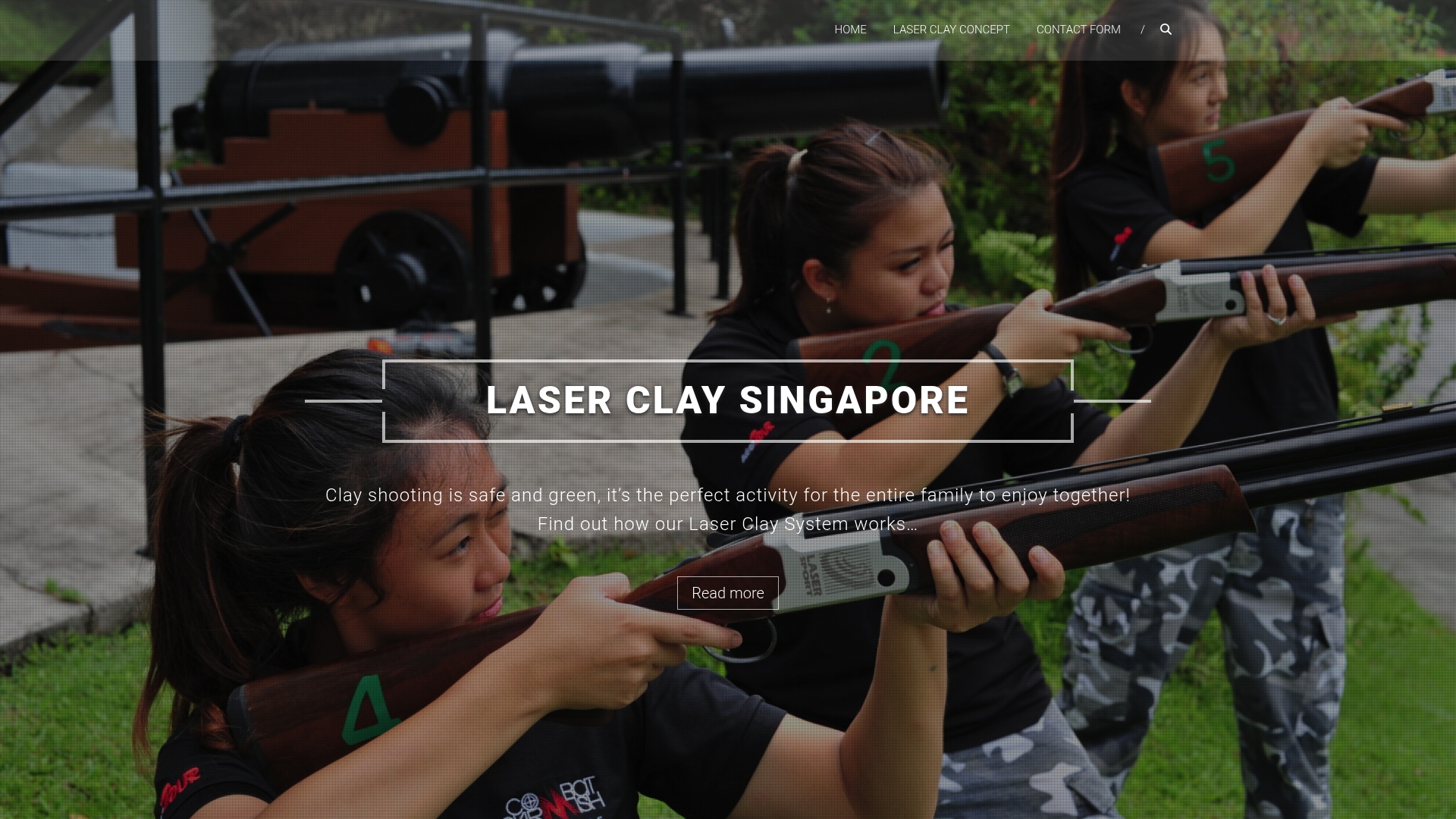
For environmental enthusiasts who want to enjoy shooting sports without compromising on conservation values, Laserclay is the most complete solution available. The format suits corporate team-building events, school programmes, and recreational groups equally well. Every session is safe, accessible, and leaves no acoustic footprint on the surrounding environment. Explore laser clay shooting to understand how the technology works, or visit Laserclay Singapore to book a session that puts wildlife and participant wellbeing first.
FAQ
What is noise reduction in eco shooting?
Noise reduction in eco shooting is the deliberate management of acoustic output from shooting activities to protect wildlife from stress-induced breeding failure and to prevent hearing damage in human participants.
How far does gunshot noise disturb wildlife?
A 2026 study on Bonelli’s eagles recommends a minimum 600 m buffer zone from active nests, reflecting how far acoustic disturbance travels and how severely it affects breeding success.
Do suppressors fully protect hearing?
Suppressors reduce rifle noise by 25–40 dB, bringing levels below the threshold for immediate hearing damage, but they do not eliminate all sound. Laser simulation shooting is the only method that produces zero acoustic output.
Why is combined visual and acoustic disturbance more harmful?
Research shows that visual and acoustic disturbance together nearly triple the duration of stress responses in birds of prey compared to either factor alone, making spatial planning as important as noise reduction.
How does laser clay shooting support noise management in eco shooting?
Laser clay shooting eliminates acoustic output entirely, making it the preferred method for eco-conscious shooting near conservation areas, with no need for ear protection or buffer zone calculations based on sound levels.
Recommended
- Why noise-reduced shooting is safer for children | Laser Clay Singapore
- How to reduce environmental impact in your shooting hobby | Laser Clay Singapore
- How to train shooting sport the sustainable way | Laser Clay Singapore
- Eco-friendly alternatives to traditional clay shooting | Laser Clay Singapore