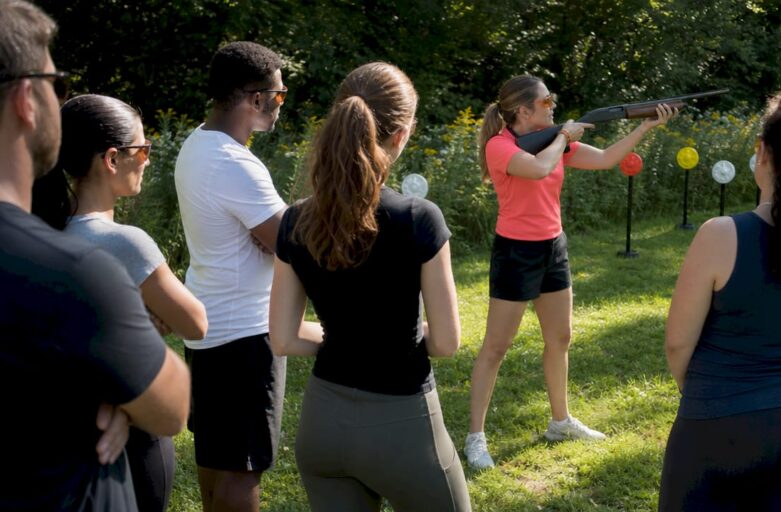
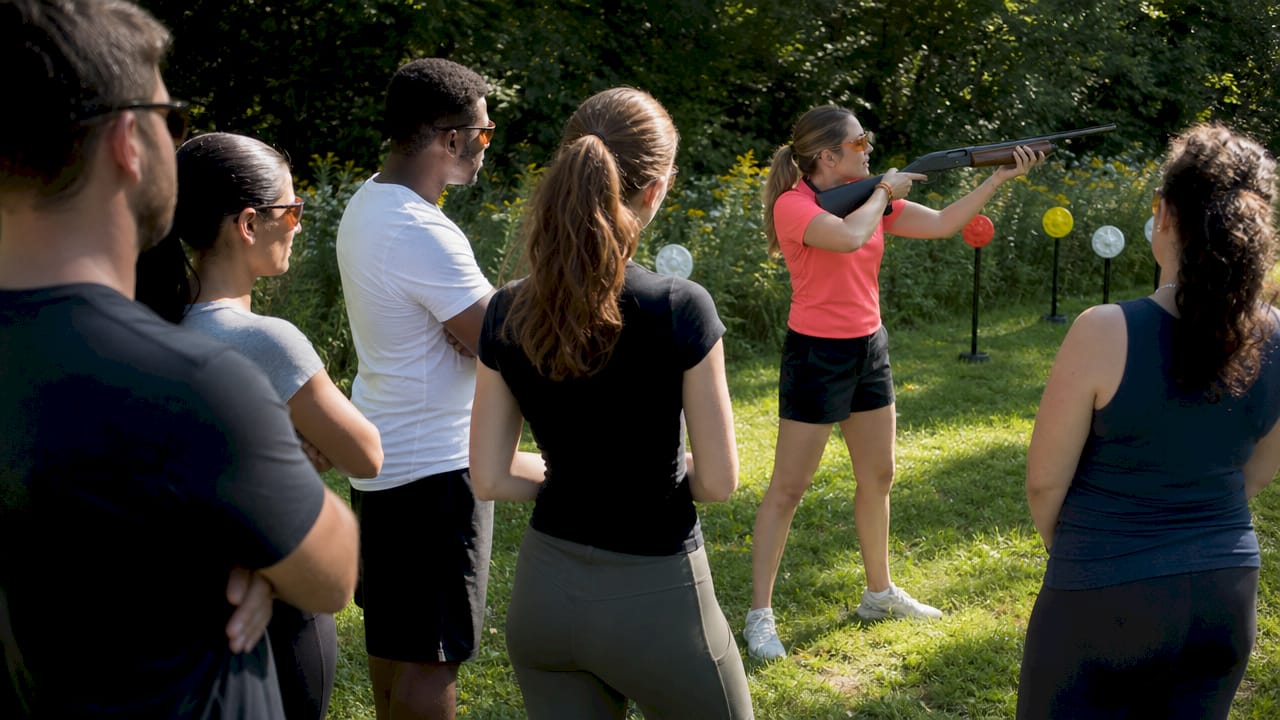
A laser clay instructor briefing is a structured safety and instructional session that takes place before any shooting activity begins. Understanding how laser clay instructor briefings work is the first step to running a safe, enjoyable event for any group. Laserclay uses deactivated 12-bore shotguns fitted with infrared technology, which means participants handle equipment that looks and feels like a real firearm without any live ammunition or recoil. The briefing covers safe gun handling, aiming technique, scoring rules, and competition formats. Without it, even a non-lethal activity carries real risk.
How laser clay instructor briefings work for different group sizes
The structure of a laser clay briefing changes significantly based on how many participants attend. Session length scales with group size: 30 minutes for 1–6 people, 45 minutes for 8–10 people, and 60 minutes for 11–20 people. That scaling exists because larger groups need more time to cover safety protocols individually and to manage equipment distribution without creating confusion.
Instructors also manage 5–10 simultaneous shooters at any one time. That number is deliberate. Running more shooters than that creates bottlenecks at the firing line and makes it harder for a single instructor to monitor safe behaviour across the group.
For groups of 11–20, the instructor briefing process includes splitting participants into rotating sub-groups. One group receives hands-on instruction while another observes or waits in a designated area. This approach keeps the session moving at a steady pace without rushing the safety content. Careful pacing in larger sessions is the single most important factor in preventing accidents and keeping participants engaged throughout.
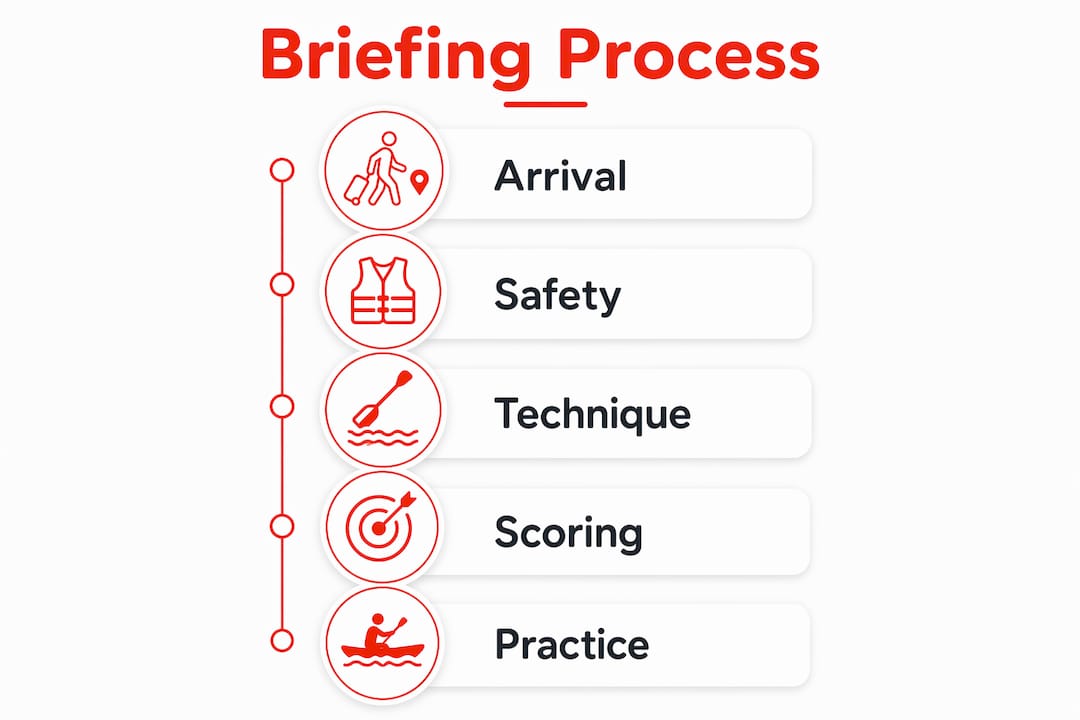
The numbered sequence a Laserclay instructor follows for a large group typically looks like this:
- Welcome and overview of the session format, including total duration and what participants will experience.
- Safety rules briefing, covering how to hold, carry, and point the laser shotgun at all times.
- Equipment demonstration, showing how the infrared trigger mechanism works and what happens when a clay is hit.
- Practice round, where each sub-group takes a short turn before competitive scoring begins.
- Competitive rounds, including formats such as Skill Shoot, with scores displayed on a digital scoreboard.
- Debrief and equipment collection, with a final reminder of safe handling during handover.
Pro Tip: If you are organising an event for 15 or more people, confirm in advance that the instructor plans to split the group into sub-groups. A single briefing line for 20 participants will always run over time.
What do instructors cover during a laser clay briefing?
The instructional content of a laser clay briefing falls into three clear areas: safety, technique, and game mechanics. Each area builds on the last, so participants leave the briefing with a complete picture of what they are about to do.
Safety protocols
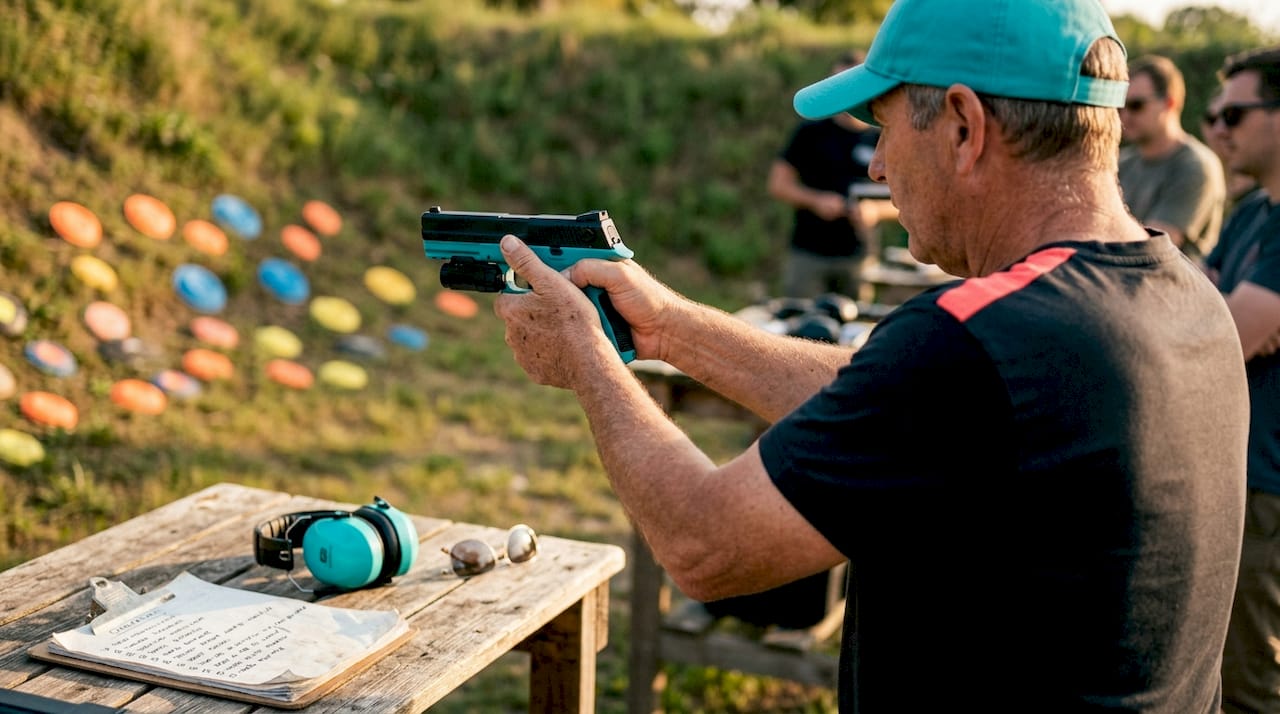
Safe behaviour is the first topic every instructor addresses. Laserclay uses deactivated firearms with infrared technology, which removes the danger of live ammunition but does not remove the need for disciplined gun handling. Instructors teach participants never to point the shotgun at another person, to keep fingers away from the trigger until ready to shoot, and to carry the gun broken open when moving between positions. These rules mirror the conventions of real clay shooting and exist for good reason: they build habits that keep everyone safe even when the stakes feel low.
Technique and equipment handling
Participants learn correct holding, aiming, and firing technique adapted specifically to laser technology. Because the laser shotgun produces no recoil and no noise, beginners often find it easier to focus on stance and lead than they would with a live firearm. Instructors demonstrate the correct cheek weld, how to track a moving clay target, and the timing required to fire ahead of the target’s flight path. This is the part of the briefing that most first-timers find surprising: the technique is genuinely similar to traditional clay shooting, and the skills transfer.
Game mechanics and scoring
Instructors explain the competition formats available during the session. Practice rounds come first, giving participants time to calibrate their aim before scores count. Competitive rounds such as Skill Shoot follow, with hits announced on a digital scoreboard to build competitive spirit across the group. Instructors also explain the different target types, flight paths, and distances participants will encounter. Knowing what to expect removes hesitation and lets participants focus on performance rather than confusion.
Pro Tip: Ask the instructor to demonstrate a full shot sequence before participants handle the equipment. Watching the technique once before attempting it reduces the time spent correcting grip and stance errors during the practice round.
How do instructors enforce safety and manage non-compliance?
The briefing is not just an information session. It is the moment when the instructor establishes authority and sets behavioural expectations for the entire event. Briefings embed a proactive safety culture that preempts the risky behaviour that commonly appears in non-lethal shooting sports, where participants underestimate the need for discipline because the equipment feels harmless.
Instructors are trained to identify overconfidence early. A participant who handles the shotgun carelessly during the briefing, points it at others as a joke, or dismisses the safety rules is a risk to the group. The instructor’s response is direct: a verbal warning, followed by removal from the session if the behaviour continues.
Participants who act beyond safe limits may be asked to leave the session immediately, with no refund issued. This policy is not punitive. It exists because one unsafe participant can compromise the experience and safety of everyone else present. Instructors carry full authority to enforce it without negotiation.
Pre-event communication is equally important for managing participant safety. Standard laser clay configurations require participants to stand at the firing position. Anyone with a mobility limitation, a physical condition, or a health concern that affects their ability to stand or handle equipment must disclose this before the event. Instructors can arrange accessible lane setups, but only if they know in advance. Failing to disclose a relevant condition puts both the participant and the instructor in a difficult position on the day.
Pro Tip: Event organisers should send a short pre-event form to all participants asking about physical limitations. This takes five minutes to prepare and prevents awkward conversations on the day.
What practical tips help participants get the most from their briefing?
Preparation before the briefing makes a measurable difference to how much participants enjoy the session. The following guidance applies whether you are attending as an individual or as part of a corporate team-building event.
- Disclose physical limitations early. Tell the organiser or instructor about any condition that affects your mobility, hearing, or ability to hold equipment. This is not optional. It allows the instructor to adjust the setup before the session starts.
- Listen without interrupting. The briefing covers a fixed sequence of information. Asking questions mid-briefing disrupts the flow for the whole group. Save questions for the designated pause at the end of the safety section.
- Do not assume prior experience transfers directly. Participants with a background in traditional clay shooting sometimes skip the technique section mentally. Laser technology behaves differently from a live firearm, and the aiming adjustments are worth paying attention to even for experienced shooters.
- Arrive on time. Joining a briefing late means missing safety content. Instructors cannot repeat the full briefing for latecomers without disrupting the group. Late arrivals may be asked to sit out until the next session.
- Embrace the practice round. The practice round exists to build confidence, not to score points. Use it to test your stance, your grip, and your timing without the pressure of the scoreboard. First-time participants who treat the practice round seriously consistently perform better in the competitive rounds that follow.
For first-timers specifically, the most common source of apprehension is handling a firearm-shaped object for the first time. The instructor briefing addresses this directly. The equipment is deactivated, produces no recoil, and makes no loud noise. By the end of the briefing, the vast majority of participants feel comfortable enough to shoot confidently.
Key takeaways
A laser clay instructor briefing is the foundation of every safe, well-run session, and its structure directly determines whether participants enjoy the event or leave feeling confused and underserved.
| Point | Details |
|---|---|
| Briefing length scales with group size | Sessions run 30 minutes for small groups and up to 60 minutes for groups of 11–20 people. |
| Safety rules come first | Instructors establish gun handling rules before any participant touches the equipment. |
| Technique is taught, not assumed | Correct holding, aiming, and firing technique is demonstrated and practised before competitive rounds begin. |
| Non-compliance has consequences | Participants who breach safety rules may be removed immediately, with no refund issued. |
| Pre-event disclosure matters | Physical limitations must be communicated before the session so instructors can arrange appropriate setups. |
Why I think the briefing is the most underrated part of any laser clay event
Most event organisers focus on the competitive rounds when they plan a laser clay session. The scoreboard, the formats, the prizes. The briefing gets treated as a formality to get through before the fun starts. That framing is wrong, and I have seen it cause problems.
The briefing is where the instructor reads the group. An experienced instructor spots the participant who is going to be a problem within the first two minutes of the safety section. They adjust their tone, their pacing, and their positioning accordingly. That is not something you can script. It comes from experience and from taking the briefing seriously as a skill in its own right.
The other thing I have noticed is that first-time participants almost always underestimate how much the briefing changes their experience. Groups that receive a thorough, well-paced briefing shoot better, compete more enthusiastically, and leave with a stronger impression of the event overall. Groups that receive a rushed briefing spend the first competitive round confused about the scoring, nervous about the equipment, and hesitant to engage. The difference is stark.
For event planners, the practical lesson is simple. Do not book a laser clay session and then try to shorten the briefing to fit a tighter schedule. The briefing time is not padding. It is the mechanism that makes everything else work. If you want competitive laser clay leagues or team events to land well, protect the briefing time in your run sheet.
— Joshua
Laserclay Singapore: professionally guided sessions for every group
Laserclay runs professionally led sessions designed for groups of all sizes, from small team outings to large corporate events. Every session includes a full instructor briefing covering safety, technique, and game mechanics before competitive play begins.
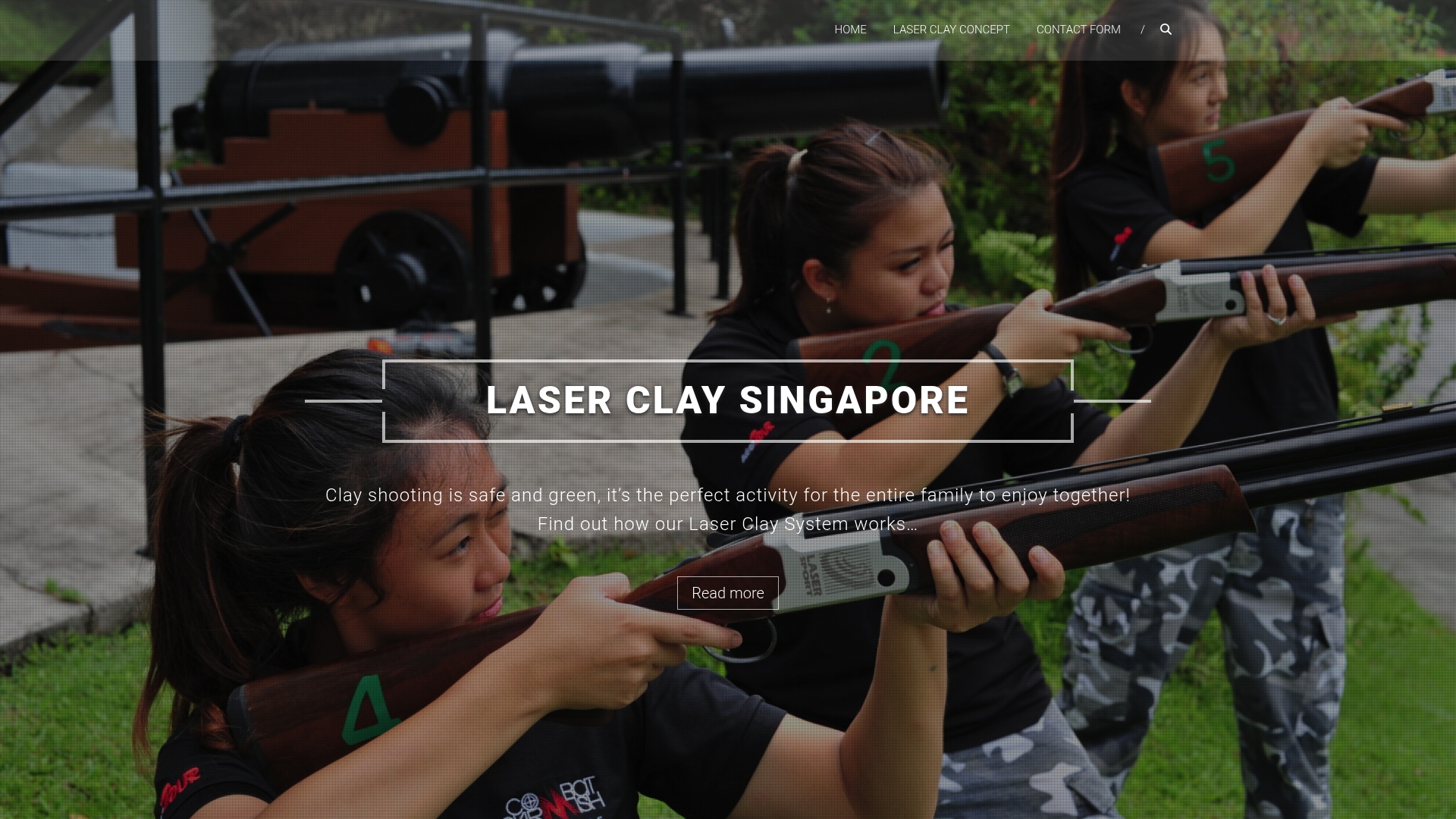
Whether you are planning a team-building activity or a weekend group event, Laserclay’s instructors manage the briefing process from start to finish. Sessions are structured to accommodate participants with no prior shooting experience, and the equipment requires no live ammunition, making it accessible and safe for mixed groups. Visit the how to play page to review session formats, group size options, and booking details.
FAQ
How long does a laser clay instructor briefing last?
Briefings last 30–60 minutes depending on group size: 30 minutes for 1–6 people, 45 minutes for 8–10 people, and 60 minutes for groups of 11–20.
What topics does the instructor cover in the briefing?
Instructors cover safe gun handling, correct shooting technique, equipment operation, scoring rules, and competition formats before any participant begins shooting.
Can participants with physical limitations join a laser clay session?
Yes, but physical conditions must be disclosed before the event so the instructor can arrange an accessible lane setup in advance.
What happens if a participant ignores the safety rules?
Instructors carry full authority to remove any participant who breaches safety rules, and no refund is issued in those circumstances.
Do I need prior shooting experience to understand the briefing?
No prior experience is needed. Briefings are designed to bring all participants to the same level of understanding, regardless of their background with firearms or shooting sports.
Recommended
- Skill development in laser clay: a practical guide | Laser Clay Singapore
- How laser clay fits event formats: a practical guide | Laser Clay Singapore
- What is laser clay shooting? A complete guide | Laser Clay Singapore
- Laser clay shooting: a beginner’s guide to getting started | Laser Clay Singapore